Happy Father’s Day, Babe!

IMG_2772

As always, I congratulate myself for marrying Mr. Fantastic. 

Dwayne eventually wants to spend Fathers Day doing amazing family adventures, such as white water rafting.  But we’ve got three years before we can do that, so we substituted an all family day at Snoqualmie Railways. 

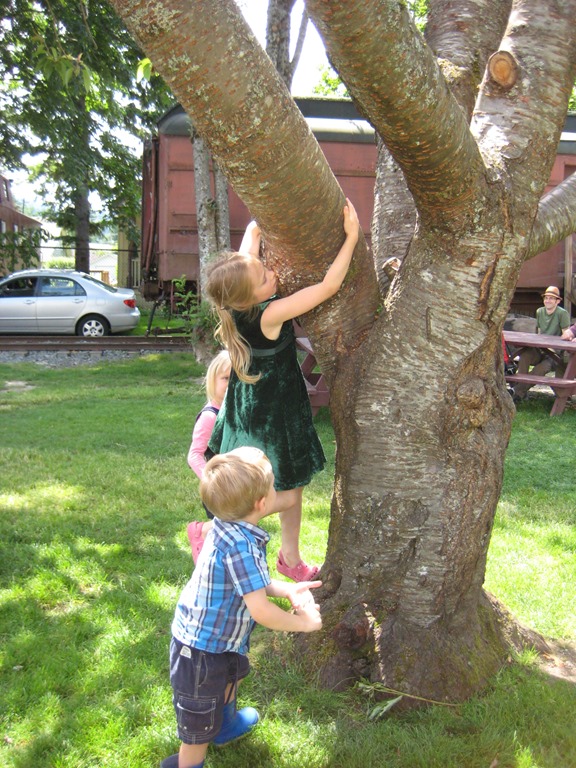
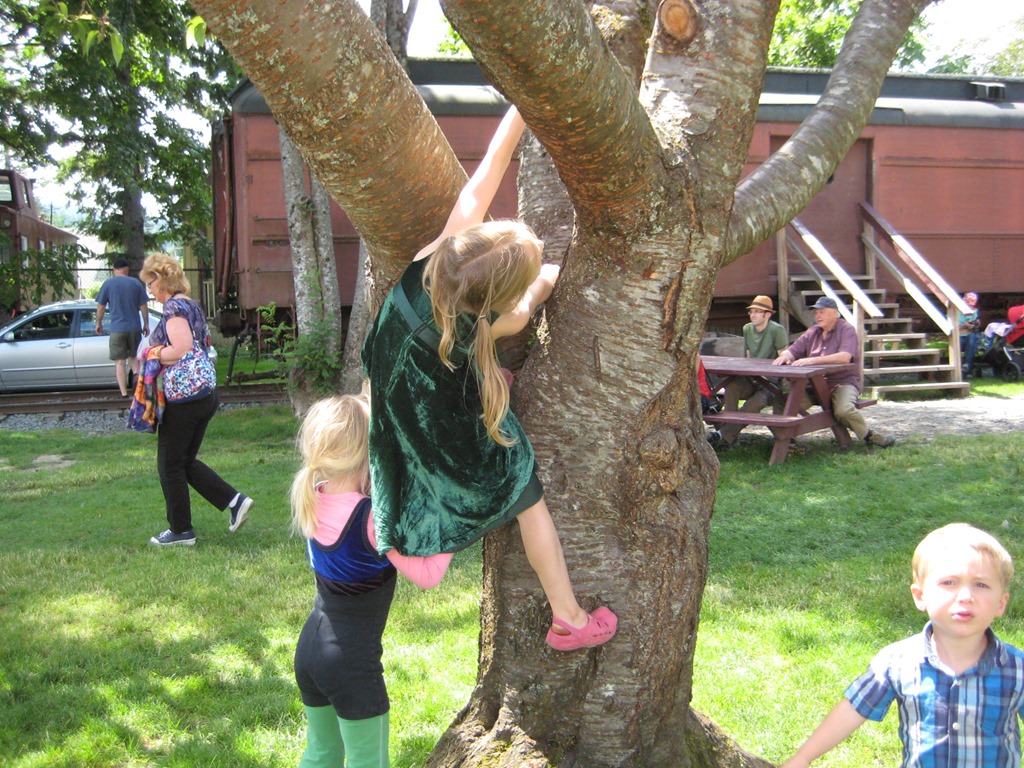
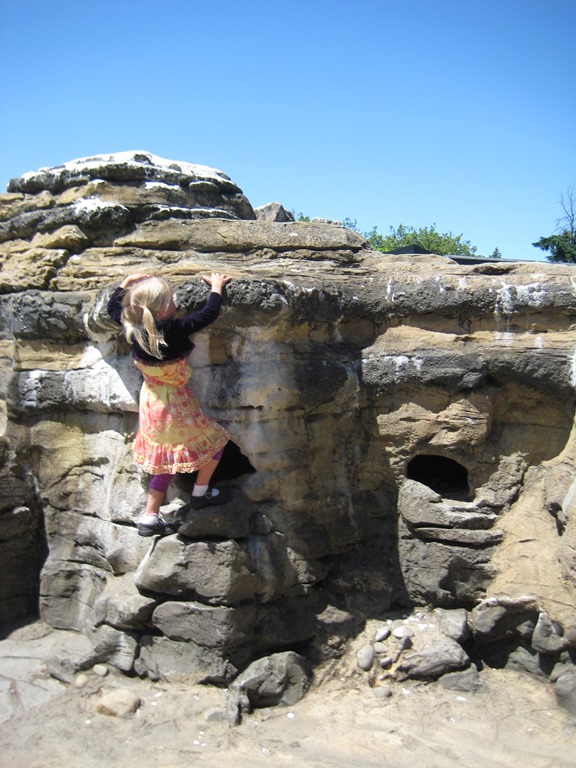
But first we had to climb a tree. 

Kyla:  Mama!  I can’t get up!  I need help!

Piper:  I’ll give you a boost up, Kyla!

IMG_2791

IMG_2793

IMG_2800

IMG_2802


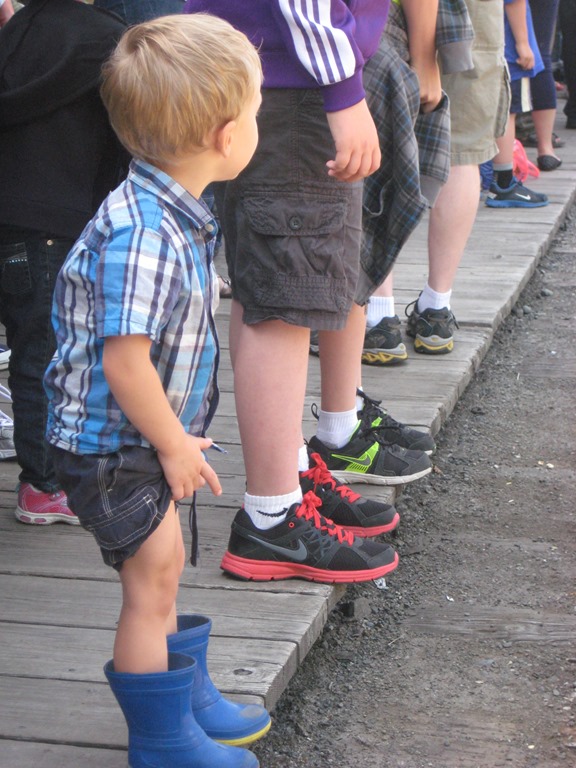
Now we are waiting for the train by walking the tracks. 

IMG_2805

IMG_2829


Dwayne’s parents are in town, so we got to celebrate Dwayne’s dad, my dad, and Dwayne himself.  With some non-dads thrown in, we had a splendid day. 

IMG_2828


The best part about the Snoqualmie-North Bend train was the trip to to Snoqualmie Falls—I’ve never seen the falls from that side. It was gorgeous! 

IMG_2856

Back on the other side, after an authentic Italian meal, we visited the falls, and instead of enjoying the view, we played freeze tag with another family.

IMG_2862

IMG_2882

2013 Booklist

It’s the beginning of Week 25 of 2013, and I’m on track for a book a week this year (#1 on the list took me weeks to finish!)

24. All Over the Map, by Laura Frasier. Excellently titled, this travel writer’s memoir is the story of a middle-aged single woman who loves her exotic, adventurous life while she longs for love and children. She envies her married, child-ful friends almost as much as they envy her.  But her journeys go deeper than simply Samoa and blind dates—she is a living, breathing, interesting person who hits hers 47th birthday as she completes this book. Worth the read.

23. Lean In, by Sheryl Sandberg. I ran out of sticky arrows to mark important passages in this important manifesto. Very readable, but more importantly, more “thinkable”. I wish she had written this ten years ago; my history would probably be different. But I’m willing to bet Mrs. Sandberg will be influencing my future. More importantly, I hope I will be influencing my future. For those who want the short version, click here. It’s a verbatim list of passages I marked.

22. Parenting a struggling reader by Susan Hall & Louisa Moats. Good information for those who might be the parent described in the title. A decent handbook to get you started.

20. Teaching on Poverty Rock / Joby McGowan. It’s not his first year teaching, but it’s his first year teaching on Mercer Island. A very short memoir.

19. To Sell is Human: the surprising truth about moving others / Daniel Pink. I read Drive, a book on what motivates us, last year. He’s a writer like Freakonomics and Malcolm Gladwell, great at taking diverse studies and bringing interesting information into a cohesive framework. He’s just a fun read! And we all so spend a lot of time “selling”—what to put in a subject line so you will read—and respond—to my email, advertising old stuff on craigslist, convincing someone else to do a job so you don’t have to…

18. How Children Succeed: Grit, curiosity, and the hidden power of character, by Paul Tough (author of Whatever It Takes).   LOVED this.  I posted more in depth on some of the ideas that stood out in this book.

17. Giving Our Children a Fighting Chance: Poverty, literacy, and the development of information capital / Susan B. Neuman, Donna C. Celano. This is the perfect book for me—the tale of two libraries, it deals with literacy, learning, poverty, the achievement gap, technology and education all within the parameters of an empirical research paper published as a book. (Those who listen to NPR will recognize the Susan B. Neuman name.) In case you find this as interesting as I do, you are in luck! KCLS didn’t have this book until I requested it and it looks like I will have to buy the book as it has some water damage. Hmm.

16. The Introvert Advantage: How to thrive in an extrovert world / Marti Olsen Laney. I am interesting in this topic, as I consider myself quite introverted (social, but introverted) and at least one of my kids has my same introvert characteristics. Recently, I went to a very engaging Susan Cain lecture about introverted children. Her book, Quiet, is on my hold list at the library and I think I will find it more interesting than this one.

15. Gilead / Marilynne Robinson. We read it for book club. It was excellently written, and it was hard to believe the nearly 80 year old pastor narrator was written by a middle age woman. It was pretty good.

14. Dawn Huebner has written 6 books, the first two I have read and recommend:

1. What to Do When Your Temper Flares: A Kid’s Guide to Overcoming Problems With Anger

2. What to Do When You Dread Your Bed: A Kid’s Guide to Overcoming Problems with Sleep

3. What to Do When Bad Habits Take Hold: A Kid’s Guide to Overcoming Nail Biting and More

4. Sometimes I Worry Too Much, But Now I Know How to Stop

5. What to Do When You Grumble Too Much: A Kid’s Guide to Overcoming Negativity

6. What to Do When You Worry Too Much: A Kid’s Guide to Overcoming Anxiety

13. Going Bovine / Libba Bray. Great title. Great cover. Lousy story.
12. The out of sync child: recognizing and coping with sensory processing disorder / Carol Stock Kranowitz. I read this to see if it fit anything we had been seeing in one our little darlings. It didn’t. Here was the companion book: Answers to questions teachers ask about sensory integration : forms, checklists, and practical tools for teachers and parents

11. Fluency instruction: research-based best practices / edited by Timothy Rasinski, Camille Blachowicz, Kristin Lems. (2006). Great articles about, well, fluency. Quickest summary: kids learning to read fluently should read the same thing 4 times.

10. Tears of the Giraffe / Alexander McCall Smith. The second in the #1 Ladies Detective Agency series. I really like listening to this series. Luckily, there are lots more.

9. Becoming a Thinking Christian: If We Want Church Renewal, We Will Have to Renew Thinking in the Church / John B. Cobb, Jr. From the publisher, “This book challenges Christians to think. Committed lay Christians, says Cobb, are already theologians; he wants them to realize this and then to become good theologians. Laypersons are just as capable as professional theologians of intellectual hard work, but they no longer expect the church to ask this of them. Cobb discusses why it is important for Christians to think about their own beliefs and assumptions.”

[Gone Girl by Gillian Flynn. This is supposed to be an excellent book. I picked it up and started reading it at the library while Wesley slept in my arms. I had a few concerns about the subject matter, so I read the ending, decided I would hate the novel, no matter how well-written, and put it in the return box on the way out.]

8. Speaking Among the Bones (A Flavia de Luce novel) / Alan Bradley. This is the 5th in a series that I am on the library hold lists long before the book is published.  A day’s read if one ignores one’s duties enough.  I adore Flavia, who is now almost twelve.  The last sentence in the book is the best/worst I’ve read in a mystery.   Unfortunately for my sanity, the sixth book isn’t scheduled to publish until “early 2014”.  You’re killing me, Alan Bradley.

7. Radical: Fighting to put students first / Michelle Rhee.  I read a book about Ms. Rhee last autumn and got a lot out of it, including a radical crush on Michelle and her philosophies.  I bought Radical when I went to see her last week at a Town Hall lecture (thank you, Seattle Public Library!). There were pickets and protests and hisses and everything.   Since leaving the Washington, D.C. district, she has started StudentsFirst, a union of sorts for students.  She’s considered controversial, but I support her positions.  I definitely want to teach again when the kids are all in school, but she inspires me to move to the inner city and work harder than I ever have in my life to be the best teacher any kid has ever had.  I’ve already said it: she’s inspiring.

6.  All There Is: Love stories from StoryCorp / Dave Isay (editor).  I put this on my Hold list when I got on my This I Believe essay kick last year, one of NPR’s great features.  Forty minute interviews between lovers, friends, and family are written up in short essays.  It’s an excellent peek into the love lives of representative slice of America. 

5.  American Dervish / Ayad Akhtar. We picked this novel for book club and I loved it.  I learned more about Islam, Jewish-Muslim-Christian tensions, and the Koran through this piece of fiction than I’ve ever gotten out of a deliberate study.  Ah, the power of story.  It brings up some great discussion topics, not only for book club, but even for Dwayne and me.   Unfortunately, this is the author’s first book so as much as I would like to grab from the shelves all his other brilliance, I will have to wait. 

4. Blueprints for building better girls / Elissa Schappell.  Meh. A collection of short stories that I didn’t realize were about the same women until nearly the end.  If you decide to read this book about anorexic girls with more issues than food, know that Elizabeth, Bender, and B are the same person.  Maybe now you will get more out of this than I did.

3. The Higher Power of Lucky, by Susan Patron.  Another audio read, I found this is the section of previous Newberry winners.  Lucky, a ten year old orphan, is trying to find her Higher Power, a concept she has heard about while eavesdropping on the different “Anonymous” meetings her in small, small town.  Hey, it won a prestigious award—always worth reading.

2. Predictably Irrational: the hidden forces that shape our decisions, by Dan Ariely.  This was an audio read for me and both the reader and subject were fascinating.  It’s in the same genre as Freakomics or anything by Malcolm Gladwell.

1.  World without End, by Ken Follett.  Our book group read Follett’s Pillars of the Earth a few years ago and decided to tackle the sequel, giving ourselves December and January.  It’s 1,050 pages about life in a English town and priory in the 14th century.  I love his historical fiction—I can read a history book about Martin Luther’s protests of certain Church practices, but fiction makes the fact more real.  The author uses a few prototype characters no matter what century he’s writing in, but overall, I’d say my enjoyment of the novel was just about worth the 4-5 other books I gave up reading to get through this one. 

[Red denotes a work of nonfiction.] 

Not Quite 3 1/2

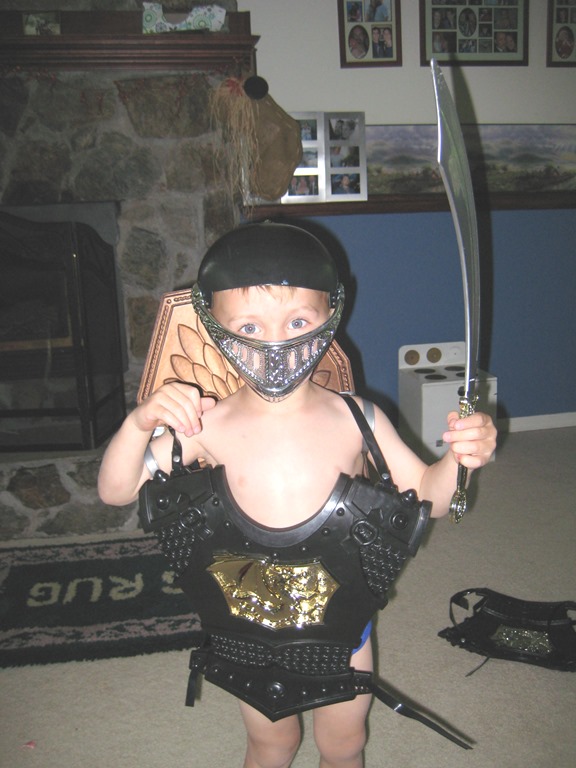
Wesley is just about the age Kyla was when he was born.  Less than 3.5 years ago, Kyla was the eldest of three small children, four months after her third birthday.  But here’s the baby, who is being a fierce knight who only slightly resembles a turtle (shield on back).

041

Then:

1-18-10 Wesley and sisters, hospital 002

And now (Cousin Parker is the extra kid—I’m holding steady at three of my own):

183

How Children Succeed: Another Abbreviated Book

How Children Succeed: Grit, curiosity, and the hidden power of character, by Paul Tough—follow this author if you enjoy fantastic writing that puts together non-related studies into a c0hesive, practical narrative, not unlike Freakonomics, Malcolm Gladwell, and Daniel Pink.
(My note:  In 2009, Paul Tough wrote Whatever It Takes: Geoffrey Canada’s Quest to Change Harlem and America, a fantastic read about education, poverty, acheivement gap, charter schools, etc. Listen to Geoffrey Canada on KUOW’s Speakers Forum.)

Again, here’s my shortcut version of the book, but really, this is one of those books that I read for my kids (like I read Lean In for me).

*     *     *     *     *     *     *

Big Idea: A study took kids who scored low on an IQ test retested those kids and gave them an M&M for every correct answer. They went from an average IQ of 79 to an average of 97.

So…what is their “real” IQ, 79 or 97? (It turns out that life prospects were more in line with a 79 score.) “They may have been low in IQ, but they were low in whatever makes a person try hard on an IQ test without any obvious incentives” (pg. 69).

In other words:

IQ = Natural/developed intelligence/ability + amount of innate motivation

Self-control as a child is correlated with, as an adult, being less likely to smoke, have health problems, have bad credit, brushes with the law, have multiple addictions, and raising children in a single-parent household (p. 73-74).

However, self-control isn’t quite the “driver of success that [Duckworth] was looking for” (p. 74). She called “a passionate commitment to a single mission and an unswerving dedication to achieve that mission” (p. 74), or grit, the important quality that could make the difference in succeeding (my note: compare word choice with success).
http://americanradioworks.publicradio.org/features/tomorrows-college/grit/angela-duckworth-grit.html

Denise: Your grit score is: 4.5. You are in the 90th-99th percentile of other users who have taken this test.

How to improve your grit:

Three strategies people use when setting goals:

1) Optimism: envisioning all the good things that will happen when you achieve; indulging; “doesn’t usually correlate with actual achievement” (p 92)

2) Pessimism: “dwelling, thinking about the entire thing that will get in the way of their accomplishing their goals” (p 92). Doesn’t work well, either.

3) Mental contrasting: “contrasting on a positive outcome and simultaneously concentrating on the obstacles in the way. Doing both at the same time… ‘creates a strong association between future and reality that signals the need to overcome the obstacles in order to attain the desired future’” (p 93). Set rules for yourself.

If you don’t have that kind of safety net (middle class, affluent)—and children in low-income families almost by definition do not—you need to compensate in another way. To succeed, you need more grit, more social intelligence, more self-control than wealthier kids. P 103

Pp120-1  Researchers have demonstrated that for infants to develop qualities like perseverance and focus, they need a high level of warmth and nurturance from their caregivers. ….[W]hen children reach early adolescence, what motivates them most effectively isn’t licking and grooming-style care but a very different kind of attention. Perhaps what pushes middle-school students to concentrate and practice … is the unexpected experience of someone taking them seriously, believing in their abilities, and challenging them to improve themselves.

When [Tom Brunzell’s] students were flailing, lost in moments of stress and emotional turmoil, he would encourage them to do the kind of big-picture that take place in the prefrontal cortex: slowing down, examining their impulses, and considering more productive solutions to their problems [than yelling, hitting].

Pg 152-3  The SAT (and the ACT) were designed to equalize the differences in schools (eg a 3.5 GPA in different high school across the nation). But ACT and SAT scores were poor predictors of college completion. The better predictor, actually, is high school GPA. “It was true that a student with a 3.5 GPA from a high quality HS was somewhat more likely to graduate from college than a student with a 3.5 GPA from a low-quality HS, but the difference was surprisingly modest.”

Conclusion: “whether or not en is able to graduate from a decent American college doesn’t necessarily have all that much to do with how smart he or she is. It has to do, instead, with the same list of character strengths that produce high GPAs in the middle and high schools…motivation, perseverance, good study habits and time management skills”

OneGoal Leadership principles: Resourcefulness, resilience, ambition, professionalism, and integrity.

Lean In: The hugely abbreviated version

I just finished the latest feminist manifesto.  The level of importance I ascribe to a book is perfectly proportional to the number of sticky-arrows used to mark up the reading.  I ran out of the markers three-quarters the way through.

IMG_2890

A good friend made an excellent point that boys are statistically in more trouble than girls up through college graduation, when women earn 50-65% of the college degrees (depends upon the study you read).  However, if women are so much more educated, why are there only 21 female Fortune 500 CEOs?  Honestly, I read this for me, not for my kids.  (I read enough stuff for them!)

Here’s the notes that I highlighted from Lean In;  they are all verbatum except for one obvious Denise interruption. 

*      *      *      *      *       *       *       *

1. Knowing that things could be worse should not stop us from trying to make things better.p 5

2. While women continue to outpace men in educational achievement, we have ceased making real progress at the top of any industry. This means that when it comes time to make decisions that most affect our world, women’s voices are not heard equally. p 5-6

3. In addition to the external barriers erected by society, women are hindered by barriers that exist within ourselves. We hold ourselves back in ways both big and small, by lacking self-confidence, by not raising our hands, and by pulling back when we should be leaning in. …We compromise our career goals to make room for partners and children who may not even exist yet. p. 8

4. If we want a word with greater equality, we need to acknowledge that women are less likely to keep their hands up. We need institutions and individuals to notice and correct for this behavior by encouraging, promoting and championing more women. And women have to learn to keep their hands up, because when they lower them, even managers with the best intentions might not notice. P 36

5. There is little downside when men negotiate for themselves. People expect men to advocate on their own behalf, point out their contributions, and be recognized and rewarded for them. But since women are expected to be concerned with others, when they advocate for themselves or point to their own value, both men and women react unfavorably. Interestingly, women can negotiate as well as or even more successfully than men when negotiating for others because in these cases, their advocacy does not make them appear self-serving. P 45

6. When negotiating, “Think personally, act communally.” …preface negotiations by explaining that they know that women often get paid less than men so they are going to negotiate rather than accept the original offer. Pronouns matter. P 47

7. Until we can get there, I fear that women will continue to sacrifice being liked for being successful. p49

8. “I want to apply to work with you at Facebook,” she said. “So I thought about calling you and telling you all the things I’m good at and all the things I like to do. Then I figured that everyone was doing that. So instead, I want to ask you: What is your biggest problem, and how can I solve it?” P 53

9. “Careers are a jungle gym, not a ladder.” p 54

10. “Tiara Syndrome” where “women expect that if they keep doing their job well someone will notice them and place a tiara on their head.” (Anyway, who wears a tiara on a jungle gym?)p  63

11. Alice Walker: “The most common way people give up their power is by thinking they don’t have any.” p 63

12. By the time the baby arrives, the woman is likely to be in a drastically different place in her career than she would have been had she not leaned back…. By not finding her ways to stretch herself in the years leading up to the motherhood, she has fallen behind. When she returns to the workplace after her child is born, she is likely to feel less fulfilled, underutilized, or unappreciated. …She probably scales her ambitions back even further since she no longer believe that she can get to the top. And if she had the financial resources to leave her job, she is more likely to do so. p 94

13. When husbands work fifty or more hours per week, wives with children are 44% more likely to quit their jobs than wives with children whose husbands work less. p 99

14. Imagine that a career is like a marathon—a long, grueling and ultimately rewarding endeavor. Now imagine a marathon where both men and women arrive at the starting line equally fit and trained. The gun goes off. The men and women run side by side. The male marathoners are routinely cheered on. “Looking strong! On your way!” But the female runners hear a different message. “You know you don’t have to do this!” the crowd shouts. Or “Good start—but you probably won’t want to finish.” The further the marathoners run, the louder the cries grow for the men: “Keep going! You’ve got this!” But the women hear more and more doubts about their efforts. …. “Why are you running when your children need you at home?” p 100-101

15. Gloria Steinman: We know now that women can do what men can do, but we don’t know that men can do what women can do.” 120

16. DONE IS BETTER THAN PERFECT. P 125

17. Study after study suggests that the pressure society places on women to stay home and do “what’s best for the child” is based on emotion, not evidence. p135

18. Guilt management can be just as important as time management for mothers. 137 (NOTE TO SELF: eradicate “bad mom” from all of my conversations, internal and otherwise.)

19. The New “F-word” (Marianne Cooper)—feminism (P 142)

20. A definition of leadership: Leadership is about making others better as a result of your presence and making sure that impact lasts in your absence.” 157

21. The more women can stick up for each other, the better… Everyone loves a fight, and they really love a catfight. 162

22. Any coalition of support must also include men, many whom care about gender inequality as much as women do. In 2012, Kunal Modi wrote an article “Man UP on Family and workplace Issues.” He argued that “for the sake of American corporate performance and shareholder returns, men must play an active role in ensuring that the most talents young workers (often women…) are being encouraged to advocate for their career advancement….So men, let’s get involved now==and not in a patronizing manner that that marginalized this as some altruistic act on behalf of our mothers, wives, and daughters, but on behalf of ourselves, our companies, and the future of our country. 165-6

23. Because feminism wasn’t supposed to make us feel guilty, or prod us into constant competitions….. It was supposed to make us free—to give us not only the choices but the ability to make those choices without constantly feeling that we’d somehow gotten it wrong. 167

24. Susan B. Anthony: Our job is not to make young women grateful. It is to make them ungrateful so they keep going.” We need to be grateful for what we have but dissatisfied with the status quo. This dissatisfaction spurs the charge for change. 172

The Zoo is So….Wild!

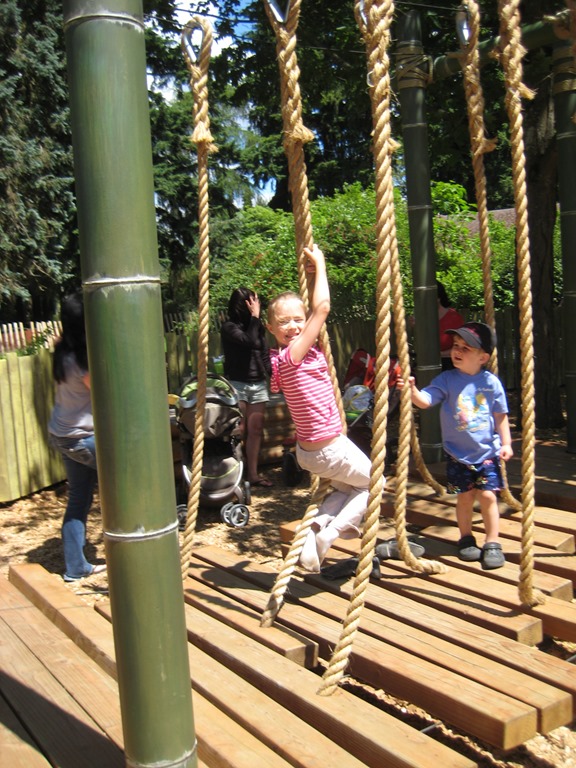
Climbing!

002

Scaling!

003

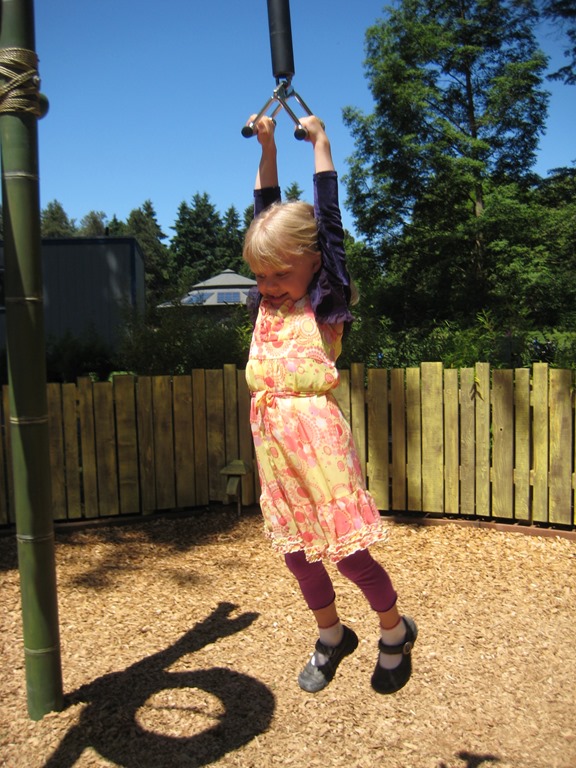
Zipping!

005

Swinging!

007

Gliding!

008

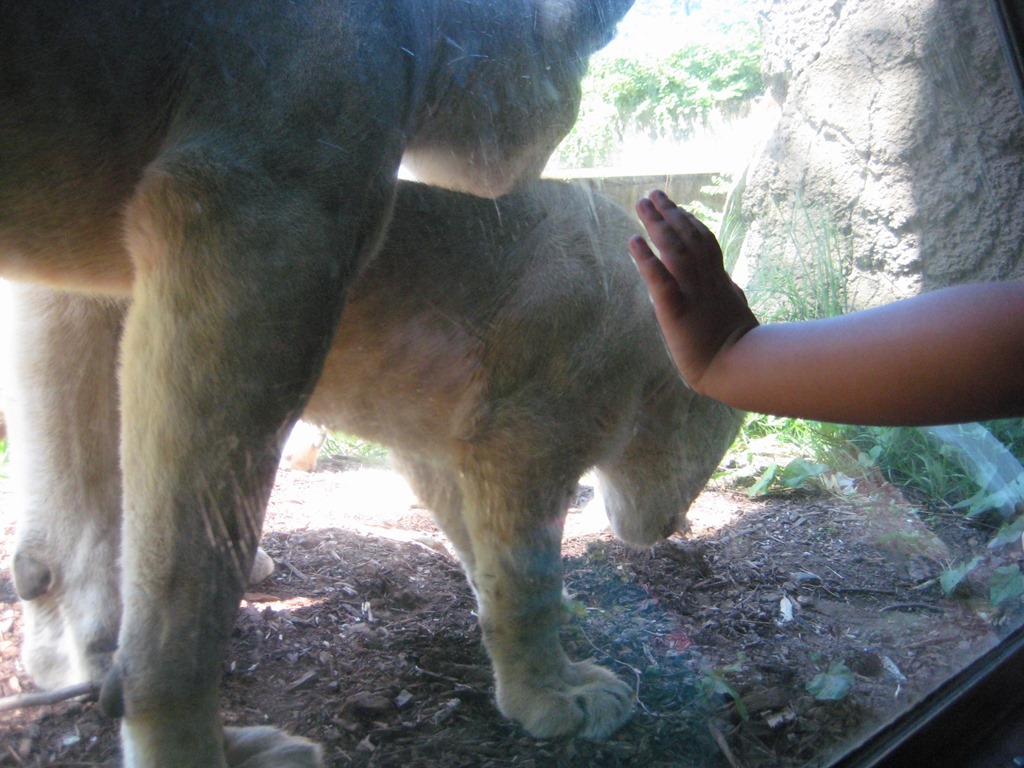
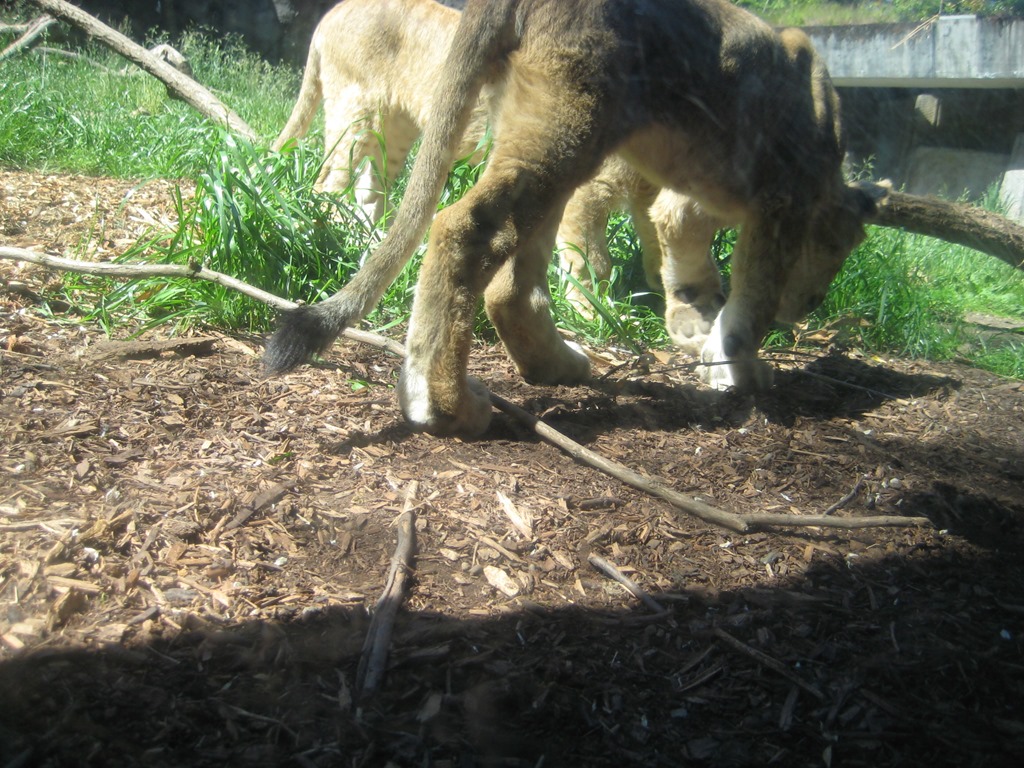
But eventually, it’s not just going to be my kids who are so wild.  We go visit the lion cubs.

018

020

Drat, I didn’t really get any good shots.  But take a close look at this.

021

Earlier, there had been 6 ducklings.  If you can see the one are the far right, there are now just three.  At least one of them is being played with by the cubs.  It’s fully dead but not as mangled as you’d think.


022

Mama Lion had been catching ducklings for her cubs to play with.  Or eat.  And eat?  Hmm.  It was very fascinating and Kyla was really excited to tell me all about food chains.  Mama Lion is clearly on top.

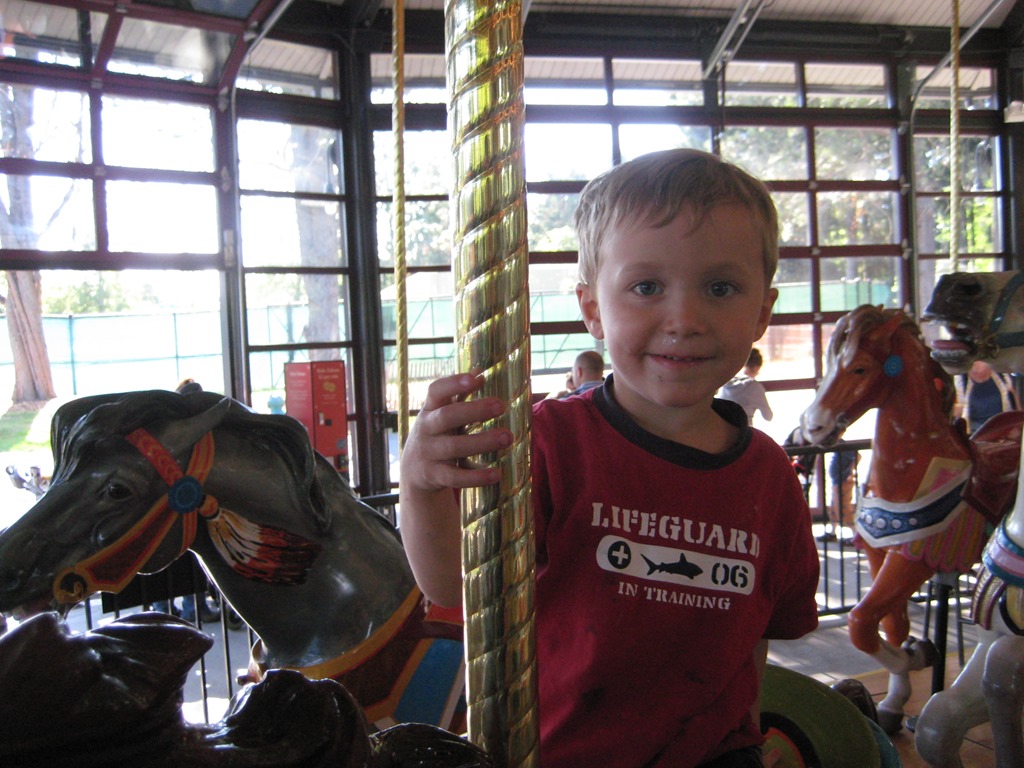
And because I had to stop by the membership counter to renew our card, I bought the carousel punch card.  A special treat cheaper than a café snack with no unwanted sugars.

025033029

We’ll go back lots this summer!

Kindergarten Field Trip

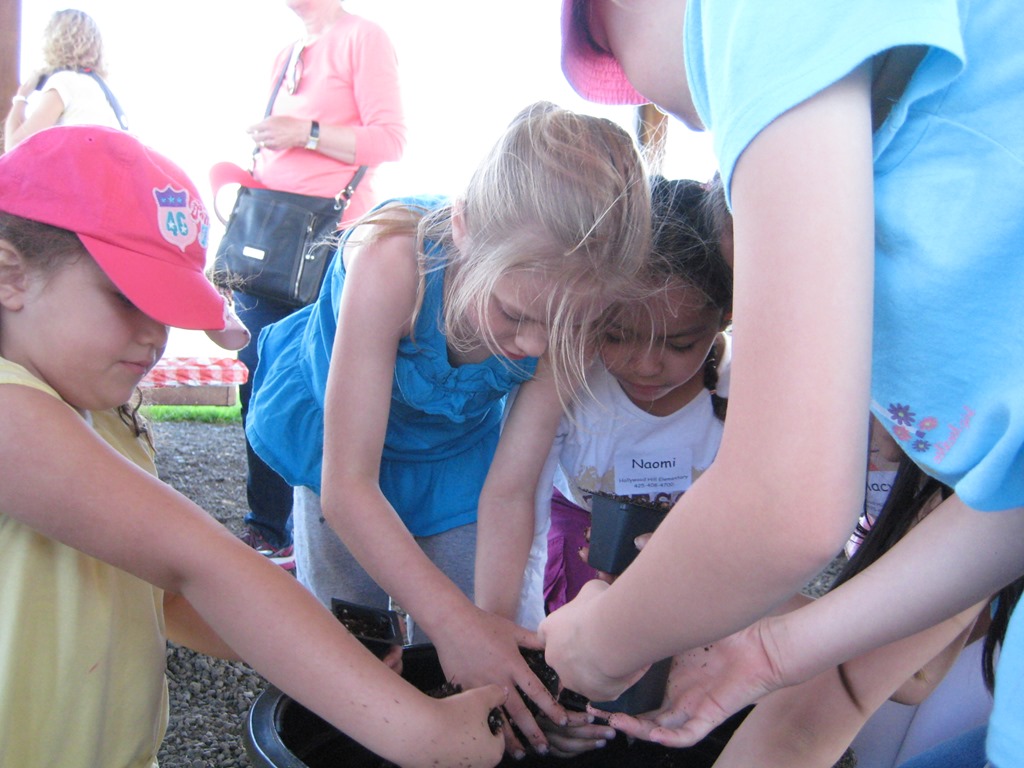
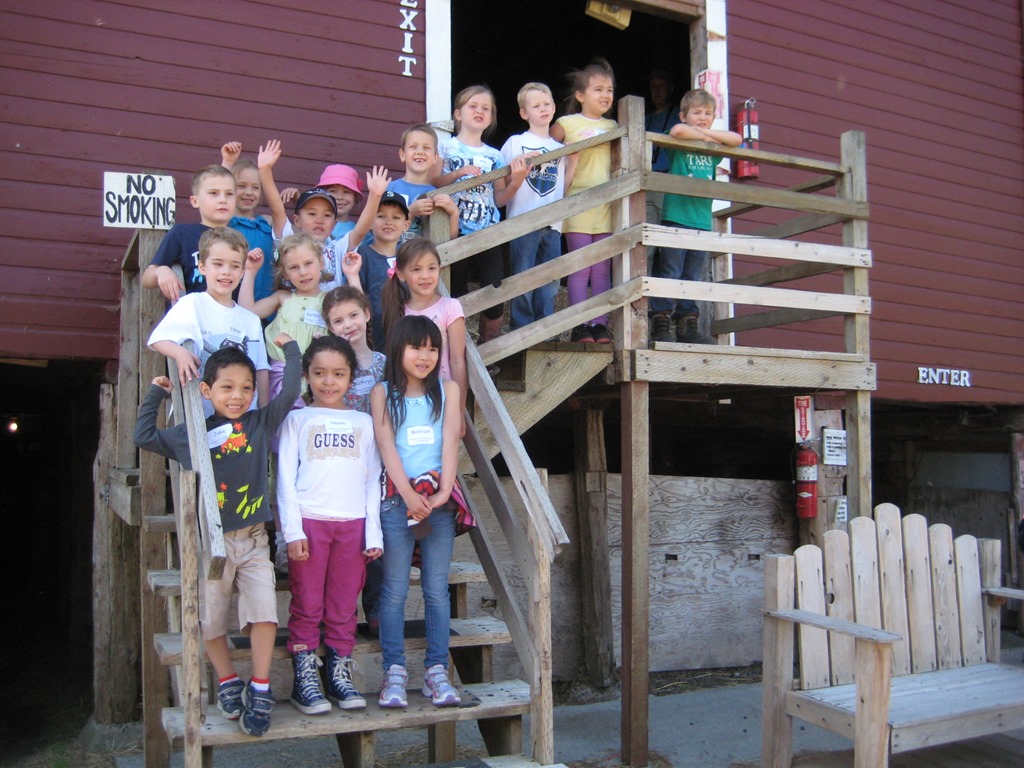
We got to go to a farm for Kyla’s kindergarten field trip!  Like most field trip-friendly farms around here, it’s really a pumpkin/corn maze type of farm, but clearly, they have to do something in the spring, too!

Kyla got to groom a pony.

Farm field trip 043

And plant a marigold.

Farm field trip 060

And, of course, plant a pumpkin seed. (Y’all come back in the fall and find your pumpkin, ya hear?)

Farm field trip 074

It was a pretty cool field trip.  (Not as cool as mama lions killing baby ducklings, but still.)

Farm field trip 023

Drenched!

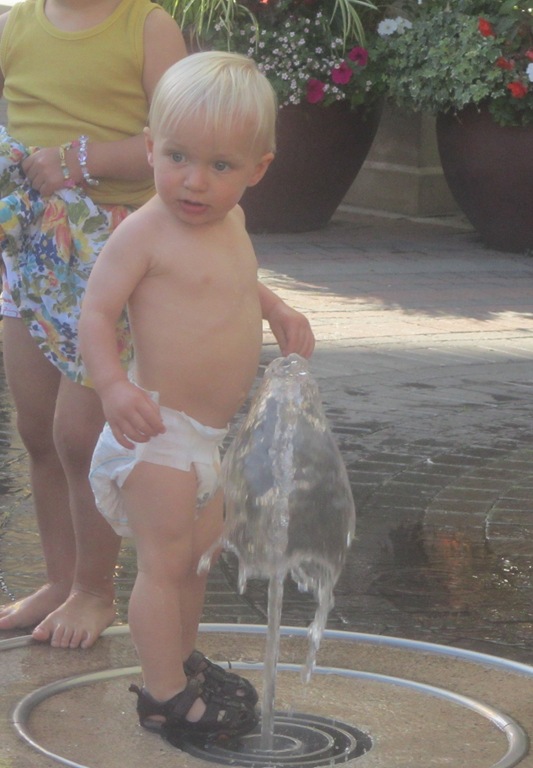
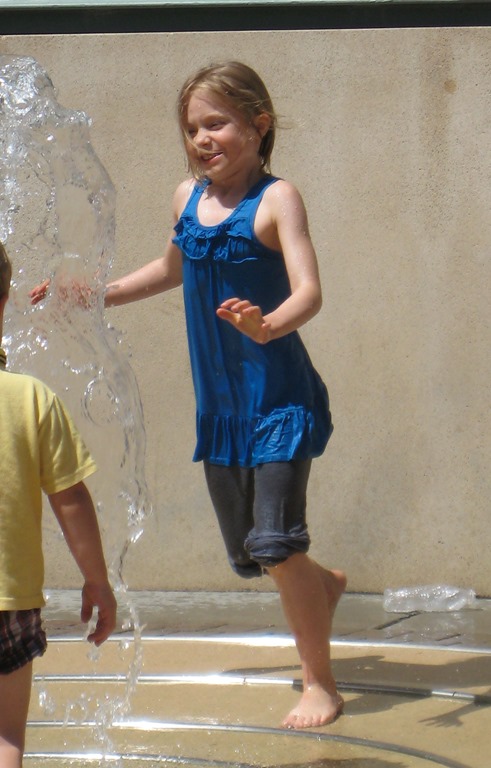
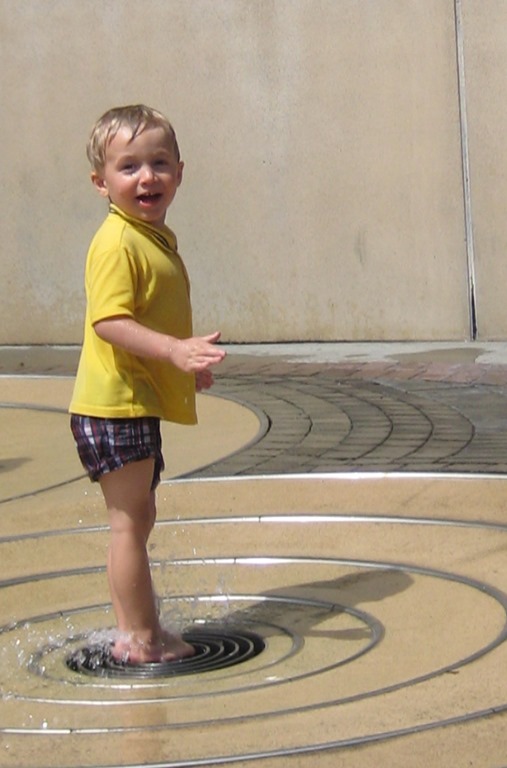
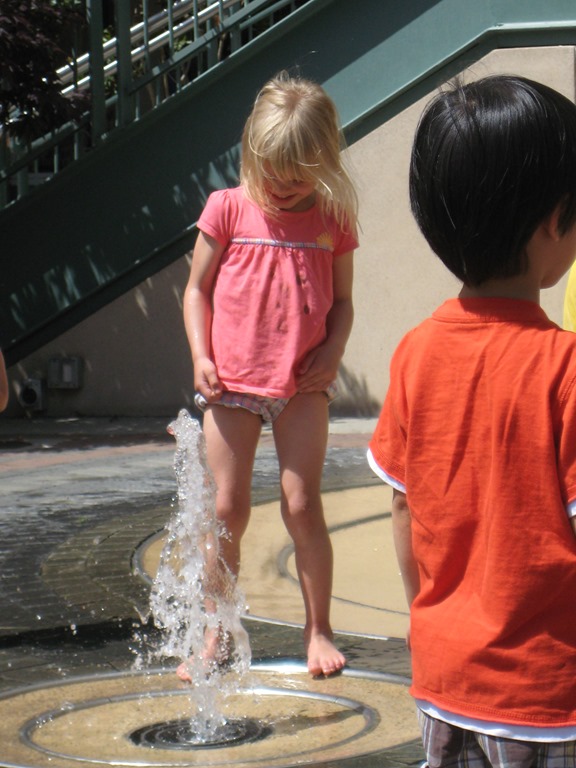
Water has magnetic properties for my children.  We like a nearby town center that has some spray fountains that we have played at irregularly since Kyla could walk. 

This is 5 years ago.

Kyla fountain 2008

Two years ago.

7-28 Wesley Water Fountain 045

7-28 Wesley Water Fountain 053

And today.

152171

159170

154141

Ah, good days in the sun.  Kyla and Wes had to be stripped when we got back to the car so I could wring their clothes out.  Piper played a little, but I had just gotten some books, so she spent most of her time reading to me.  I like how she and Wesley rolled up their shorts so as not to get them as wet.  It’s a fountain, kids!

It May Be Difficult to Recognize….

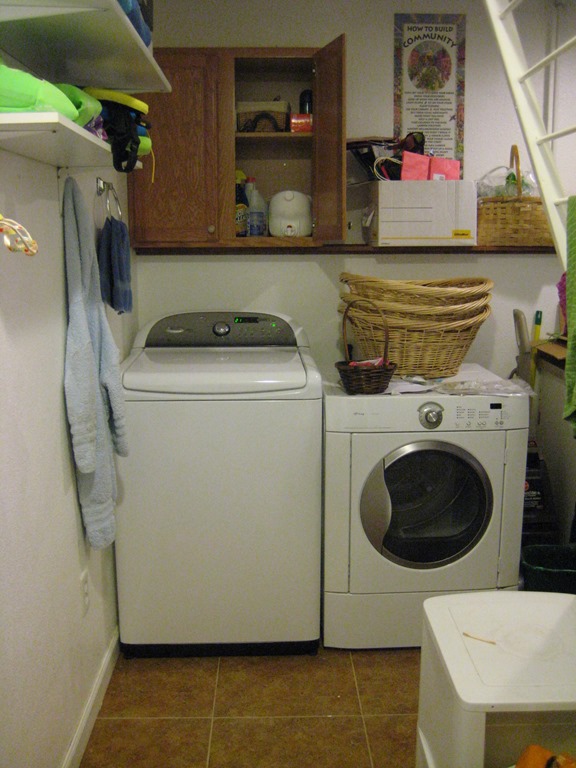
…but this is a picture of a washing machine that is [gasp] washing clothes!

229


Yep, 14 days after I ordered and paid for a new washer (and 4 separate repair visits, countless hours needing to be home during the repair window, innumerable phone calls to various personnel, 2 machines later), I can do laundry in my own laundry room again.  Phew!