Cyprus I: A rebuttal to Wes

[If my reader would like to get an alternative perspective of Cyprus, I invite you to read Wes’s musings on his week of torture. I was amused.]
Cyprus felt like coming home.  This is a little strange, because we’ve never been to Cyprus before, and although English is a prominent second language here, it is no more so than in Dubai, Kenya, Egypt or Jordan.  We’ve been immersed in the Arabic alphabet for a few weeks, and in Cyprus, everything is first written in Greek (which hurts my head, because I think I am just two shots and a sleepless night away from deciphering το ελληνικό αλφάβητο*), then in English.  But Cyprus, in spite of its weird political dispute and unacknowledged Turkish border, is in the EU, and we can navigate Europe.

To prove the point, we rented the car.  And to prove its point, Cyprus drives on the left.  So did we…eventually.

The attraction of Cyprus is that 1) it is a Mediterranean Island, 2) it has the sunniest clime in the area and is where Europeans go to burn to crisp, 3) its long history covers ancient, Greek, and medieval artifacts, and 4) Malta wouldn’t let us in**.  As everywhere else we’ve been so far, the weather this year was highly unusual.  It did break 70 F a few times, but we often found that our beloved puff jackets stayed on much of the time. Kyla dipped into the pool on the hottest day and dipped right back out.  But the unusual weather meant rain and snow well into March, and though we had no precipitation during our visit, the island was green and lush.

Our first full day was pretty low-key, but very cultural: We drove to a grocery store and shopped for the week.  Navigating groceries in another country is always one of my favorite things to do and we’re experienced enough at this point that we accept the fact that each piece of produce must go into a nonreusable plastic bag and be weighed and tagged by the produce manager before we can take it to checkout.  Because this is such an EU tourist destination, the grocery carried, in the least organized way possible, regular groceries for Brits, Francs, Spaniards, and even some Americans.  We were able to find taco seasoning and “minced beef”. 
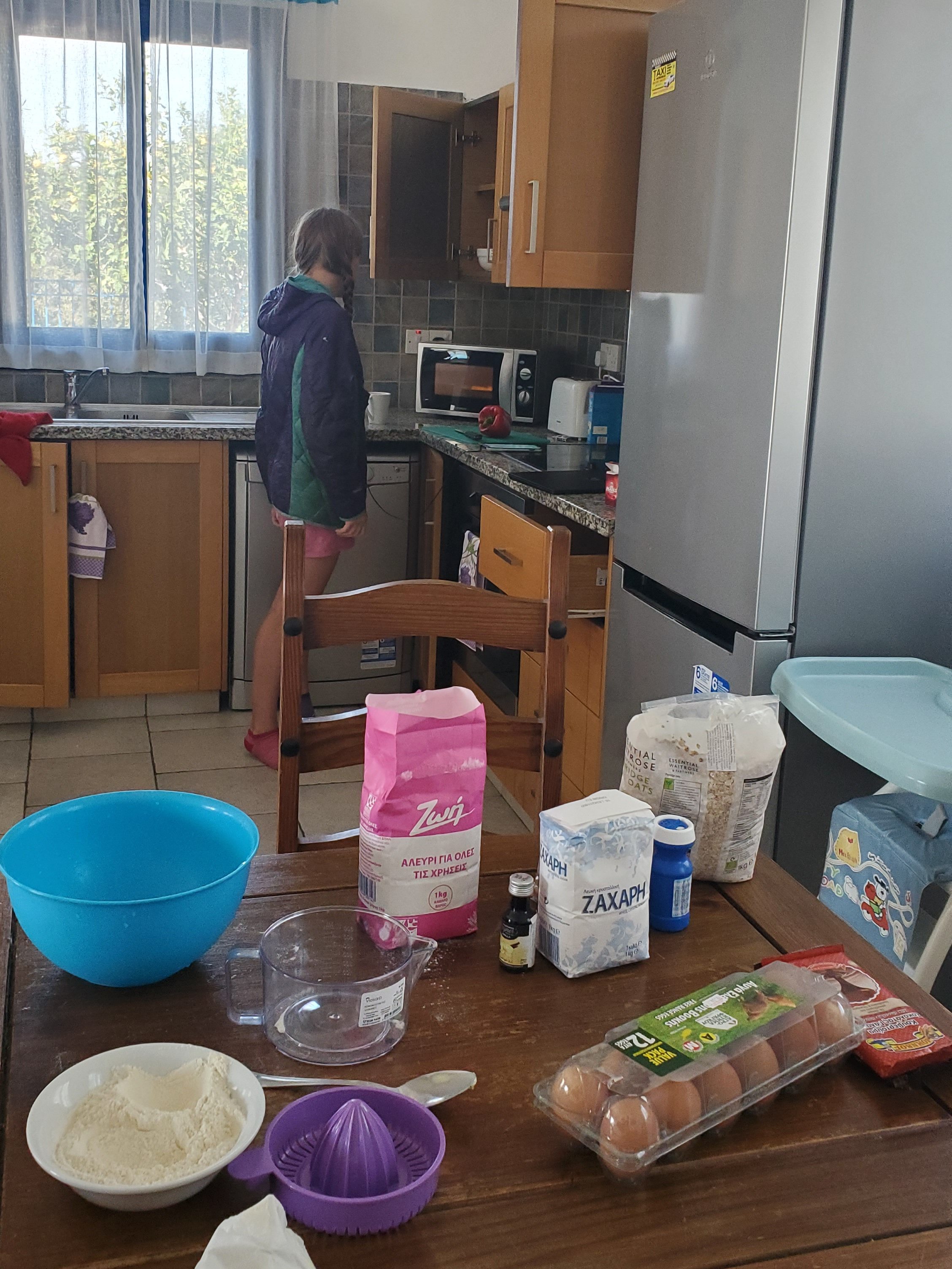
Piper had been yearning to bake as soon as we could get a kitchen so most of Monday was spent getting her ingredients and time.  As good as the grocery store was, we couldn’t find chocolate chips, a clear violation of the food pyramid, so Piper hacked up chocolate bars.  We ate all her cowboy cookies before we made it to the beach, trying to gain back an appetite for dinner.

We asked each kid what they wanted to do that week, and Piper chose zoo (once she had homemade cookies in her system again), Kyla wanted a nature trail, and Wes, well, Wes finally decided he would settle for seeing a movie in a theater. 

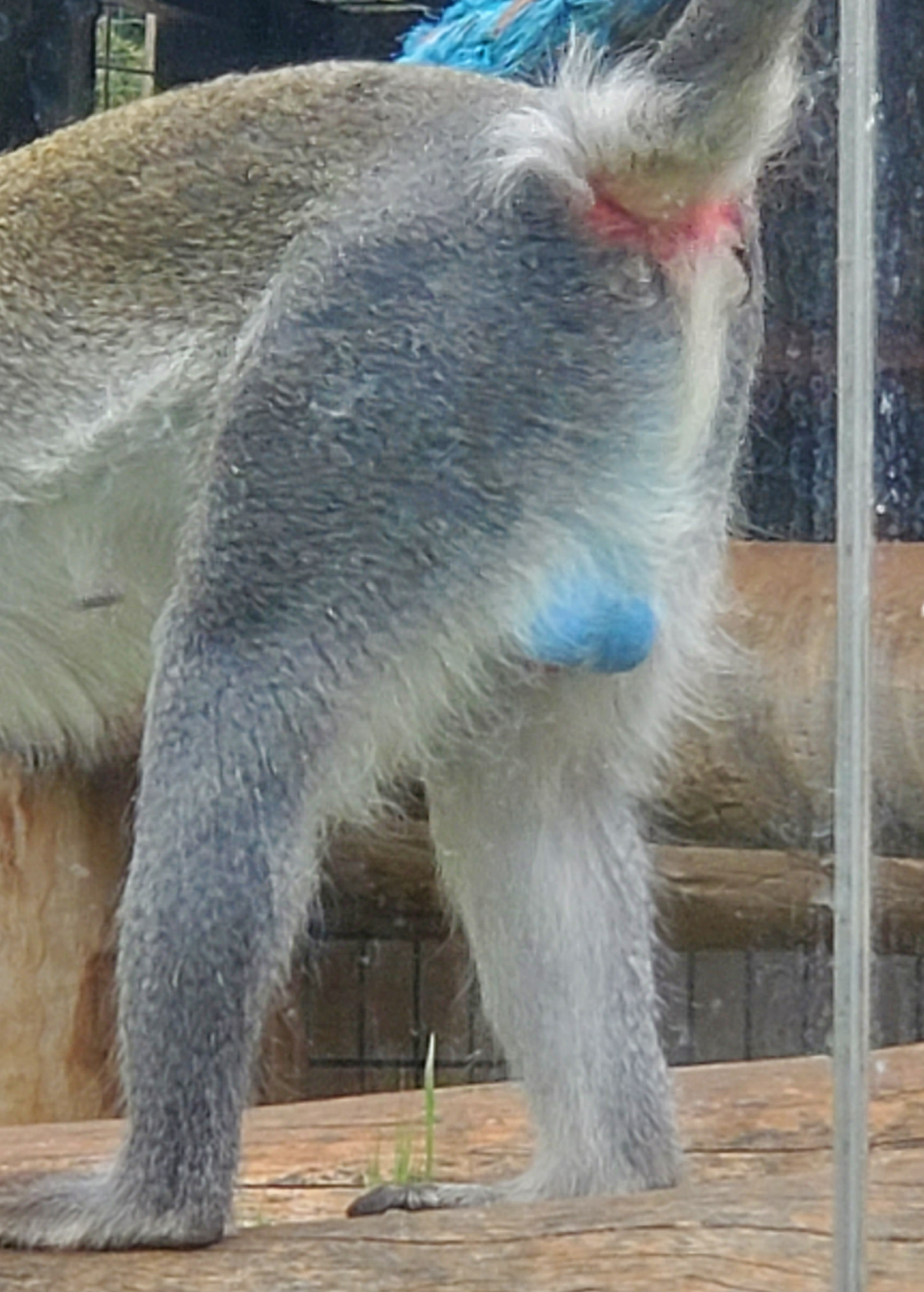
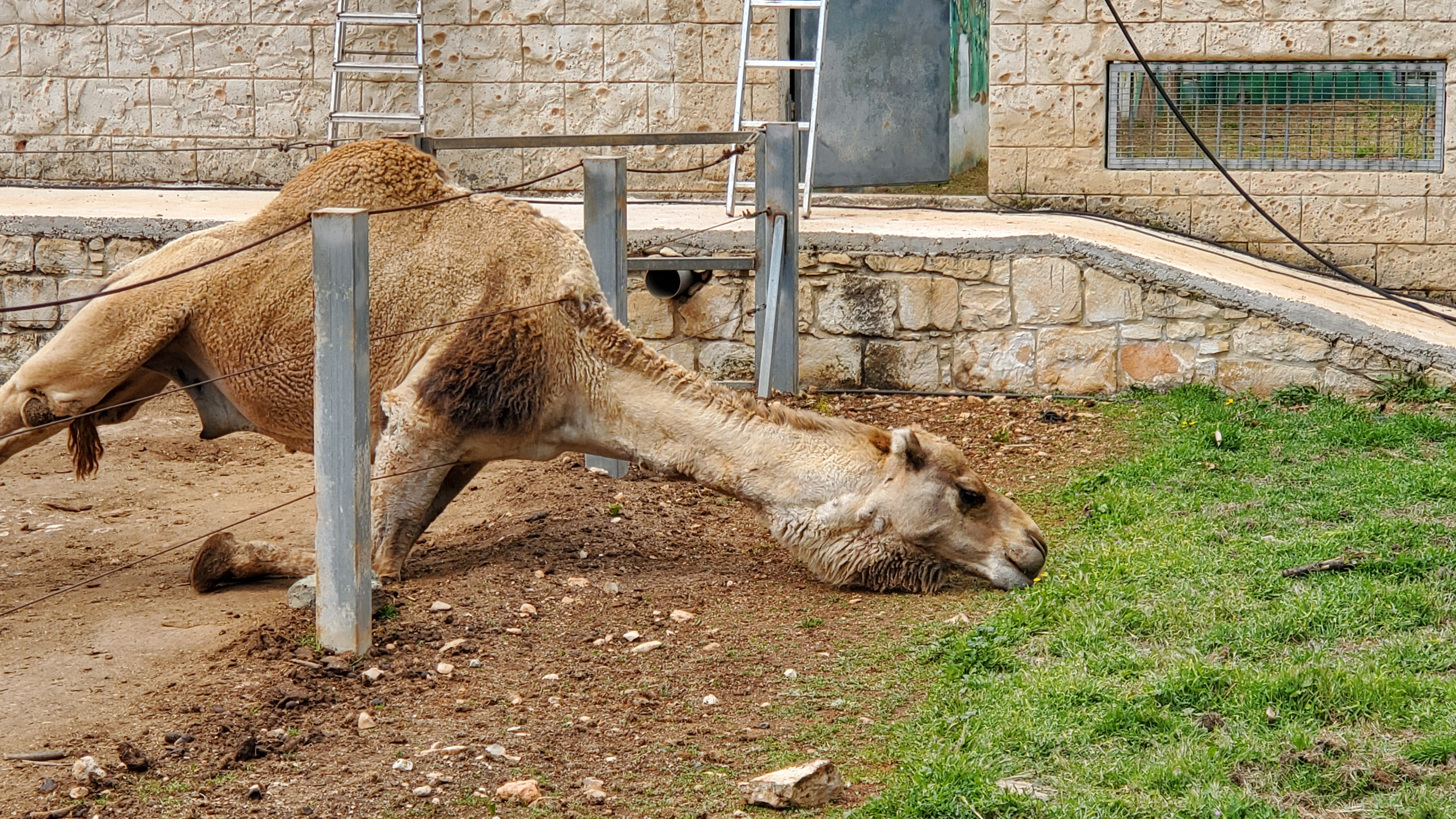
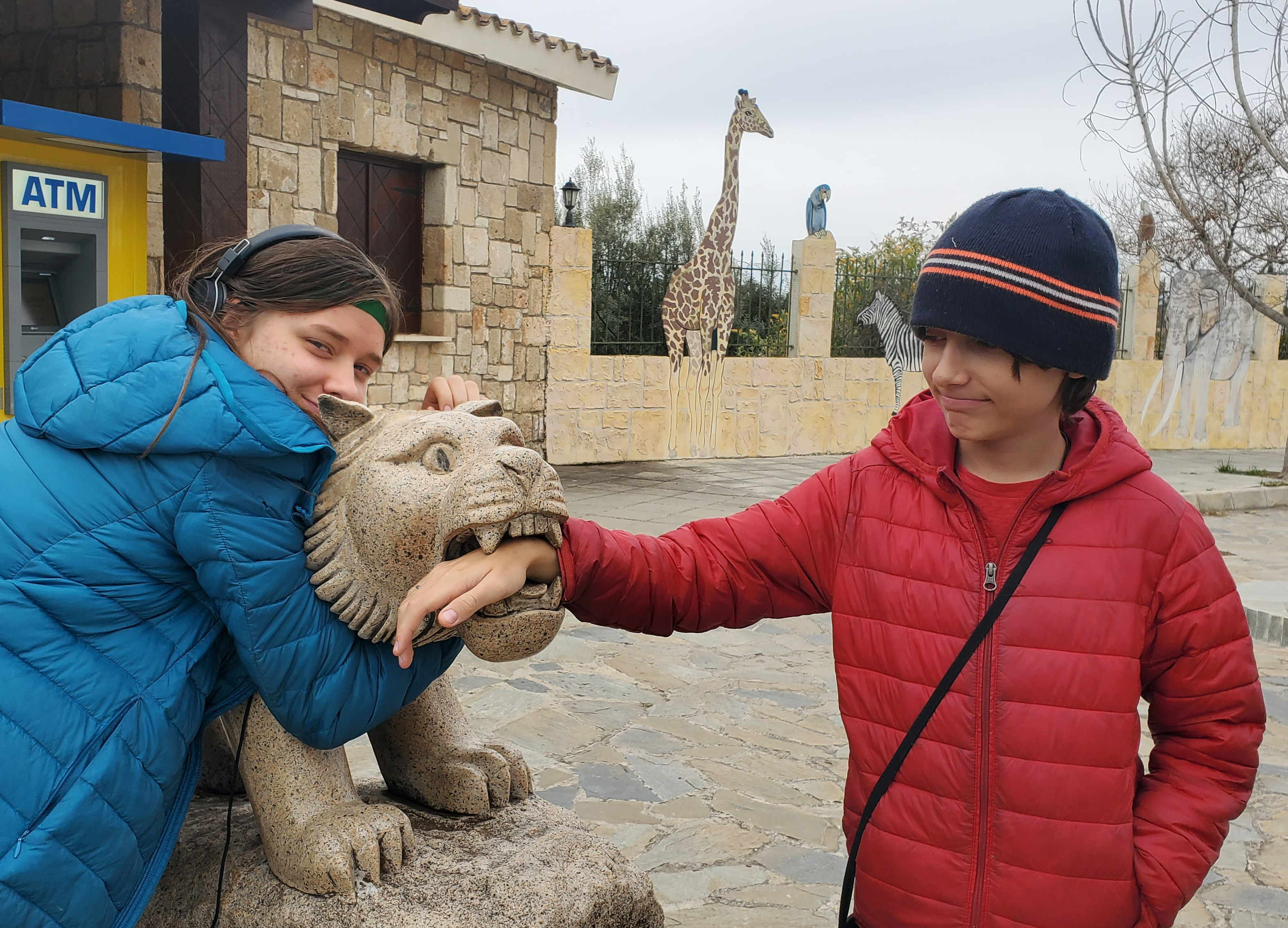
The Paphos Zoo was fantastic. I love amphitheater shows, and this one used all the fun birds to do tricks—macaws, parrots, owls. Piper is a delightful zoo-devotee. After she used up her phone battery, she took another 180 pictures on Wes’s phone, then borrowed mine and shot 150 more pictures.  I will not subject you to them, but we did get to see a few of the animals we had seen in Kenya, albino wallabies, and a few marmosets that would have been snuck into Piper’s suitcase had we been able to manage the heist. I will agree with Wes on one point: the food at the zoo, from hamburger to hotdog to pasta, may have been the worst I’ve ever had, and that includes my own cooking. 
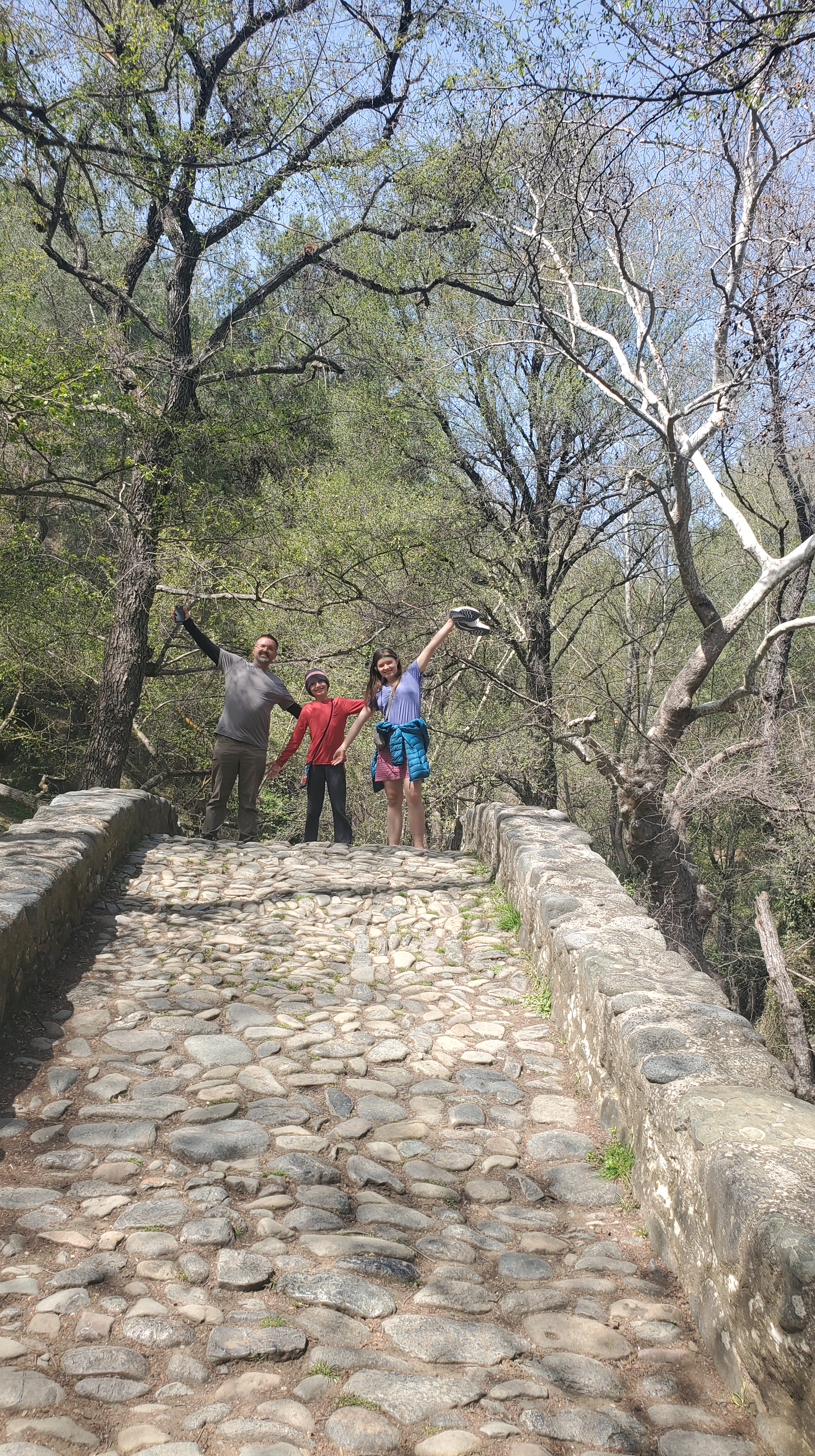
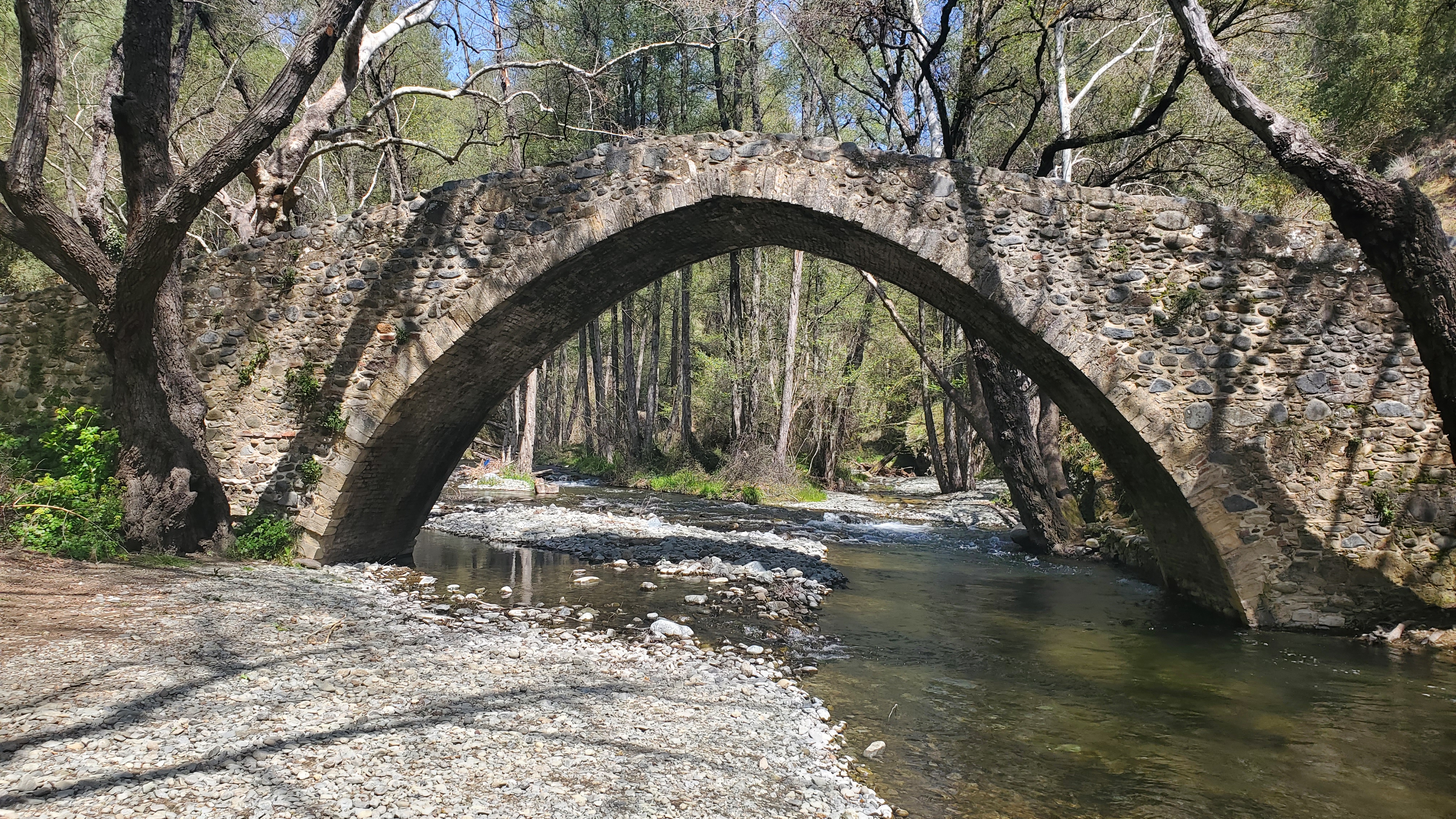
Today, I was too late to get us the mountain tour I wanted, but then I realized I had their itinerary and our own car. It was the perfect day (or as Wes likes to put it, the Worst Day of My Life), where we started by driving into the mountains and explored an old bridge. The girls and I did a short hike with lots of cute lizards.

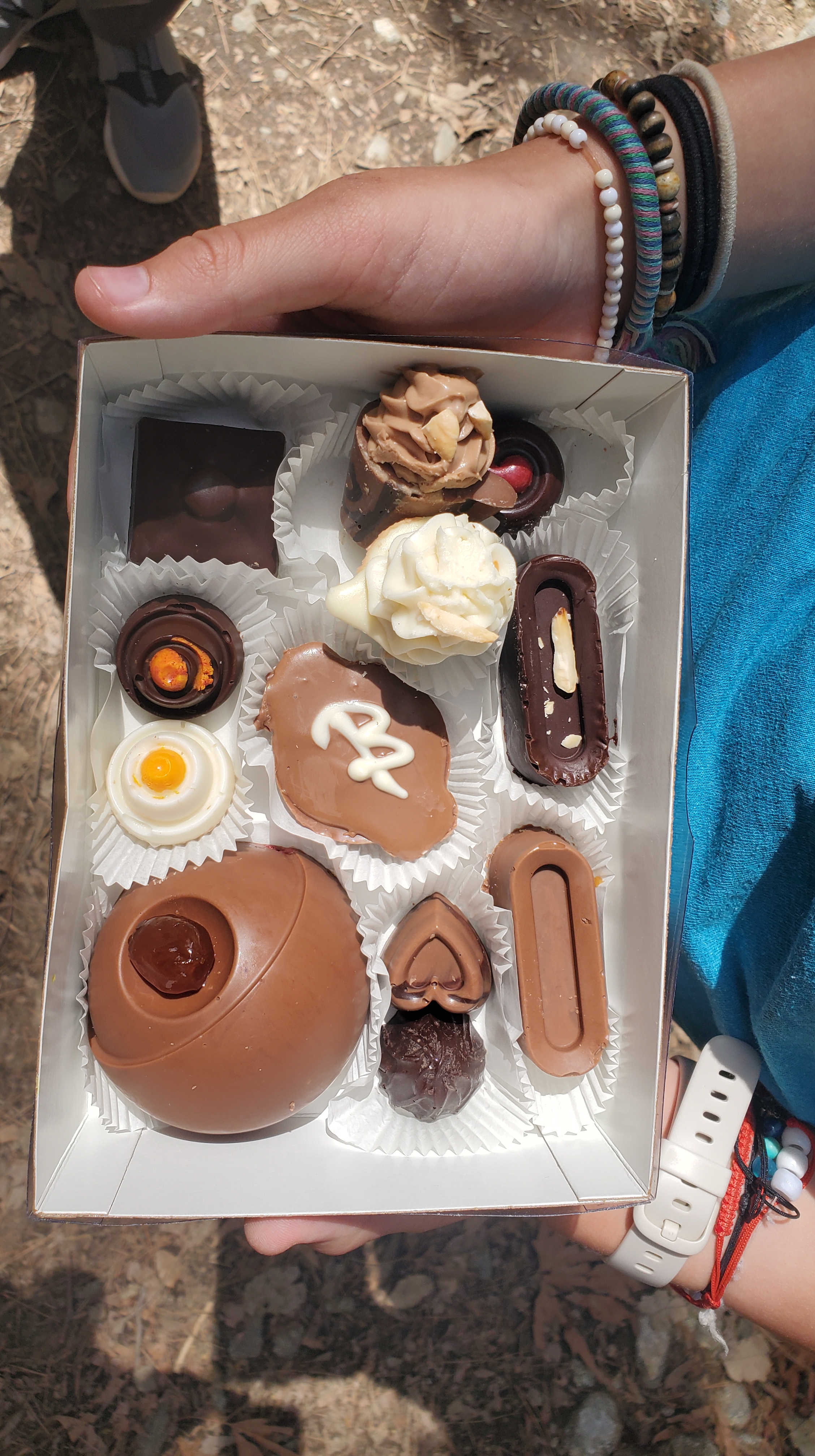
We hiked out to a beautiful waterfall and ate just-purchased handmade chocolates and PB&J***.
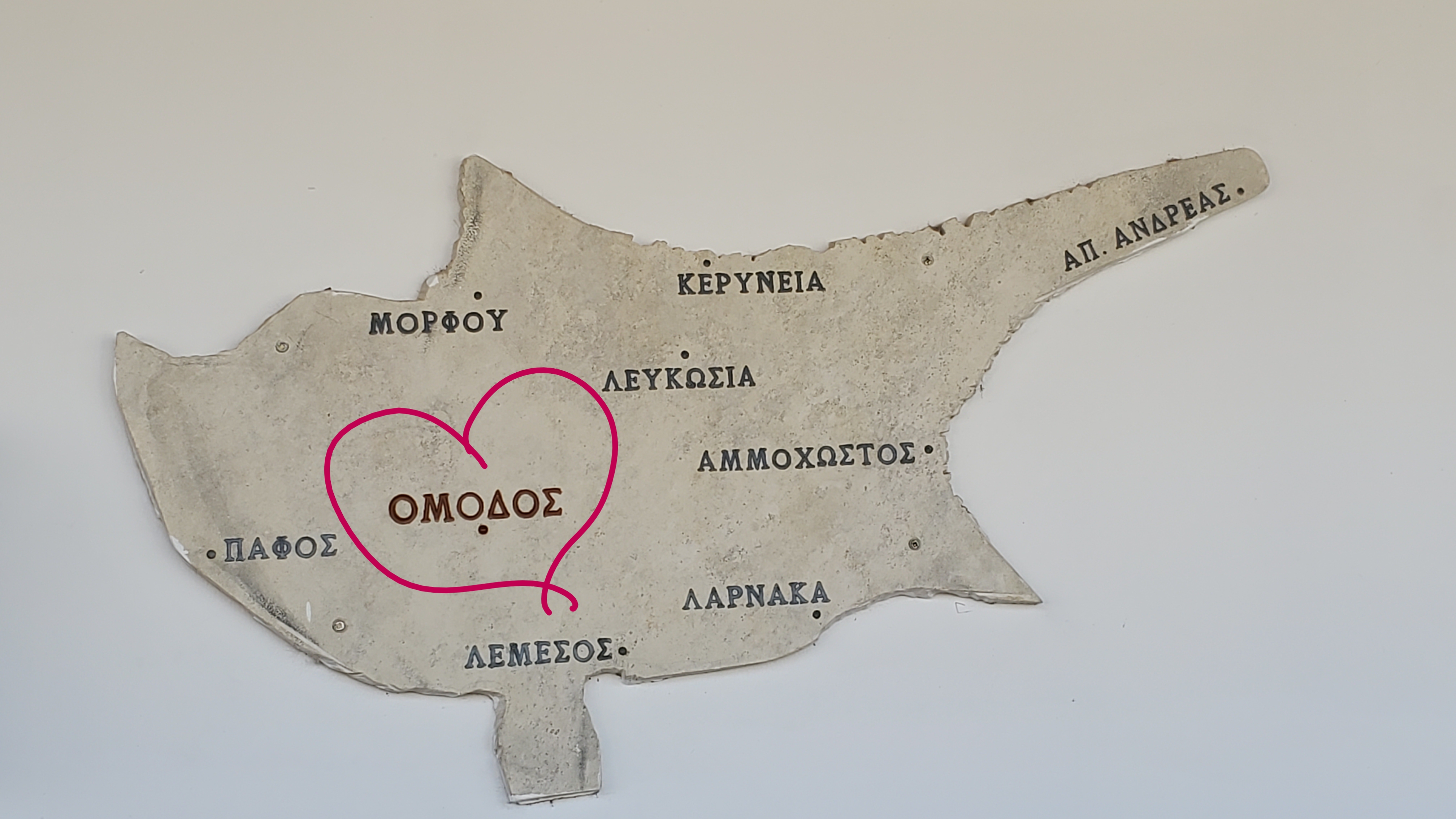
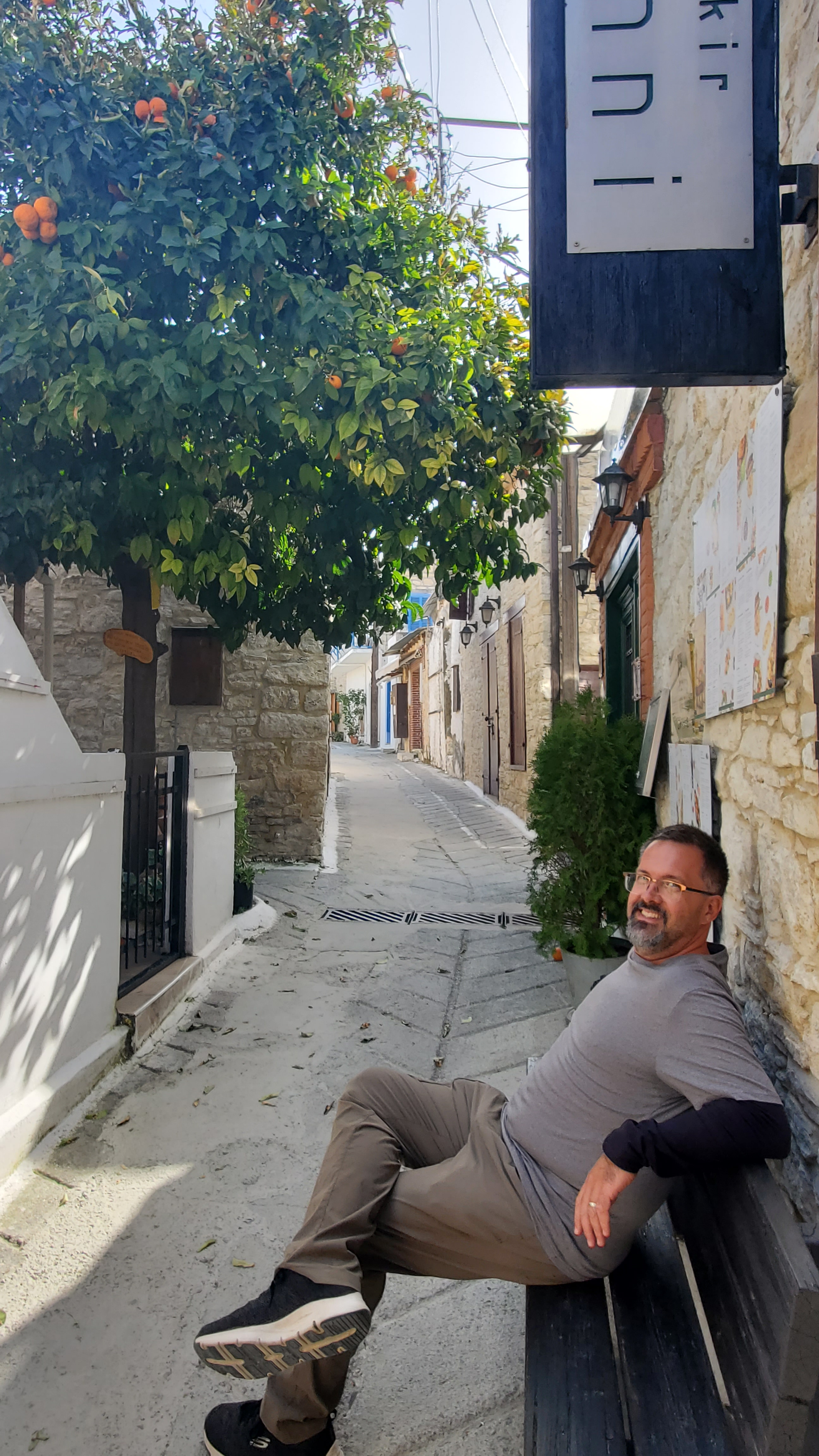
Then we stumbled across the cutest village that satisfied the kids’ ice cream cravings and my I-must-walk-all-these-adorable-medieval-alleys-and-monasteries fix. A note: Cyprus has a few small cities, and a couple of generous towns, and over 3,000 villages.  Most are not quite as charming as Omodos.
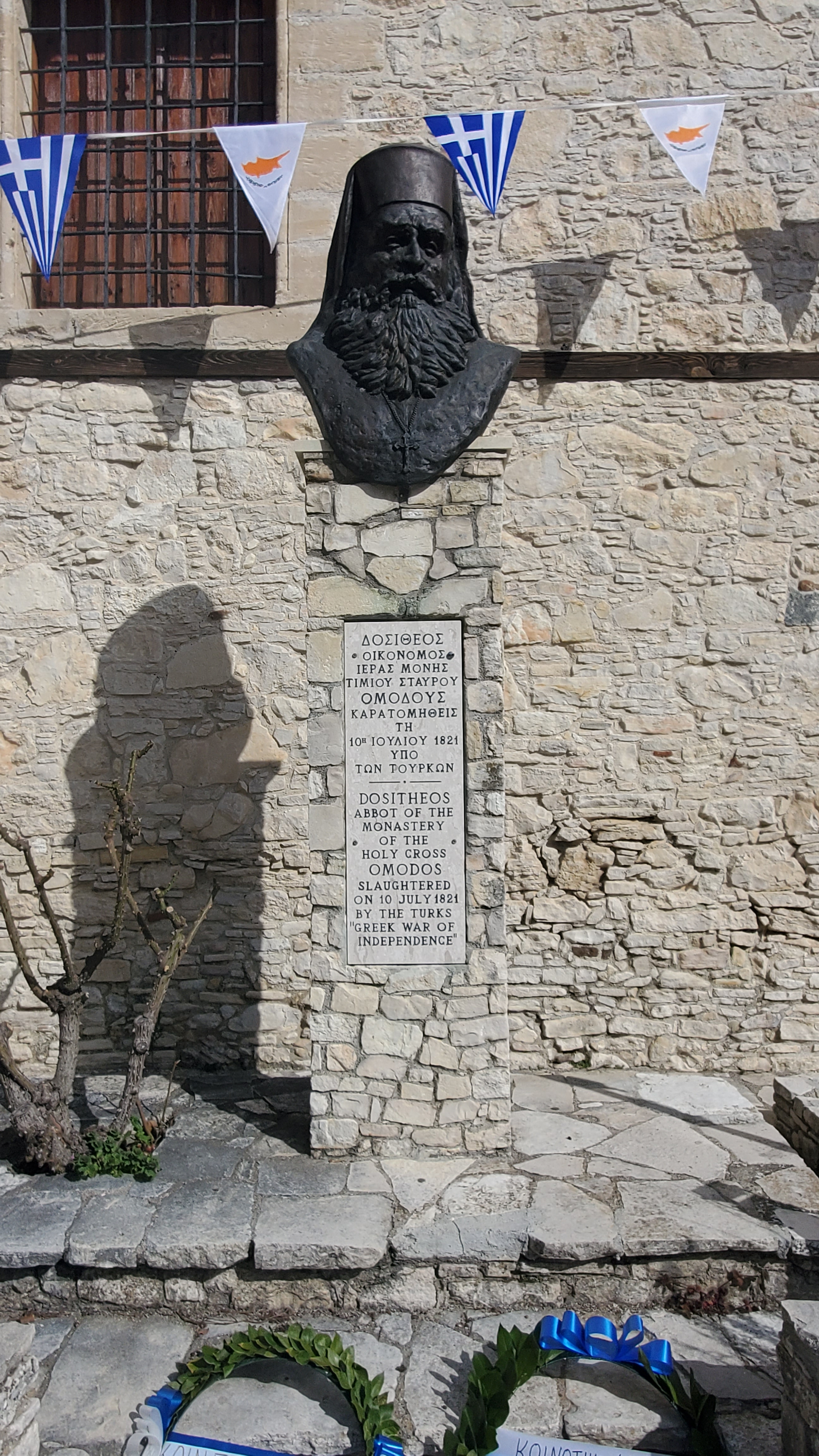
From Cute Village, we did make it back to Paphos in time for Dwayne and the youngers to catch a showing of Turning Red while Kyla and I enjoyed the mall and coffee shop wifi.

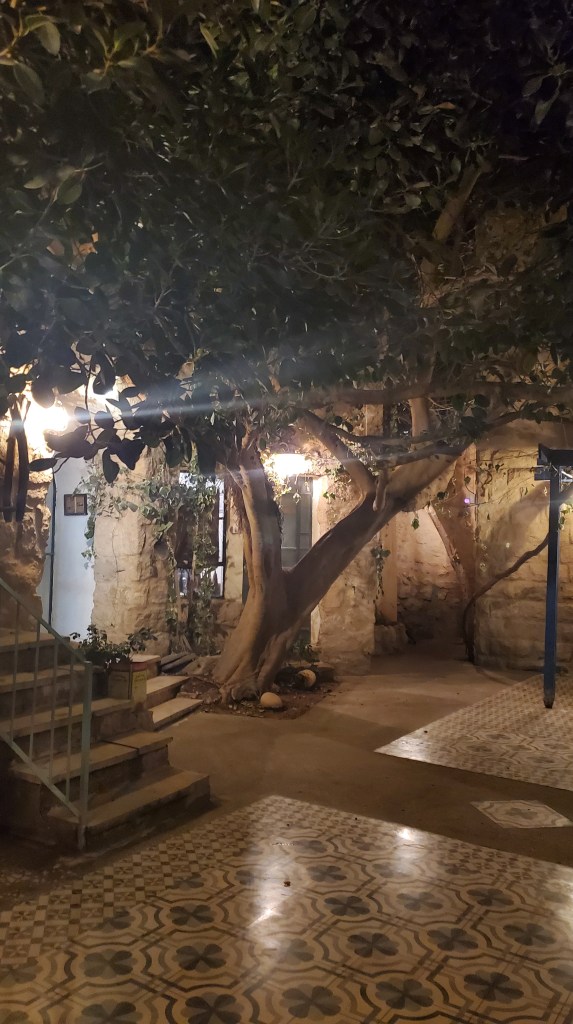
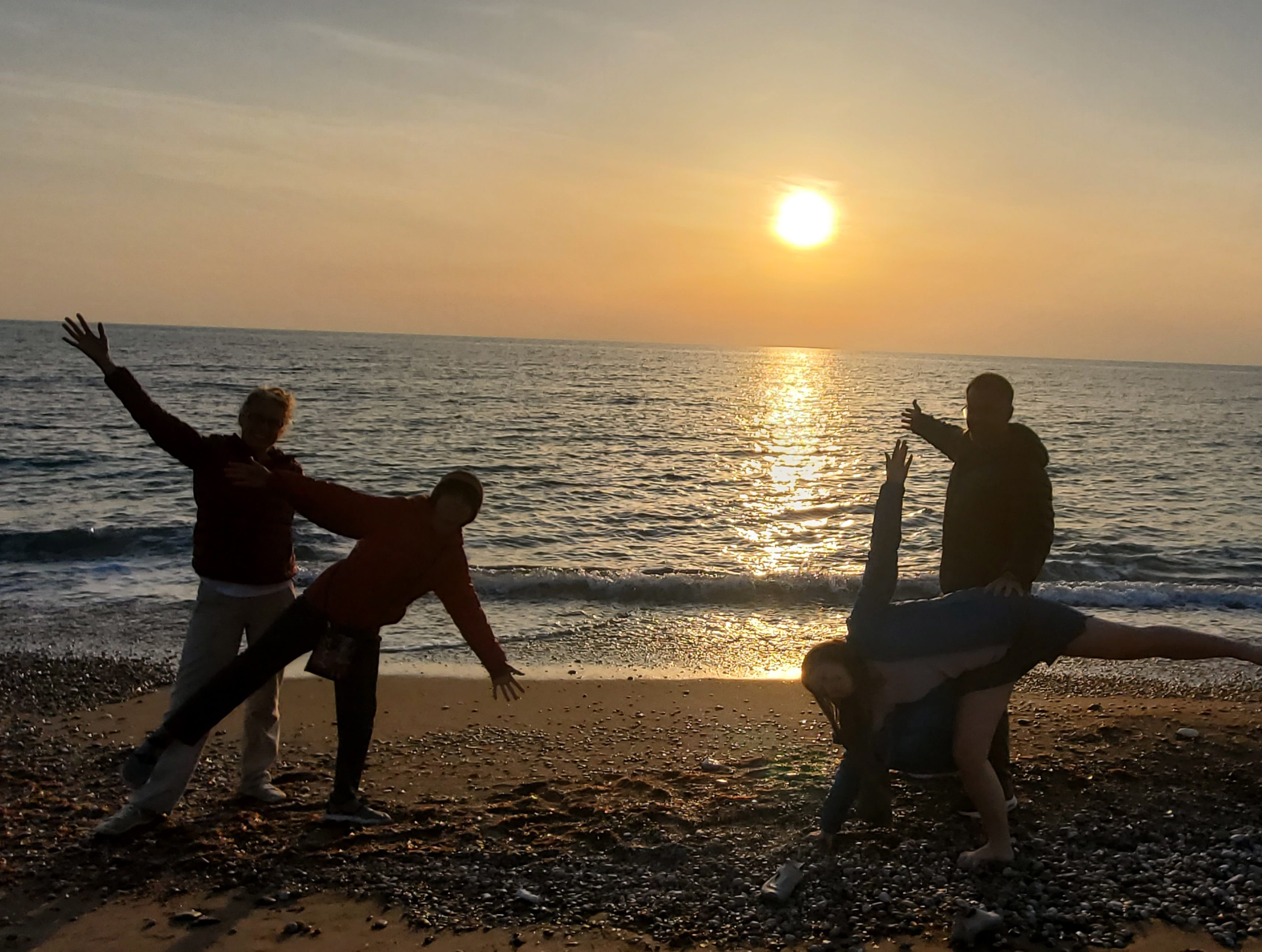
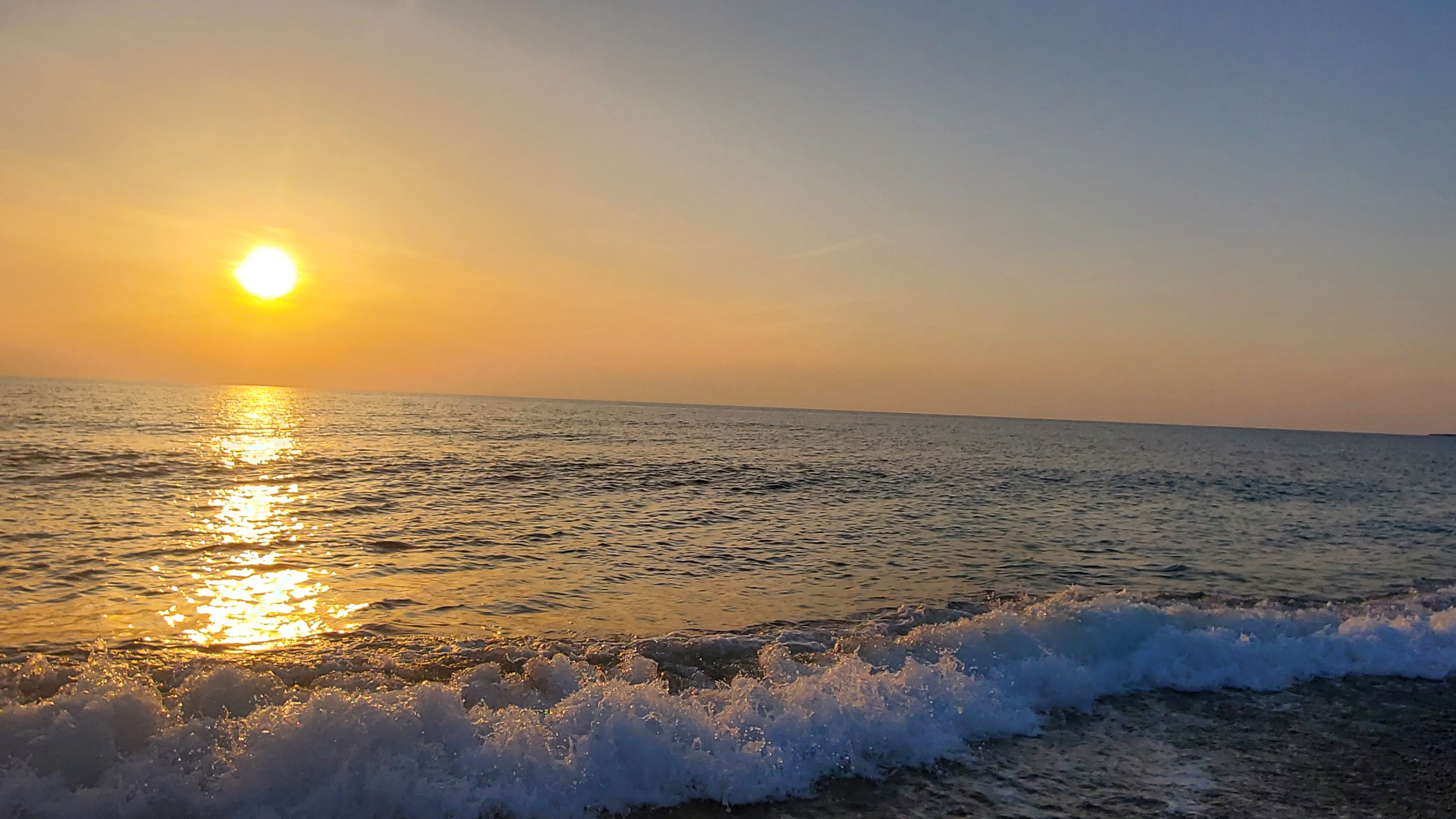
From squeezing fresh OJ from the villa orange trees to pink sunsets on not-yet-warm beaches, Cyprus has hit the right notes for a rejuvenating sort of adventure. More exploring tomorrow.


*Literally, “the Greek alphabet,” written in Greek.

** Malta wouldn’t allow travelers who had visited Egypt in the last 15 days, for Covid reasons.  This is odd, because we didn’t need negative Covid tests to enter Jordan, and we had to prove vaccination status for every country we’ve been to so far.  But Egypt was on their “cooties” list.   

*** We even scraped enough creamy PB for Wes to have his preferred sandwich while the rest of us ate crunchy.  Did he appreciate this small gesture?  If you need me to answer this, you haven’t been paying attention. My poor son. I do need to be kinder, but while we were picnicking, he said, and I quote, “I don’t like anything.” Which I immediately decided needed to be translated into Latin and adopted as his personal motto.  So, ta-da, I give you non amo aliquid.

Finishing Jordan: The Ruins & Leftovers

After leaving the Dead Sea, we drove to Madaba (MAUD-dah-bah, fun to say aloud) for our last nights in Jordan.  It is a jumping-off point for a few more sites of antiquity.

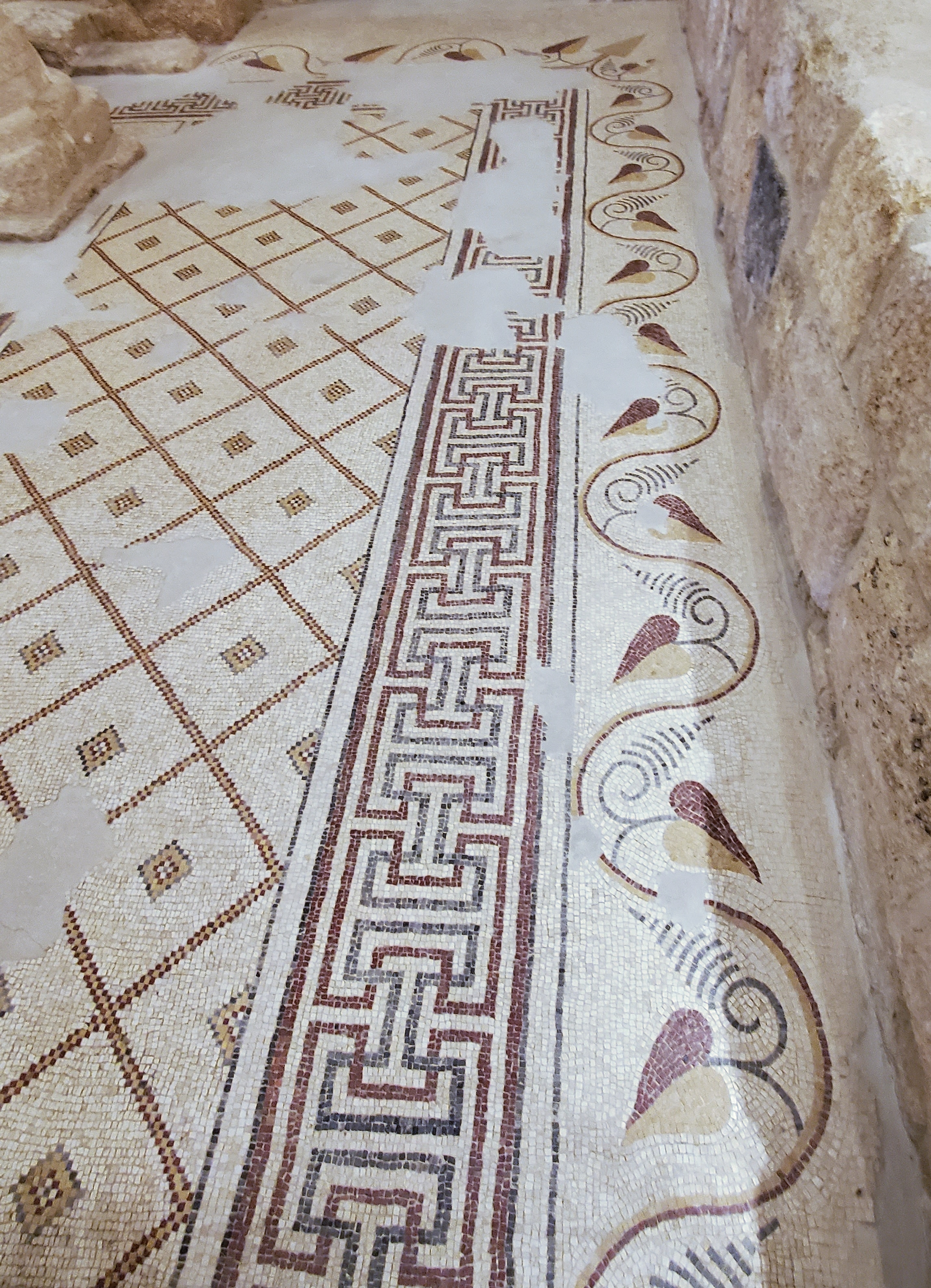
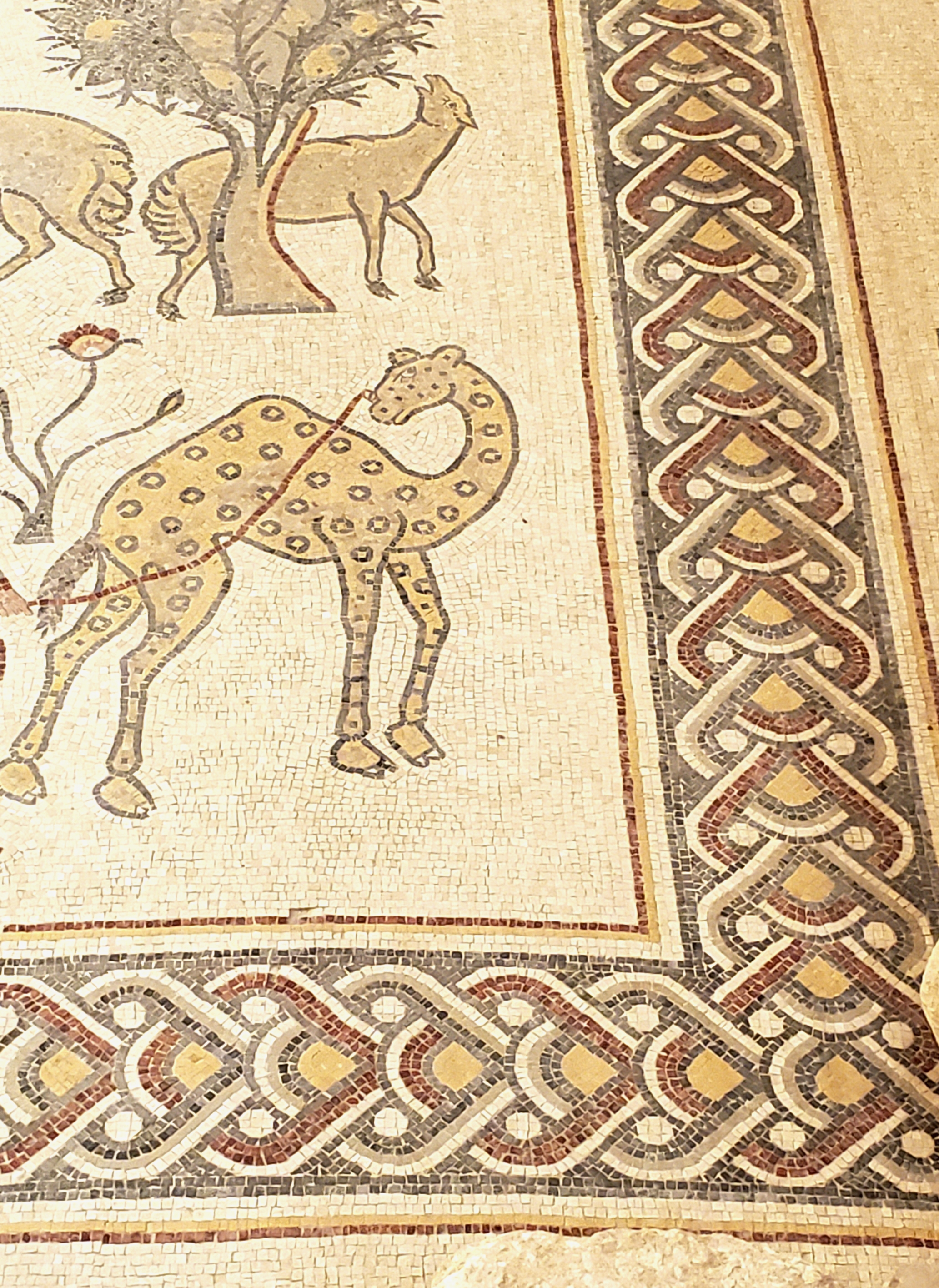
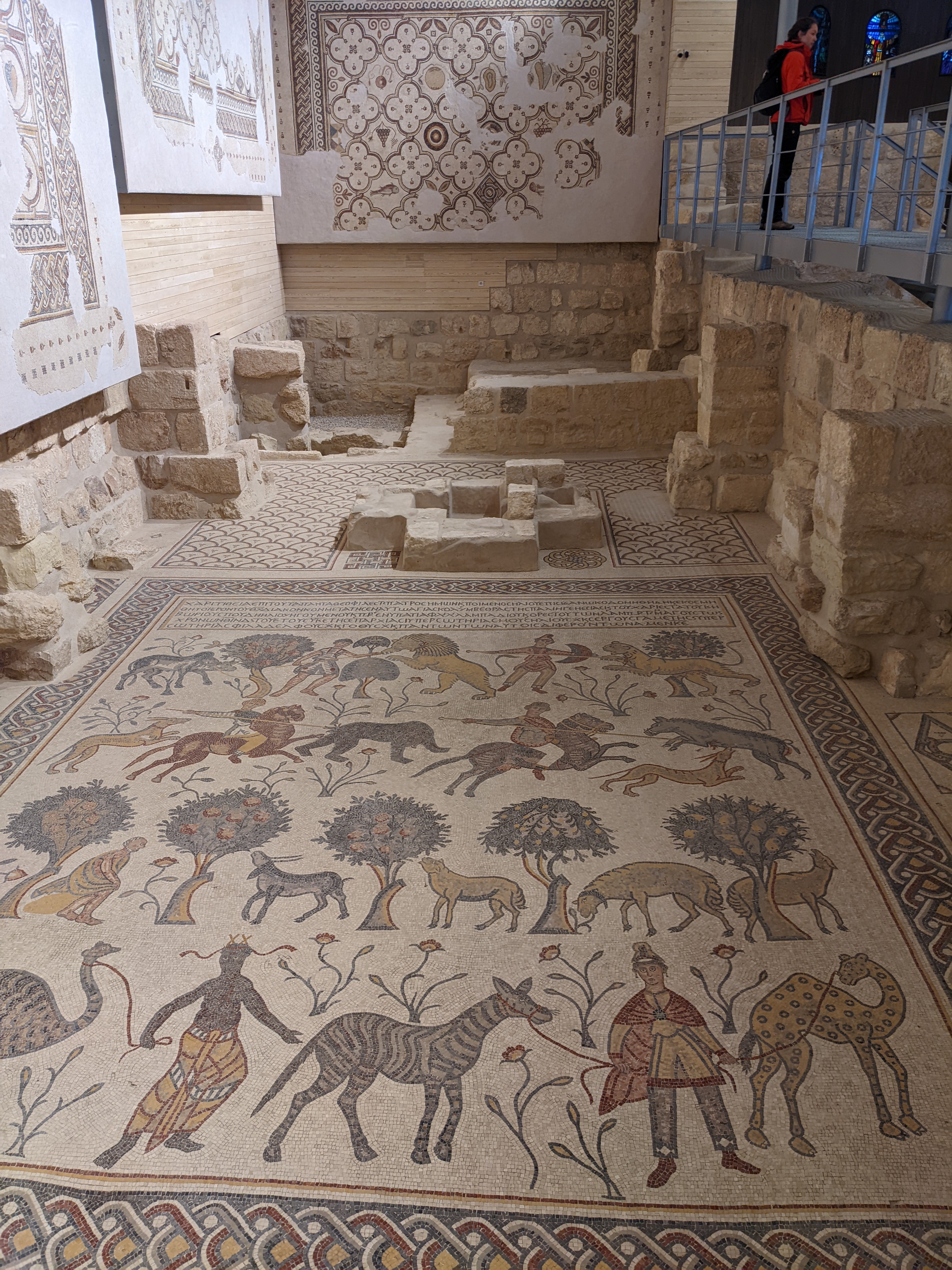
Mount Nebo is the site where Moses was allowed to look out and see the Promised Land after wandering for 40 years. (He should have demanded an upgrade.  Costa Rica, Whidbey Island, even California —all much better places to live, if one enjoys non-dead oceans and abundance.) He also might (not) be buried here. What Mt Nebo is also known for, though, is the mosaics in the church. Actually, this was one of the highlights of what was going to be the Ancient Mosaic Hall of Fame.  We had seen some in an ancient church in Petra, and Dwayne is already scheming how to incorporate a mosaic into his future chateau.

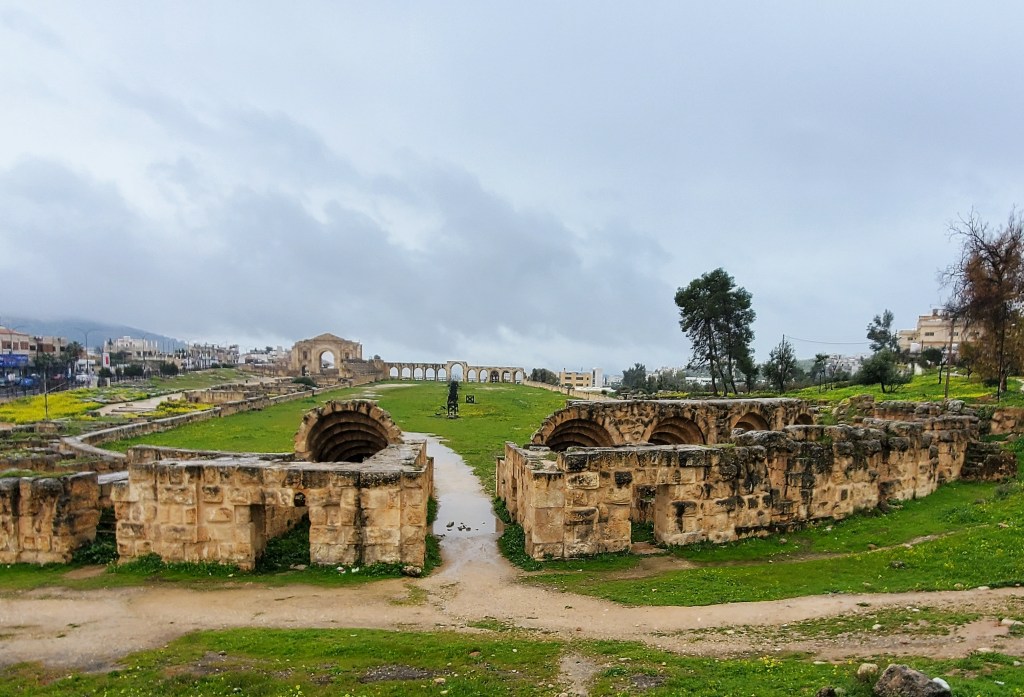
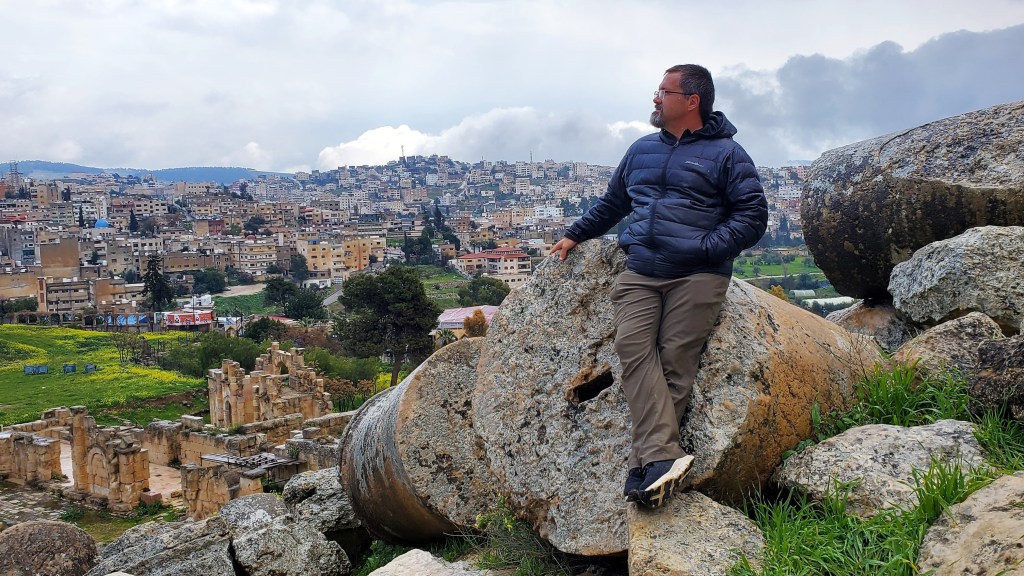
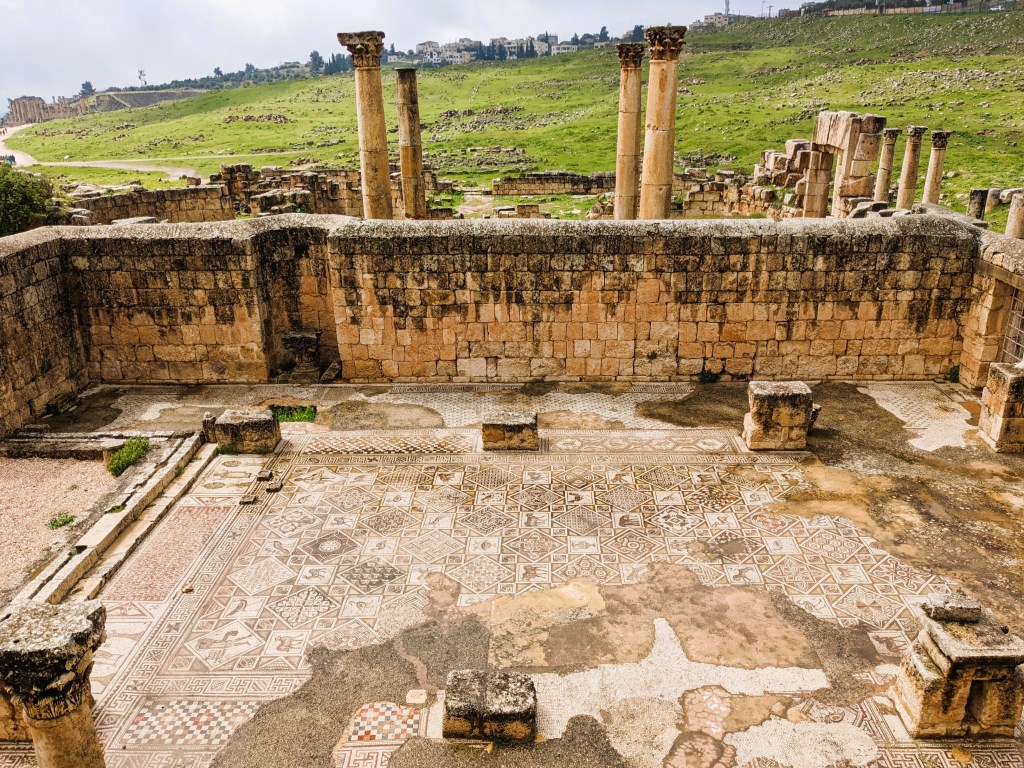
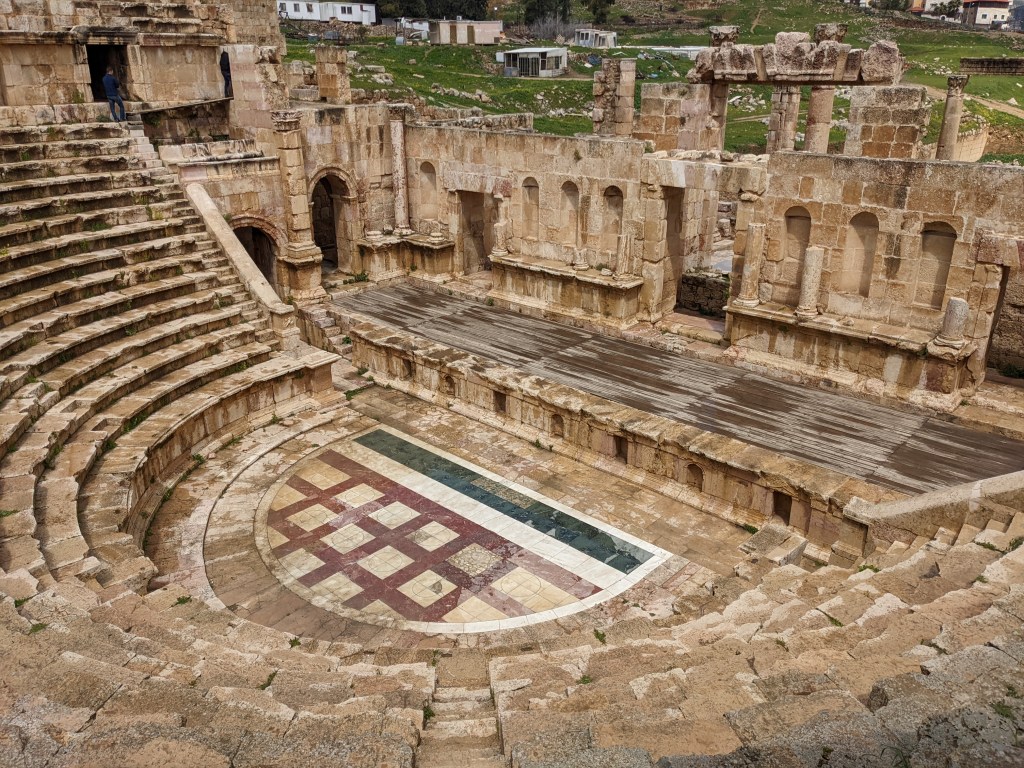
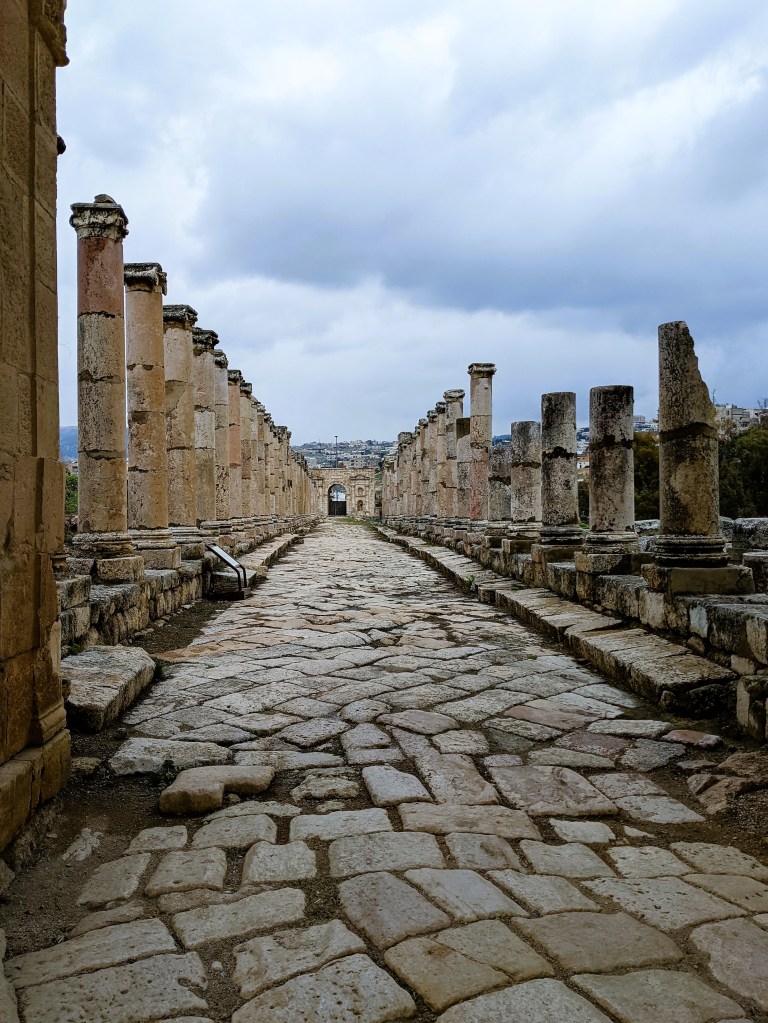
Jerash has some of “the best-preserved Greco-Roman ruins around”. If I hadn’t woken up with the worst cold in memory, and if it hadn’t been raining, and if my summer shoes hadn’t gotten irreparably soaked as soon as we walked through the gate…this would have been an enjoyable exploration.  An intact main gate, two wonderful theaters, a colonnade, churches, more mosaics, even an original butcher stone from the marketplace—if I had had warm feet and a clear head, this probably would have been a highlight. I might have even bought a toga and reenacted my former life as a goddess. 

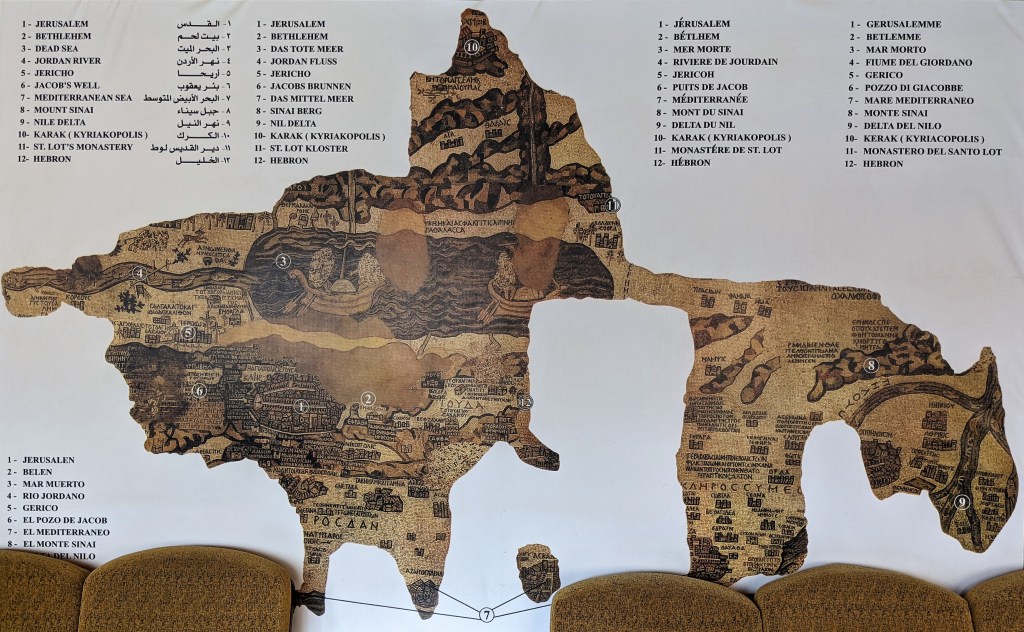
But I did not have warm feet and a clear head, so by the time we returned to Madaba and visited St. George’s Church, I was not inclined to be inspired by the sixth-century mosaic map of Jerusalem and the Holy Lands that everyone has heard of but me.  The replicas of the map in the visitor center were much more impressive than the original on the church floor; even non-sick, non-wet Dwayne thought so.  But we came, we saw, we nodded seriously and soberly, and I bought new shoes and went back to bed.

This is a replica, of course. The original was quite faded and not so lovely.

We stayed another day beyond the tour’s end to accommodate our cheap flight’s schedule to Cyprus. I think we really just spent time eating. On our last official night, our guide arranged for us to have denise fish (also spelled danis on at least one billboard) because eating denise sounded necessary. We over-ordered, as the youngers were not eating fish voluntarily, no matter what it was called.

They were a little more receptive to the donuts the next day, even if they came with the price tag of a walk around town.

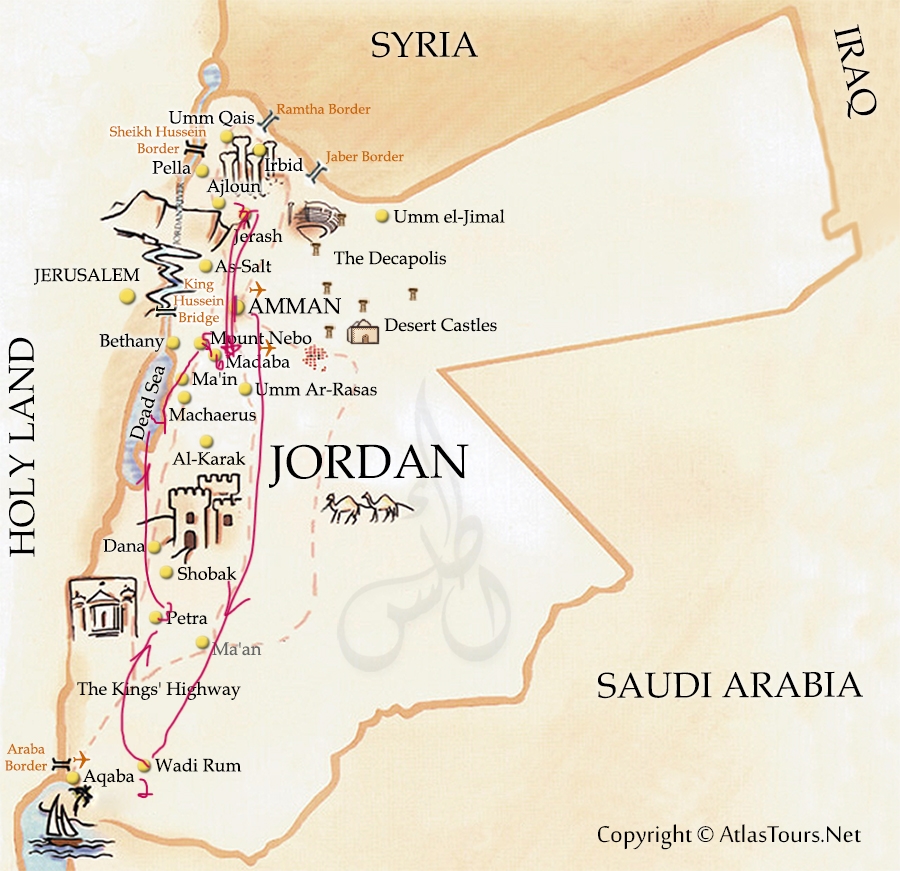
A few more rememberances of Jordan, starting with a map of where we explored.

I have struggled to get herbal tea in our last three countries, and usually had to choke down some awful caffenated Lipton whenever I ordered tea. I was excited to find mint tea on a menu in a beautiful restaurant. However, they just put fresh mint leaves…in Lipton tea.

Goodbye, Jordan! I’m not sure I’ll ever be back, but you showed me many wonderful things.

Living Life: Getting Haircuts in Jordan

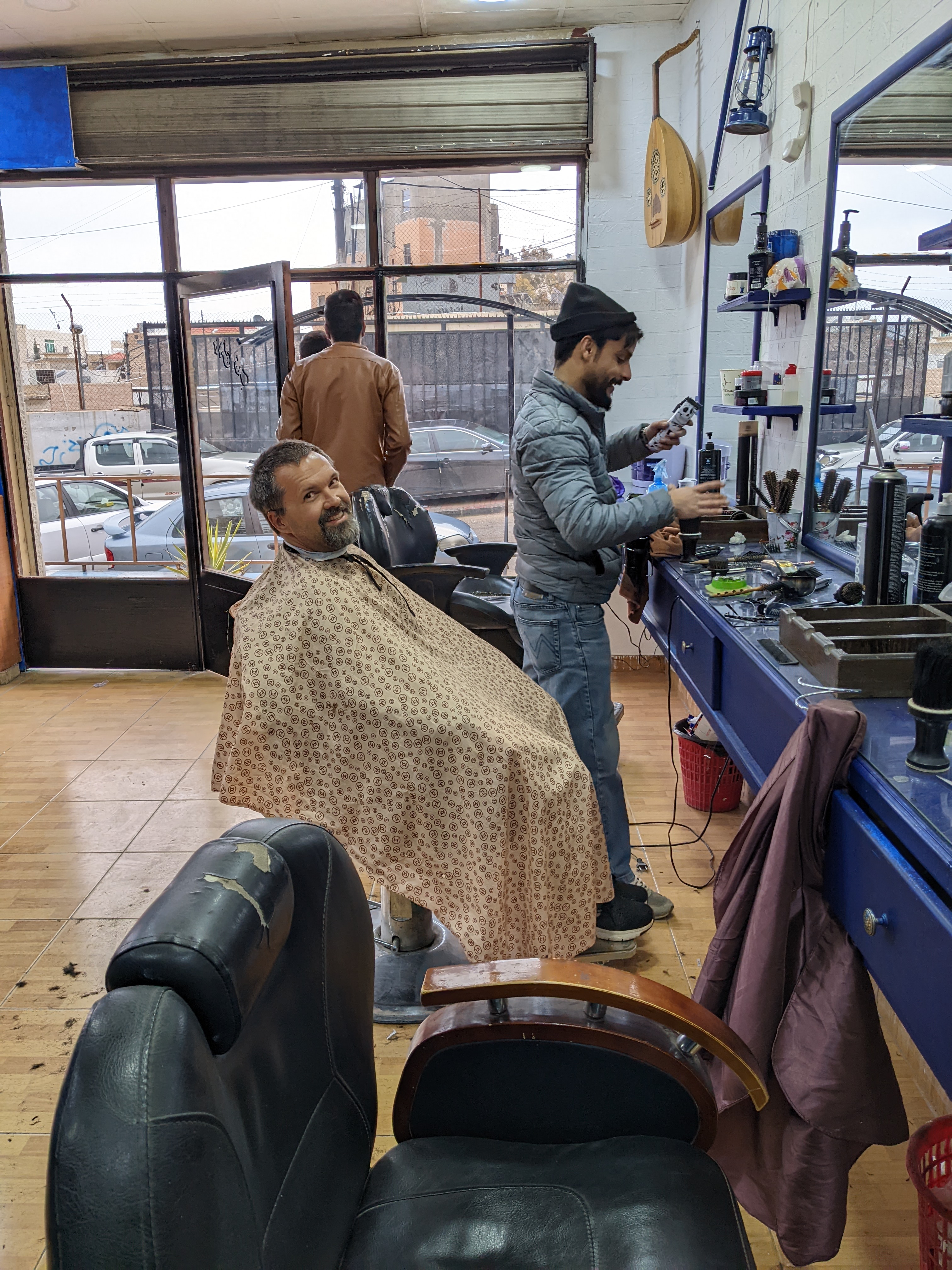
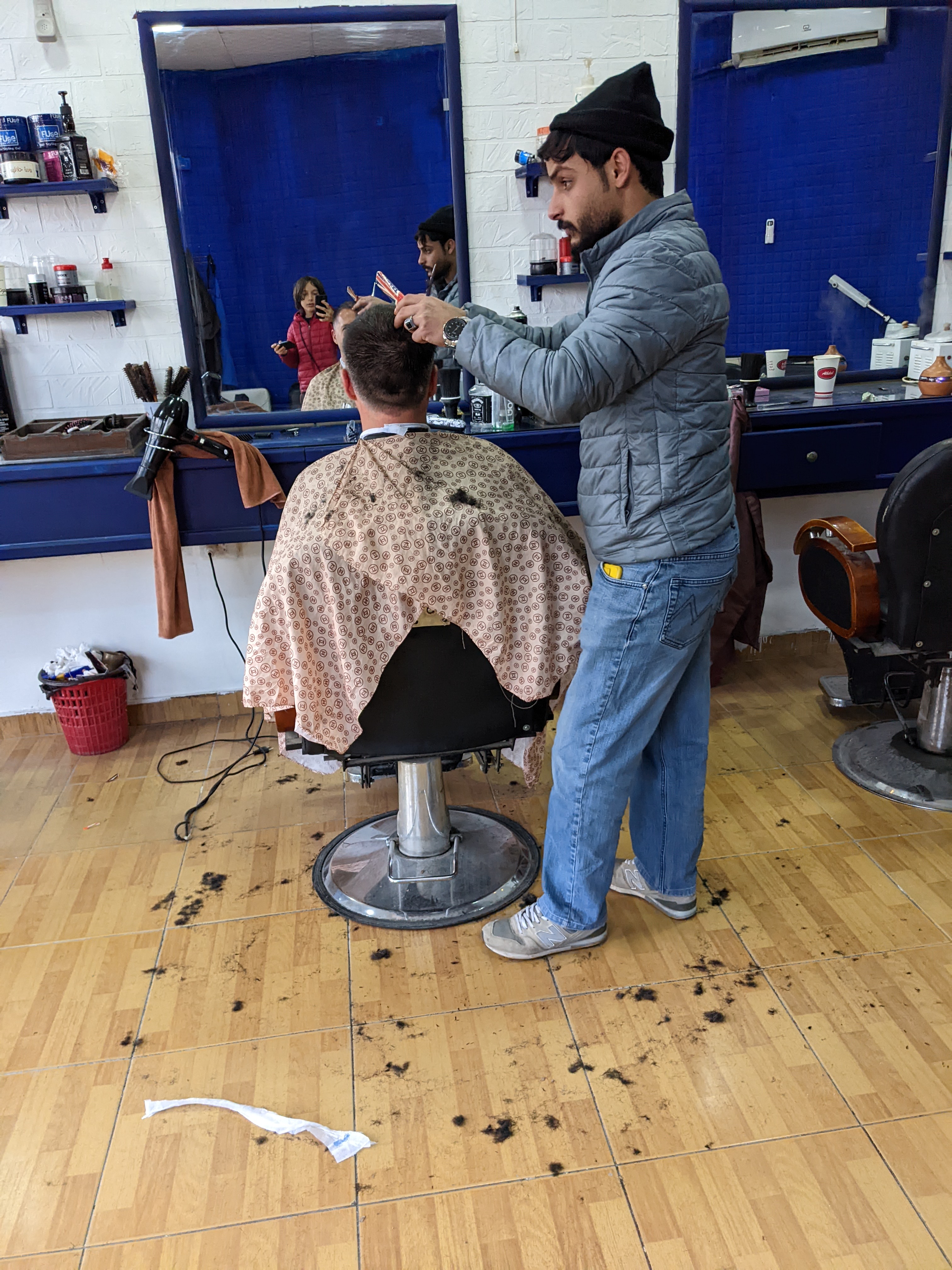
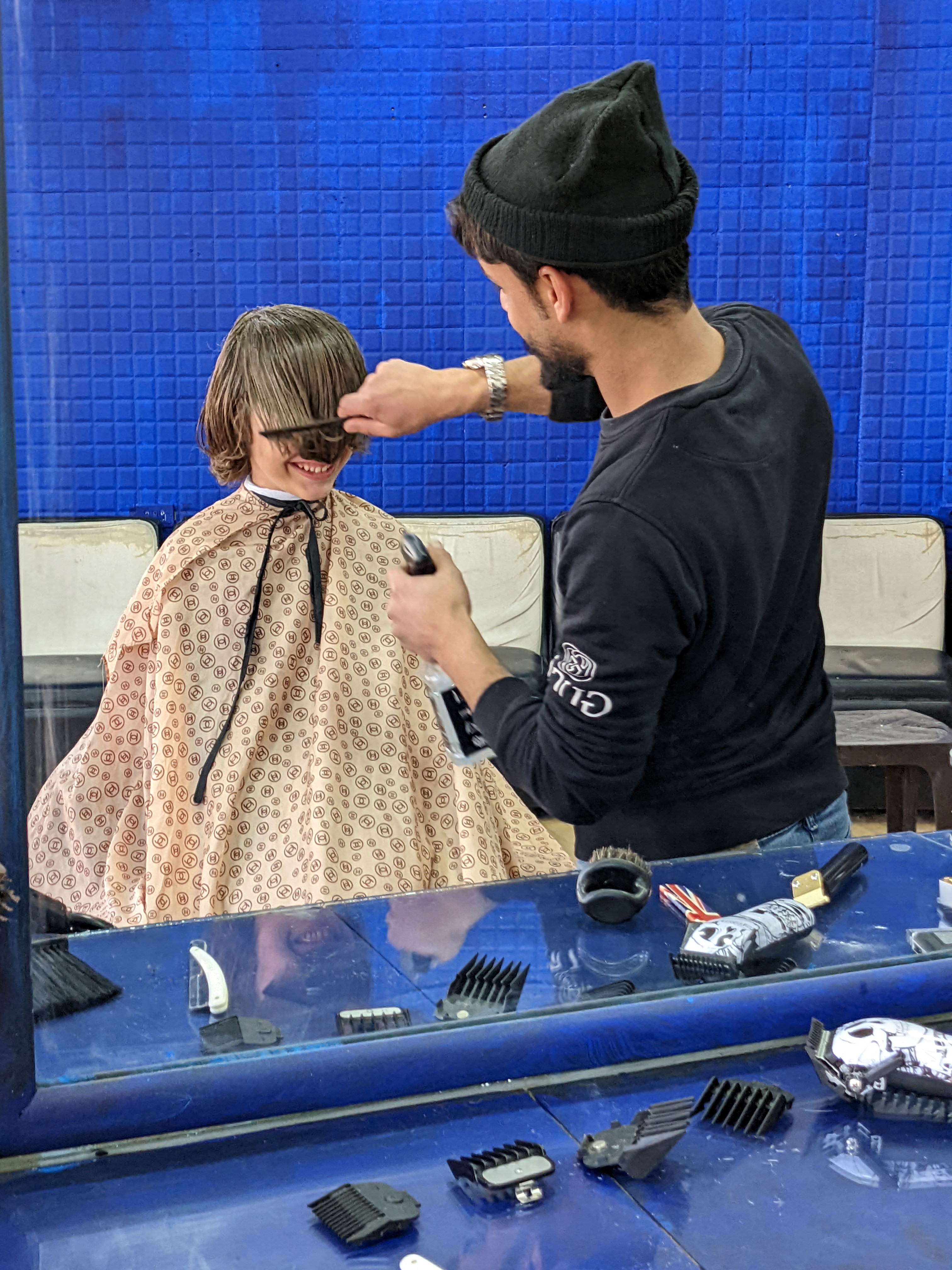
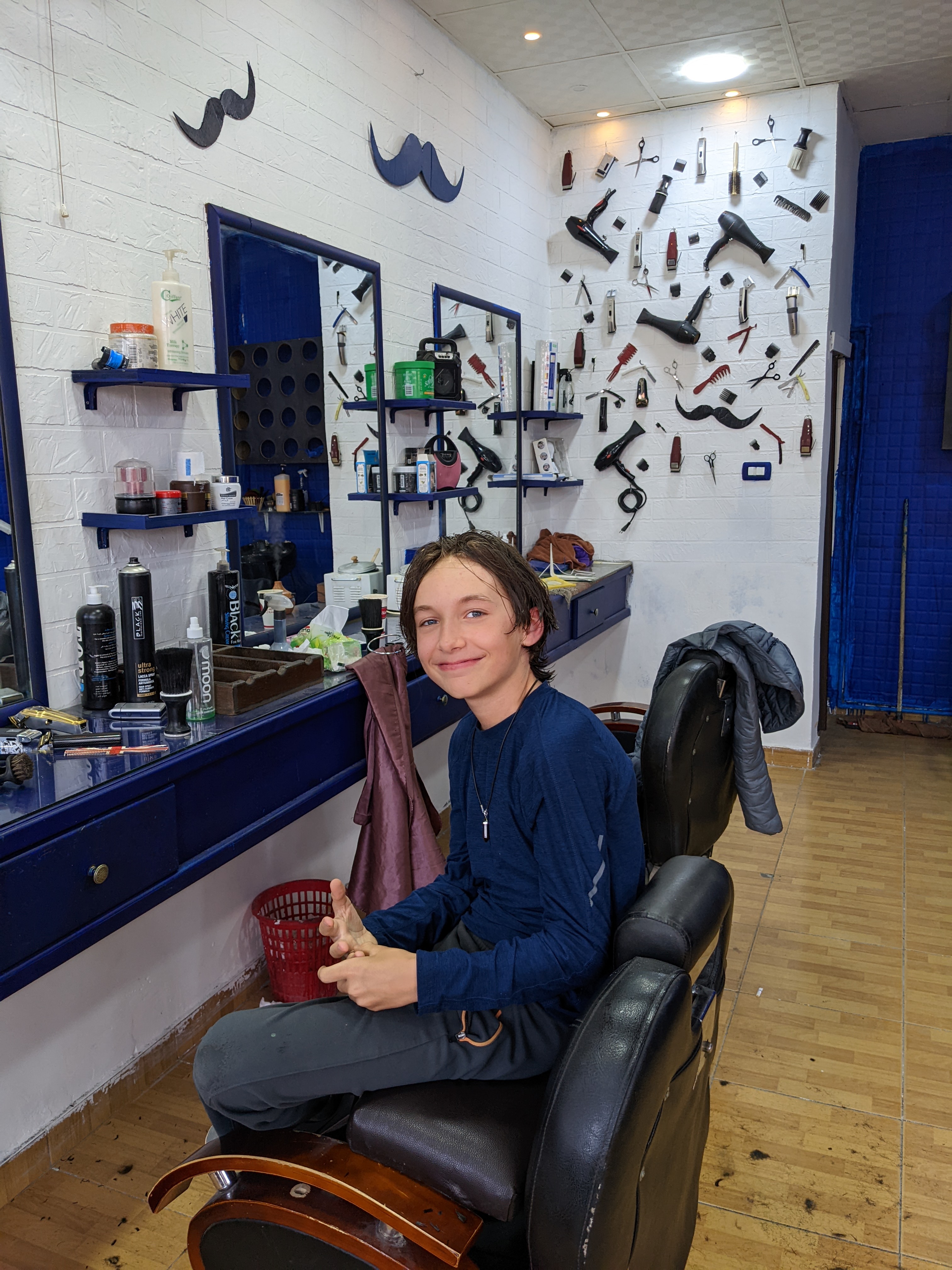
It had been over a month since we left, and Dwayne was getting shaggy.  Wes was definitely shaggy and was actually asking for a haircut.  We ended up in Madaba, Jordan, staying in the heart of this less-touristy town where there were 3 liquor stores and 4 barbershops on our street.  For 8 dinars (about $10), both Wes and Dwayne came back trimmed and shiny. True to his hygiene habits, Wes’s hair was a bit gross, so the barber put some product in that Wes would be forced to wash out—with shampoo, no less—back at the hotel. 

Side note: I think it is hilarious the barber smoked while doing Wes’s hair.  According to our guide, Jordan has the highest number of smokers per capita in the world. [Bing insists that currently, Jordan is a lowly #6.]  I could have sworn Egypt would be higher, but supposedly, Egyptians smoke everywhere but Jordanians usually smoke less inside touristy areas. (When we were sitting in the lobby of the fancy Pyramisa hotel in Cairo, I think I had more secondhand smoke in one afternoon than in my last 30 years of life.)  And smoking in Jordan takes dedication; one doesn’t have a few cigarettes a day and call themselves a smoker.  One needs to be able to quantify by packs per day.  Again, our guide tells stories that seem unbelievable. Jordanians spend a third of their income on cigarettes. (Please, in a country that makes such amazing baklava?!?) Faisel’s own father finally gave up smoking when our guide was a child, and with the extra money, bought his wife a washing machine, his kids a TV, before going on to furnish the entire house with “normal” appliances, like a toilet, fridge, and oven. Faisel was really poor growing up, but much less so when his father quit tobacco. 

Piper’s Cooking Class: Jordan Upside Down

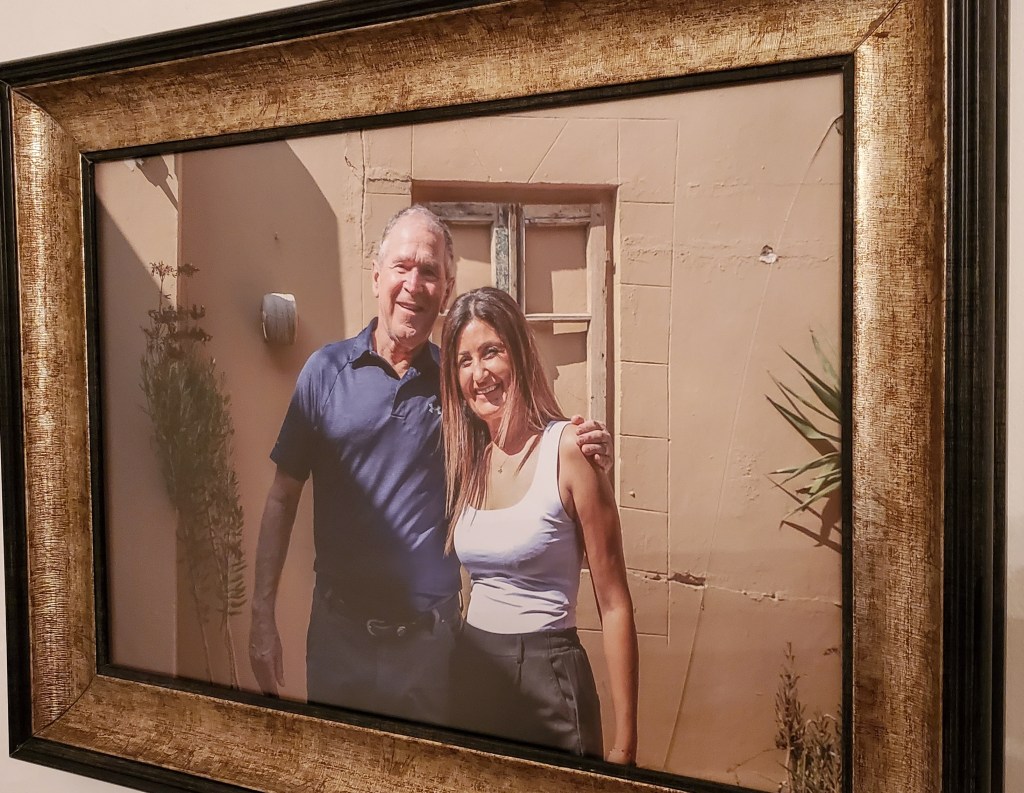
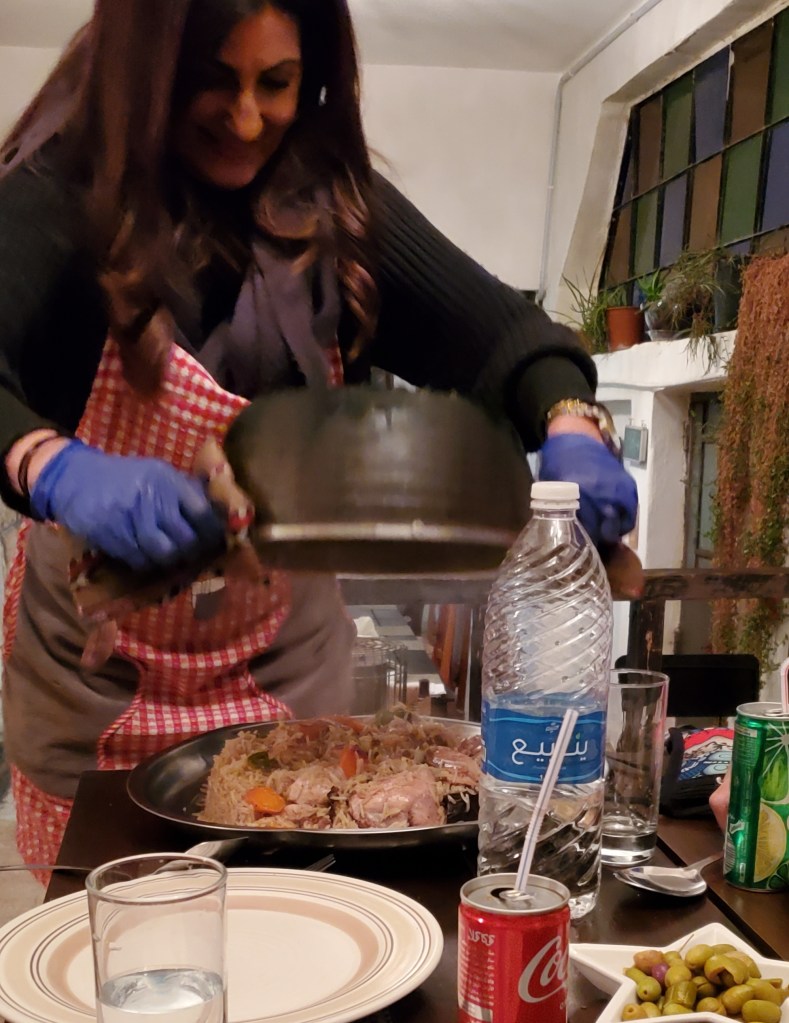
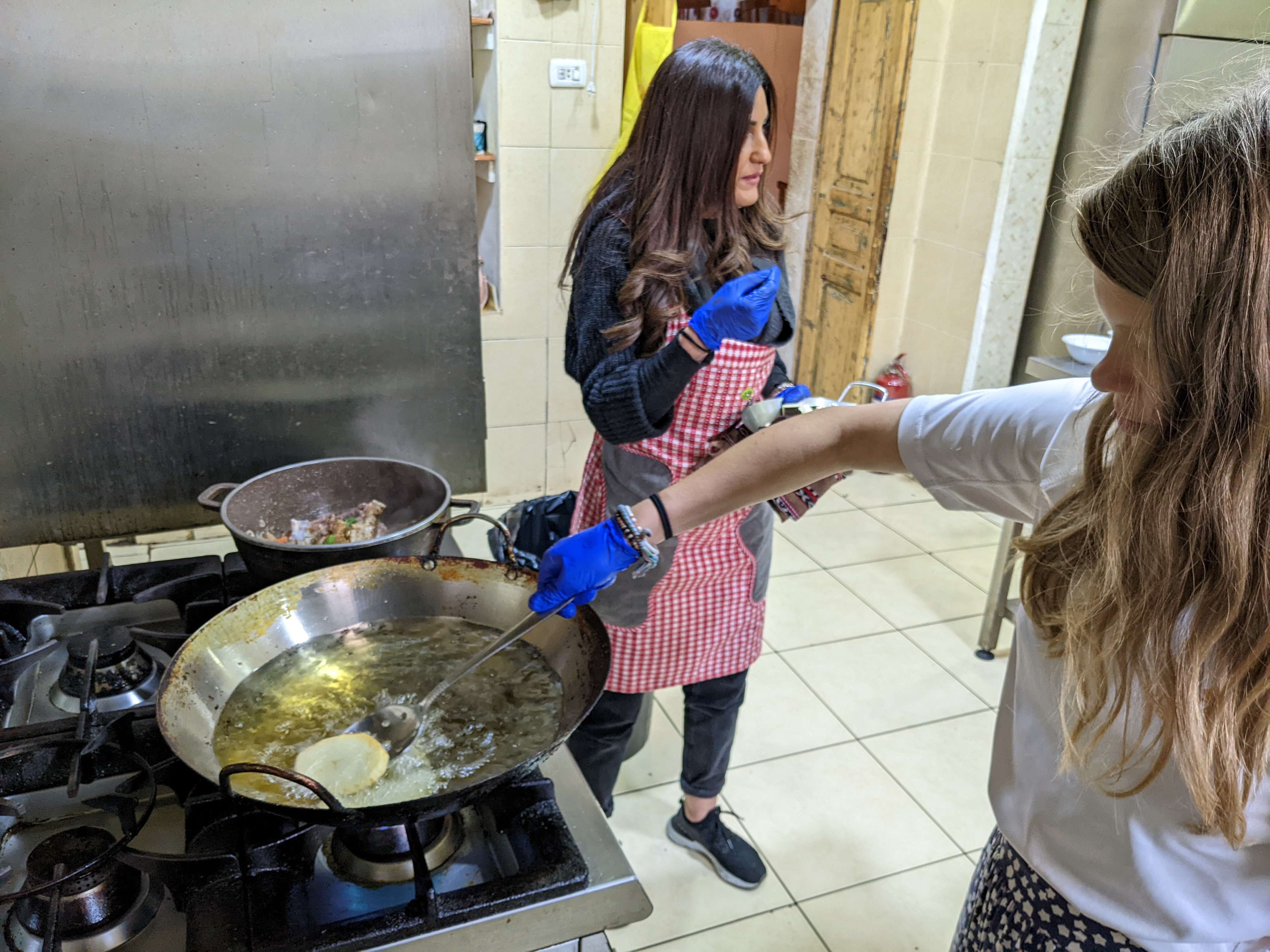
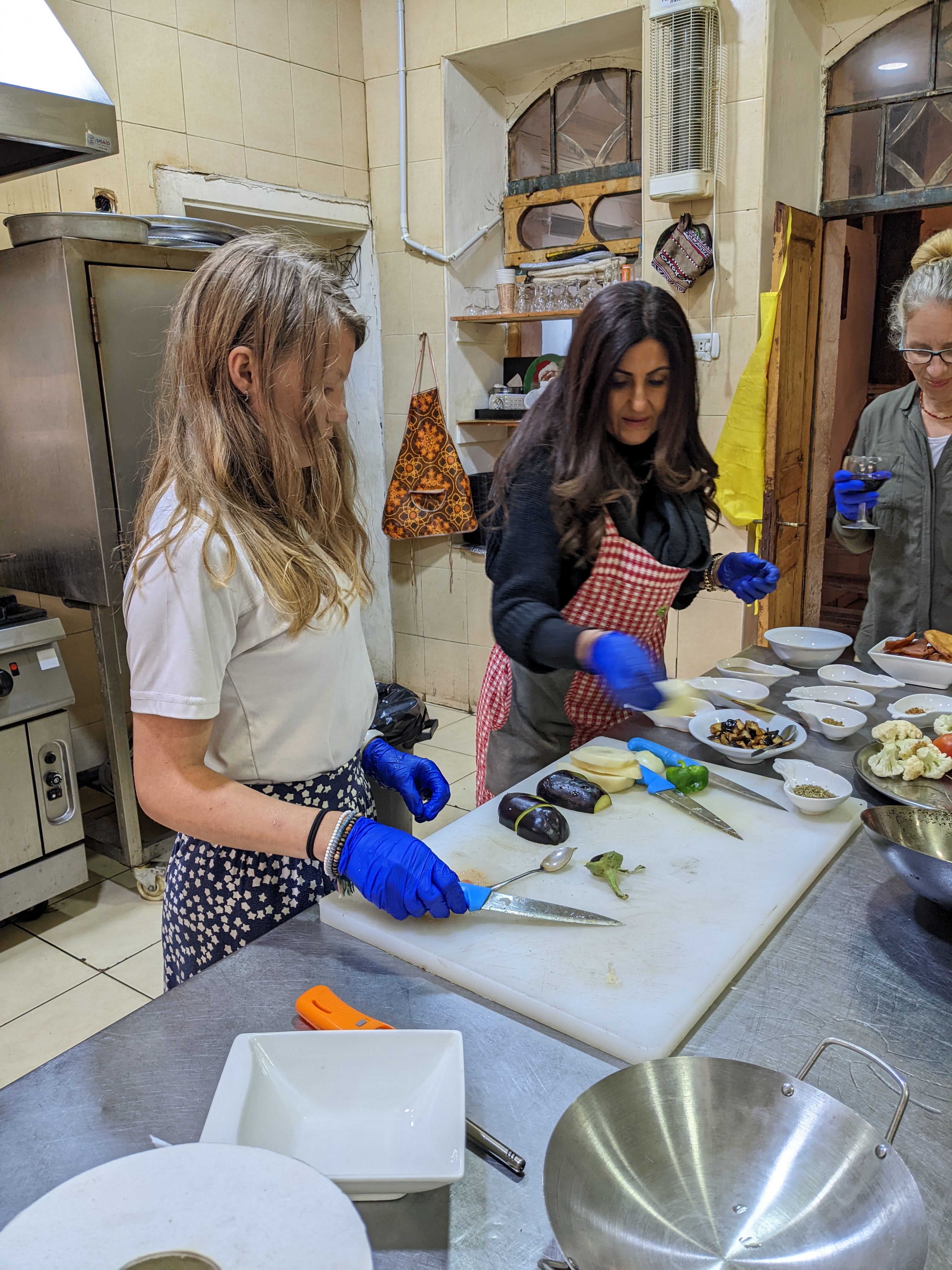
Our tour guide knew a woman who ran a restaurant/cooking school for travelers. She actually received a grant from USAID for a full kitchen and has her picture with W and Laura Bush to celebrate the event.  Dwayne and I took the cooking class with Piper, which meant I drank wine, Dwayne took pictures, and Piper actually learned how to make a delicious main course that cooked up veggies and chicken before covering the pan with rice to simmer, and then flopping the entire pan upside down on a platter to serve.  Using chiles and cinnamon, the secret is definitely in the special seasonings, and most notable, all five of us loved it! Piper has packed the seasoning mix to make this dish for Grandma and Grandpa when we get home. 

Jordanians don’t just put one dish on the table: A little dish of olives, another of hummus, eggplant and roasted tomato dips, pita bread, fried bread, another salad, and then even more tiny little bowls that make you feel wasteful when so much is still left on the table and your stomach can only hold the two little cookies your hostess serves after the bill is paid. 
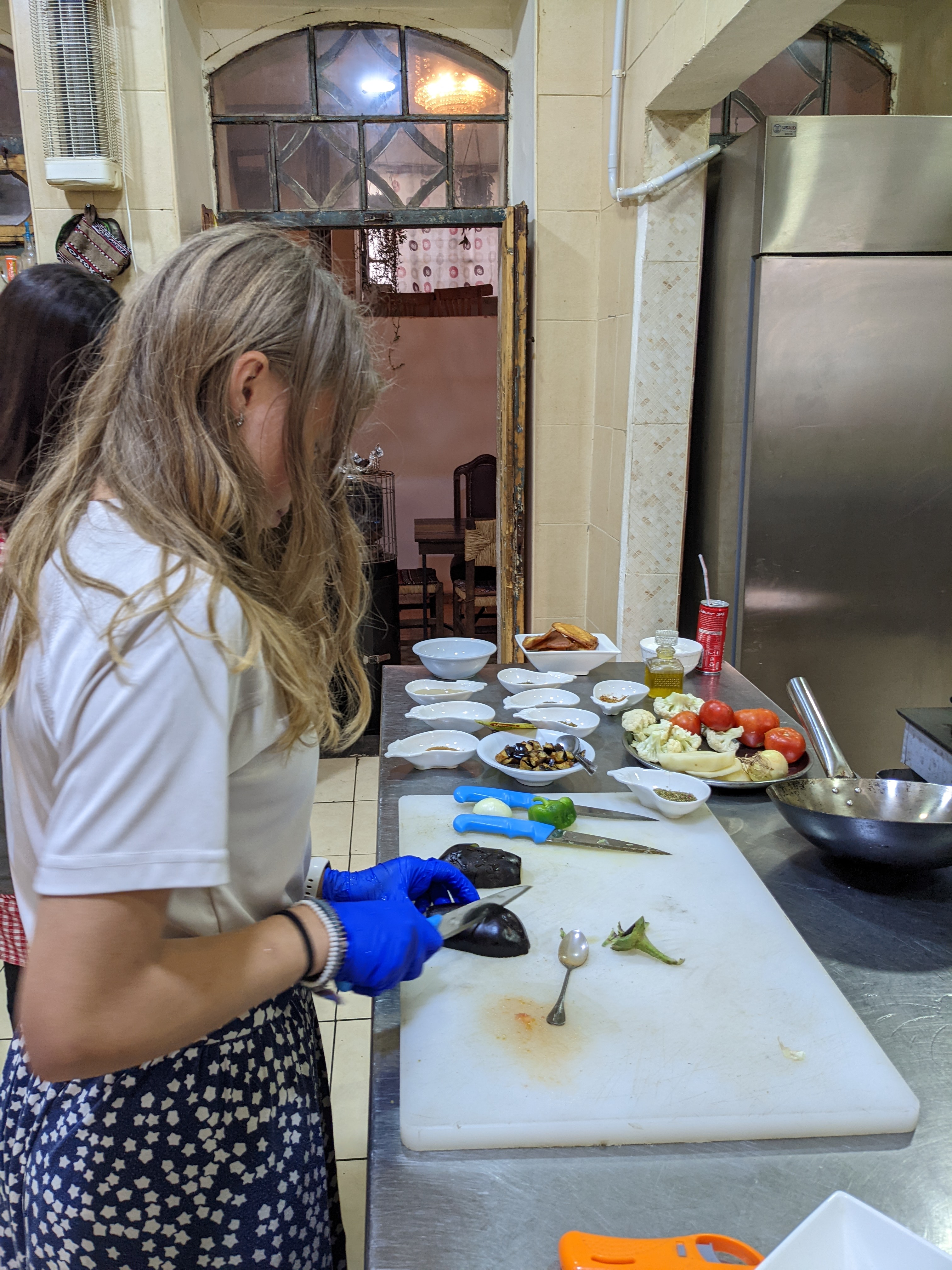
Favorite quote today—Piper: That was so much fun!

We hope we get to hear that again someday!

The Dead Sea: Not what we expected, but I had fun

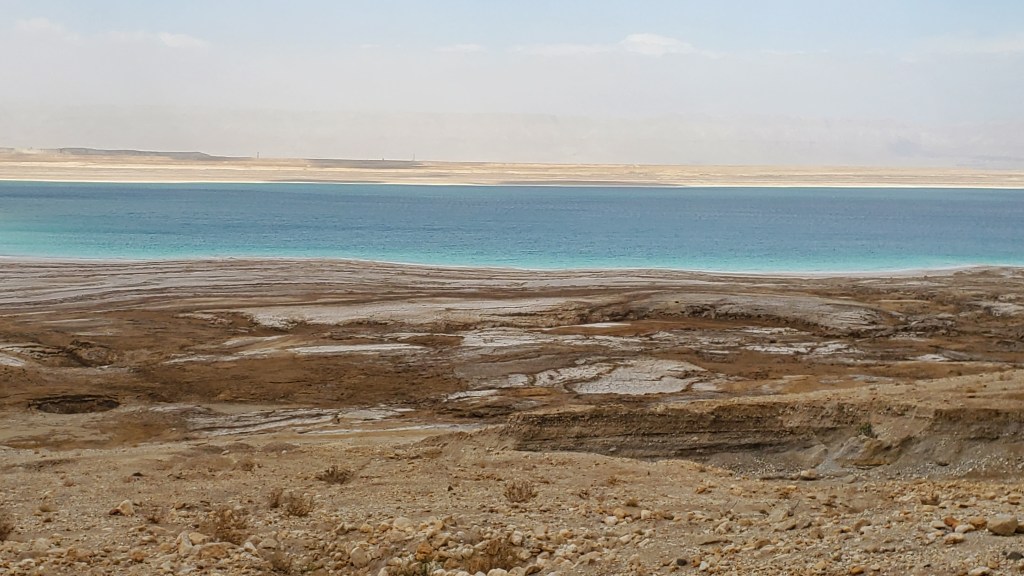
Since leaving Kenya, the weather has not been what we hoped. All the layers we packed “just in case” have been worn daily. The Dead Sea, the lowest place on earth, was warmer than Petra, but that’s a low bar. Unfortunately, it was a lot windier on the sea and the Red Flag of Doom was flying on the beach. That didn’t stop us from changing into our suits and attempting to enjoy it, even without a proper swim.
The Dead Sea is so named because it is so salty (34%-ish) that nothing but bacteria can live in it. We were also warned that swallowing even a tablespoon of the water would send us to the hospital…or the grave. (This has not been verified with casual internet searches; I’m sure the tour agency and the hotel want to minimize liability).

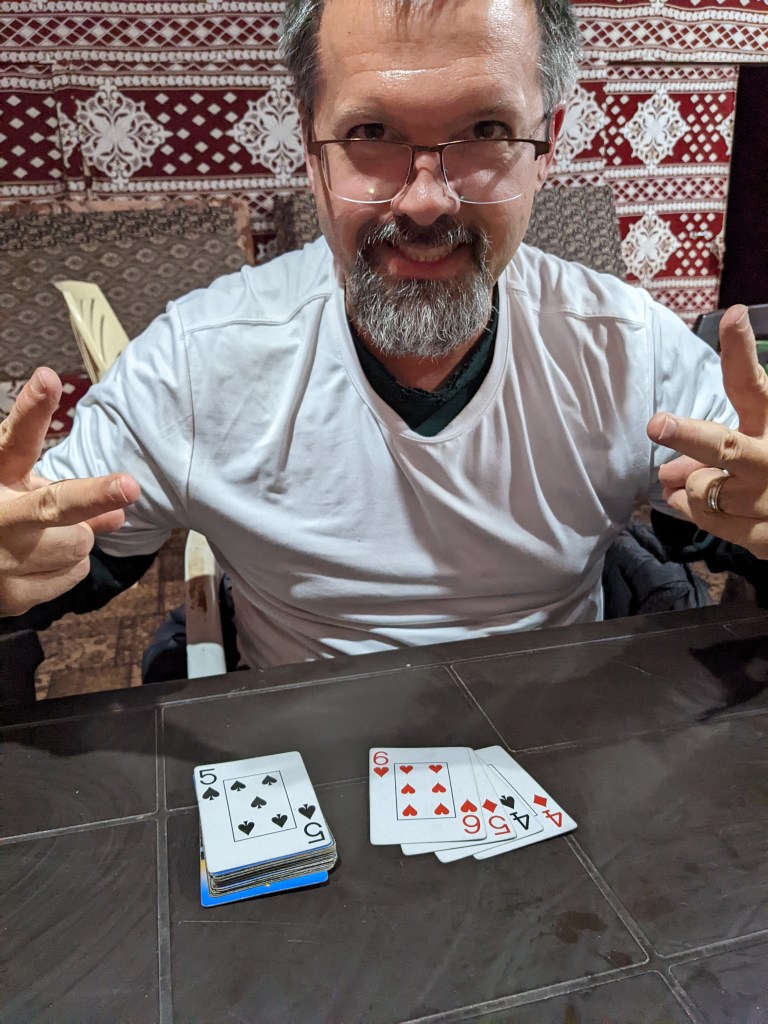
The logistics: Our tour booked us an afternoon pass at the Holiday Inn, an oddly luxurious Dead Sea resort. We gained access to the changing rooms, fluffy towels, a large “heated” pool, and the life-guarded sea. We changed, hugged our bodies as we made it down to the rocky beach, and were able to go in almost to our knees before the lifeguards blew their whistles. Honestly, the water was awful. Between the wind and the waves, large rocks would crash into our shins and smash our toes and there was no chance of trying to do the famous float. We rinsed off in the outside showers, warmed up in the inside showers, jumped into the heated pool, discovered that the heated pool was too cold, and then returned to hot-showers-that-quickly-lost-their-heat. We turned our afternoon stopover into just an hour, and that was because we ordered warm drinks and played cards in the lobby once we were dressed again.

However, the Dead Sea was a highlight for me for one reason.

This hotel also had complimentary buckets of the miraculous dead mud guaranteed to take off years. Turns out, that was years of maturity, not wrinkles or cellulite. But I had heaps of fun playing in the mud. Even my hair got a mask. The Fam laughed, I frolicked, and the outing was rescued.
Maybe we’ll try it again someday!

Petra: What I Didn’t Know Before

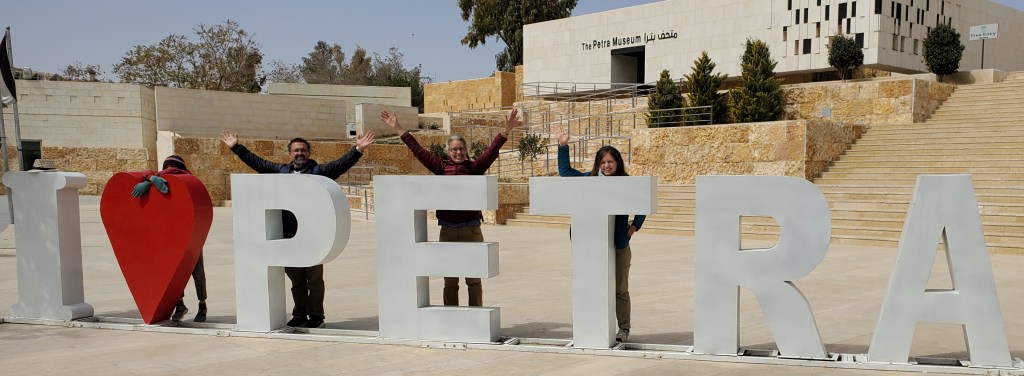
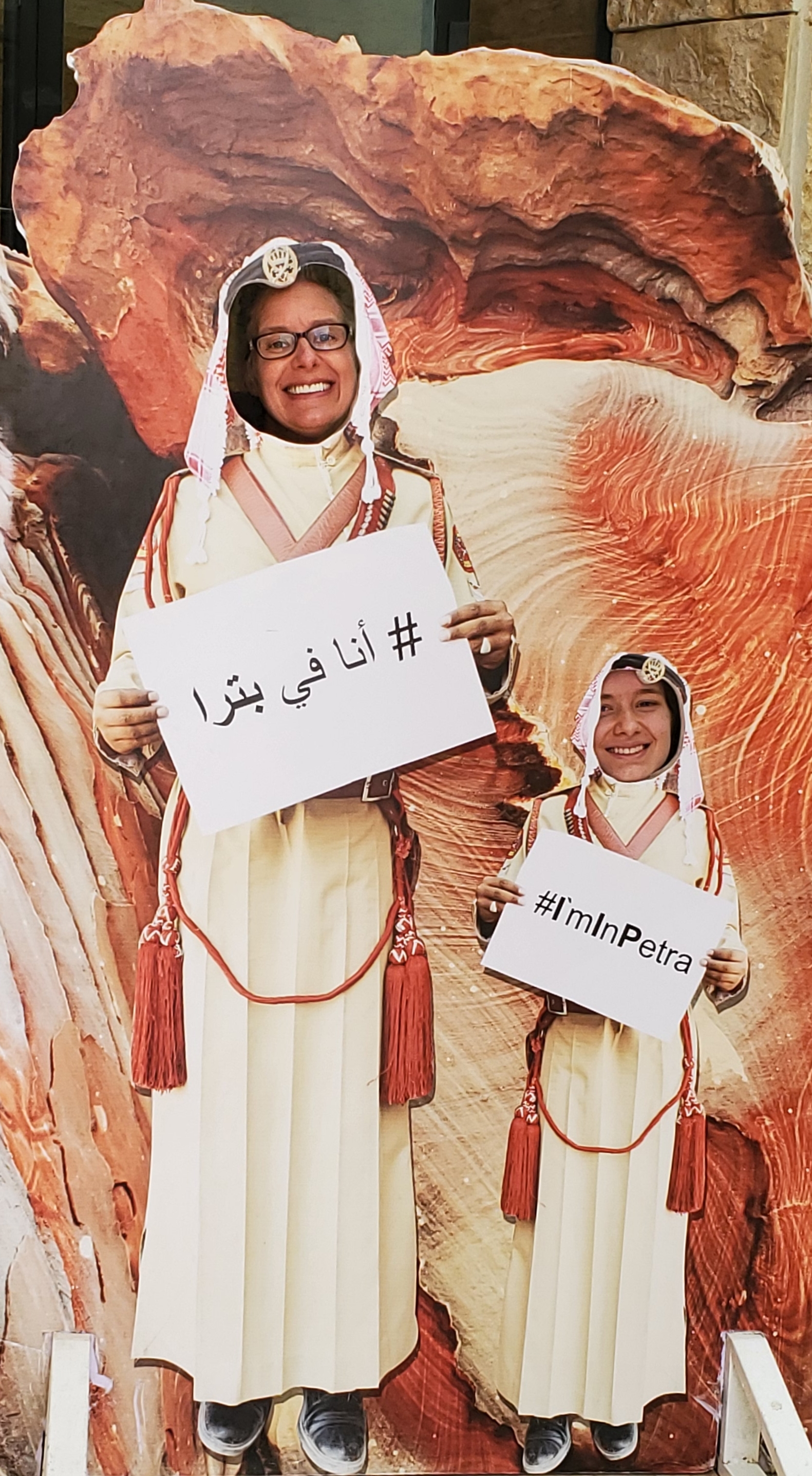
Piper’s beloved hat, doting the “i”, now stands in for her during this do-not-take-my-picture phase.
The Treasury is the poster child of Petra. Even expecting it, turning the last bend in the mile-long rock canal to get the first glimpse merits a gasp.

Here’s what I knew about Petra 5 years ago:

  1. It is something very, very old, and looks like this–>
  2. Dwayne really, really wanted to see it.

* * *

Here’s what I learned about Petra a few years ago, when we first booked the tour:

  1. Petra is in Jordan. I can even point out Jordan on a map.
  2. Petra is ancient and is much more extensive than this one picture suggests.

* * *

And here is what I’ve learned in the past two days:

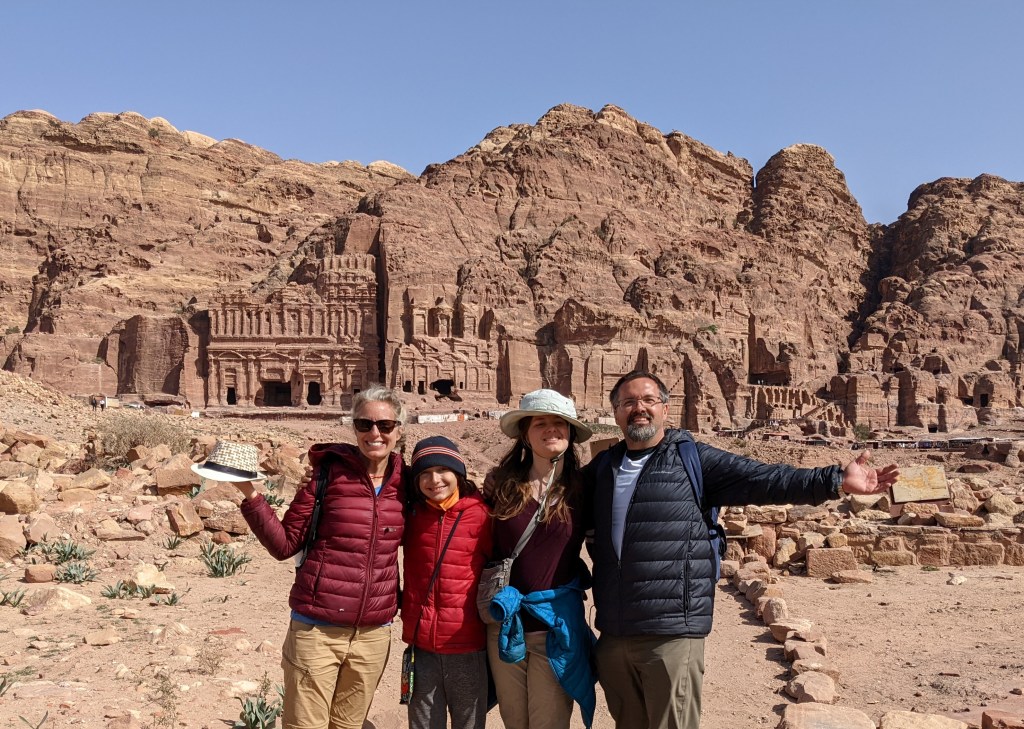
I appreciate the man will pose for me.
  1. From the ticketed entrance to the main event, the Treasury, it is about a mile walk, much of it over old (old!) Roman roads, that have been made uneven by time and earthquakes. Before getting to the Siq (the walled cavern that is most of the walk to the Treasury), there are several antiquities of note, almost all related to death and memorials. The canals, aqueducts, and dam were the most interesting to me, as enough of it has survived to truly picture how this dry rock was continually made rich with fountains and pools.
  2. The ticket does come with a free horse ride down the Siq, but almost no one takes advantage despite the long walk. Our guide told us there was a mandatory “tip” of 3 dinars ($4.25) but there are online reports of 12-15 dinars demanded of riders. The attempted fleecing at every turn in Petra could only be tolerated only by ignoring it and walking purposely somewhere else.
  3. The Treasury is as superlative as it is reputed to be. Nothing captures turning the last bend and seeing it for the first time, even with the crowds of tourests, hawkers, camels, and the many, many asses.
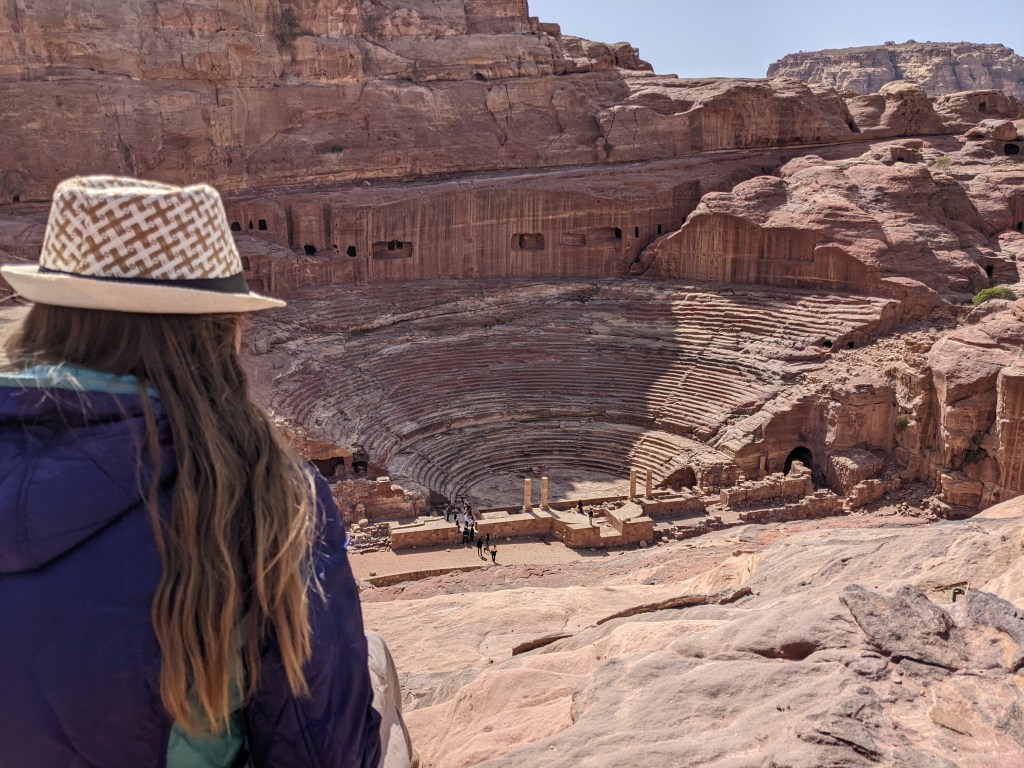
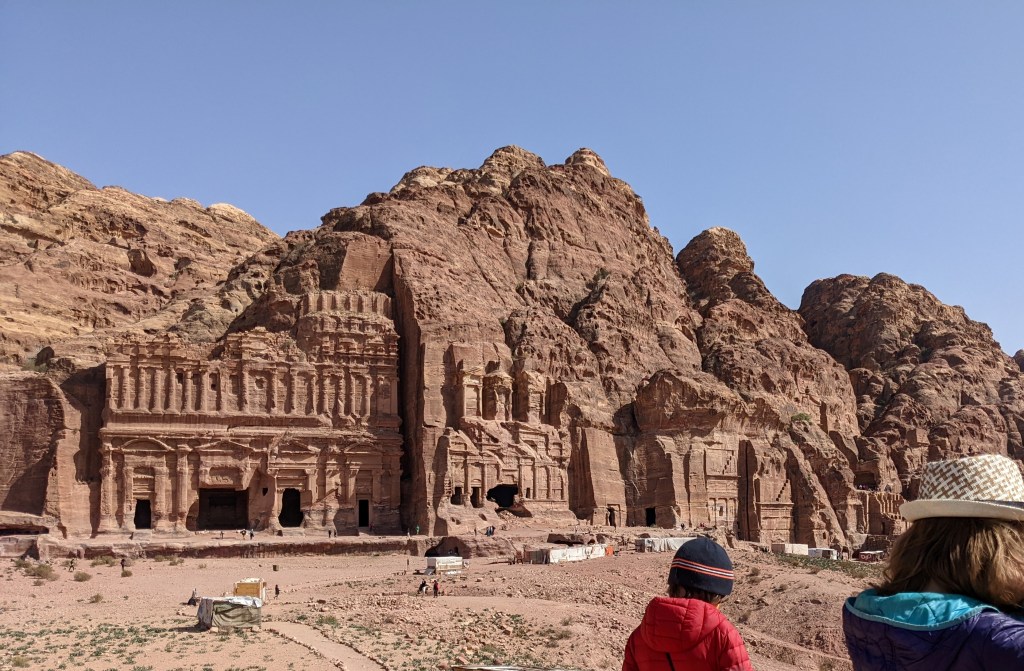
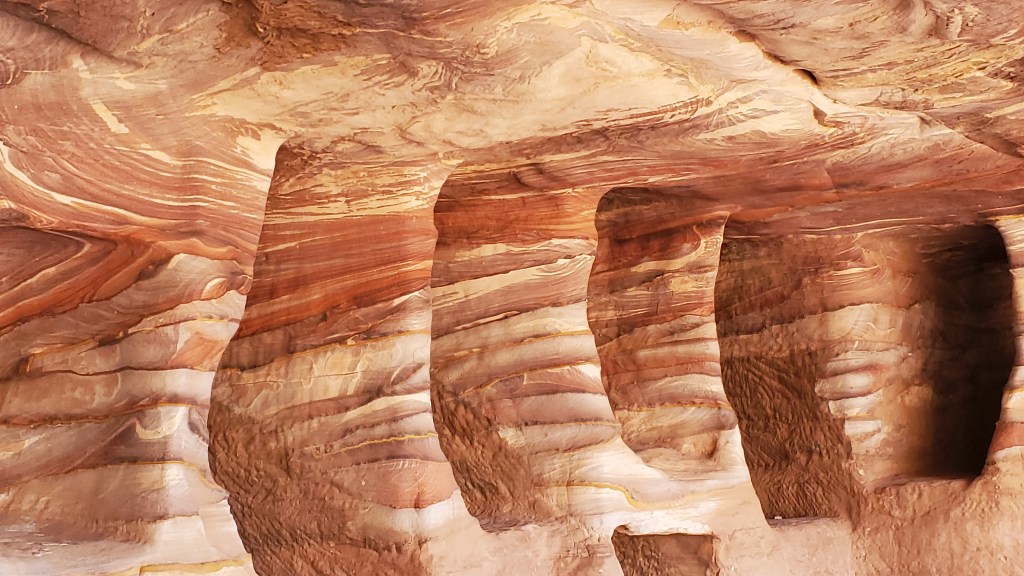
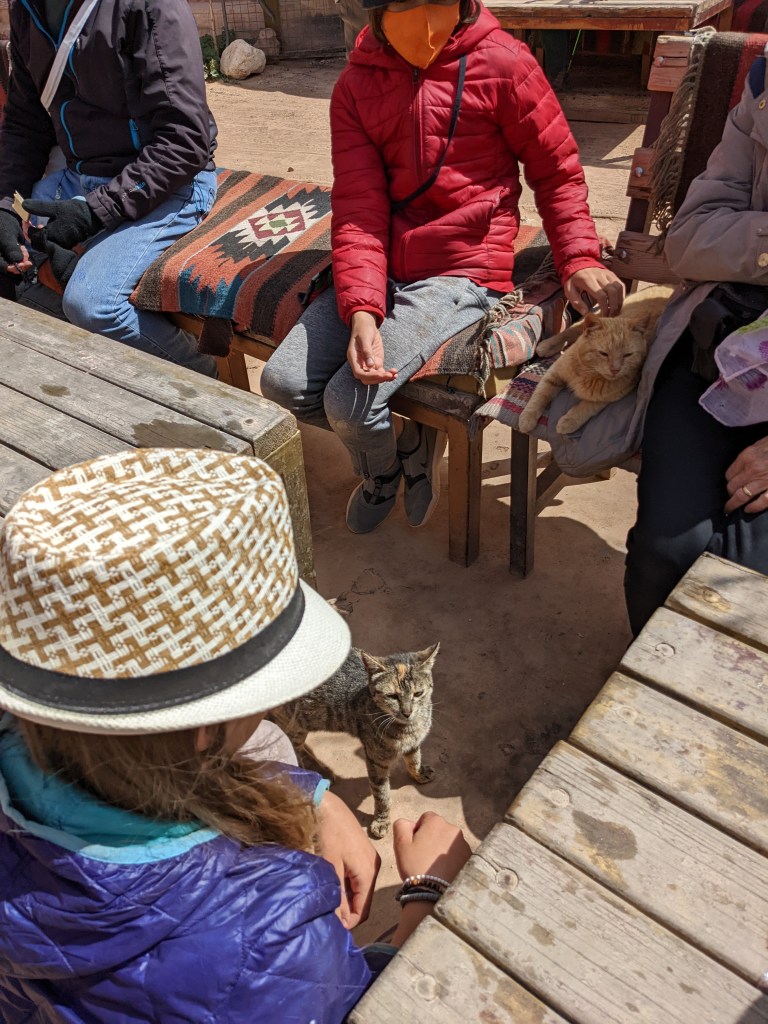
  4. Petra is about the façades. Truthfully, the most inspiring finds (supposedly only 5% of the original city has been excavated) are mostly grave markers and empty tombs. The Treasury, which you might be forgiven for believing was originally a financial center, or, you know, treasure, is basically equivalent to the Giza pyramids. It was actually a tombstone, an extraordinary angel-mausoleum on top* of four small burial rooms. But if you are like me and yearn to clamber up and search every nook and explore each alcove, your soul will be cut deeply. As you can see from the top picture, there is the main chamber as well as a smaller chamber behind the second pillar on each side. Truly, they are just empty rooms, or more accurately, giant litterboxes. #CatsAreEverywhere I wanted them to be giant palaces carved out of gorgeous stone, taunting me with a “you may not enter and explore the elaborately sculpted halls, lowly swine!” locked gates, but alas, they are just skin deep, though their complexion is flawless.
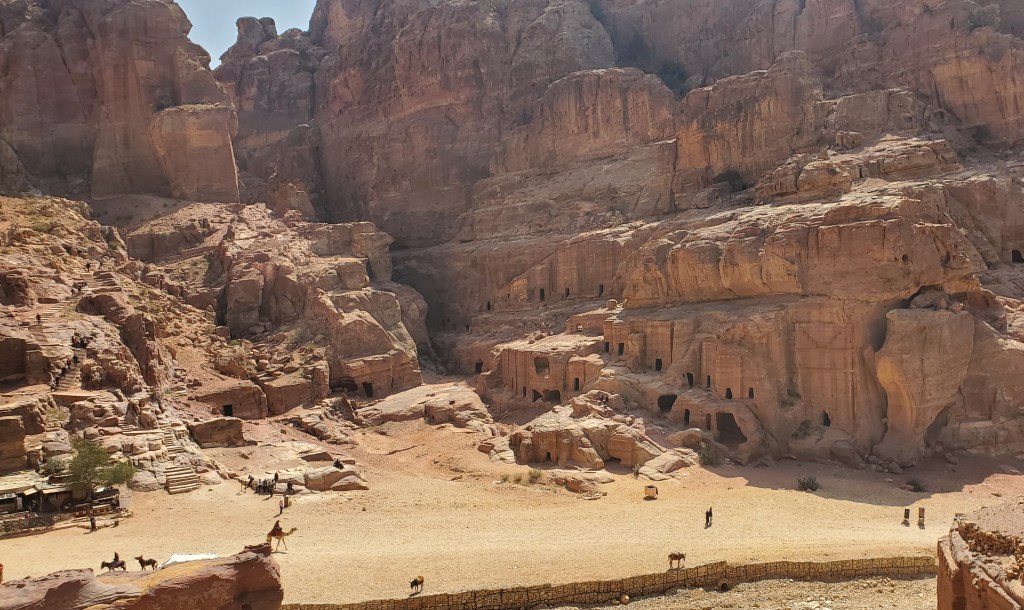
  5. Petra is extensive. Leaving the Treasury is when Petra opens up. Wide, wide up. We had a map with multiple trails and sites marked. On our first afternoon, our guide showed us many of the famous carved memorials, a church with some intact mosaics, pointing out temple ruins, etc. It was probably about a 7-mile walk that day, and the youngers refused to make the trek again**. The next day, Dwayne, Kyla, and I explored more of the main street before taking the longest, steepest, and furthest trail out to The Monastery. Between our day in Petra, and then returning for the night show, we walked 30,000 steps, or 21km/13miles, with significant elevation and rough ground.
  6. The Monastery, it will not surprise you, was not built to be a monk’s retreat, though it probably became one many hundreds of years later. It, too, was a remembrance of a rich king.

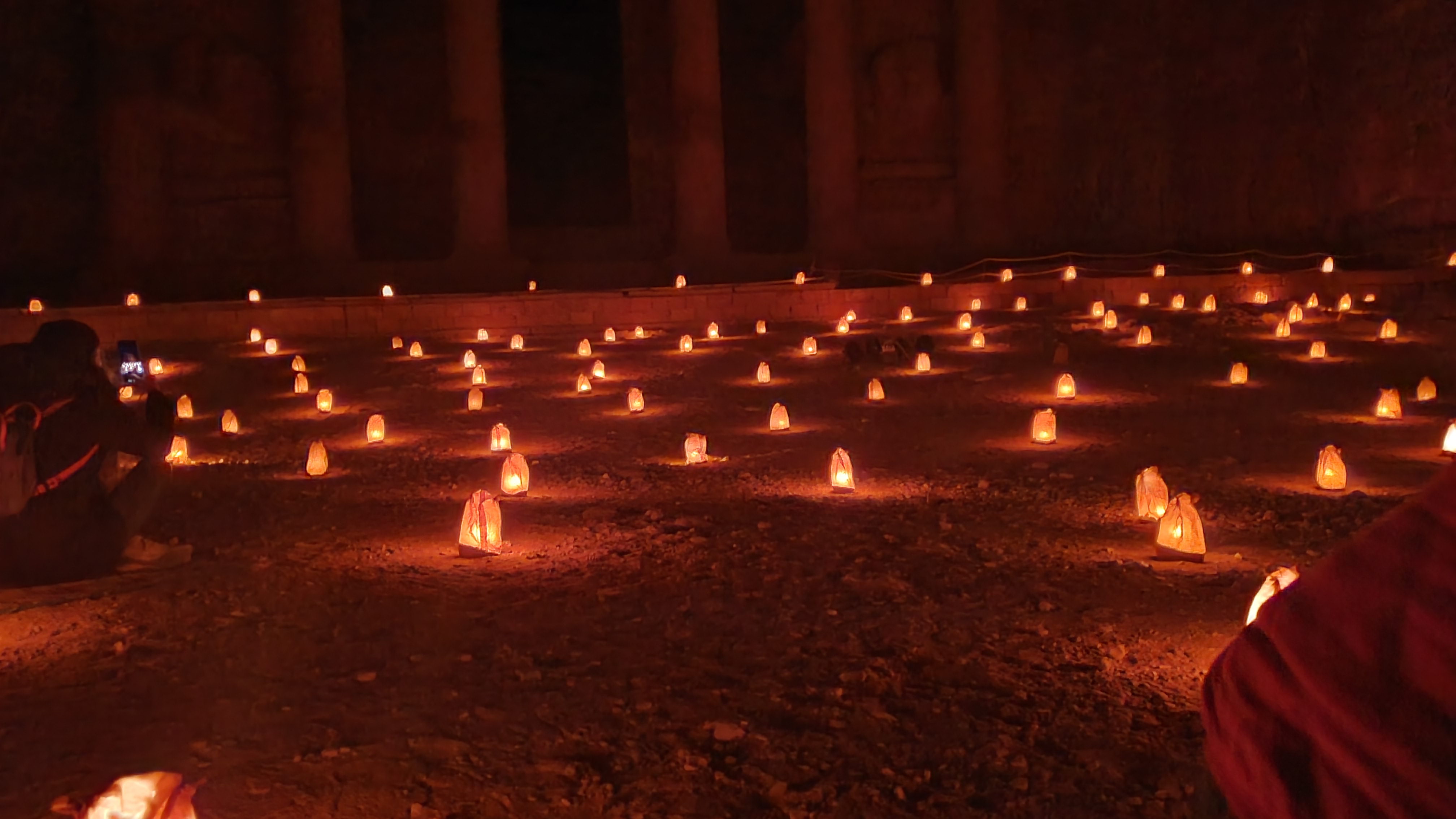
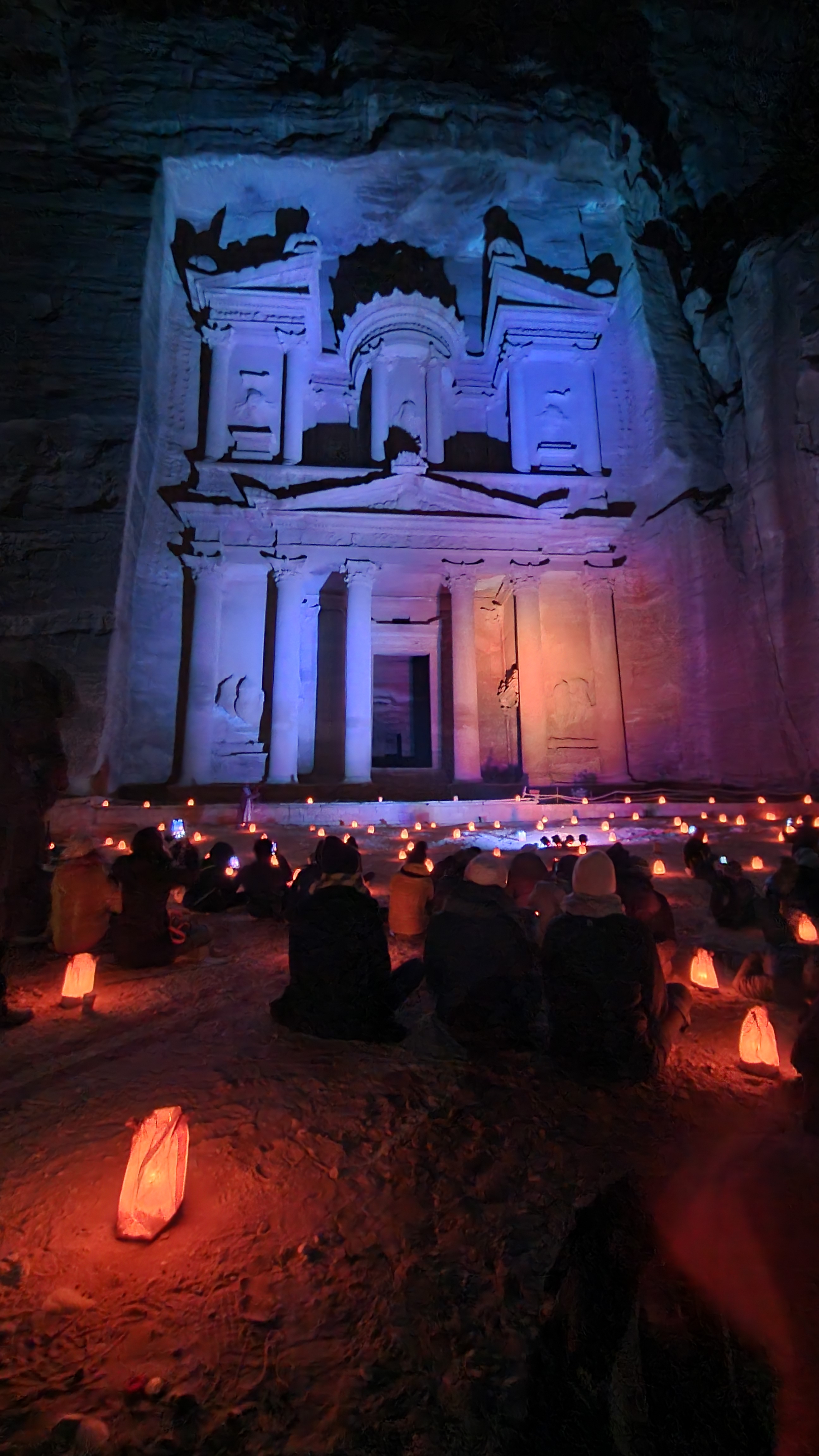
Petra at Night is a separate event and ticket, but the same long path newly marked with luminaries. The gates open at 8:15 to begin the walk down the Siq. We sat only in candlelight while two musicians playing traditional instruments and a storyteller wove a sense of history to the evening. When the Treasury was lit up at the end, several tourists saw it for the first time. For us, it was the final send off, first on another long walk, and then out of Petra the next morning.

I learned a lot about Petra that suprised me, but I was never disappointed by our experience.


*Technically, these tombs were ground level at the time of construction, but thousands of years of dirt and debris, and about eight feet of Roman road, gave them a basement location upon refurnishing.

**After carrying my 12-year-old whine sack for a bit on the last bit home, I was not unhappy to comply. You can read his take on our time in Petra here.

Why, Hello, Jordan!

The beginning of Piper’s don’t-take-my-picture phase.

One of life’s conundrums is how it can take an entire day to do a 1-hour flight.  We traveled from Luxor back to Cairo on an overnight sleeper train, and then got a short WC and café break before spending three hours at the airport for the short flight to Jordan.  It does seem that a large portion of Kenya’s, Egypt’s, and Jordan’s economy is dependent on employing people to make us go through security check #1, passport check #1, boarding pass, passport check #2, Security check #2, boarding pass check #1, etc.  And then when you get to your destination, there’s the person you buy the visa stamp from, the person who checks the passport, the person who puts the visa (adhesive) stamp into the passport, the person who rechecks the passport…and then you go through customs.  We amuse ourselves by trying to guess how many people will pretend to check our documents.

I think Jordan is our monarchiest* country yet.  I know UK is lousy with royals, but it seems different here.  The only ones with more power than the king are the big, big businesses.  Hmm, so maybe not that different from anywhere else, including home. 

Kunafa

The capital, Amman, has a few things to recommend it. One, street vendors are amazingly polite, low-key, and non-pushy, especially compared to Luxor and Cairo.  Two, they have a fabulous dessert called kunafa, a warm dish served with melted goat cheese as the base, layered with a sweet cake-ish top and drenched in honey-sugar syrup, and possibly pistachios.  For not having any chocolate, it is remarkably delightful, but even a small piece must be split five ways because it is so rich.

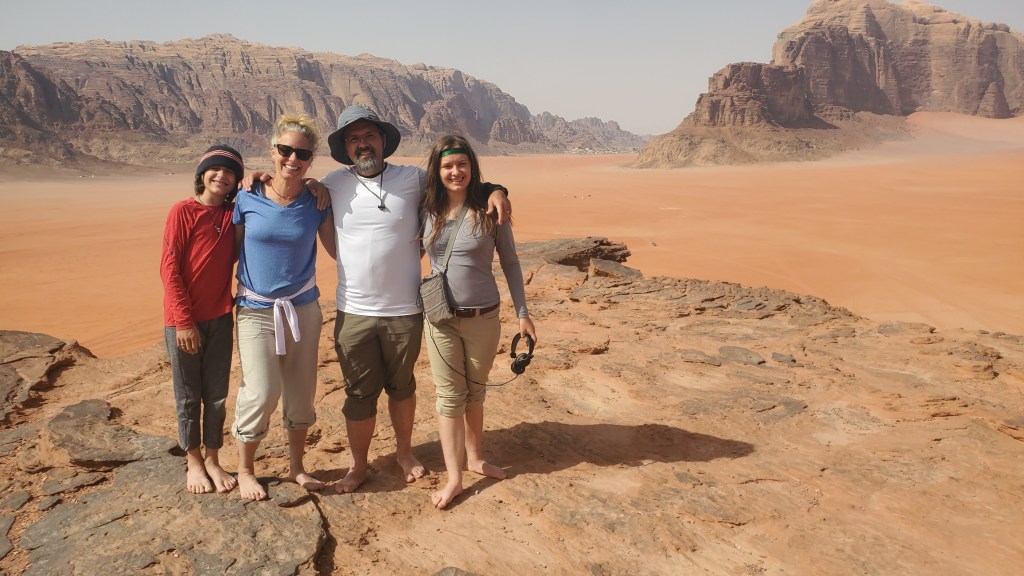
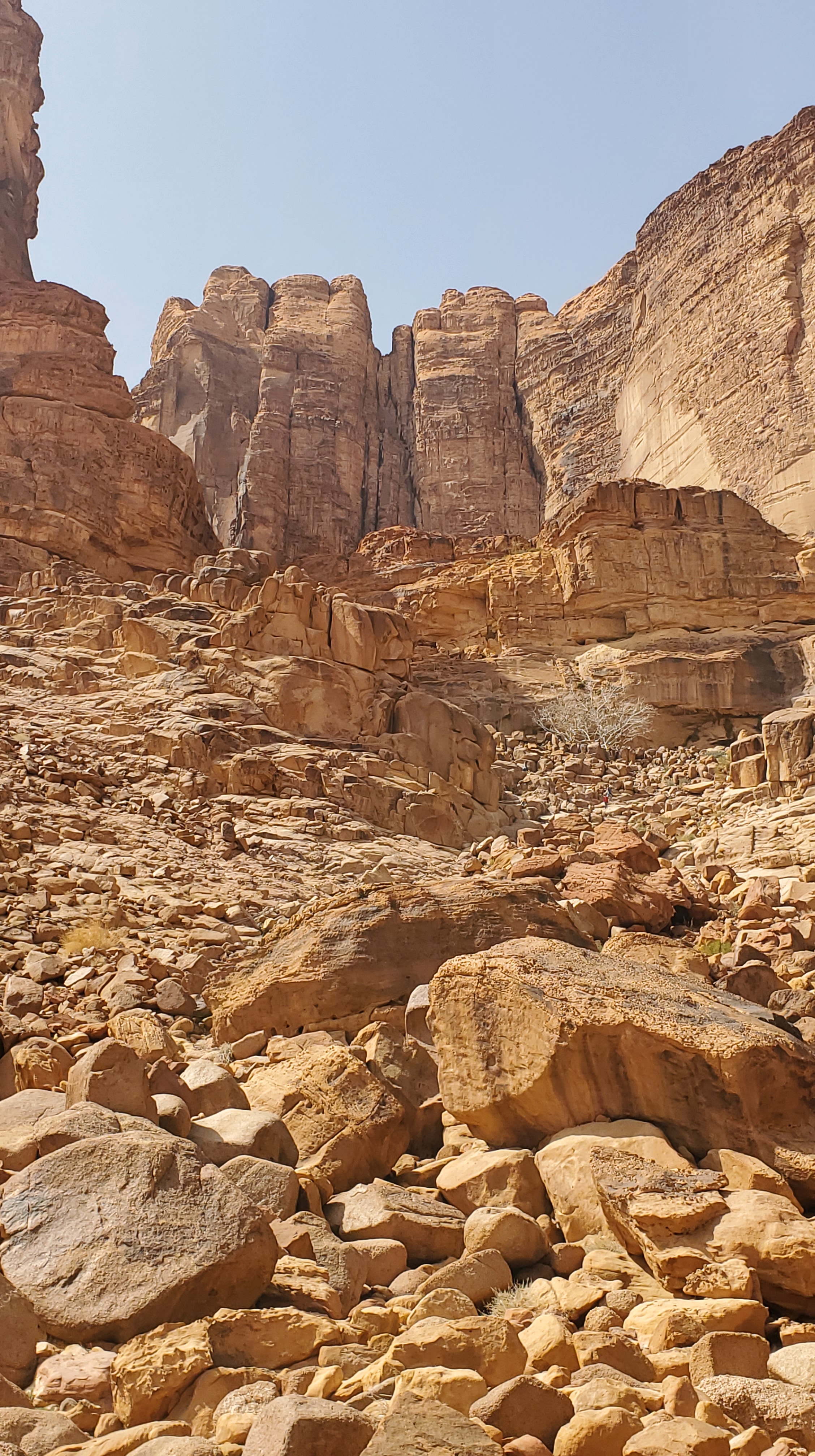
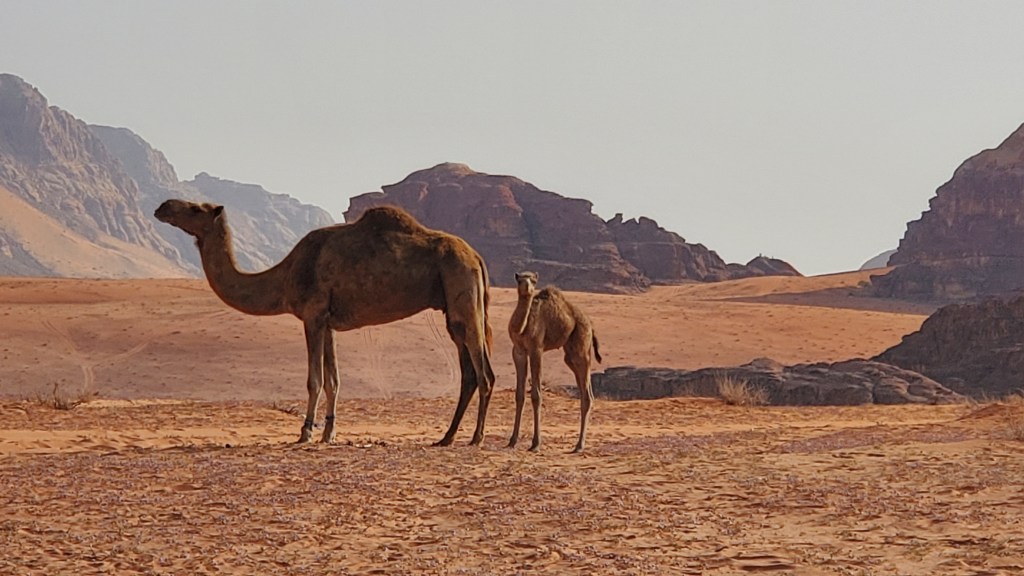
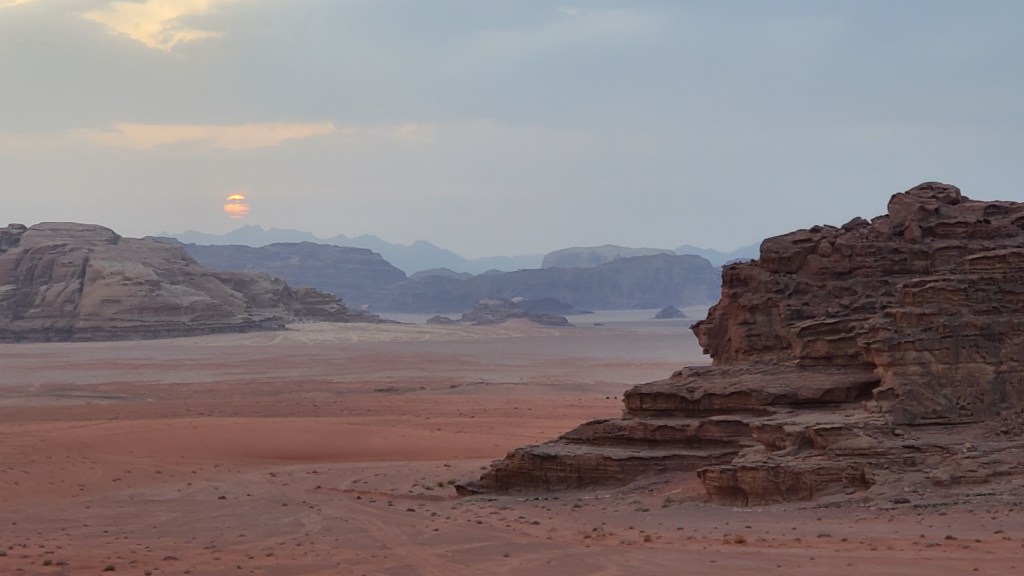
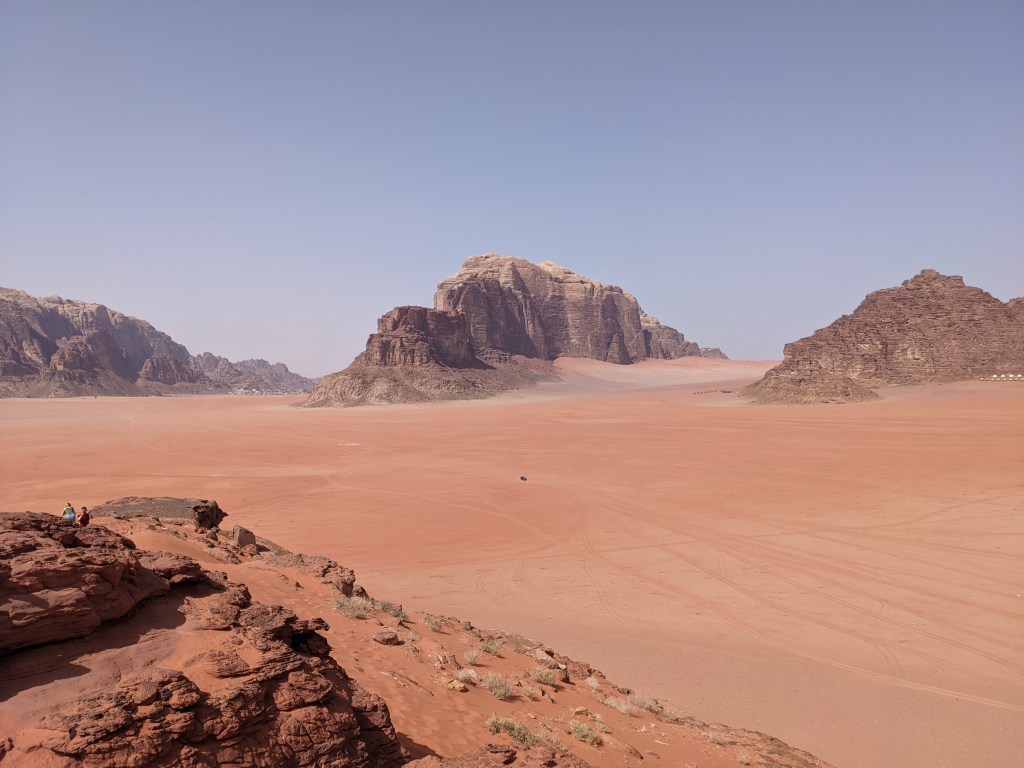
Amman was a quick layover before we headed far south to Wadi Rum. Wadi means valley, but Wadi Rum means holy-cow-it’s-desolate-even-for-a-desert.  It is where Lawrence of Arabia, The Martian, and Dune were filmed, if you are unsure of what “desolate” means.

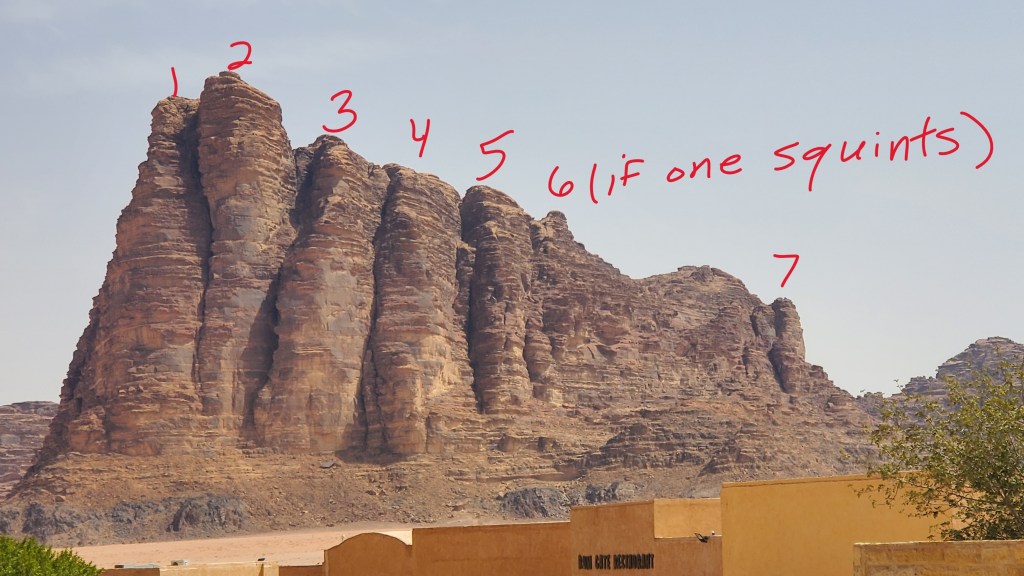
The Seven Blessings of Wisdom, if “wisdom” means “my prescription needs to be updated”

I could have easily hated it…except my kids loved it.

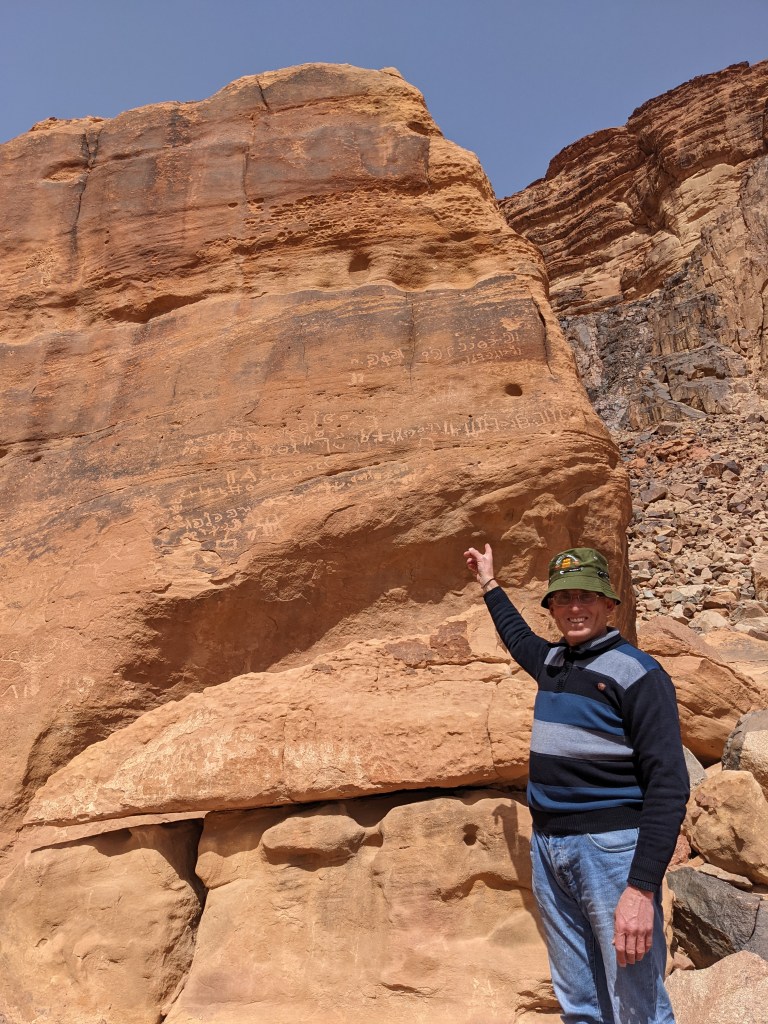
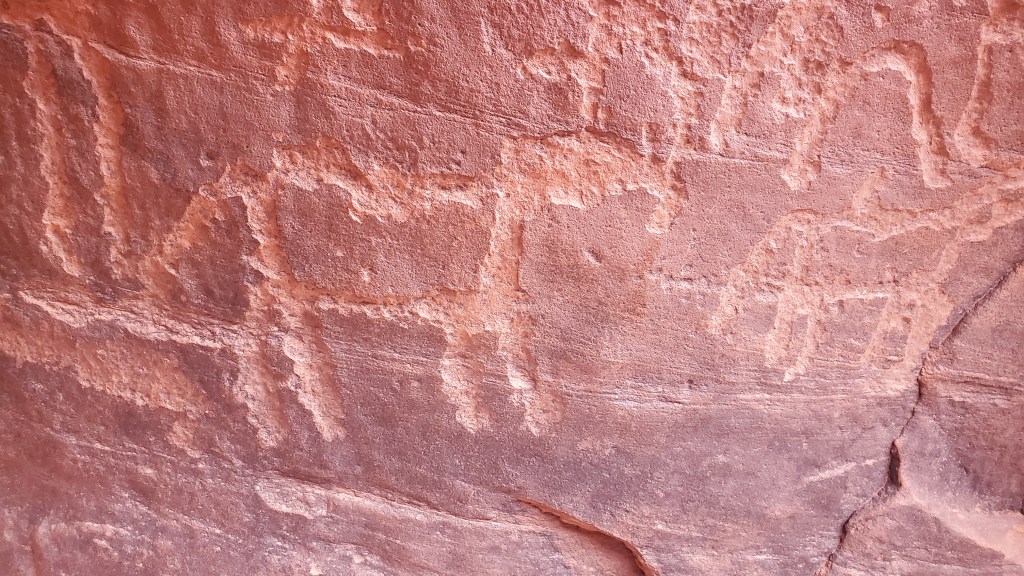
Just five minutes after we switched our comfort bus to the sand-handling Land Cruiser, we made a stop to see where caravanners had scratched their names thousands of years ago.  Before we had even turned our backs, Wes and Piper were scrambling up the hill.  Kyla was torn between the grown-up desire to nod solemnly over ancient carved writing and joining her sibs. Rock writing did not win. (Goats are visible in the first picture; the kids are somewhere in the second, but we never saw them!)

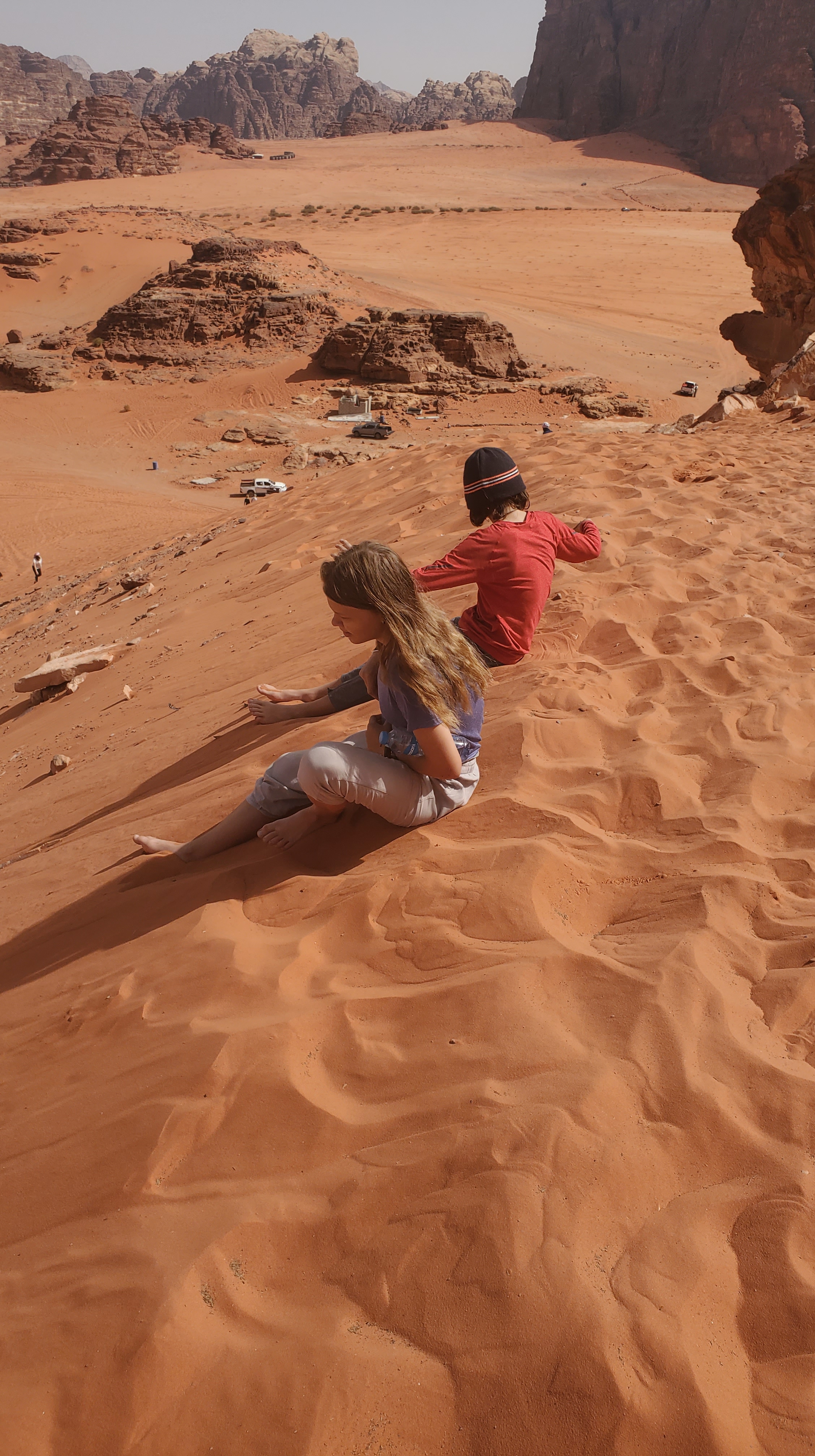
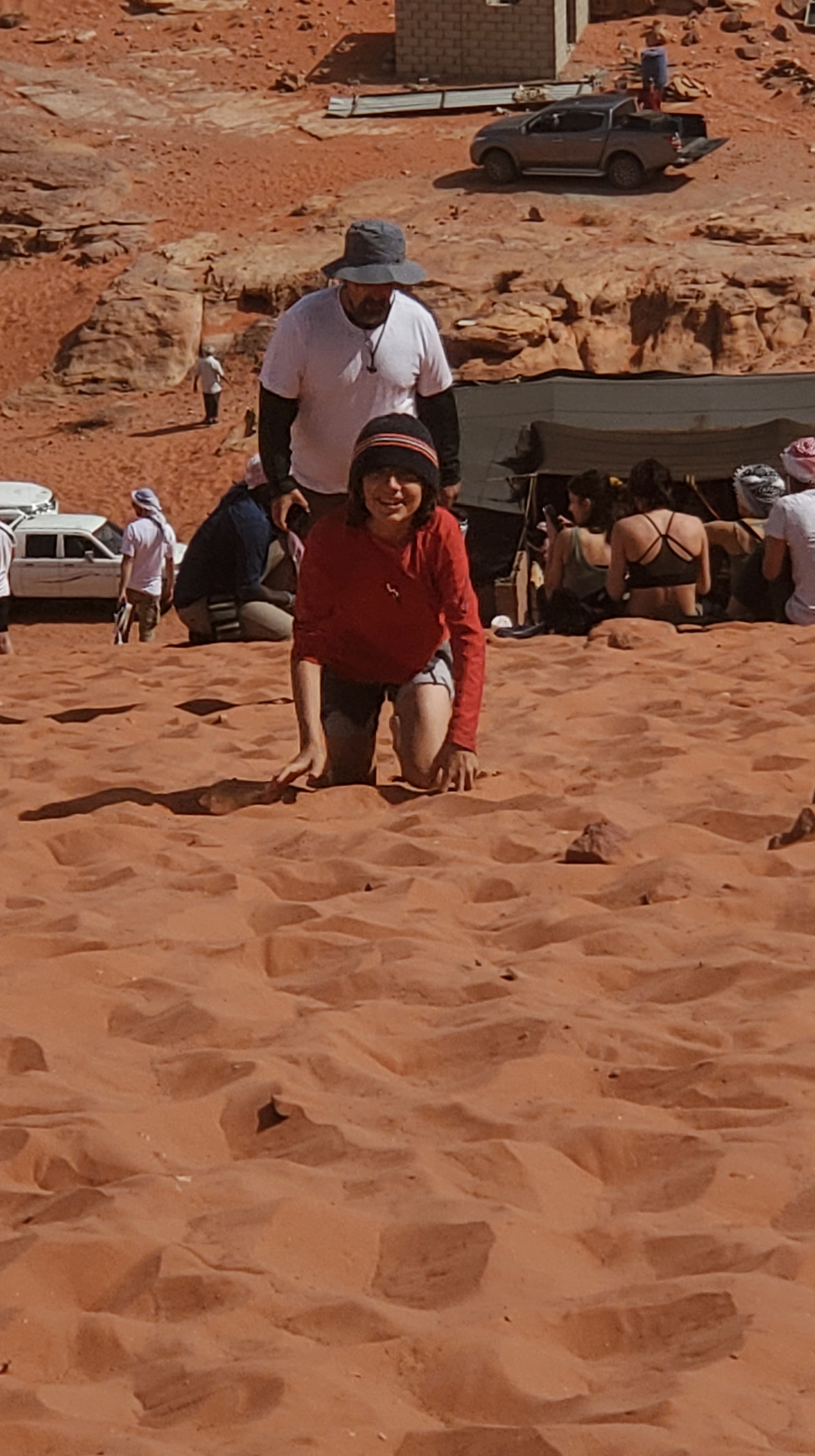
Our next stop was a red sand dune climb up to a Very Important Rock. Again, climbing and creating sand games, then scrambling to the very top for a panoramic view.  No matter where we landed, the kids figured out something fun (and off-script) to do, including building a pyramid to entomb a dead beetle. I guess they were paying attention in Giza after all.

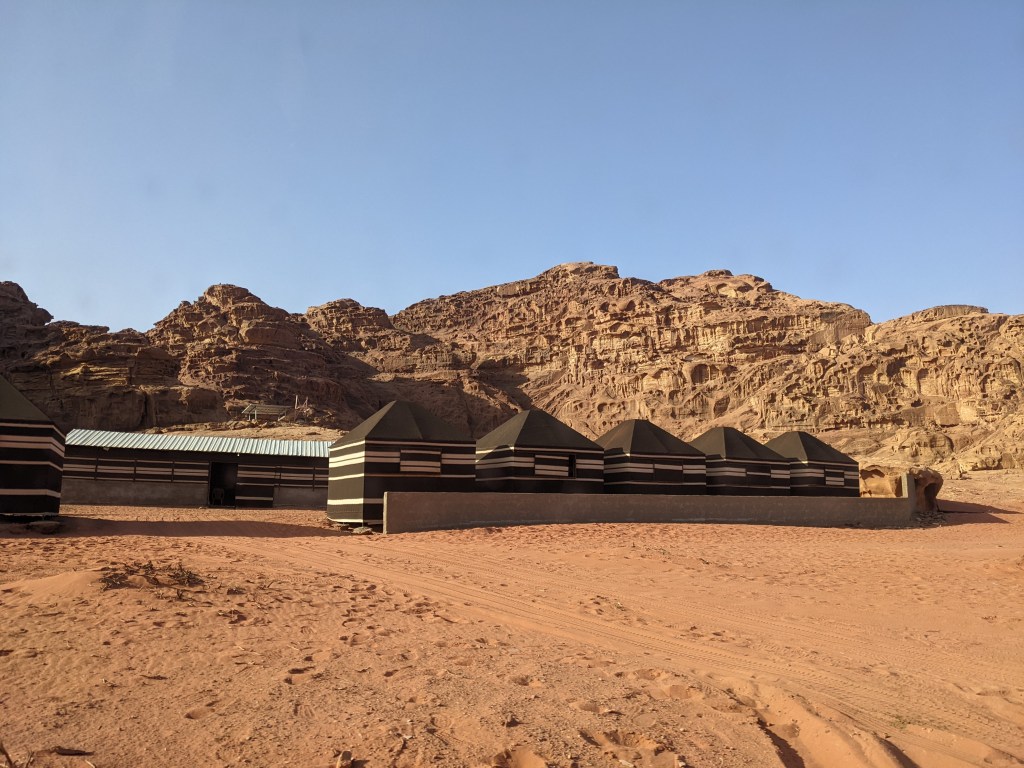
We stayed at Sheik Zaib’s camp for two nights. All resources had to be carefully doled out, and we slept in two-bed tents with a single light bulb and no heat. [Dwayne and I shared one twin bed and the blankets from both beds almost kept us warm. The kids did not fare as well.] Winter became Spring, technically, during our stay and the daytime temperatures never got warmer than taking off our puff jackets while we hiked and climbed midday.

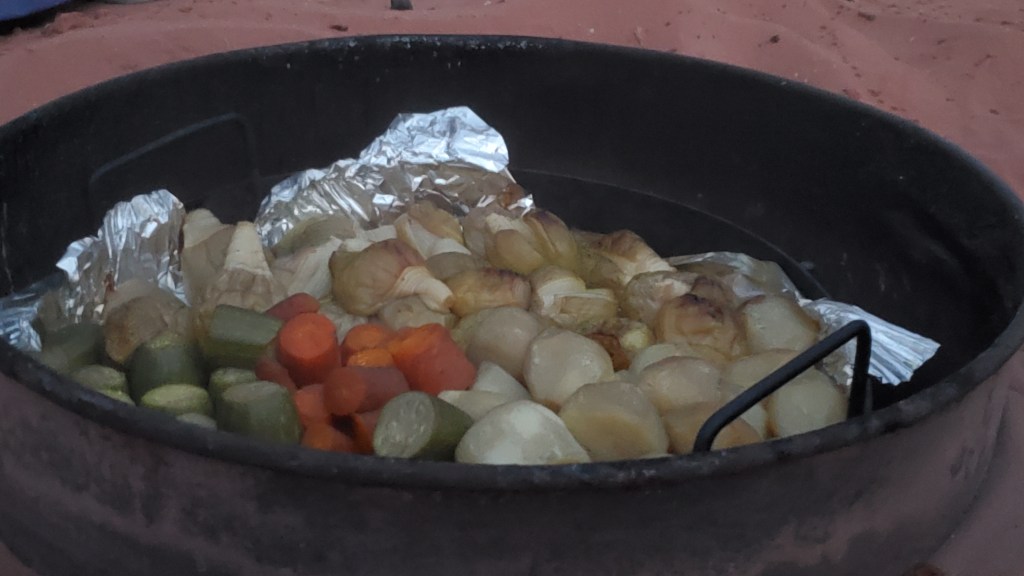
We did get to have zarb our first night.  It is a delicious local bbq, done by layering veggies and meat in pans and burying it with a fire under the sand for an afternoon. True to all of our experiences so far, all the veggies offered were cooked (blech, as quoted by youngers) and there was a lot of dry pita bread and non-sweet foods. Luckily, we brought a tine of cookies and another tin of baclava for our two days here.

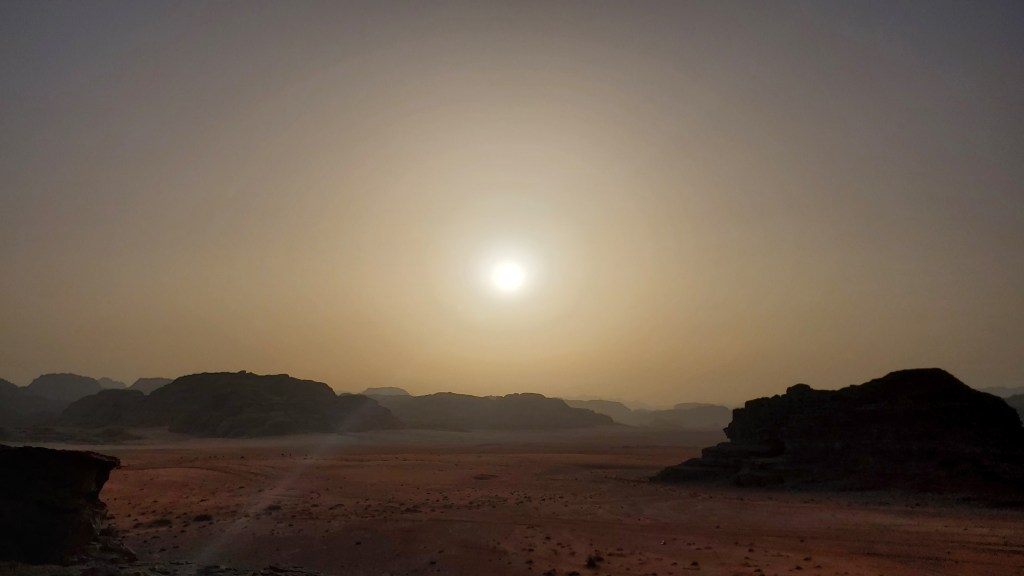
The sheik had chosen his camp a location of both sunrise and sunsets over the rocks. I did not get my cold self out of bed to witness the first, but we enjoyed the evenings.

Dwayne sincerely enjoyed the beauty of Wadi-Rum. It grew on me, but so do warts.

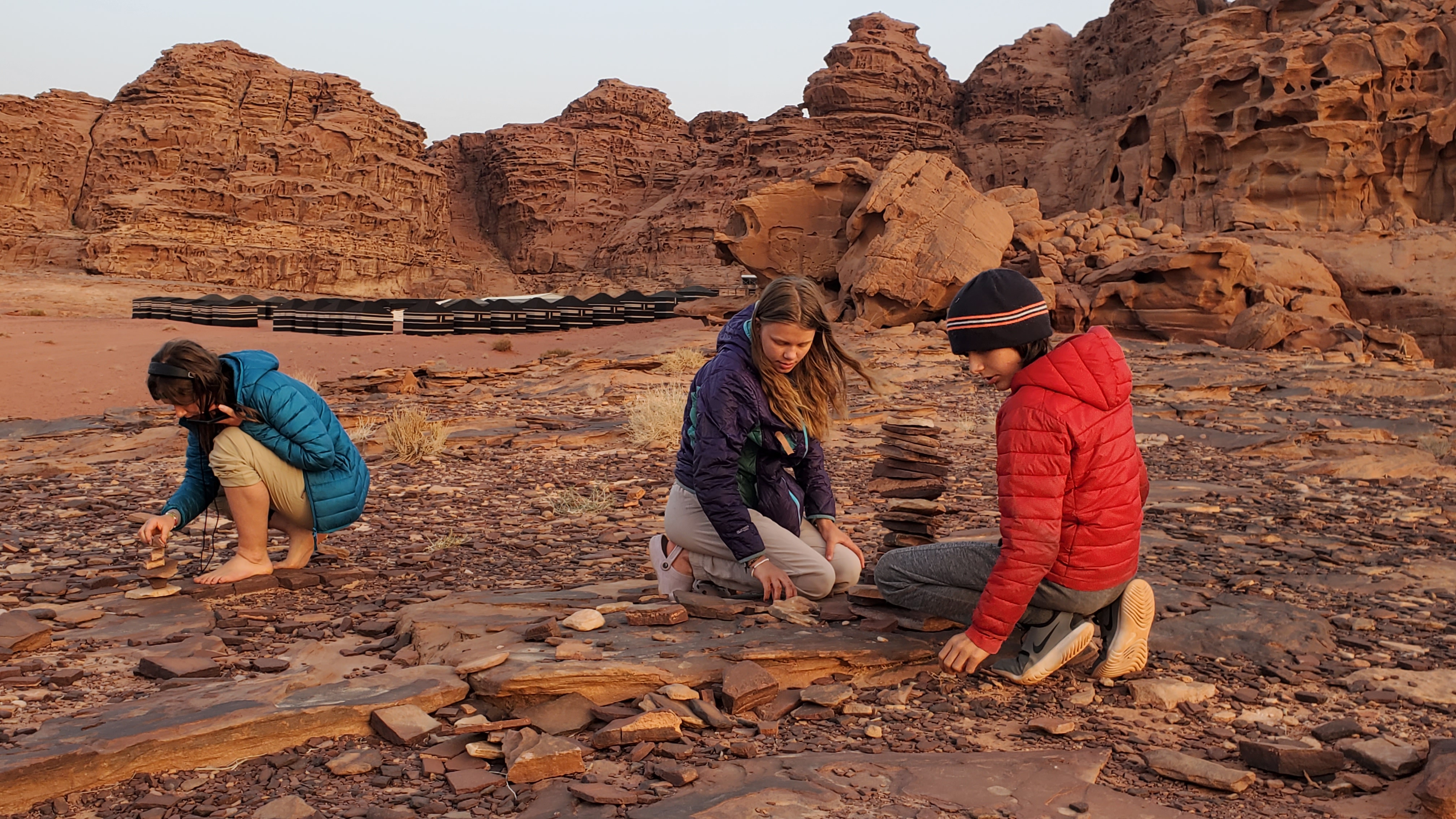
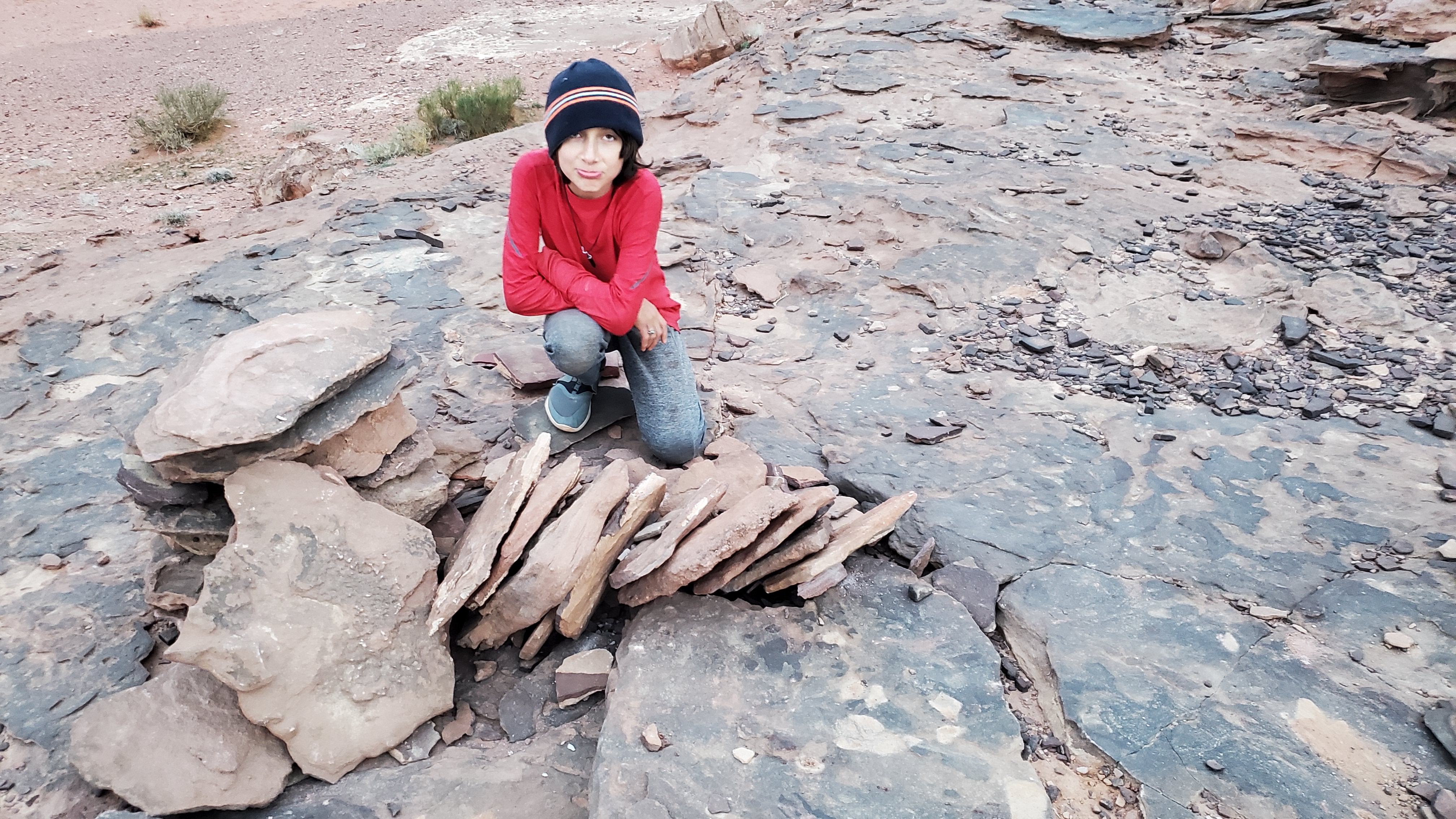
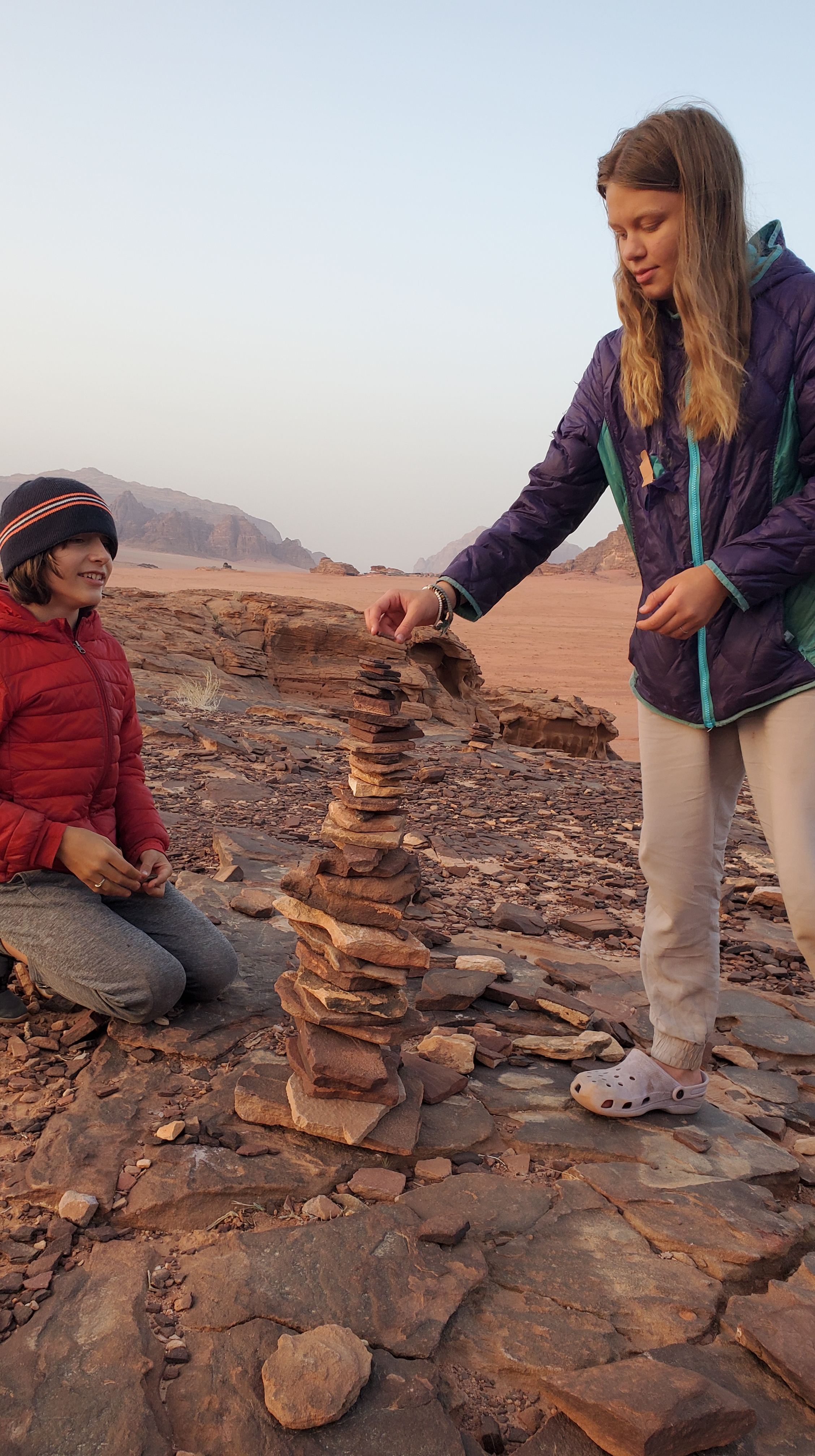
Wes and Piper, perhaps bonded by misery, were determined to build the tallest cairns on the rock where we watched the sunset. Finding rocks that neither could lift separately, they moved them together.  And they got to 40 rocks tall (aiming for 47, the age of their parents) before gleefully witnessing The Fall.

The Wadi-Rum was an experience I’m glad I had, now that I’ve had a hot shower and a good night’s sleep.  Next up is the reason we came to Jordan: Petra.


*Again, a coined word that makes sense in this context.

End of Egypt: Impressions

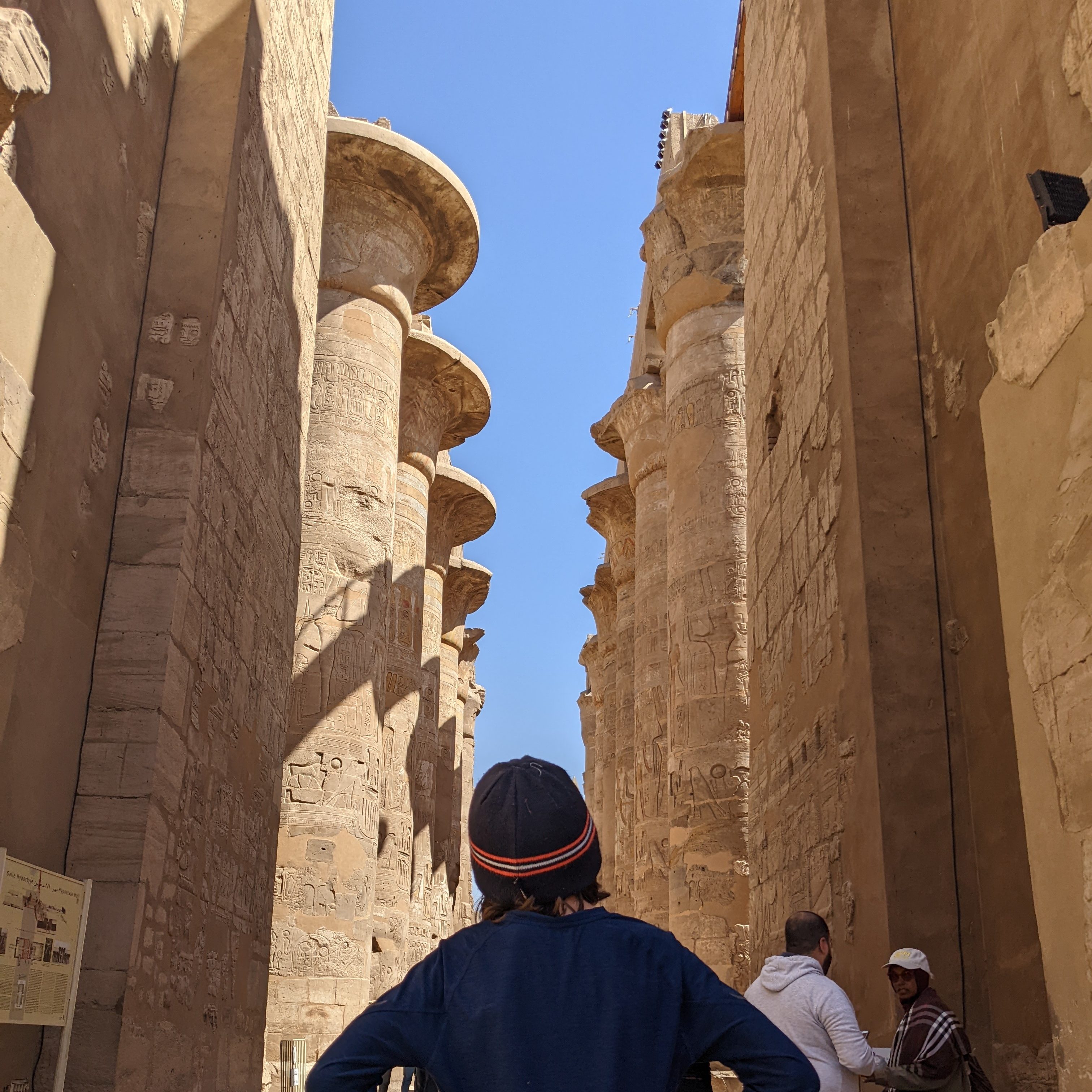
Egypt can make my brain hurt.  We saw this:

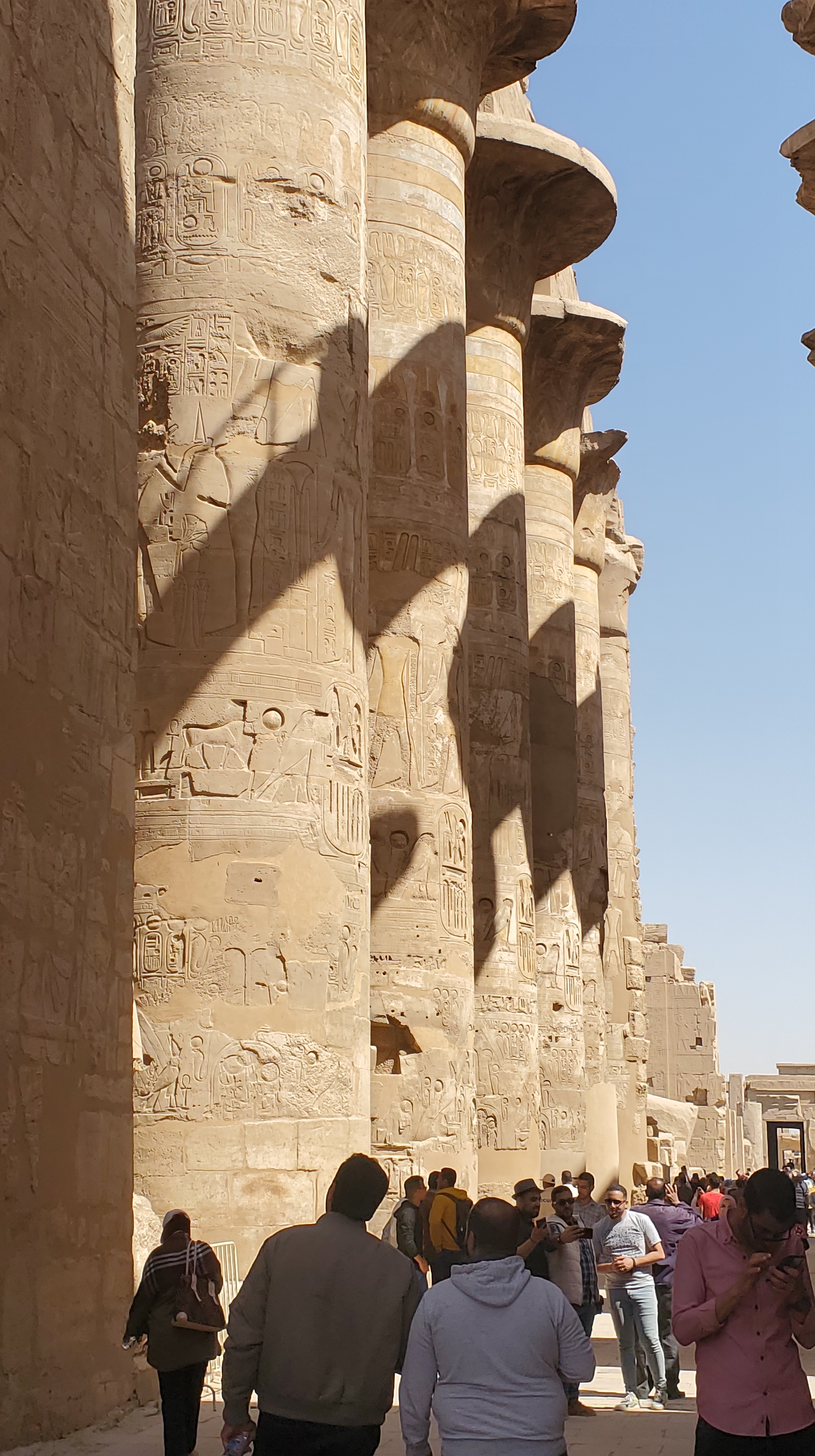
Wes stars at the giant pillars at Karnak Temple in Luxor.

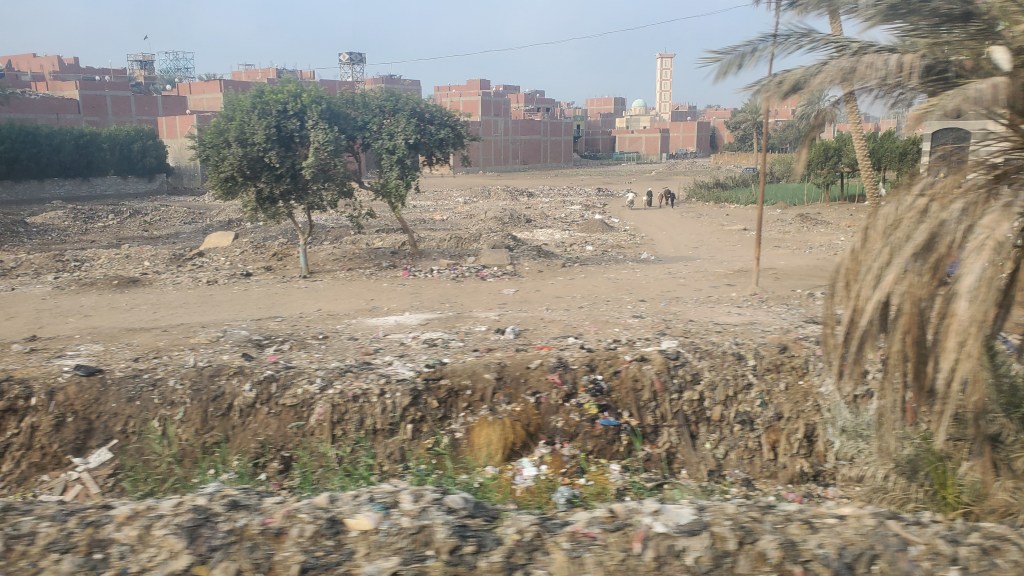
… and we were surrounded by this:

Taken from the train window. There was no irrigation ditch, tributary, path, sidewalk, road, curb or front yard that was not covered in litter.

I found myself very fond of the sight of a distant mosque among palm trees, a lone camel grazing near the Nile, the sand becoming lush fields jutting against the river. I loved the sense of turning a corner and stumbling across another ancient ruin.

My enthusiasm diminished when there was far more trash than splendor or when I had to look straight ahead and ignore all the sensations of the suq to minimize harassment. I have no regrets (other than accidentally using Dwayne’s toothbrush and catching his cold!) of our North African adventures. Egypt was absolutely worth doing, but now that it has been done, my Amelia Peabody* itch has been thoroughly scratched. 


*Amelia Peabody is a turn of the century lady-ish Egyptologist, created by Elizabeth Peters.  While a fun read, they are best listened to as narrated by Barbara Rosenblat. The series is most noteworthy because of all the books I’ve read (and since childhood, that number is certainly in the many thousands), her son, Ramses, is my absolute favorite literary crush.  Peters also created the longest and slyest literary joke I’ve ever come across, as she cross-references herself and Amelia in another of her series.  Amelia and her family spend lots of time in the turn-of-the-century Valley of the Kings, Karnak, Cairo, Thebes (present-day Luxor), the Egyptian Museum and the Egypt wing of the British Museum (where we also toured in 2019), while working along and against other real-life Egyptologists. 

Day 31 of the Try It Again Trip: Luxor

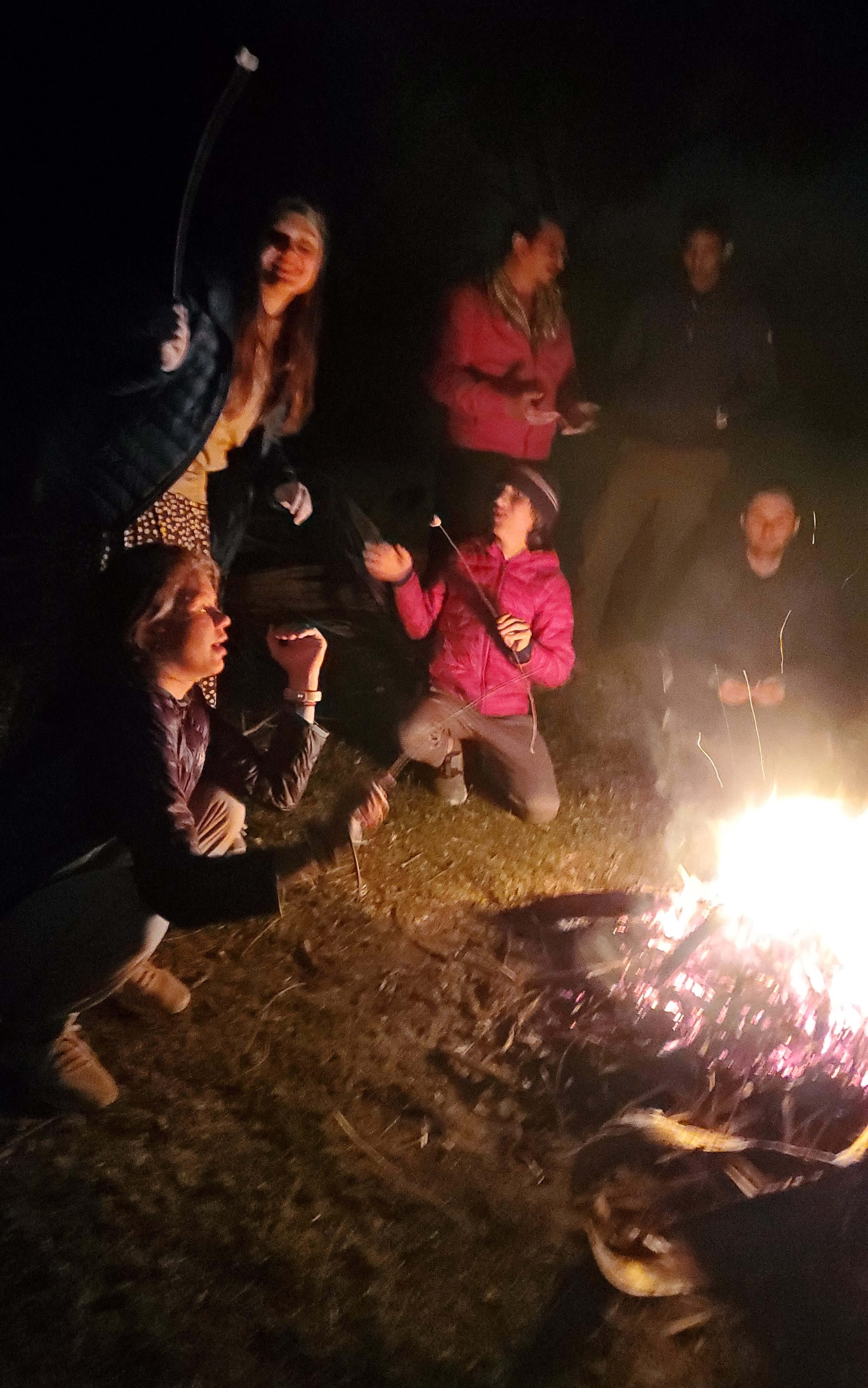
We loved the felucca and wished it had lasted past an early breakfast.  Another tour group camped on the same bank we did and used fallen palm branches to start a campfire. Our guide had picked up a package of Egyptian marshmallows (much smaller, don’t puff up, but gets golden and tastes sweet) and the party group had a wireless speaker, bad 80’s music, and they weren’t afraid to use either.  The girls loved it, Wes gorged on marshmallows, and I think it will be a memory will all recall fondly tomorrow and in twenty years.  And with enough blankets and clothes, we didn’t freeze that night. [Allegedly, it was hot last week, but we’ve rarely taken off our puff coats this week.] 

It is lucky to circle the Giant Scarab statue at Karak Temple seven times, counterclockwise. Wes whizzed through.

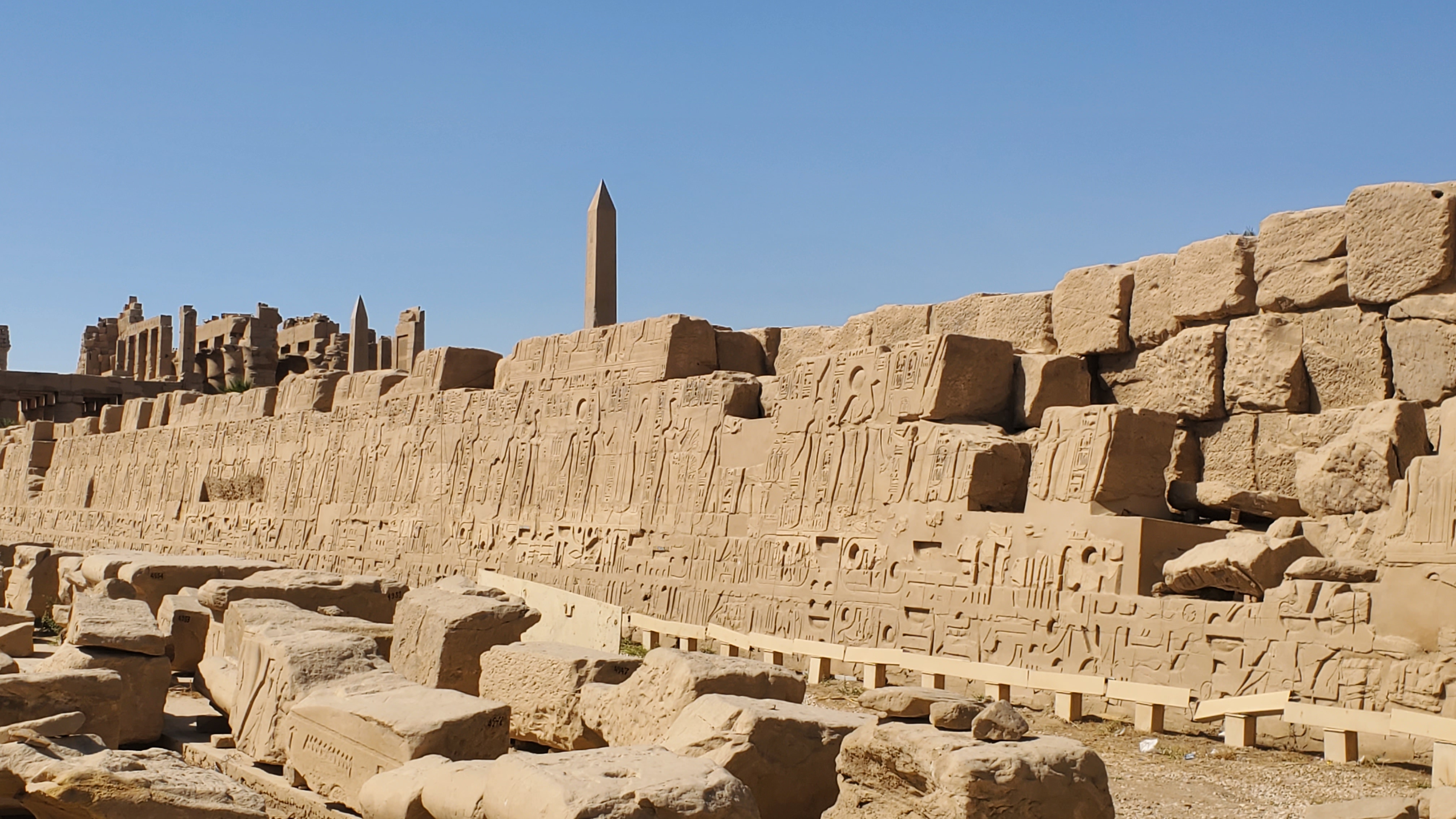
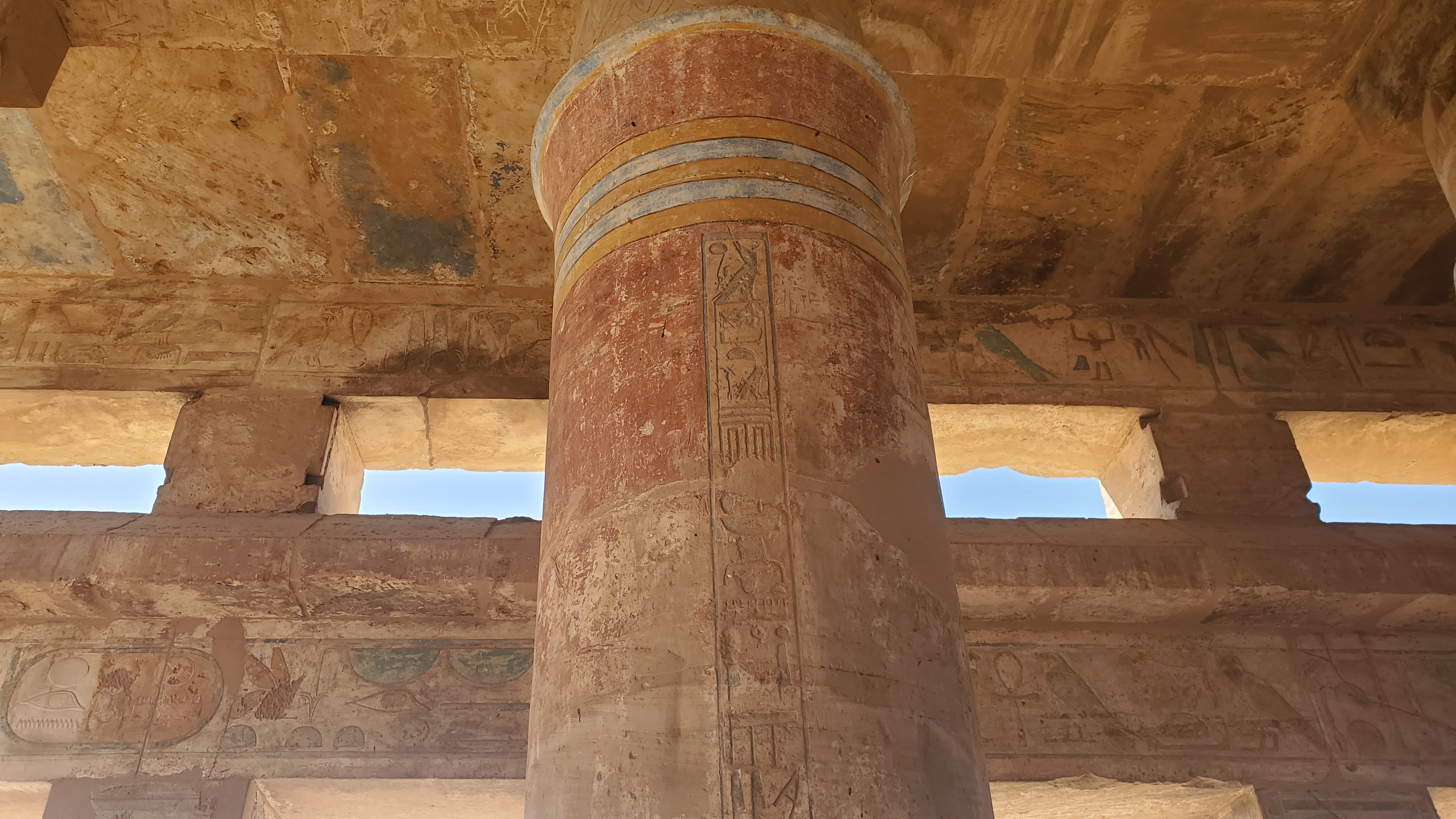
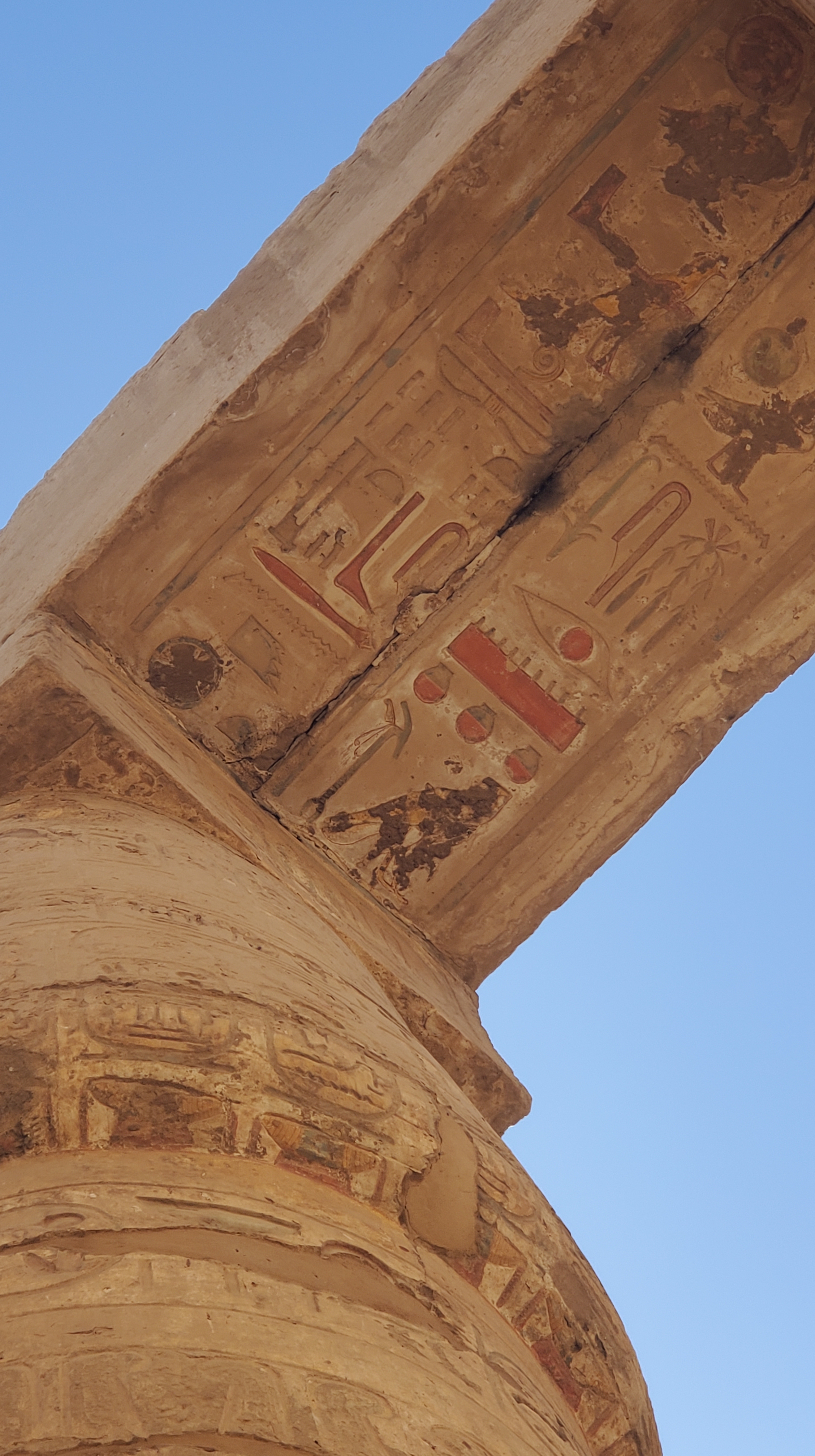
The drive to Luxor from where the felucca stopped was the Five Hours That Broke Our Kids in Egypt. We bribed them with anti-whine ice cream to spend a few hours at Karnak Temple, a structure that was added onto for 2000 years as king after king “humbly” built temples for their gods.  We saw some of our first images in their original colors—what a difference it made, and one can begin to imagine how stunning they were in their first millennium or so.

Next to our hotel is the Luxor Temple with its recently semi-restored Avenue of Sphinxes that runs from it to the Moon Temple at Karnak, about 3km distance.  This is my view as I type this.

Today, we ended our tourist time in Egypt with a trip to the Valley of the Kings and the City of the Workers.  There are logistical issues with building a new pyramid complex for each new king and by the New Kingdom era, pharaohs were building caverns into a pyramid-like hillside.  Workers were blindfolded on the way there so they wouldn’t know exactly where this giant underground treasury was (but at least not killed upon completion).  This is where King Tut’s tomb was found.  Because each burial was top secret, when a new king would have his built, it sometimes ran into an old one.  Tut’s was a relatively small one built accidentally between two bigger ones.  If you were looking at the landscape and had to decide where to start digging, you probably wouldn’t choose this tiny area between two other tombs, which is why many think King Tut’s puny burial site was the only one –so far— that has been discovered intact over so many millennia.

If you flip your brain inside out, you can see that this is an underground view of the 62 discovered tombs in the Valley of the Kings. Like the pyramids, the entries can be quite long and narrow to get to the actual chambers and tomb. The vary in size, and some are just glorified holes and one has dozens and dozens of rooms.

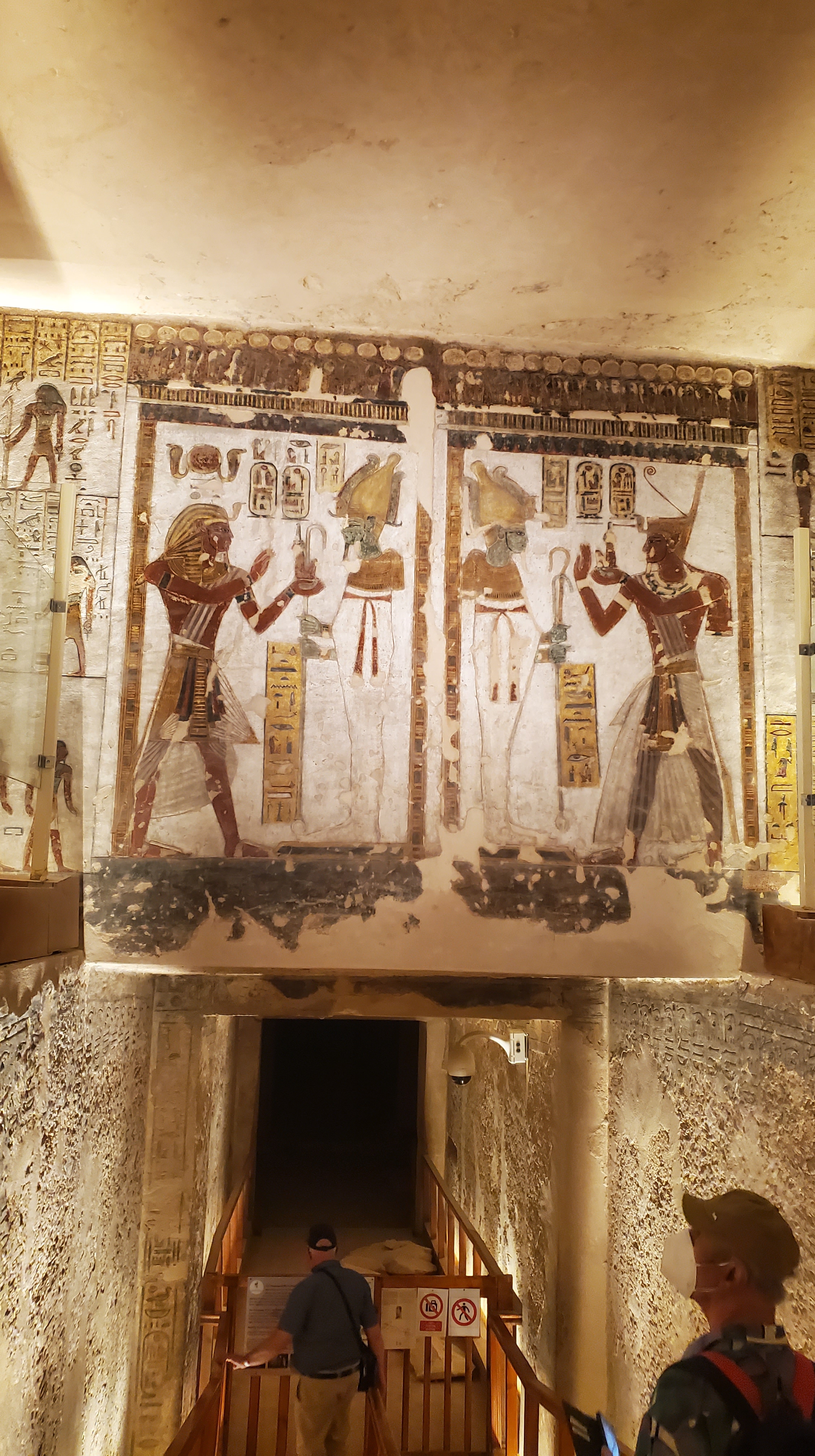
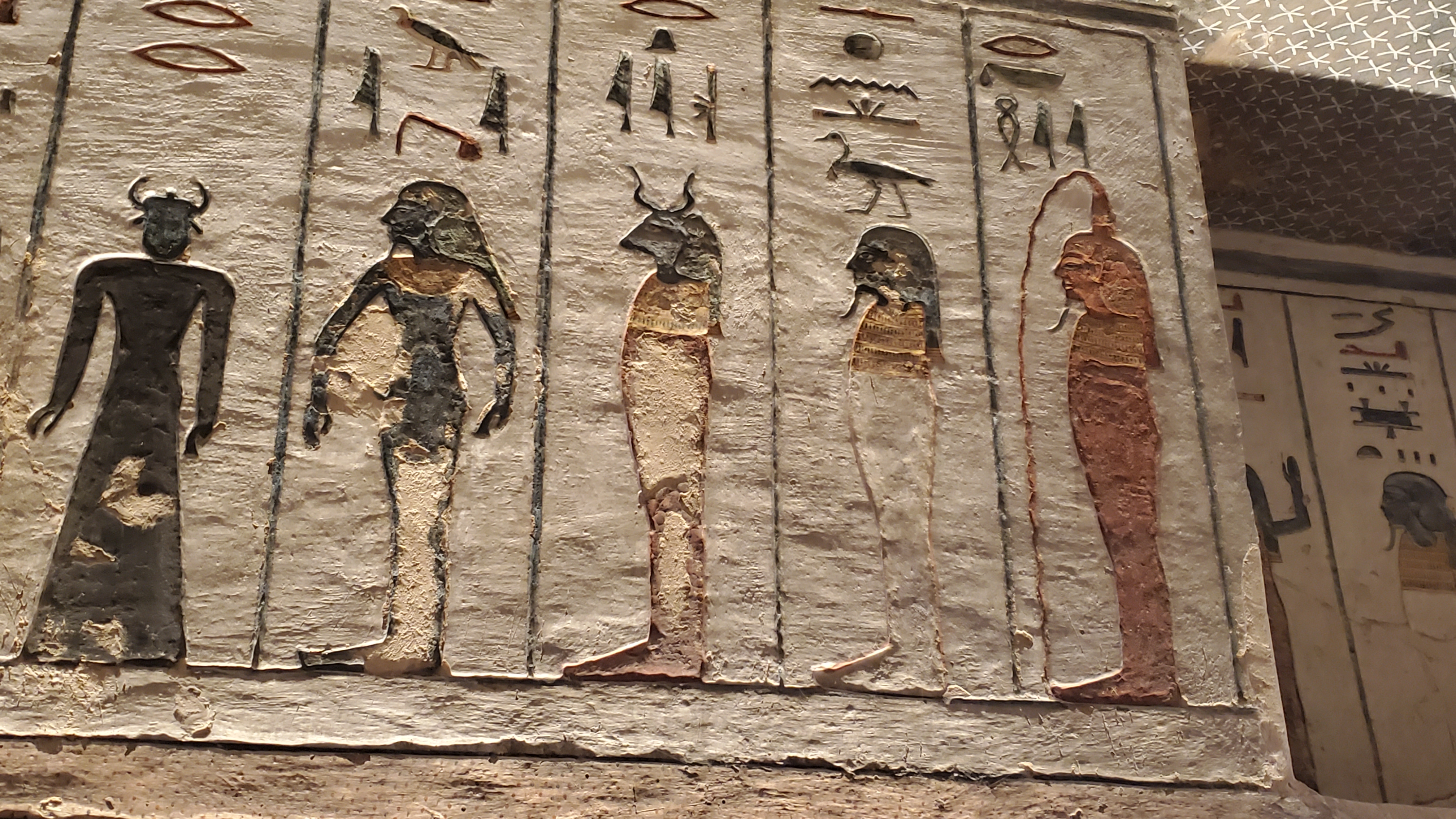
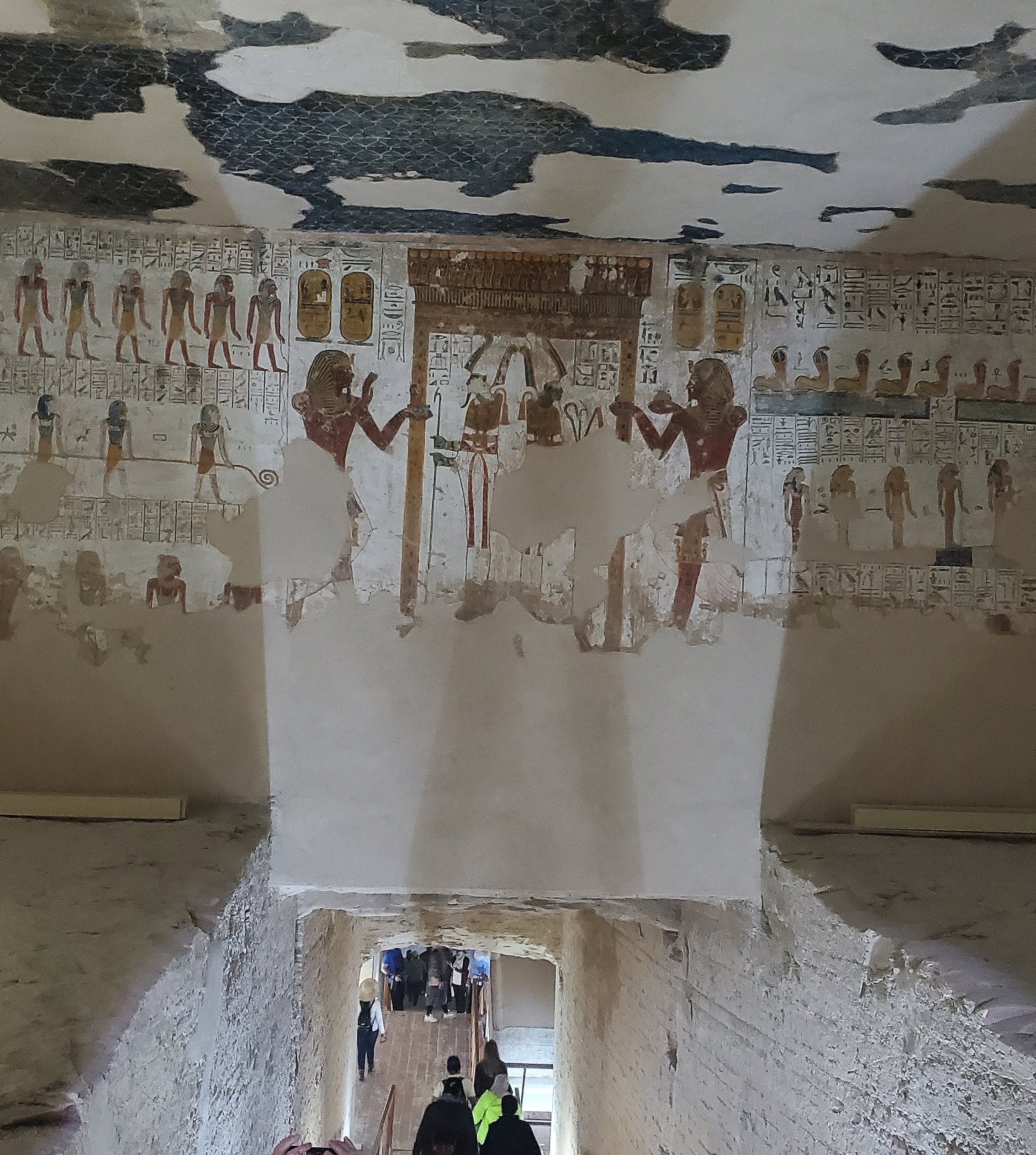
A ticket gets you into 3 of about 7 tombs that are currently open (there’s a rotation). Mohamed, our guide, told us the three to visit and in what order and we have no regrets. First of all, we got to see so much color. It’s really like going from black and white TV to colorvision. And in all that, we saw a few odd things:

The City of the Workers is interesting as it is the only site where “regular people” residences have been found. The top workers got to build their own burial chambers—these were so much smaller than the kings, of course, but fascinating as the three we got to duck into were colorfully painted.  They were made of straw mudbrick and were not engraved, but the scenes of paradise, a guarantee for all non-pharaoh people, are a bright and unique antiquity. 

And that was our last bit of Egypt. We take another sleeper train back to Cairo and will head to the airport tomorrow. I hope to gather my thoughts to prepare myself for filling up my brain with Jordan!