[Part 1] We are in the Cradle of Civilization! (Do you think it will rub off?)  

This is our fifth day in Egypt, and it has been ripe with experiences.
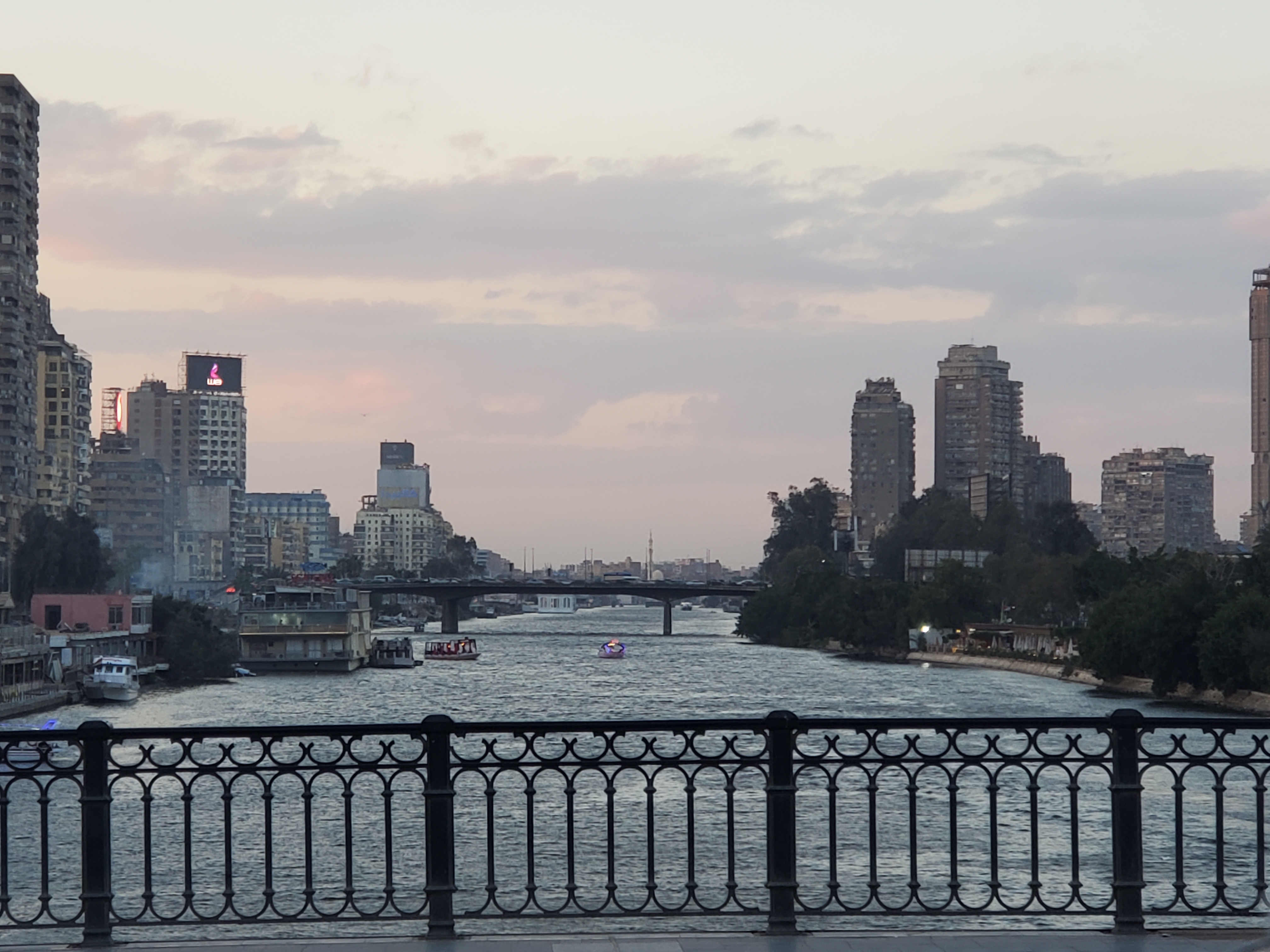
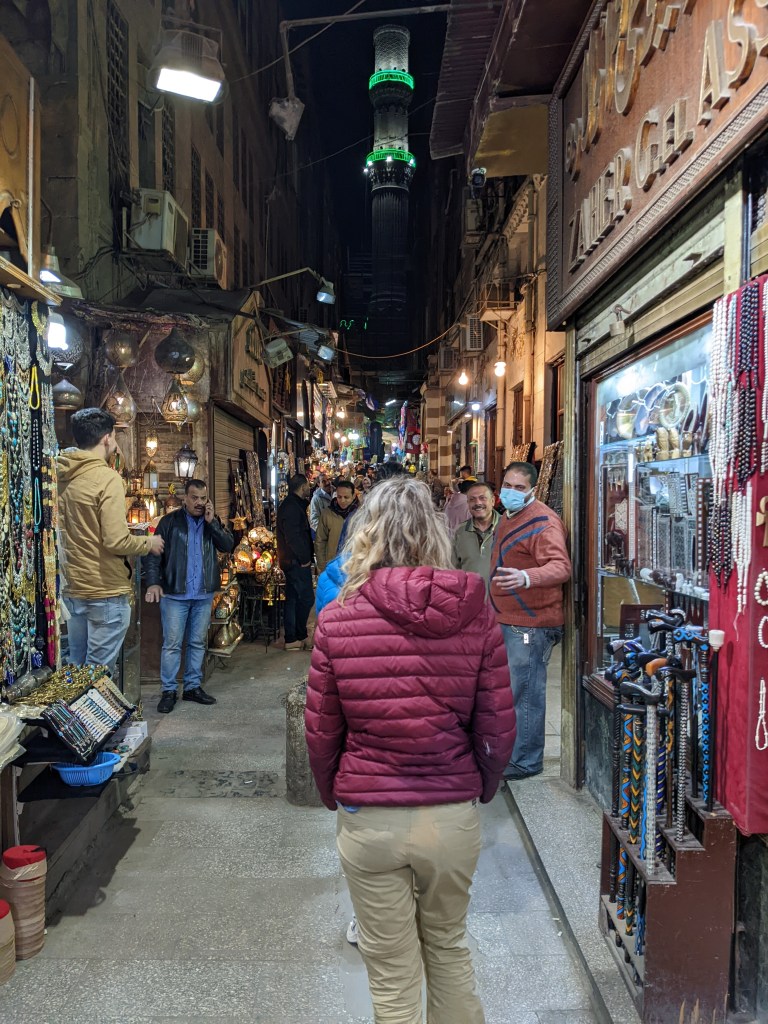
Cairo bazaar

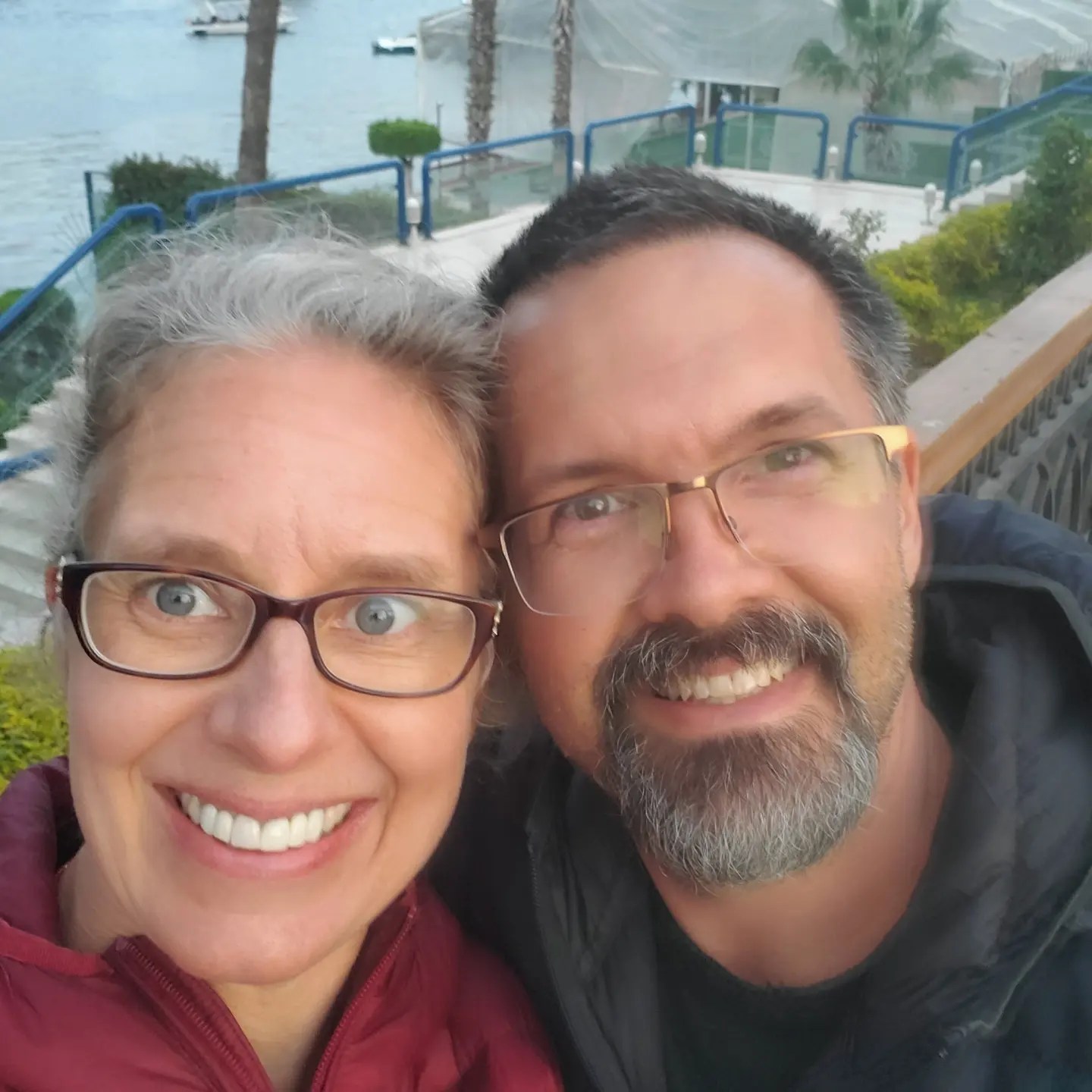
Dwayne and I explored a few kilometers around our hotel the evening we landed, and we didn’t get maimed or killed.  It’s cute how we thought Nairobi was dirty and brimming with crazed drivers and unflappable pedestrians/vendors in the middle of freeways.  Add 15 million more people, the smell of dead cats (because, you know, of what happens to all the living ones), and oh-my-f-ing-Nefreti, the Nile! …and you have a decent approximation of Cairo. It was exhilarating.
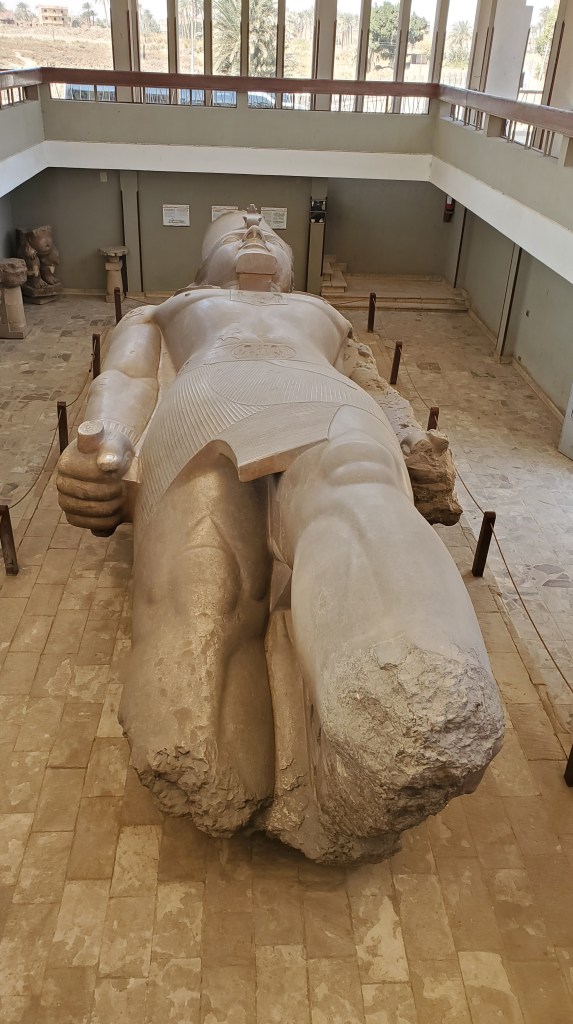
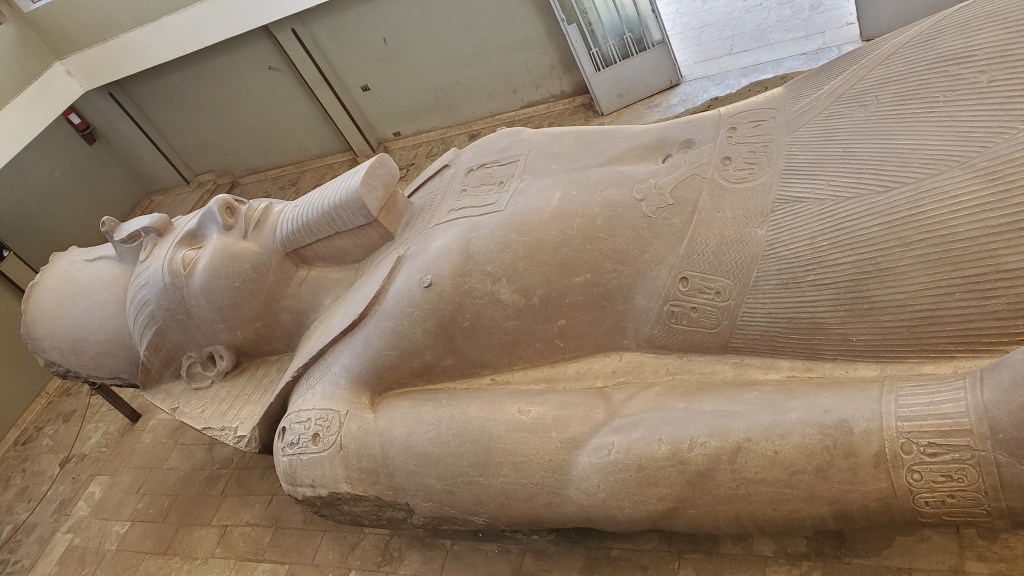
This Ramses II statue was found face down in a puddle somewhere.

We met Mohamed, our tour guide for Egypt, and the six of us explored Memphis and Saqqara on our first full day.  Understatement: Memphis is old. While it didn’t become the capital of a united (Upper + Lower) Egypt until about 3100BC, it probably existed, in its prime location on the Nile, about 8000 years ago. Even when it wasn’t the capital after a thousand years, it was still an important city such that Ramses II (most famous/powerful/successful/ egotistical of all the arrogant 170 pharaohs) erected two huge statues of himself in Memphis and he died in 1200BC.  Ancient Egypt can throw thousand-year increments around like the US tosses billion-dollar price tags.


There are three interesting things about the Memphis outdoor museum:
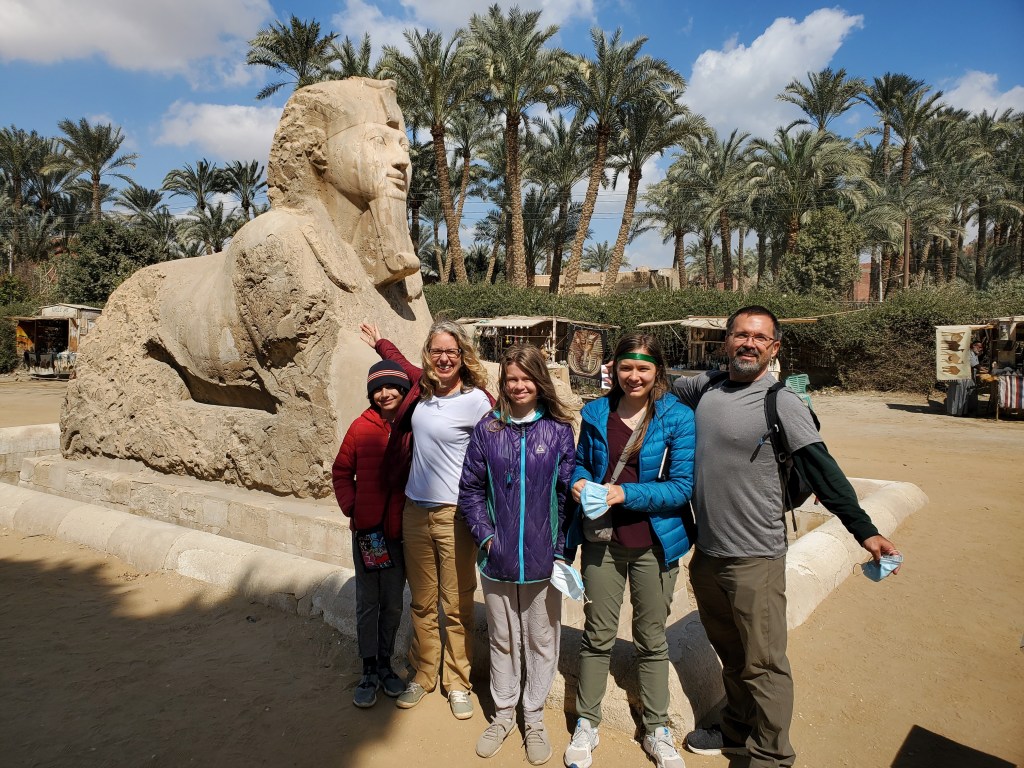
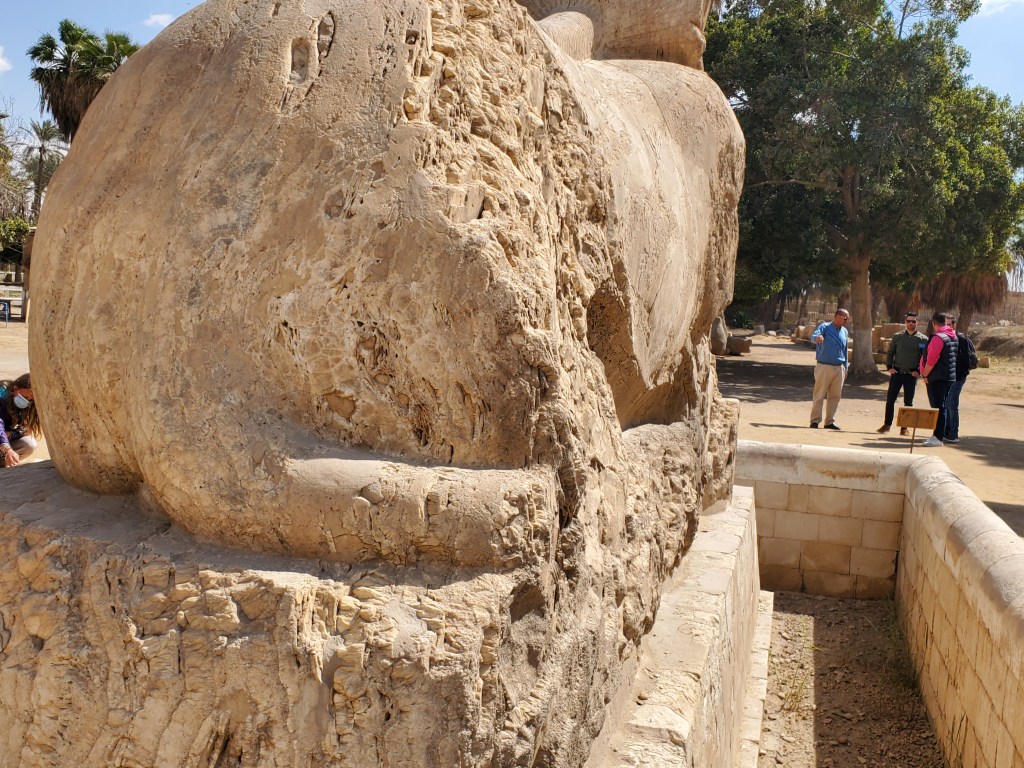
  1. The 2nd largest sphinx (like a mini-me, and in better shape).  It was excavated exactly where it was found, which is why the base is so deep.  The museum was built around it.
  2. The mostly intact Ramses II statue, rescued from it’s face-down position in a mudpuddle.
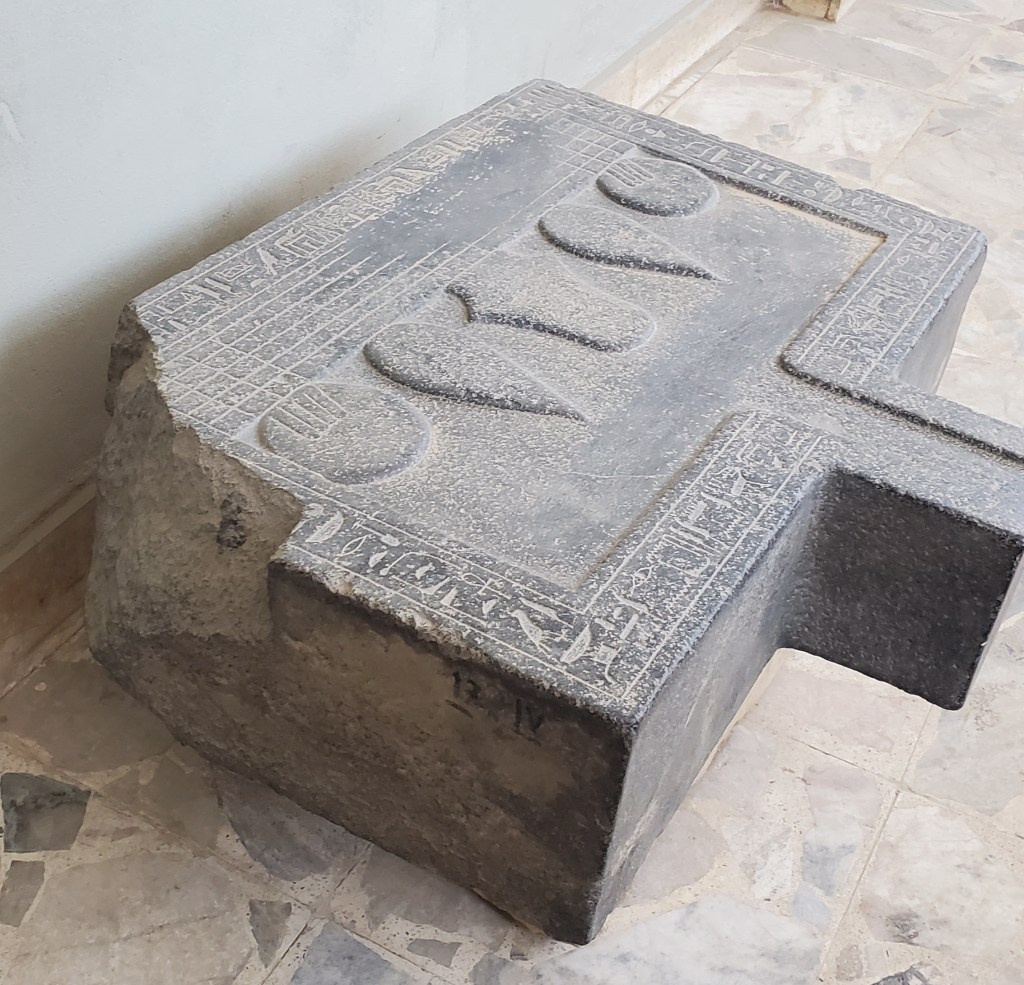
  3. The casual remnants of ancient sculpture, hieroglyphs, treasures places around the yard. (The last one in the slide show is an altar with depictions of after-life necessities and the hieroglyphics on the edges are the spells to make those items real.)

Memphis alone could probably employ all the world’s archeologists for many years.

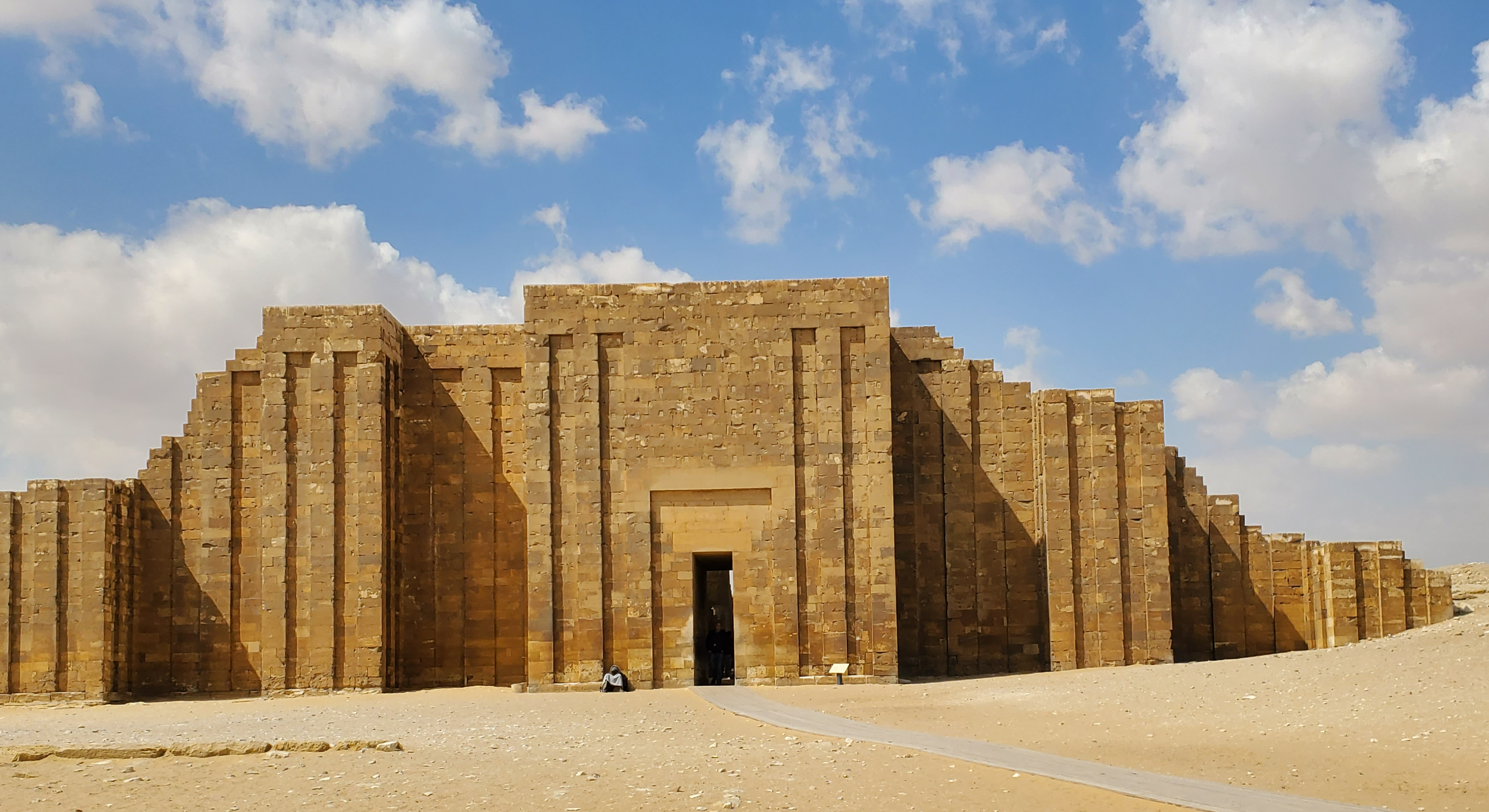
Not far from Memphis is Saqqara, in my puny understanding, the mausoleum of Memphis.  This is where the first step pyramid was built.  Its importance? Besides being the first known pyramid, it was the first block (not mudbrick, but cut stone) structure, possibly ever.

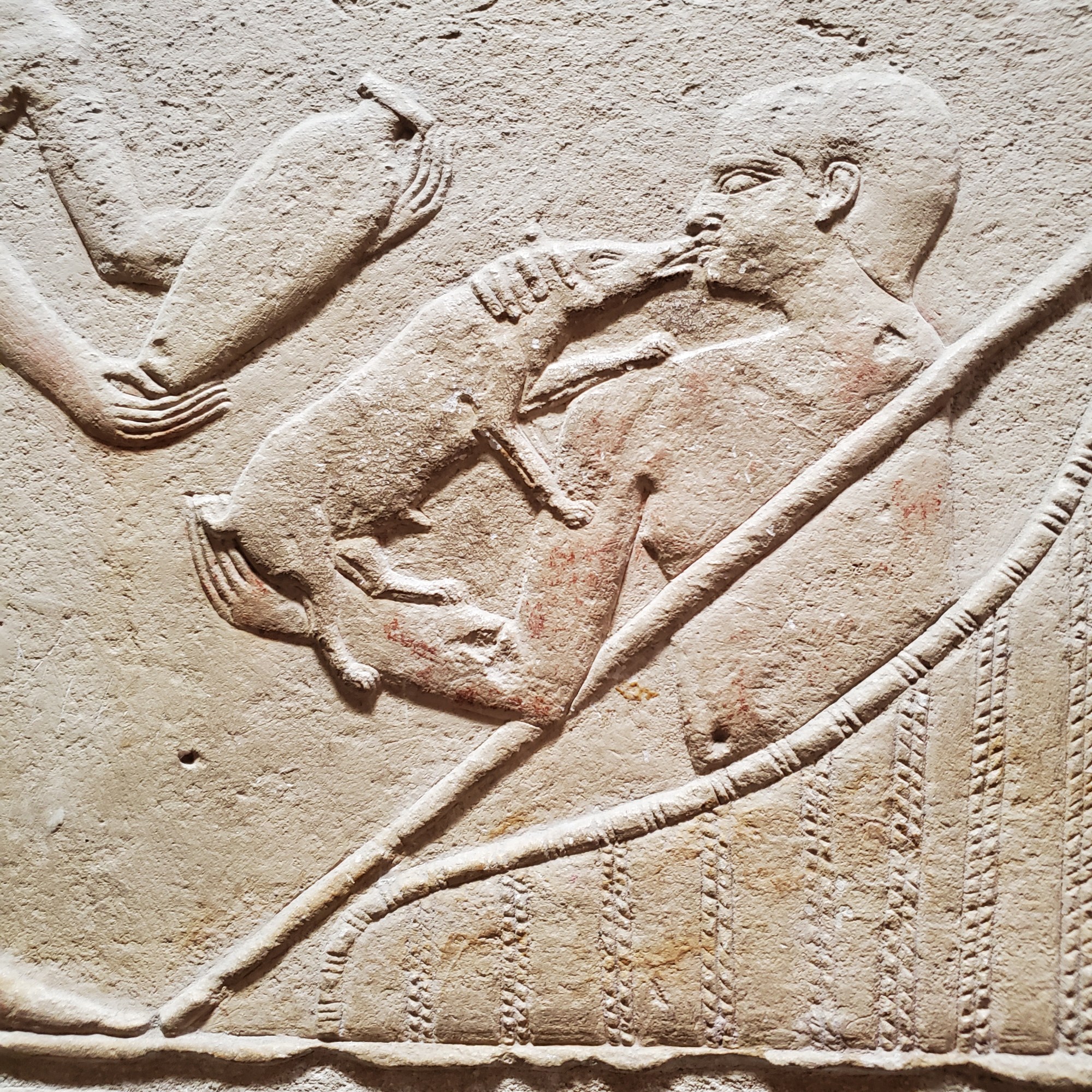
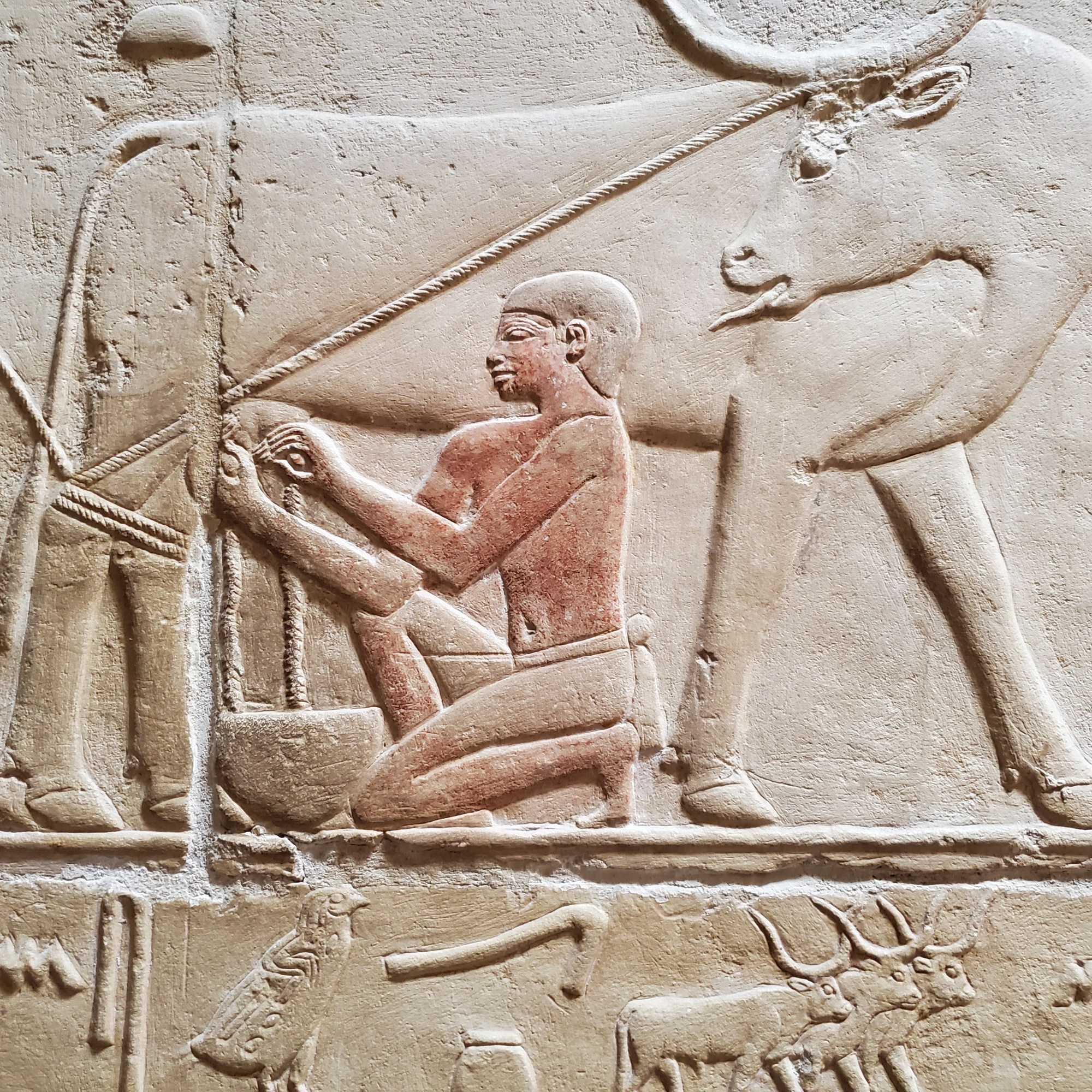
I enjoyed many of the carvings we saw inside:
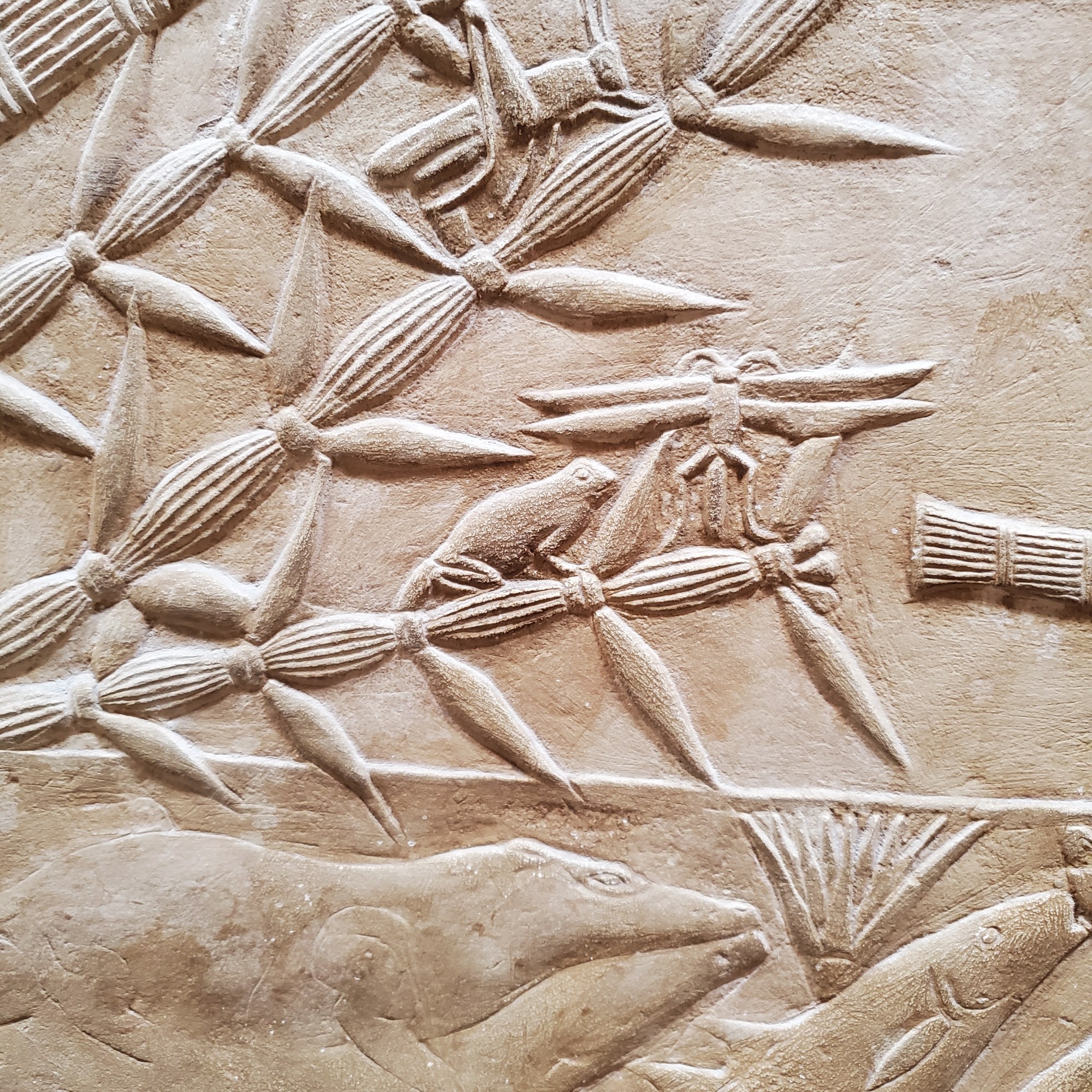
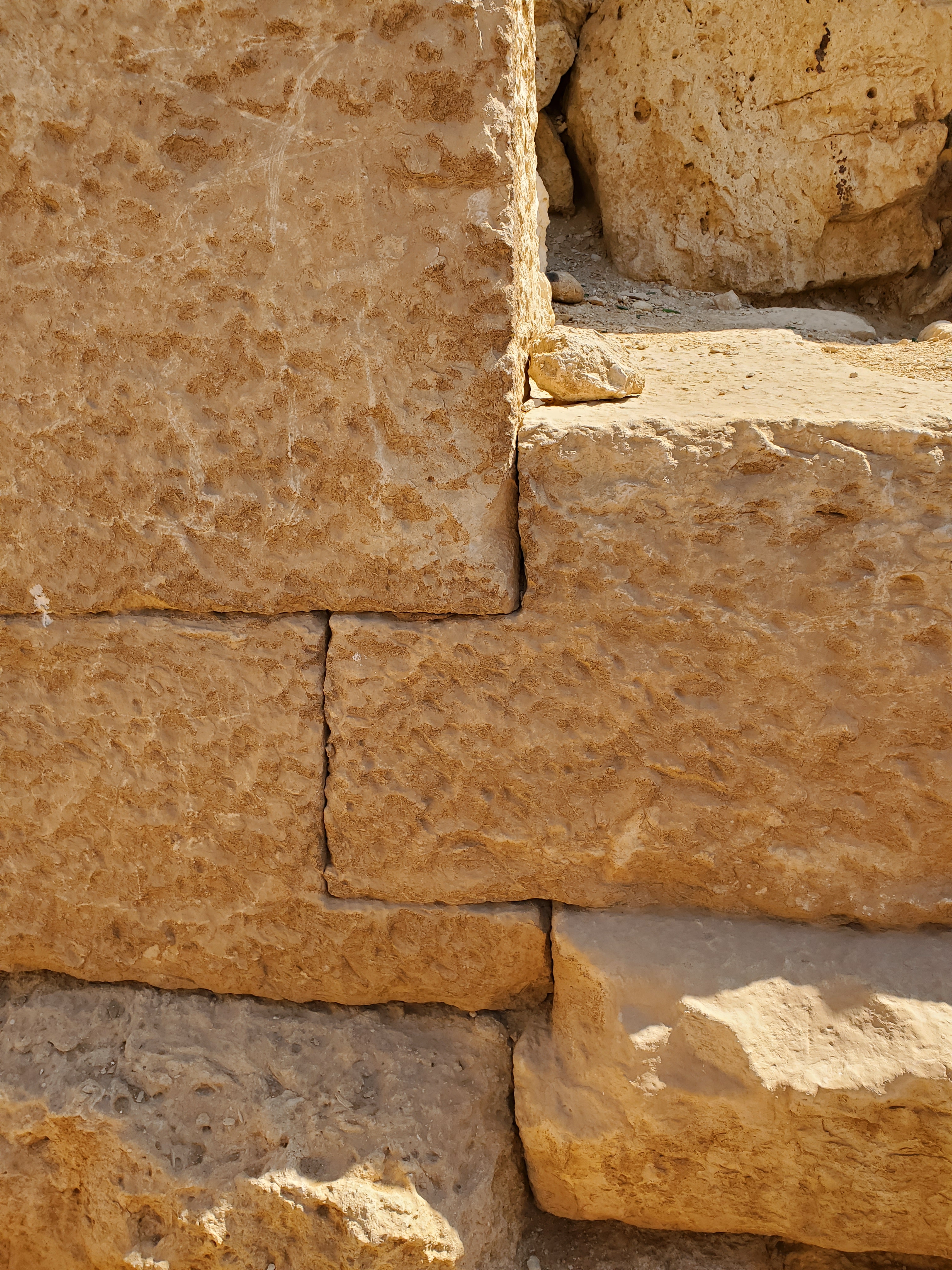
One thing I’ve learned about pyramids is that they are never built alone.  Even this first burial pyramid had little pyramids built for wives and daughters and his burial and mummification, as well as possible tombs for the architects. The Step Pyramid of Saqqara has part of its original fortress wall around it, which has been recently restored. Something I already knew, but didn’t quite grasp, was that the mummification and burial “stuff” is quite a ways from the pyramid, and access to the final chamber is a long stair set through the underground. You will be forgiven for thinking “iceberg” even given the hot climate.

That was about as much history as we could take for the day, and our next adventure was to visit the bazaar downtown, singeing all our senses in a cacophony of hawkers.

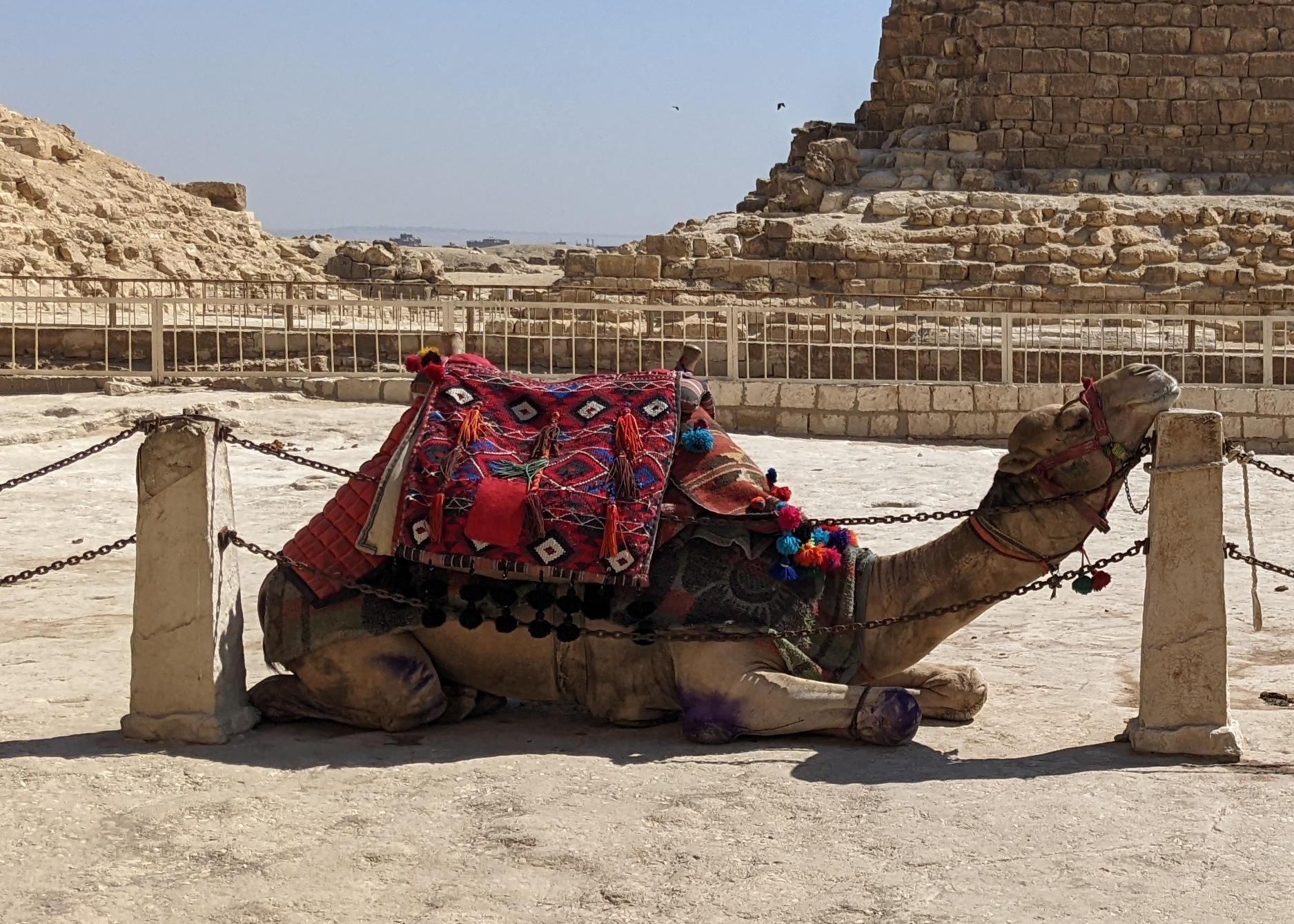
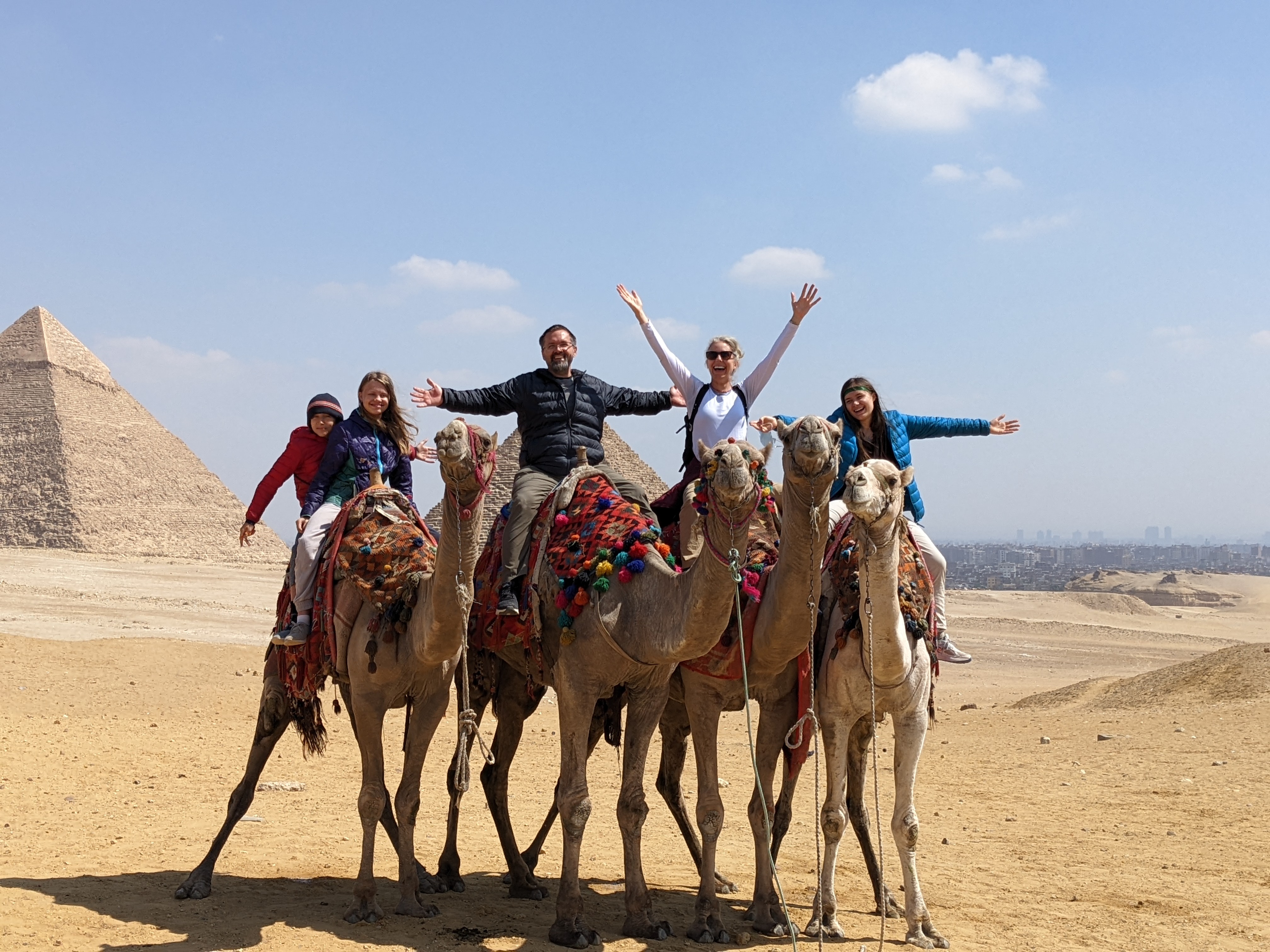
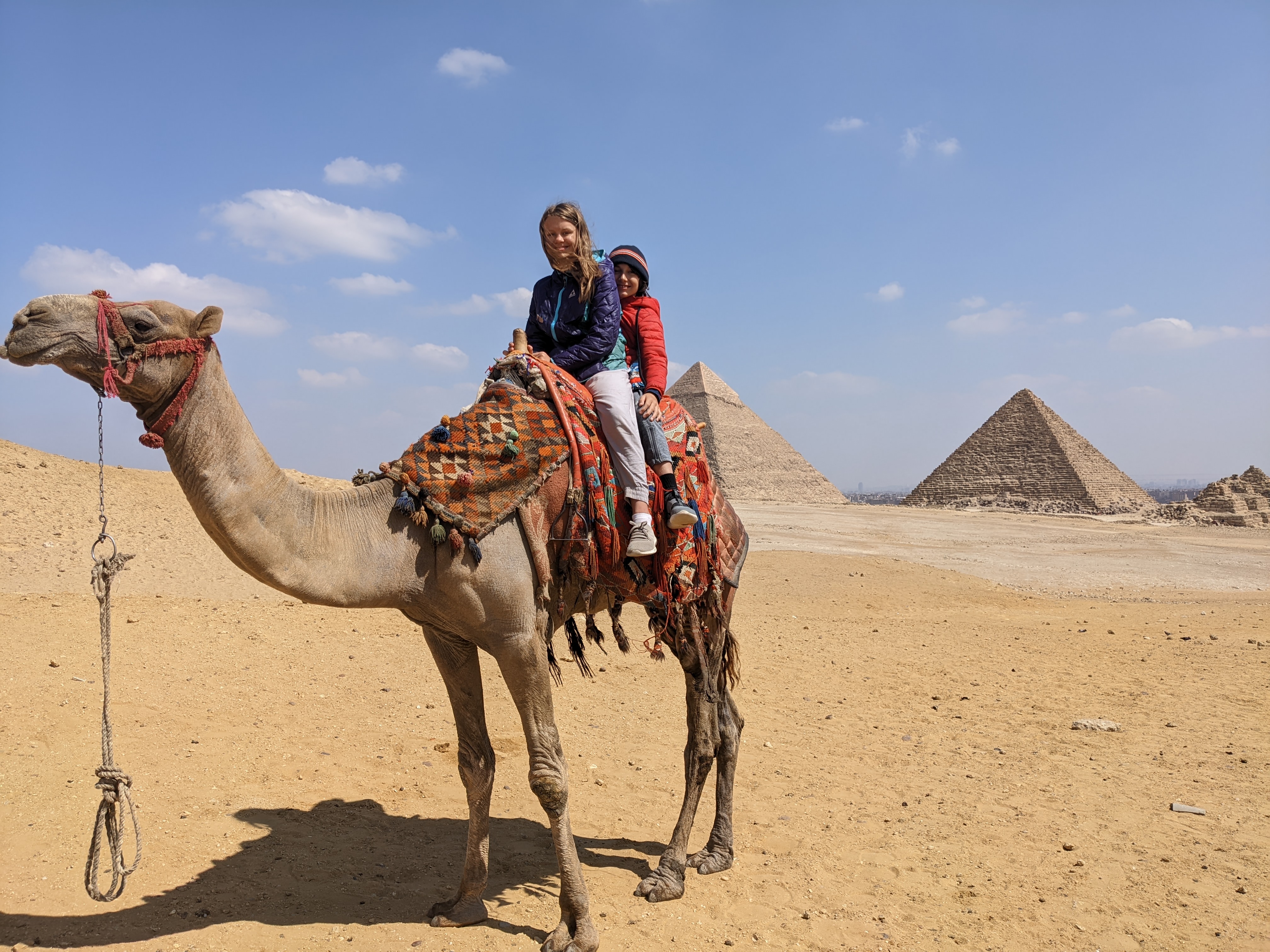
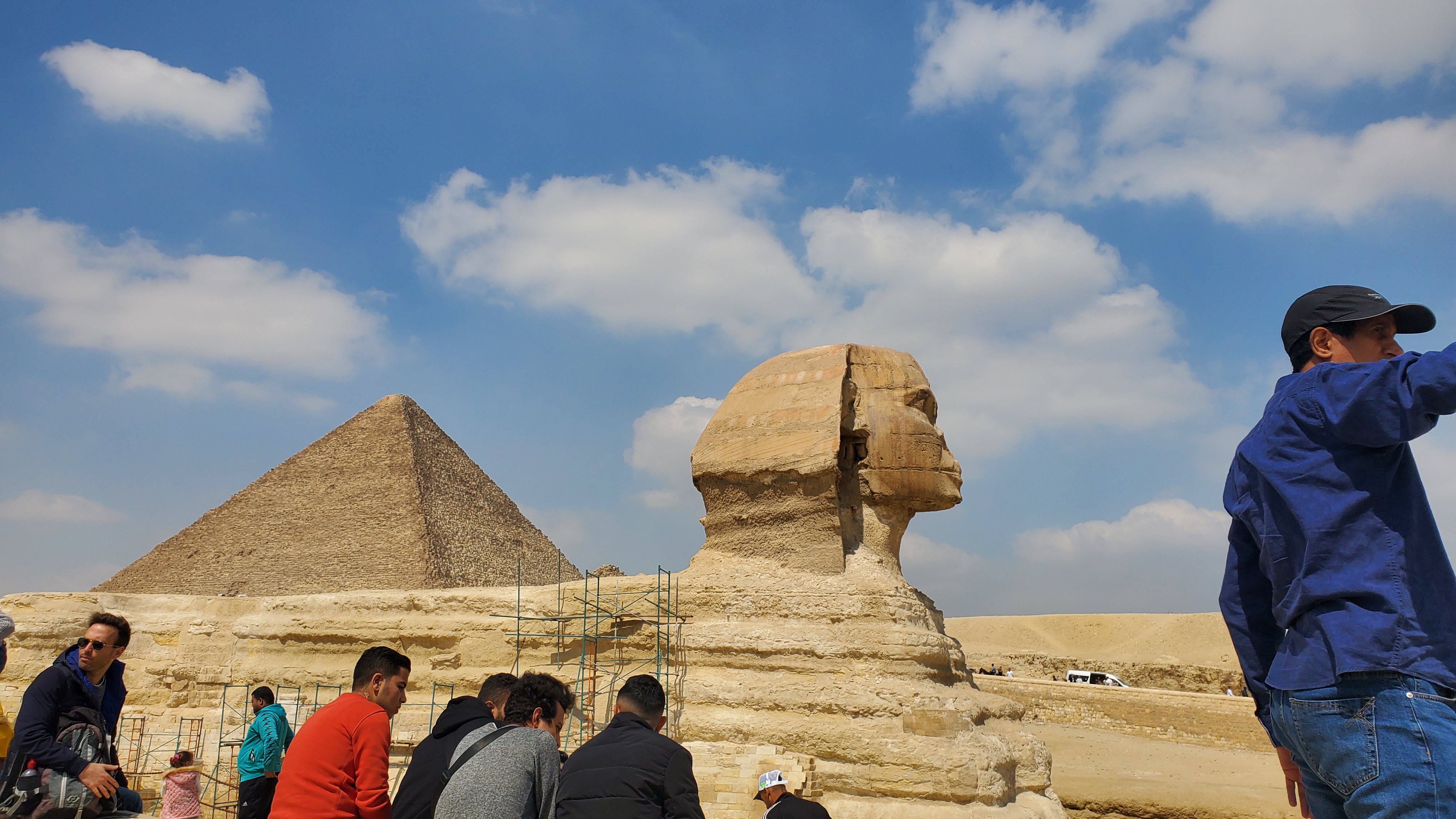
The next day was the big guns: Pyramids of Giza, the Sphinx, camel rides, and the Egypt Museum.  The youngers were thoroughly bored.
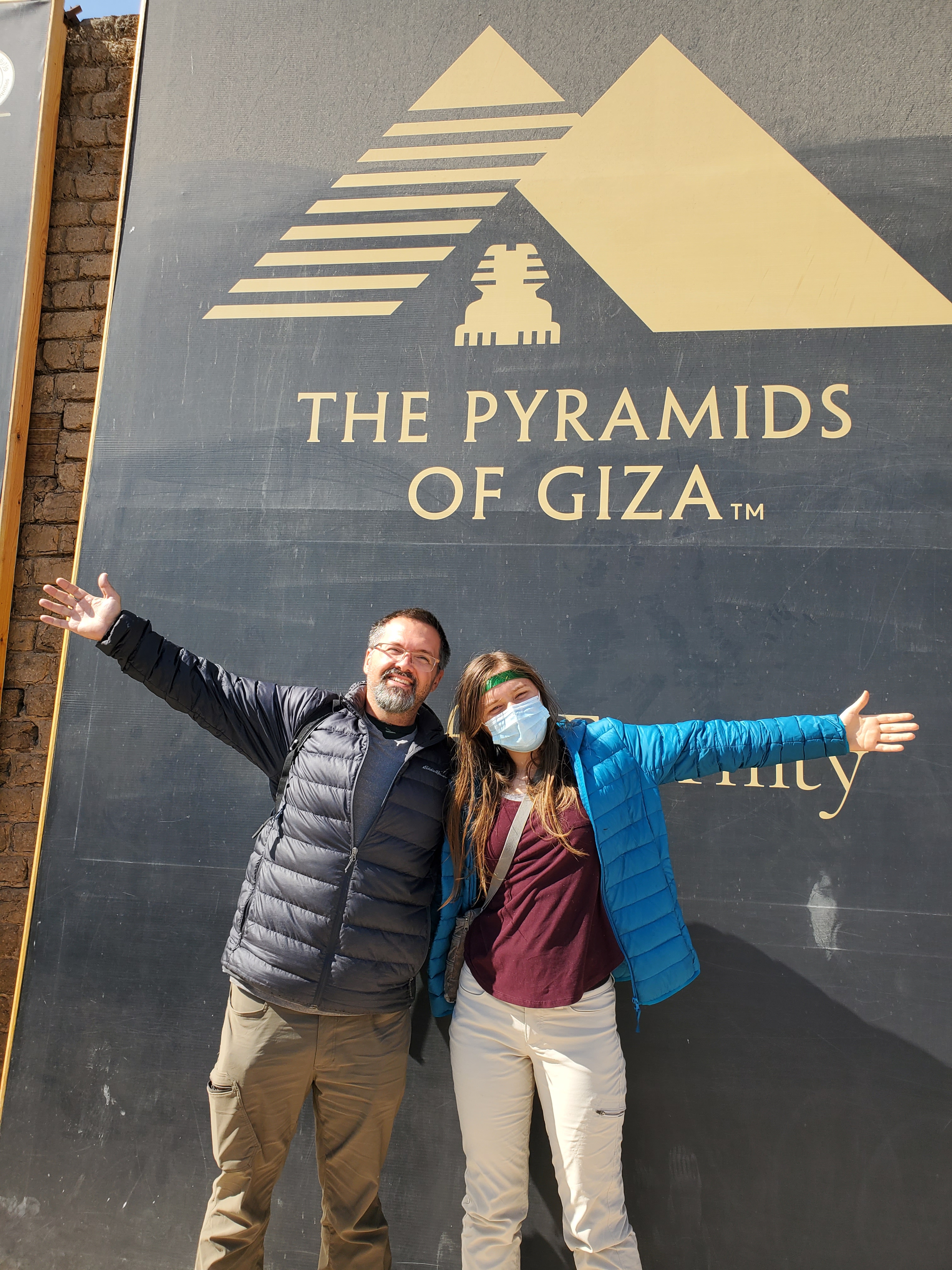
[The momism in our household is “Well, I liked it enough for all of us.” Not only is it true, but it has the benefit of annoying Wes.]

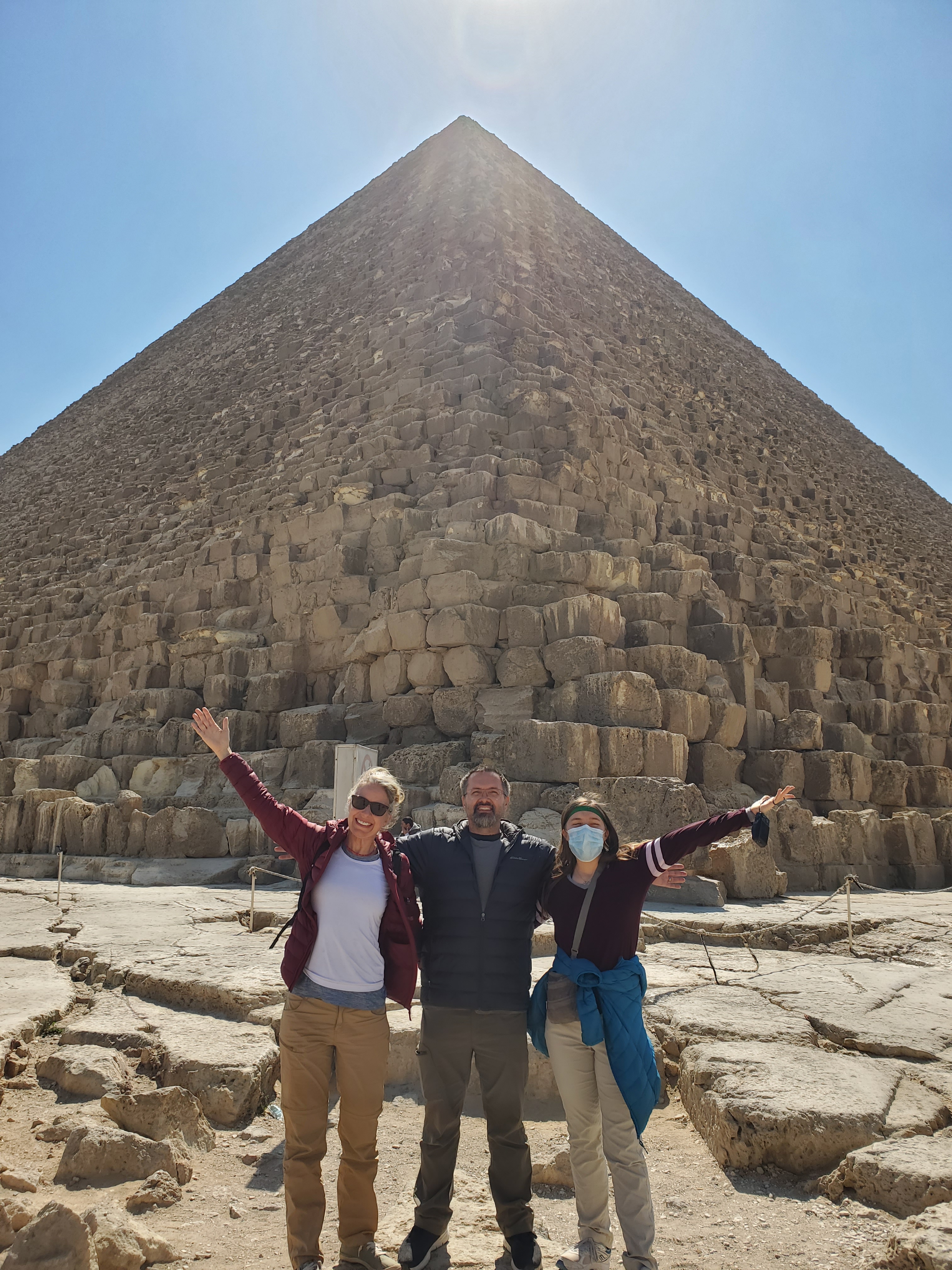
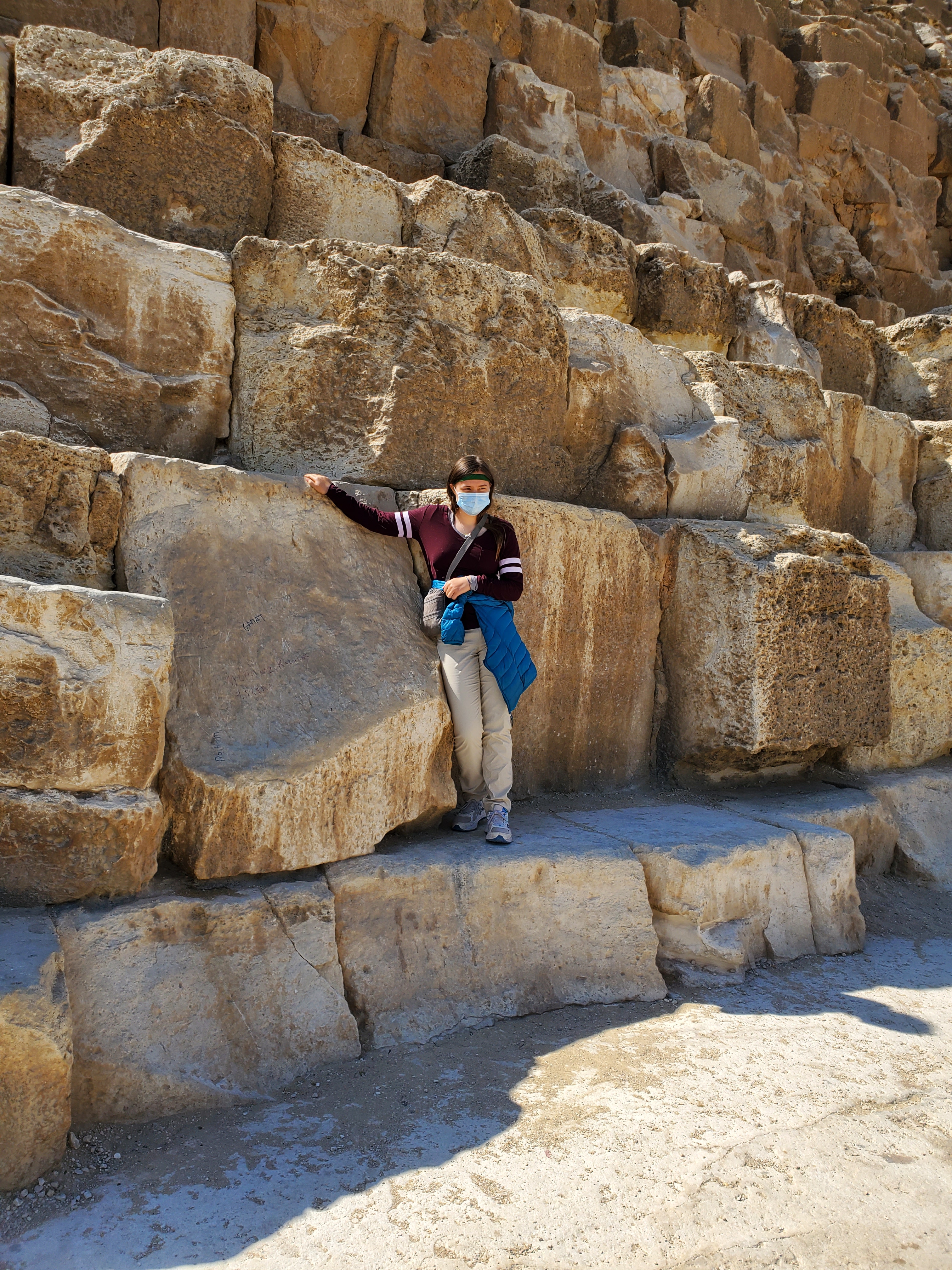
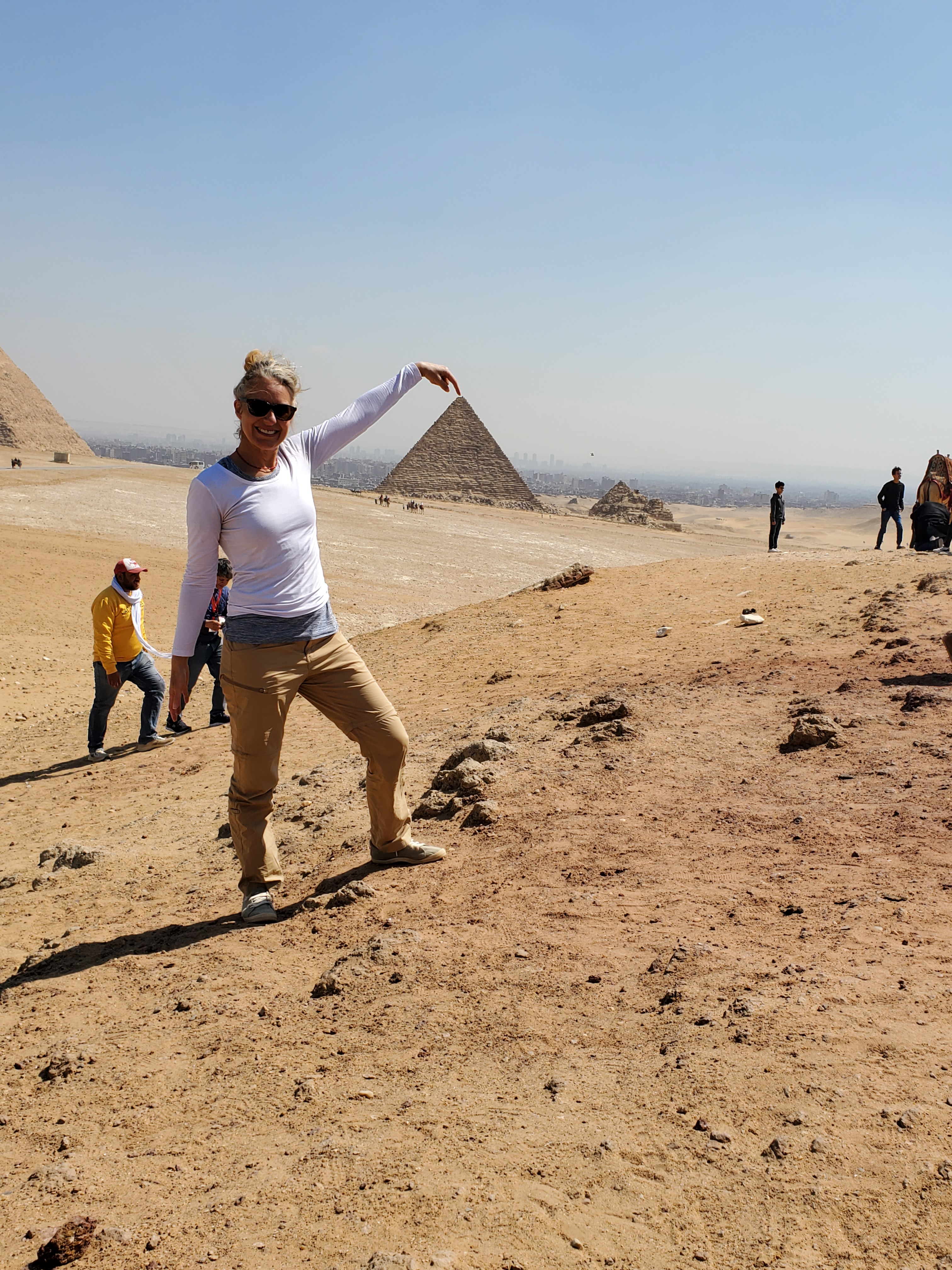
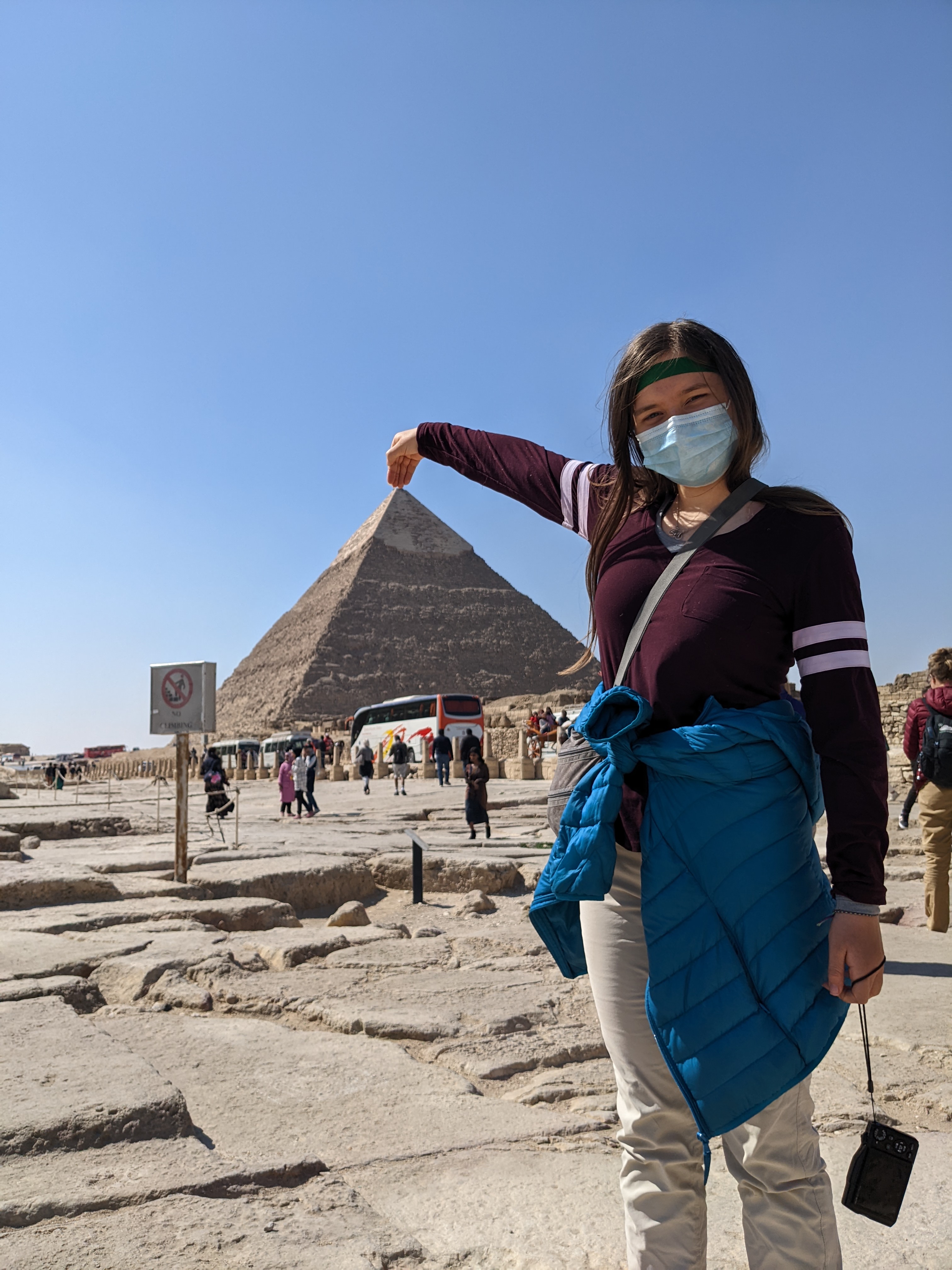
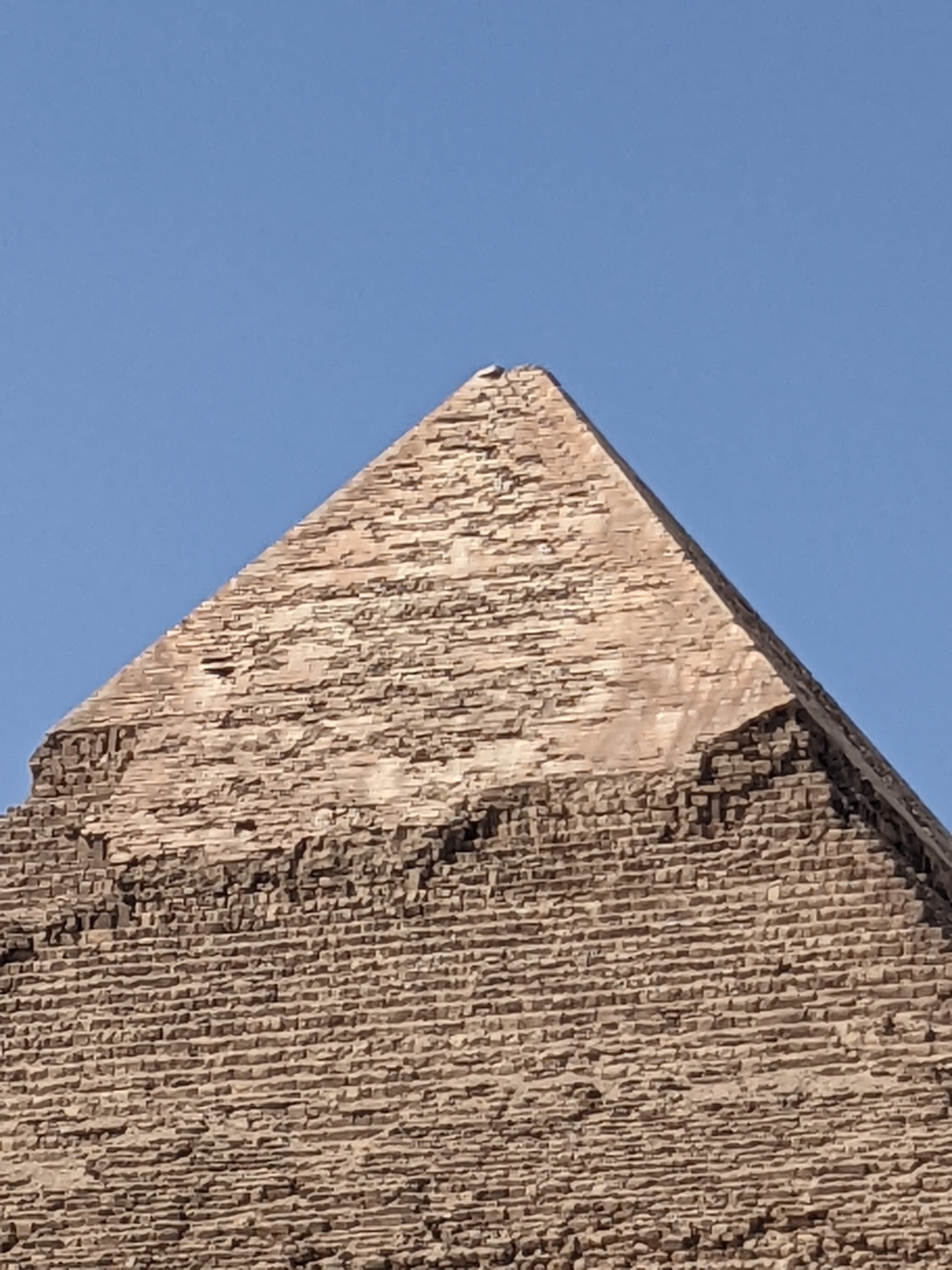
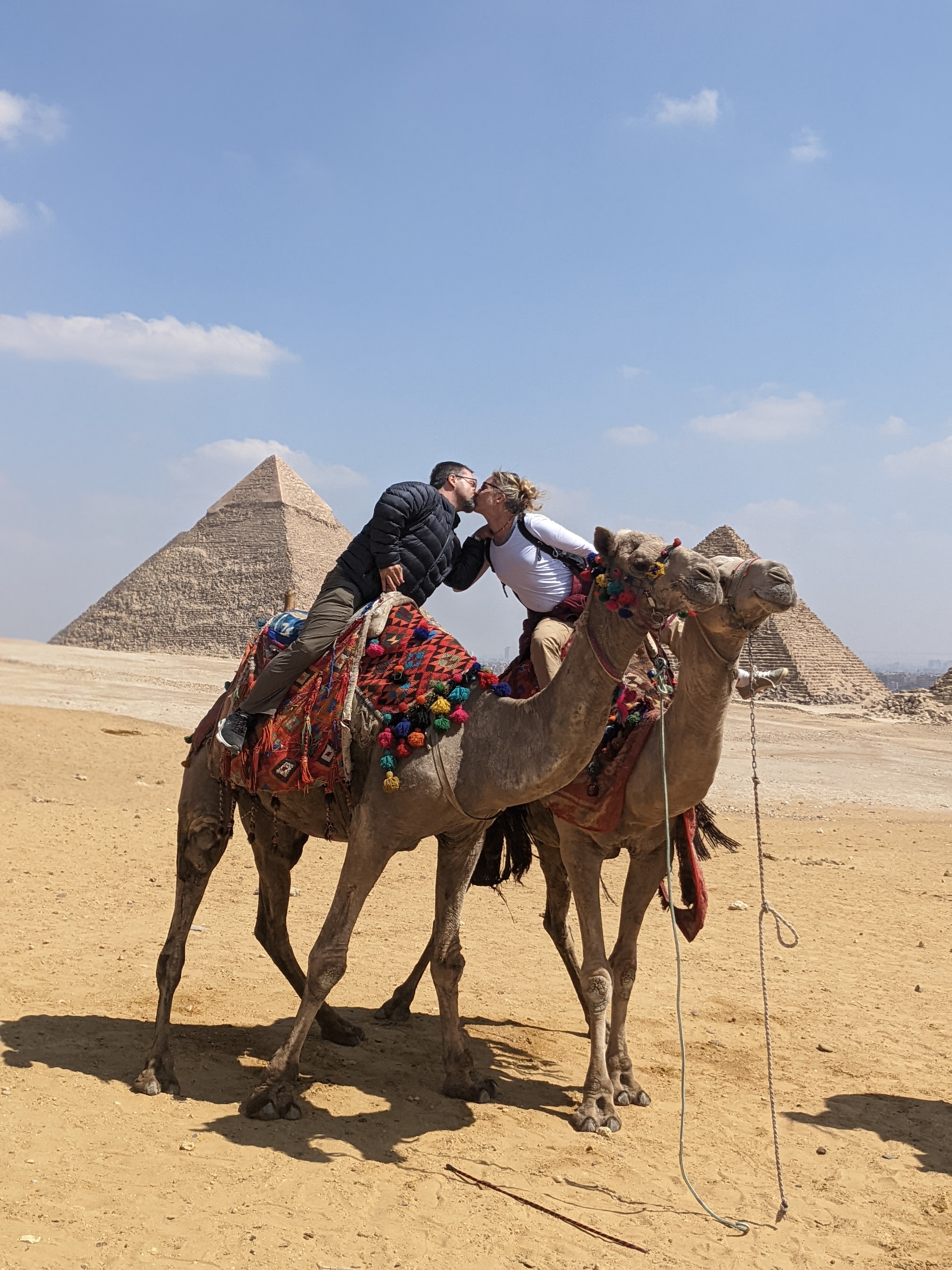
A fun fact about the pyramids, built by Father, Son, and Grandson: The Father’s (Khufu) was quite tall, and Son (Khafre) couldn’t disrespect his father by making his taller.  So he built his four meters shorter… on higher elevation. Grandson (Menkaure) couldn’t compete and just sulked over in a corner.
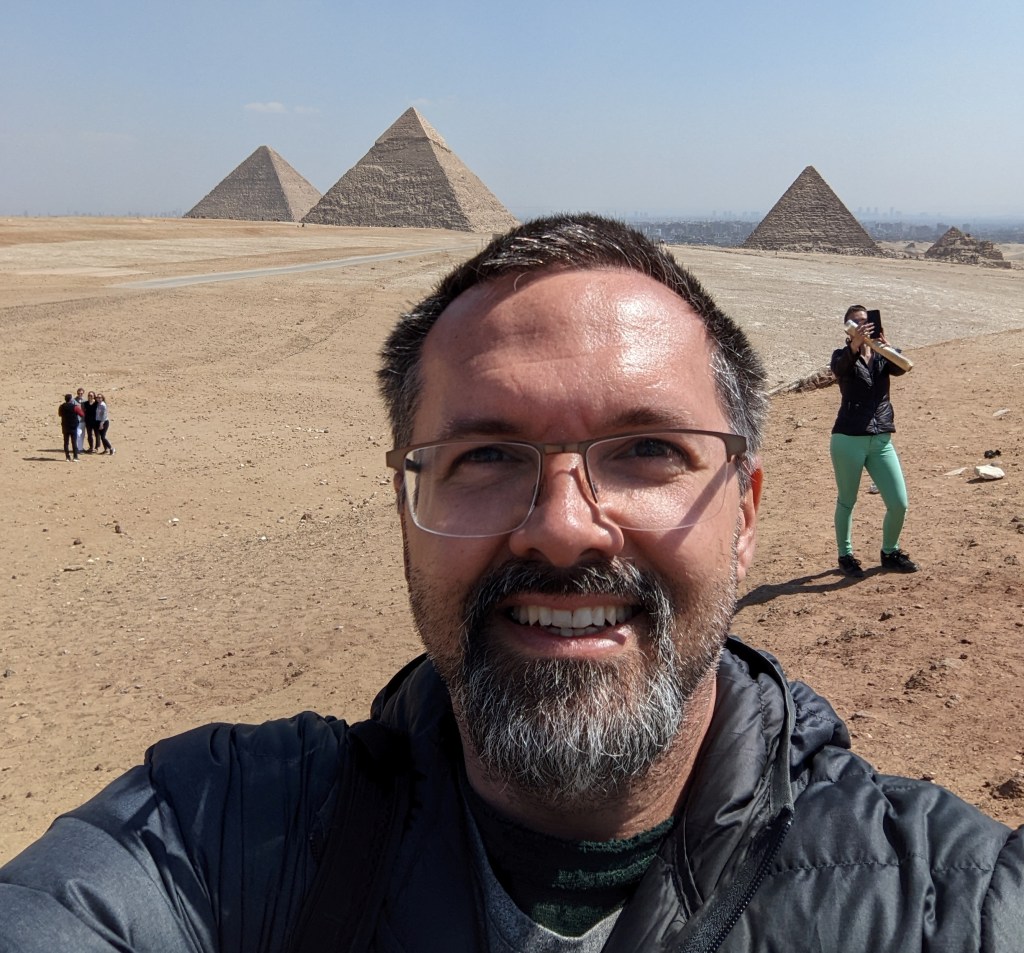
You can get a sense of the placement and sizes of the three pyramids.

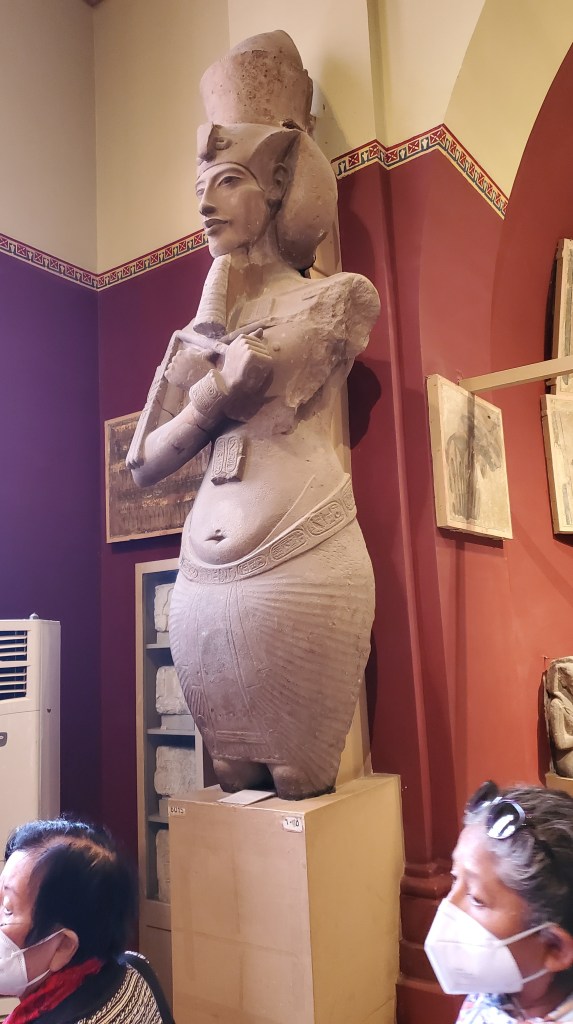
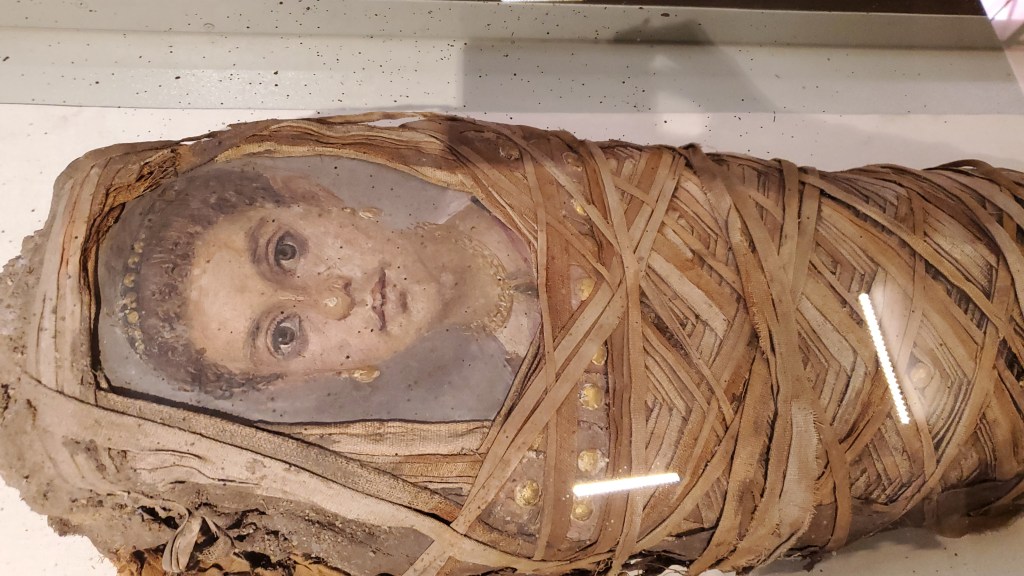
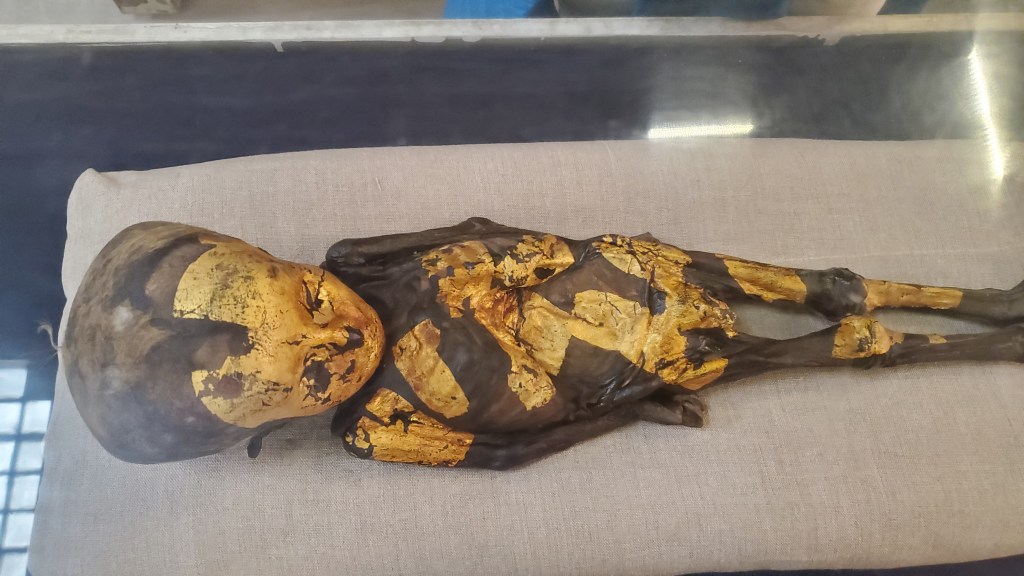
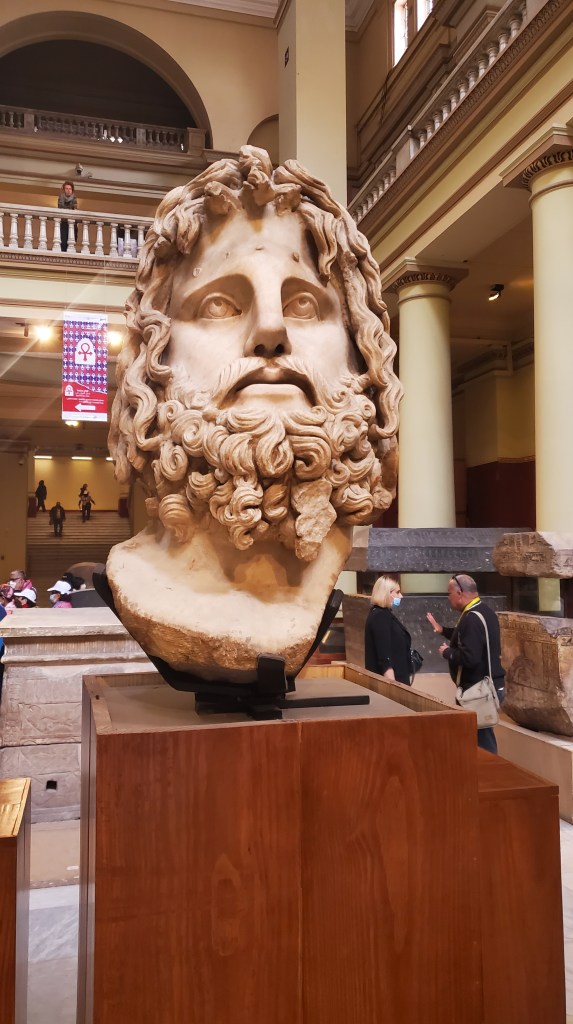
Even though “the coolest stuff” has been moved over to the not-yet-opened Grand Museum, the Egypt Museum still had some interesting and curious works, including some statues that did not look like anything we had seen in our ancient Egyptian field study, including what looks suspiciously like mummified Yoda.
[Continued, next post…]

[Part 2] We are in the Cradle of Civilization! (Do you think it will rub off?) [Part 2]

[I’m breaking one long post into two parts so that the pictures show up better. Hopefully.]

We left Cairo for Aswan in the most fun way, easily the best part of Egypt so far for Wes. We caught an evening sleeper train for the 13-hour trip south. What wasn’t so great was that I was struggling with nausea, GI trouble, and abdominal pain, which I self-diagnosed as either 1) something I ate plus the beginnings of a kidney stone, or 2) just a kidney stone*.  I spent most of the 13 hours trying, and failing, not to vomit inconveniently, and silently nominating Dwayne for Best Human Being trophy. When we arrived in Aswan and put me to bed, Dwayne and Mohamed searched the city and brought me back a hot water bottle.  If it was a kidney stone, it was of the moaning-Advil-heat variety, not the groaning-narcotics-ER kind.  Phew.  Regardless of diagnosis, it was definitely my reason for sleeping instead of blogging for so many days.

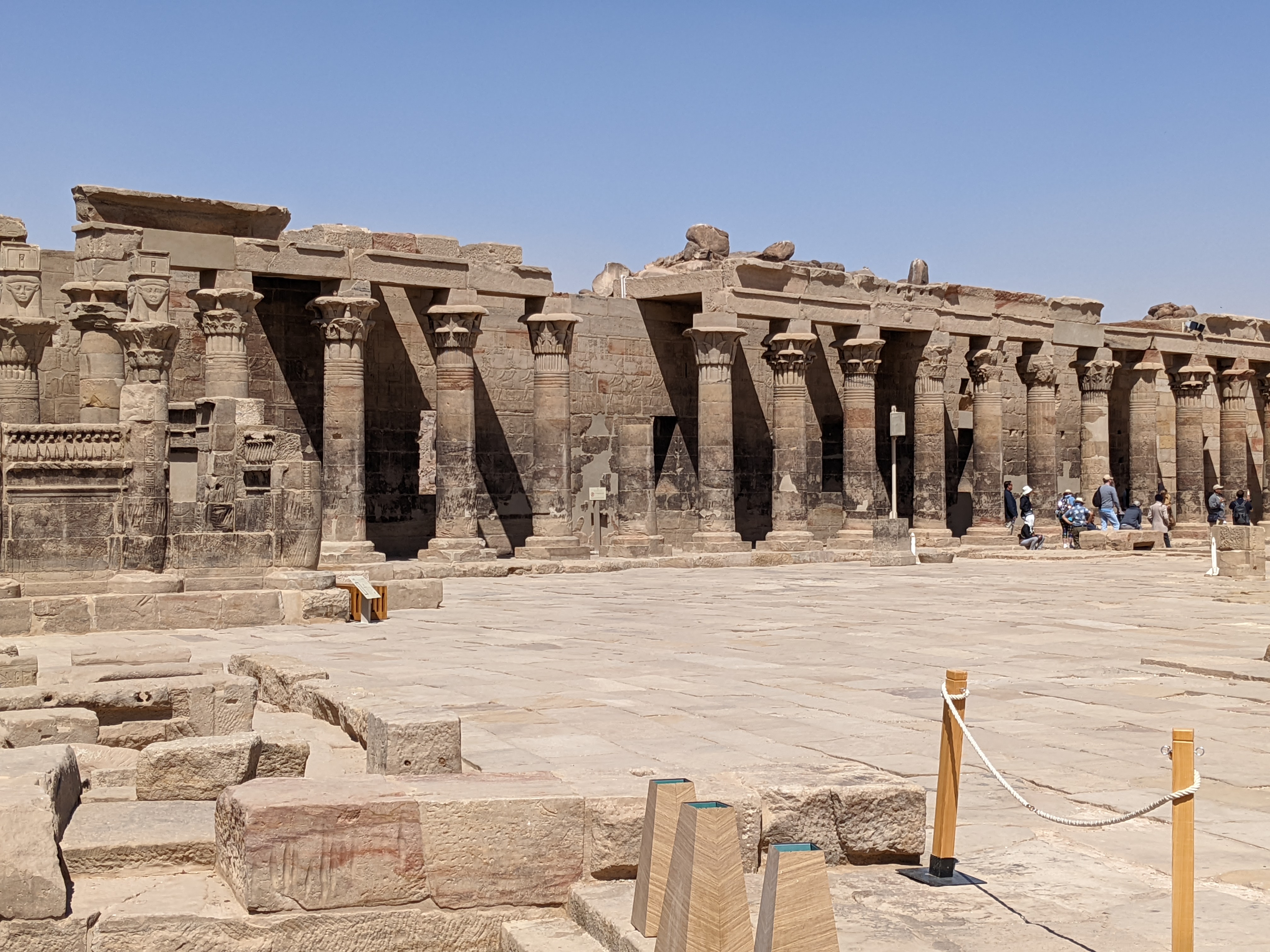
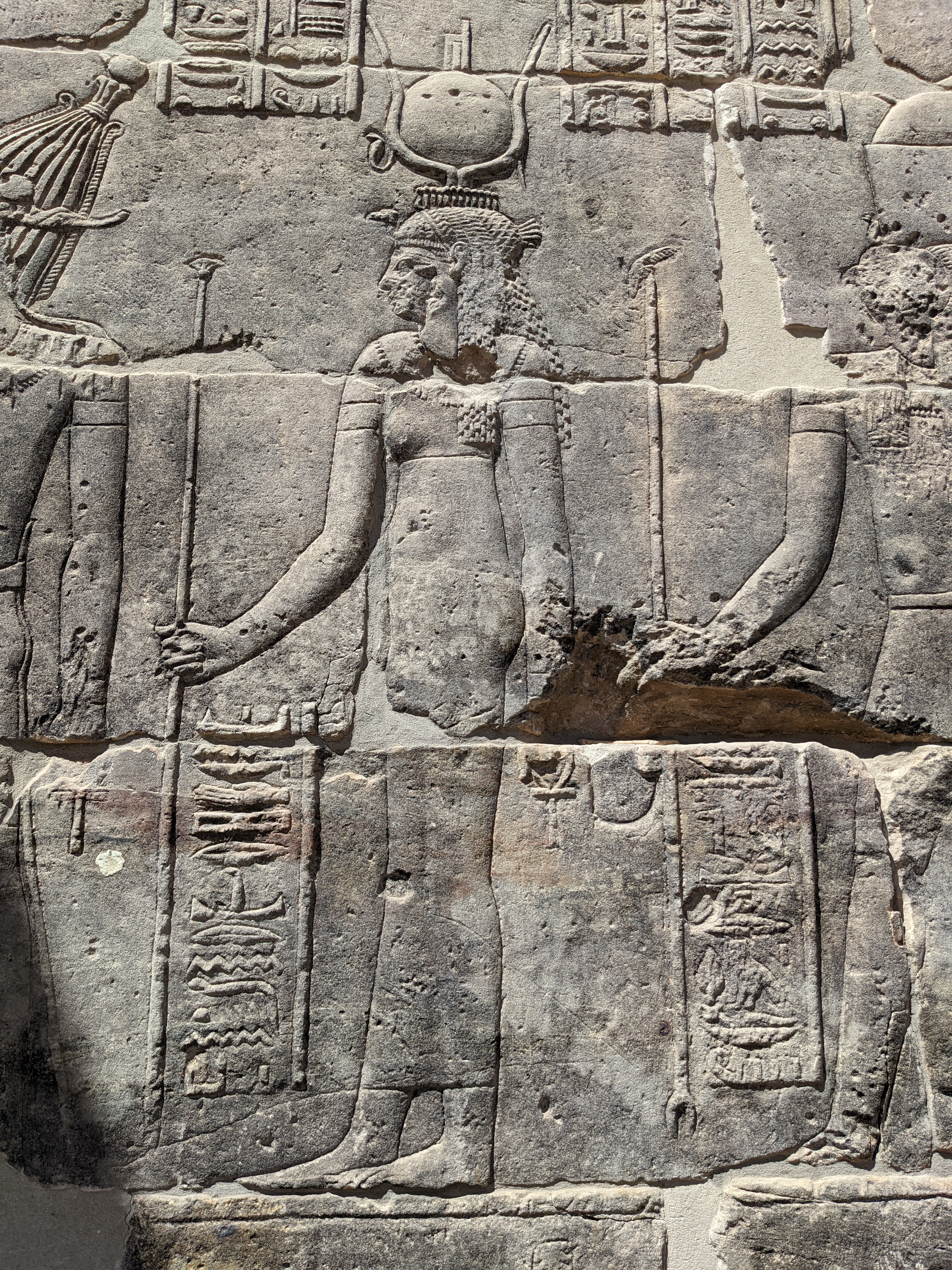
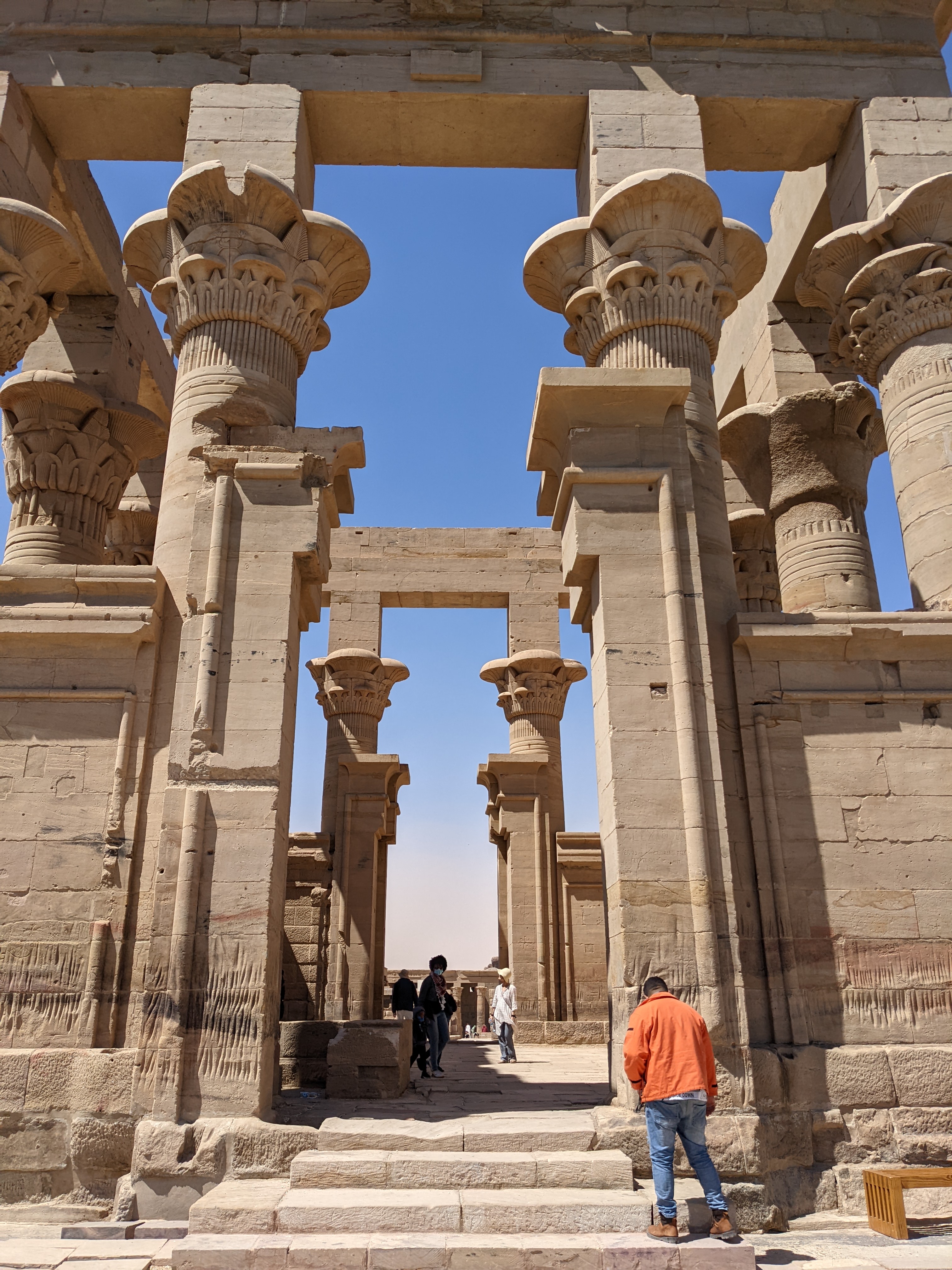
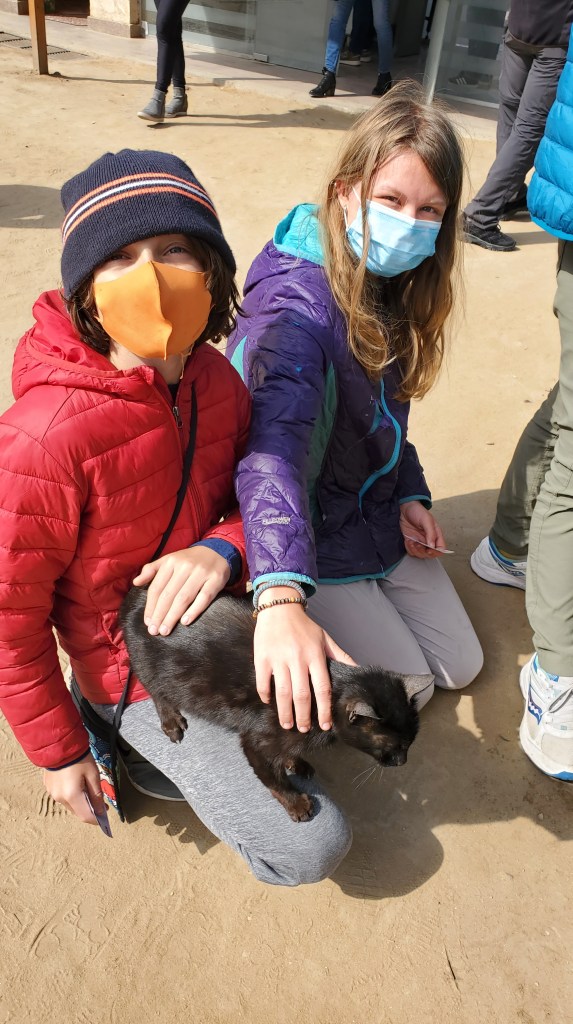
That day, we still managed to put in a few hours at Philae Temple, or the Temple of Isis. Practically brand-new at 2300 years old, it had to be moved about 50 years ago from one island to another, before the dam was completed and drowned the temple. It was *the* place to worship Isis. It also had a coffee shop and cats, so the Piper and Wes didn’t leave it horrible reviews.

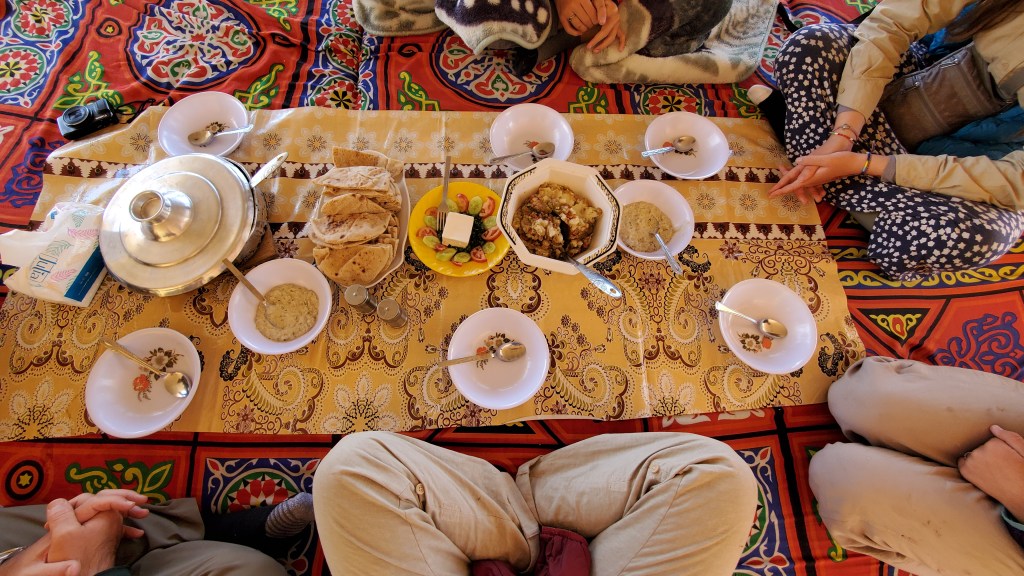
That night, we motored to a Nubian village and were given a short tour of the village and ate dinner hosted by a family.  We caught the sunset, ate an amazing feast, and the mother gave me and the girls henna tattoos.  Our Nubian guide told us about traditional life and weddings, and how it was changing.  He sang for us while accompanying himself on the tambourine. Dwayne and Wes played soccer outside with their younger son and I couldn’t help but eat two honey pastries with custard, even after nursing my stomach very carefully for a day. Because, somehow, we had to be on a bus by 4:30 the next morning for the 3-hour drive to Abu Sembel, among “one of the most famous of all ancient Egyptian monuments”.

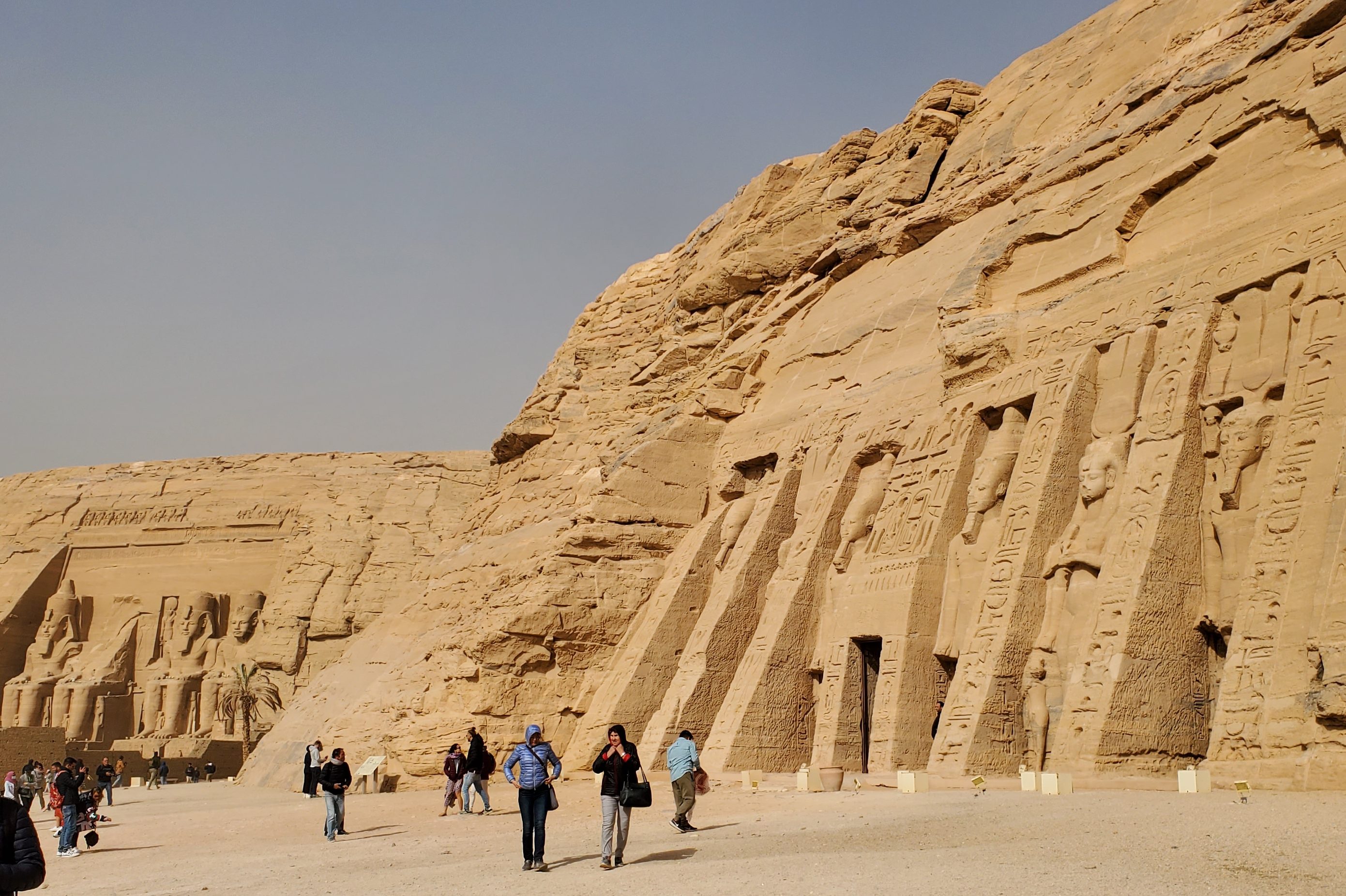
Haven’t heard of it? The name didn’t register for me either, and it wasn’t until we had queued and paid 5 E£ ($0.32) for the toilet, fought a strong wind, got sand in our eyes, and then rounded a corner and saw:

The Great Temple is also called “Temple of Ramesses, Beloved by Amun”. [Subtext: “I’m compensating.”] All four of those statues? Of Ramesses II himself.  The Small Temple was built to honor his favorite wife, Nefertari (not Nefertiti, another woman entirely, I learned). Of the six statues in front of it, two of them are her.  Yes, yes, do the math to figure out how many statues of himself, at different ages, Ramses II put in front of her temple.

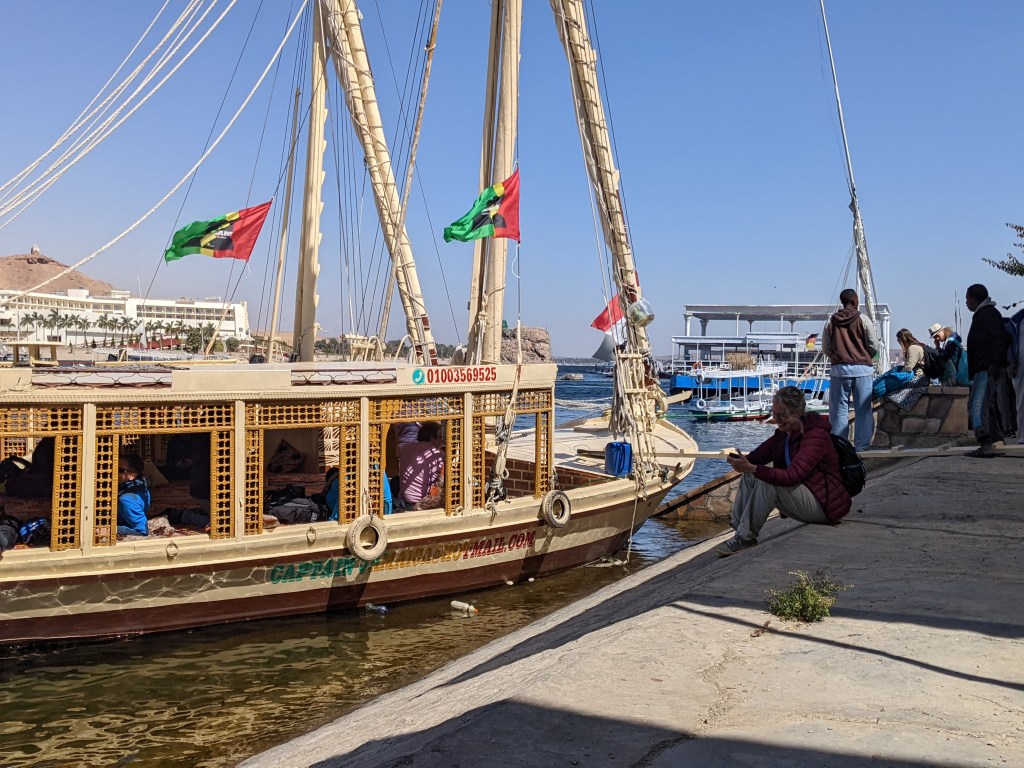
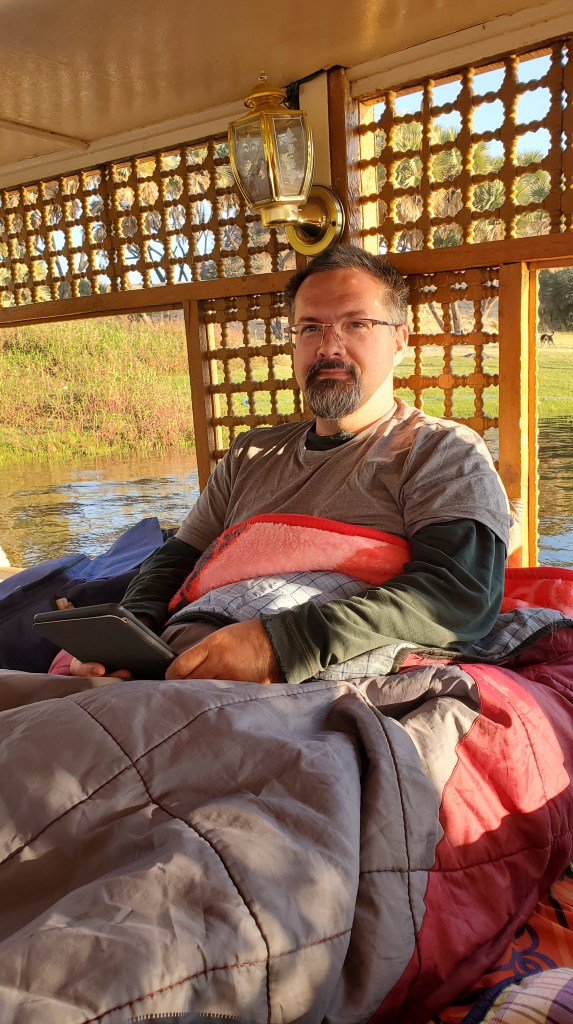
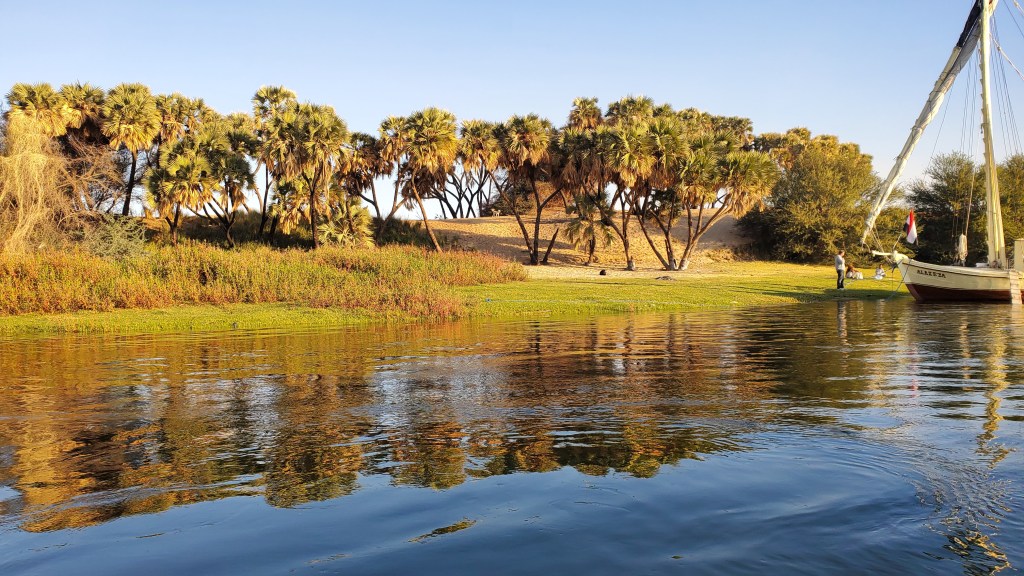
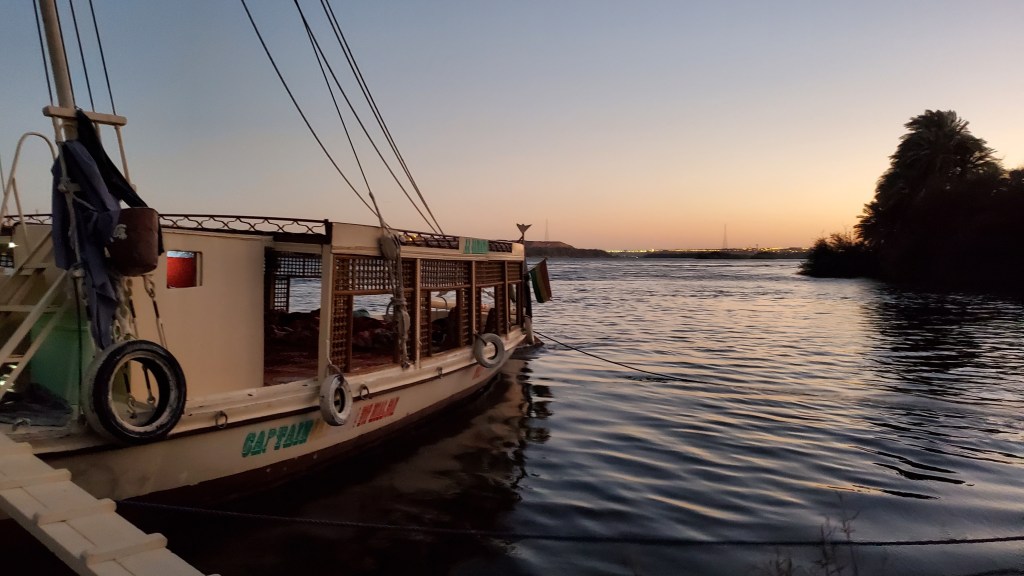
I write all this during what is probably going to be our Egypt highlight—on a felucca (river sailboat) on the Nile, traveling from Aswan down (but north) as many kilometers as we can make in a day. We anchor at sundown and sleep on the boat before meeting up with the car tomorrow. It is heaven.

Stray cats and stray kids.

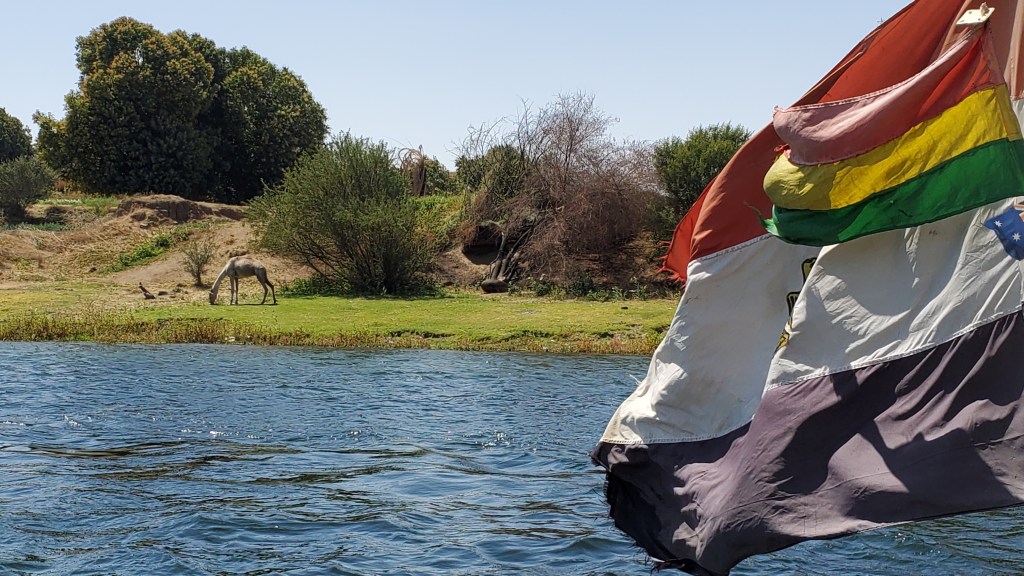
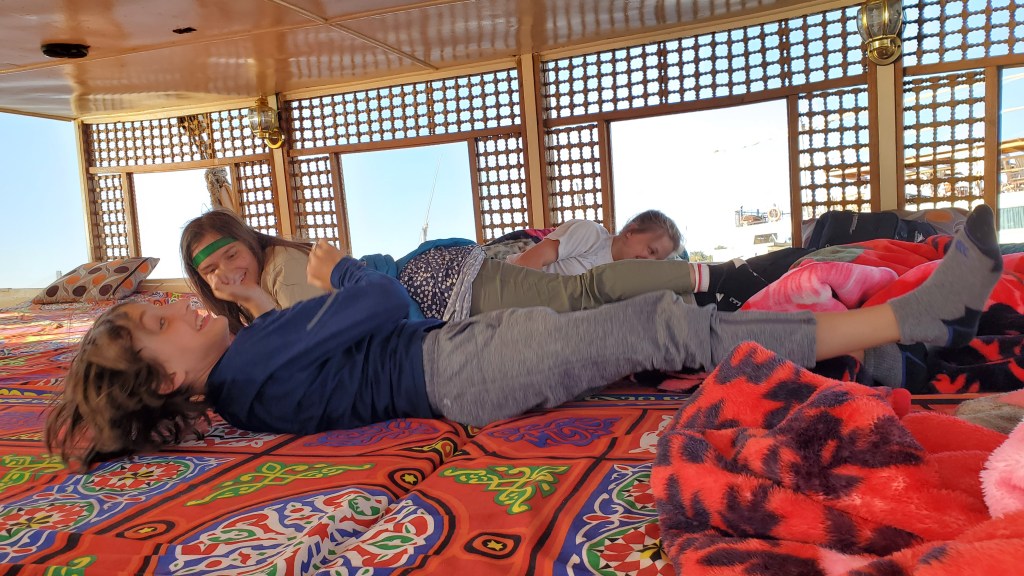
Because I think of all the wonders I’ve witnessed this week, I love most the Nile, the heartbeat and blood of the beginnings of civilization and of Egypt today.  Lounging on the cushioned floor of the felucca, I am writing for as long as my battery lasts.  We zigzag between life (the east bank, as ancients read the path of the sun) and afterlife, which might be cows and camels, which are on the less populated west bank. We idly pass domed Nubian villages, sandbanks, palms, and absolute tranquility.  (Well, until my kids woke up from one of their many naps and realized the boat was fun to roll across.)

Two full days left and then a travel day to Jordan!  Dad, Mom, you are probably the only ones tolerant enough to read this entire post.  Thanks, I love you.


*I had the pleasure of a kidney stone about 5 years ago.  I’ve also birthed three children naturally with no time for drugs.  At least I got babies with the childbirth.

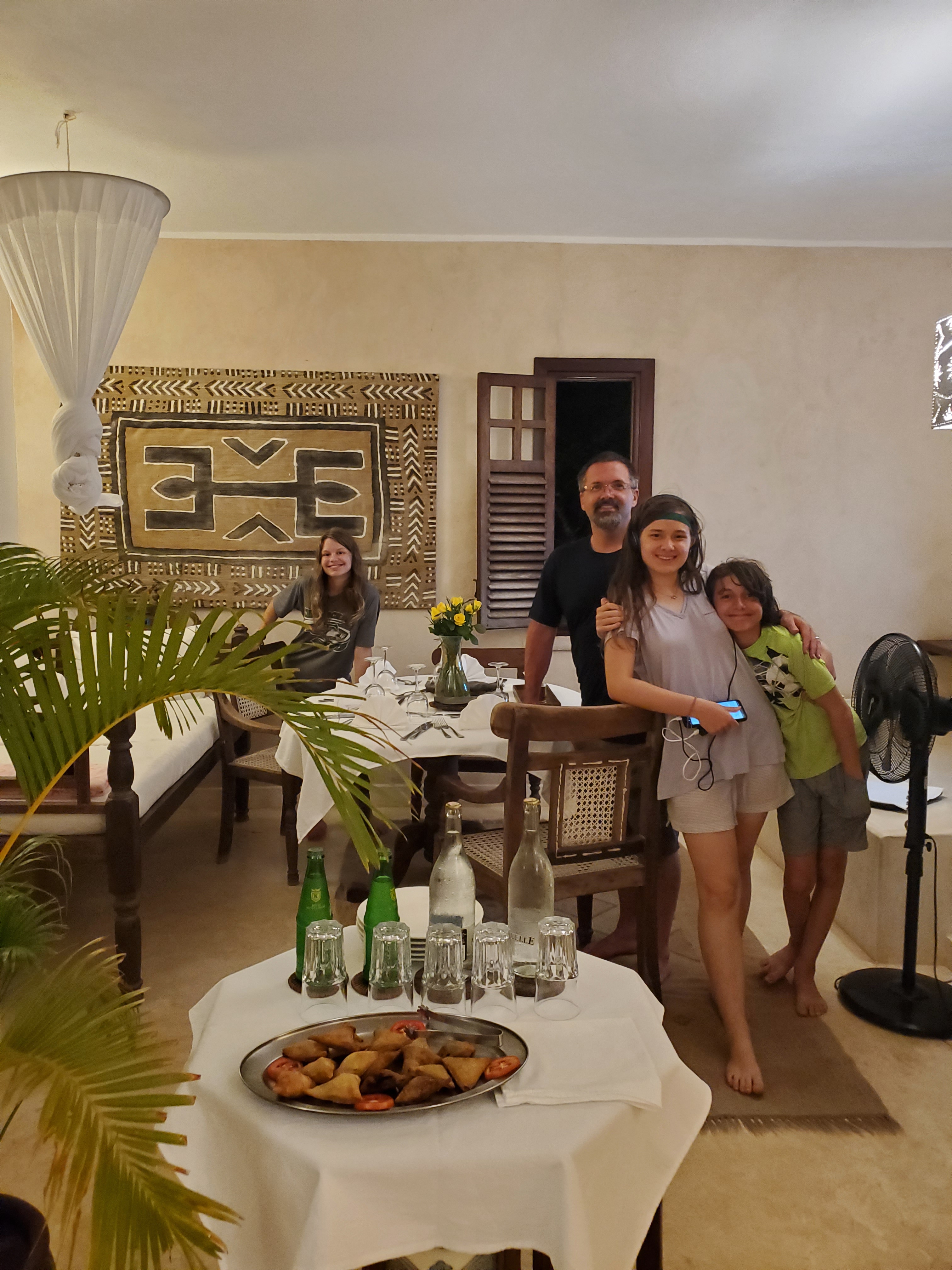
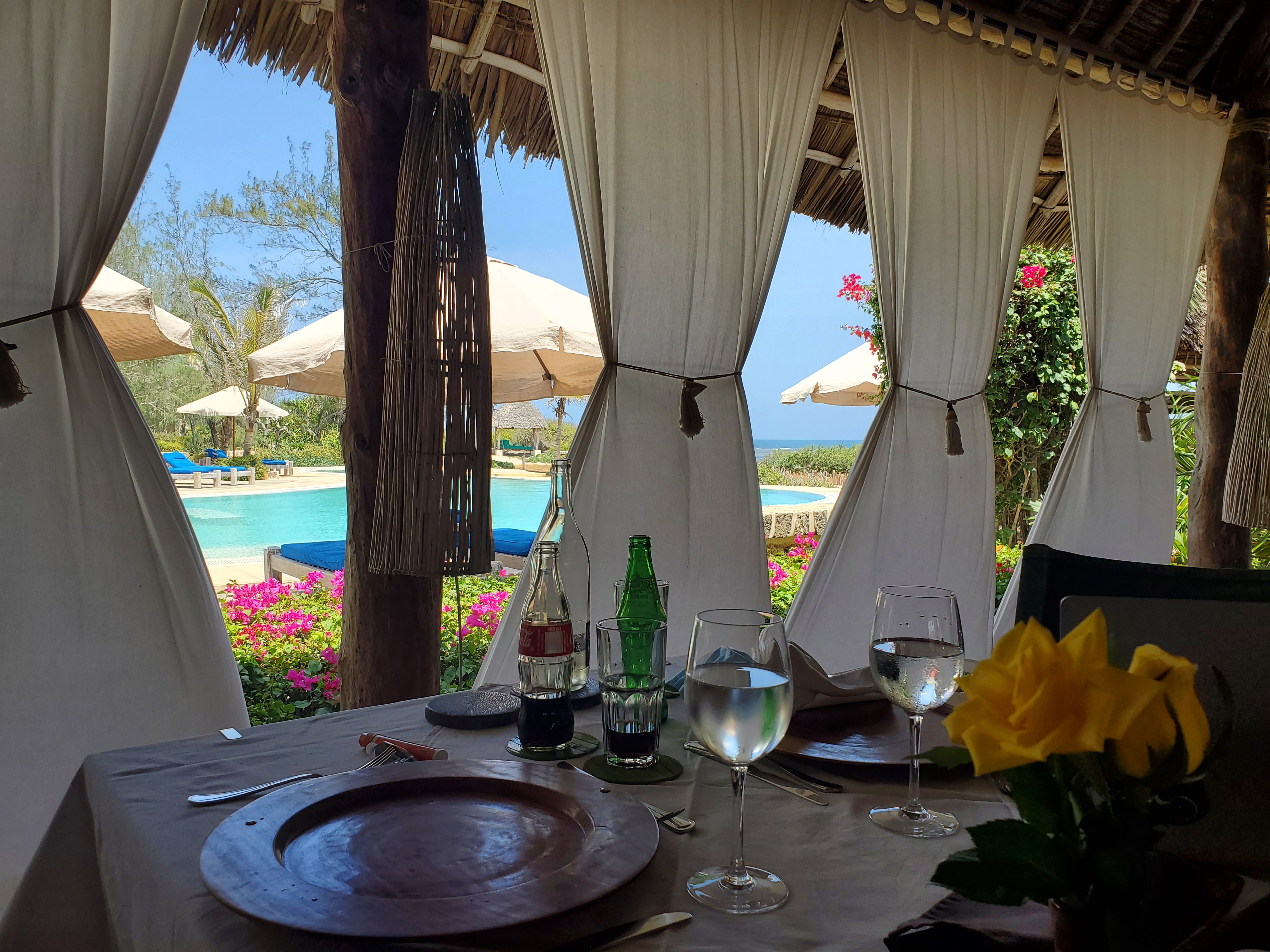
The Charming Lonno Lodge

I like anything whose first name is “Charming”, and Lonno was no exception.

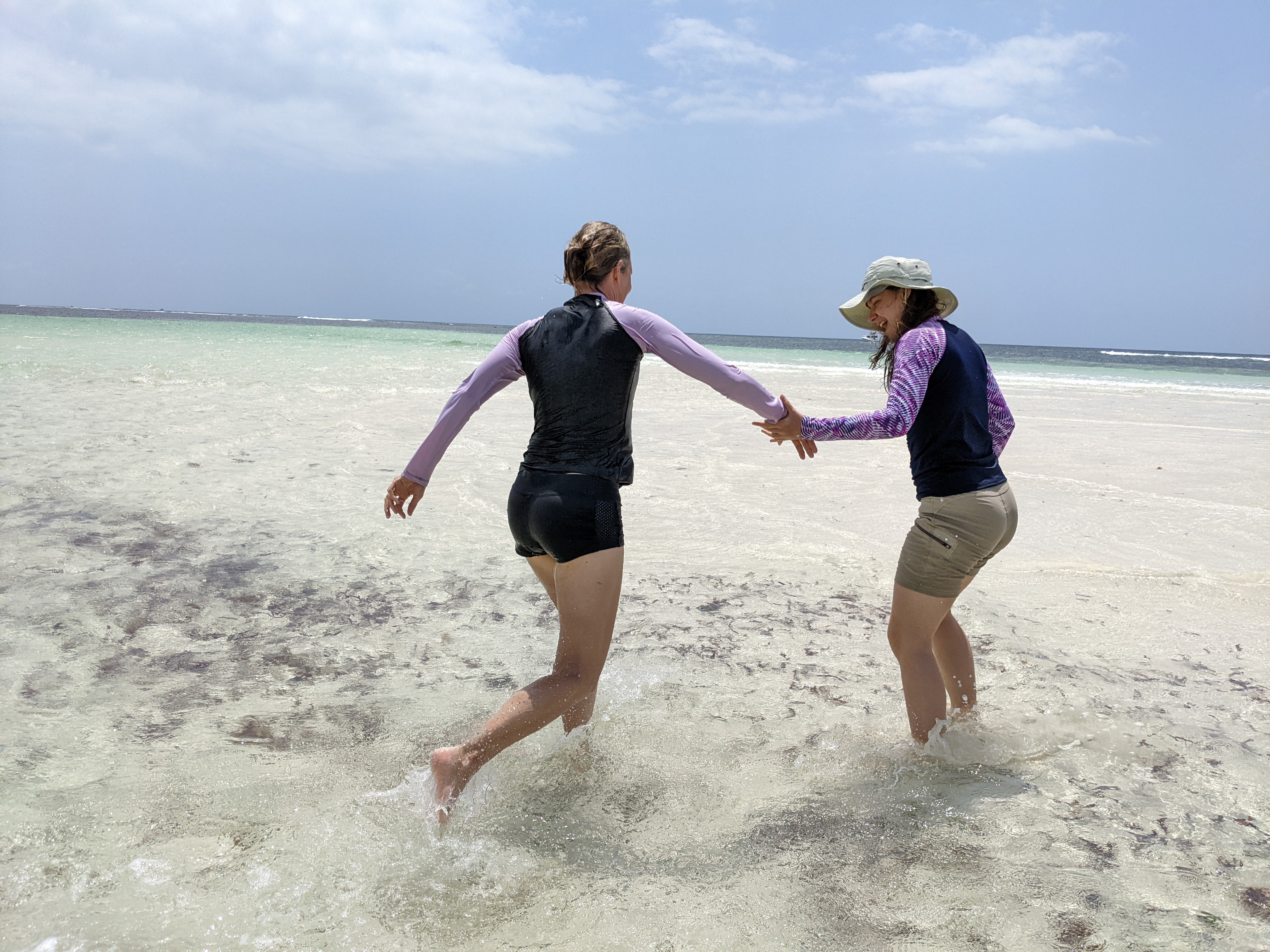
After eleven days of rich food and little exercise, we took a beach break where…we ate richer food and got slightly more exercise. The pants I added elastic to the waistband the day before we left are now cutting off my circulation.

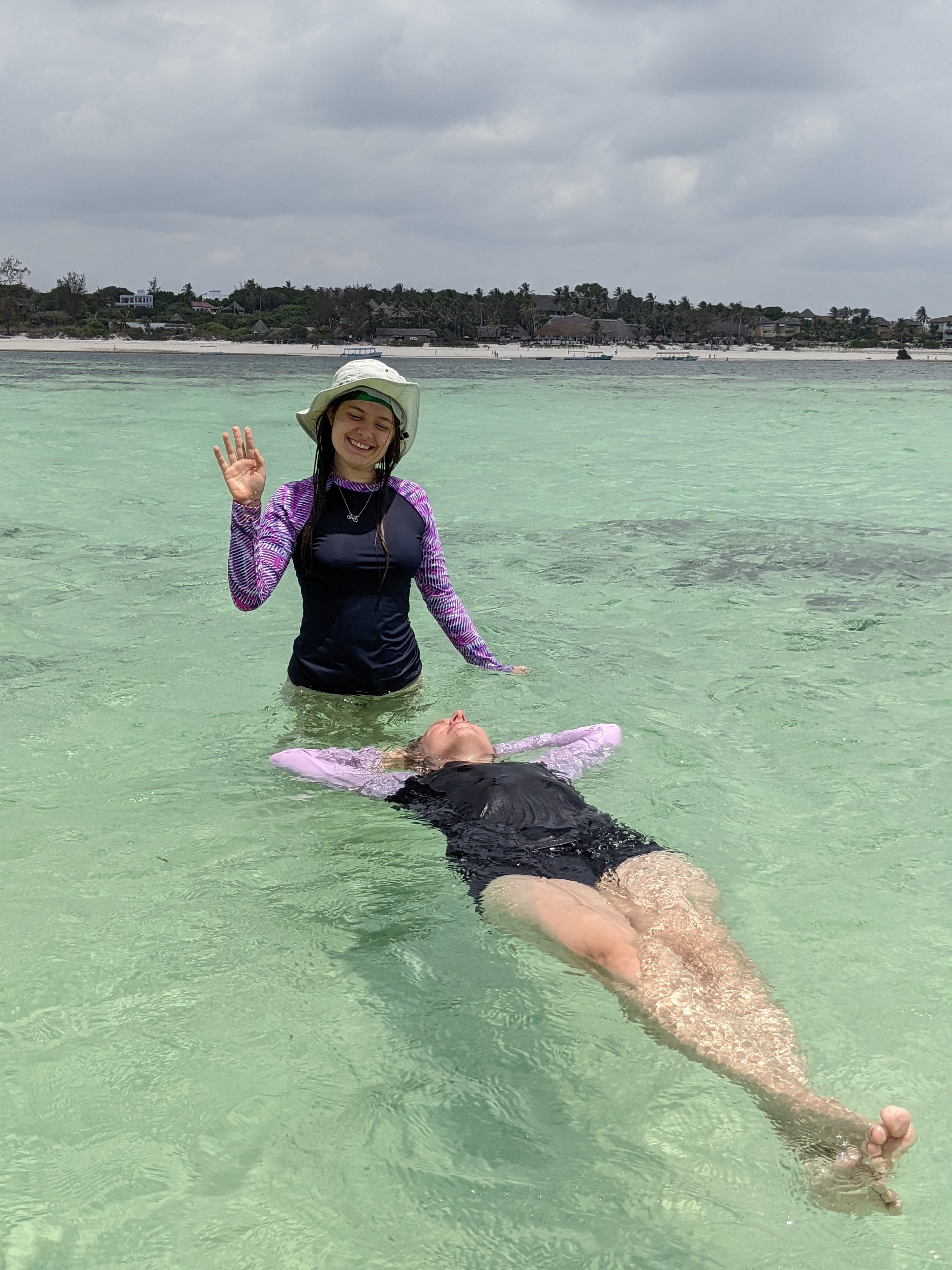
Our first time in the Indian Ocean!

The beach was not what I thought, as we were far from open expanses of white sand, but the ocean!  We first stepped into the Indian Ocean and sighed.  It’s about the same latitude as the Galapagos, but so, so much warmer.   

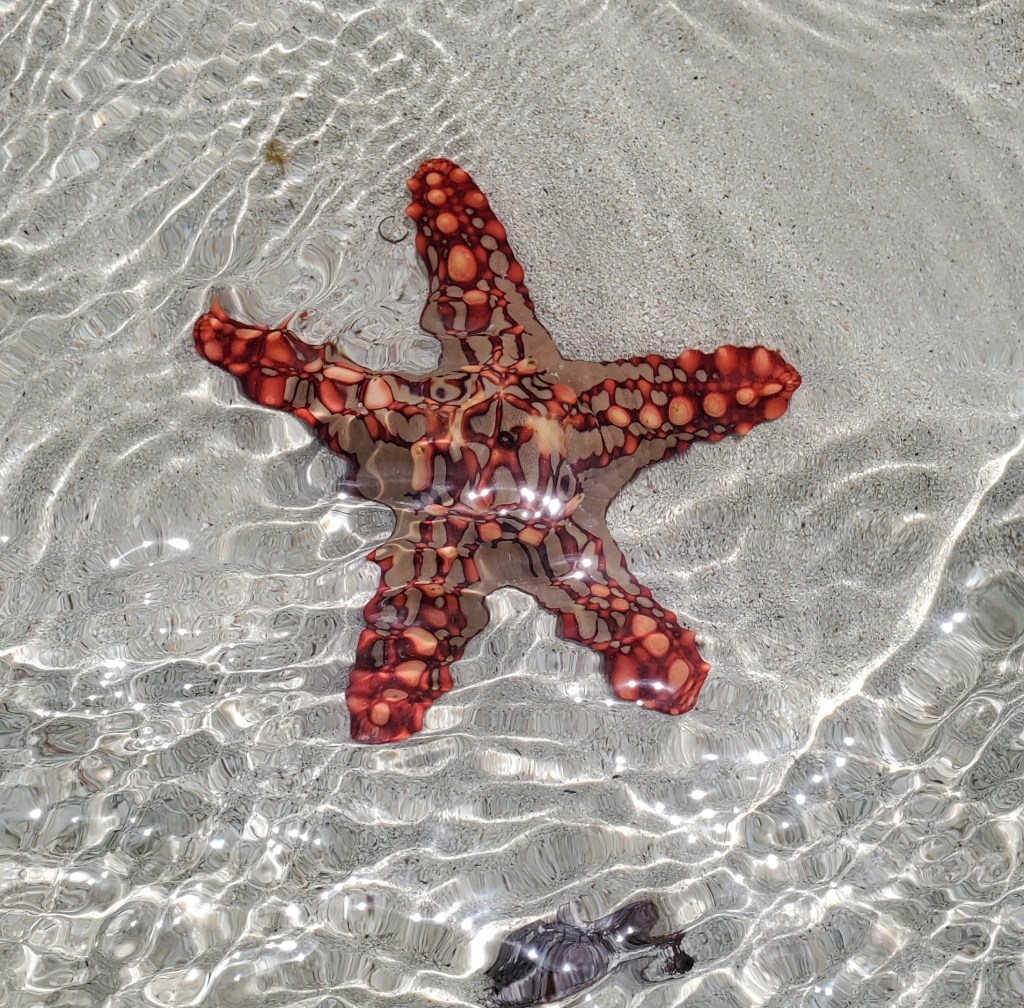
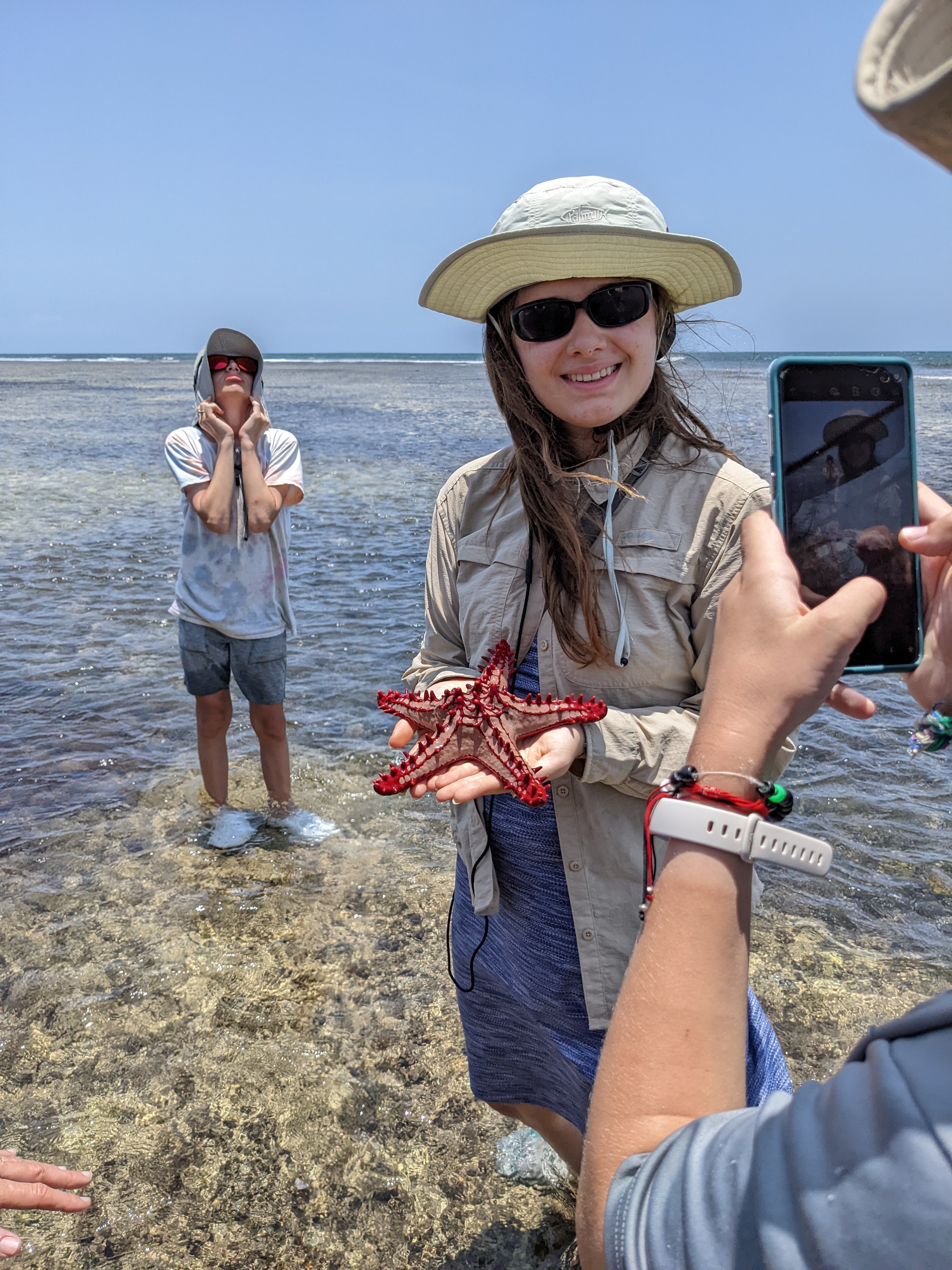
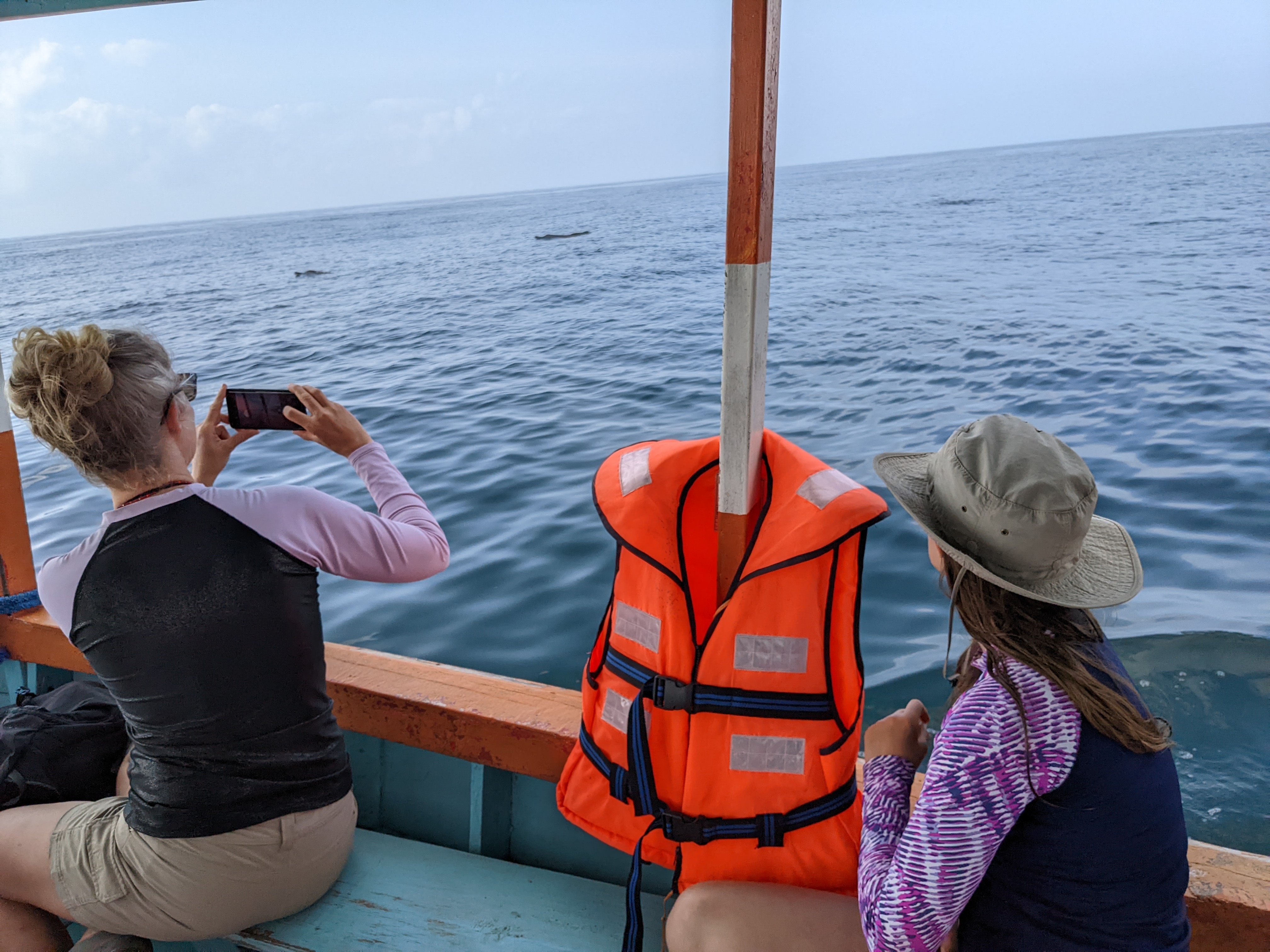
We also did some ocean-safaris.  Wes says it was just as good as the second snorkeling in Ecuador, but I think the only other time I saw so many varieties of reef fish, Dwayne and I were honey+mooning in Fiji.  It was startling how beautiful it was.  Another morning, we went out to see the local dolphin family.  Later that morning, Kyla and I jumped out over Turtle Island, underwater at the time. I usually save my frolicking for fun reads, but my oldest and I frolicked our water-logged brains out. 

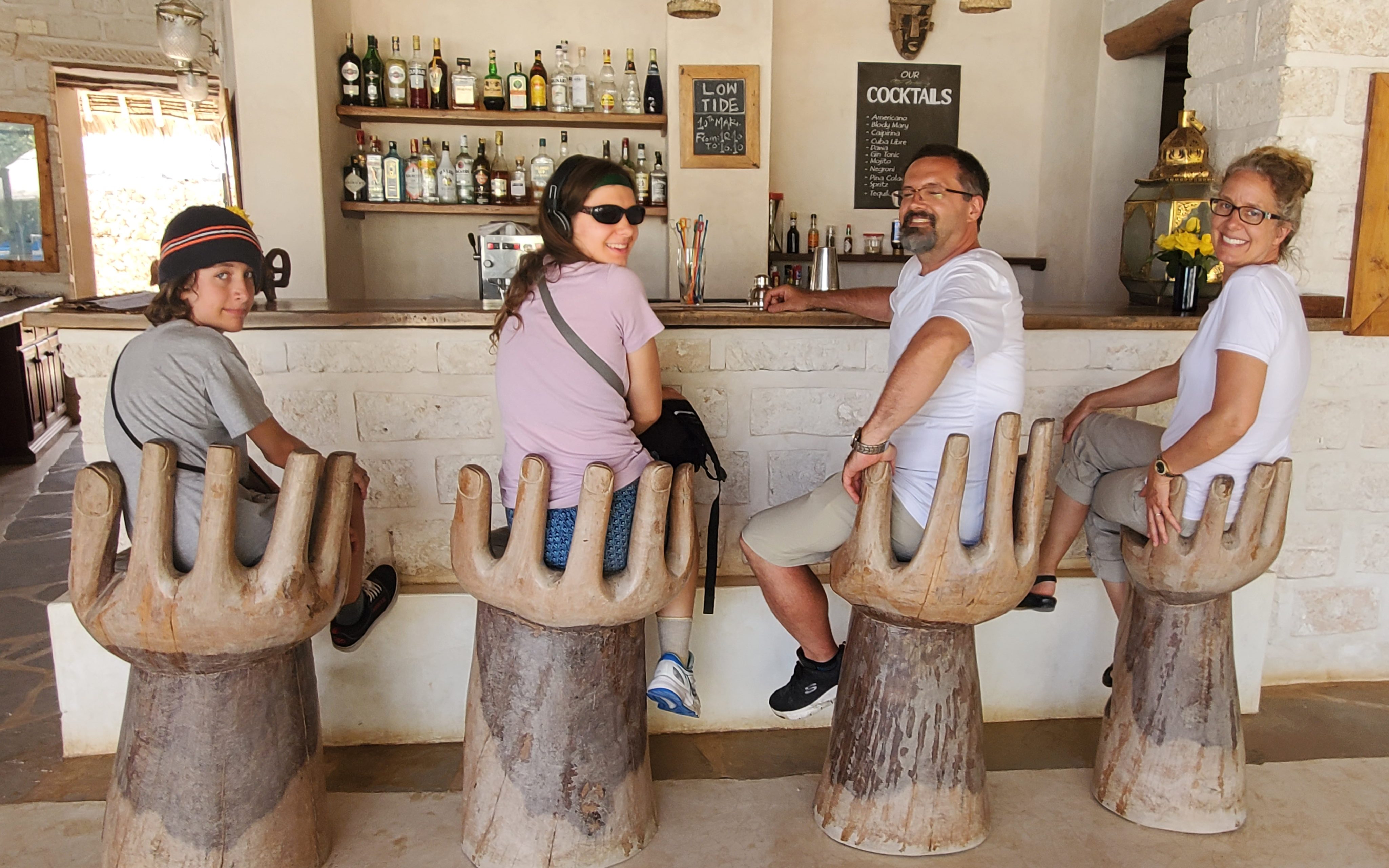
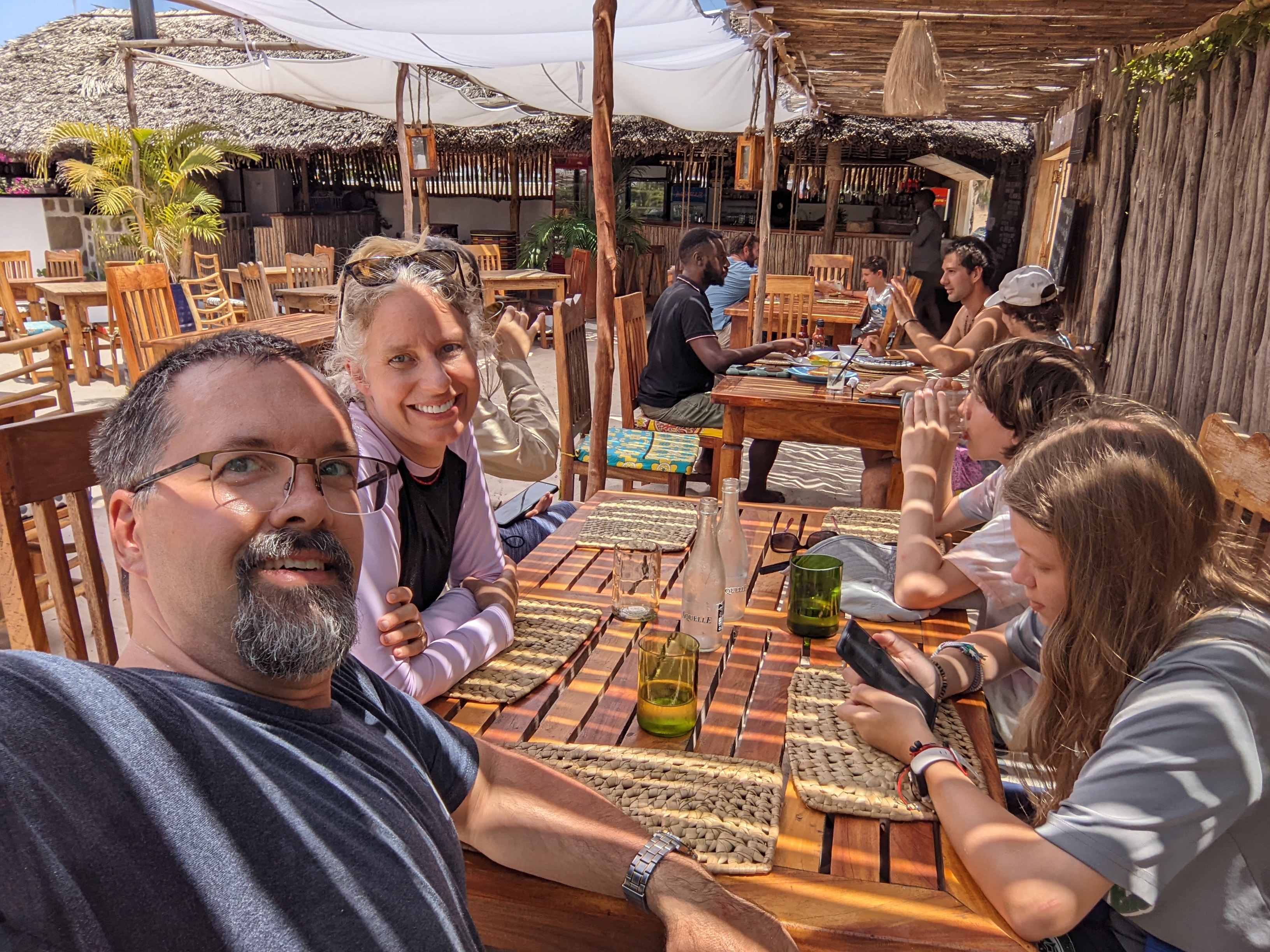
Almost all our meals, and then our cocktail hours, were punctuated by games of cribbage and Hearts.

My reading swing, forever and ever. Read Klara and the Sun here.

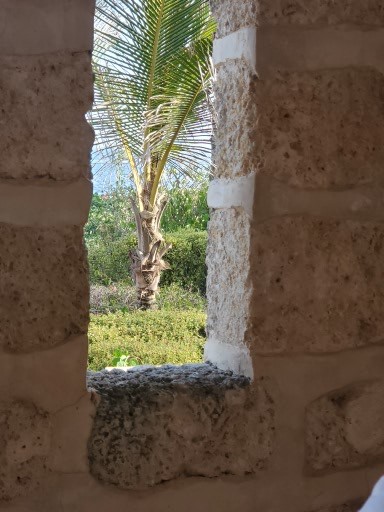
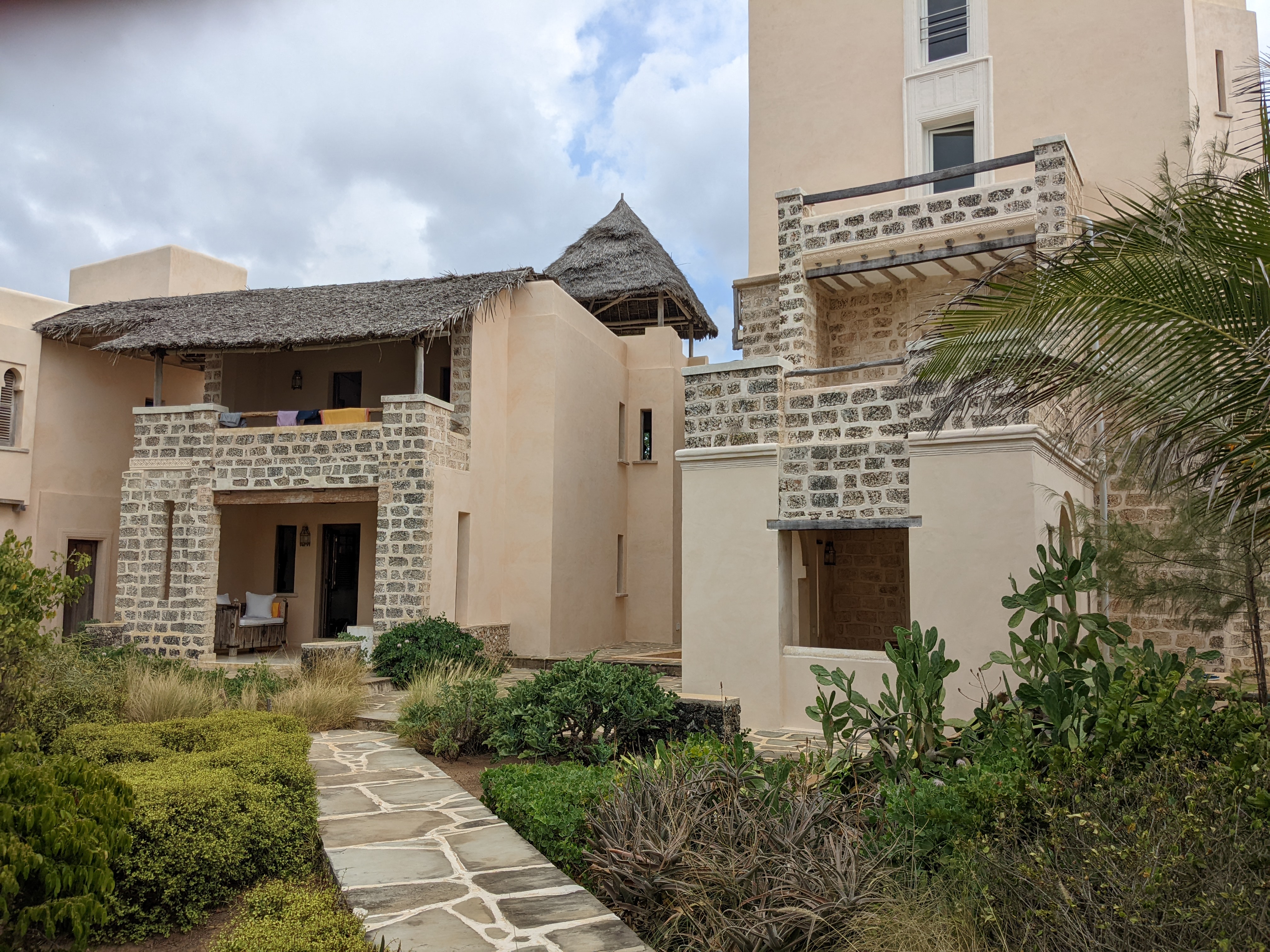
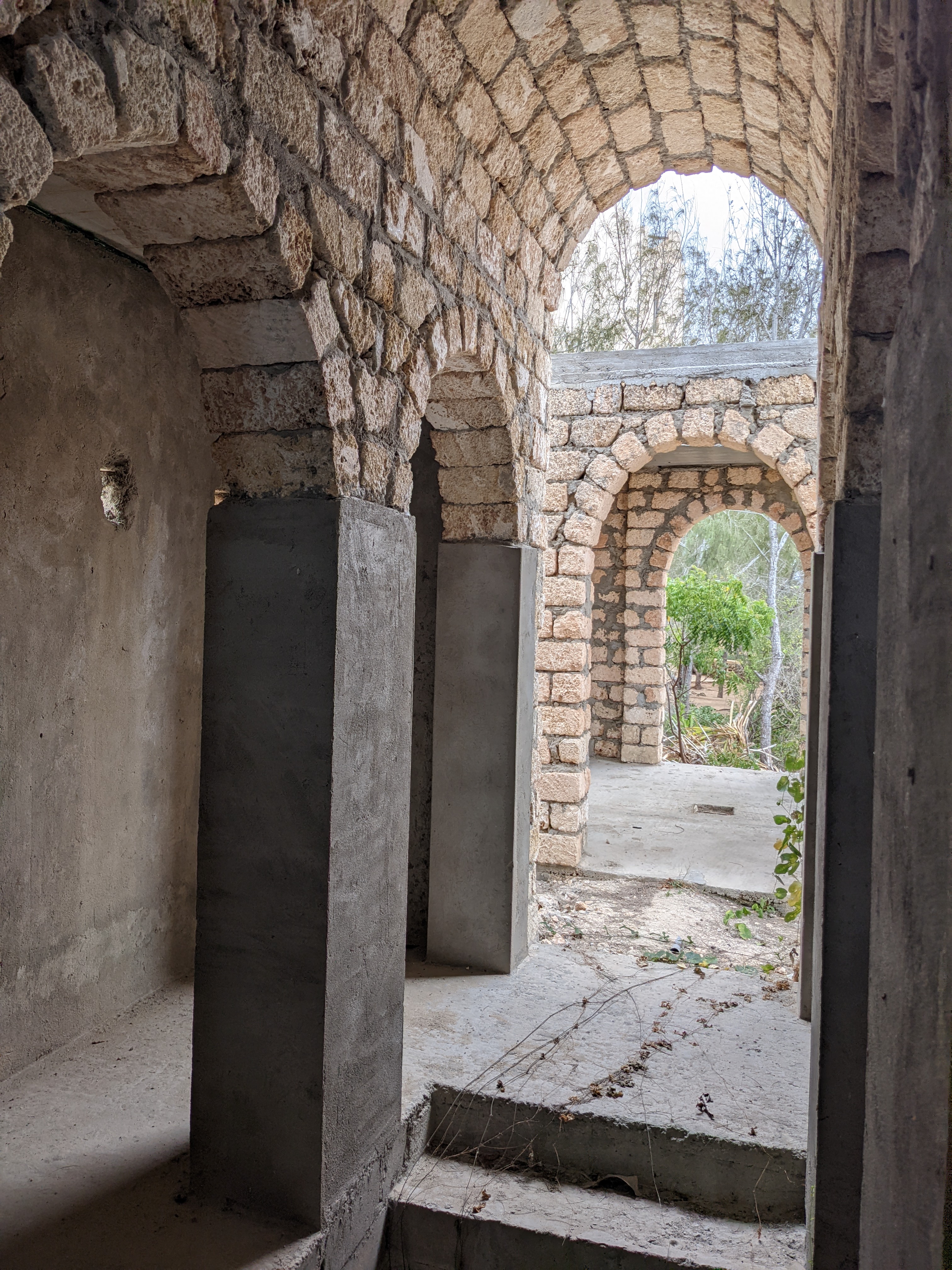
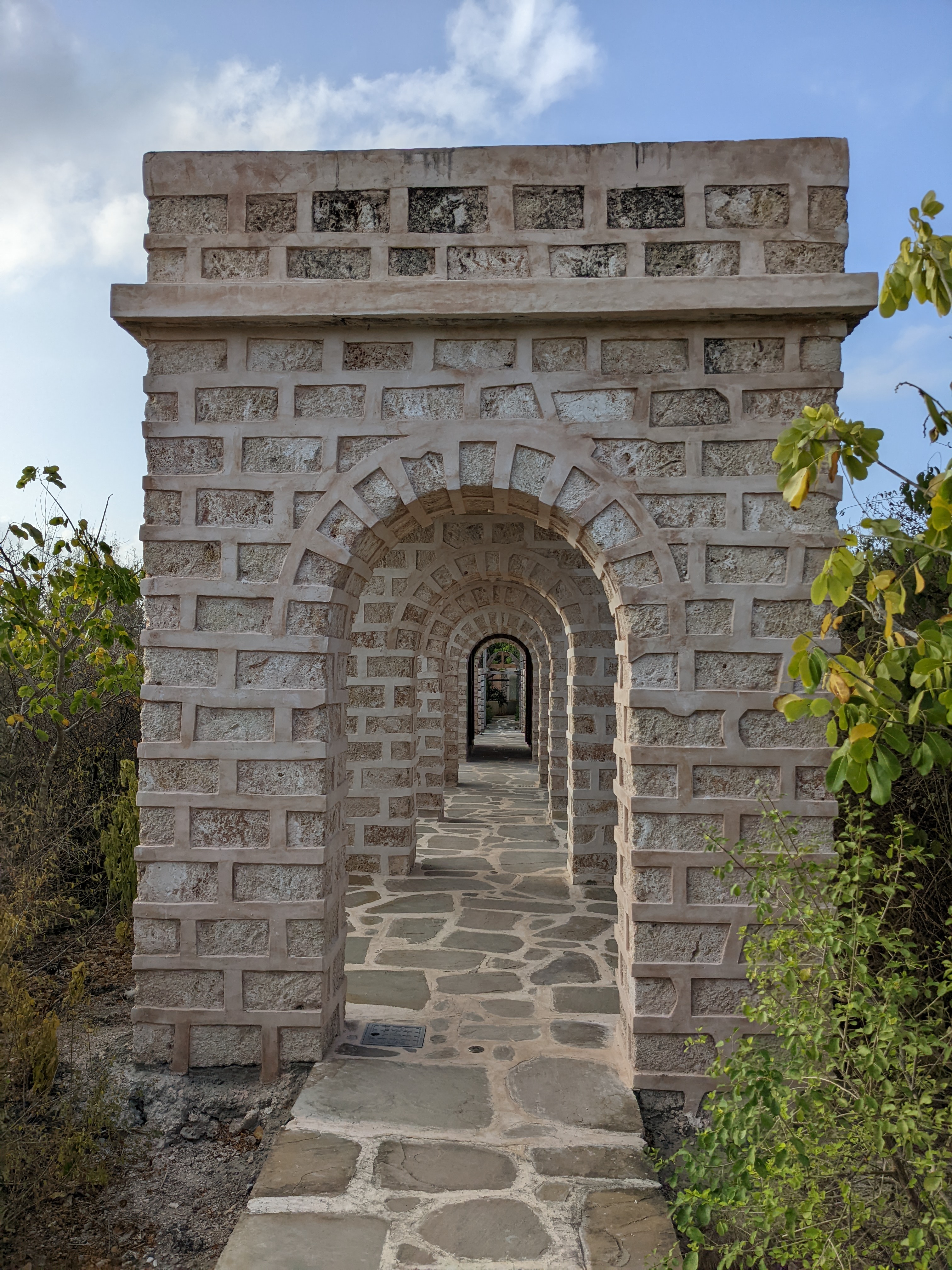
If Dwayne ever leaves me, it will be for an older model, made of blocks, mortar, and generous arches.  Gaga for architecture, Dwayne is, and Italian influenced Kenya coral renaissance rung all his bells.

Good times on the beach side of Malindi! Finally caught up from my general NW vitamin D depletion.

Saving the Best for Last: Masai Mara Safari

We’re not really missing a child–he was either back in the camp pool or napping. Wes was both safari-ed out and suffering stomach aches as we ended our tour.

We have arrived at our fourth and final safari camp, Interpids Mara on the Masai Mara! As great as each place has been, I do think they saved the best for last.

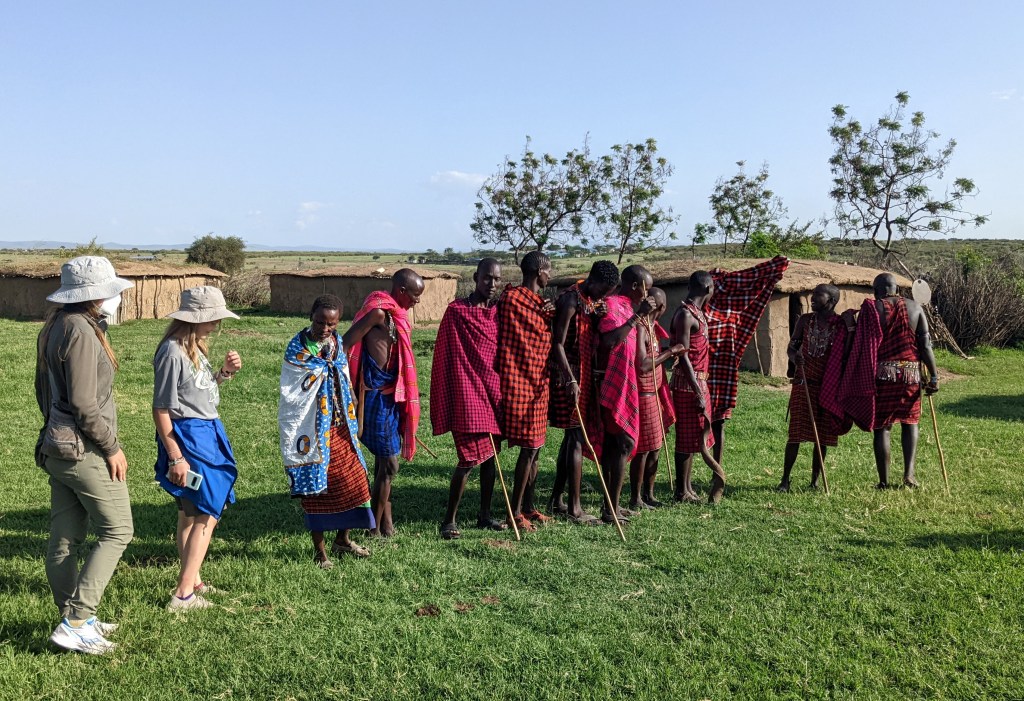
The Masai refers to the people of the area.  The Masai are recognizable from any stock photo, with their red plaid blankets and decorative dress.  Other tribes believe their height, slenderness and beauty come from the tradition of bleeding their cows and mixing it with milk to drink.  Regardless of the means, the Masai are a distinct tribe in a nation of more than 40 tribes.

Not quite just any stock photo–Dwayne and the girls visited a Masai village while I stayed behind one afternoon with an unwell Wes. It was reportedly a full cultural experience and a complete money shakedown.

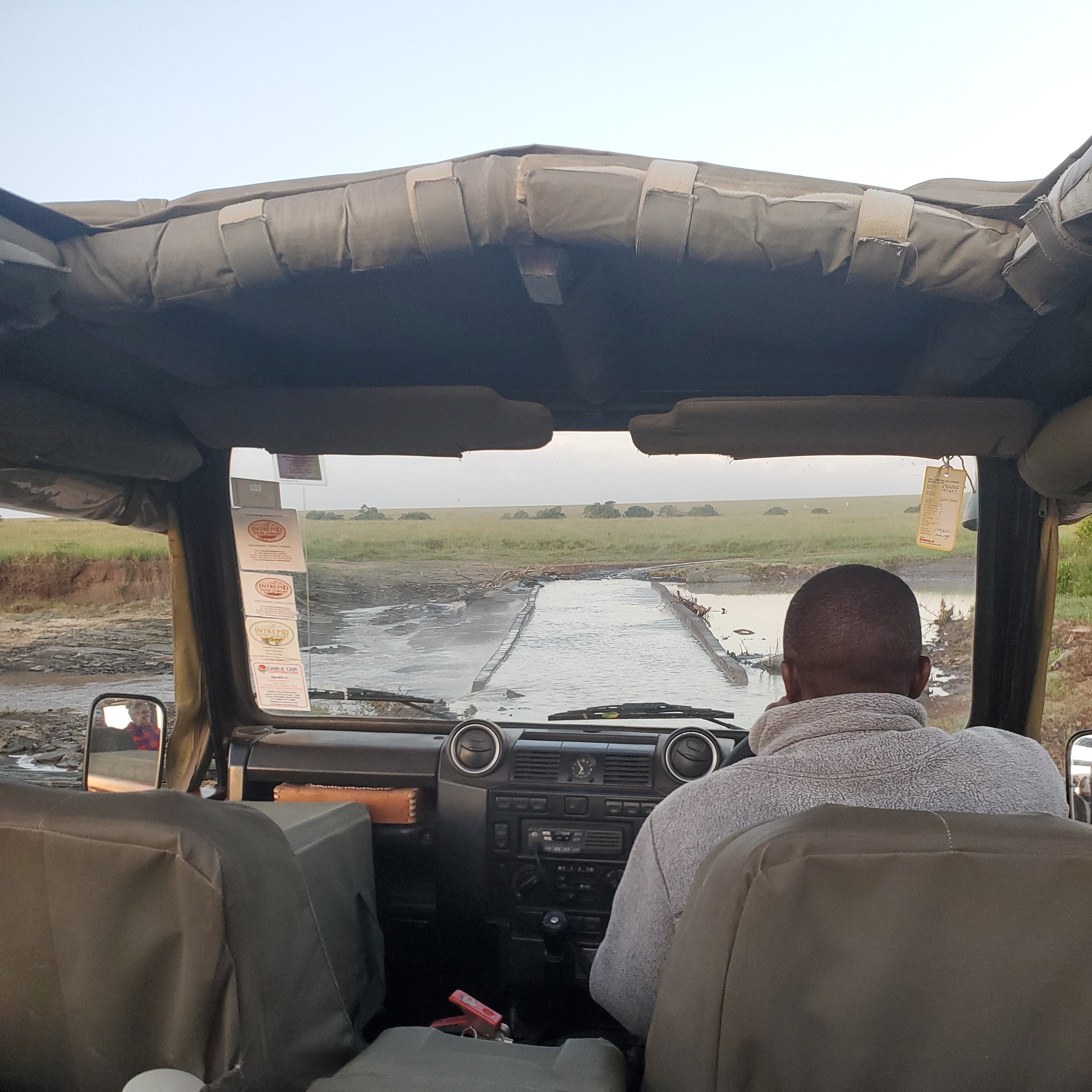
Mara basically means plains or grasslands valleyed between mountains.  The landscape is beautiful, and it makes game drives jaw-dropping regardless of animals spotted.  It is easier to see across expanses, and the recent rainy season has made the grass tall and green.  Samburu dust has been exchanged for some mud, but the Land Rover can more than handle it.  Also, the roads are more suggestions than limitations—when wildlife is spotted up on a grassy hill, our guide just takes the Rover off-roading so we can get close to the animals, who never seem to care about the weird-wheeled beasts that hang around so much. (Shh. We found out on our last day that he would get a $100 ticket if caught by a park ranger, but there are few rangers and lots of land.)

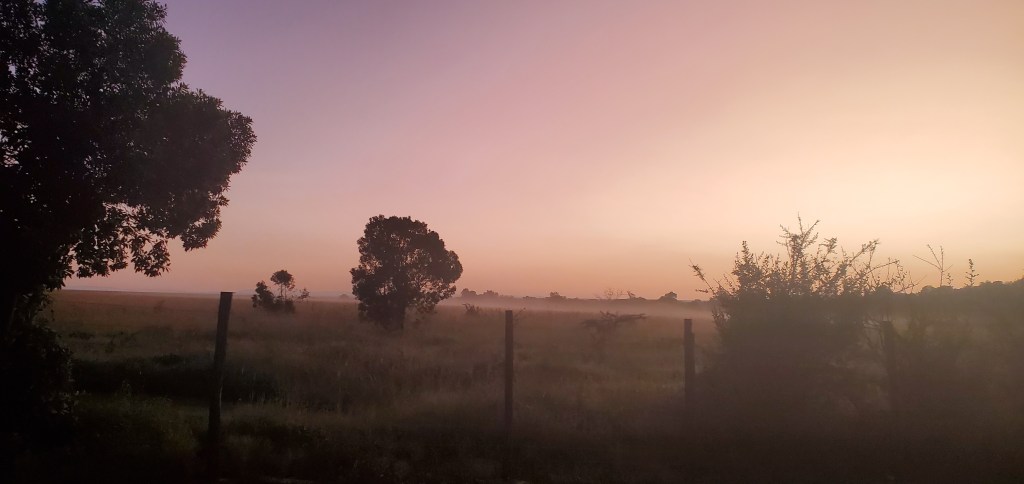
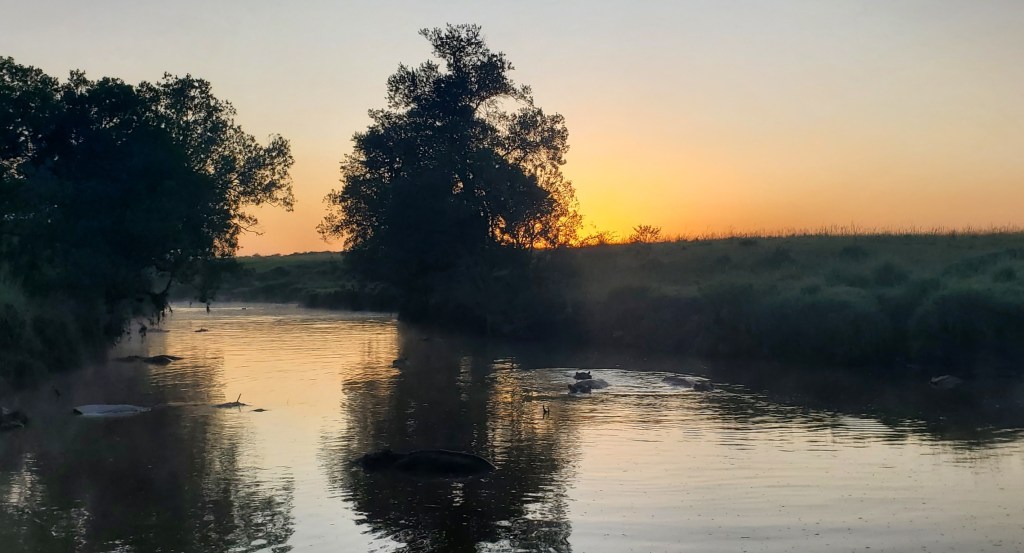
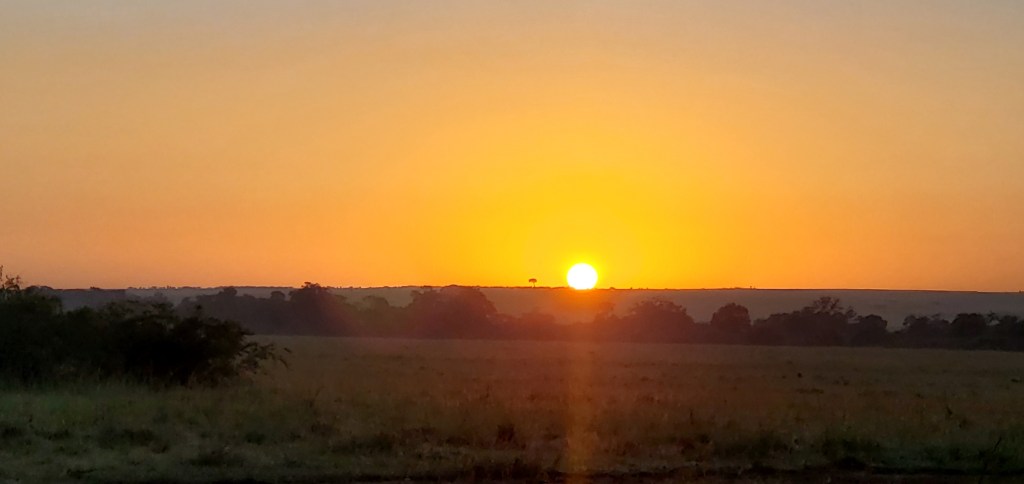
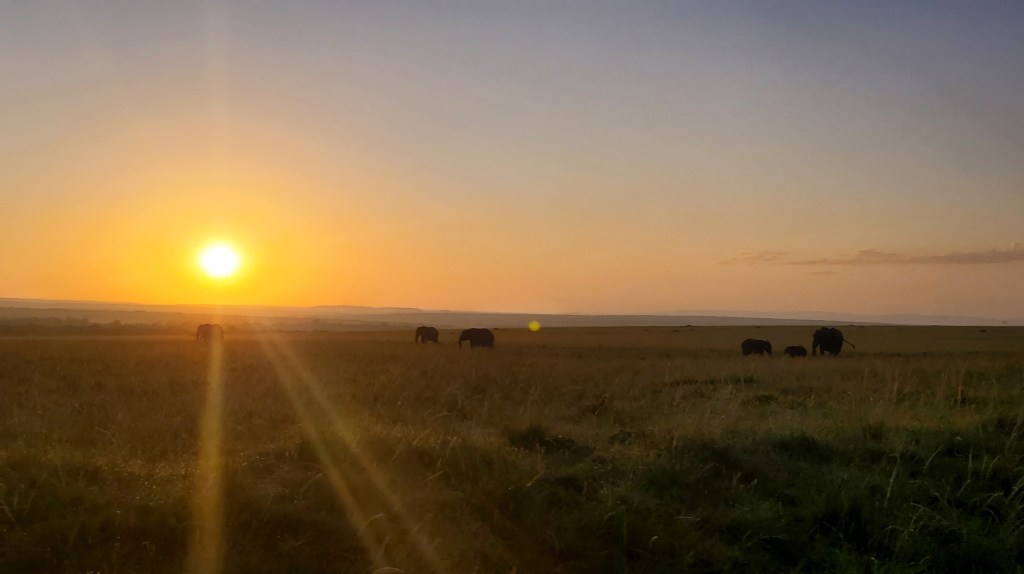
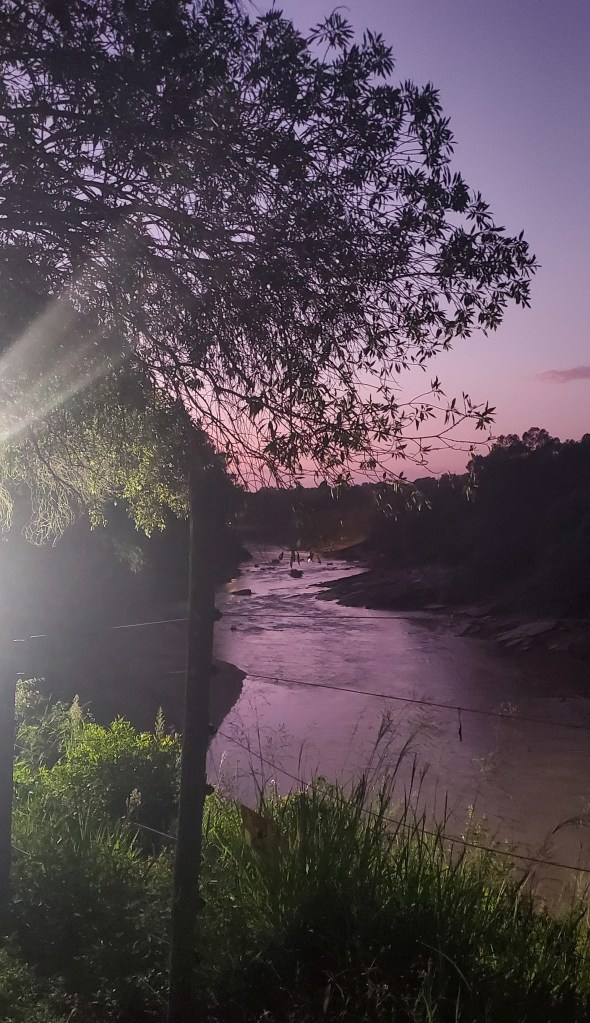
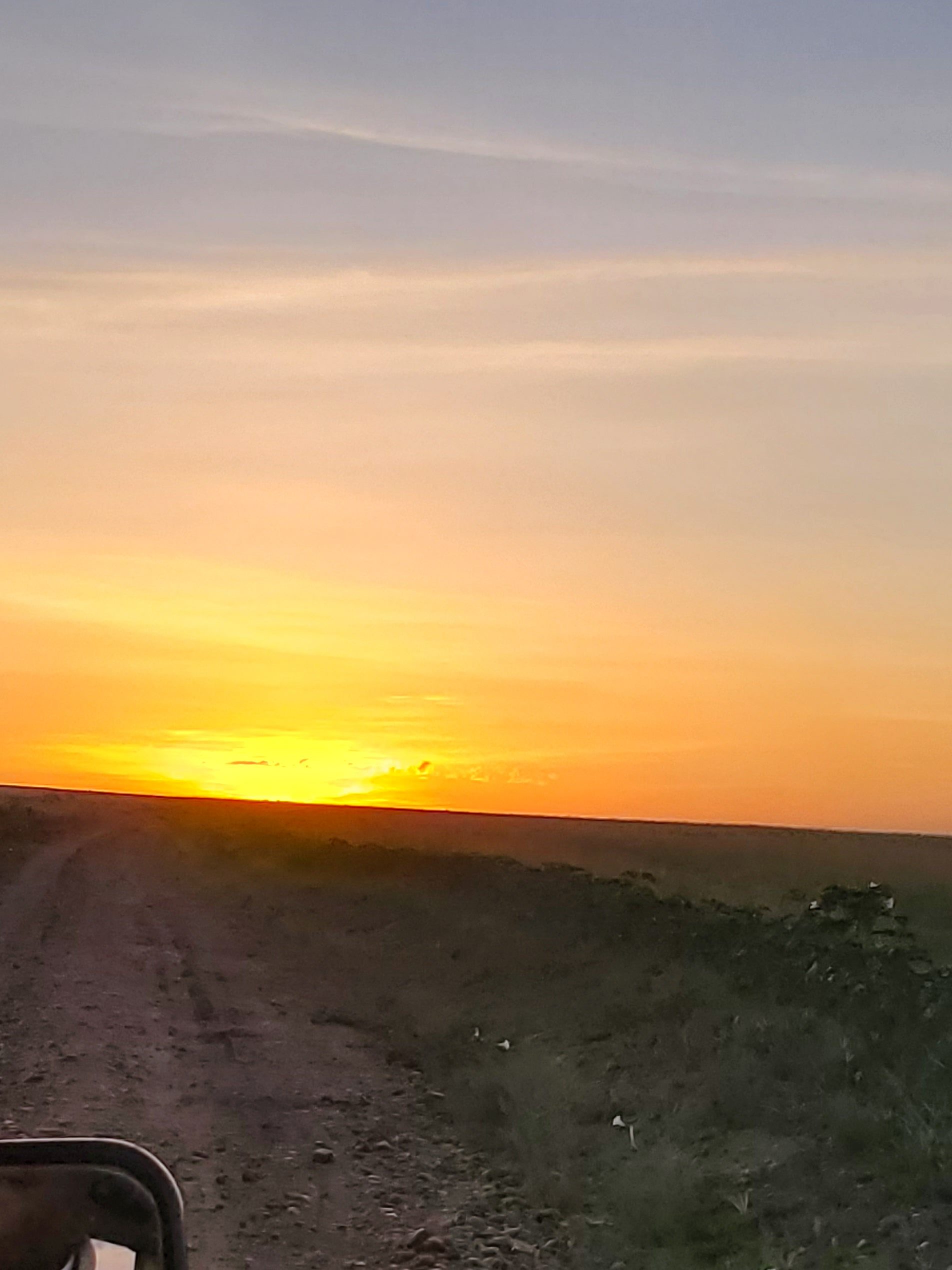
Sunrises and sunsets over the Masai Mara. The sun kept getting photobombed by animals.

Sunrise as we left our tent for a 6:30am game drive.

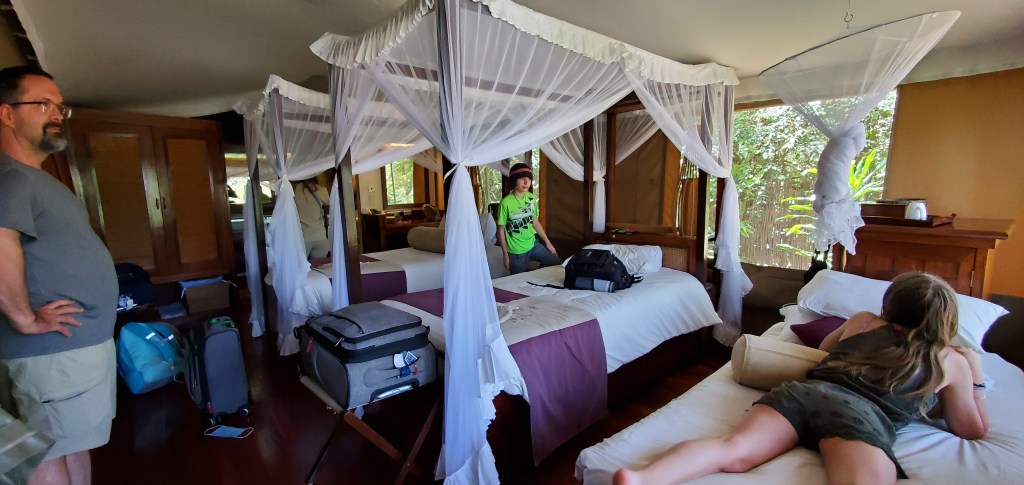
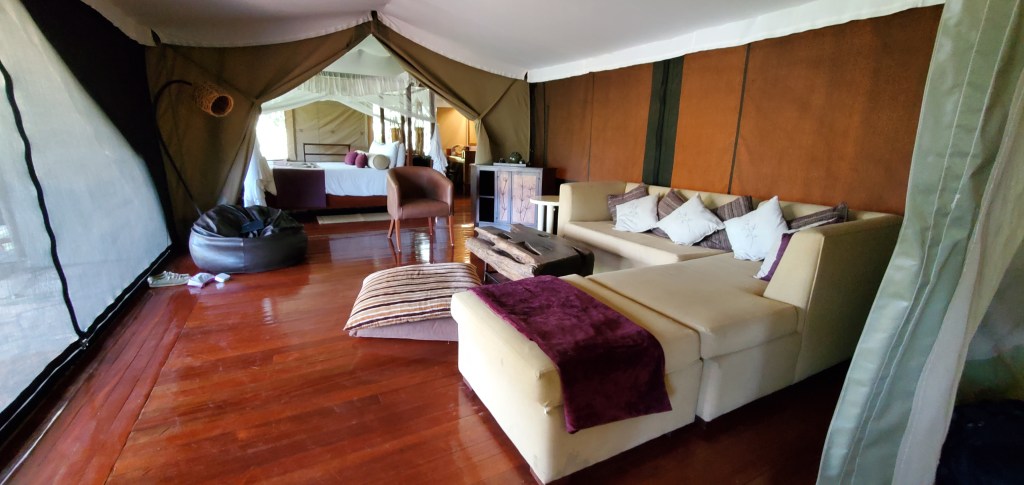
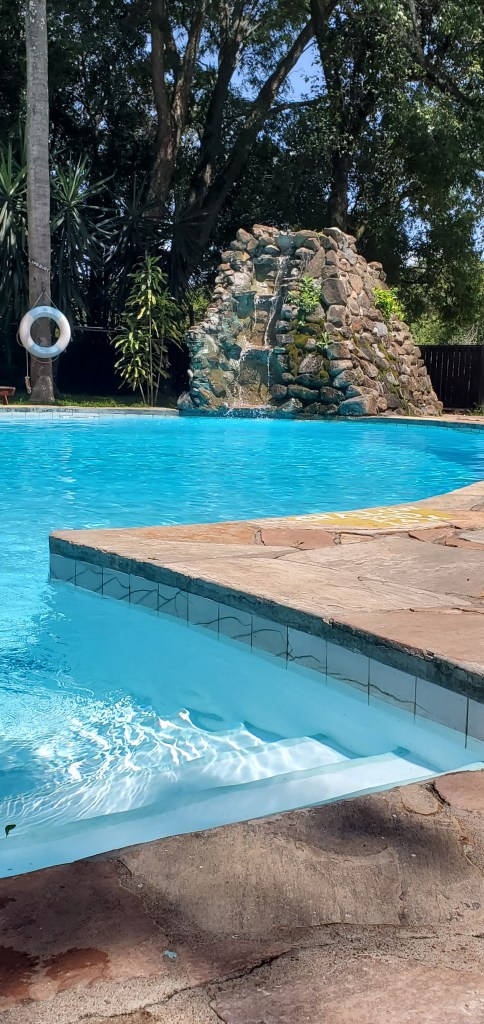
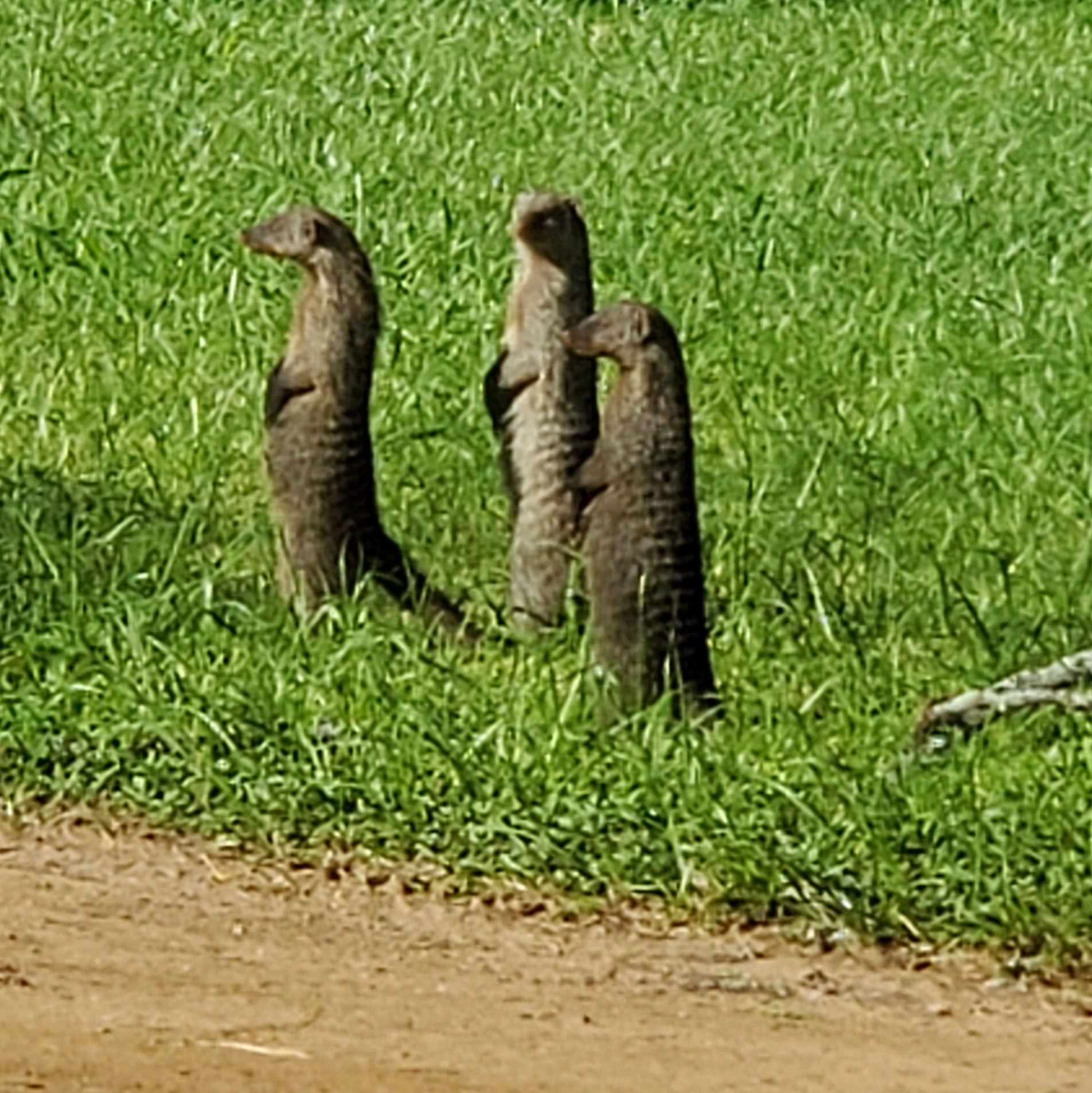
The camp itself is the Safari Camp Ideal.  It is built around a river bend, where hippos submerge in the day, and graze around and bellow at night.  Mongoose (mongeese? mongooses? A little help here, please!) travel in happy packs, looking like moving dirt piles and very frolicky ferrets. And our tent!  We have two tents that are connected with a common living room, and it is perfect.  The swimming pool has a small waterfall feature which makes Dwayne’s building fingers itch to create one himself.  If you could go to only one safari location, make it Masai Mara, regardless of where you camp.  (If you get to add a second, Ol Pejeta easily makes the cut.)

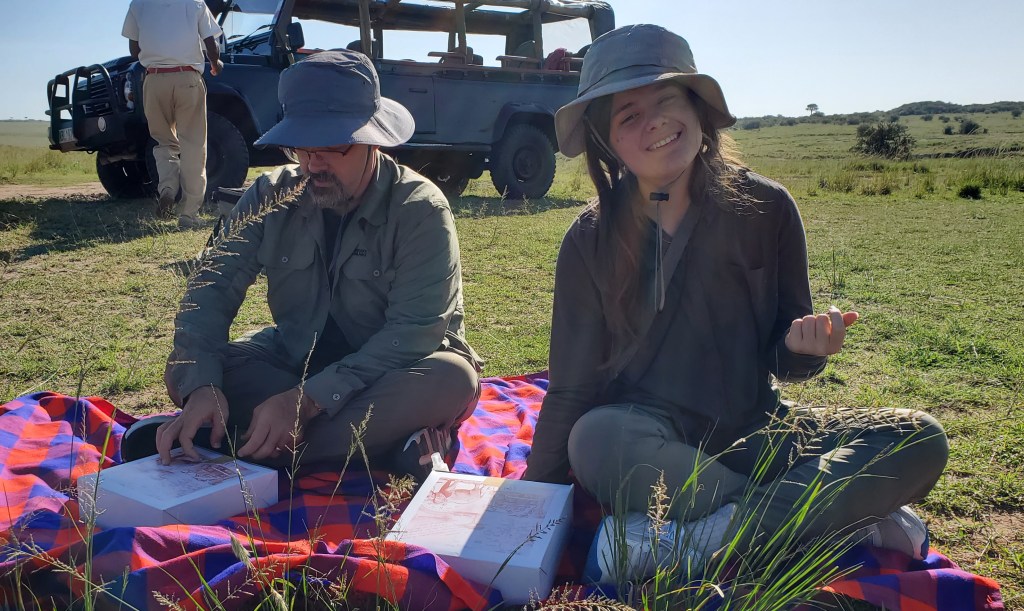
A true bush breakfast! It gave us the strength to let driver Simon do all the work while we sat in the Land Rover for 6 hours.

This was the only camp that did the sunrise drives. On the second morning, we* packed a boxed breakfast and stayed out for 6 hours, finally “catching” our leopard. We also finally got to see our cheetahs! The pack-that-used-to-be-5-but-is-now-3-even-though-cheetahs-are-usually-solitary showed up and we watched them cross the river where the water was shallow and fast enough to not be inhabited by crocs and hippos.

Even though we had seen several of these animals at other camps, we often saw them in larger herds and the vast grasslands produce different behavior than dry scrub.

These were a few of the animal highlights:

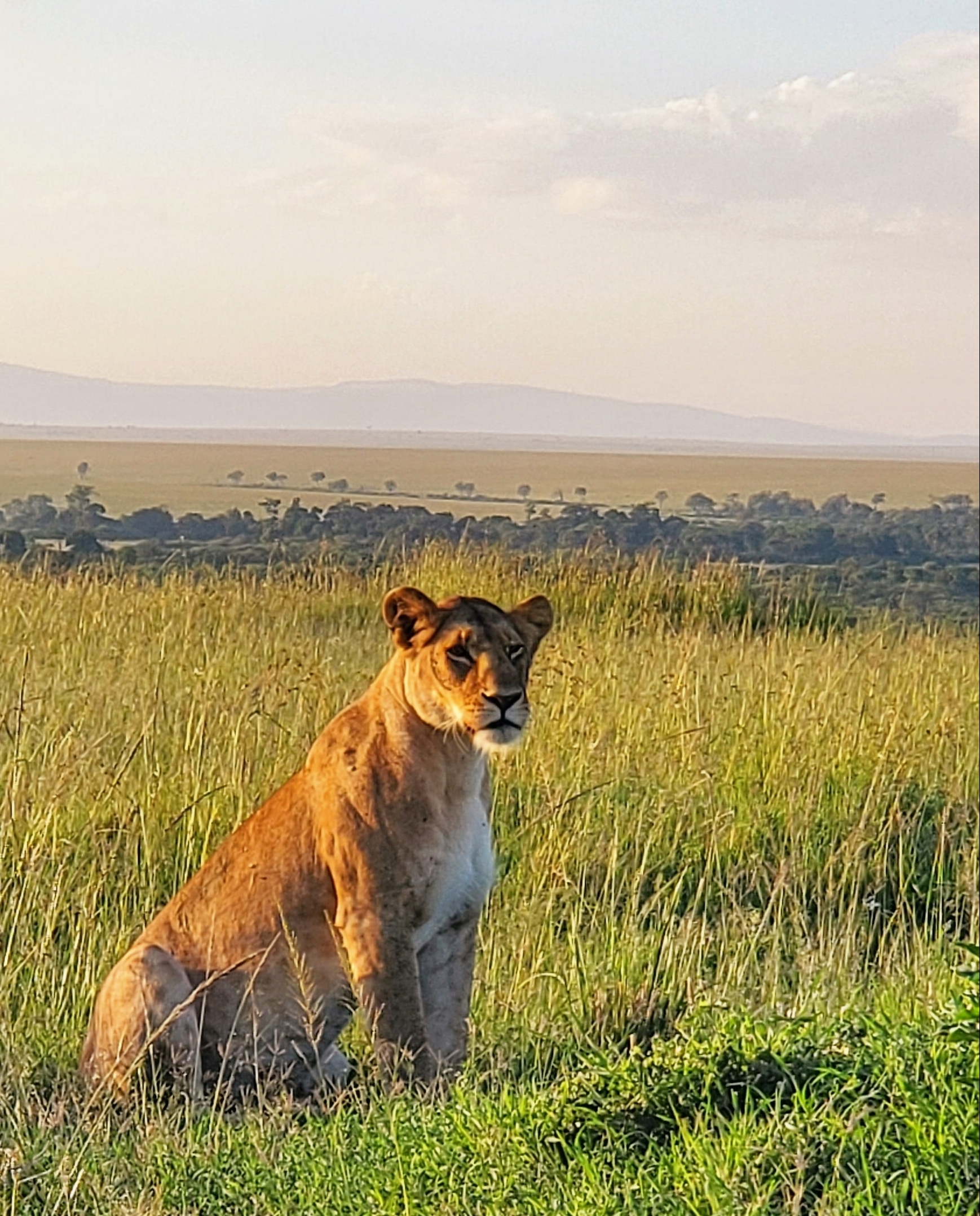
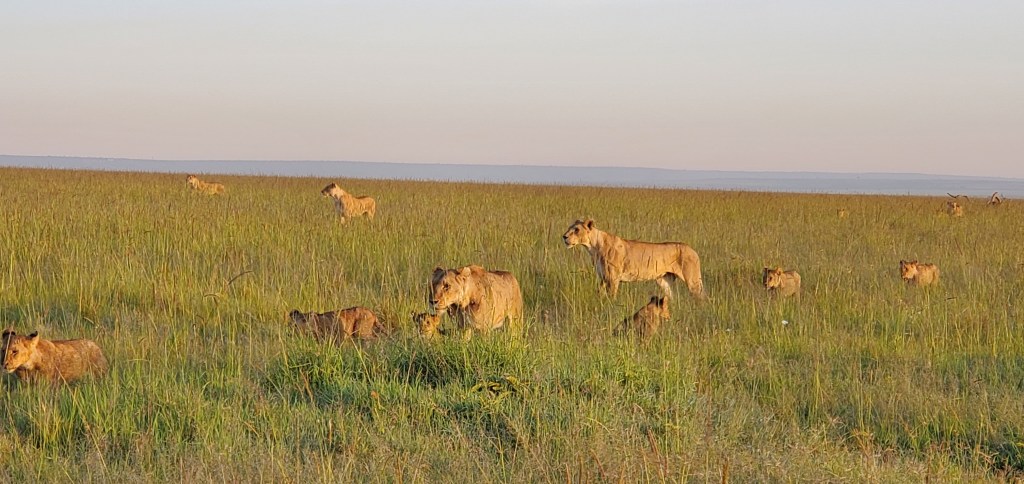
(1) By this point, we had seen lots of lions–males, females, and cubs. But this particular pride was dripping with cubs. They also had more than one male, but they don’t hang out with the women-folk and cubs. A particular hobby of males is killing cubs that aren’t theirs, so most days, lionesses play “hide the cubs”. A lioness will nurse any cub of her pride, which is handy when there are so many cubs. Can you count the lions in this video? I got 21.

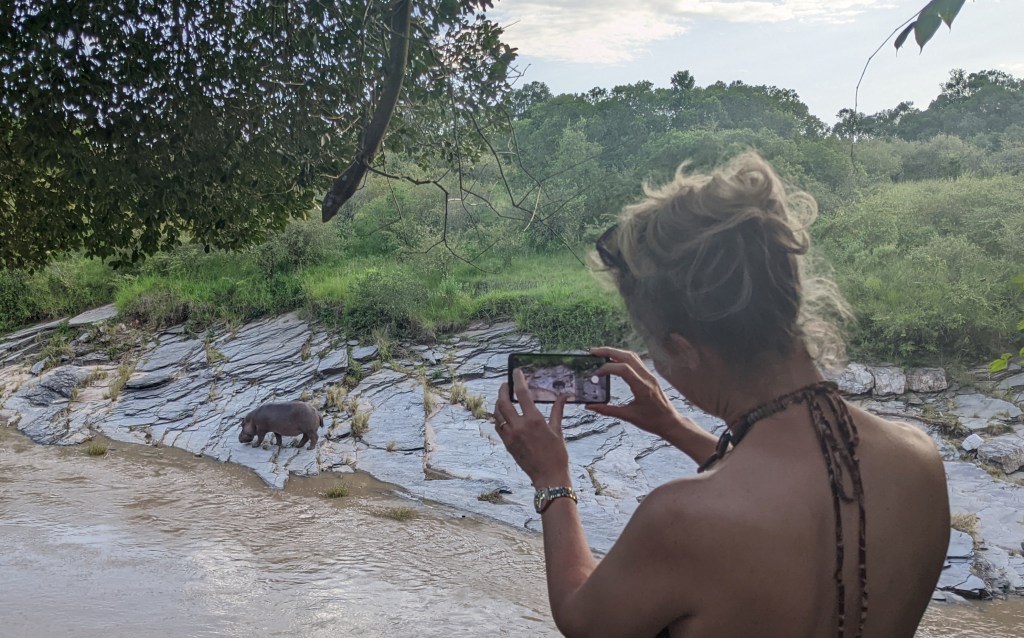
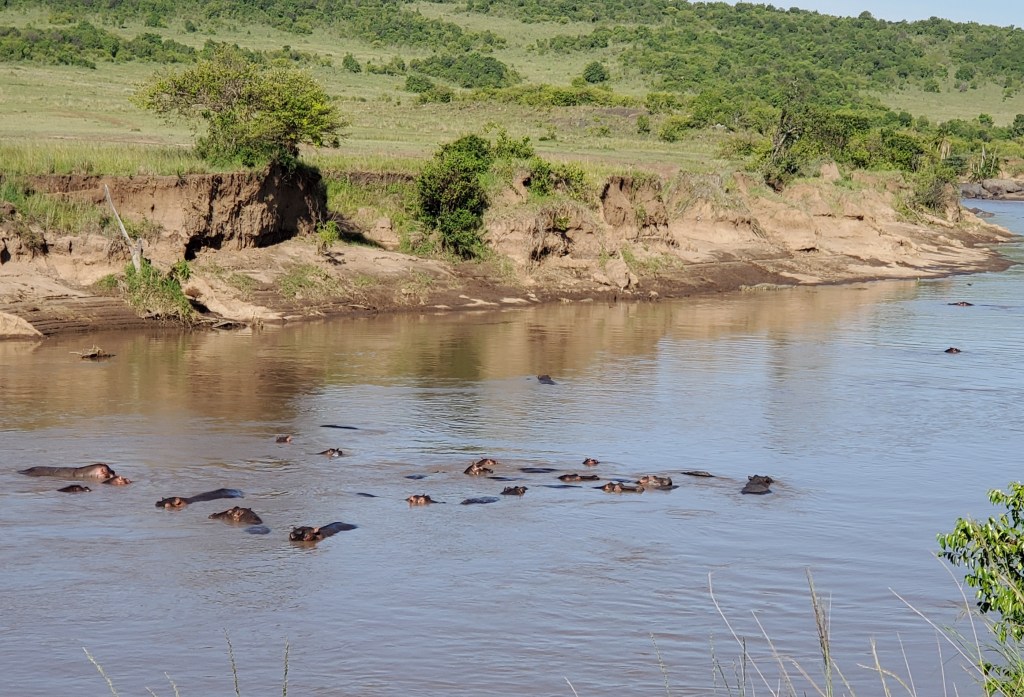
(2) It is so wild to see a bloat of hippos in every stretch of the river! We caught them a few times out of water, but they spend the daytime mostly submerged.

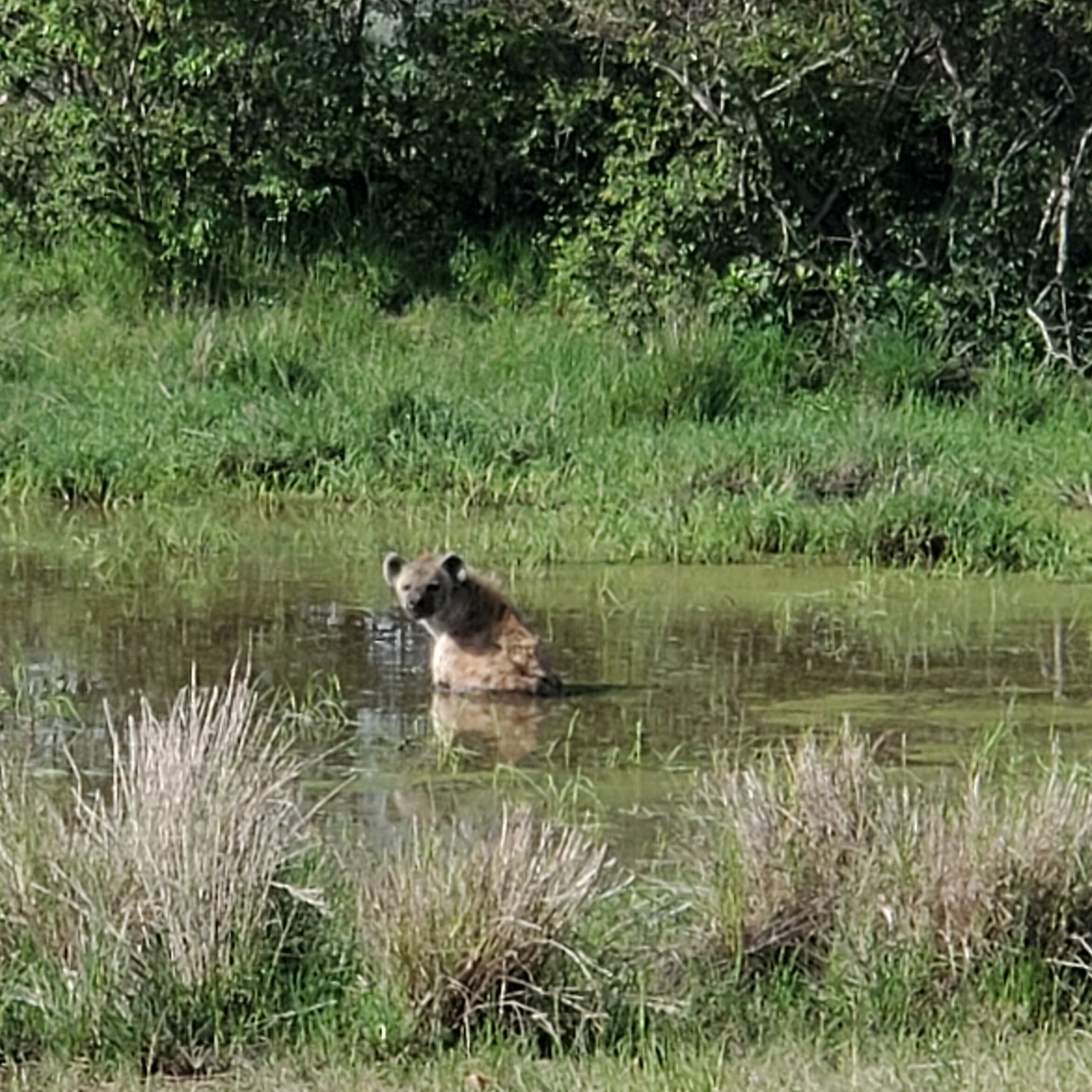
(3) The non-devious hunting attempts and casual rubbing shoulders of predators and prey surprised me. They didn’t seem any less successful than the careful prowling and hunting of the lions, who we saw organize ambushes four times and never successfully.

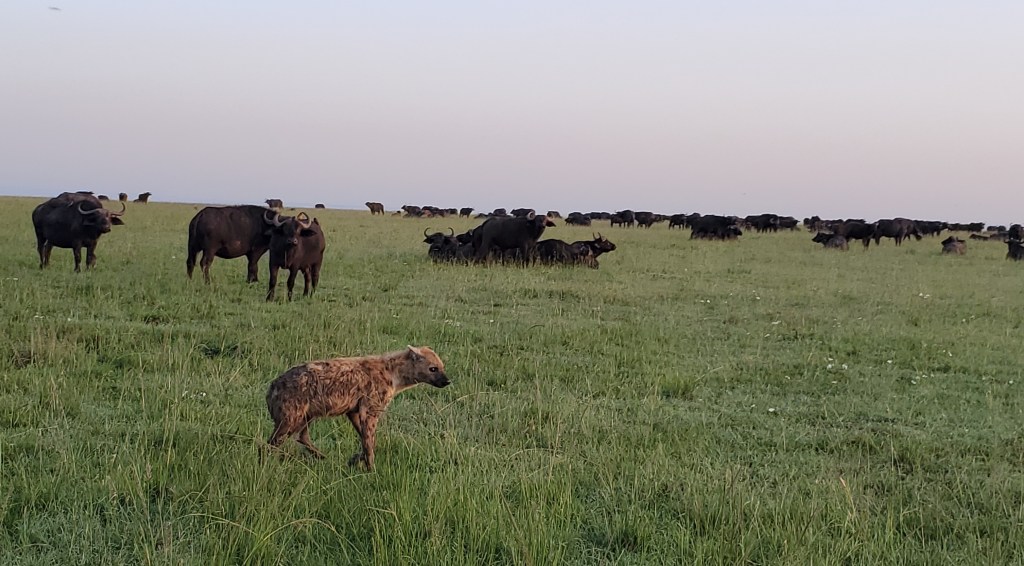
An obstinacy of Cape buffalo keeps an eye on a few hyenas waiting to eat newborn baby buffs for breakfast.
I was both amused and horrified that this mother trotted away from her new calf–it must have been just minutes old. However, baby caught up to mama before hyena caught baby.

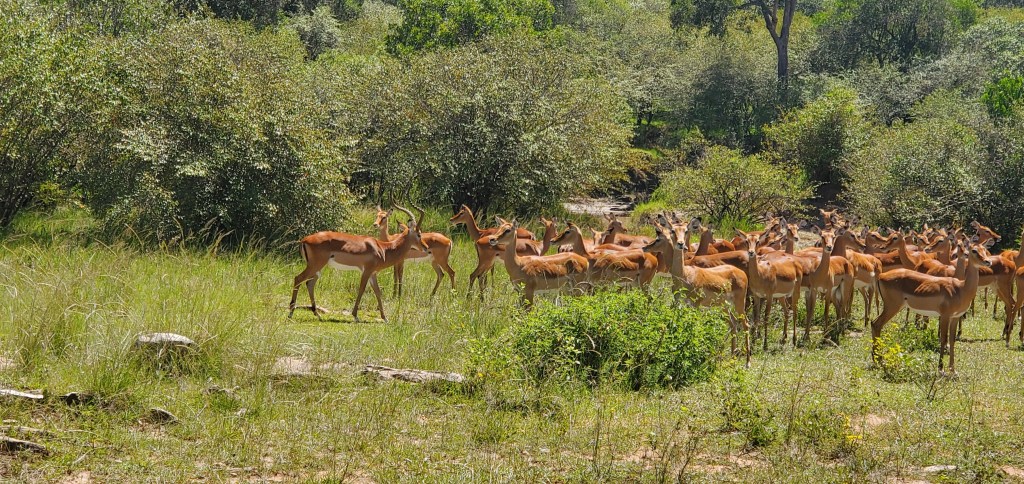
(4) We witnessed the strict control of the male impala over his harem. At a whiff of danger, he gathers them close. But you know how long a male’s reign lasts? Truly, take a minute to guess. Because they must remain vigilant against predators, and keeping the ladies from going off to the bachelor group (where the boys go when they are butted out of the herd by the dominant male as soon as they sprout horns), they eat little and quickly lose the strength that won them the herd. They are dethroned and return to the bachelor pad in about two weeks. Only a small number of females can get pregnant in that short time, and so the herd eschews inbreeding. I am fascinated.

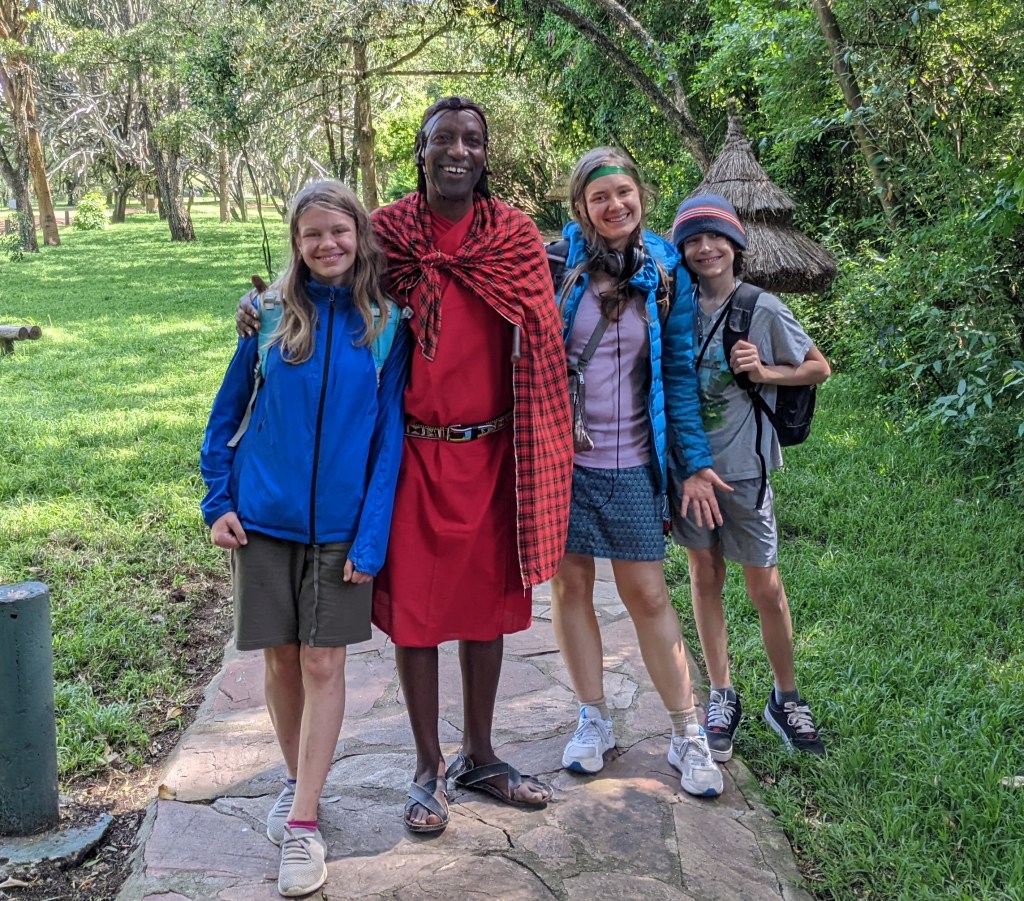
I have to add one more highlight of the Intrepids Camp. Chief ran an afternoon explorer camp for kids of all ages (seriously, if you are old enough to walk, you would love the afternoon activity). Kyla did Masai beading one afternoon and made me my favorite Kenyan souvenir. Kyla and Wes made bows and arrows and had a shooting contest, and the one that Piper loved, took plaster casts of animal prints found around camp, and then pressed them into the dirt to make their own trail. It was followed by a pretty great obstacle/parkour course. Chief also did evening talks with slideshows of the Great Migration (that goes right through the Mara in July and August, and I will never witness it in person because, for every million wildebeests, it sounds like there are a thousand humans), and the Big Five. He is also possibly one of the most personable people I have ever met. Even Piper liked him, if you need a personality testimony.

Chief and the kids saying goodbye.

Thanks for joining me on our 11 day Kenyan Safari! Meet me in a few outside of Malindi, on Kenya’s white beaches?


*Truth: a 7-course boxed breakfast was packed for us by very attentive staff who also delivered hot water bottles and food to Wes, who stayed back because 1) he was having Terrible Tummy Trouble, 2) he gets bored easily if the animals aren’t Minecrafted, and 3) his mother hasn’t been able to sell him yet. Yes, the first one is reason enough but when a kid goes that long in a foreign country without eating fruits and veggies in spite of his parents’ entreaties, the heart hardens a bit.

Ode to the Land Rover

Simon, dropping us off at the airstrip on our last day of safari.

You shiny beast, you impeccable ride,

No matter the water, you get us to the other side.

Over mud, you are nimble; over rivers, quick.

Not once did we ever…stick.

So you can’t call me a loser;

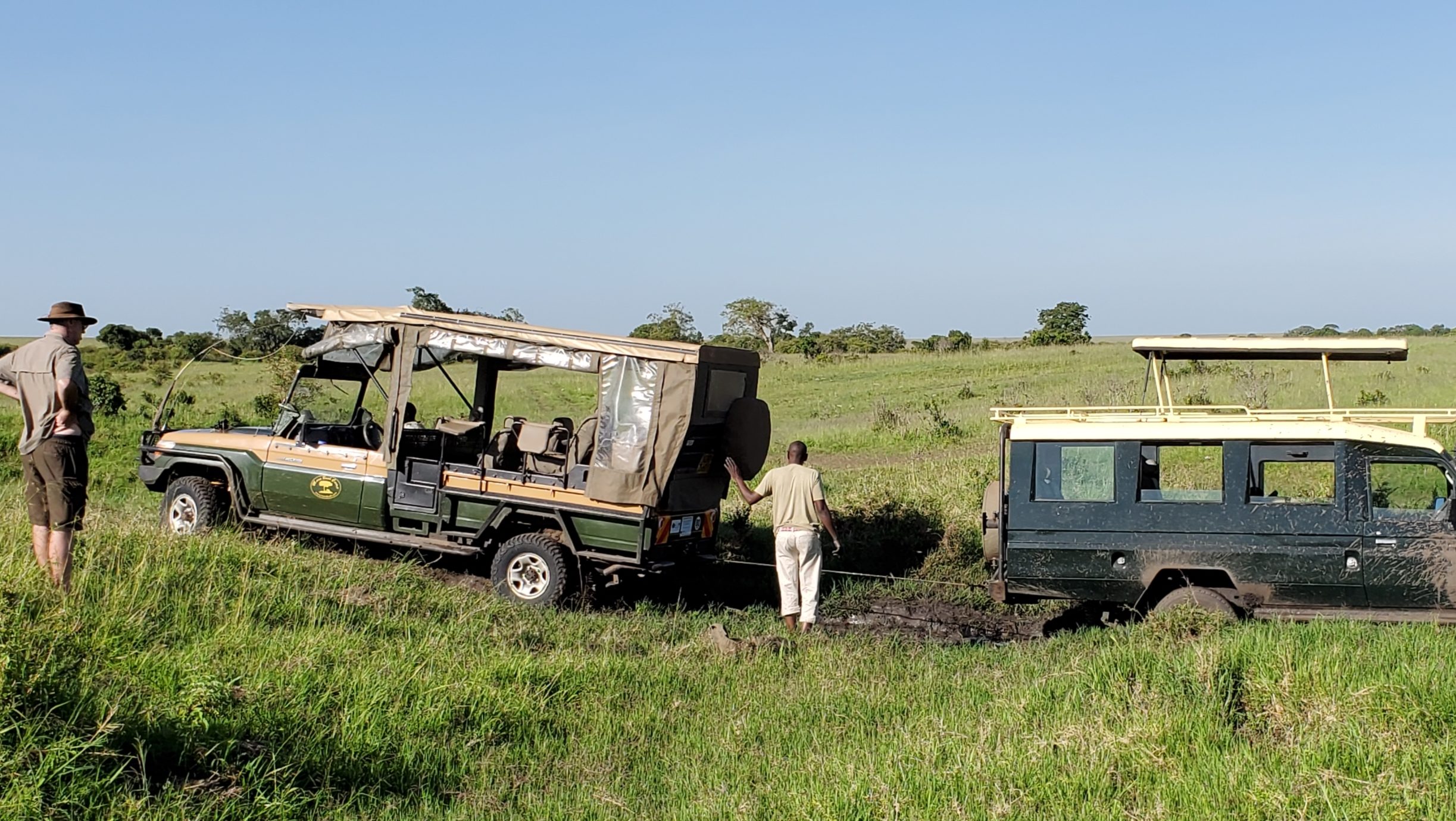
We just had to pull out your Land Cruiser.

True story.

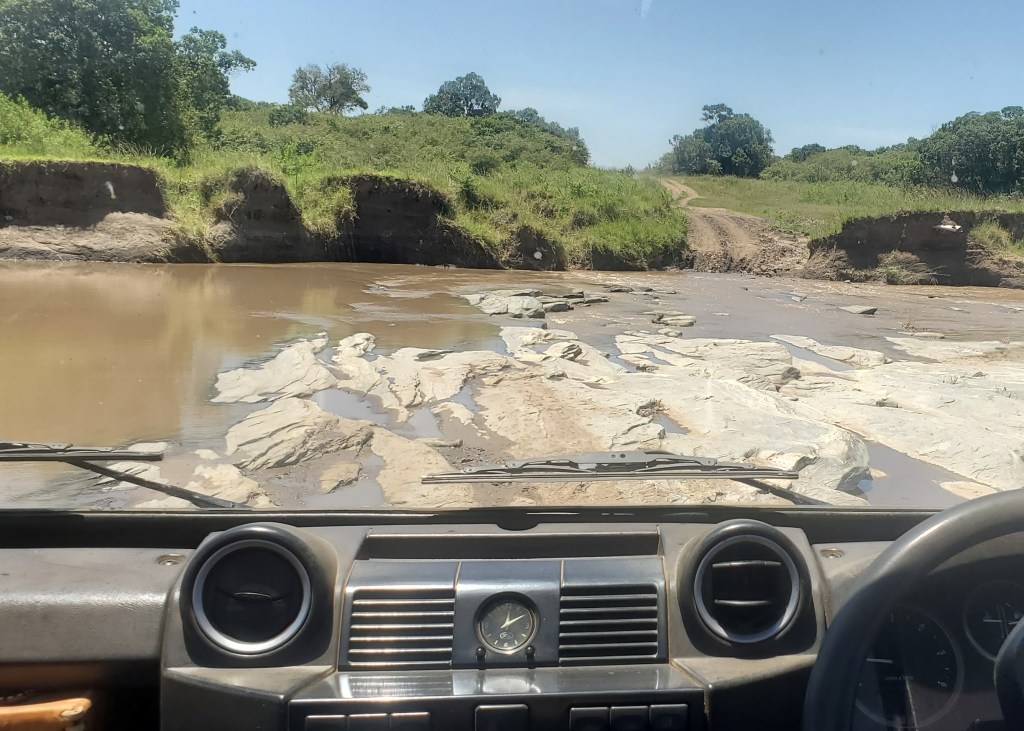
Seeing where Simon would take the Rover quickly became one of my favorite parts of game drives. This crossing was one of my favorites: jagged rocks covered in several inches of water, hippos to the left, a monitor lizard on the right, and the destination an angled, uphill muddy slop. Simonisamazing became one word.

Just some of the park’s infrastructure.
Just a washed out bridge with hippos upriver? How pedestrian.

How I love adventuring here!

The PG-13 Post

Alliterative subtitle: Erect Elephants and Blue Balls

Yep. Totally prehensile, too.

I did not enhance or color-correct this photo of a Black Face monkey. These are the monkeys that played around Samburu camp, with mothers carrying babies on their bellies and younger monkeys wrestling in and out of trees. And I absolutely used this hilarious moment to discuss with my daughters (making sure Wes could overhear) why boys might complain about blue balls and why this is a problem that is his and his only. #StraightTalk #ThanksMonkeys

Top Five: The Big, The Little, and the Ugly

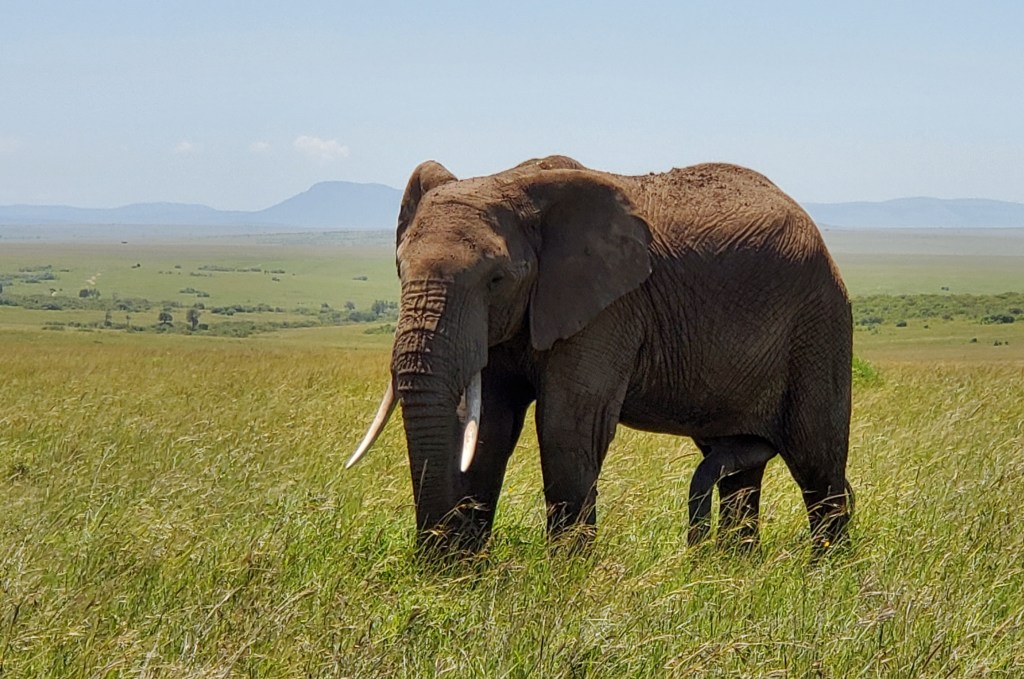
You can’t look at an African safari guide without seeing promises of The Big Five. I would have guessed the list included (ahem, BIG) animals that every 4 year old knows–lion, elephant, giraffe, rhino, hippo, maybe monkey or ape. But no, it’s all about how dangerous the animal is to hunt on foot. I think it’s telling that of the leopard, elephant, Cape buffalo, rhinoceros, and lion, three of them are herbivores. And the list leaves off alligators and hippos which, according to WorldAtlas, kill respectively ten times and five times as many humans as elephants and lions. Well done, marketers, you’ve killed off logic.

The Big Five, as stolen from Bing Images

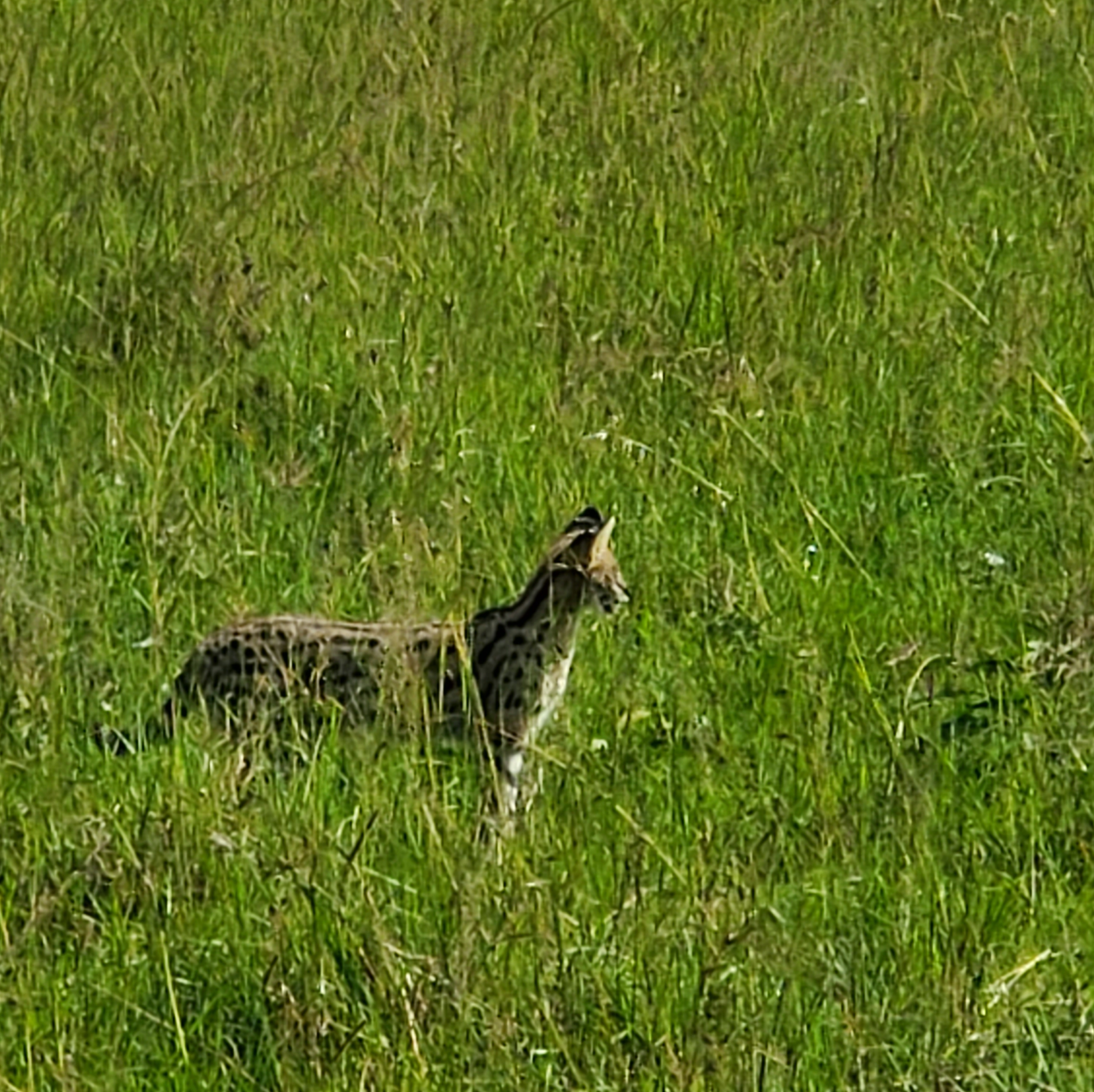
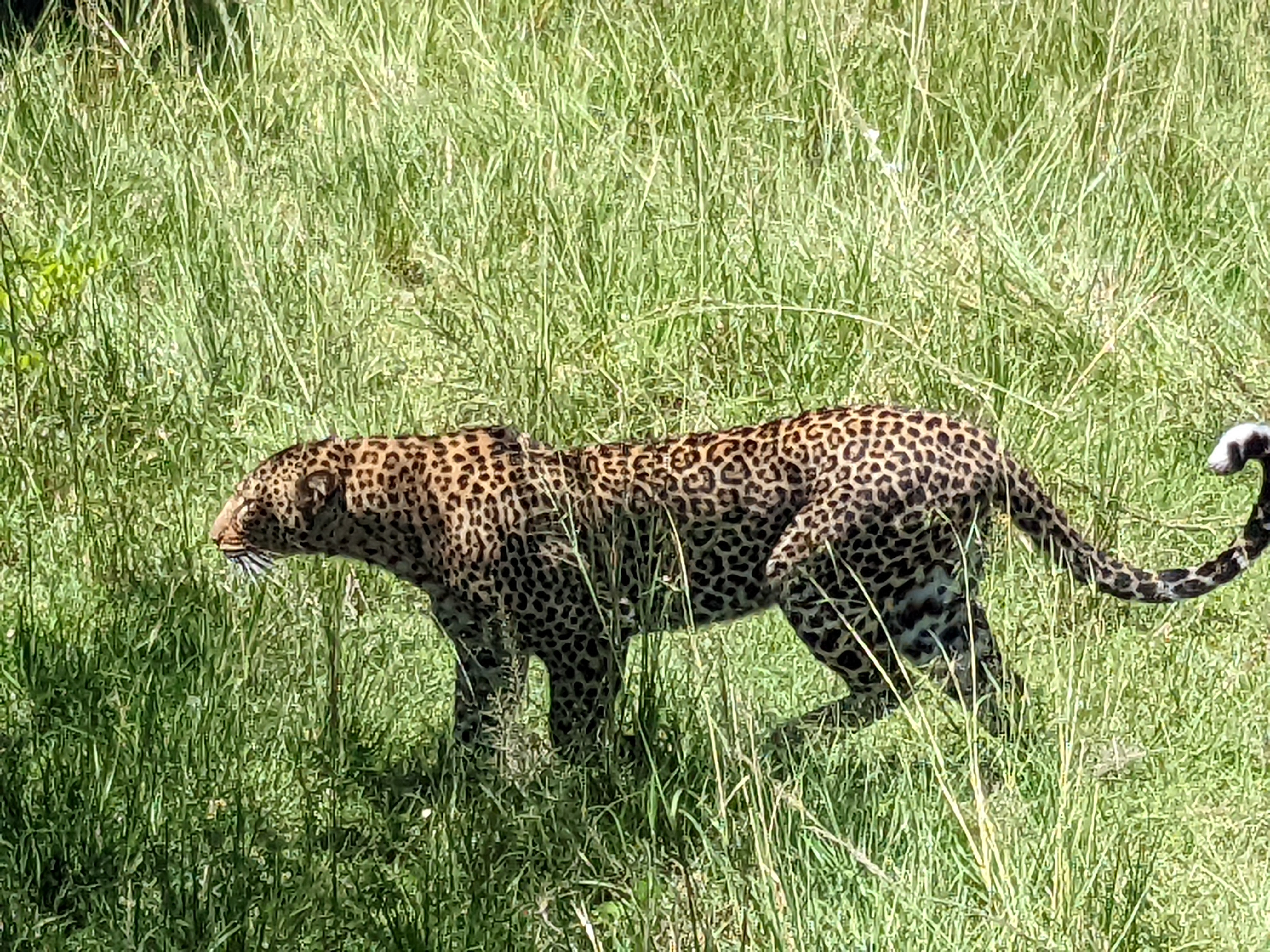
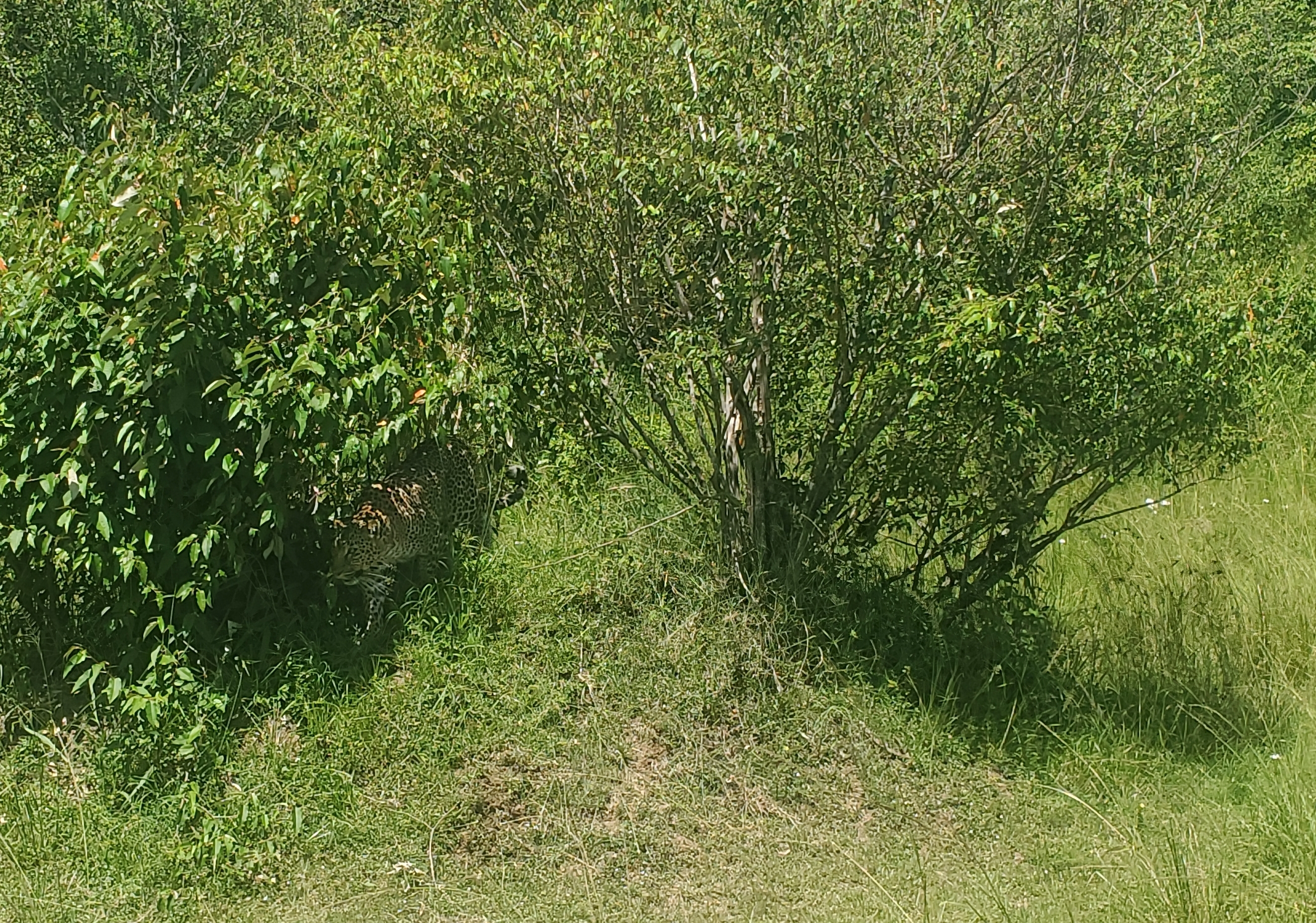
Regardless of the history behind the list, WE SAW THEM ALL! Today, towards the end of our 6-hour morning drive, Simon-the-Amazing guide spotted* the elusive leopard, checking off our African Animal Bingo card.

When you see a leopard against the green grass, you wonder why it’s so hard to locate. Find the same cat when he’s prowling more stealthfully by sliding the arrows to the left.

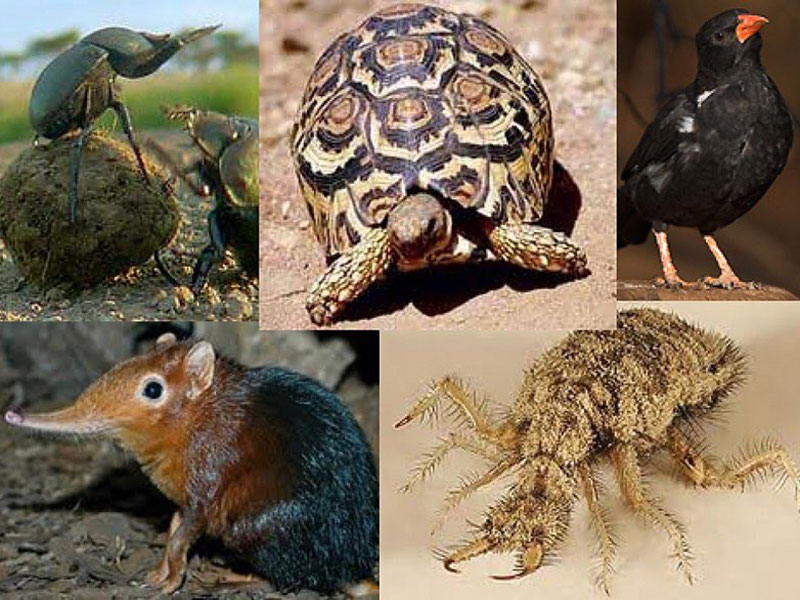
Admittedly, we saw none of the Little Five, but I can appreciate the list: elephant shrew, buffalo weaver, leopard tortoise, ant lion, and rhino beetle.

The Little Five, as stolen from Bing Images
The Ugly Five, per Bing Images

The Ugly Five deserve their time in the spotlight. Two are birds, which I find funny and fitting, but my beloved warthog hangs out on this list: Wildebeest, Warthog, Spotted Hyena, Lappet-Faced Vulture and Marabou Stork. Even though wildebeest come in the millions to Masai Mara during the Great Migration, we only saw one, and at a distance, on Crescent Island when we were at Lake Naivasha. Vultures were flying overhead and storks hung out at the water, so we saw them, but not close enough to appreciate their special beauty. We checked all of these off our list, but I only got to study the hyena and warthog.


*Word choice deliberate. Low hanging fruit, I know.

Morning on the Masai Mara

This morning, we woke up at Mara Intrepid Camp, bright and early for a 6:30am game ride.

So far, we’ve seen, in this order:

Impala

Impala, taken the day before. One male (horns on left) can handle stress of a harem for about two weeks before he grows weak from hunger and loses to the next challenger.

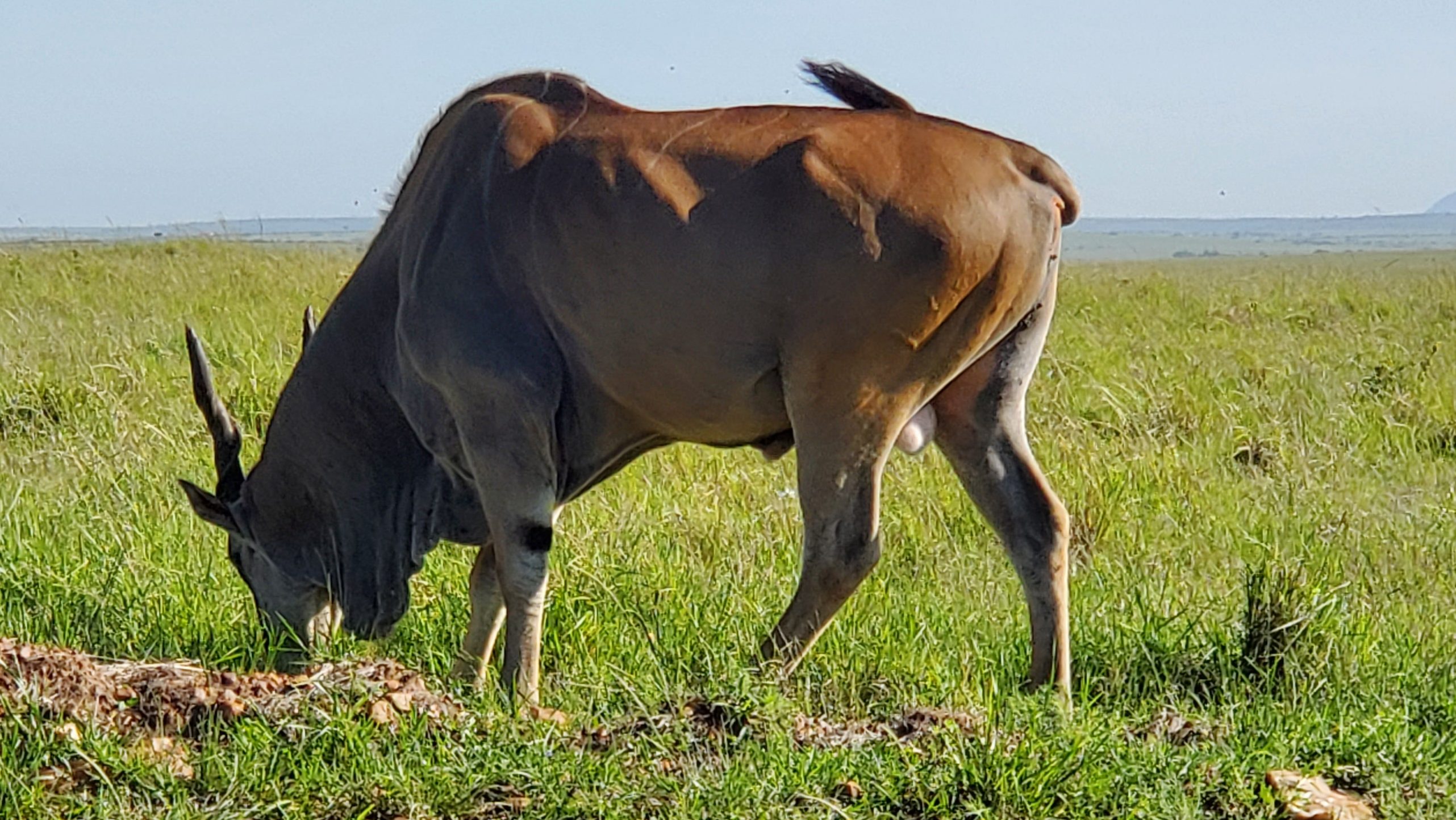
eland (biggest antelope)

The male eland has the oddest wobble on its neck.
warthog (who succeeded in not being breakfast)

lion (who failed at having breakfast–twice)

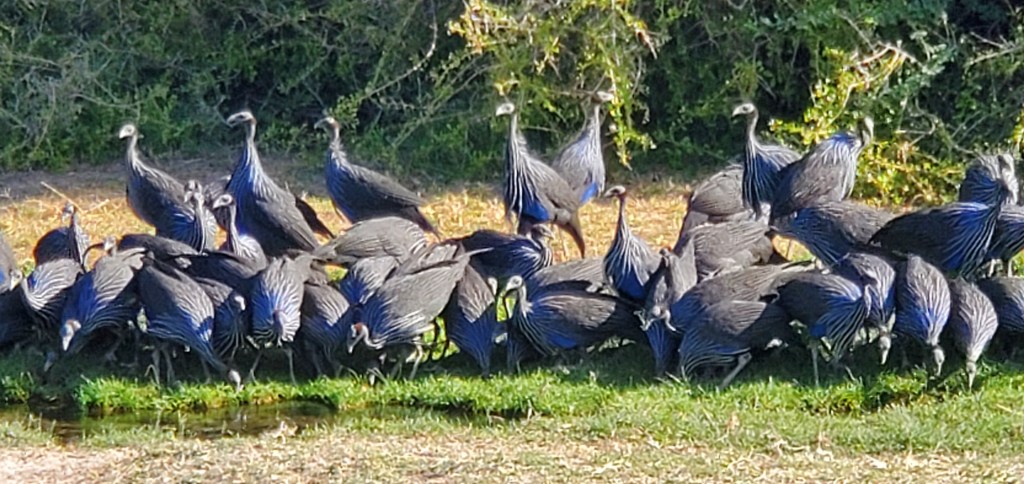
guinea fowl

our first cheetah sightings

These 5-but-now-only-3-after-two-tragic-accidents brothers are almost always found together, very unusual for cheetahs who almost always live and hunt solitarily.

crocodile

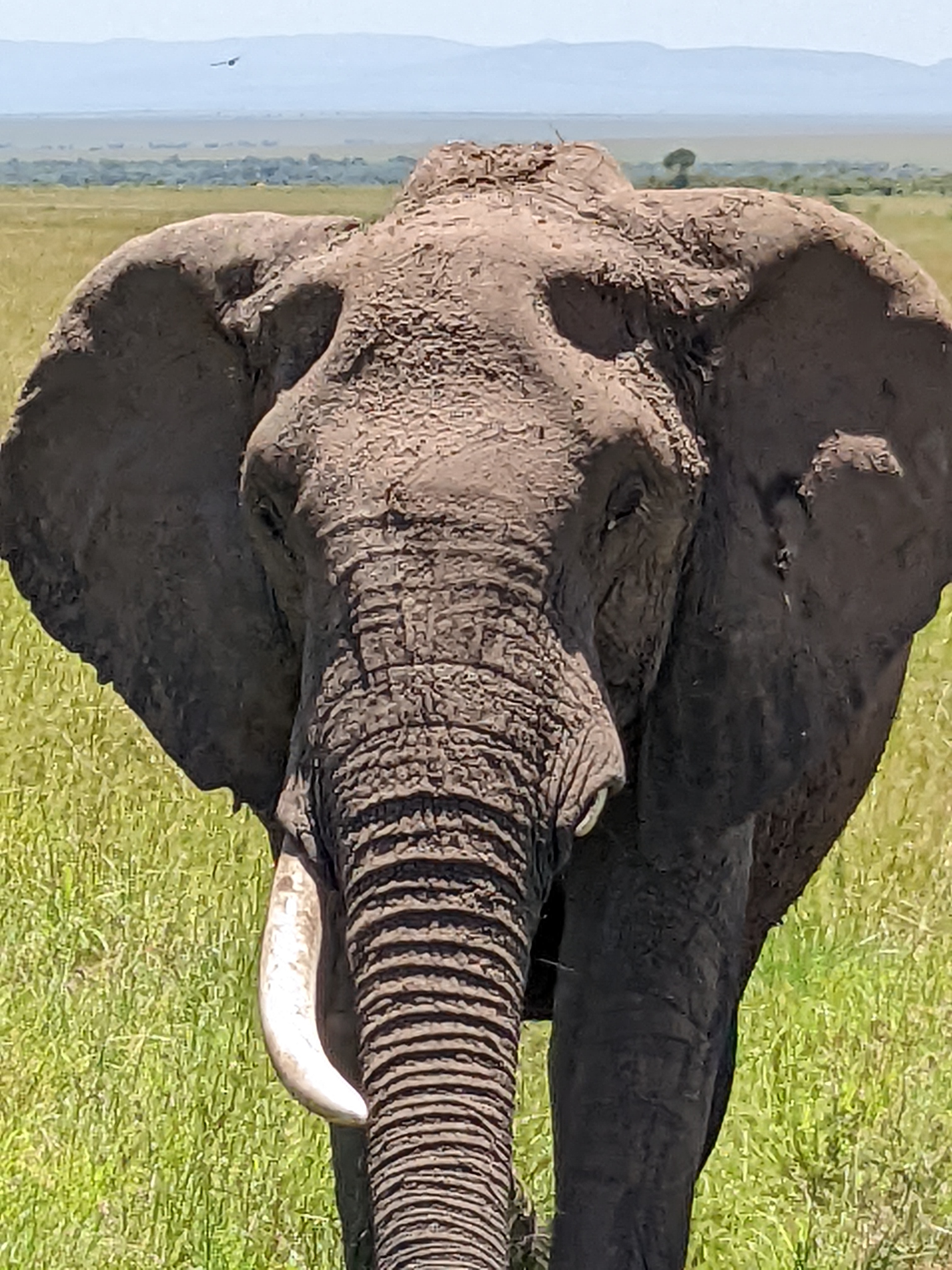
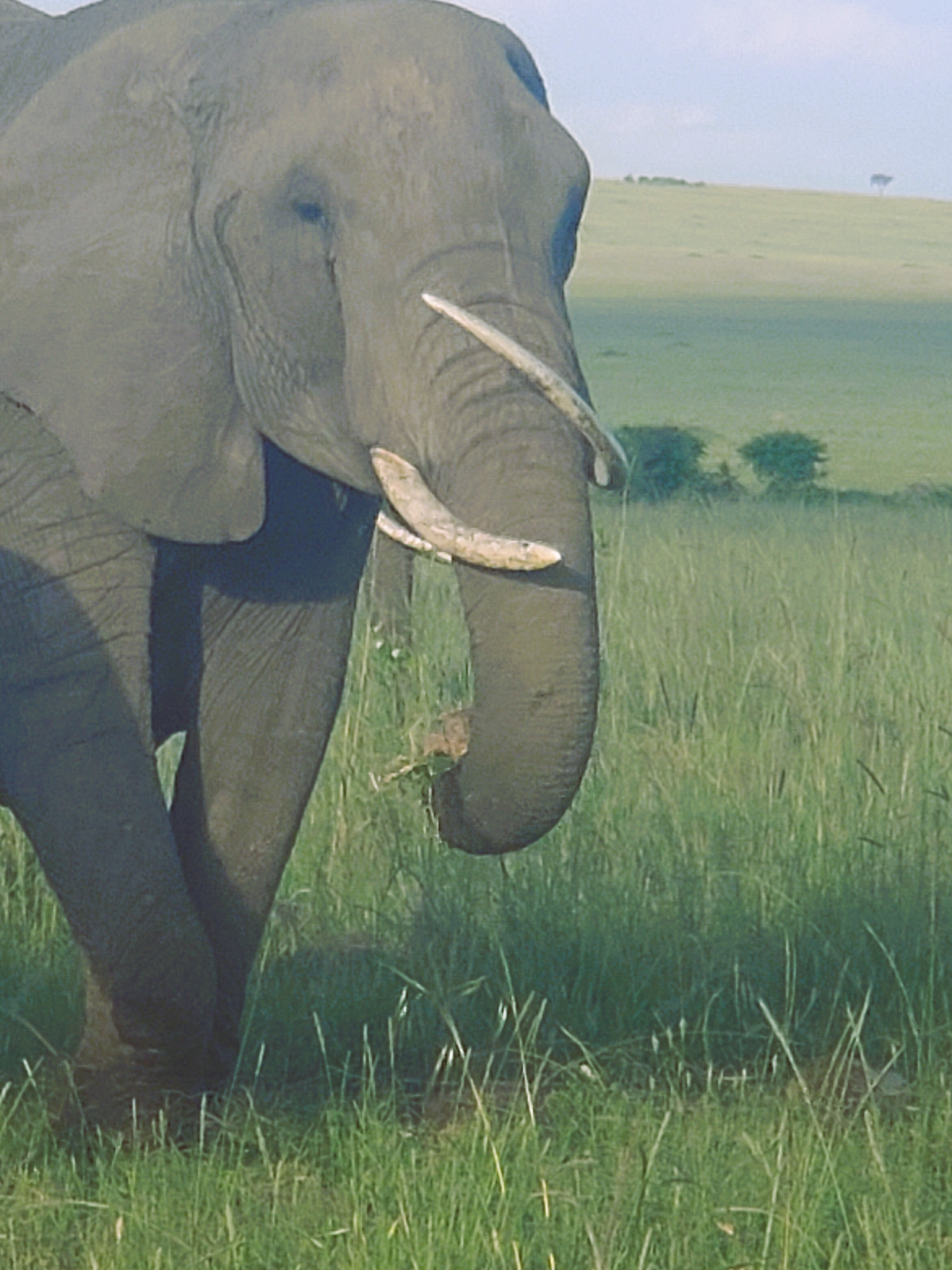
elephant

I’ll be posting plenty of elephant pictures, so will give this post some space.

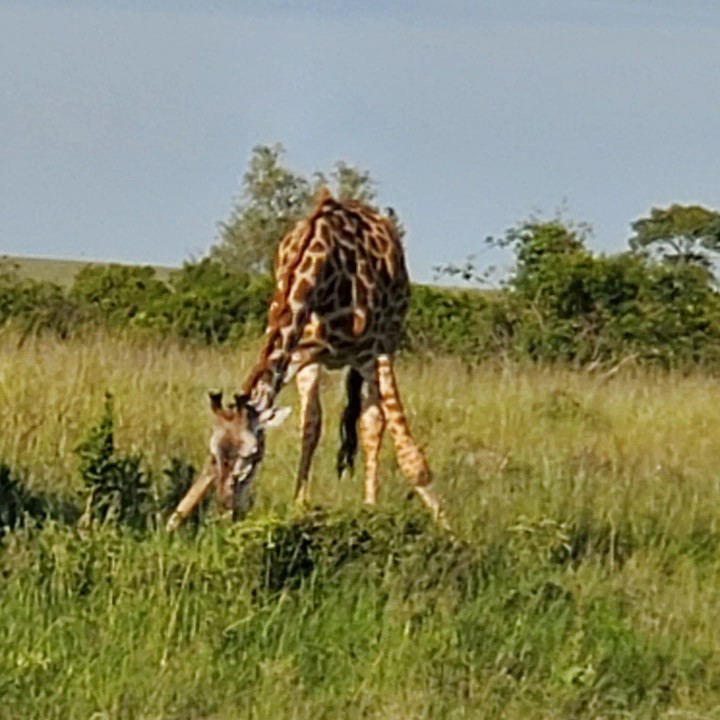
giraffe

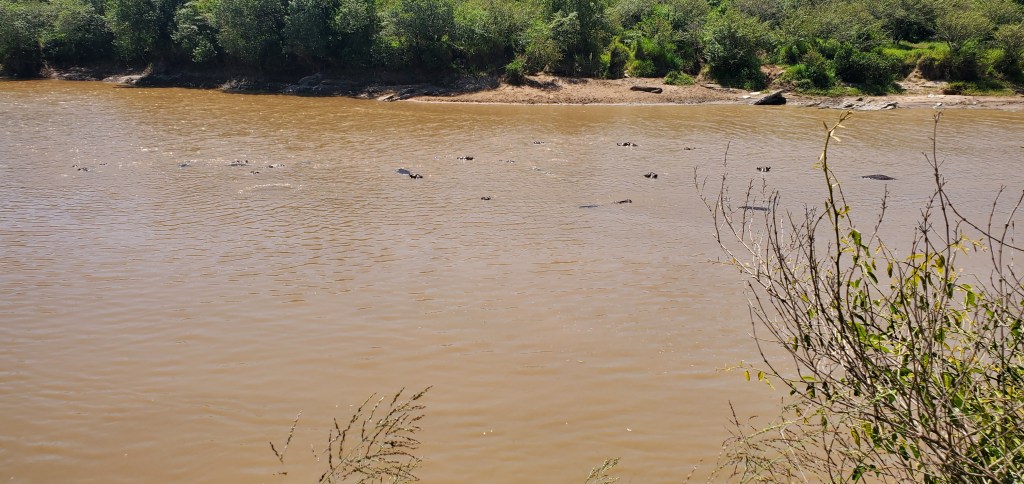
hippo

There was more than 30 hippos at the convergence of rivers this morning, and I think I drastically undercounted.

dik-dik (smallest antelope)

These guys are so small that I got lousy pictures of them, though we did get to witness two fight for territory–which was a little like watching teddy bears fight. Bing images gets the credit.

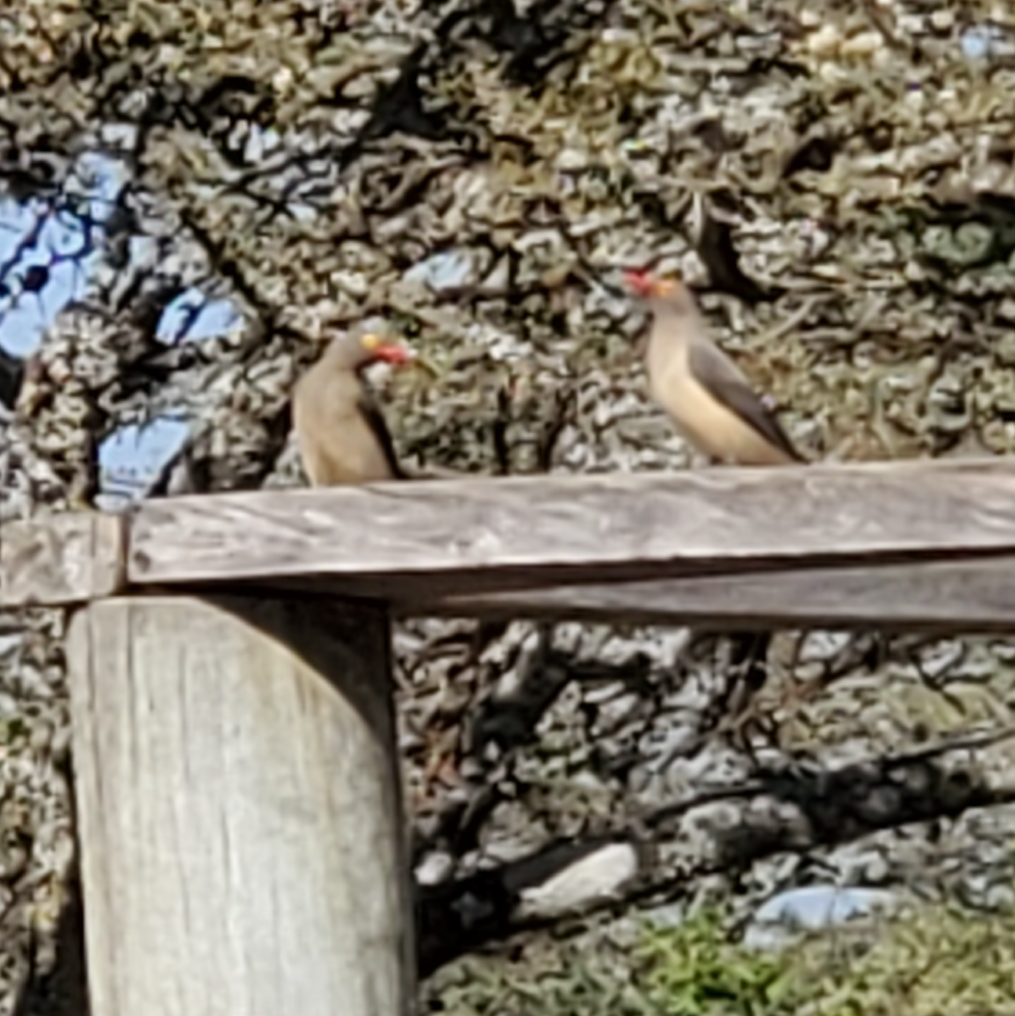
oxpecker birds symbiosing* with antelope

I took this back in Baraka’s enclosure. We have seen oxpeckers on beasts and antelope–most safari mammals are potential buffets!

and banded mongoose.

What in the world will we do *after* breakfast?

This place is wild!


*calm down, spellcheck. I’m just turning “symbiotic relationship” into a verb.

Don’t you hate it when this happens?

You’re late for the airport when halfway there, a mother elephant steps into the road and blocks your ride for several minutes.  Why are she and her calf there? The grass is really sparse near the road and nothing but rocks and dust in the middle of the road. She seems to be picking up pebbles for no other reason than to mess with us.  She flapped her ears a few times to let us know that she was in charge.  We sat back and folded our hands—nothing to do but wait patiently for the boss.


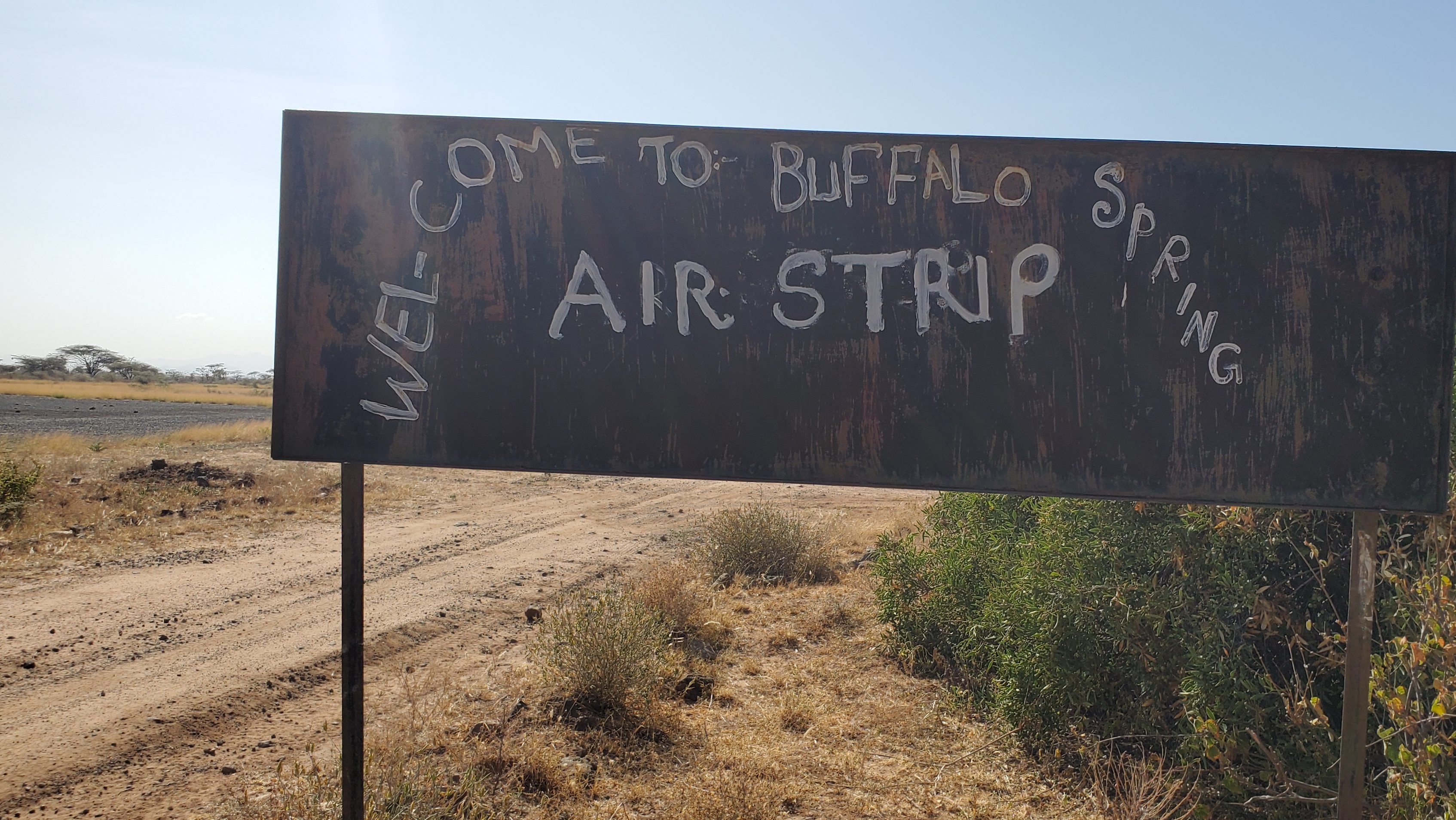
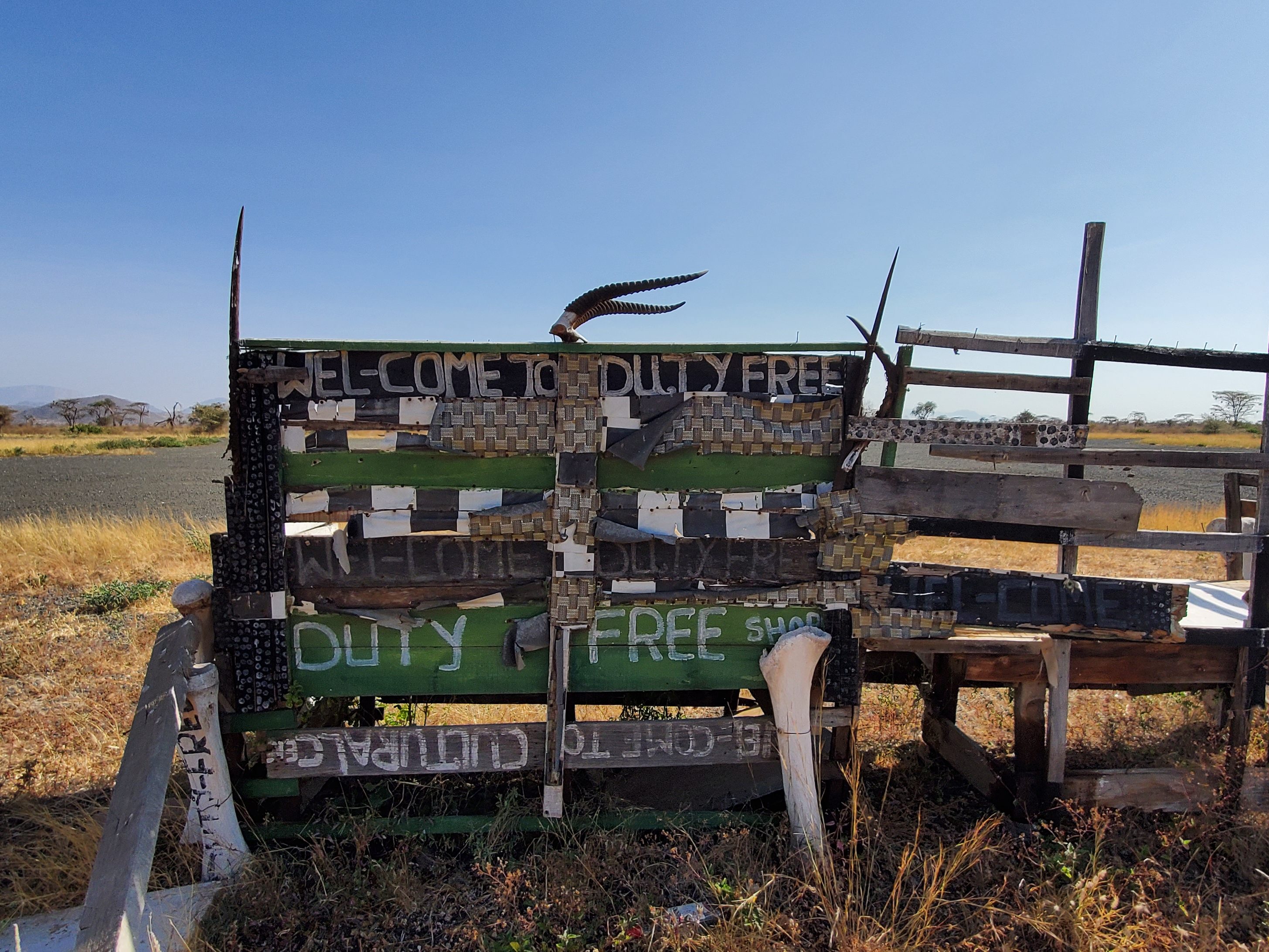
PS This is the airport we had to get to.  It may have been duty-free, but not doodie-free.  There were elephant droppings liberally spaced on the landing strip.

Ready for take off! Next stop, the Masai Mara.