Of the nine UNESCO sites in Barcelona, Antoni Gaudi designed seven of them. He is a Big Deal. Which is why I’ll pretend I knew all about him long before setting foot in Barcelona.
Gaudi (gow-rhymes-with-cow DEE) was an architect in the late 1800s until his weirdly anti-climatic tram death in 1926. By almost any standard, he was a Genius. After exploring three of his works, I’m mostly Team Gaudí and Dwayne is mostly not.
“Originality consists of returning to the origin,” said Gaudí, summarizing his deep desire to build the greatest reflection of nature he could design. Let’s see if I can show, not tell.
Casa Batlló
Kyla, Dwayne, and I toured this home designed for the Batlló family, where I crushed hard on the water-sky loveliness. It was airy and light and whimsical, and hardly a straight line to be found.
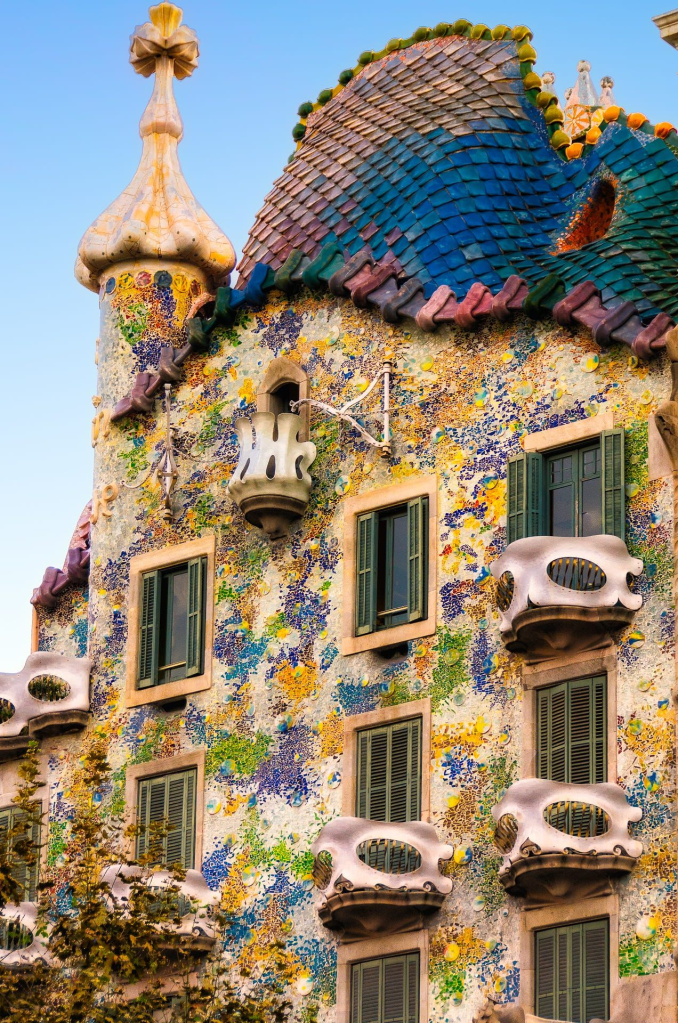
The upper floors of the exterior give off a “hippy sea dragon” vibe. 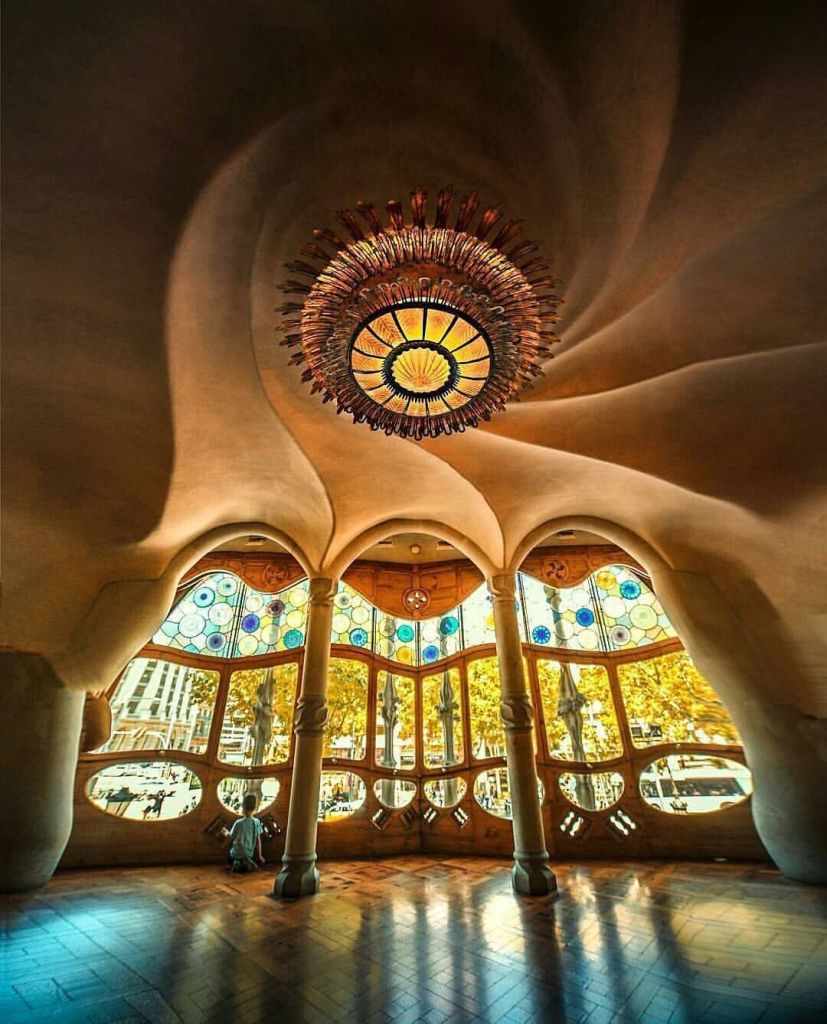
Another picture I did not take. This is the middle of the 3-room living room. The middle windows can lift fully, creating a glamorous balcony to wave to the bourgeoisie. I adore the stained glass and seashell swirl ceiling. 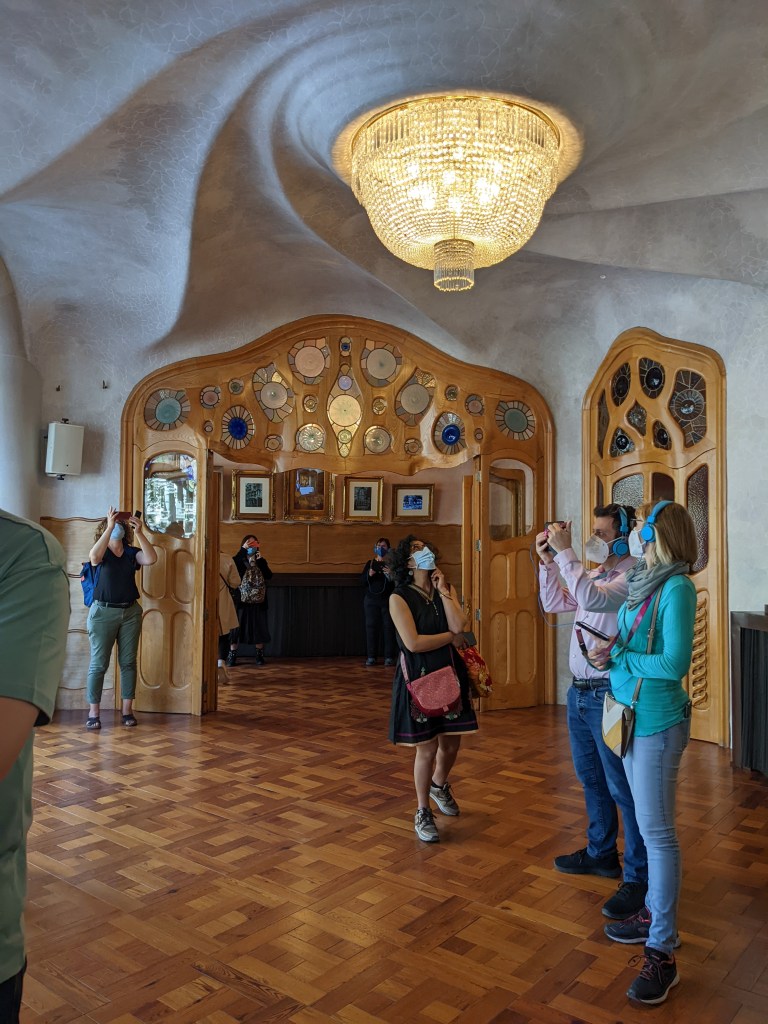
Those picture frames in the background? Digitial screens played “home videos” (actors in period costume) of the family entertaining, worshipping, and waving to the bourgeoisie in these main rooms. 
I *love* this fireplace cozitarium, a place so inviting I had to create a new word. 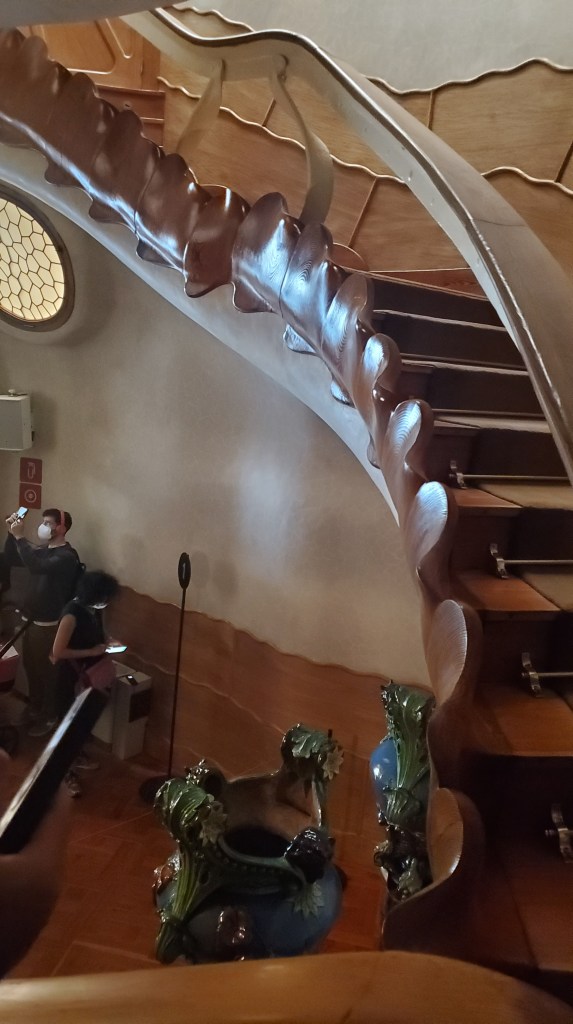
Just a regular old staircase, Gaudi-style. 
Think a central chimney, but for air circulation instead of smoke. The glass barriers, the ceramic rope gates, the increasingly blue tiles upward, all give the visitor the calm sensation of a smooth sea. 
Fresh air is not the only point of this tower–lots of light “flects and reflects” into the entire house. 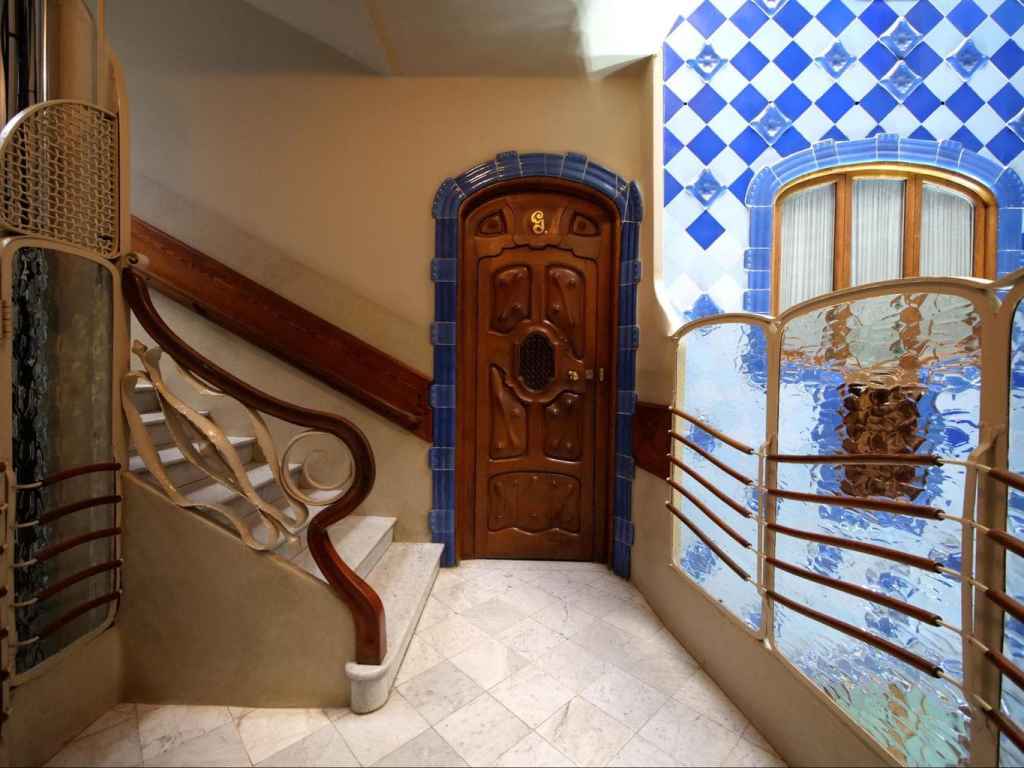
Nearly at the servants quarters, the usual drabbest of places was the lightest. 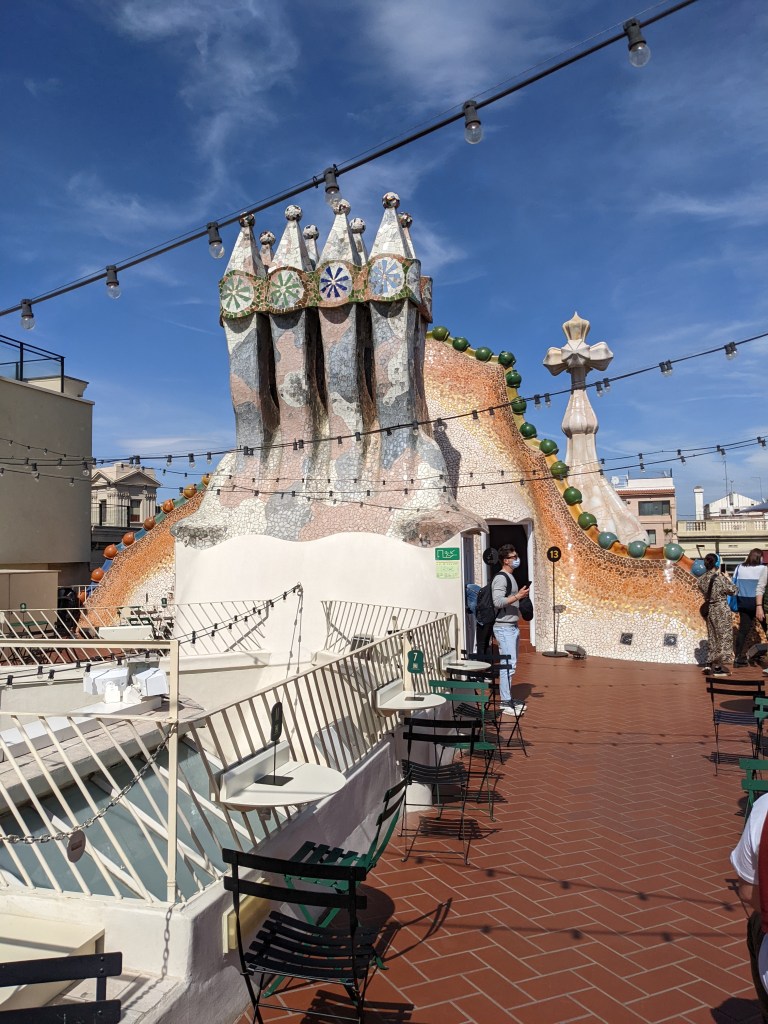
There were lovelier patios but the rooftop was a fun place to see how the chimneys became part of the motif.
Park Güel
I’m so glad we saw Batlló first. The park was crowded, inconvenient, expensive, and only amazing-ish. It was the first stop on a hop-on, hop-off tour bus and the excursion effectively murdered my children’s desire to see anything else that day. The park is famous for its serpentine bench that wraps around a very large terrace. Its display house (with an entry line that made me quickly walk in the opposite direction) demonstrated that melted-icing-over-a-sand-castle look that I associate with Gaudí exteriors.

The main entrance to “Park Guell”. 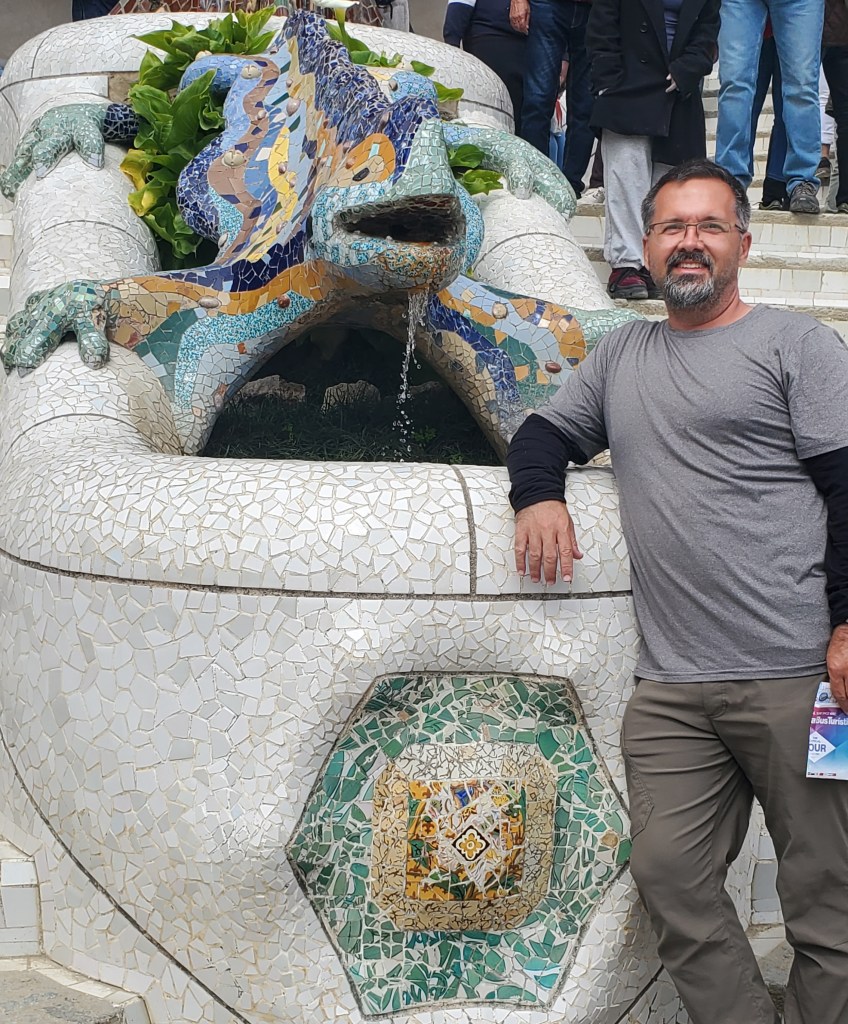
One of Gaudi’s fingerprints is the colorful tile mosaic on animal-like objects. 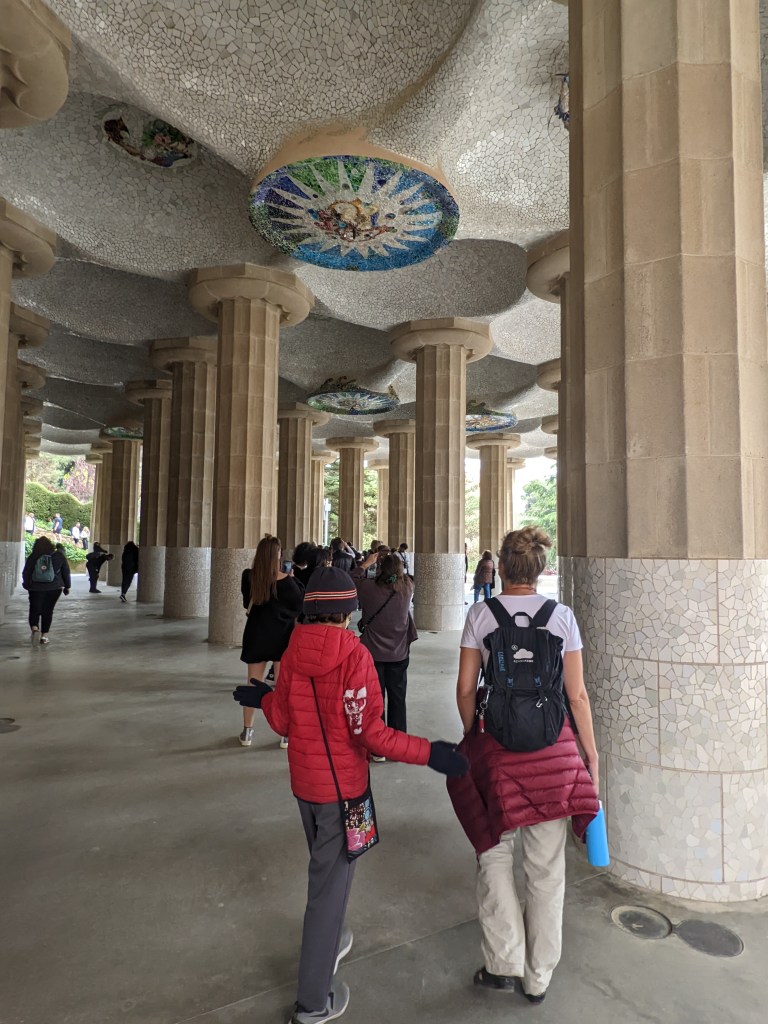
The sense of tall trees and clouds in the sky from pillars and weird ceilings is very Gaudi. 
Here’s the smallest fraction of the serpentine bench, with some of the forementioned tile mosaics. 
Am I the one tilting or is something odd about those pillars? 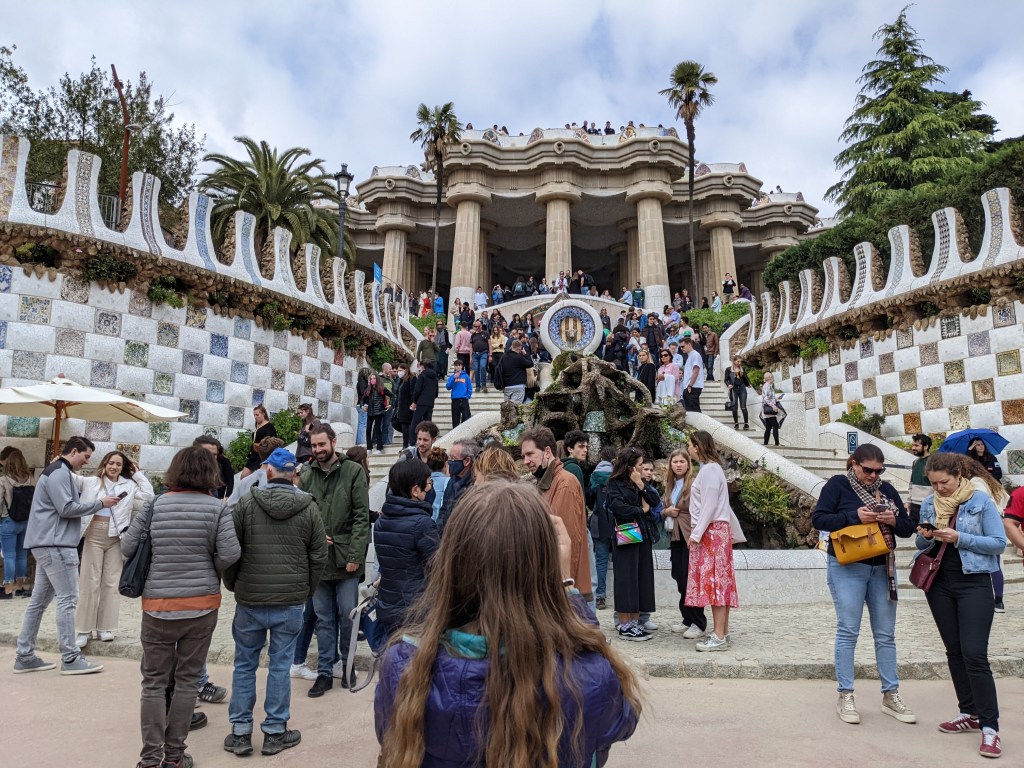
Crowded. Done and done. 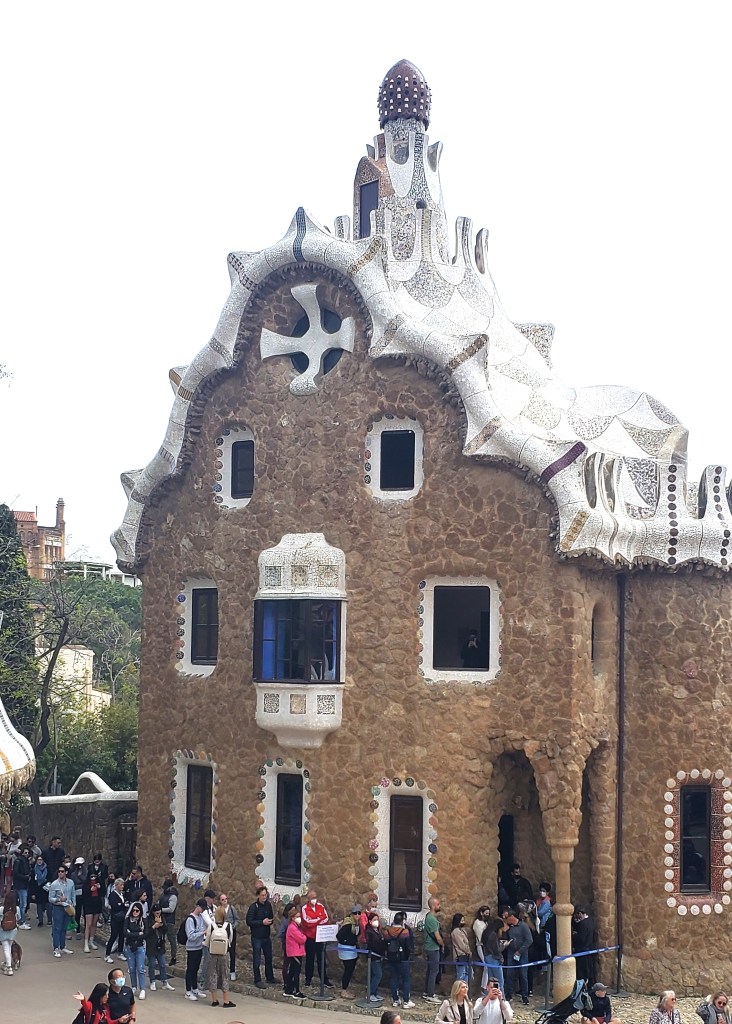
The gingerbread, melted-icing look shows up on Sagrada Familia. And those lines! I really wanted to explore the house, and considered waiting for almost a second.
Sangrada Familia (Sacred Family)
This is the Cathedral that finally has a projected completion date of 2026, the one hundred year anniversary of Gaudí’s death. It is, if one may radically understate, atypical of a European cathedral with official minor basilica standing*.
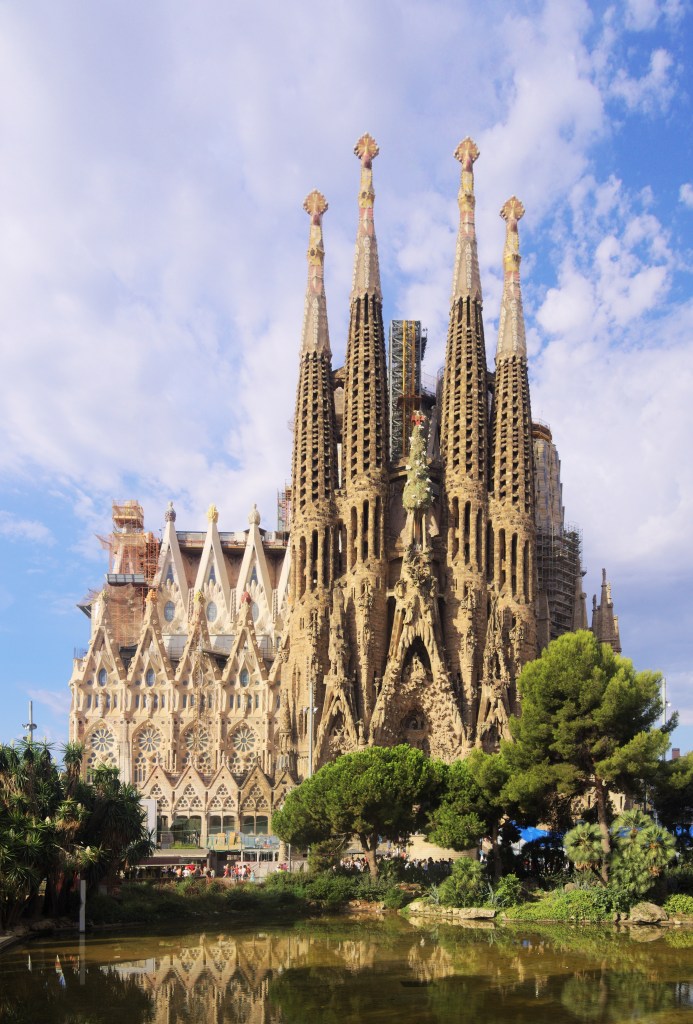
Whoever managed to publish this shot somehow photoshopped or used clever angles to hide the cranes and construction. 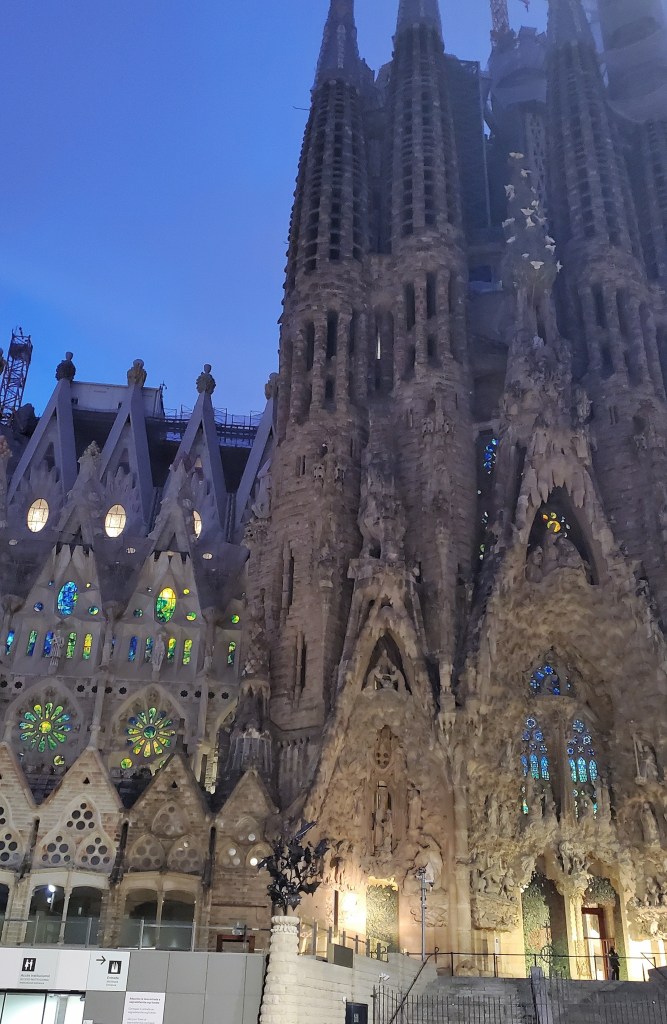
I loved the “reversing” of the stained glass at night, making it beautiful for outsiders. 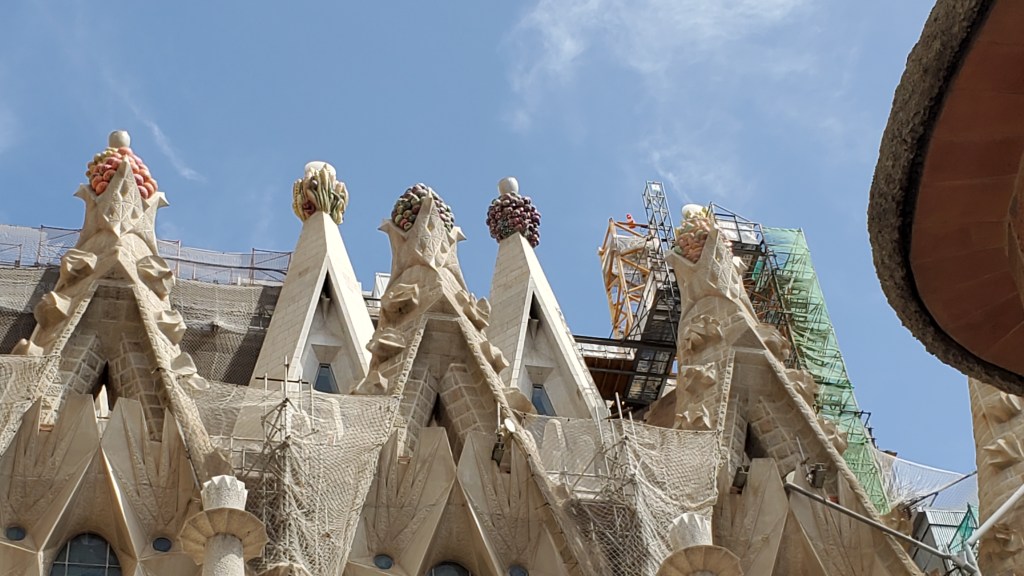
Yep, this cathedral has fruit on top. I believe one side of the massive structure focuses on harvest fruits (closest to the crucifiction side) and the other summer fruits on the entry, where the birth is depicted. I believe there is heaps of symbolism and clever nods to details that mostly escaped my notice. 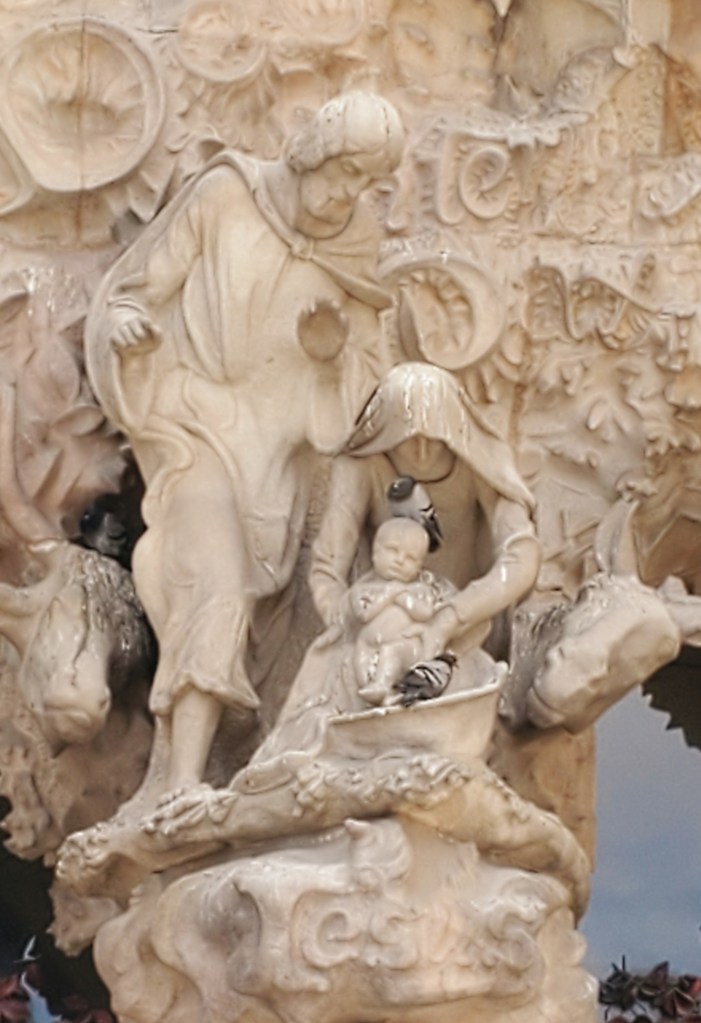
Oh, dear, the nativity is a grandiose birdbath. I’m actually surprised metal spikes, disguised as halos, were not used. 
A sea turtle holds up the entry pillar closest to the sea, and a giant tortoise is the basis for the pillar closer to the mountains. 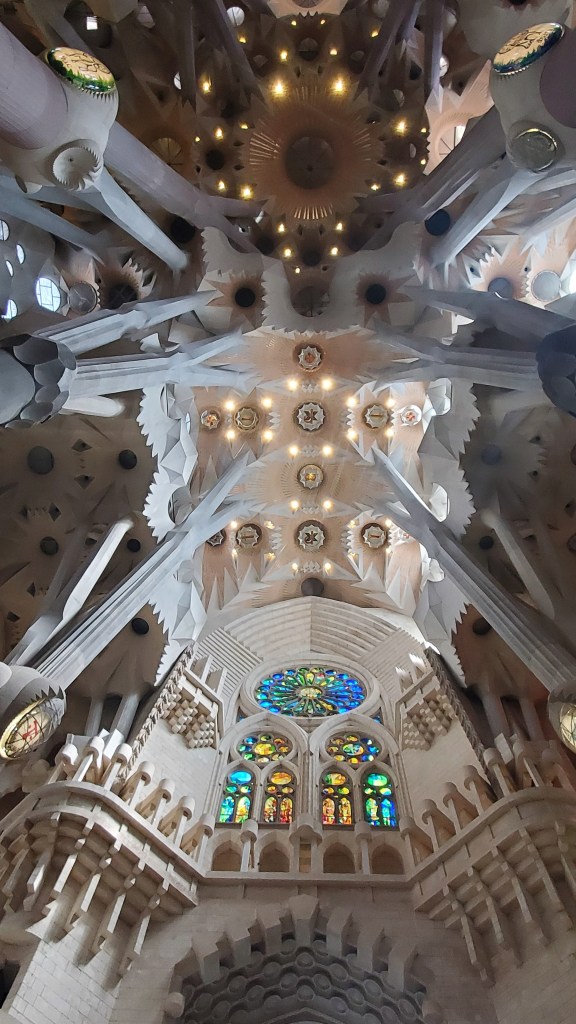
The giant, enormous, oversized pillars branch out to hold up the ceiling and towers. Gaudi very much wanted you to feel you were in a forest dappled with sunlight. 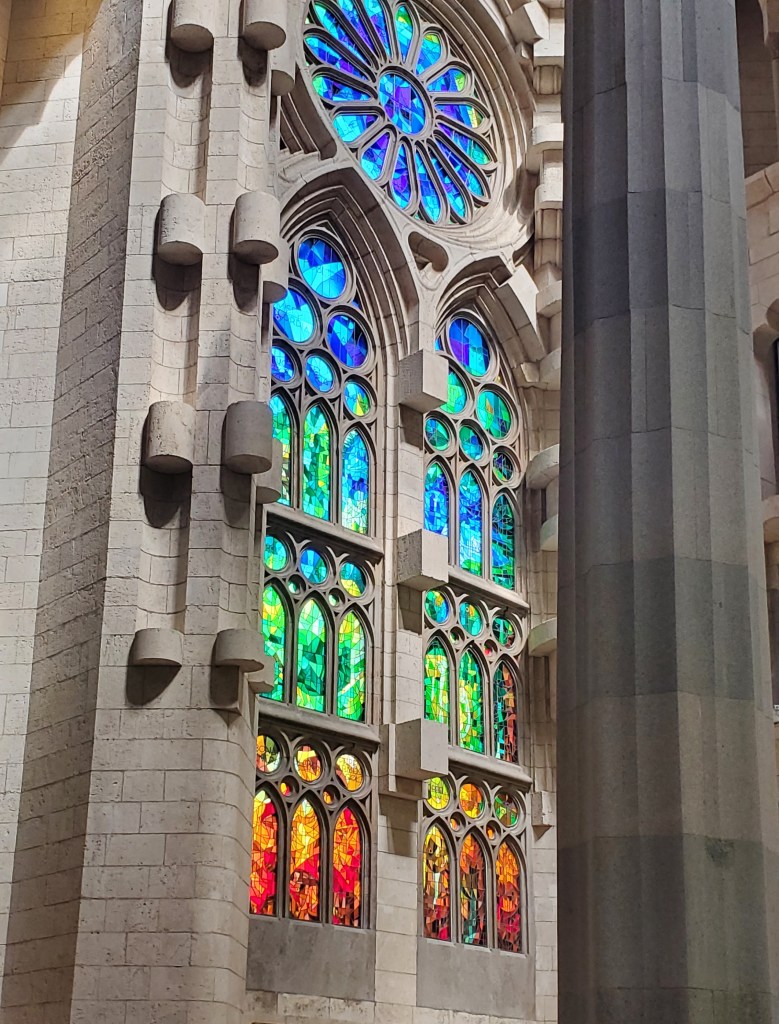
The gorgeous stained glass practically sings. 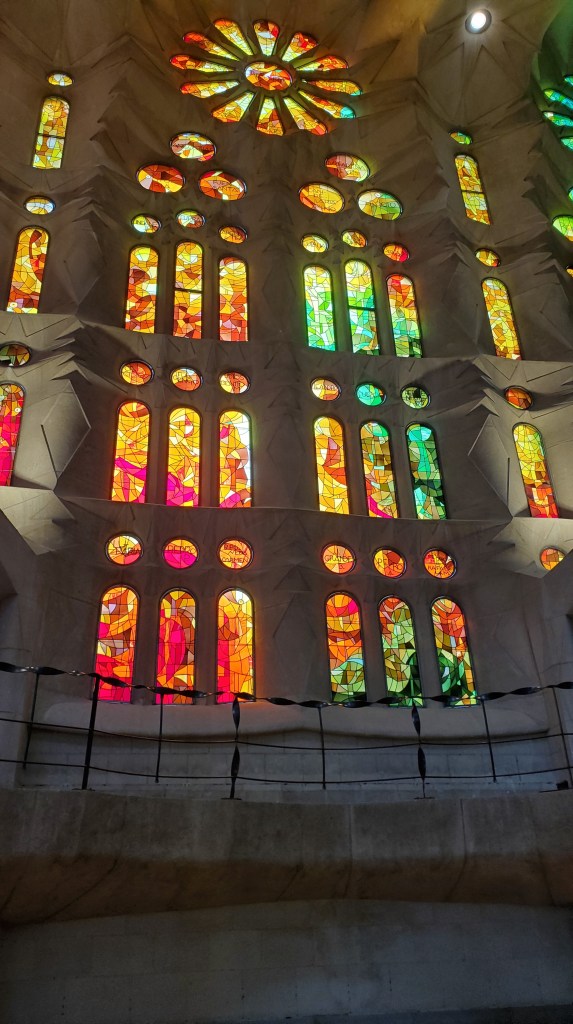
The large airy inside of the cathedral lit up by these massive windows was my favorite part. 
So much of this is not Gaudi, since he died long before much of this was constructed. The architect who did this Judas betrayal added a magic square, where each way adds up to 33, the age Jesus was at his death. Math puzzles on a church? Yes, please. 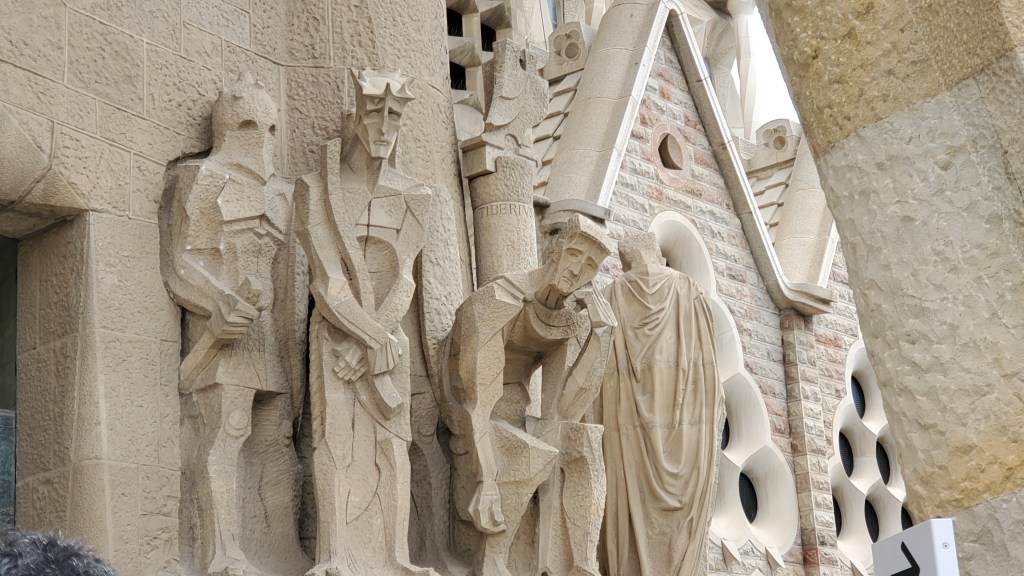
I am most intrigued by Pontius Pilate’s plight and meditation in these statues. 
What Gaudi is particularly known for is his throwing out the good old-fashioned Roman arch (which Dwayne adores to the depth of his soul) and using parabolas instead. You get a parabola basically by holding both ends of a string and letting it hang down. Using strings and small weights to create the desired parabola, Gaudi designed his building …. UPSIDE DOWN. Can you see it now, sort of?
*This is a thing. There are 4 major basilicas in the world. They are all in Rome. Would you consider this more nepotism or self-aggrandizement?
 Needopedia
One thought on “Architect Antoni Gaudí: Great or Gaudy?”