It wasn’t until we were on the plane out of Barcelona and I was chatting with an exchange student from the US that I realized we were going to be in Seville during Holy Week. Sure, you’ve lived through and possibly even participated in the week before Easter your entire life, haven’t you?
No, you have not!
In a casually Catholic country (55-70%), there is a quite Catholic state (80%), and the capital of that state is Seville, which, at least during Holy Week, must have a Catholic population of about 150%. If that seems mathematically impossible to you, then you may not be ready to read on. That’s fine; it’s not too early for the first glass of cava*.
Semana Santa is a celebration and remembrance of the last days of Jesus. I will do my best not to misrepresent a meaningful tradition with too much irreverance, partly because I want to be respectful and mostly because [inspite of the absurd noise, chaos, and crowds] I really enjoyed it.
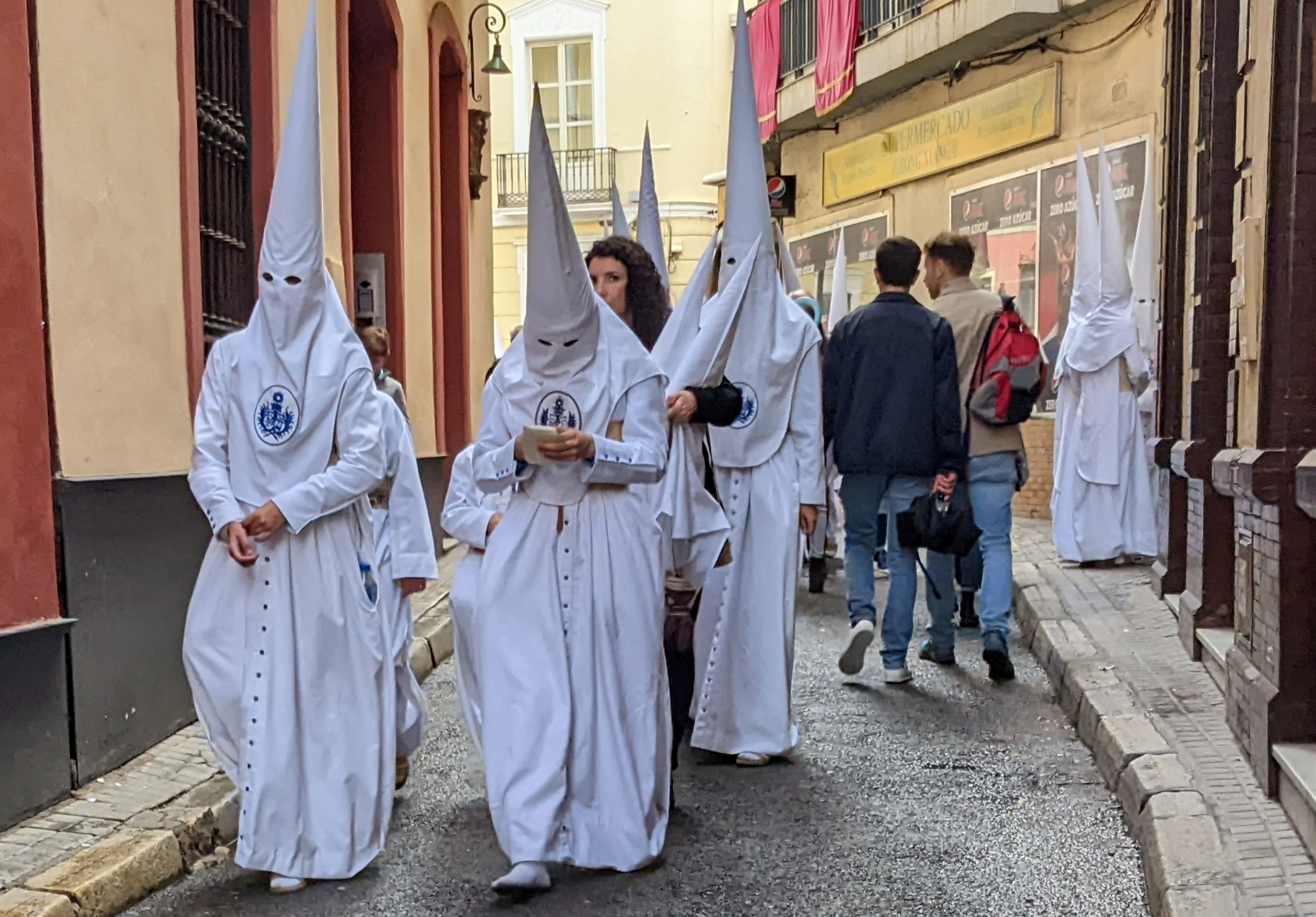
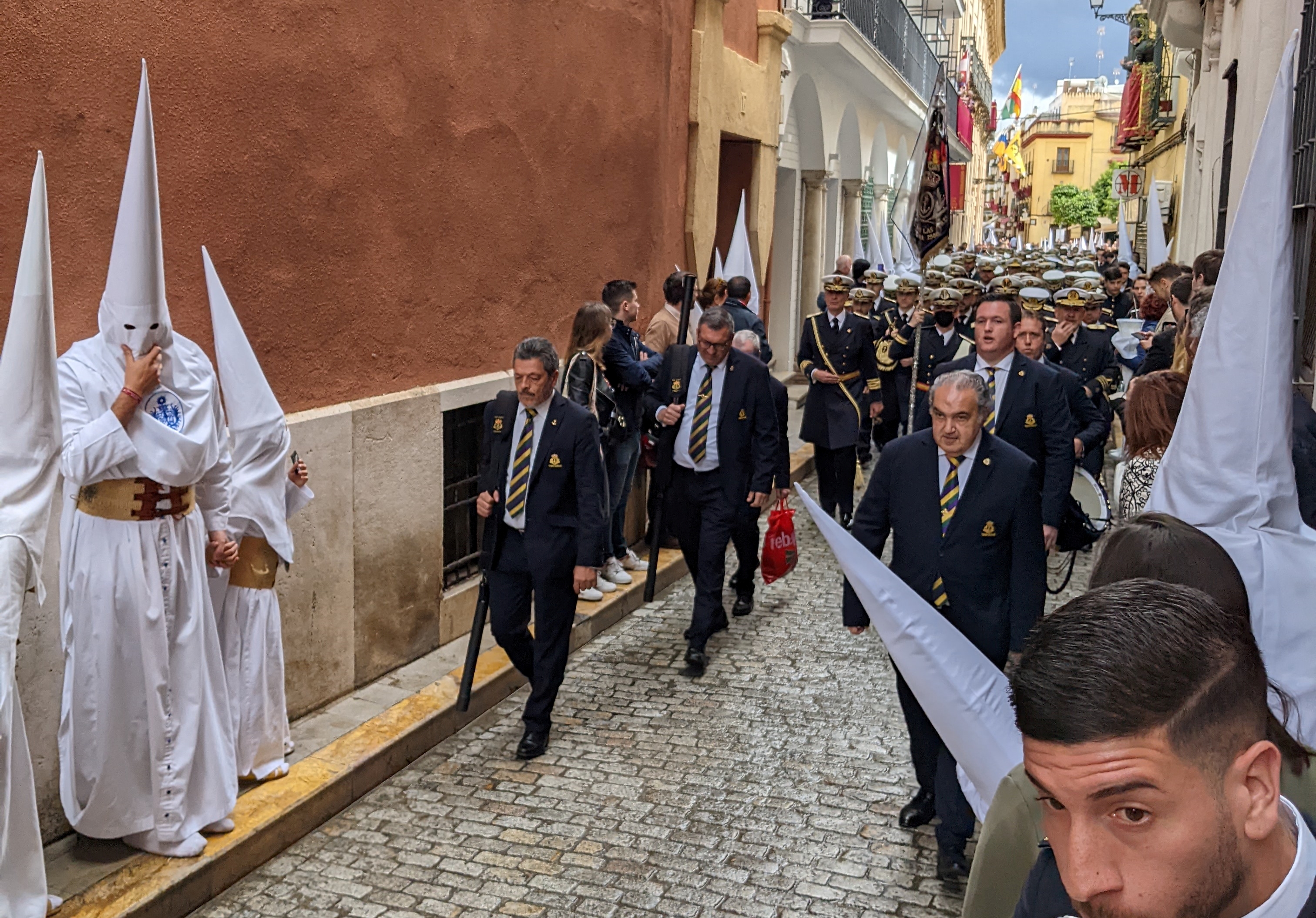
Seville has one cathedral, the Catedral de Santa María de la Sede.** About 70 religious brotherhoods, basically individual church communities, walk from their church to the Cathedral and back again during their designated processional time during the week. The heart of the processional is the float that depicts some aspect of Good Friday or Mary, and it is carried for hours and hours and hours by men strong and lucky enough to be chosen to shoulder the burden. There might be a marching band (and I love the sounds of the drums reverberating against the narrow stone alleys, even at 1am), there may be little kids dressed as priests handing out candy and saint trading cards to the kids, but there are always penitentes. You know you are an American seeing a penitente for the first time because you start freaking out while trying to act normal:


This sign in a pastry shop (“borrowed” from the internet) sums it up:
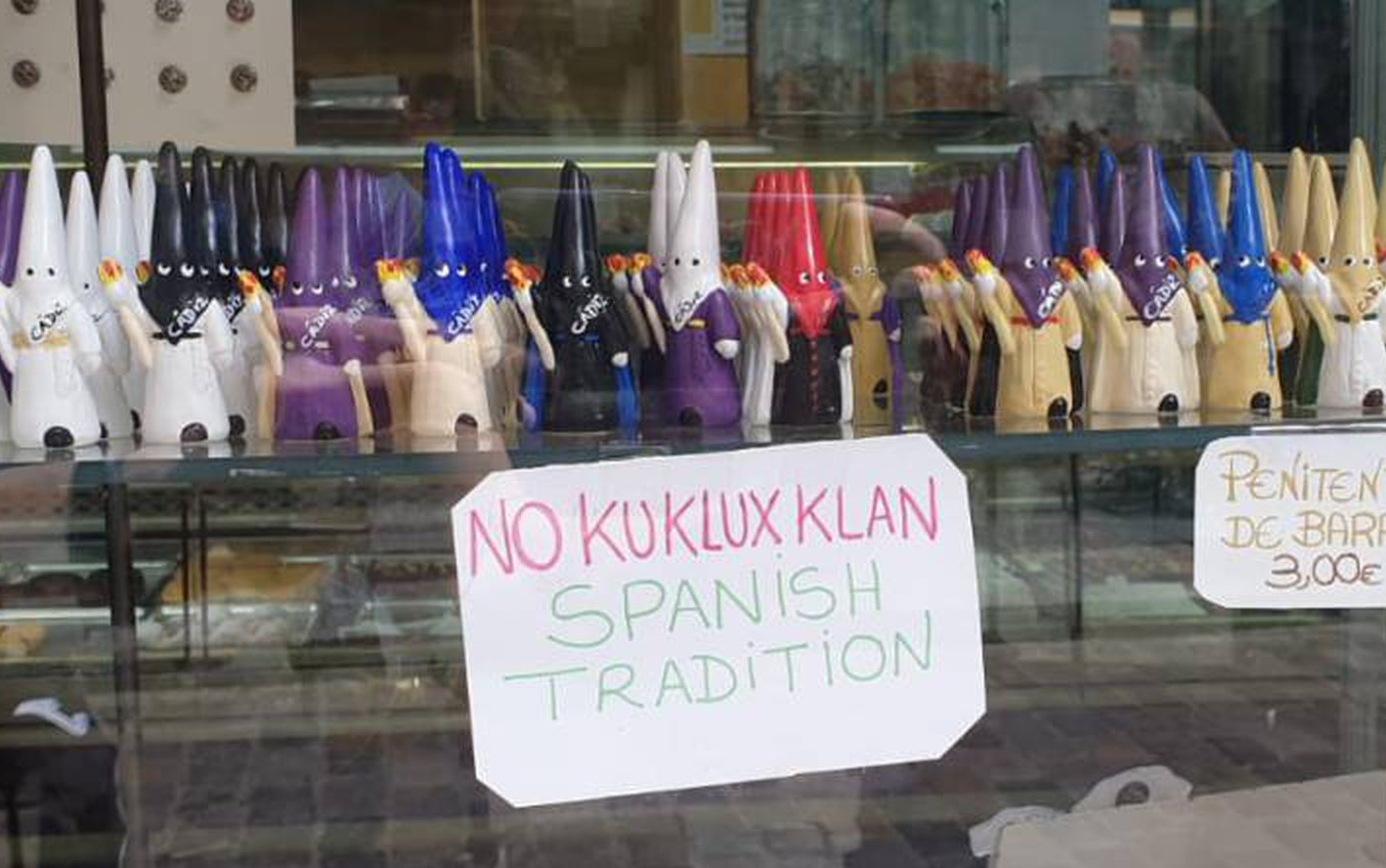
The anonymity of the pointed capirote is meant to be pious, not intimidating, and the point of the point is to point towards heaven. These traditional Semana Santa caps evolved from the Inquisition era, if online research is to be believed, and everyone agrees that they are not related to the KKK in anyway. Anecdotally, it seems American travelers just have to keep reminding themselves that this is a meaningful religious tradition denoting repentence and humility, not a lynching squad. It was just a bit unfortunate that our first morning in Seville coincided with the procession of the brotherhood that wears white-on-white.
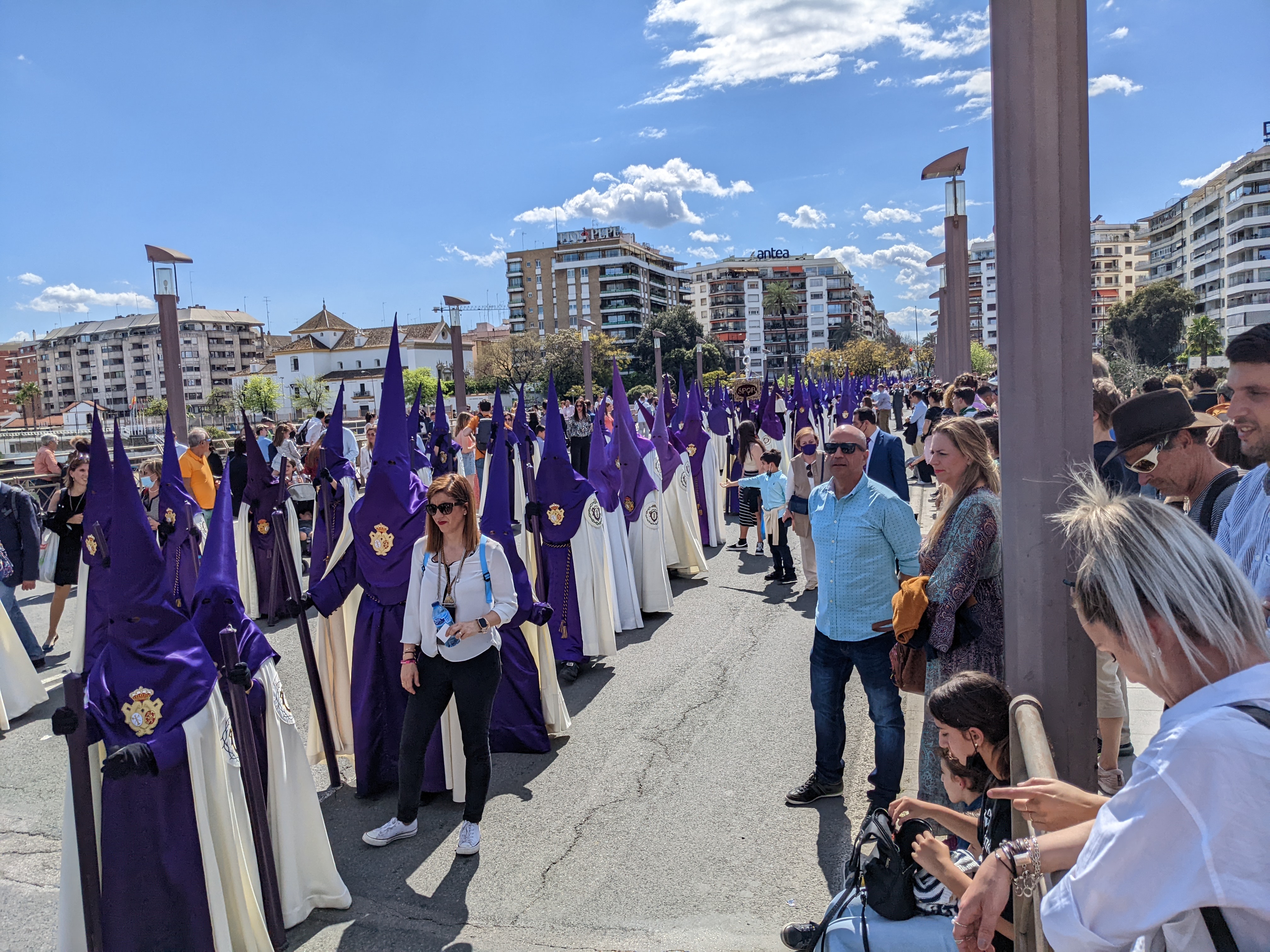
The crowds were massive, of course, but mostly concentrated around the procession, which was canceled one day because of the rain, making the city itself mourn. But it was impressive how alleys that are too narrow for cars managed the number of participants, the floats, the bands, and all the people watching.

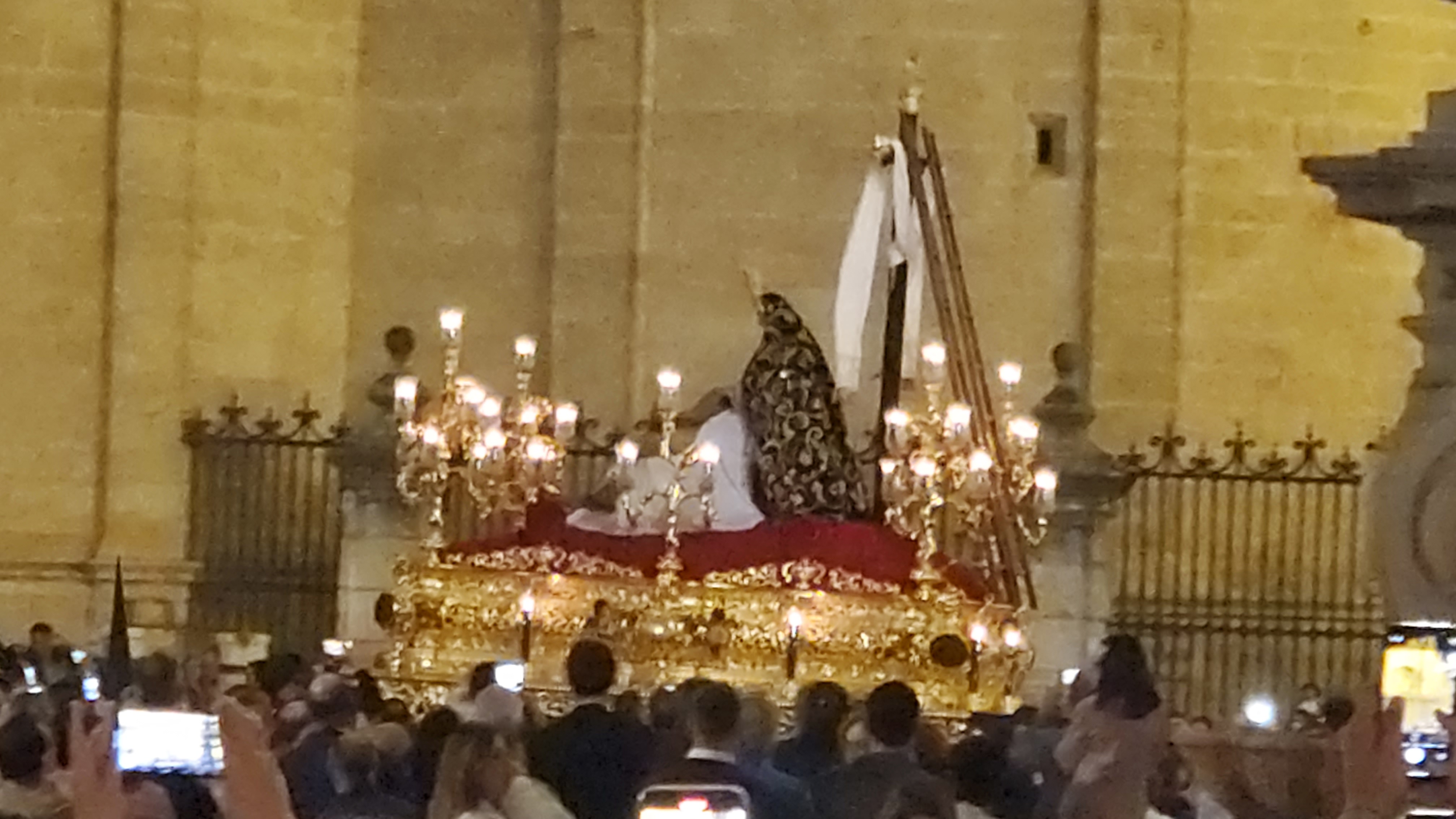
Remember, there are a bunch of muscley, sweaty men carrying the “paso”, sometimes for several miles. We never got close enough to check but “they” say you just see dozens of feet peeking out from the platform’s bottom. 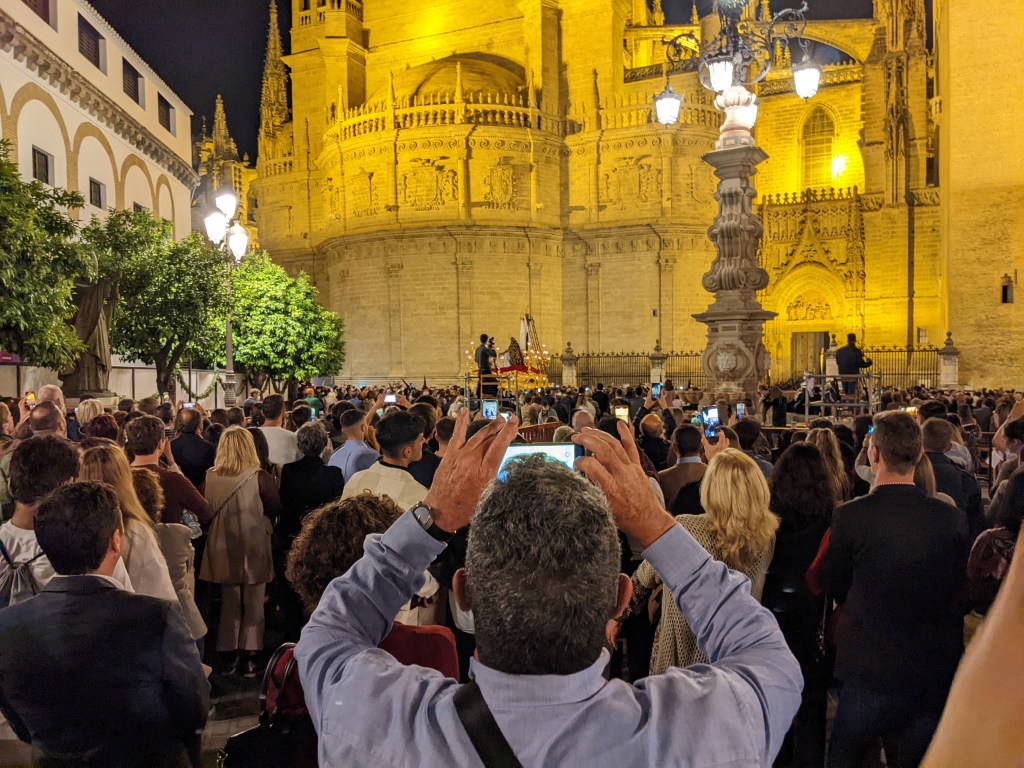
A paso exiting the Cathedral. The Cathedral is much bigger than this corner of it shows…and so are the crowds. 

We’re far enough away that the Roman soldies almost look real on this paso. 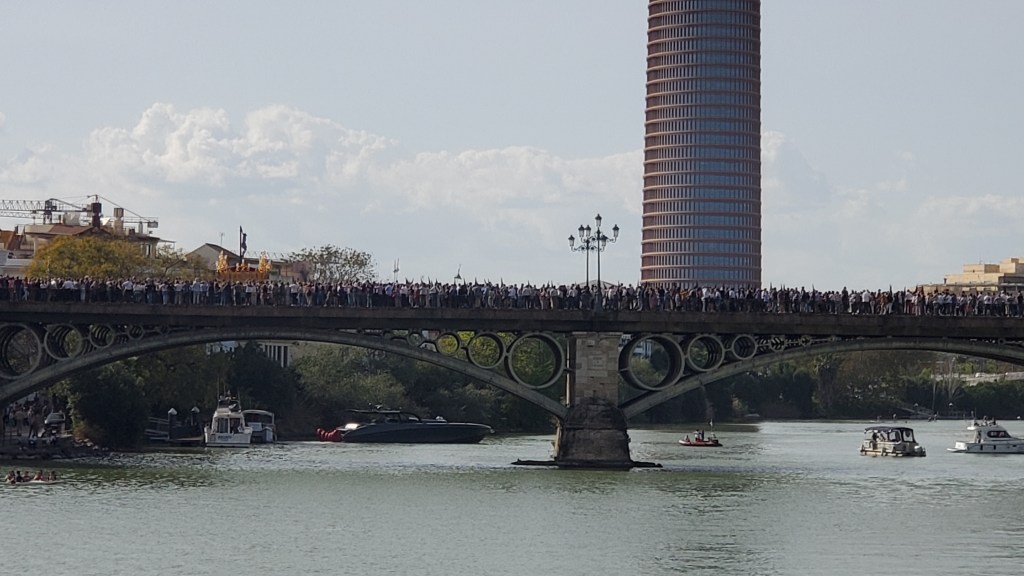
This bridge, which usually would be for cars and buses, is wall to wall people. You can see the golden float on the left hand side, above the white boat.
Seville has been our favorite European experience thus far, and I’m not really sure if it’s because or inspite of Holy Week. Guess we’ll have to soujourn again someday to find out.
*If it were born in Champagne, France, it could be called champagne. Alas, it was born on the wrong side of the border and must be called cava.
**Seville really loves Mary, to the point it might be a bit of “Jesus, who? Oh! You mean Saint Mary’s son!”. Also, I am still on my search to find a non-white Jesus.
 Needopedia