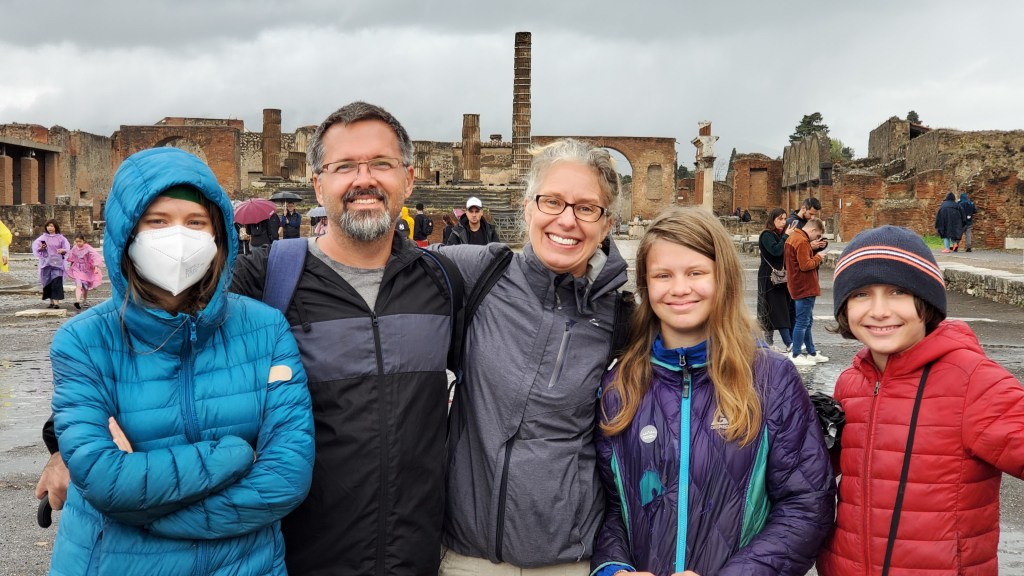

[“Penis” is in the title. Do you need further clarification of the rating?]
I think we have done Naples perfectly. After a further study on the Third Classic Blunder*, we made it to the Palermo Airporto in time for the hour-long flight to Naples, giving us an entire afternoon in the “New York of Italy”†. Dwayne and I made our way to the MANN (Museo Archeologico Nazionale di Napoli**) to explore all the finds taken out of Pompeii excavations as well as all the marble statues we could hope for.

As we picked our audio guides, we were told that the secret room closes in 20 minutes. That’s an intriguing statement to make to a middle-aged couple sans children. We found another three others looking for the Gabinetto Segredo and through cooperative efforts, we entered . . . the room of Pompeii erotica. Mosaics and painted pottery, phallic whistles and wind chimes, statues and figurines, we had graphic displays of everything but woman-on-woman, which for some reason was taboo. [Zeus the Goose can rape maidens, and Satyrs can love their goats, but the only truly beautiful gender doesn’t get to enjoy the same loveliness? It does not hold up to scrutiny.] With a corner of my mind always narrating for this blog, I did not take pictures, knowing that this is shown to children and people I am related to and they have to see me over family dinners.
I was less censorious on our actual tour of Pompeii today. Let us enter the red district first because afterward, I have some really interesting tidbits to relate.
First of all, as everyone knows, Pompeii’s entire trajectory was transformed by the 79AD eruption of Vesuvius, covering the busy port city with ash, suffocating living things while burying and preserving organic and nonorganic materials alike. Pompeii’s current location, while close to water, isn’t exactly port material. There is good evidence that the plate tectonics that caused the earthquakes and eruptions over the millennia also changed the geography so that the ocean is no longer just 200 meters from one of Pompeii’s main gates, as it was over 2000 years ago.
A port city meant that sailors spent more time in areas of the city closest to the port gate. And where sailors roam, food and prostitutes take up residence. And how did sailors know they were in the right area? The penises embedded above shops and used as arrows (thank goodness penises can also point!) on streets and walls. In fact, an erect penis above a doorway was an excellent place to hang a red lantern. If the lantern was lit, services were available. Not lit, services were servicing. Tada, the infamous redlight district.

The gladiator school training yard of long ago. 
One of two theaters in Pompeii. In about as good of shape as the ones we saw in Jordan! 
Can you read this grafiti? “Liberti” from 2000 years ago. 
Chariot/cart tracks on one of the main streets. Literal stepping stones so pedestrians could get across with dry feet. Stone placed so that wheels could still get by. 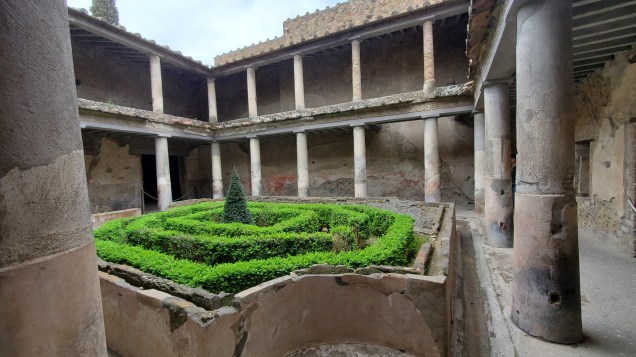
On of the best intact villas of elite Pompeii. 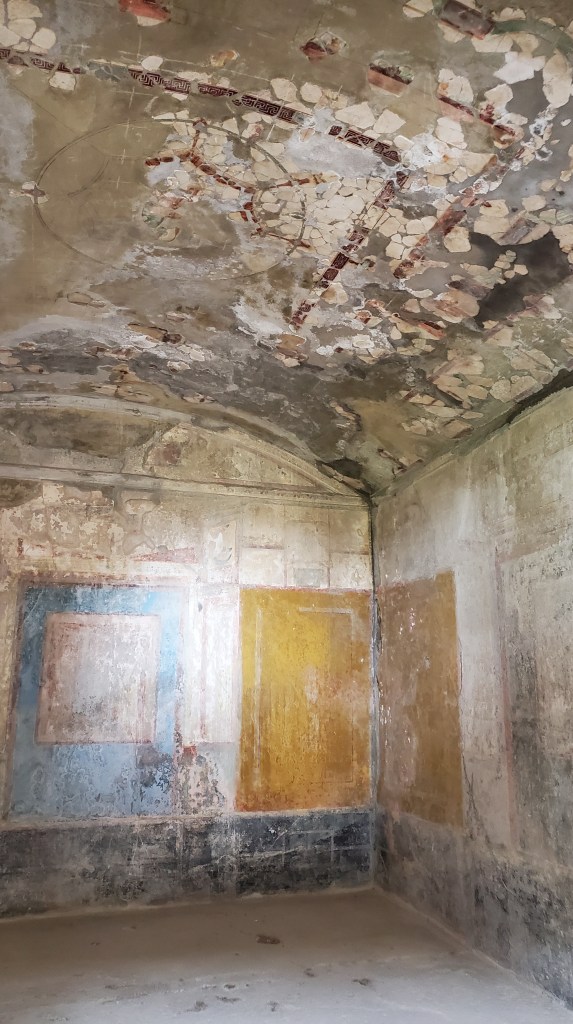
Same villa still had some original wall paint. Blue was particularly expensive and exclusive. 
That’d be a penis-on-a-wall. 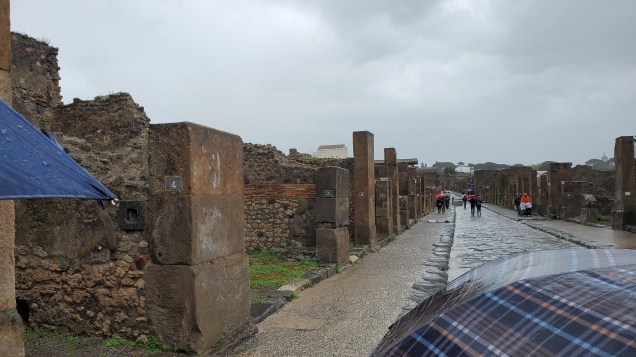
A row of house and shops. 
One of the few mosaics left intact from earthquakes and museums hunters. 
Look! An Igor Mitoraj sculpture in the main square of Pompeii! He’s the artist who did Icurus in Sicily’s Valley of the Temples I loved so much. 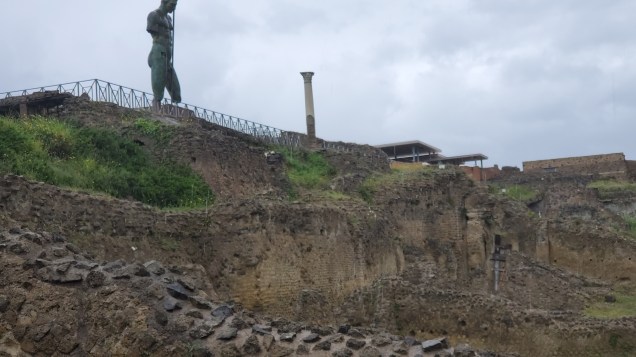
What?! A second Igor Mitoraj piece? I love Pompeii.
A brothel was practically an art gallery. Without relying on literacy or common language, one could just point to the mosaic that best detailed the service desired. Are you not entertained? These are still on the wall in Pompeii. (I’m leaving them small so you don’t have to get full details.)


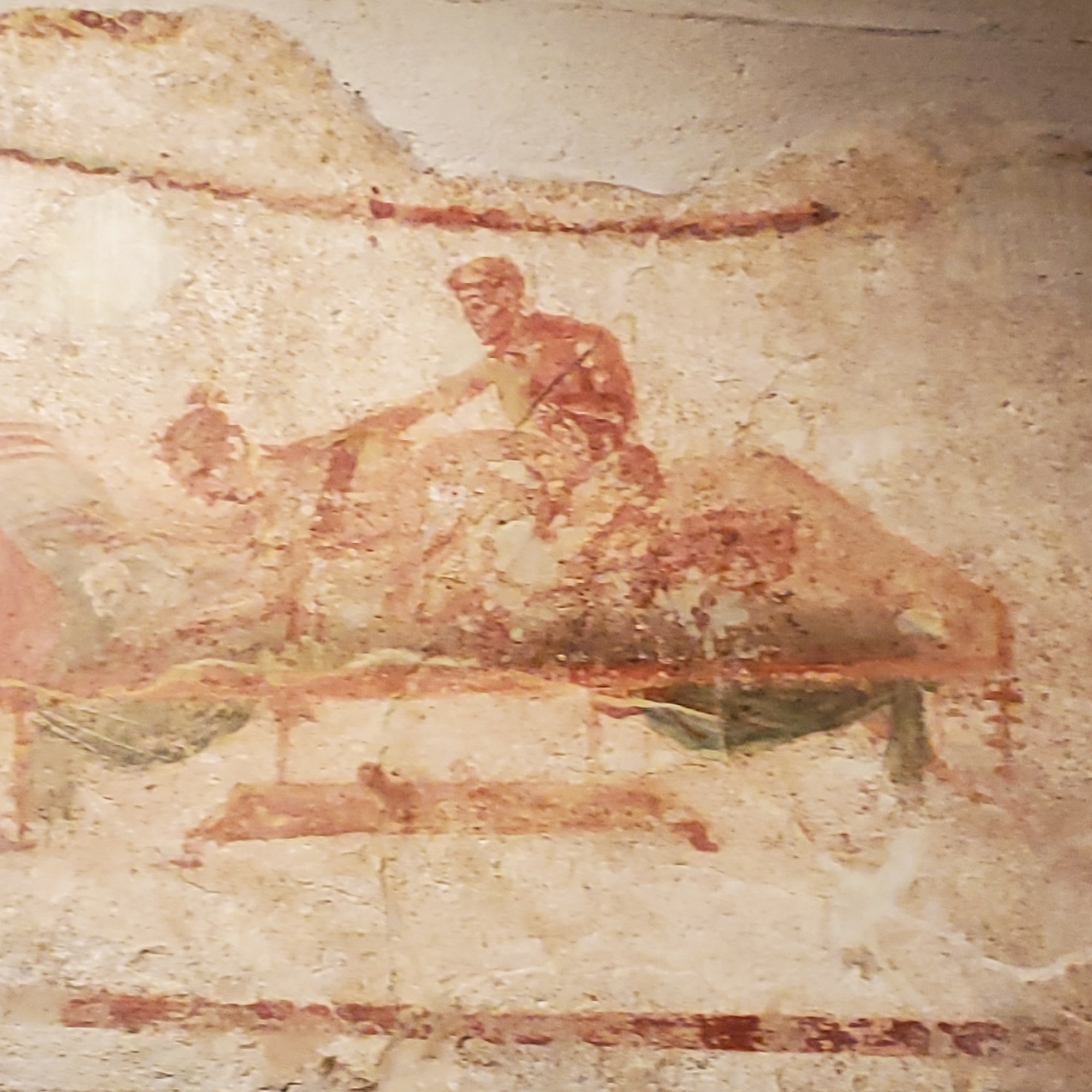
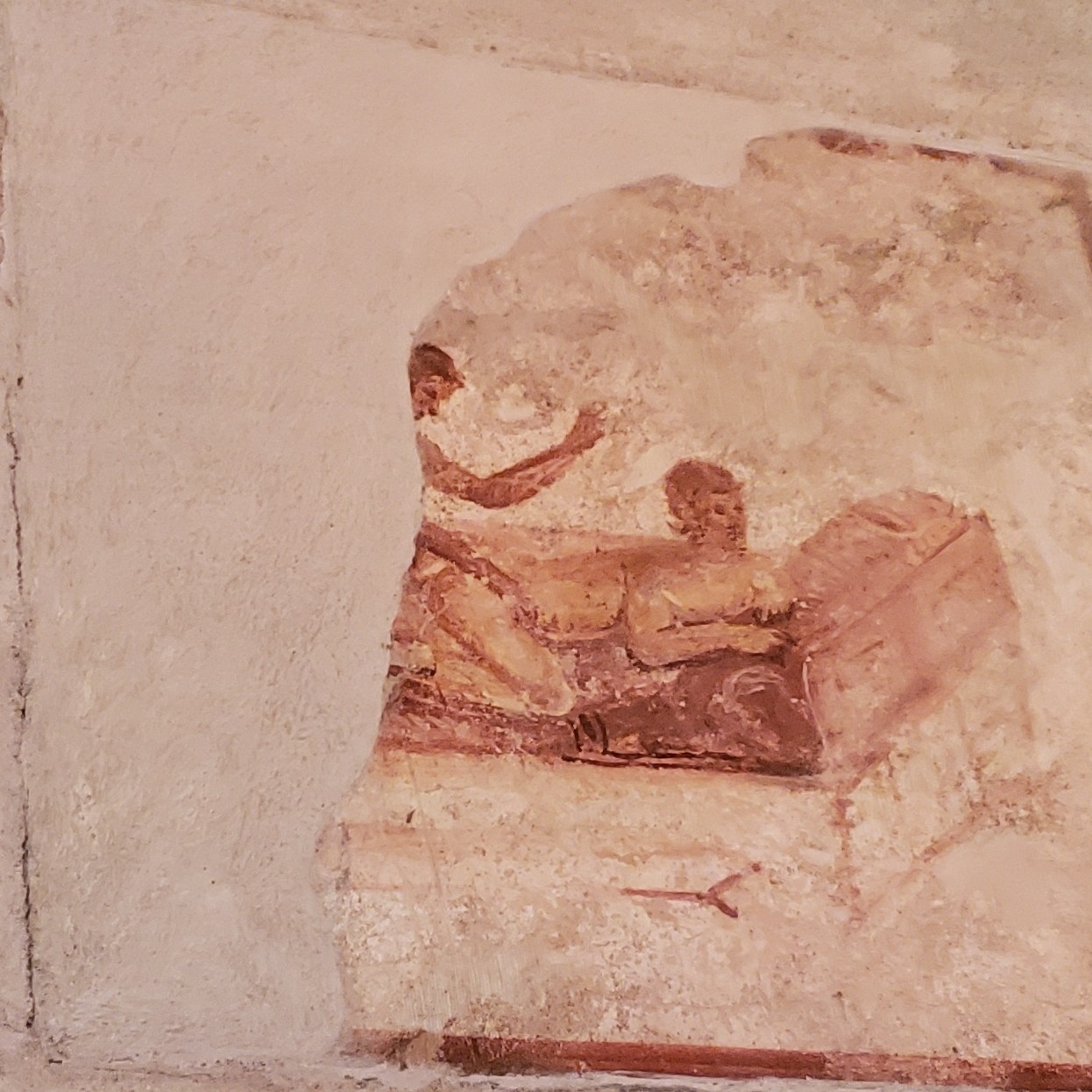
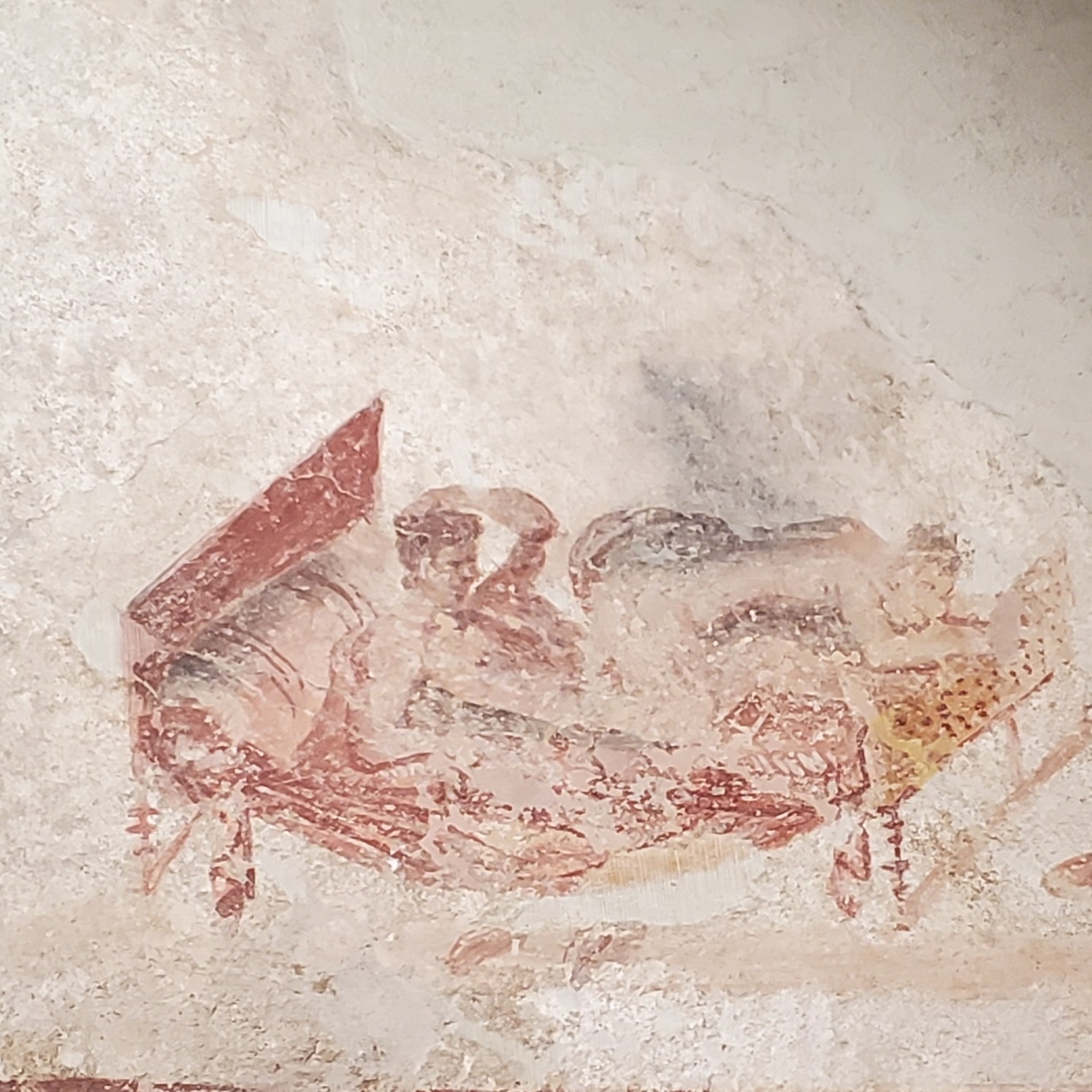
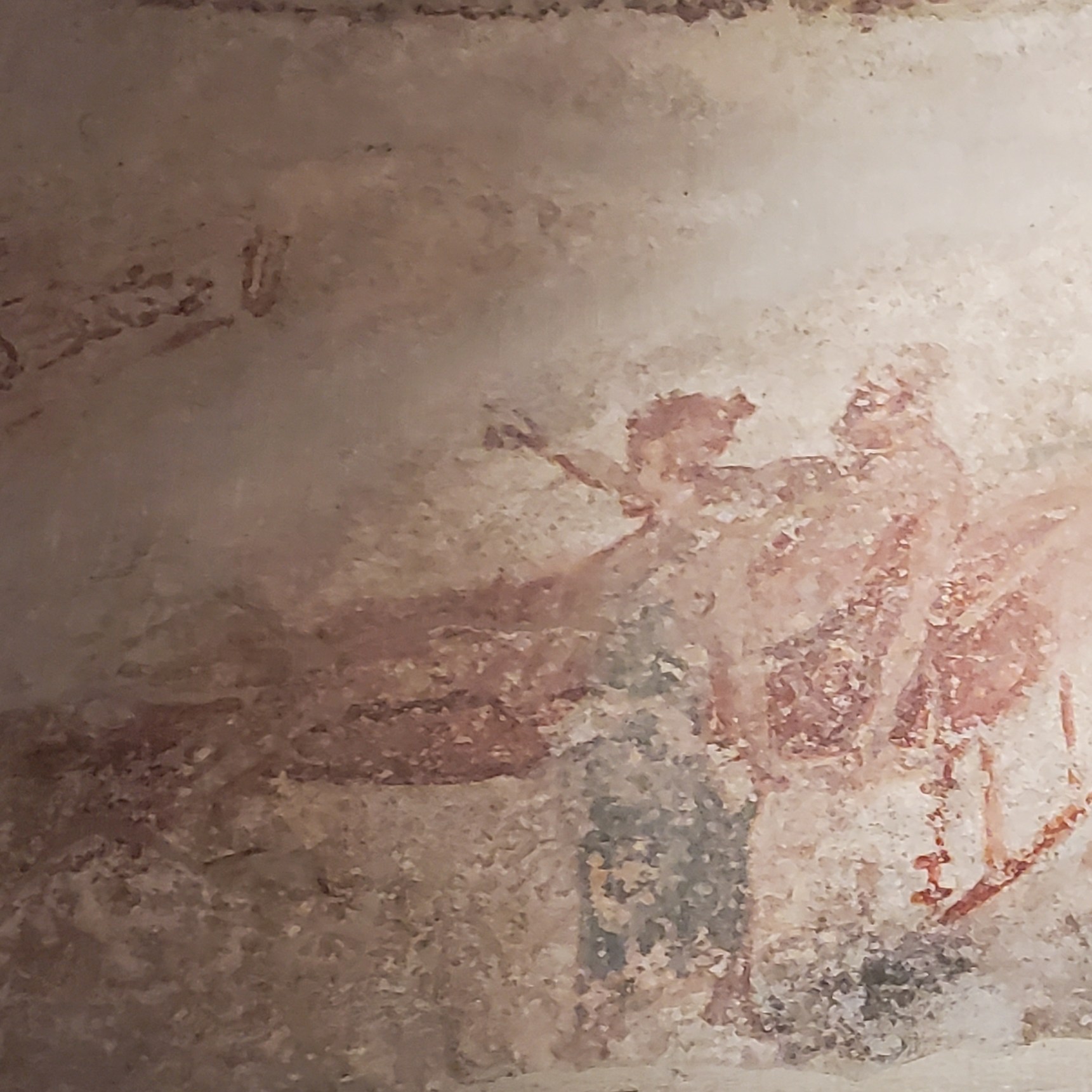

Let’s now turn to the interesting parts. I had pictured Pompeii differently. It is definitively ruined; former two- and three-story buildings now have only half a story. But destruction and preservation are not entirely mutually exclusive. Excavated walls still have painted murals. Mosaics, mostly relocated to the MANN, are plentiful. And unique among Roman ruins, mostly intact everyday items have been found, from petrified bread to glassware, pots, décor, jars of urine for bleaching at laundries, and, to keep with a theme, condoms. If you visited the Pompeii traveling exhibit, you also may be aware that about 80% of the population died in the eruption and were covered in ash where they fell and suffocated. Slowly, the bodies decayed, leaving a body-shaped hole in the layers. About 200 years ago, someone injected liquid plaster into those cavities and created forms of the bodies in their last moment. Also about 200 years ago, soldiers excavated the area with dynamite and threw away boring skeletons, so the 1800s wasn’t always brimming with brilliance.
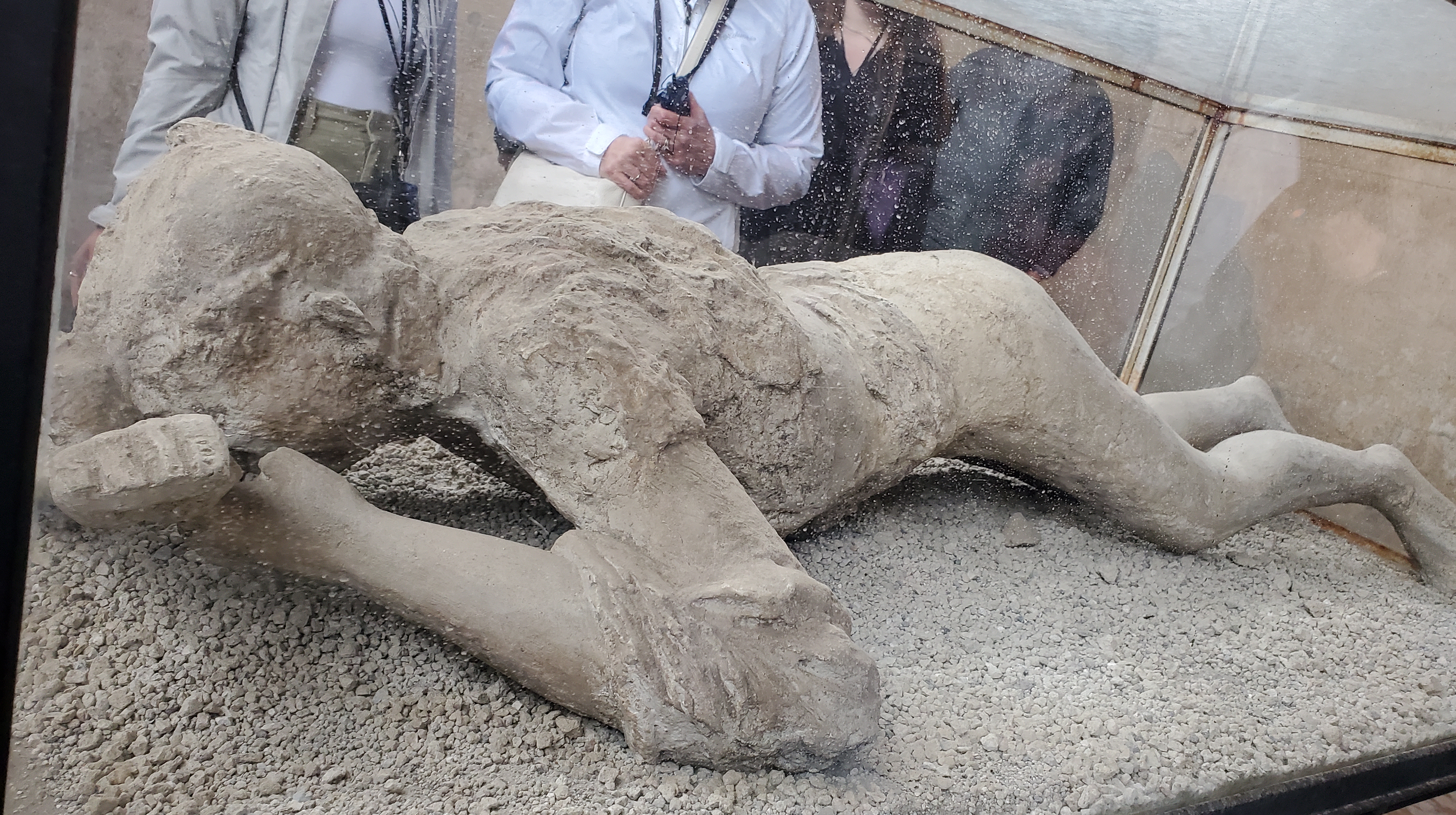
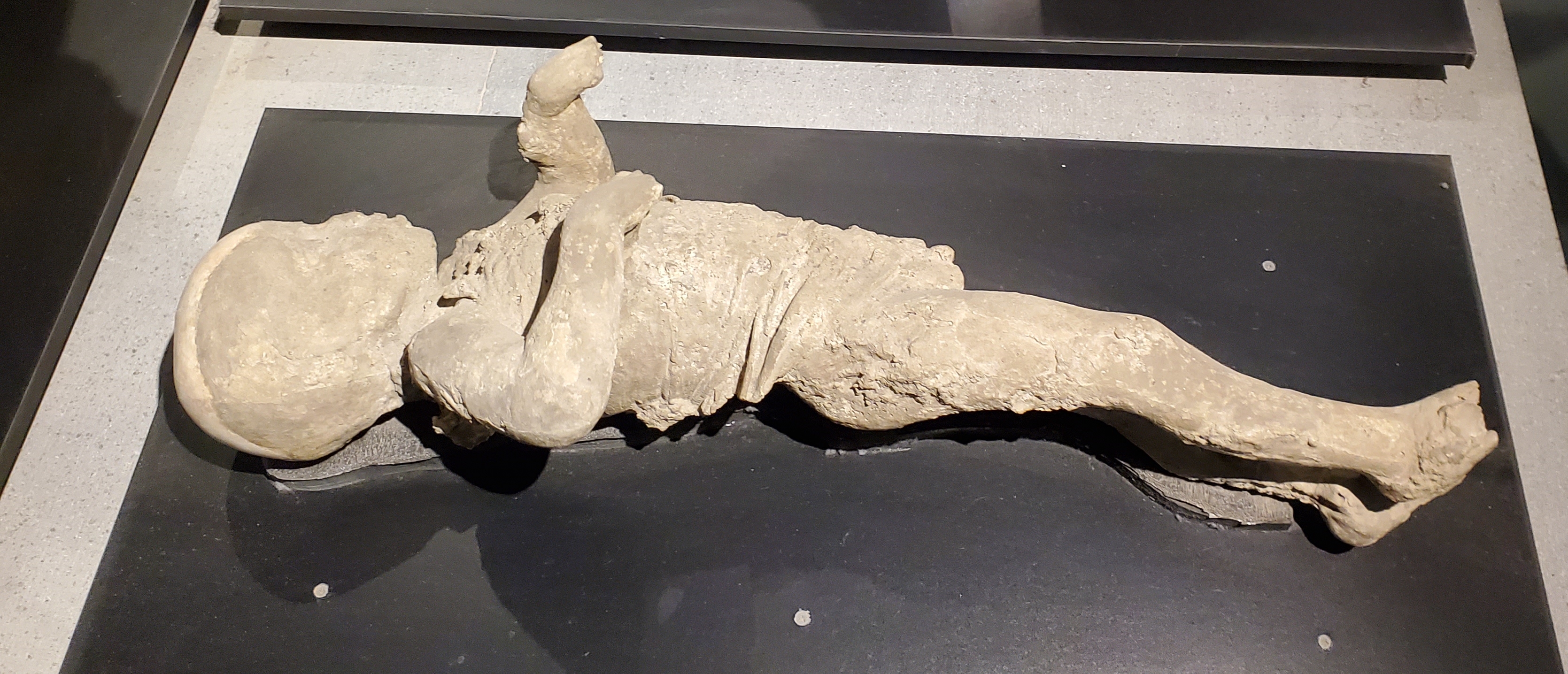

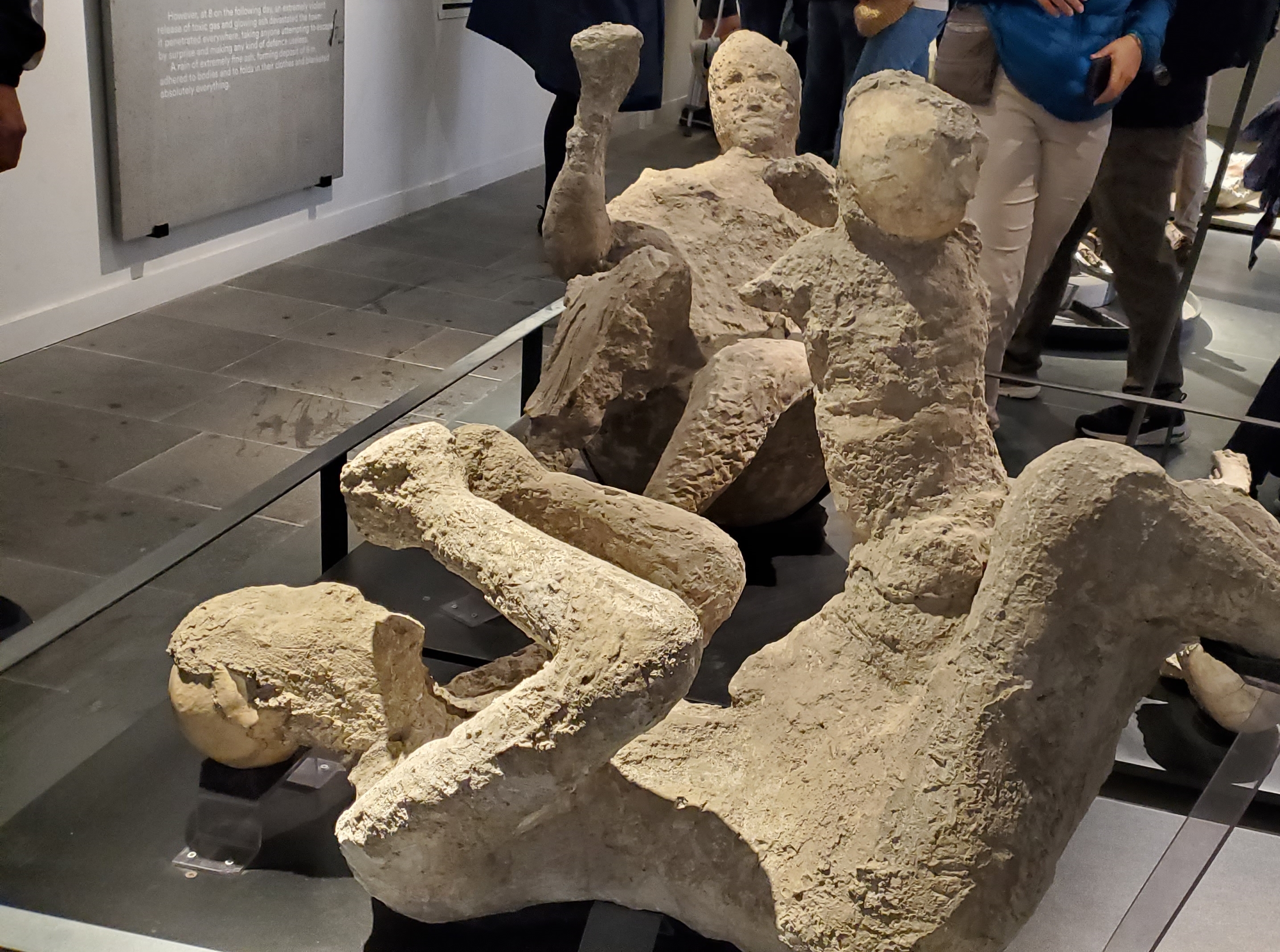

What may have fascinated me most today was the story of the water of Pompeii. Like all good Roman cities, an aqueduct brought fresh mountain spring water down to the population center. Clay pipes began dispersing it. But to one-up Petra, the water then flowed into metal pipes to reach the various fountains in this sizeable town. Lead pipes. Seriously. All evidence seemed to point to a well-nourished population that didn’t grow very tall or live very long (well under 5’ and lifespan of under 30 years for woman‡ and about 5’3” for men who lived 4-5 decades). There is some argument that the water ran through so much limestone that the pipes became coated with it, lessening the effects of the lead. Oh, to have a time machine and all of today’s scientific equipment!
Thanks for hanging in so long. I wrote the first draft the afternoon we returned from our Pompeii tour, and was still getting with finally seeing (a fraction of) this famous site.
*Classic blunders—the most famous of which is, “Never get involved in a land war in Asia”—but only slightly less well-known is this: “Never go against a Sicilian when death is on the line”! Unfortunately, Vizzini died of iocane powder poisoning before completing, “The third is trusting Google maps when driving in Sicily, you idiot.” [Dad, Mom, you do remember famous Princess Bride quotations, right? Just nod and smile if you need to.]
†If you are looking for amazing art, museums, and food in a crowded, loud, smelly urban setting, the Venn diagram favors the comparison.
**Mann, I love my footnotes. Isn’t Italian great? I don’t even have to use my translator app to figure this out.
‡Childbirth, of course, skews this. Hmm, our guide also said that most families at the time were a “one is enough, two is too much” child-mindset, but it could have been their mothers didn’t regularly survive a second or third birth.
 Needopedia