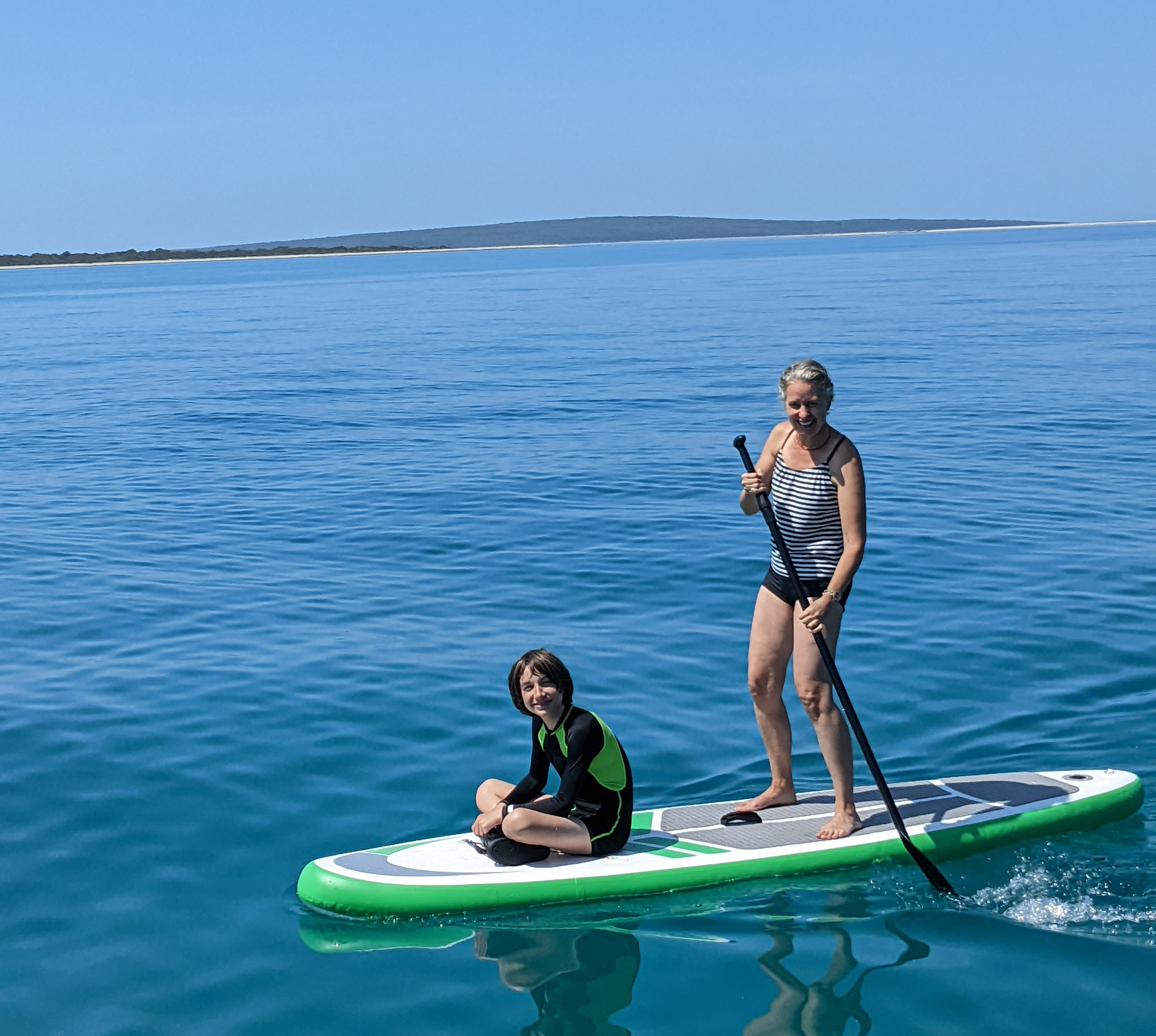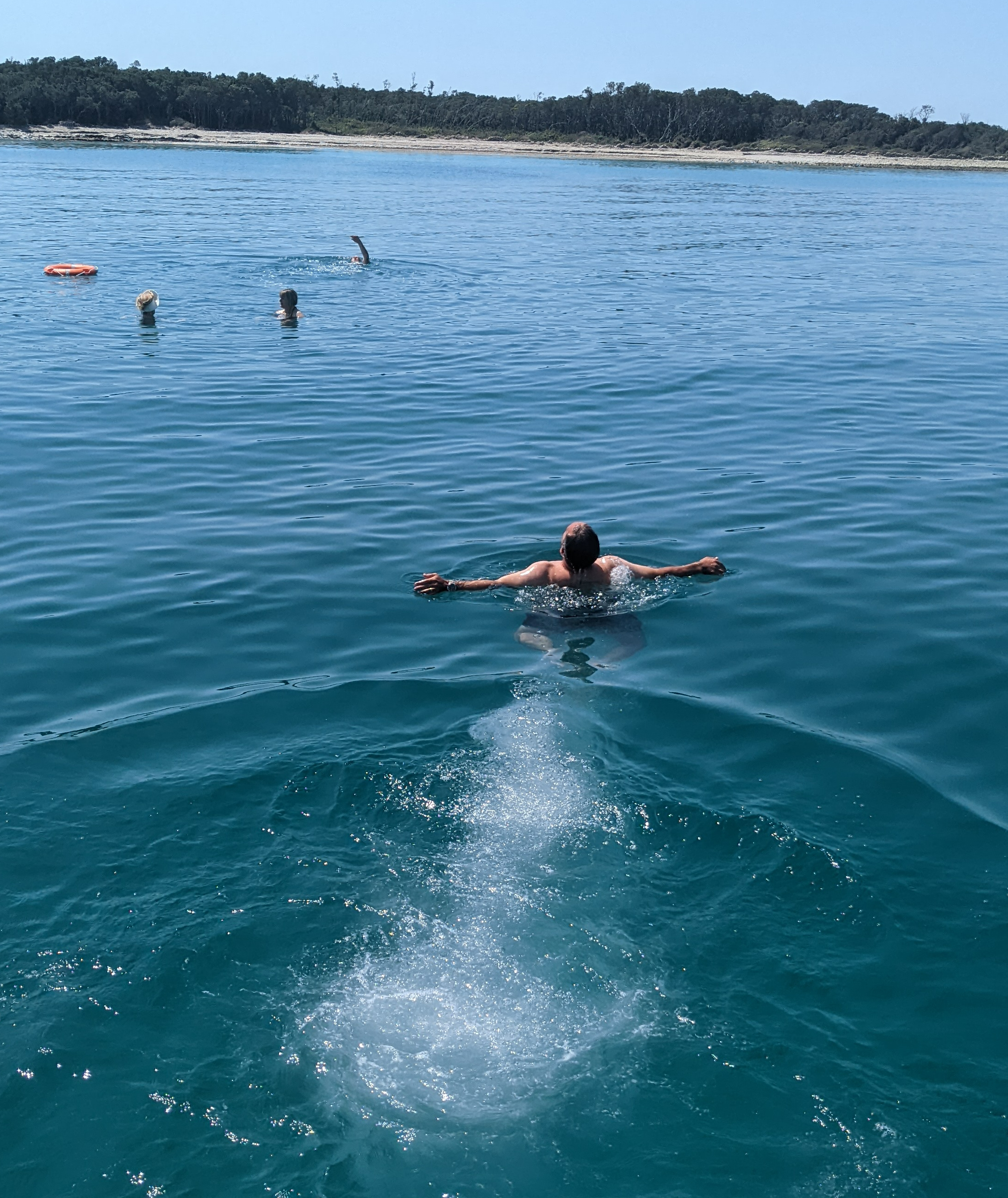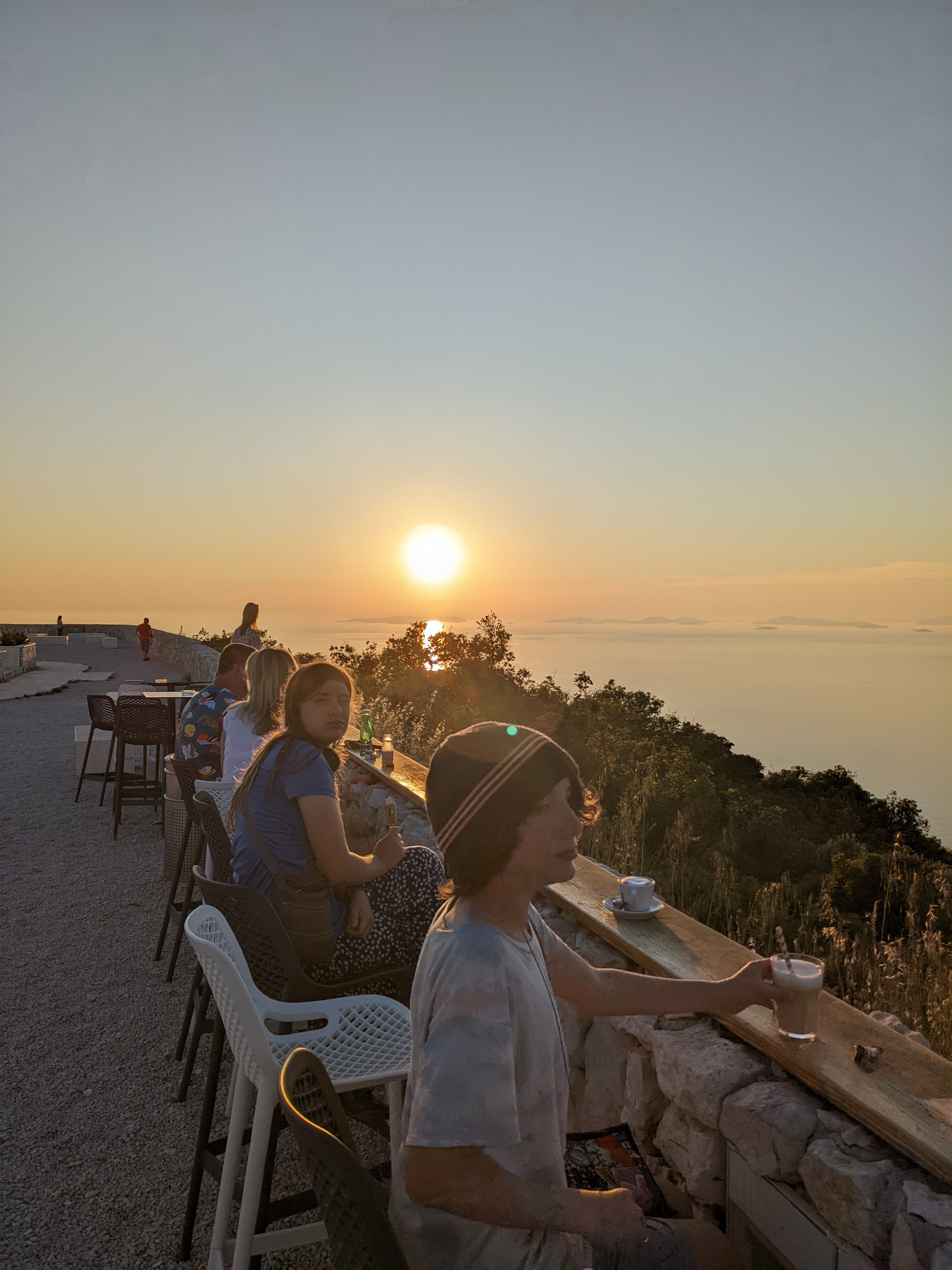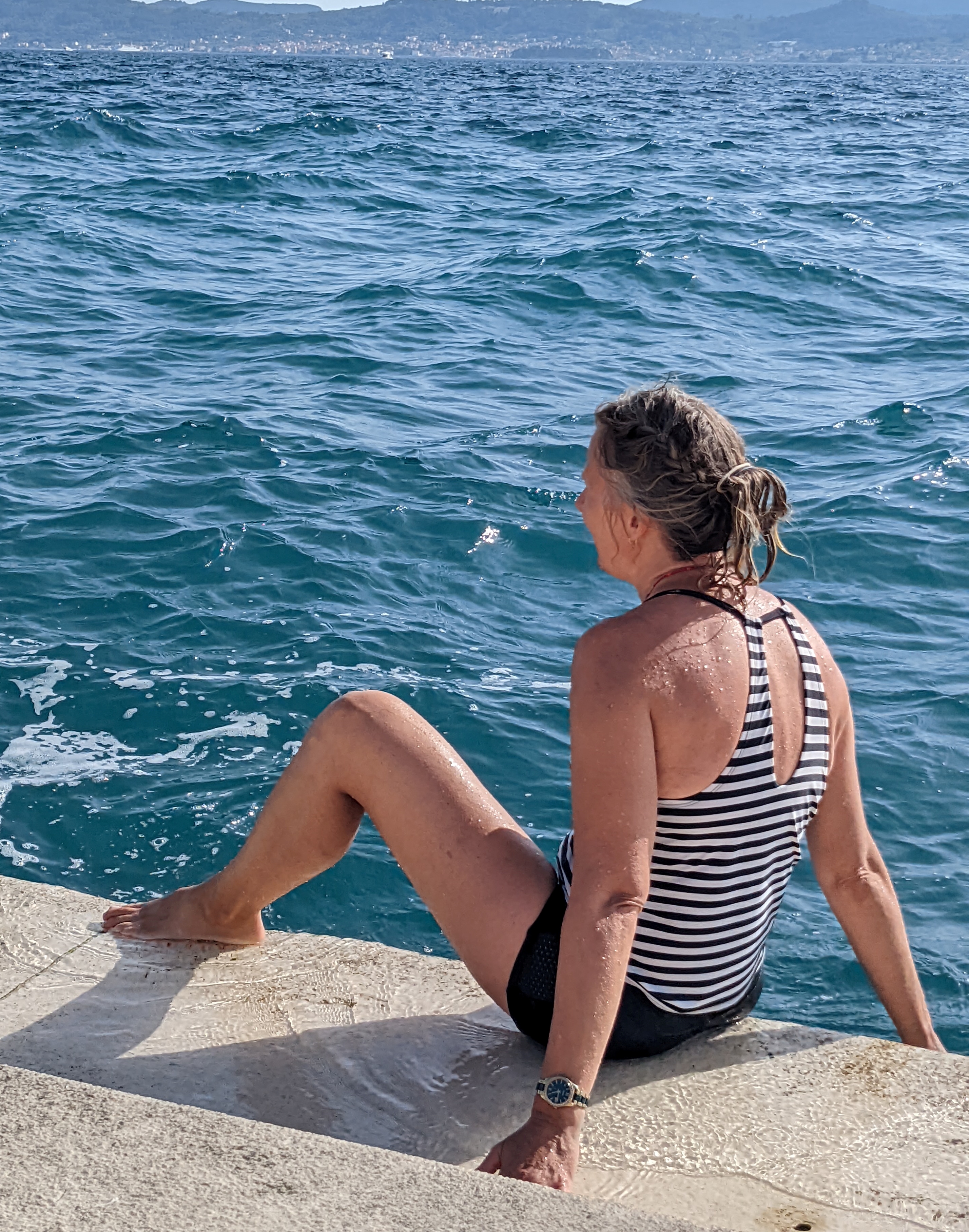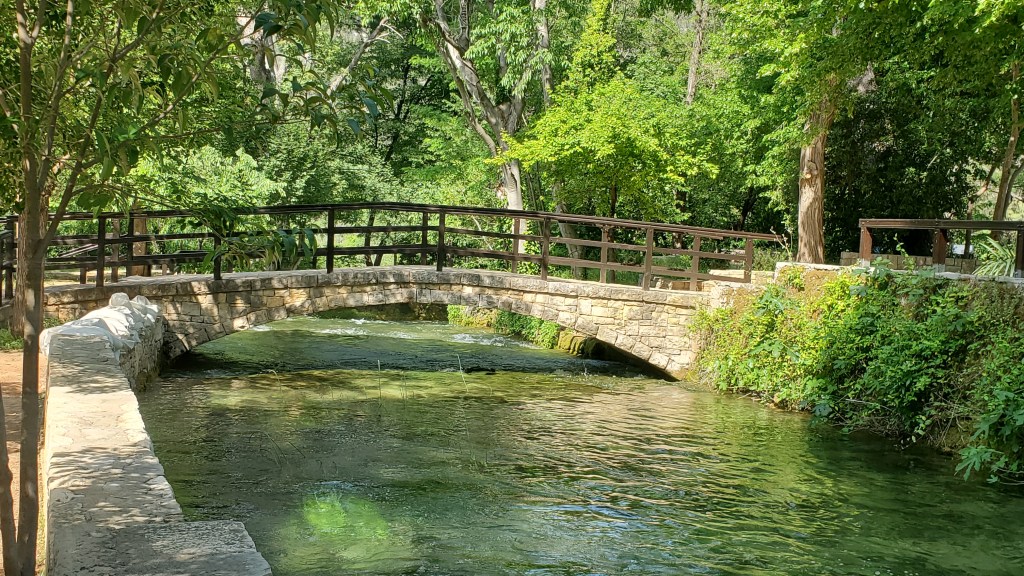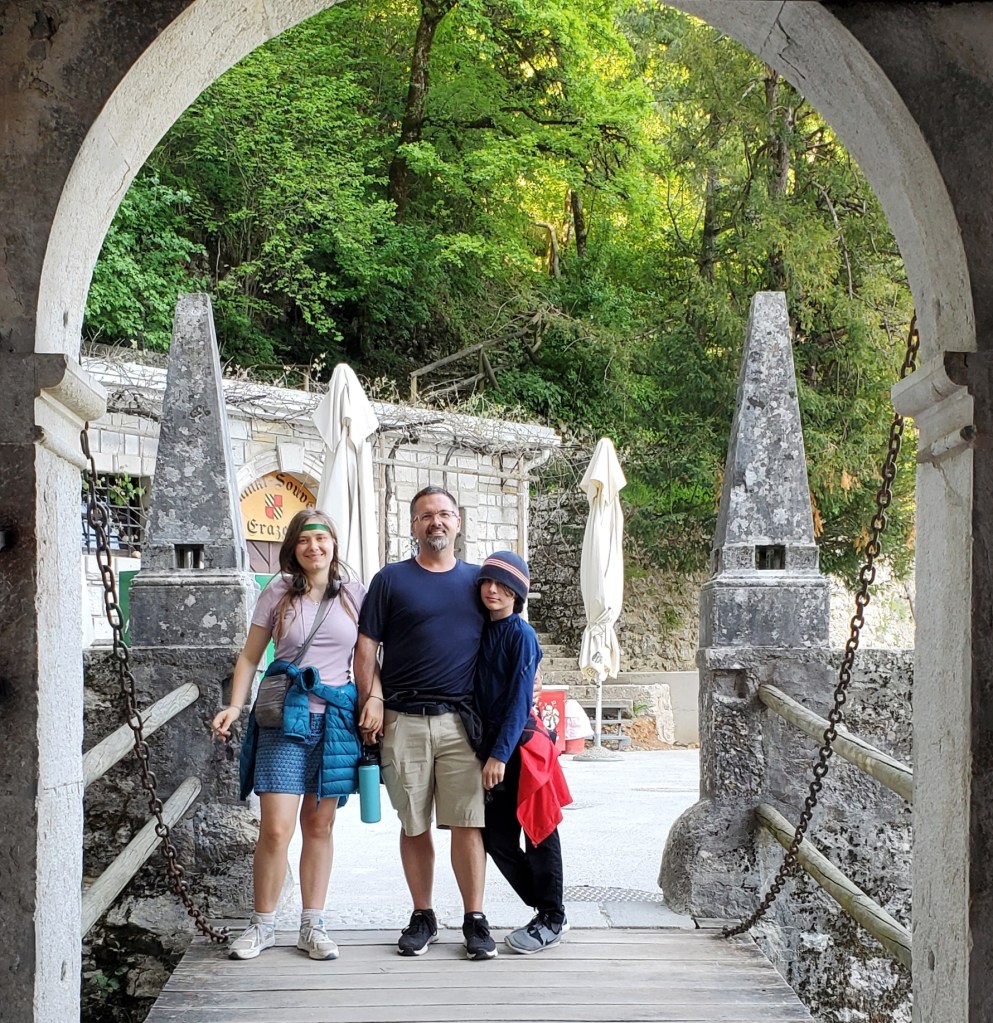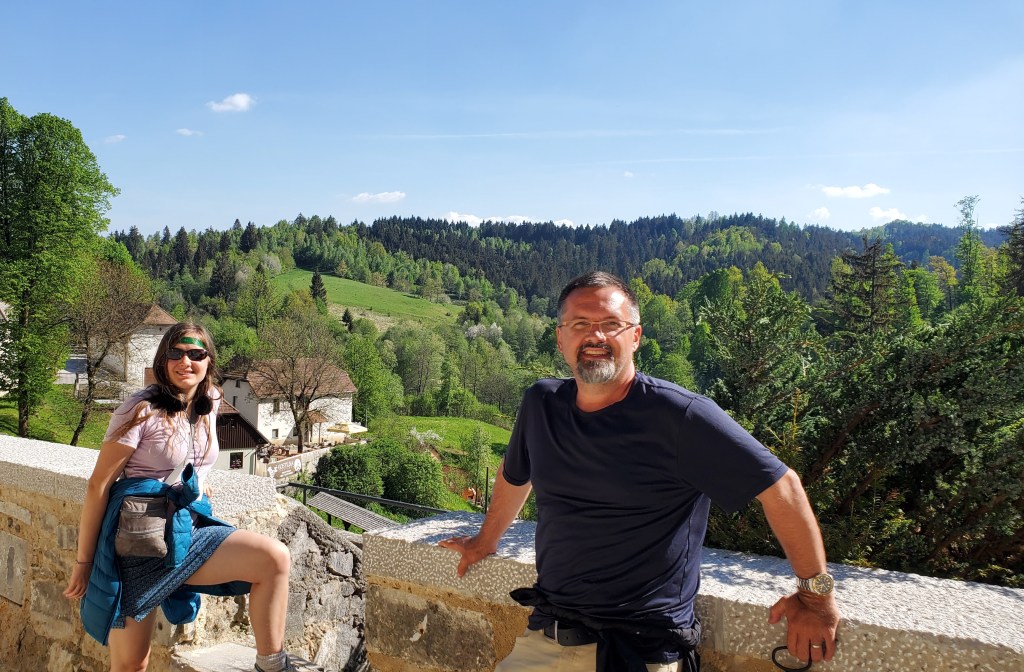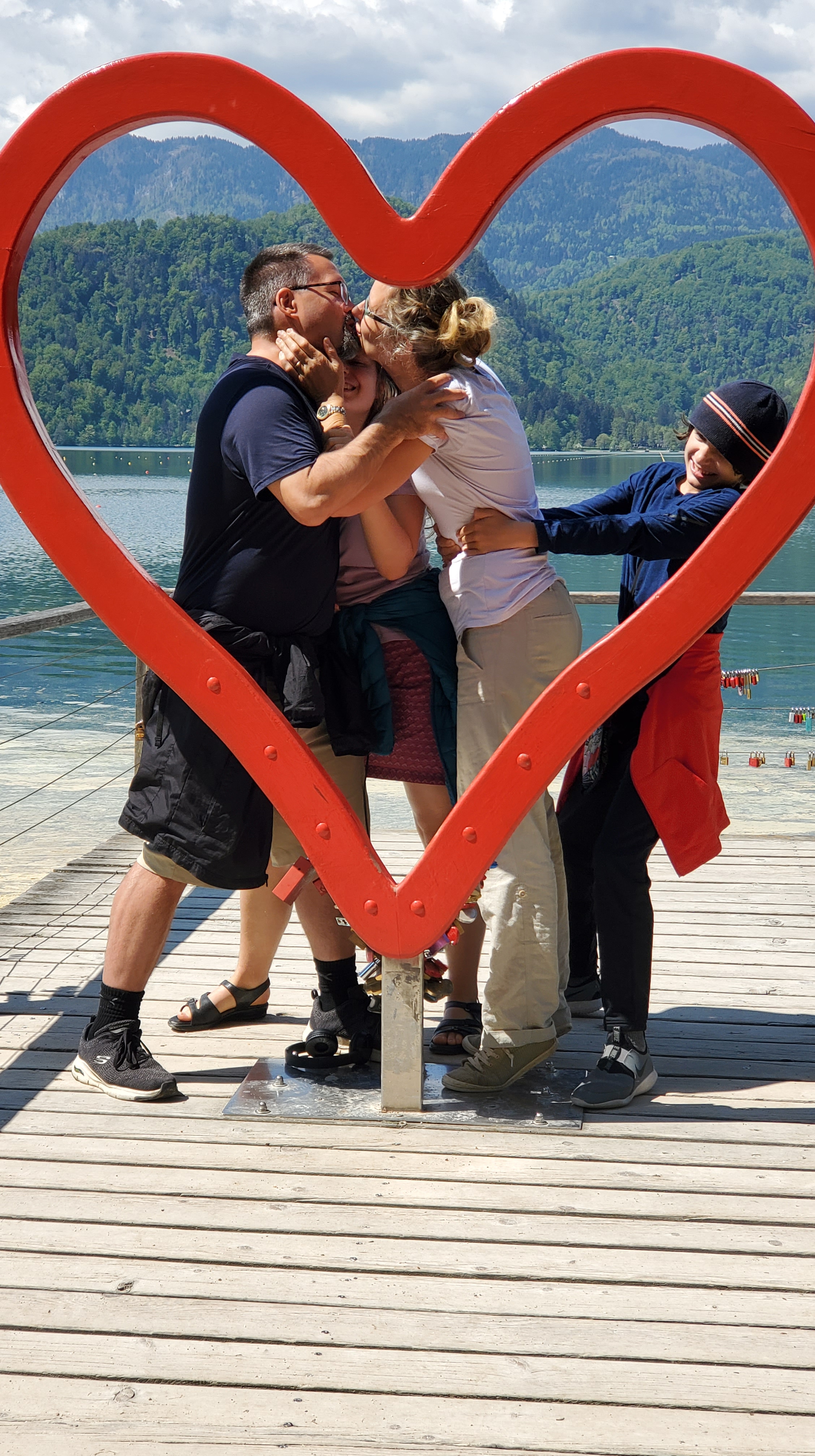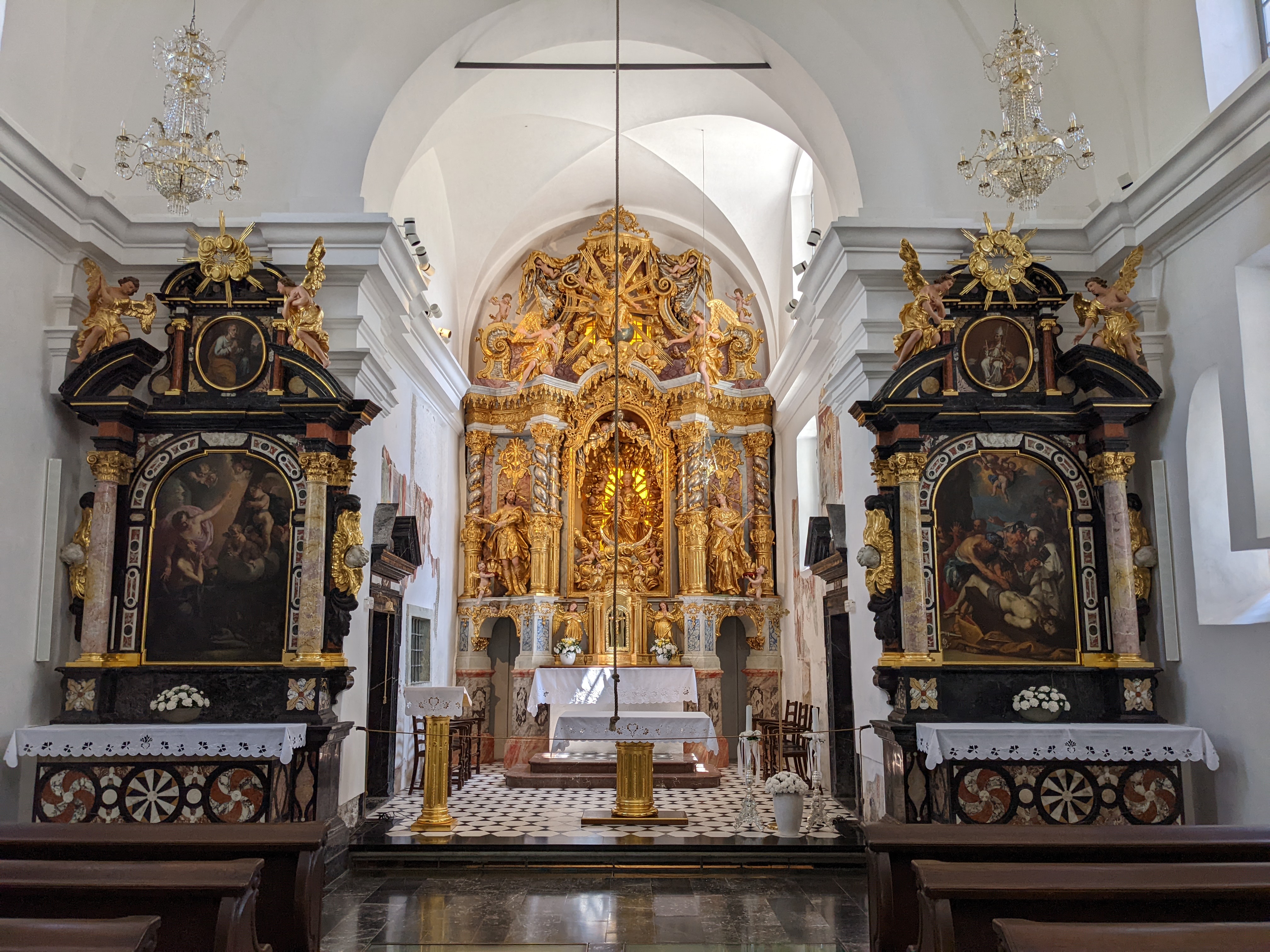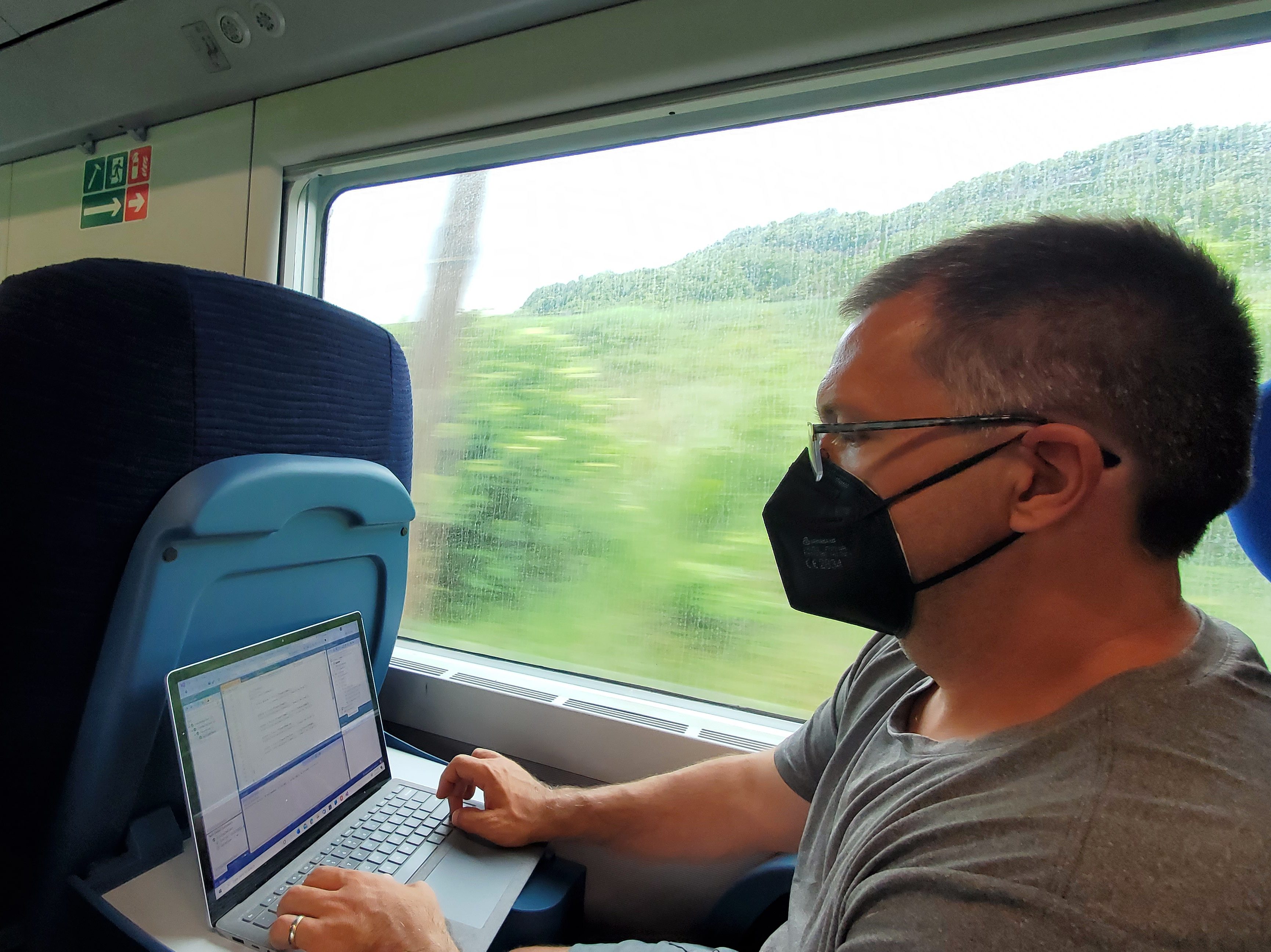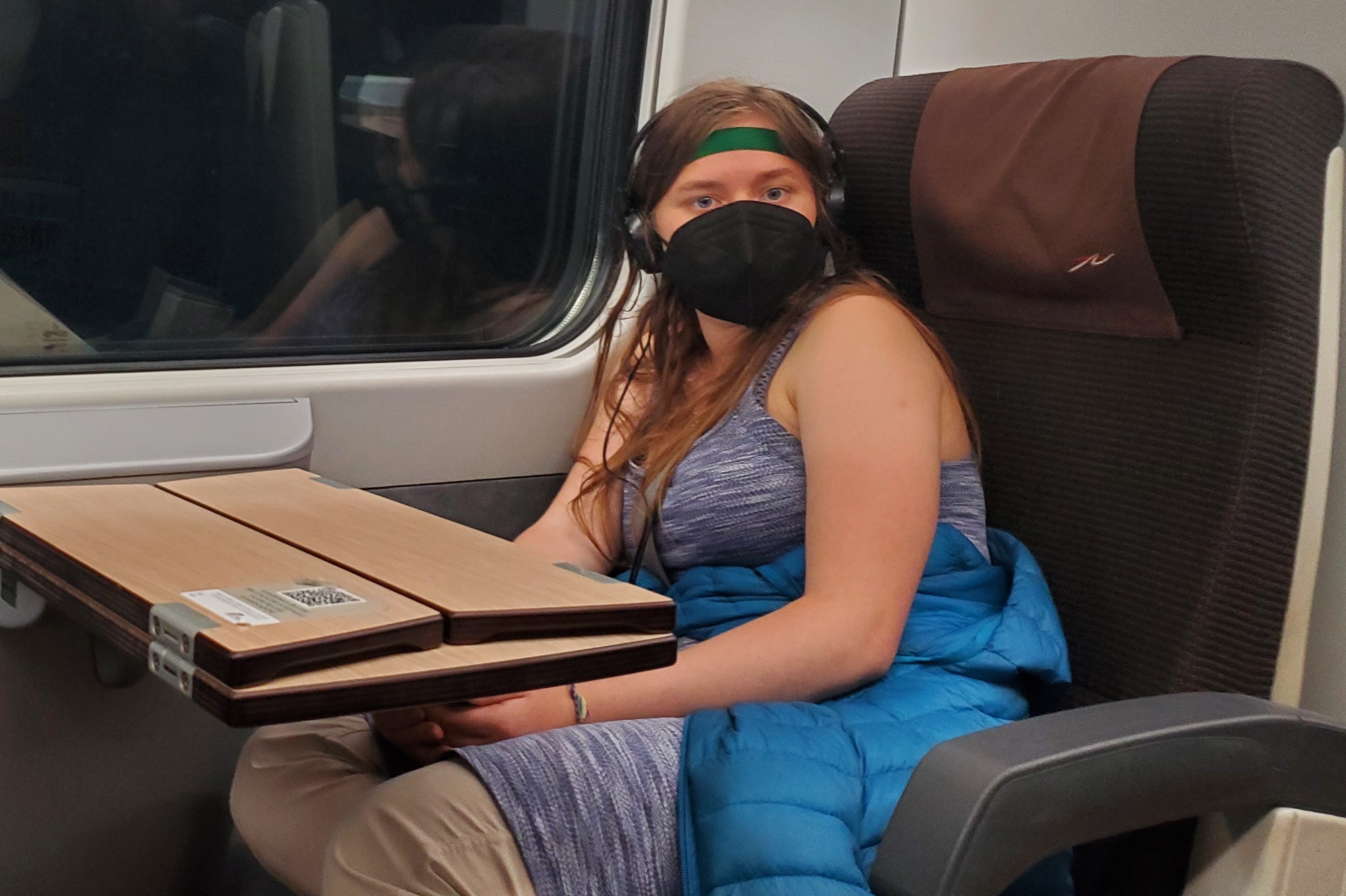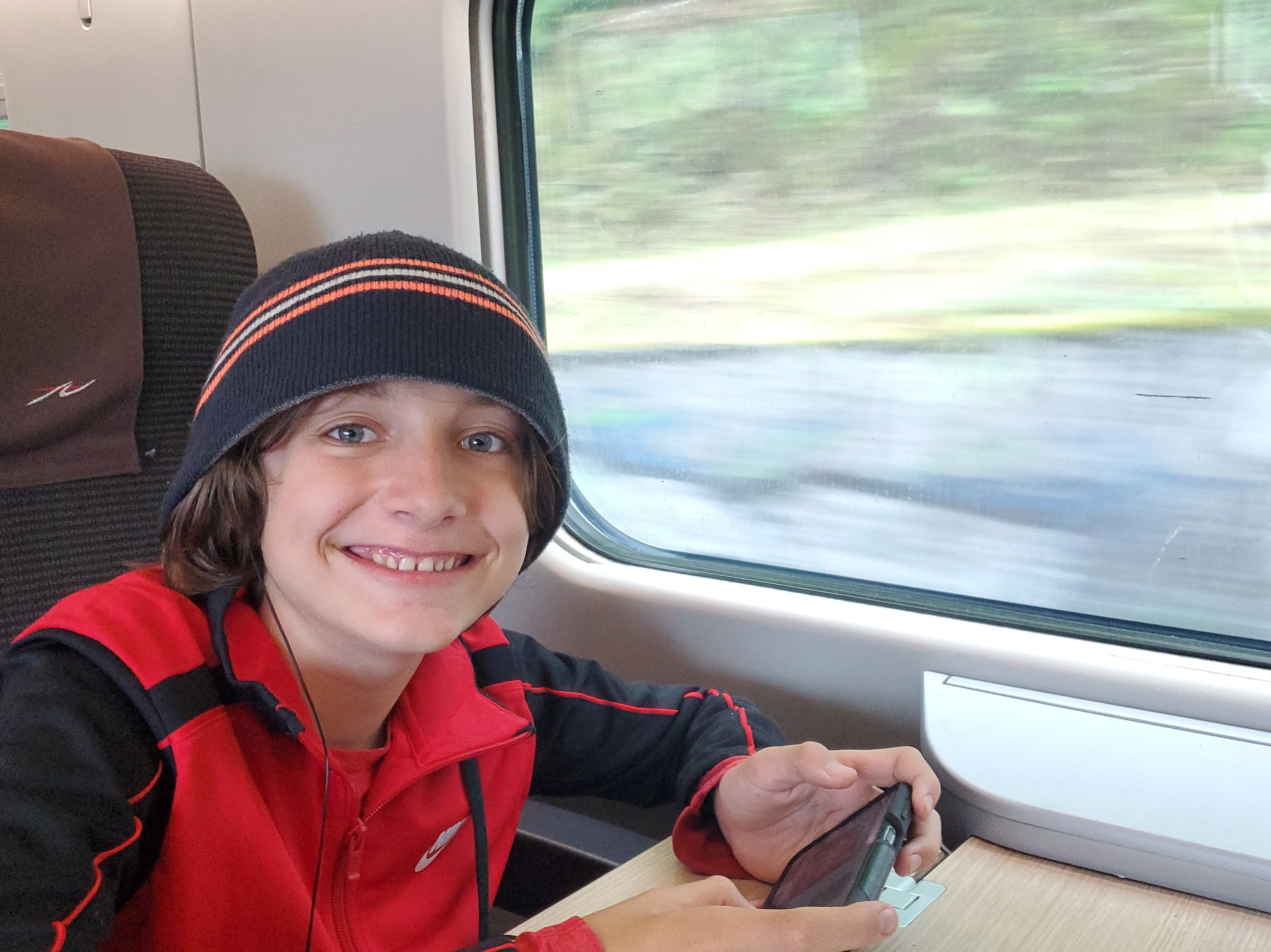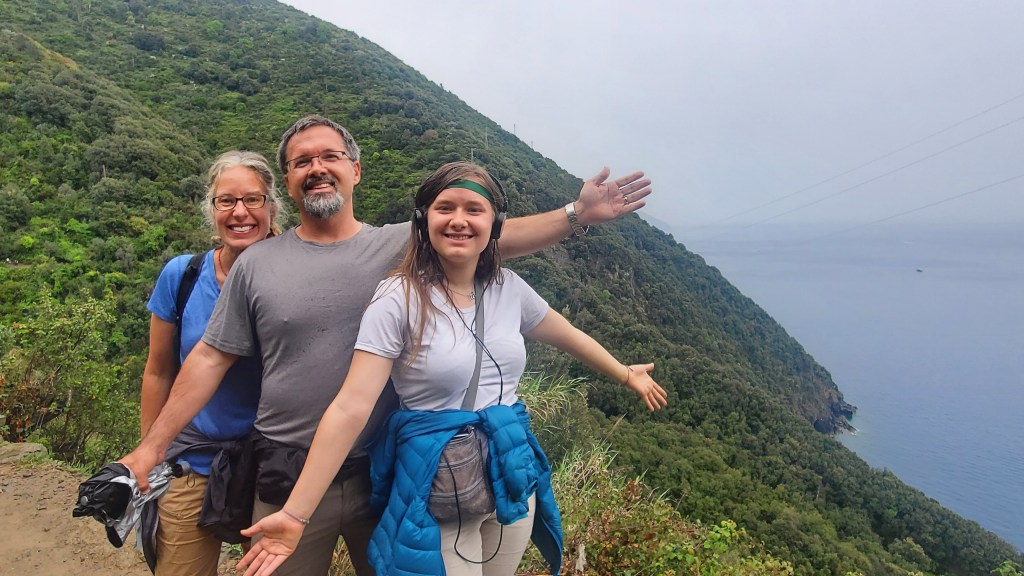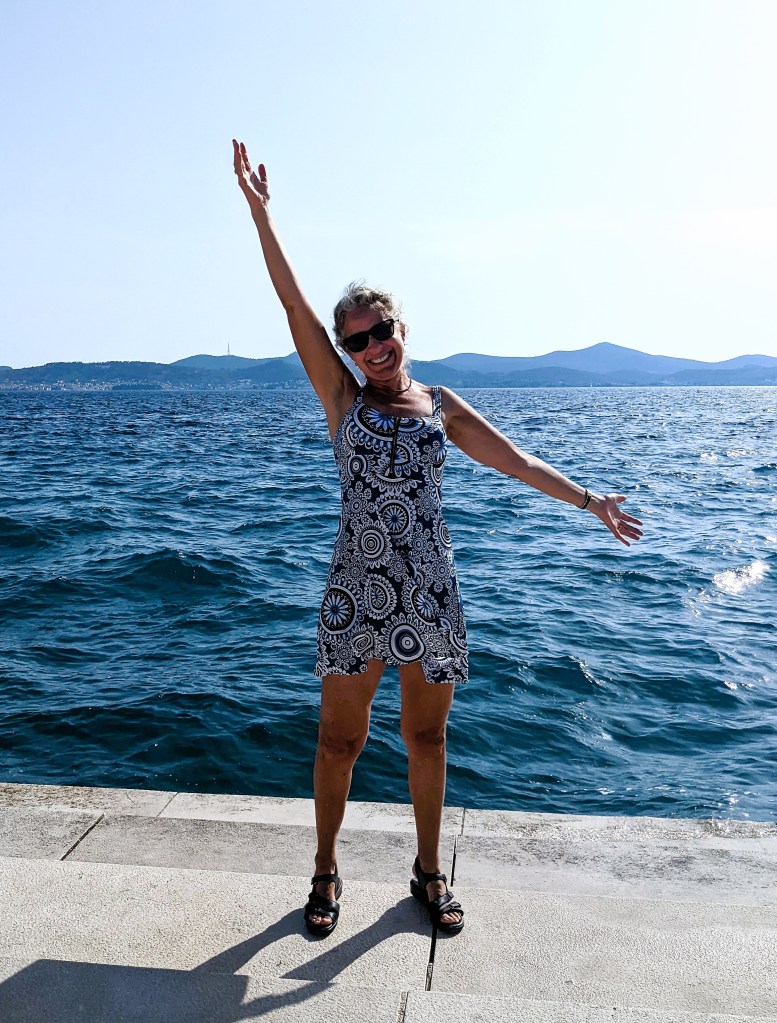
There is something special about the Croatian coastline—thank goodness, because we spent an extra week cruising the islands.
Here’s what I love about coastal Croatia:
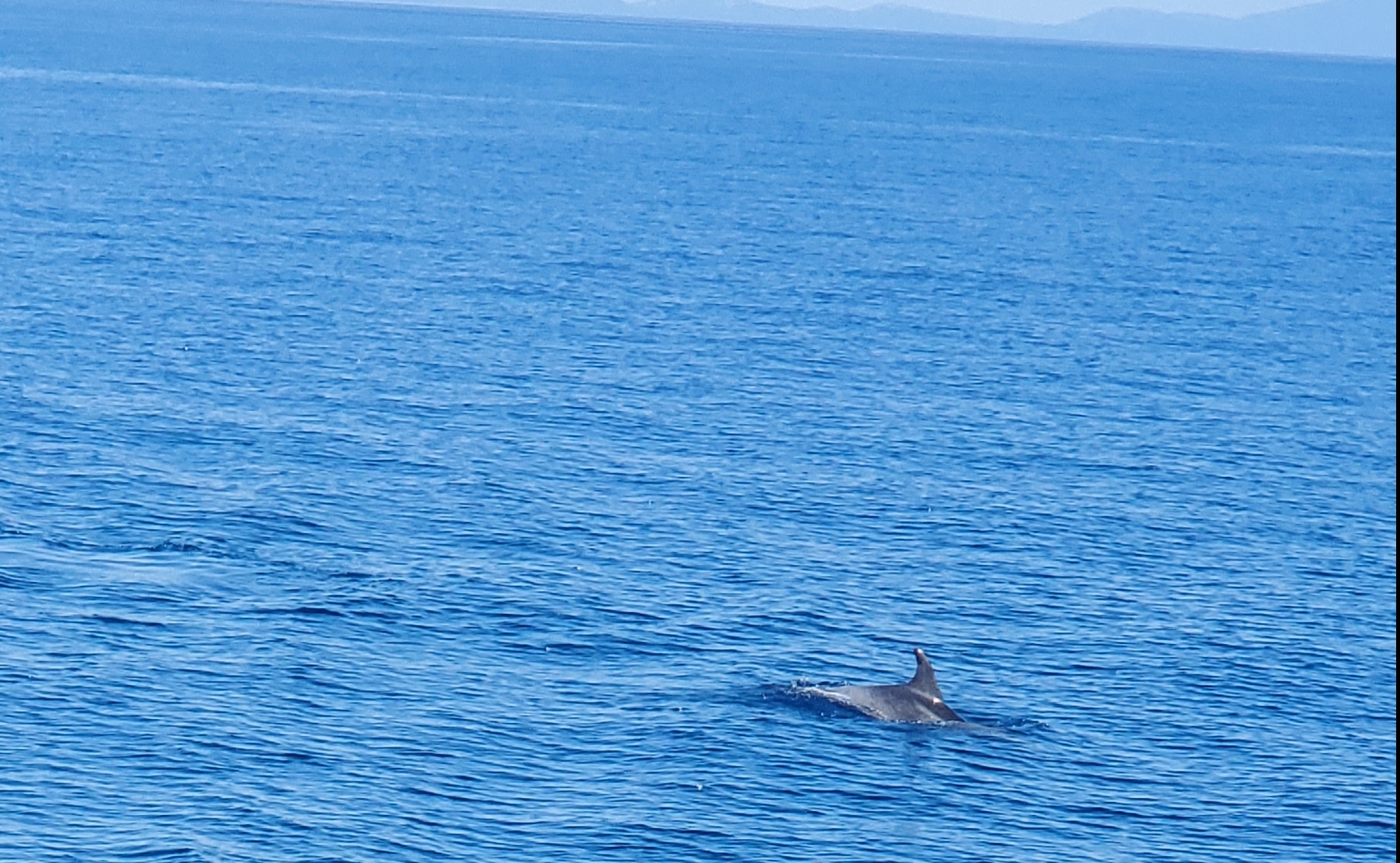
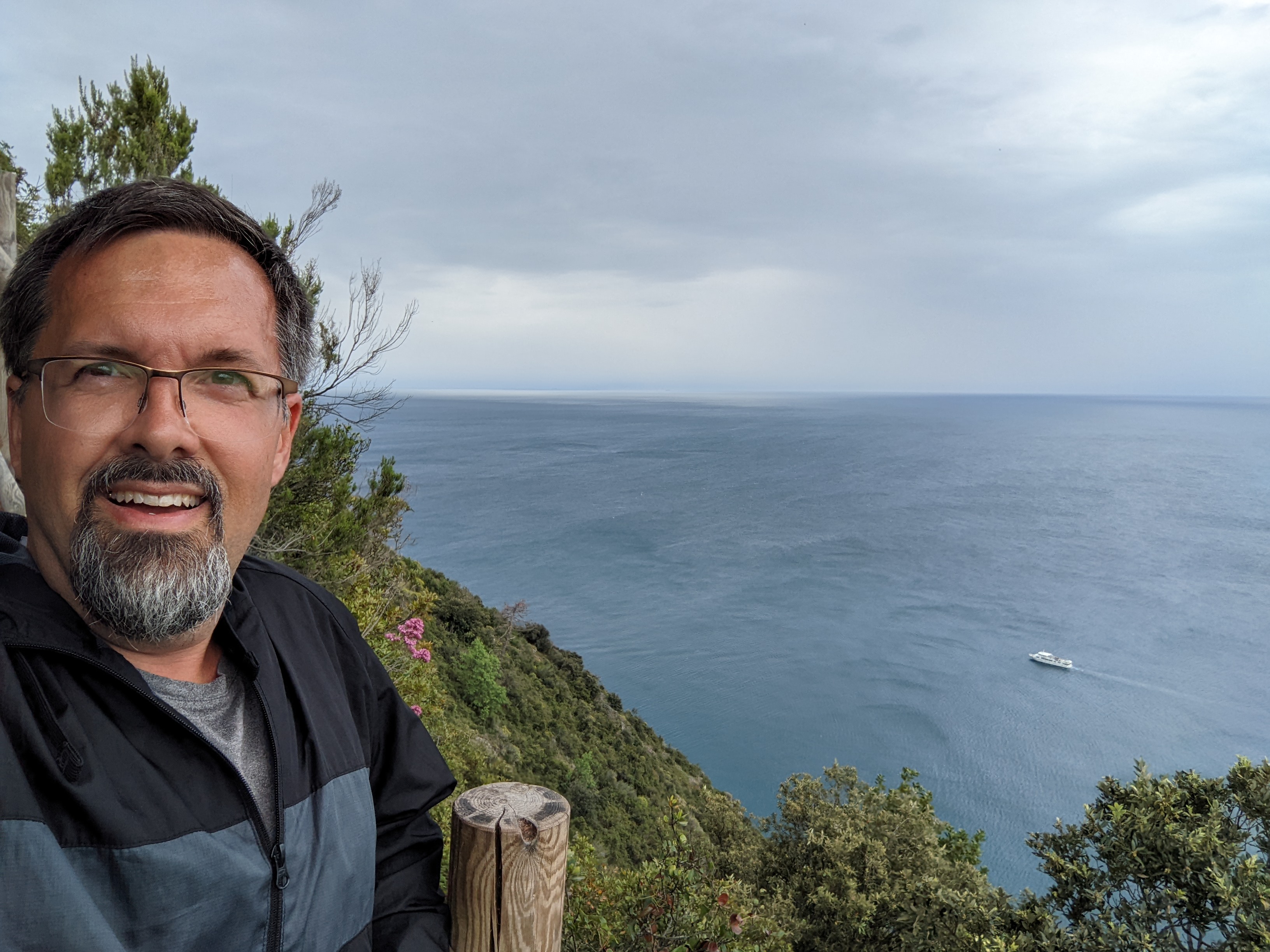
The Adriatic Sea. The sea is colorful, clear, and refreshingly cool. Pre-summer, it feels too chilly the first two minutes and then was quite swimmable…unless you are 12-year-old boy with very low body fat. Bonus: We saw dolphins several times.
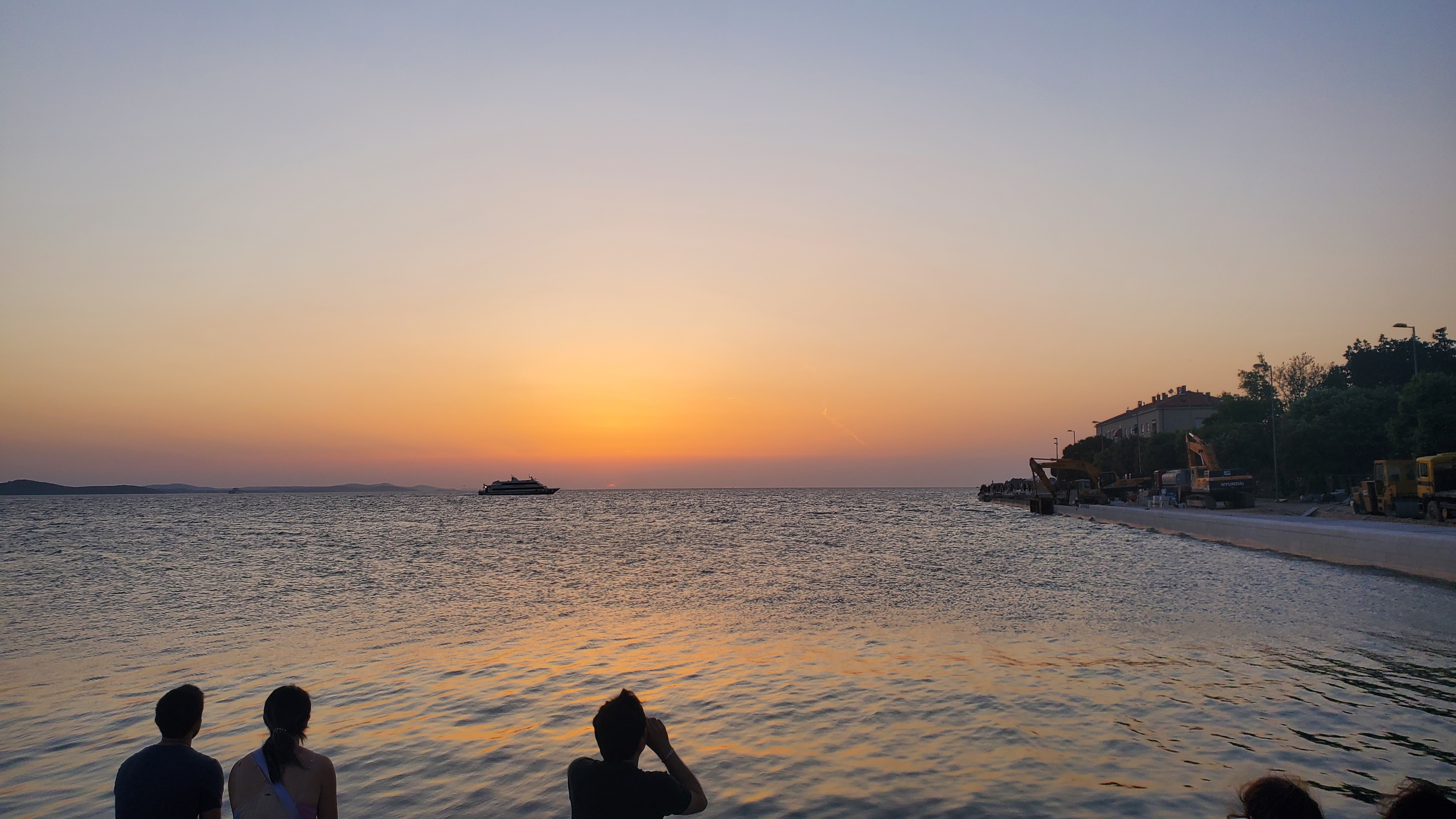
Sunsets on the Adriatic. (Okay, no brainer. Sunsets make the world go ’round. Sorta.)
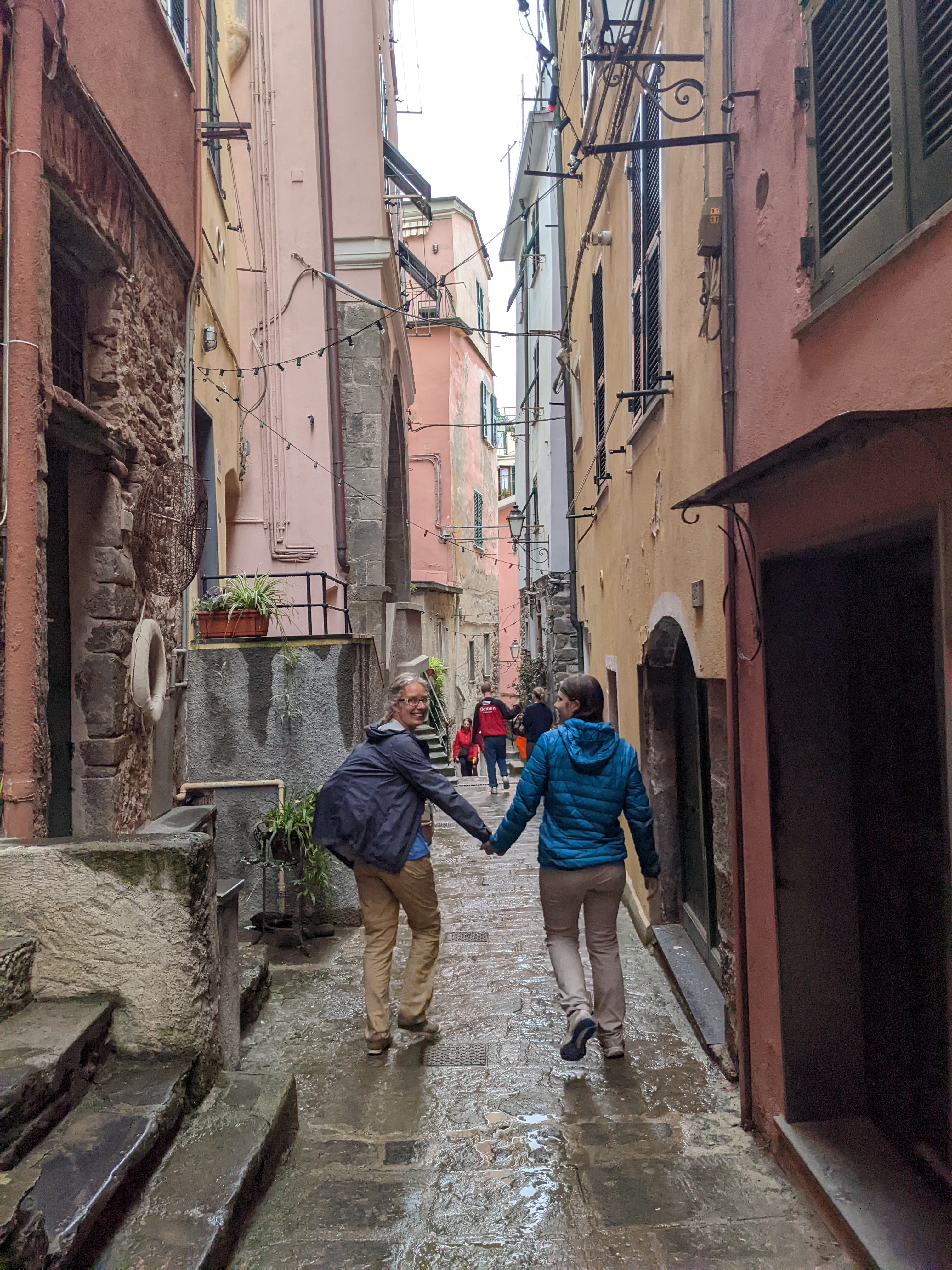
The towns. I had to wear sandals the entire time because I was so charmed my socks fell off.
Obviously, small-ship cruises don’t stop at any uncharming villages.
Croatian has plenty of UNESCO-stamped towns that have…
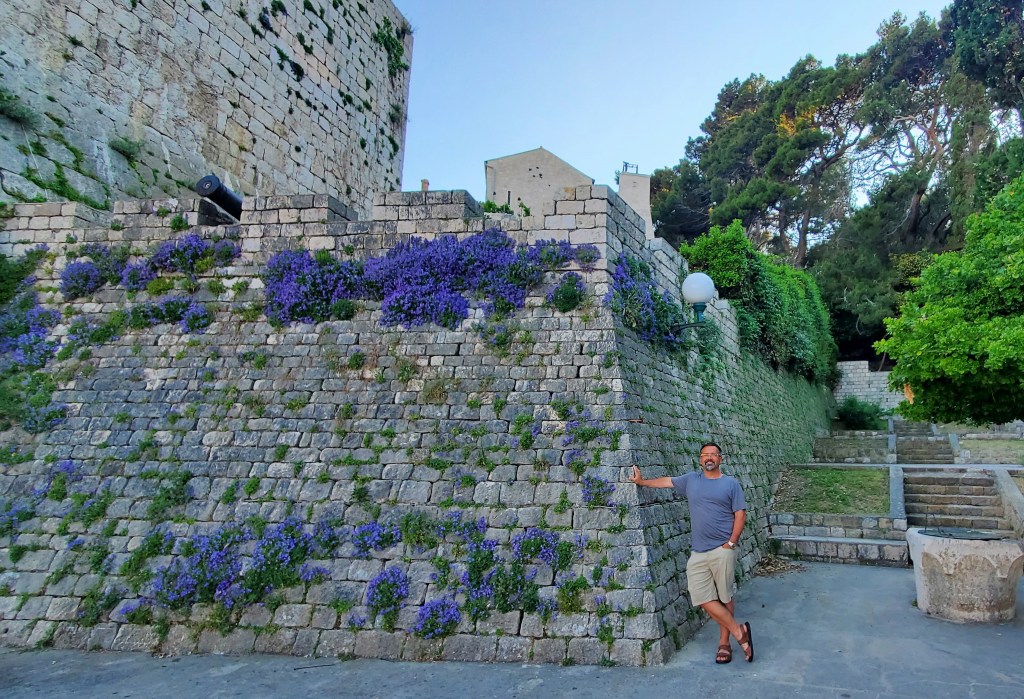
…1) ancient and/or medieval buildings and historical significance, which lead to….
… 2) quaint narrow streets with slick stones worn by centuries or millennia of feet, which means…
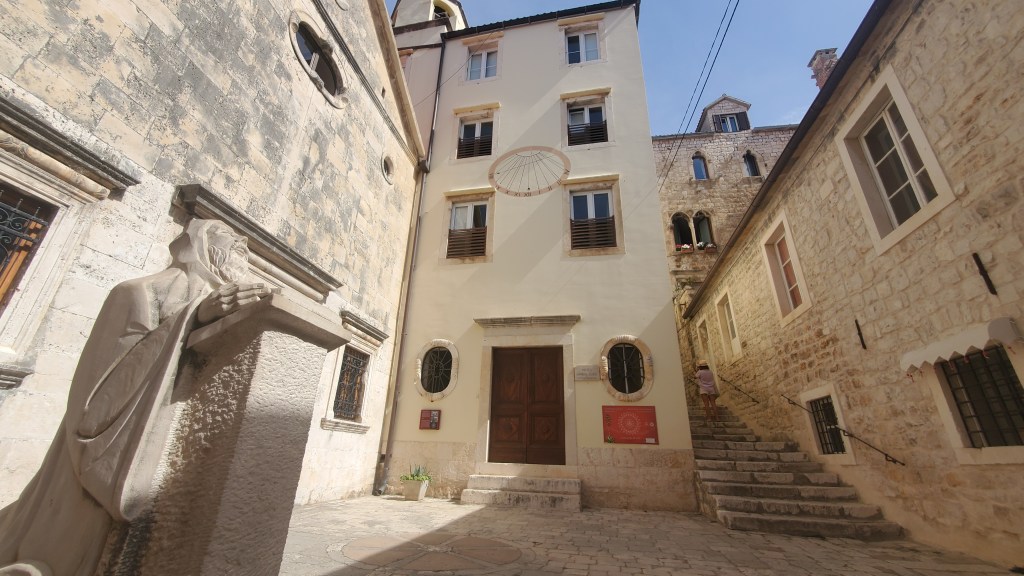
…
3) charming restaurants and shops spilling out into church-lined squares and vine-shaded alleys.
Just another UNESCO medieval building across the pitch.
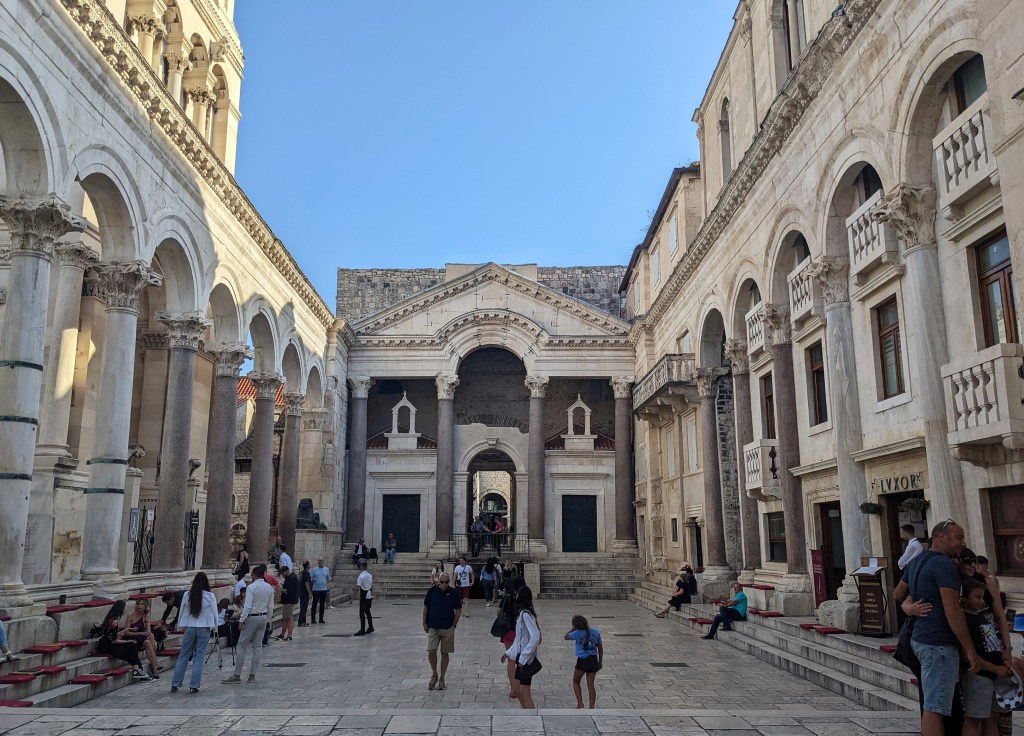
Being on two cruises that mostly did the same thing means that I got a second chance to see Vis.
Zadar (I think) had a gate that shows it was built by the conquering Ventians (winged lion) during a period of peace (open book).
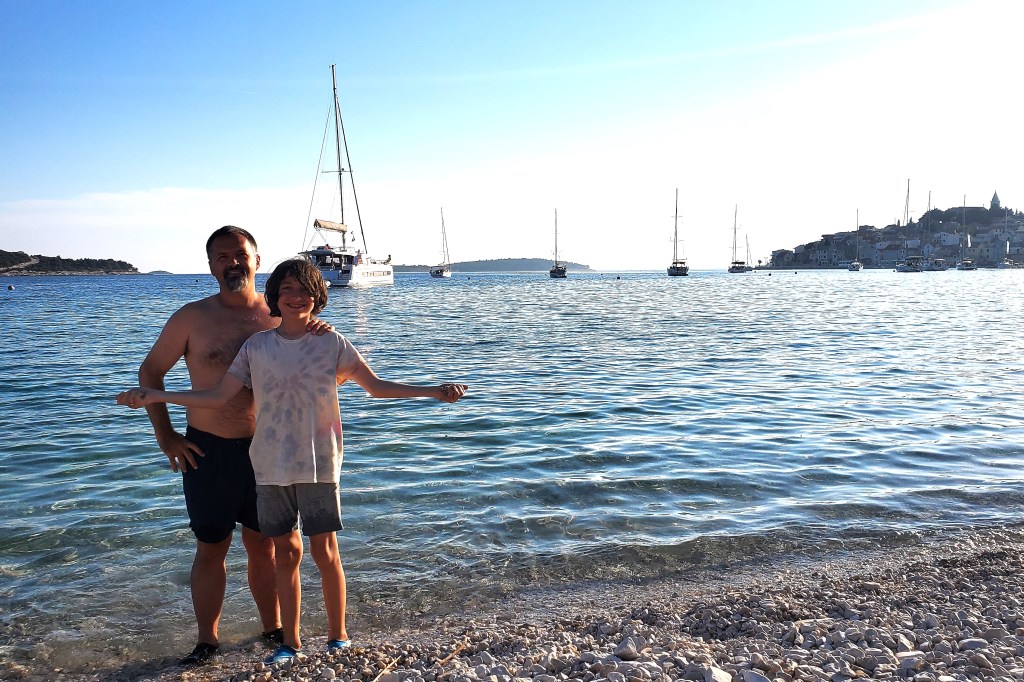
The beaches are less than ideal. Think sharp, stabby rocks and extra-pointy sea urchins, or at least uncomfortable pebbles. This is probably the one thing that keeps tourism slightly under control, so I am actually thankful for them.
Plaque reads: This modest house was built around the year 1495, in the time Ch. Columbus made his frist travel to America adn when Leonardo da Vinci painted ‘The Last Supper’.
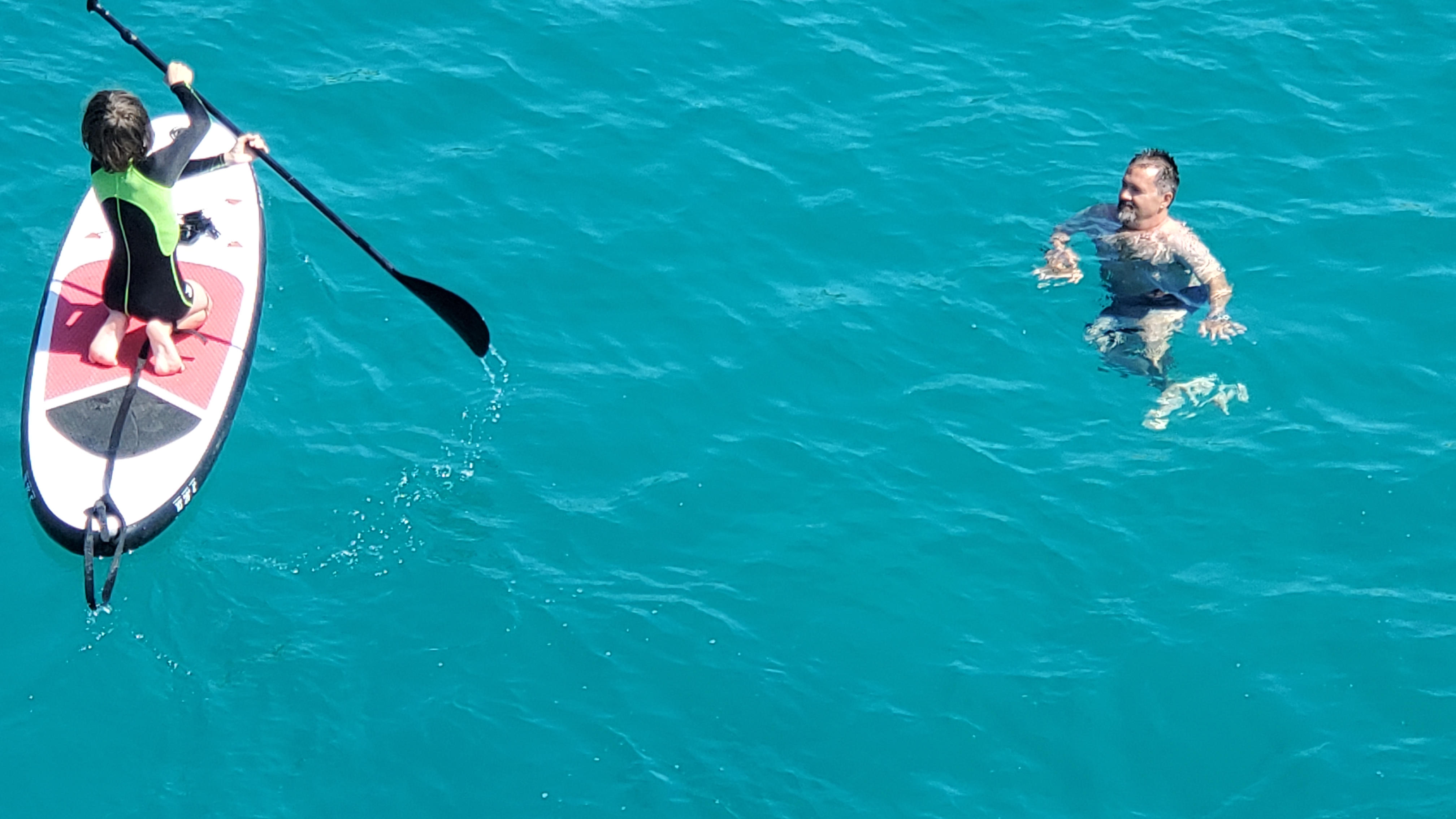
And I was able to enjoy all that for 24 hours before I screwed around on a paddle board and forgot to take my right knee with me when I splashed into the water. A hospital visit and Xray later that afternoon said nothing was broken—but the doctor pointed out that didn’t mean nothing was wrong.
So we booked another week on another ship. If I am not supposed to be doing 20,000 step days, I needed to be put on a boat leash. Not exactly a great hardship, and when I could stagger as well as a drunk 3-legged elephant, I was at least able to get into the sea and do some PT swimming.
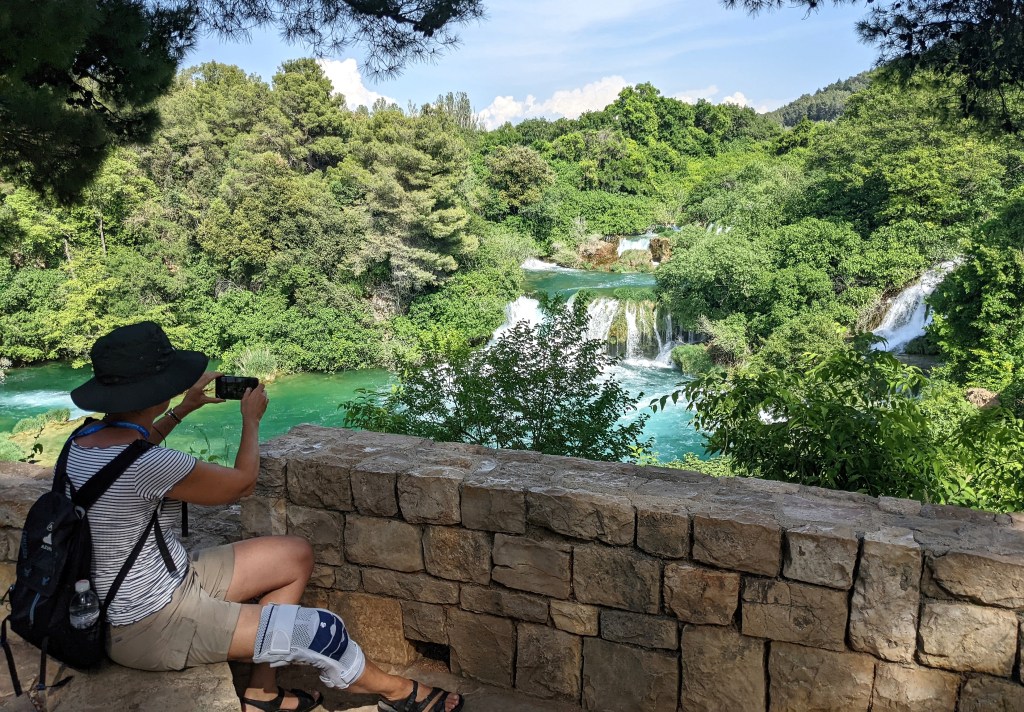
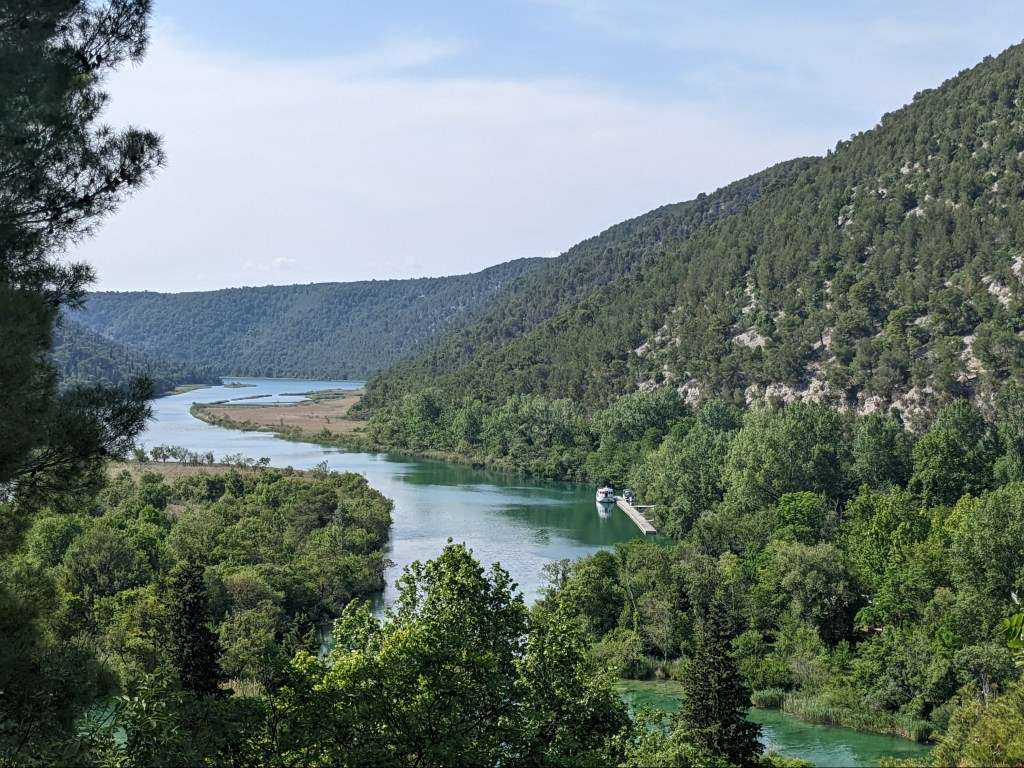
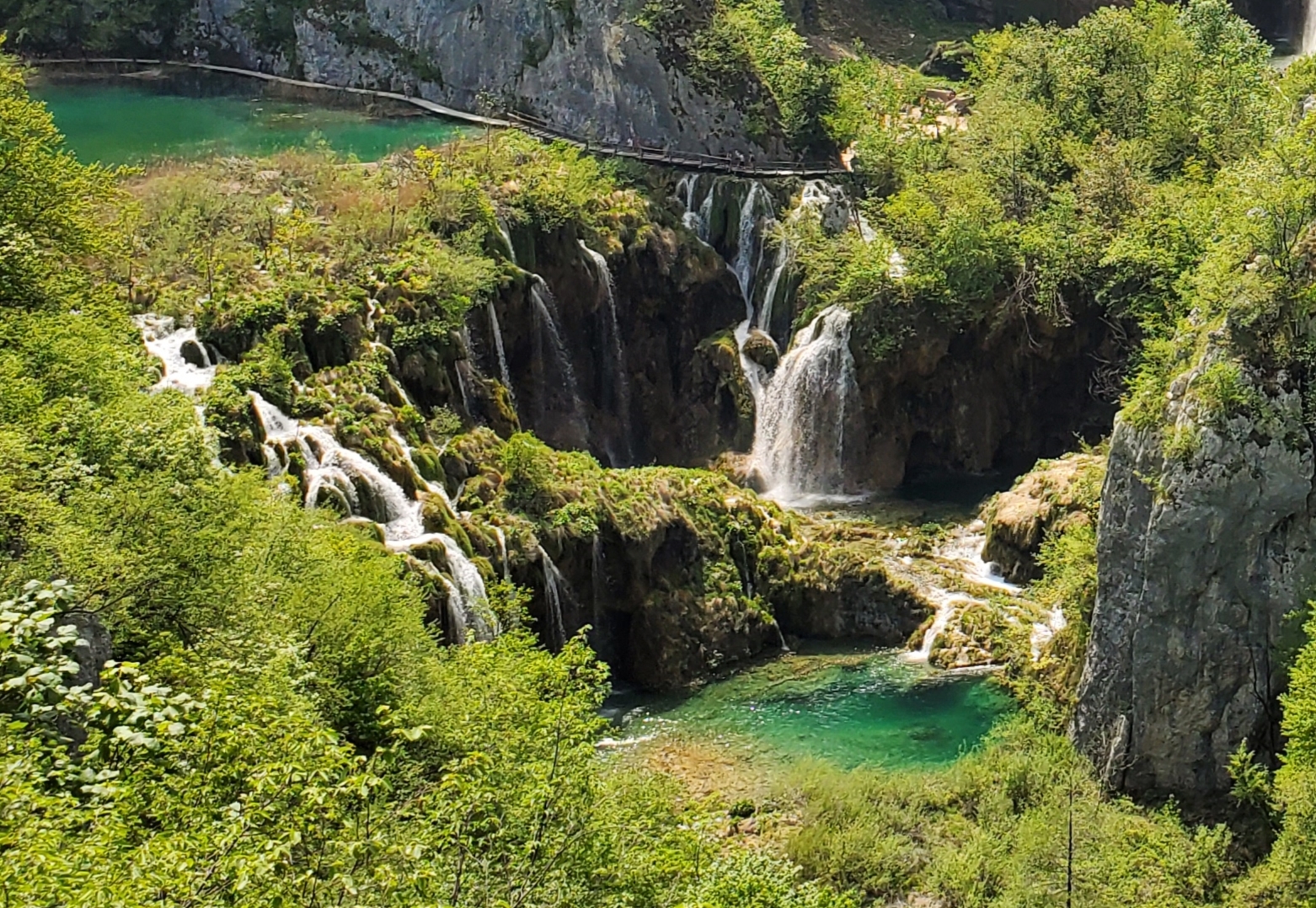
I still joined the group on the second week to go to Krka* National Park, Plitzvicsa’s little sister. Kyla and Dwayne did the full loop, but I still got some good views.
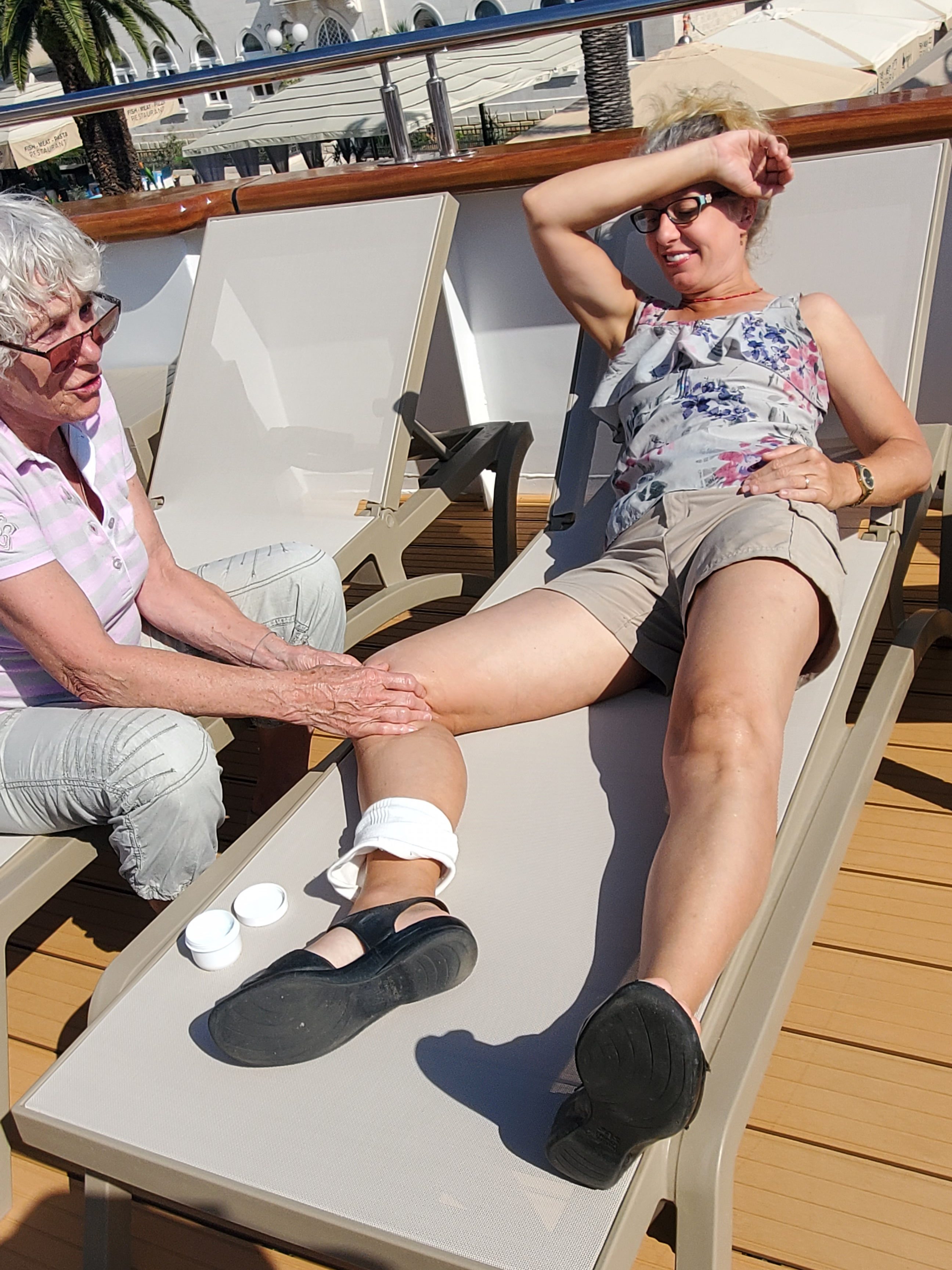
Ice, braces, and a bedtime Advil helped me get through the first few days. Then a wonderful Slovenian woman, a retired nuclear factory employee and trained masseuse, started massaging my knee twice a day, and gave me the opposite advice of the doctor. Mostly, I tried to listen to my body, and when we packed to leave Croatia, I had moments of not noticeably limping. Honestly, I’ll take it at this point.
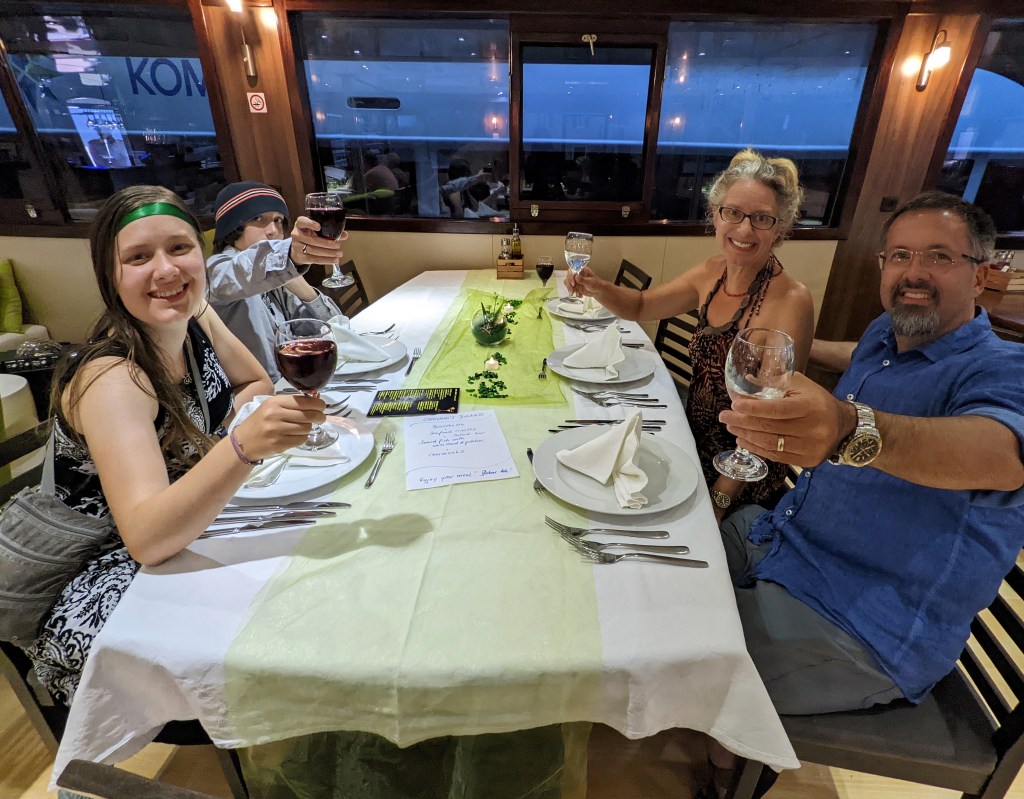
Piper is still with us, but there will be no pictorial evidence. Just the bite marks….
And that’s how I gloss over 14 days in coastal Croatia–the most we spent in one area since we left home. On to Greece!
*Again, no vowels were inadvertently left out. This is the correct spelling.
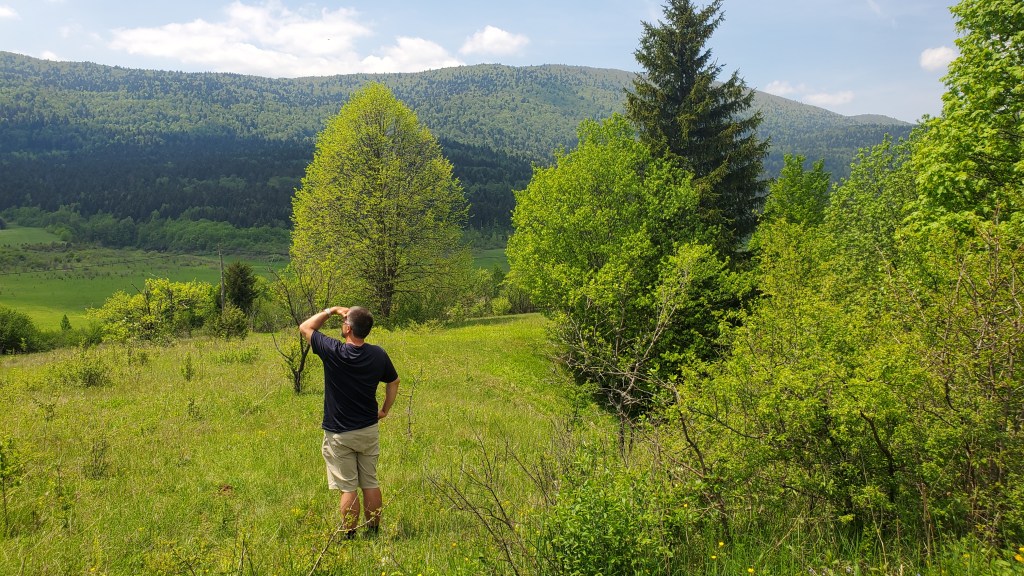
Plitzvicsa [PLITZ vick ah*] National Park is a Croatian must-see that is, ahem, driveable from where we stayed in Slovenia. “Driveable” in this case means 3 hours by delusional Google Maps but 4.5 hours in reality. Of course, the drive was beautiful, and I was especially taken with the local WCs.
The WC. The world is my toilet on long country drives.
It wasn’t until a few hours in, after we were stamped out of the EU and into Croatia, that I realized we had completely left the youngers in a different country from us. This was immediately followed by a twinge of guilt drowned out by the realization that everyone was happier this way, and Piper and Wes had enough euros to feed themselves for a day.
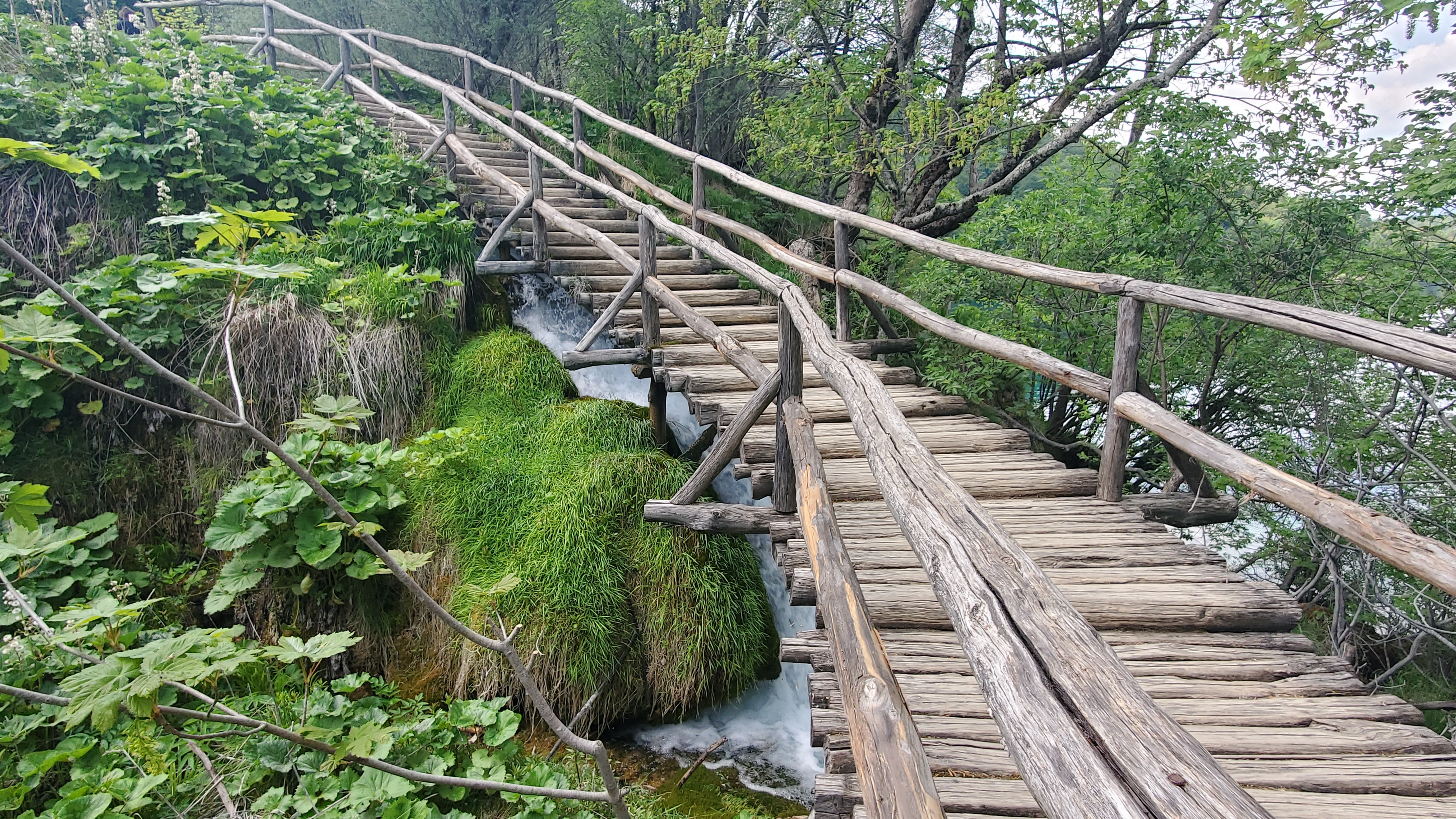
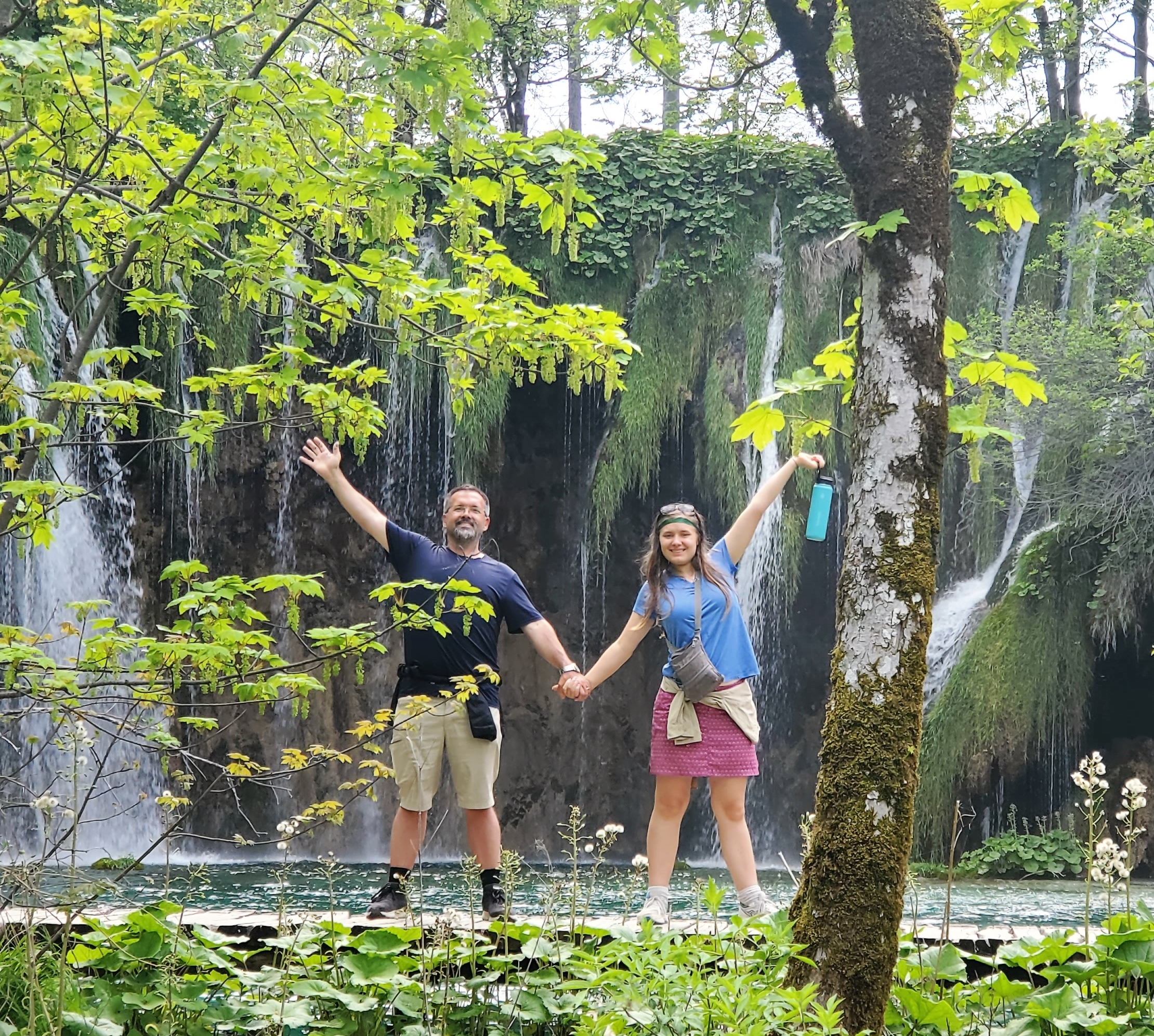
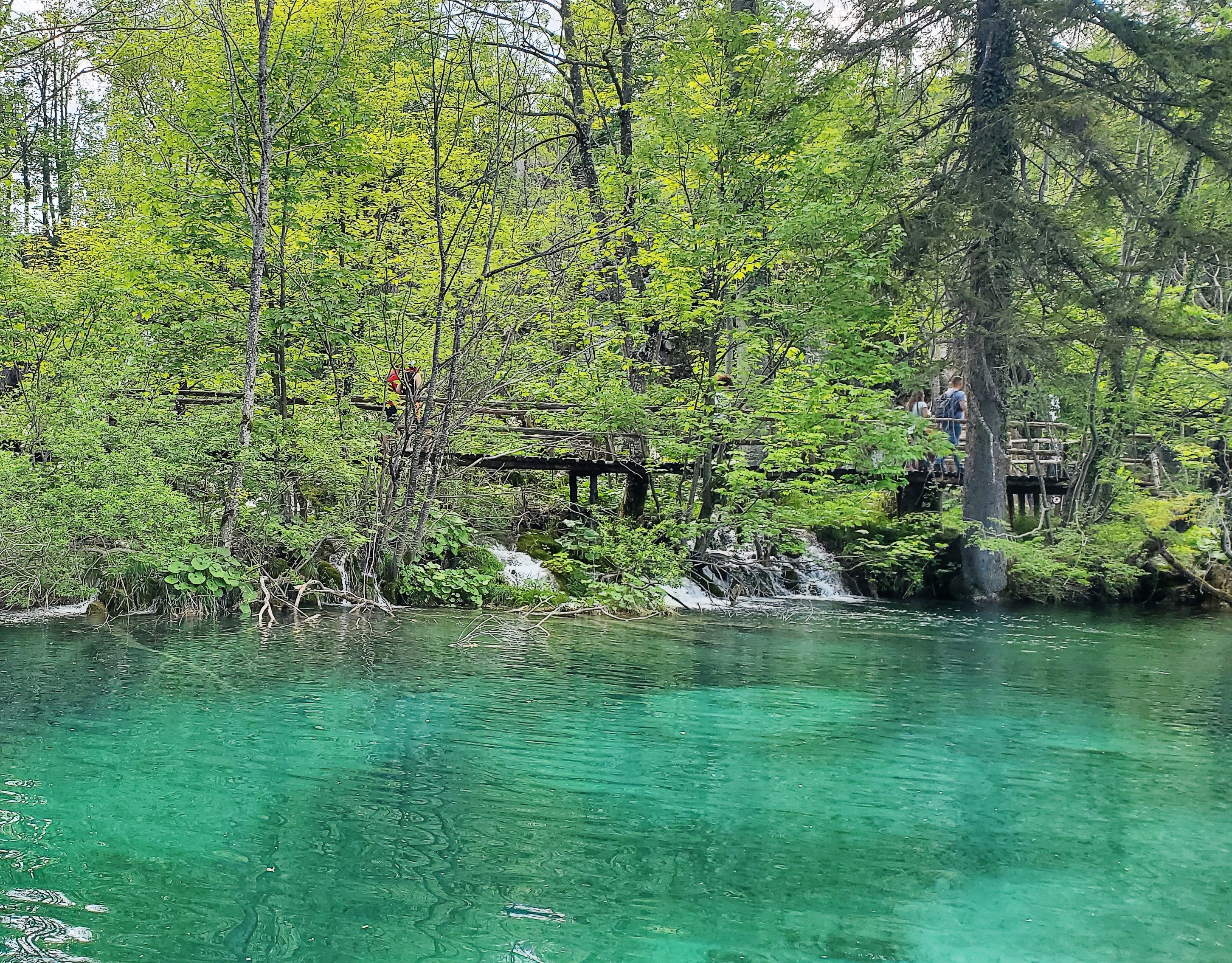
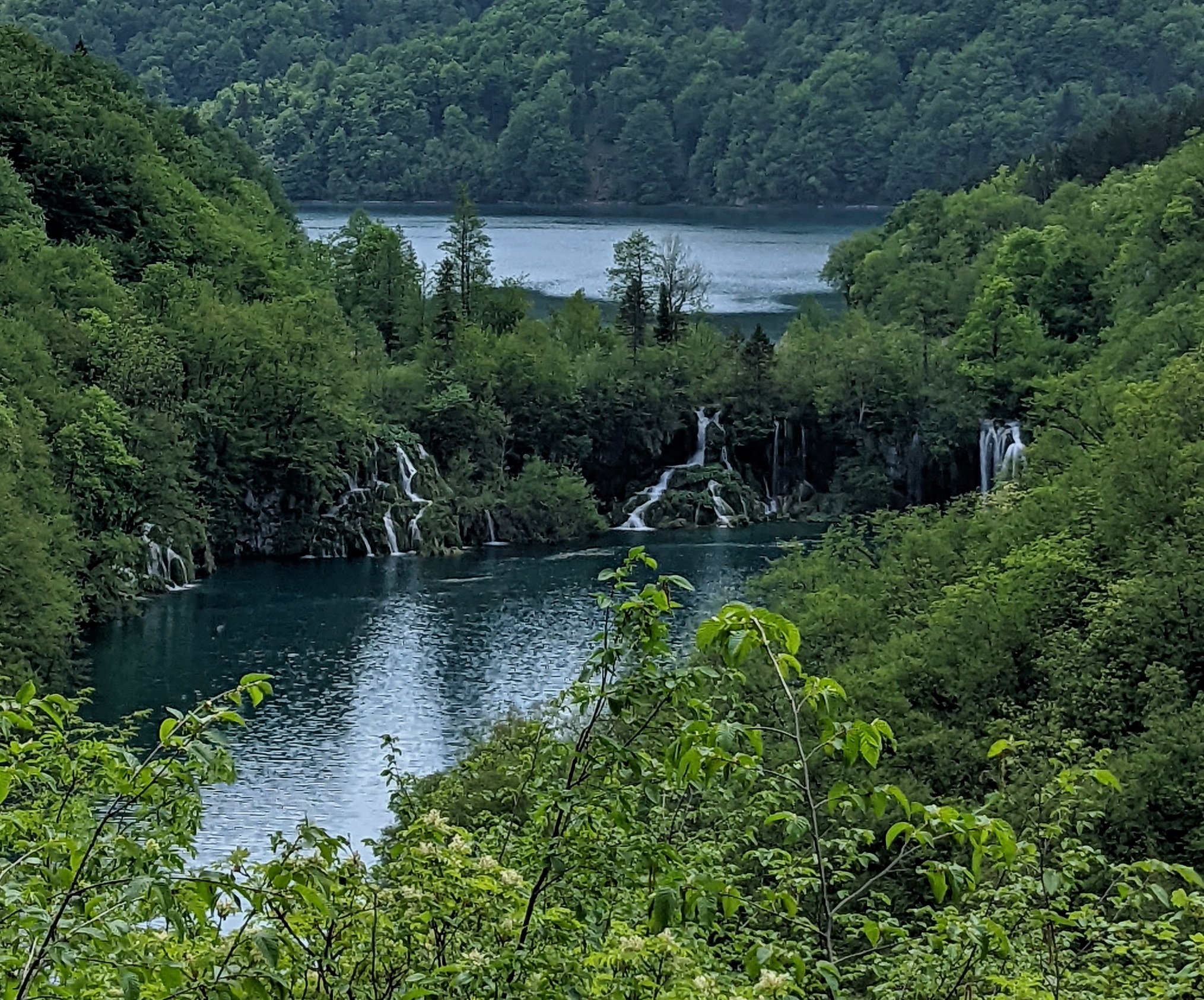
Plitzvicsa can best be described as a series of lakes connected by waterfalls. That is like describing a butterfly as a pretty insect, so let me show, not tell.
This is a place where we all wish we could swim, but fully agree others should not. The waters are so clear and blue that it’s cliché, and I had to give up on my kissing bridge rule, as there are more picturesque bridges than I have kisses.
The park is well-organized with electric ferries and buses to bring hikers to each new place, and then back to the parking lot when we peaked.
Again, May is the right time of the year— lush but not muddy, warm but not hot, crowds but not hoards. When we were in Dubrovnik and Split in 2019, we were disappointed not to make it north to Plitzvisa then. This was worth the wait, however, and I bet we’ll be back again for the full day hike, instead of just a half-day.
PS We were gone for at least 12 hours, and I’m not sure our youngers noticed.
*Again, an acceptable pronunciation for Americans but in no way actually correct.
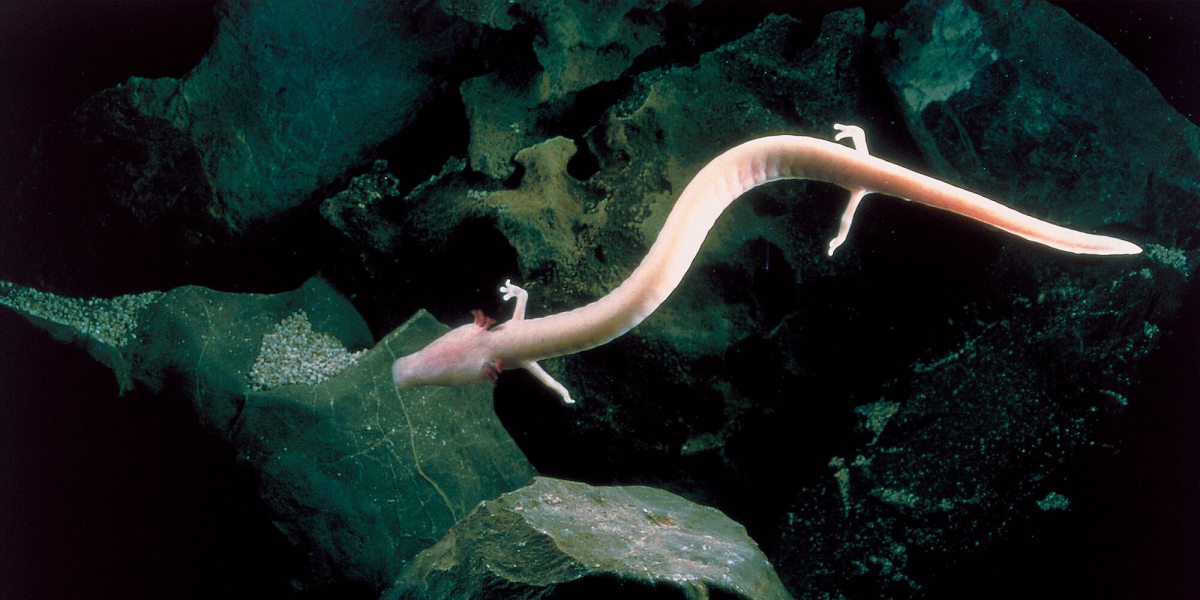
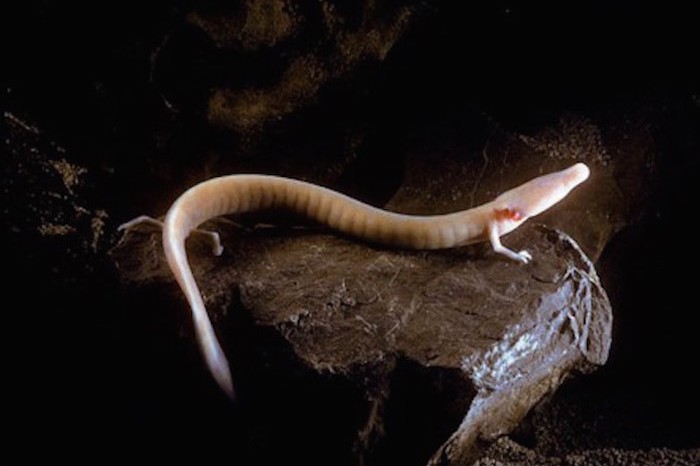
Finally, there be dragons. Baby dragons. Which is the working name for a blind cave salamander that is so specialized for the Postojna caves that it doesn’t live more than a few days if removed, even under the most careful conditions.
Like all proper dragons, everything you first hear about them is probably false. They live 100 years (fact: possibly, but better confirmation of 60 year lifespans), eat only once every 10 years (fact: okay, this seems to be true, but only if necessary, not as a lifestyle choice), and breathe fire (I refuse to believe otherwise). They are considered amphibians that are fully aquatic, and to really confuse us, ohms have both lungs and gills. They really aren’t even that cute, but between the good naming and excellent PR, we’re all lining up to buy baby dragon keychains that look hardly at all like penises.*
*Did I go too many posts without mentioning penises? My bad.
Our second spot in Slovenia was Postojna, a town that boasts the country’s second-largest cave system and one of the most scenic castles in Europe. Cave size doesn’t really matter, but the experience was “really cool”, and that is a Wes quote!
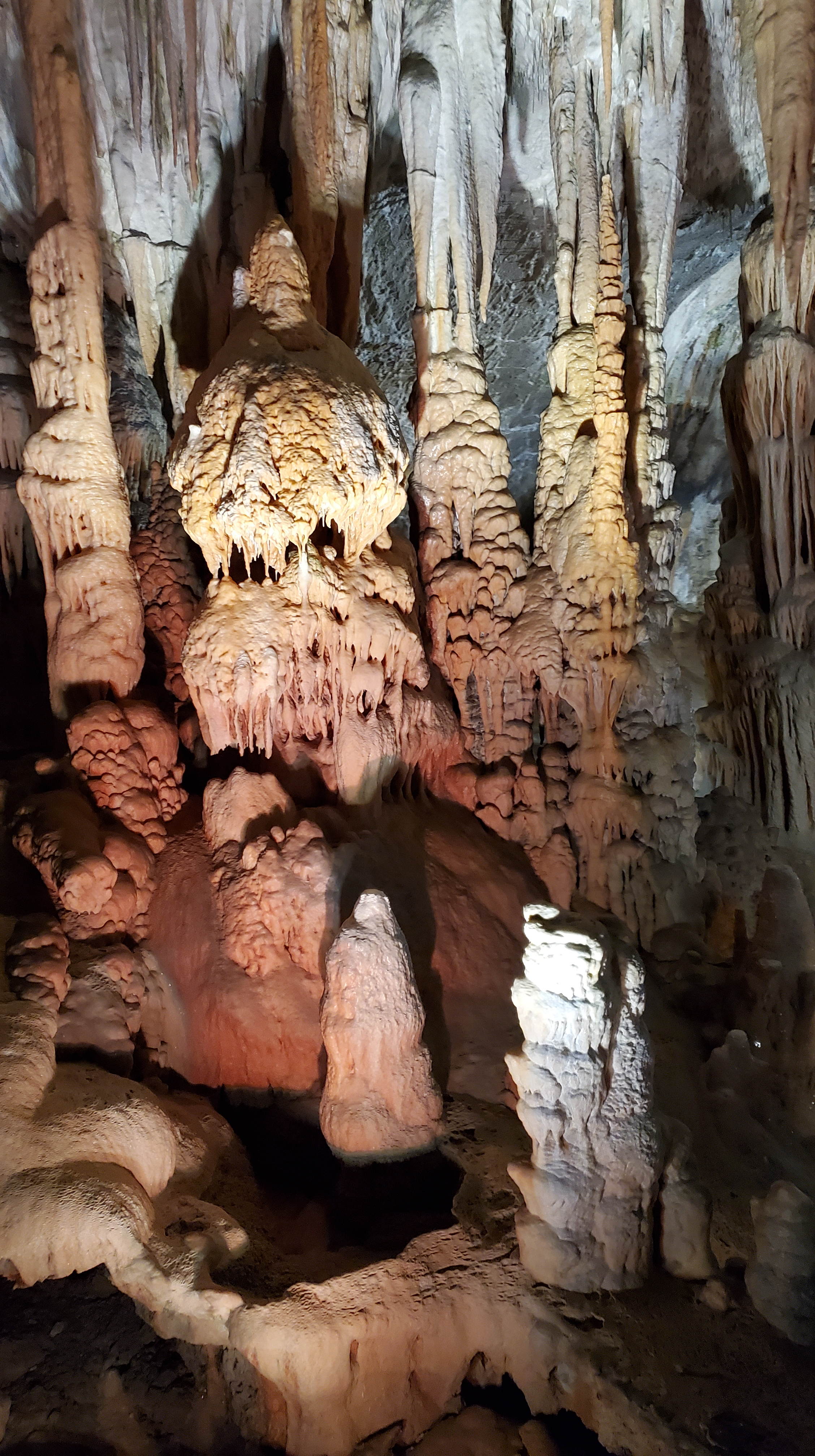
With an English-speaking tour guide, we took the cave train deep into the limestone caverns, carved out by rivers over eons.
The existence of the cave has certainly been known before recorded history, but it took some technology to discover its further recesses. Since we know exactly when distant caverns and tunnels were discovered, and hence, when they were widened and readied for tourists, stalactite growth can be precisely measured. Growth of about 1mm per decade is not particularly slow-growing in cave time. Almost exactly 100 years ago, this reinforcement was done and a new (circled) stalactite is growing.
This stuff is cool! (And, um, cold and damp, but truly, totally neat-o.)
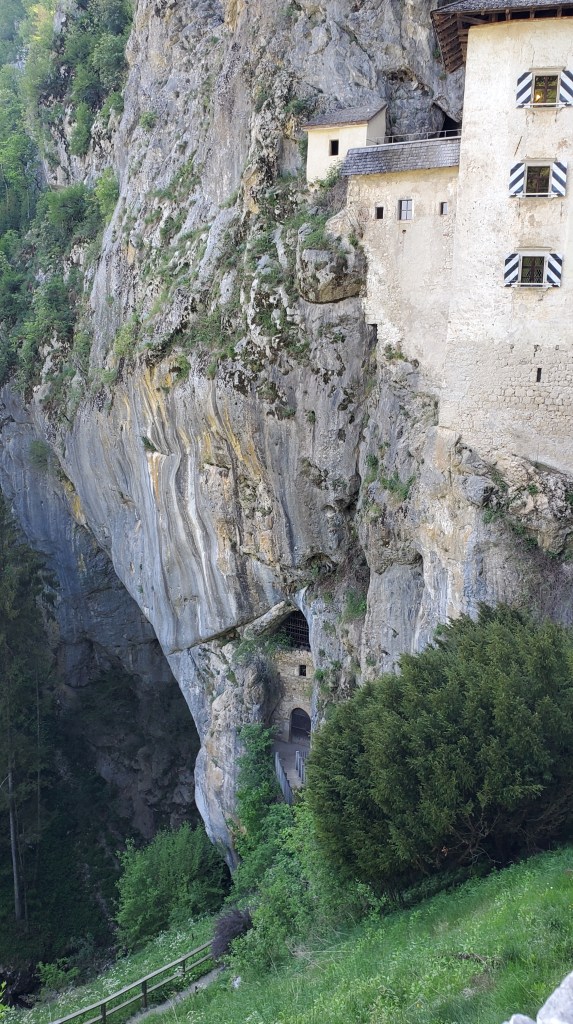
Down the (necessarily charming, bucolic) road is Predjama Castle, literally “castle in front of the cave”. It is both an incredibly attractive and very secure fortress. What it wasn’t was comfortable–at least for residents under siege for long periods of time. Cold, damp, dim…and that wasn’t just the torture chamber.
Here is the castle-in-a-cave.
The castle is about halfway up a 400+ foot rock face. It’s pretty secure.
All good castles should have a dank torture chamber.
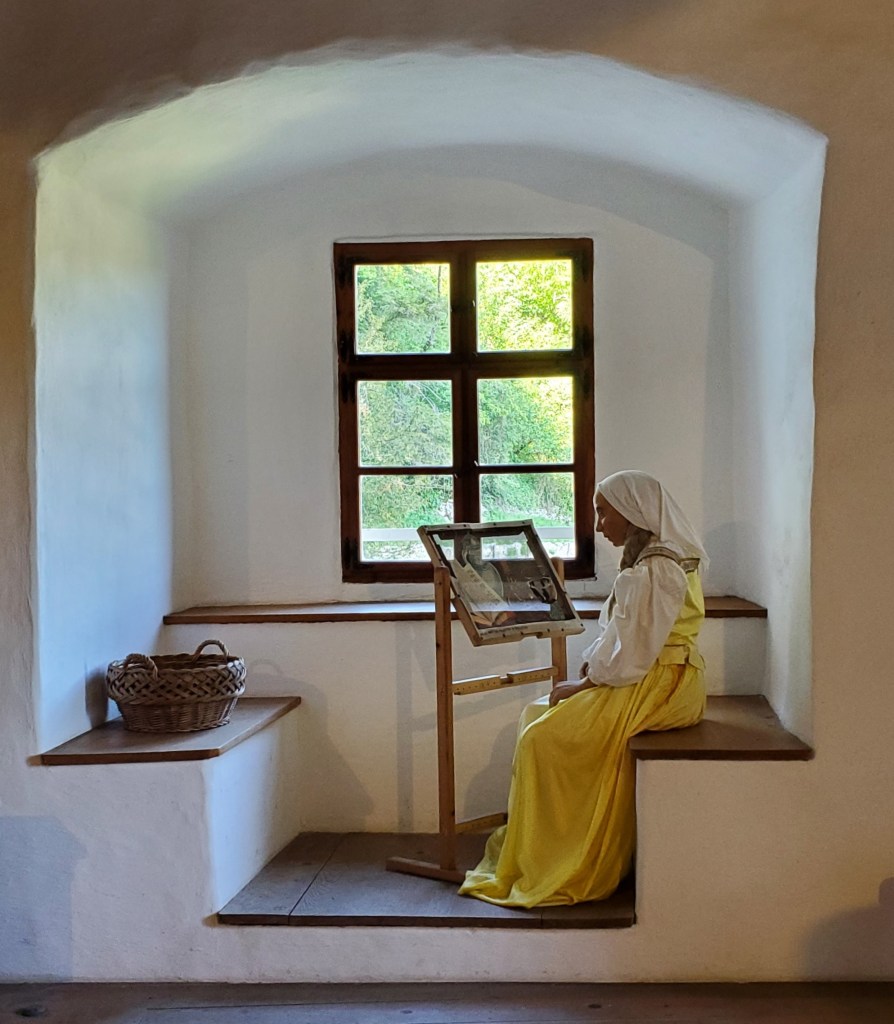
The thick walls still allowed in light in the outer parts of the fortress.
Okay, it’s funny because it’s a toilet. Not-so-funny is that the Guy Who Lived in the Castle died because of this toilet. All good medieval castles made sure toilets had a hole that went straight down outside. Here, the WC is the most vulnerable spot in the castle because it had the thinnest walls. The story goes that after the castle had mockingly held up more than a year under siege (with secret cave exits that allowed resupplying), a servant betrayed the master of the house by signaling when he was on the toilet, and he died when a catapult hit the target. It’s a little suspect that a medieval weapon could be accurate, but it’s a good story.
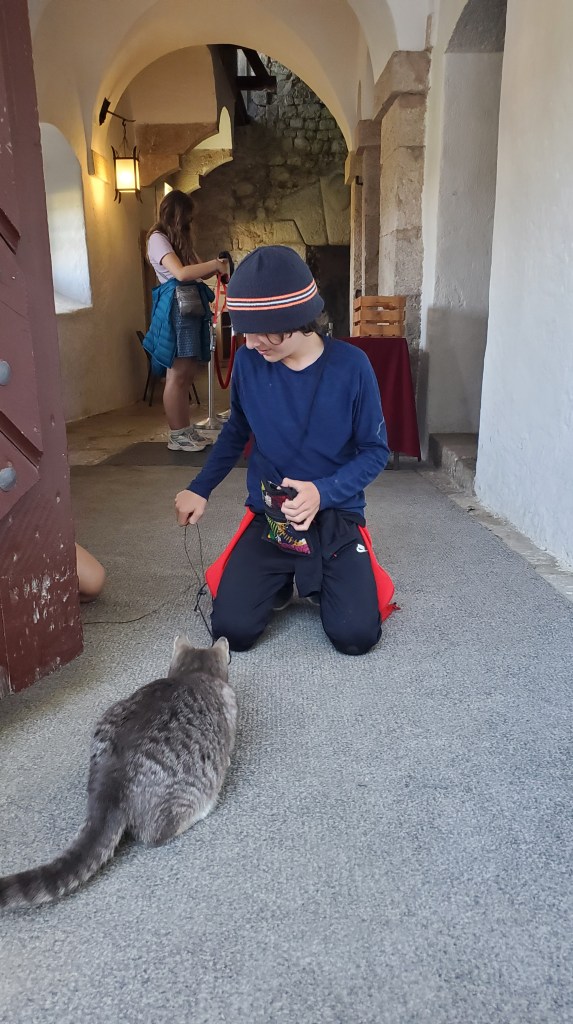
Wes uses his earbuds as a cat toy. Piper hides behind a door.
The view from the watch tower. Originally, all the trees had been cleared for good viewing.
Of course there’s a drawbridge! It’s a proper castle, you know.
I loved the countryside.
Have I sold you on Slovenia yet? Come with me next time!
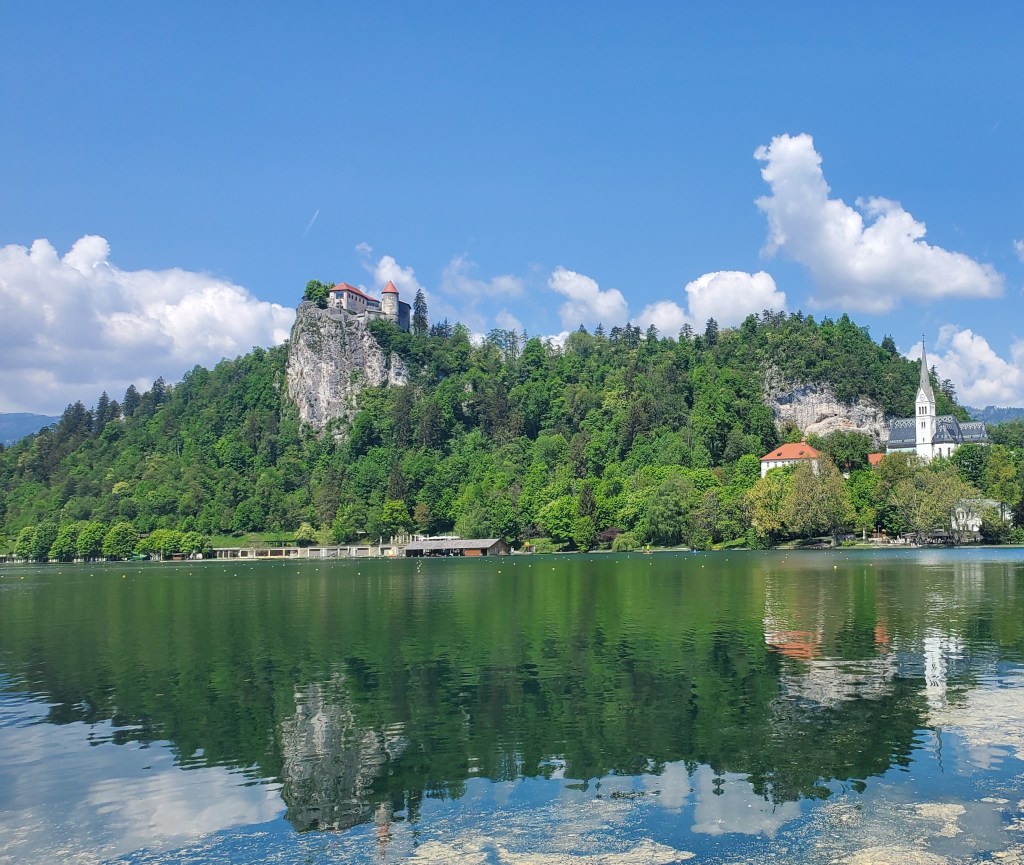
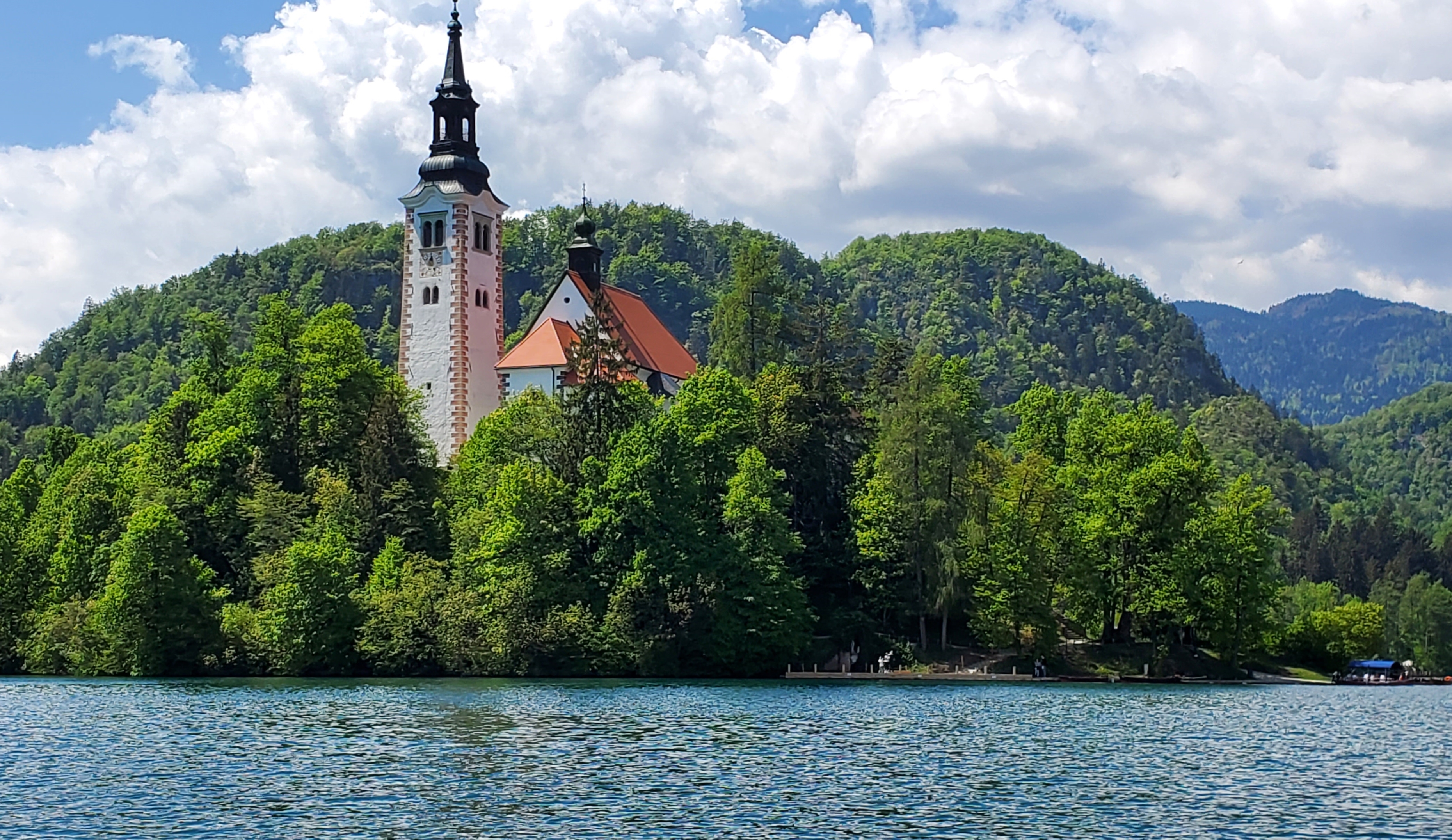
Lake Bled is one of the top tourist sights in Slovenia.
What’s to like about Lake Bled? Let me count the ways:
Bled Island. This tiny lake isle is mostly taken up by the Lady of the Lake church. The whole thing is adorable, from being rowed out on a pletna wooden boat, to a pretty little island to a cute little steepled church with a sweet little clock tower that also houses a museum on time-telling.
2. Of course, there’s a Bled Castle that looks out over all this adorableness.
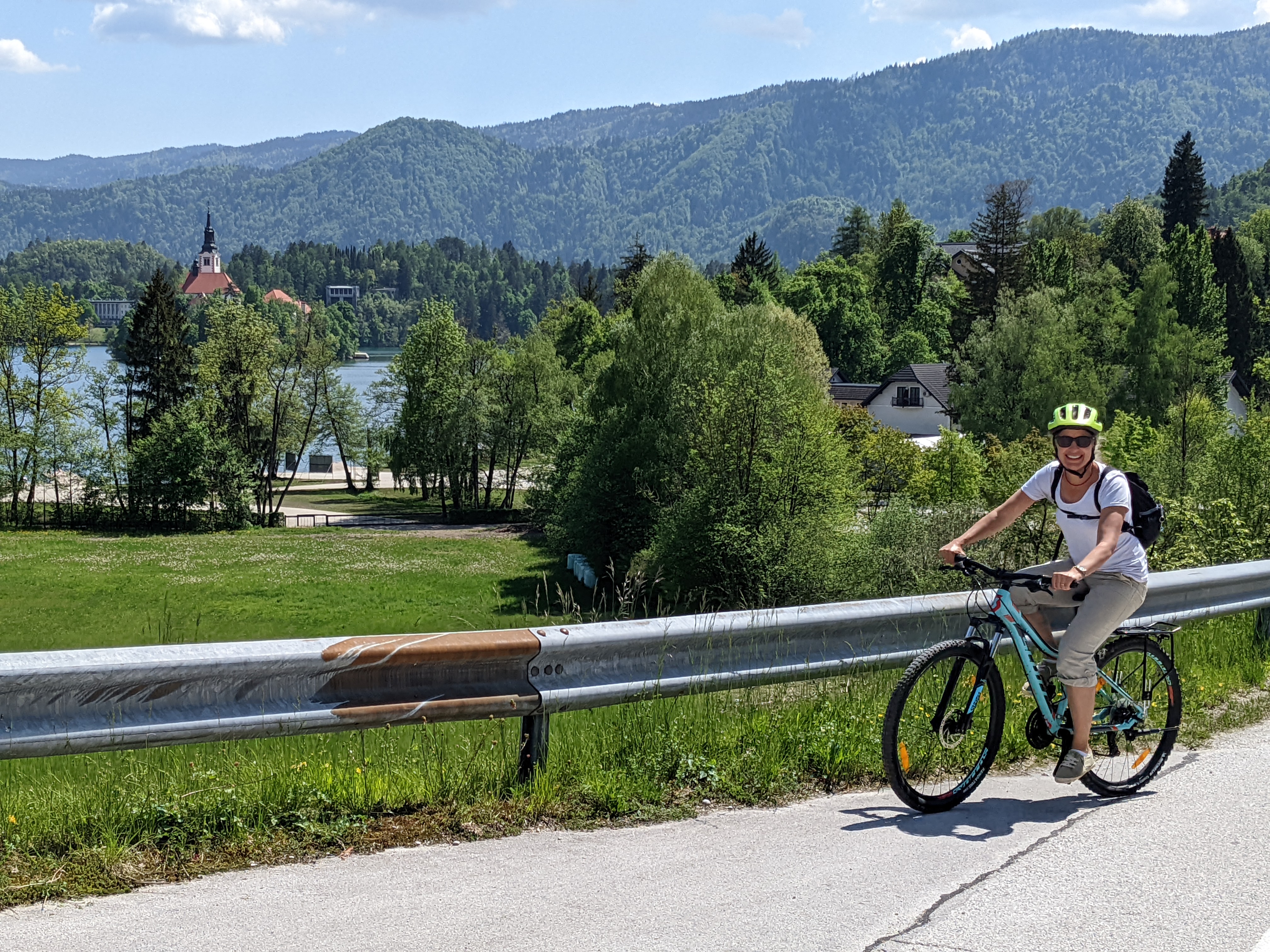
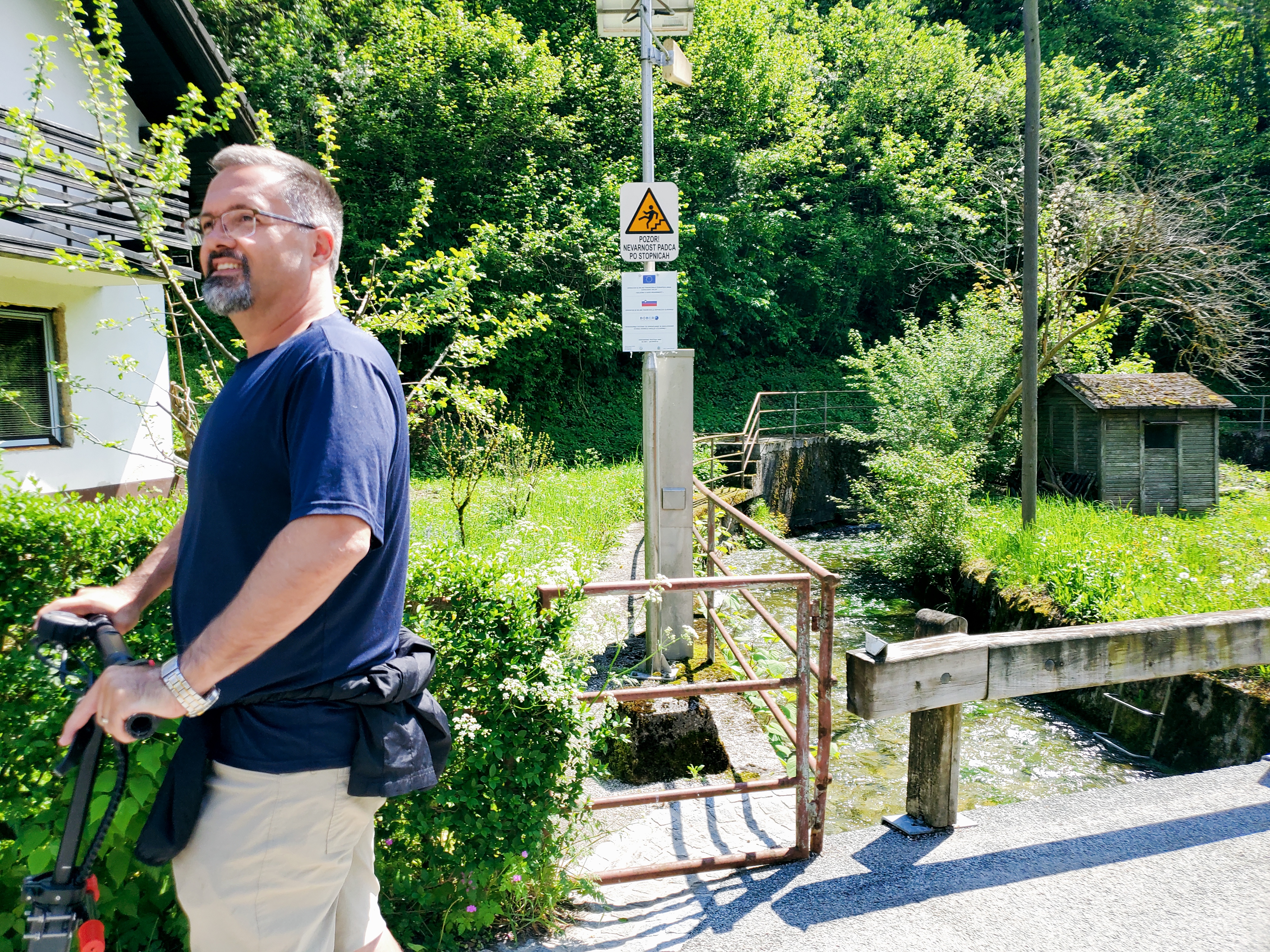
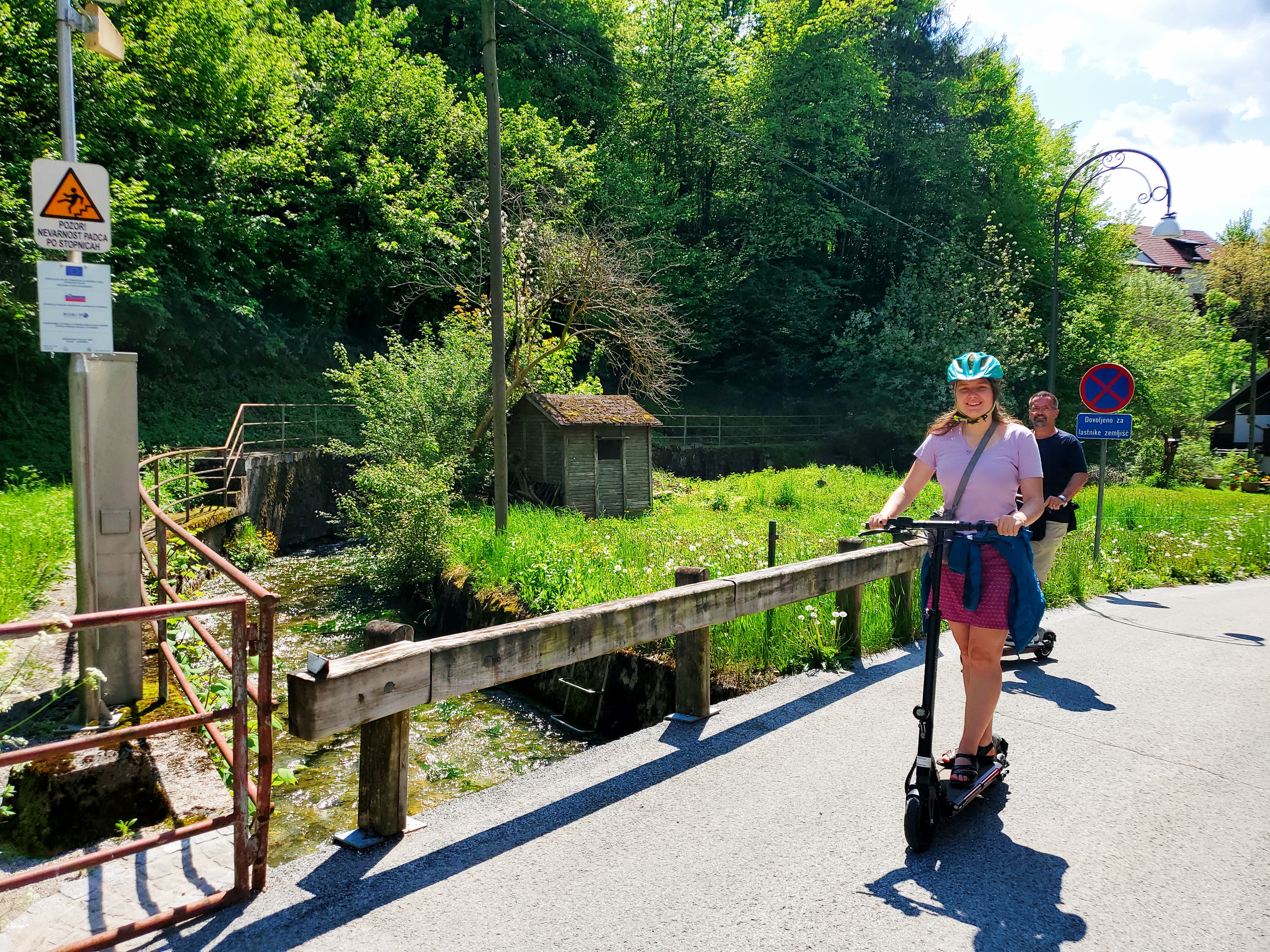
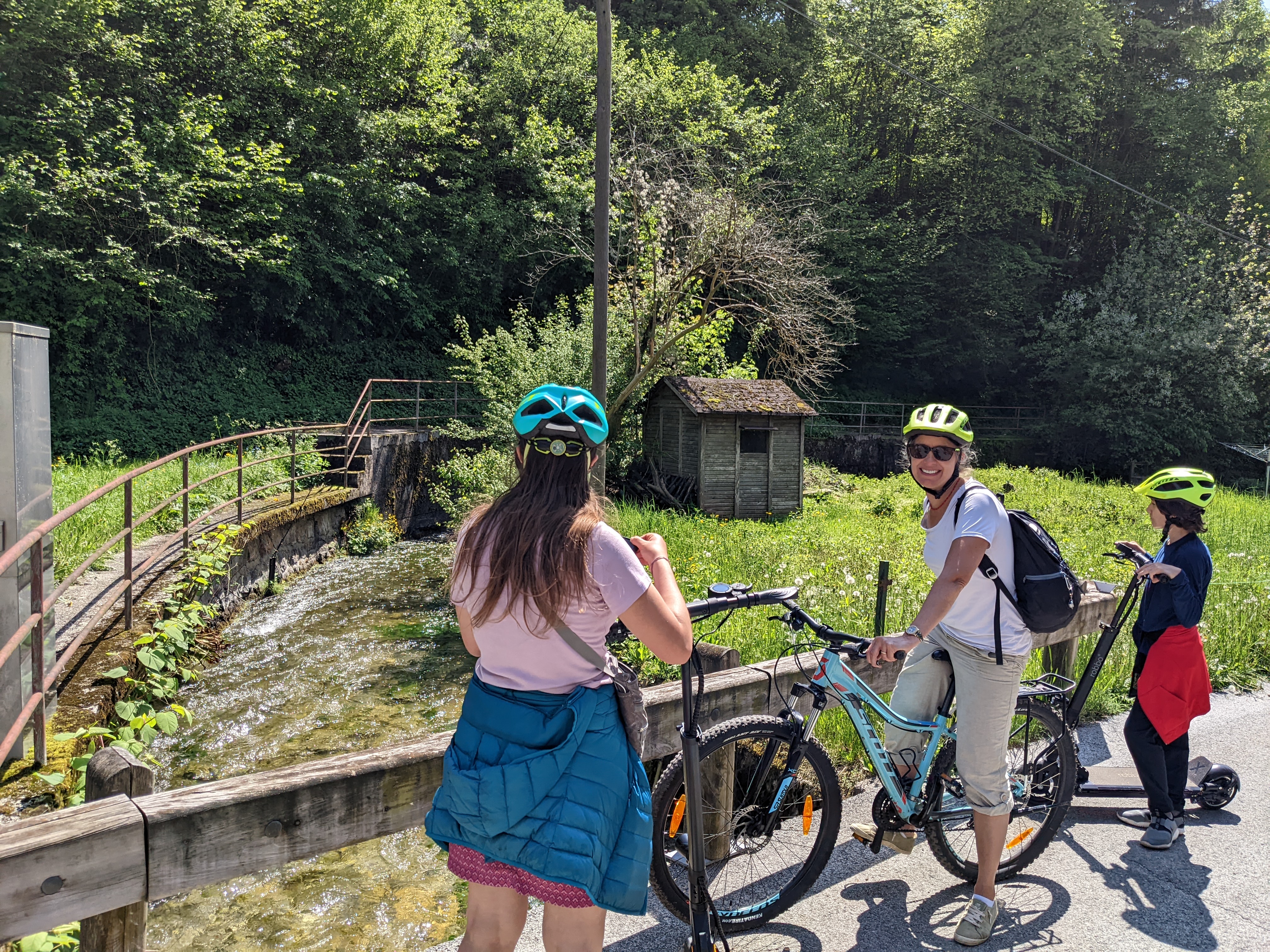
3. This outdoor paradise has a trail circling the lake, where we were able to rent a bike and scooters. Piper staked claim to a sunny park bench with her kindle, I rented a bike, and Dwayne, Kyla and Wes got scooters, which are one of life’s joys for Wes.
If it looks like there aren’t many people there, it’s because there weren’t many people there! I think the crowds change this are in July/August, but all the more reason to travel May and September. I’m not kidding, I really want to spend more time in Slovenia.
* * * * *
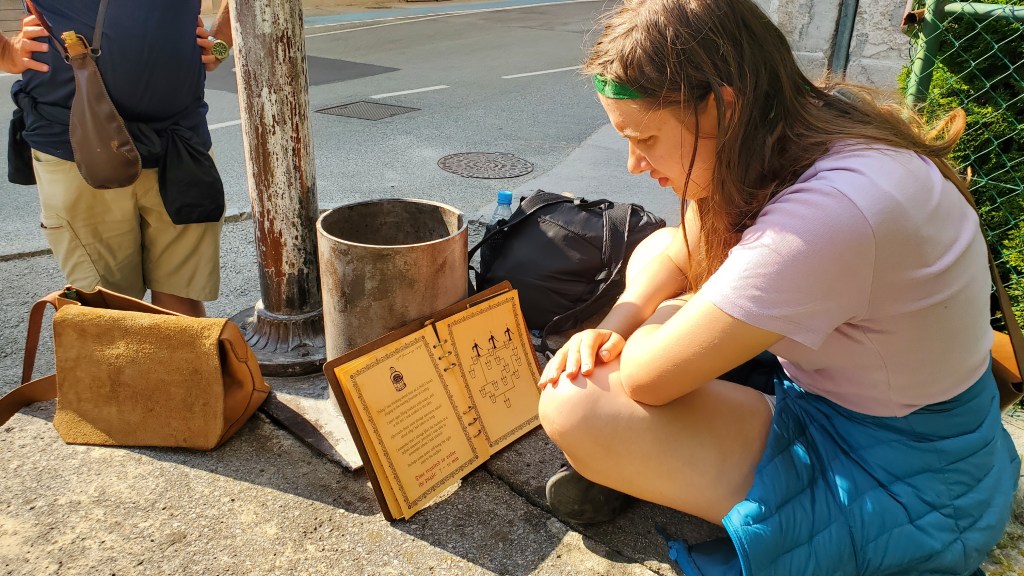
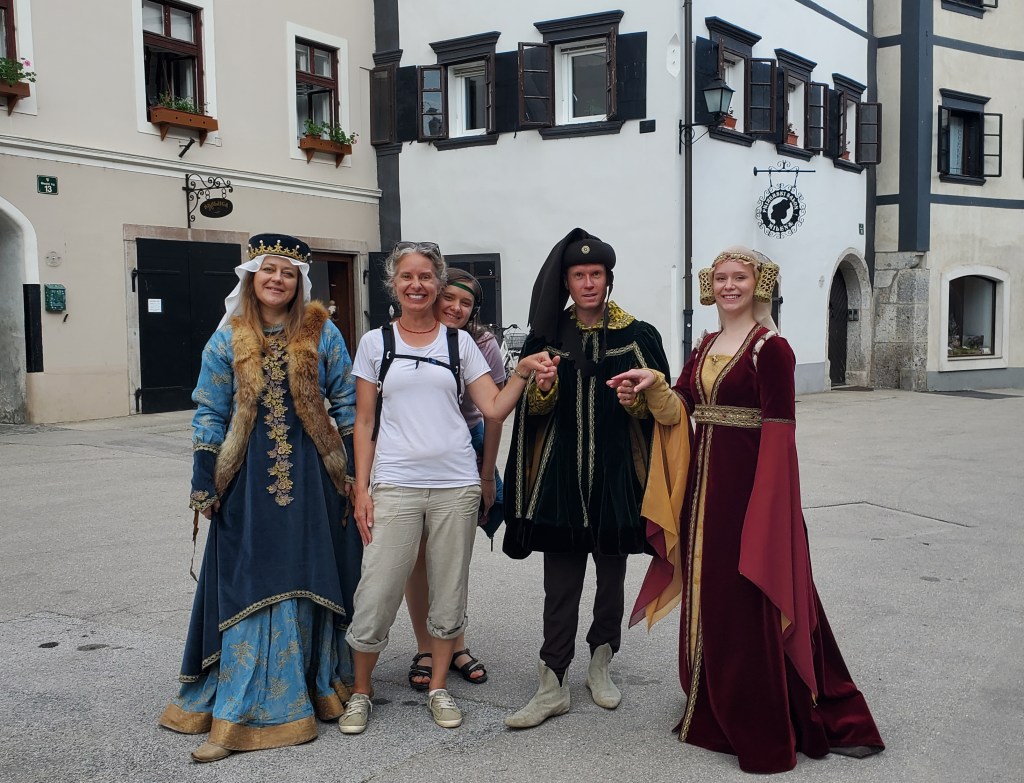
We left Lake Bled before I had my fill because I had reserved another adventure for us in a small town halfway between Lake Bled and where we were staying in Ljubljana: the Škofja Loka Escape Town Outdoor Game. A few brilliant game nerds came up with this Escape Room meets Old Town Tourism. For about $70, the five us up picked up our loot, got a warm welcome and introduction to this town established over 1000 years ago, and then followed our leather-maps to each new riddle. We did NOT complete this in record time, but we completed it. There were two best parts: 1) Each of us made valuable contributions that helped us complete that game, and 2) we never used the hints and the kids got to witness perseverance through some difficult puzzles. Ice cream was had, and the opening of a medieval clothing store was celebrated. What a delightful day in Slovenia!
…which is a good thing, because of all the places we’ve been, it’s one of the few places I want to return to sooner than later. No less than a half-dozen separate people would tell me something like, “You can be on the beach in the morning and skiing in the mountains by afternoon in Slovenia”. It contains multitudes.
Notable Slovenia Tidbits:
1) It is possibly prettier than my beloved Pacific Northwest, more green, more lush, more lakes, more blue sky, like if the drive over the Cascades or through the Olympics took performance-enhancing drugs. It was THAT beautiful.
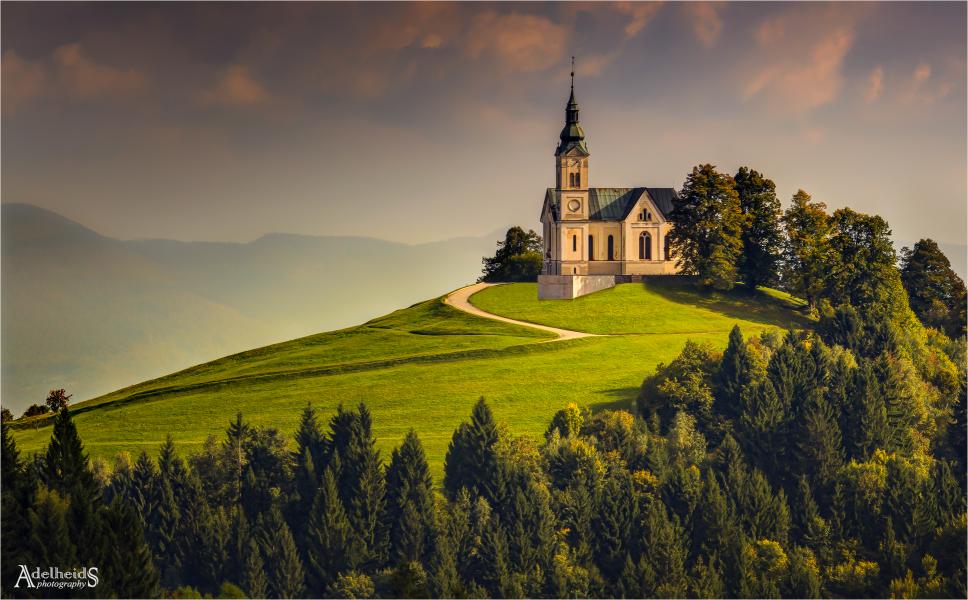
One of my favorite scenes was church steeples peeking up through the hills and forests. My shots from a moving car window didn’t do them justice, so again, I turn to Bing images.
2) Slovenia was the first of the former Yugoslavia to declare its independence in 1991, resulting in the Ten Day War and about 65 casualties. The Croatian War of Independence, in comparison, lasted four years and resulted in 20,000 deaths. This is not to imply Slovenia is superior to Croatia–it was further from the political power of Yugoslavia and was able to control its own borders quickly.
Again, just another scene we drove past while looking for Lake Bled parking.
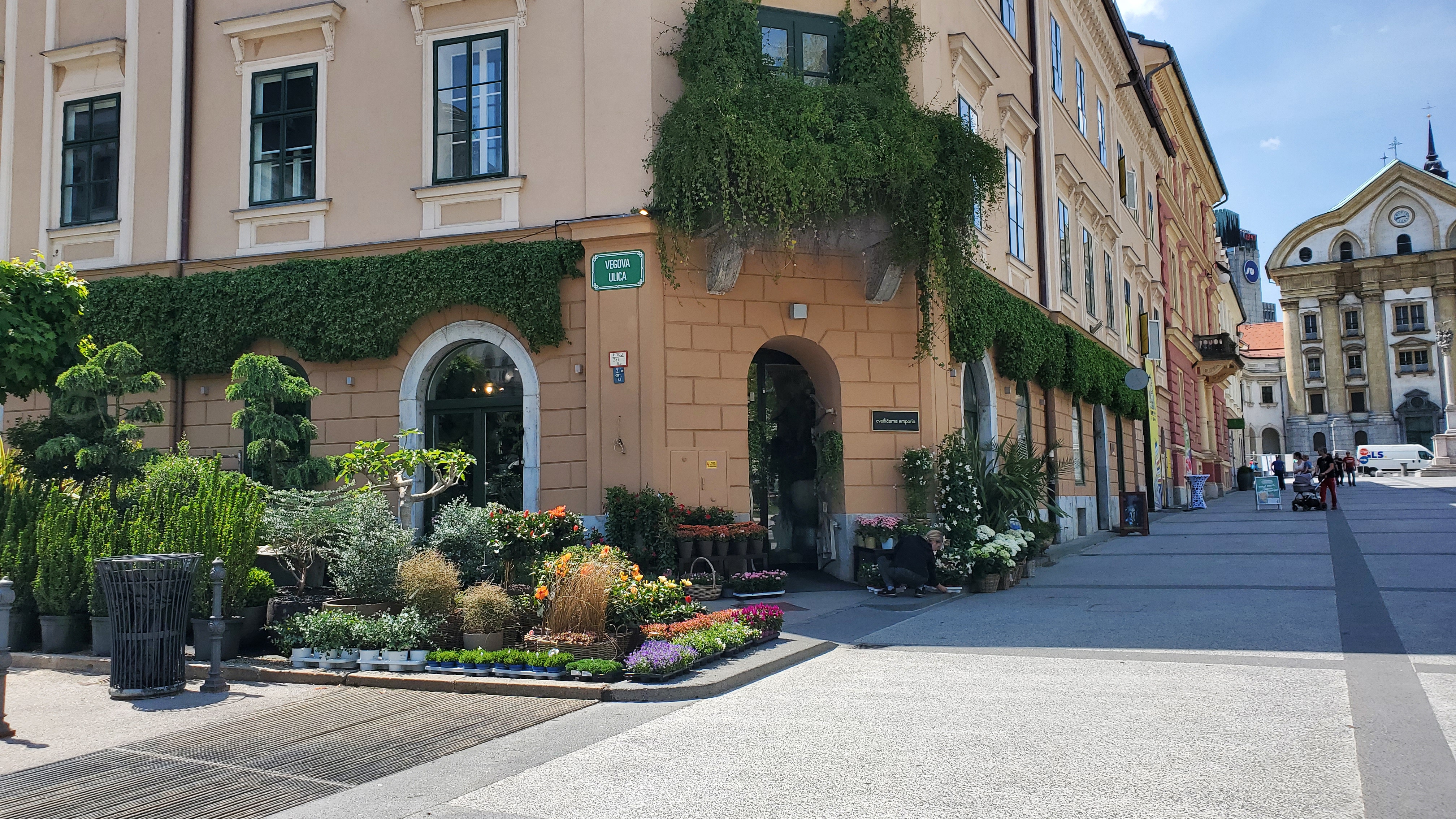
3) Ljubljana (/YOU BLEE ahnna/ is as close as an American can get to the correct pronunciation) is the capital of this small and beautiful country of 2 million. Even as the biggest city, it is incredibly green, both botanically and ecologically. One of my highlights was borrowing a cruiser bike from our hotel and riding down to the Old Town to meet up with a tour and cruising back at our leisure. When I grow up, I want to live in a place just like Ljubljana which speaks English.
Ljubljana is a beautiful small city, and we found a restaurant that served traditional Slovenian food. I loved their liver & onions, which is a lifetime first. It may have been the best traditional food we’ve had.
4) As soon as we entered Slovenia, we stopped wearing masks. We didn’t see a single mask during our 5-days here.
5) Another thing I gave up once I entered Slovenia was trying to say local phrases. I’m not proud of this, but I thank all fates that made me a native English speaker in a bilingual world where Engish is the most common second language to learn.
English
Slovene Phrases
Greeting
Pozdravi
Hi!
Zdravo!
Welcome! (to greet someone)
Dobrodošli!
Thank you (very much)!
Najlepša hvala
You’re welcome! (for “thank you”)
Ni za kaj
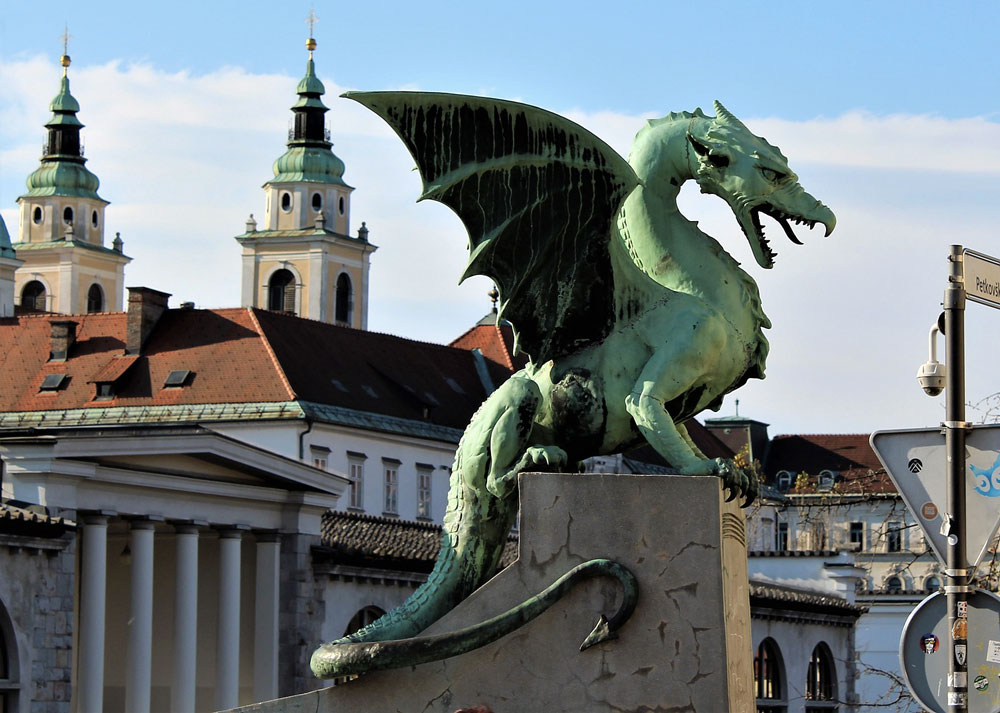
6) In Slovenia, there be dragons! Seriously, Kyla tried counting them all when we were in Old Town and couldn’t keep up. Historically, it comes from the legend of St. George slaying the dragon, the symbol of evil. Now, Ljubljanian dragons are more of a beloved mascot. Kyla and I loved it.
The “open book” windows of the library.
7) The Ljubljana National Library is a much-beloved Slovenian building by a much-beloved Slovenian architect, Jože Plečnik. There is much symbolism in the entire structure, but I love the windows that look like open books.
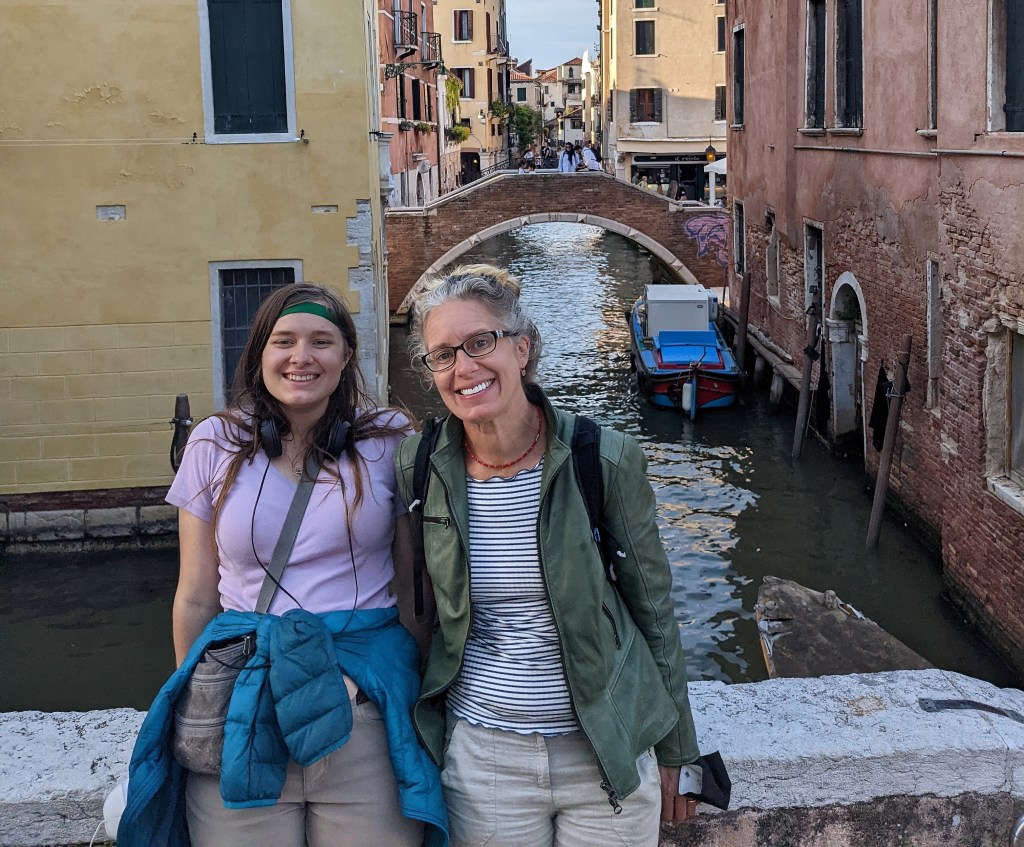
That’s not fair, as most of the day was a delightful train ride from Cinque Terre to Venice. The kids and Dwayne enjoy the train ride as much as I do and it felt like the transportation equivalent of a spa. After our 5 hours of first-class heaven, there was just a 15-minute walk from the station to our hotel for the night. Wes went from blissed to pissed (more in the London vernacular of “tired”) and elected to stay in the hotel rather than go into Venice for dinner. With all the discussion of whether or not he’d stay behind, we missed the first bus and then got to Venice later than we wished, keeping us from getting to The Tiramisu Place That Piper Remember With Love From Three Years Ago before it closed. While I love just wandering Venetian streets and over bridges, it is not an enjoyable group activity. The four of us had a dinner that was pretty good in a not bad location and then wasted late hours trying to find the right kind of postcard box to mail our letters before leaving Italy for good. We returned way past princess time and well into pumpkin hours to a room that the five of us had to share before catching an early bus the next morning.
Piper put more effort into taking a picture of a cat than of her mother, which is why I include this picture. If anyone is missing Wes’s antics, he enjoyed riding his suitcase to the bus station.
All that to say, the pictures may say a thousand words, but they’re pretty much lying. And there are no pictures with my three children since Wes stayed behind to play video games and Piper won’t have her picture taken.
I’m buying myself a hanging basket when we get back.
…it will be from a high-speed, first-class train up and down Italy. Once we left Amalfi, we took the ferry down to Solerno, and then a train to Rome. Later, the train took us from Rome to Cinque Terre. Our last leg of Italy took us from Monterosso (Cinque Terre) to Mestre-Venice, probably the most relaxing travel I can imagine. First, I embrace everything that all five of us love, and these trains make the top ten. How often do you travel 3-6 hours and come out completely refreshed and not needing to pee? Second, my happy place is definitely the calm of a quiet train car with few people and roomy seats, with bucolic views at almost every point, giving me mental and physical space to compose posts. I have no conception for a book, but at least I know where it would be born.
Oh, and if I ever want to taste hell again, I will take the Circumvesuviana train from Naples to Sorrento again. The ying & yang of Italian trains!
Admittedly, I won’t sell all my worldly goods to move to Cinque Terre (CHINK-eh Tair-uh), even if I could take loads of Italian train rides, but I will definitely be going back to spend more time trekking further afield.
The “Five Lands”, as translated, are five former fishing villages all perched on the mountainous eastern Italian coastline. They are beautifully quaint, but their real draw is the hiking trails connecting the towns. For a long time, Cinque Terre has been more agricultural and touristy than fishy, and most of the boats today are used for excursions, not for the catch of the day.
There is technically a road by which you can reach CT, but most guests come in by train or boat. Lots of cruise lines and other groups make it a day stop, but adventuring would have to be compromised to do so. And I had adventuring to do!
The towns are connected by one main path that requires a parks pass, broken into 4 unequal segments. While they are not easy trails, they are considerably more moderate than the expert trails that wind their way up and down rocky hills to smaller hamlets. The pass comes with an unlimited day pass for the train, with the idea you could go from one end to the other, and then ride back. In 2014, the two southernmost towns lost their main paths to landslides, making the train or alternative paths necessary.
We had an ideal location in Monterosso town, with a short walk with luggage to our hotel, a long stretch of beach with a Colossal Neptune holding up a cliffside, good restaurants and shops, and more importantly, laundry. And being the northernmost town, it was an ideal spot to start our trek.
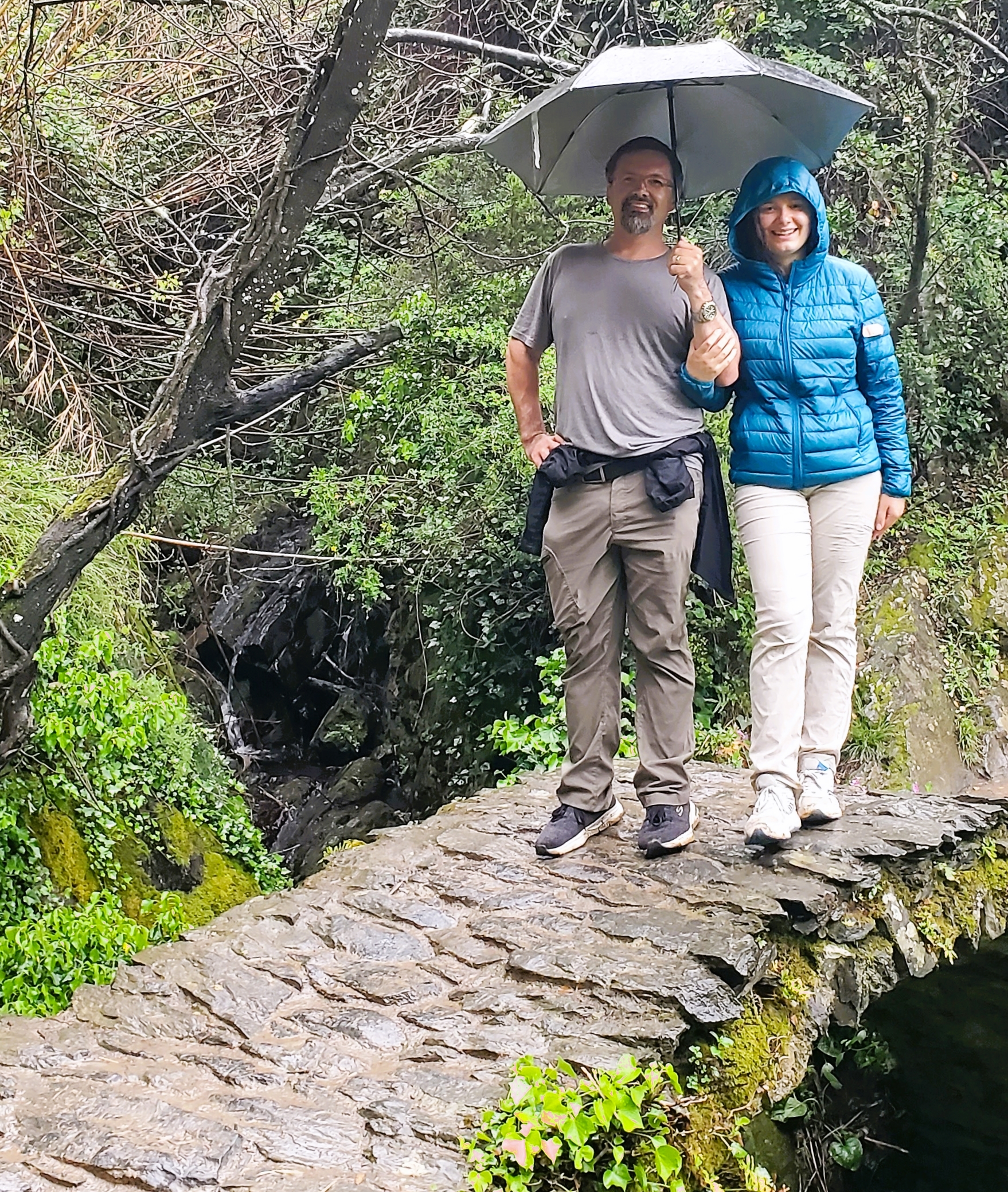
Our of cursory politeness, I invited Wes and Piper to join us. Then Kyla, Dwayne and I set out to conquer Cinque Terre on the drizzliest day of our stay. I prepped for this, realizing later that I had just become my father, with practical convertible easy-dry pants, a rain jacket, my sun-rain-mosquito-netting hat, and no style.
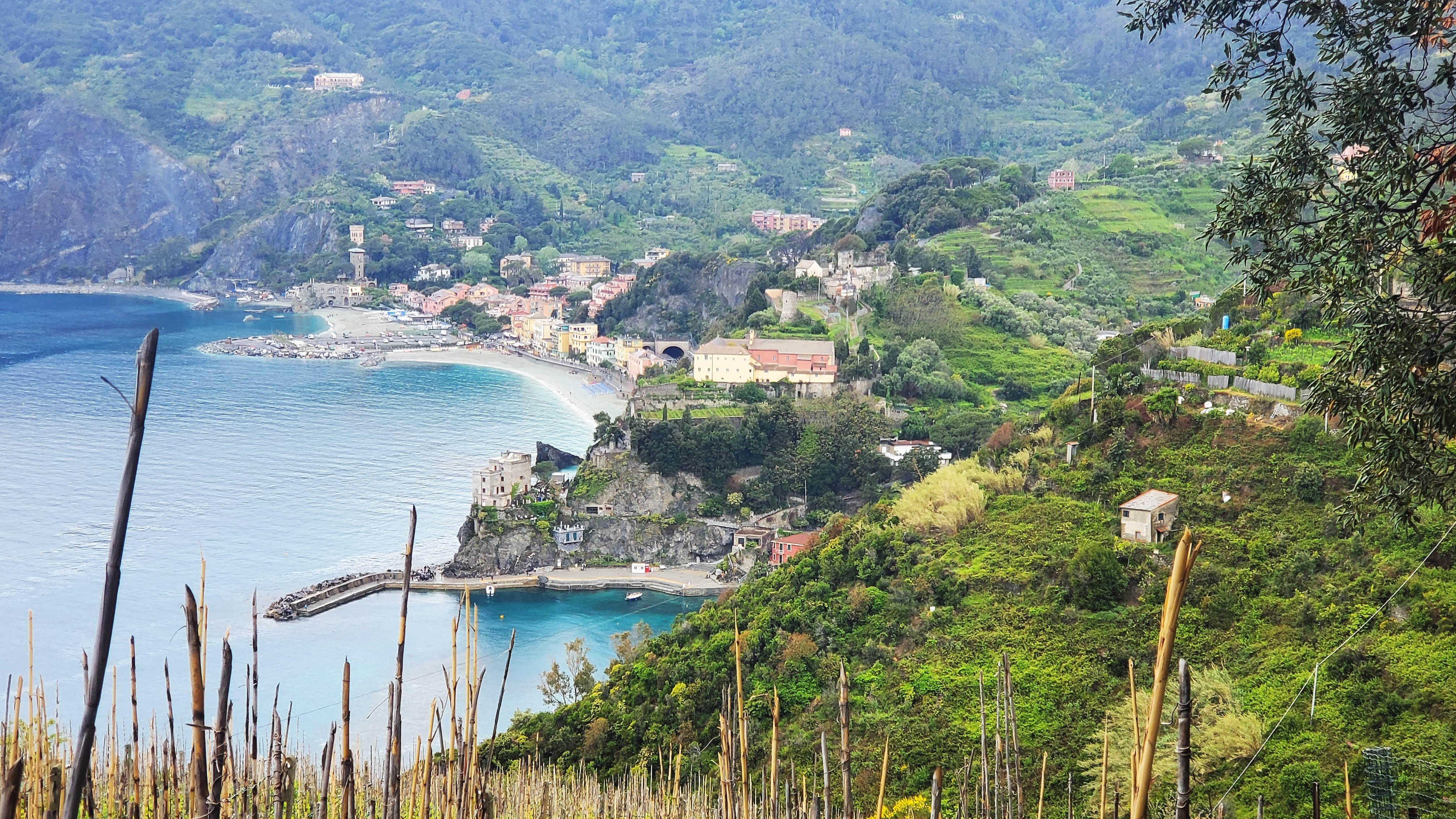
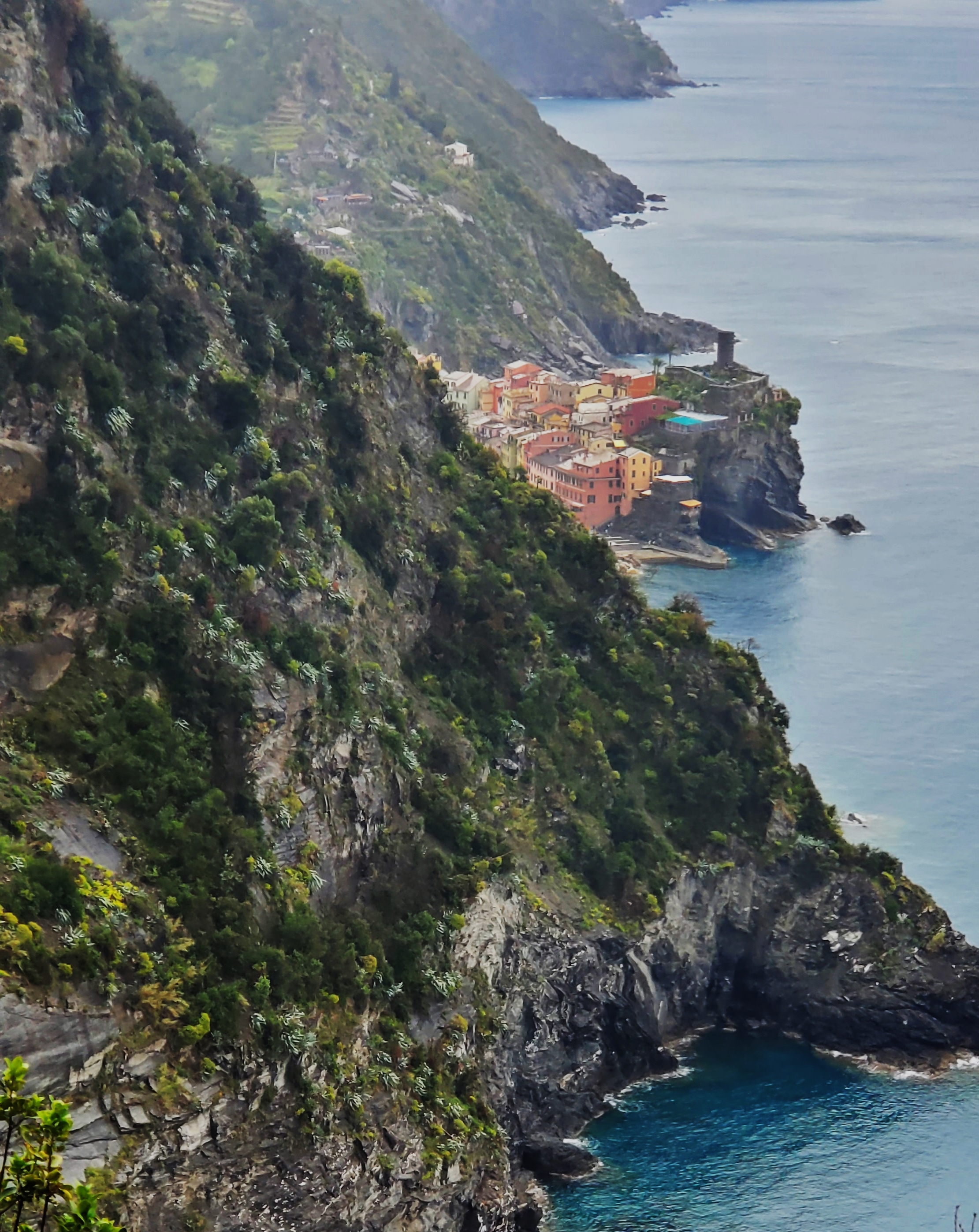
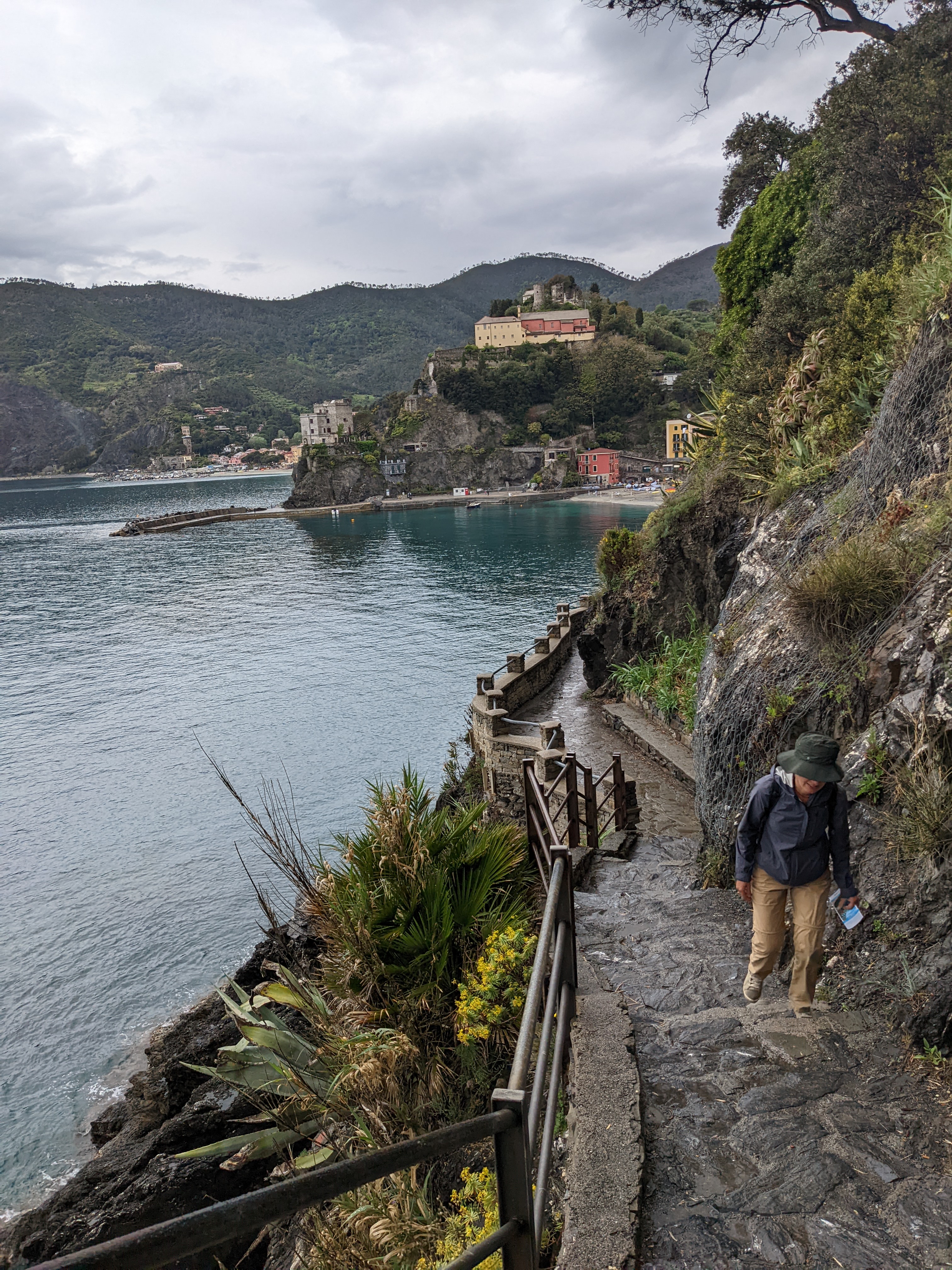
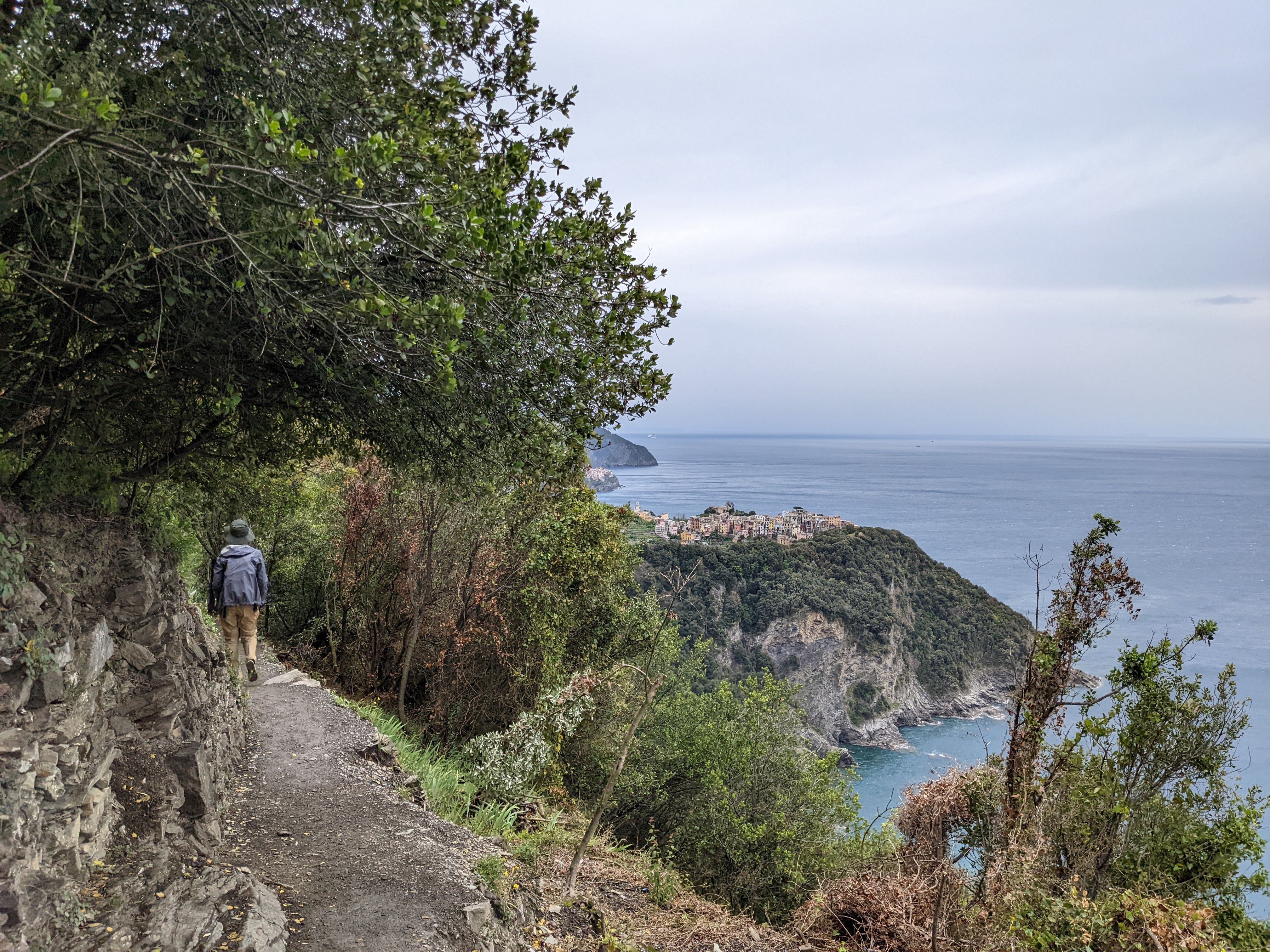
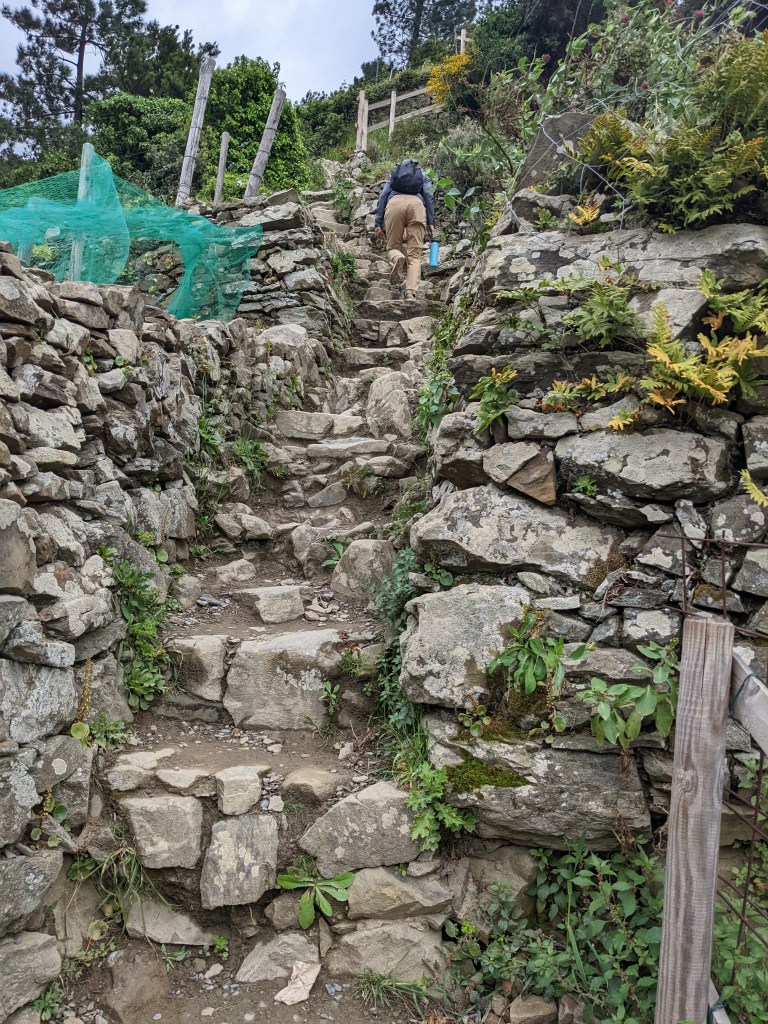
Is Cinque Terre a hike with amazing views, or great views you trek to? Either way, our rocky up-and-down path took us past waterfalls, through vineyards, orange and lemon groves, treescapes, over arched stone bridges, and up cliffs overlooking a turquoise Mediterranean where, I swear, I could almost see fish swimming. The paths included lots of steps and rocks, which kept the mud down. It took us less than 2 hours to get to the next town, which was a great place to have focaccia-as-street food before heading to the next town, which was oddly both more kilometers and less time. We took a break from the rain by calling it lunchtime, so I could pour over the maps and choose the next route as a workaround for the next two closed main paths.
Kyla was a trouper who did about 7.5 km on the longer, tougher trails with us through rain and mud. The girl knows when to quit while she’s ahead, though, and took the train by herself back to the hotel*, and Dwayne and I rode to the next town to avoid the closed 3rd segment. But between the last two towns, there was a 1.4km trail that I wanted to do to complete our Cinque Terre day. The map rated it “moderate”, the same as our first two trails, so easy-peasy. Right?
Vertical crawling
We spent the first half of that trail vertically crawling. One might generously call vertical crawling “climbing”, but no, it wasn’t that dignified. I felt more justified when we got to the peak and saw this sign:
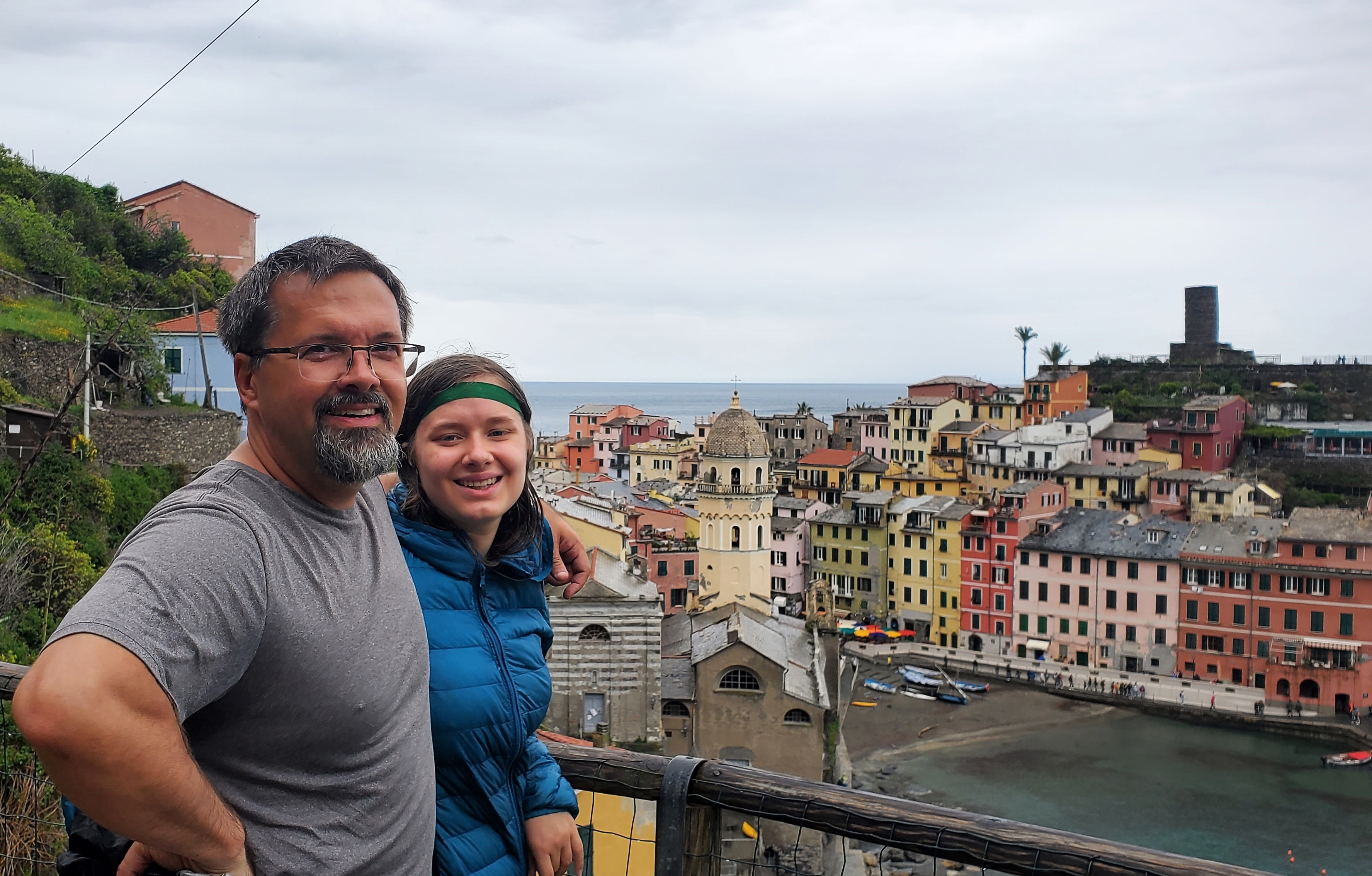
I immediately embraced the “expert excursionist” moniker, and shared it with the newly engaged couple we met on the way down. You never know when you’ll meet fellow excursionists and we had the most lovely chat, as we descended to the town of Riomaggiore together. They were staying there and showed us the good gelato and the best spot for pictures.
By the end of the day, Dwayne and I had 29,000 steps (19km), just a thousand shy of our Petra record.
The trails are supposed to be fully reopened in 2026. Who will be an expert excursionist with me in a few years?
*To tell tales: Piper and Wes can leave a hotel, navigate to two grocery stores, get lunch, and find their way back to eat junk food and play video games all afternoon. Kyla can follow the couple we connect with to get on the train and off at the right stop, then get so lost in her book that she can quote important passages almost verbatim, give a character analysis, and discuss if and what tropes are used, before texting us to say she can’t find the hotel that is 50 meters in front of her. We all use our brains differently!
We didn’t improve family harmony by making this tour mandatory, but it seemed sinful to have 5 days in Rome and not see the Vatican.
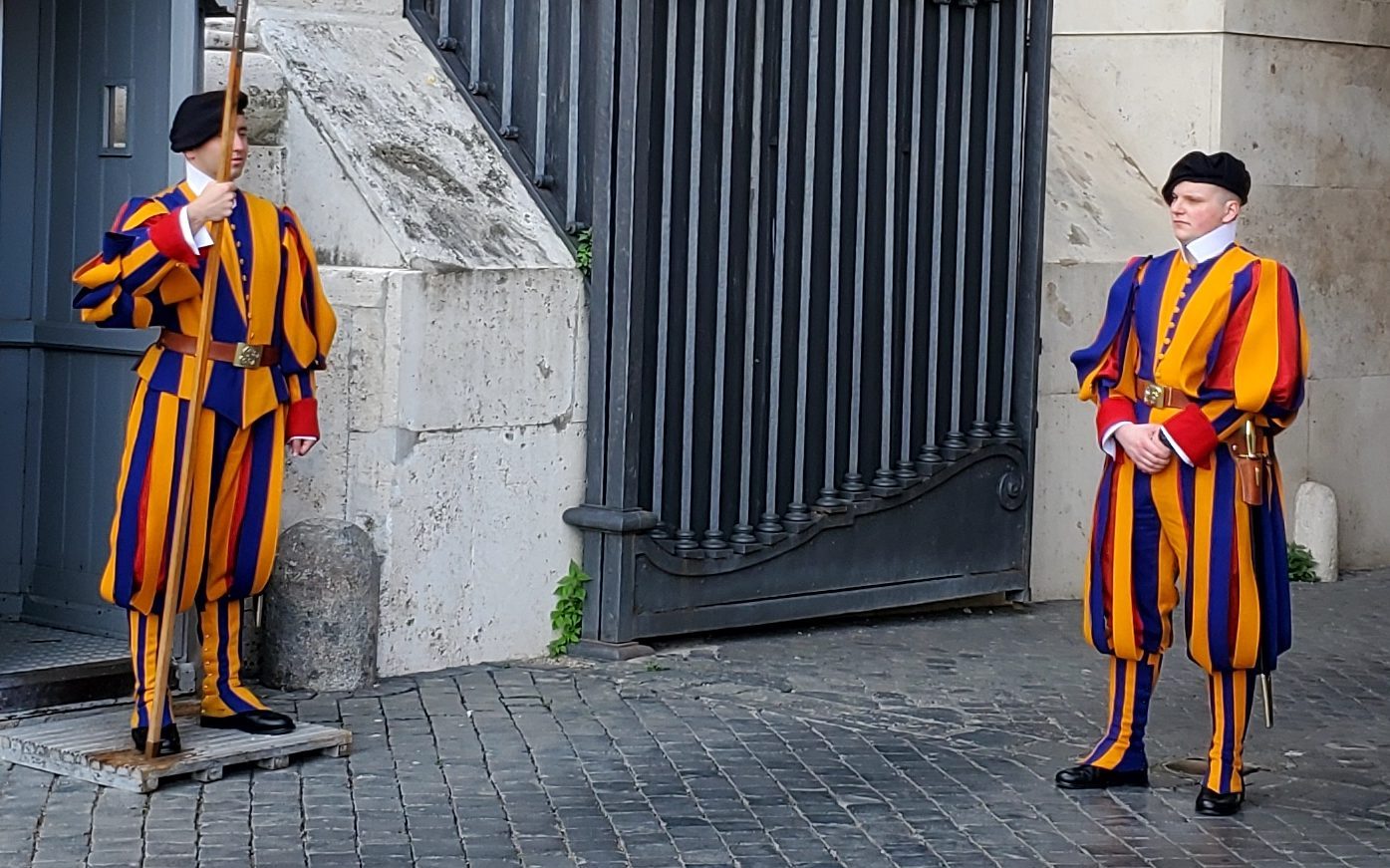
Yes, it’s true. Swiss guards not only have to secure the Pope et al, but have to do so wearing this. Why do the boots delight me so?
The smallest country in the world has the second-largest museum, after the Lourve, indicating the power, reach, and wealth of the papacy over the centuries. This niggles a factoid loose, that part of the golden extremism came as a counter to the plainness of Martin Luther’s Protestantism. It is easier to wow people with mighty buildings and a sensory overload of ostentatious accouterments. (Oh, crap, did I just revisit America, 2016?!?)
But luckily, our children’s religious affiliations cannot be bought with lots of boring art! They sell their souls only for good Wifi and gelato.
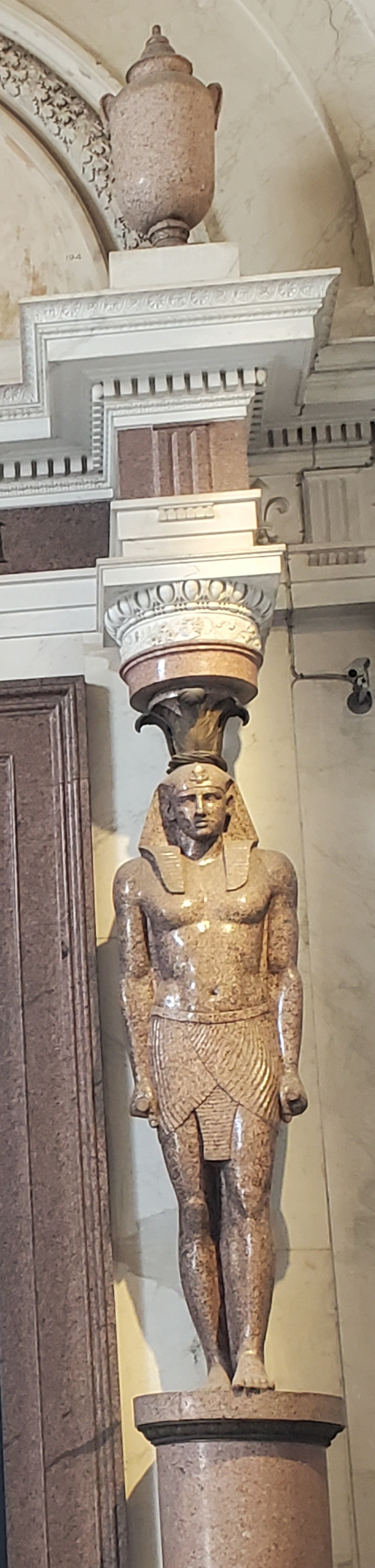
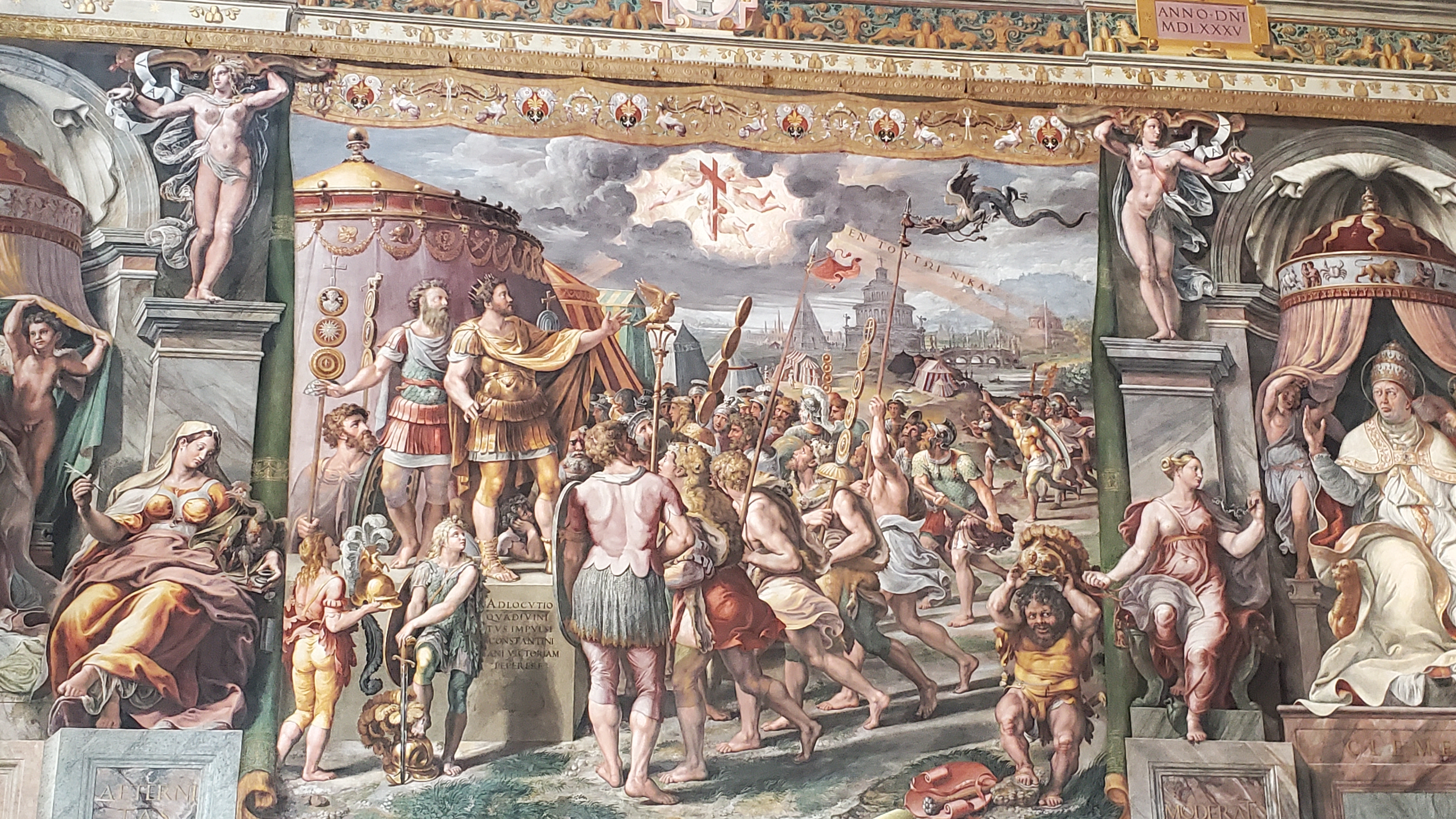
Truthfully, which of these screams “Jesus saves!” to you?
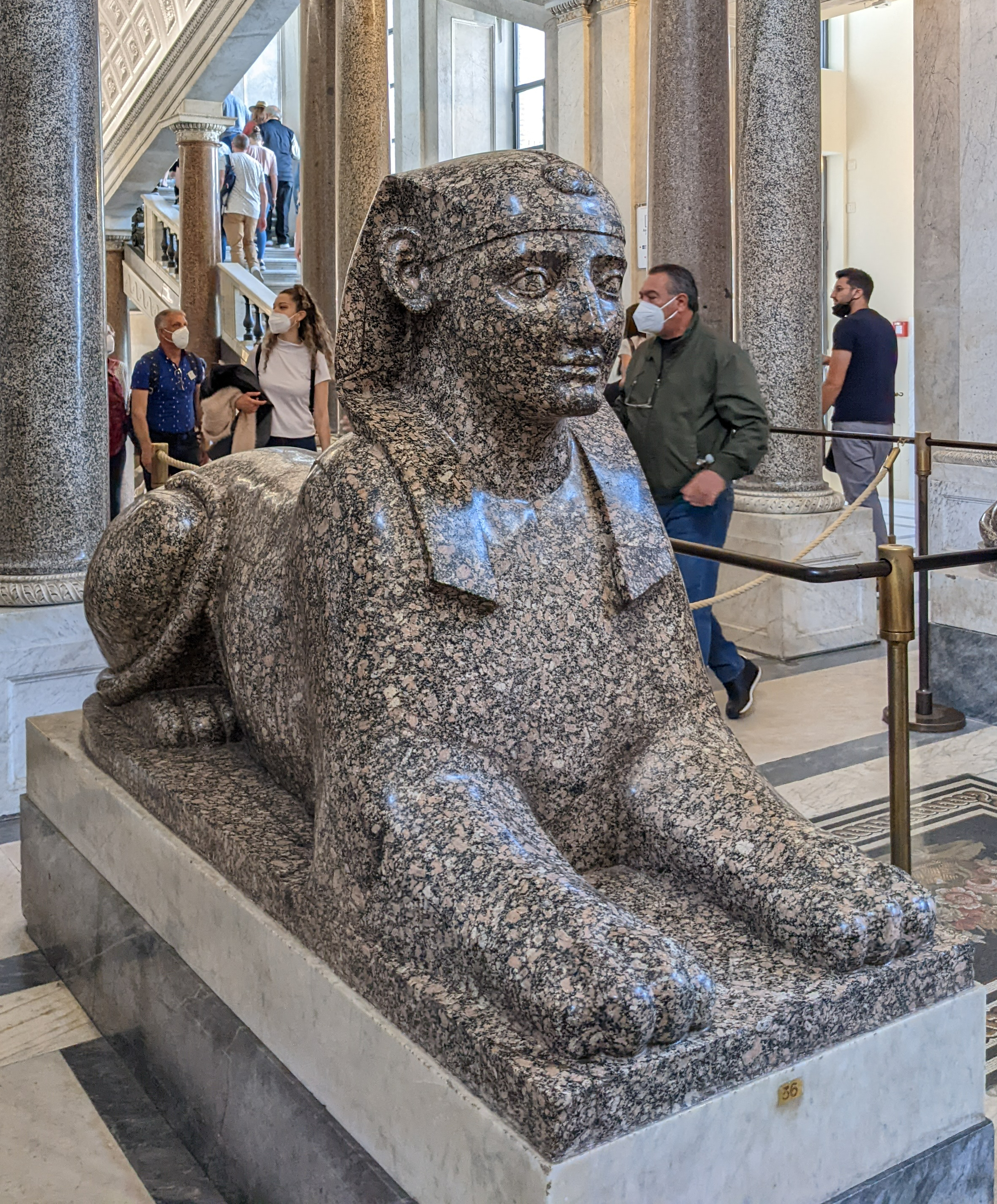
Actually, as soon as you realize that the Vatican museums are not about uplifting the Christian faith, or even Catholic traditions, and are really just showing off all the worldly goods collected over centuries, it becomes much more fun. [Honestly, one of the dreariest things to do in Europe is trying to appreciate a plethora of medieval religious art. Architecture, yes. Art, no.]
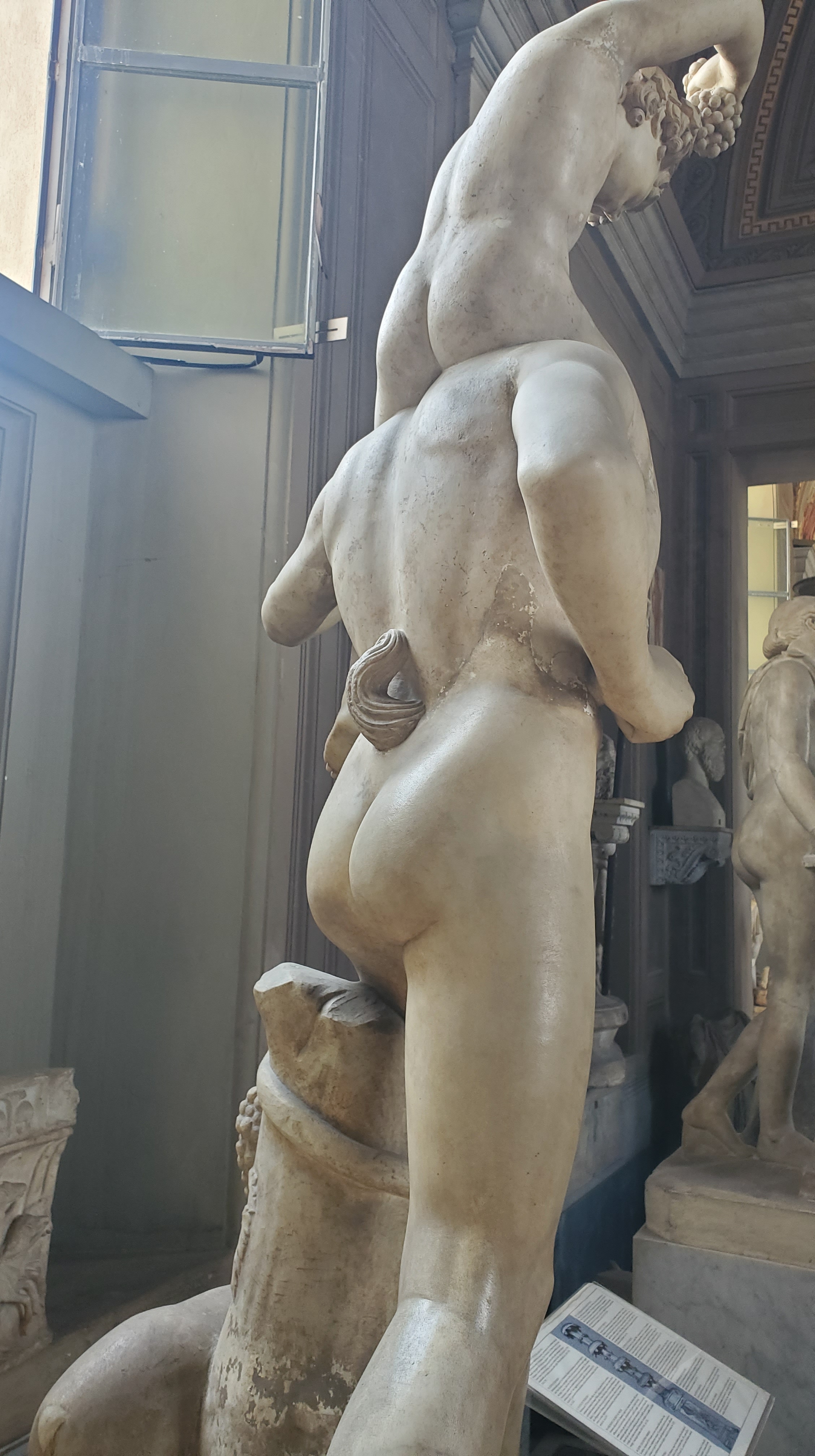
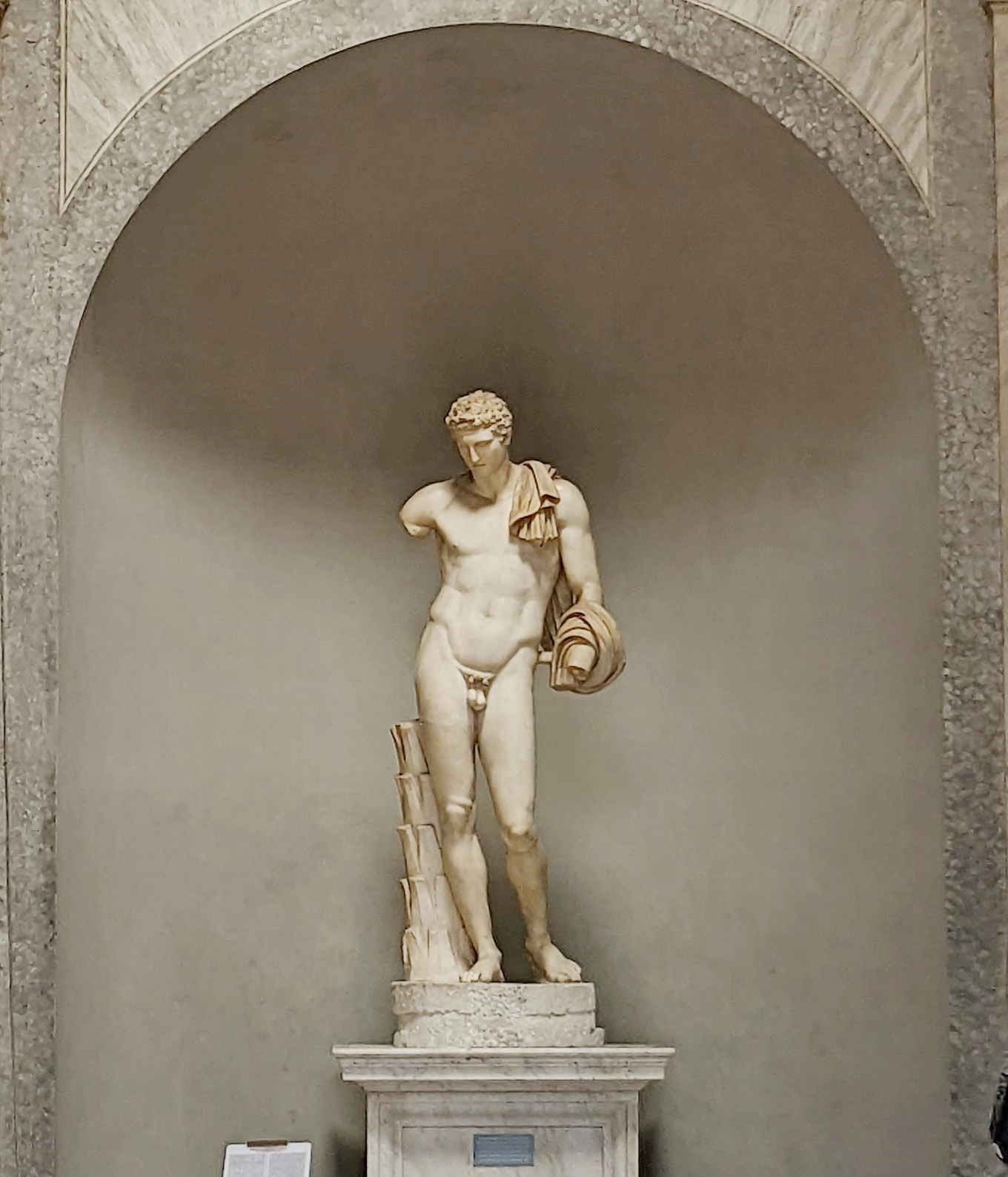
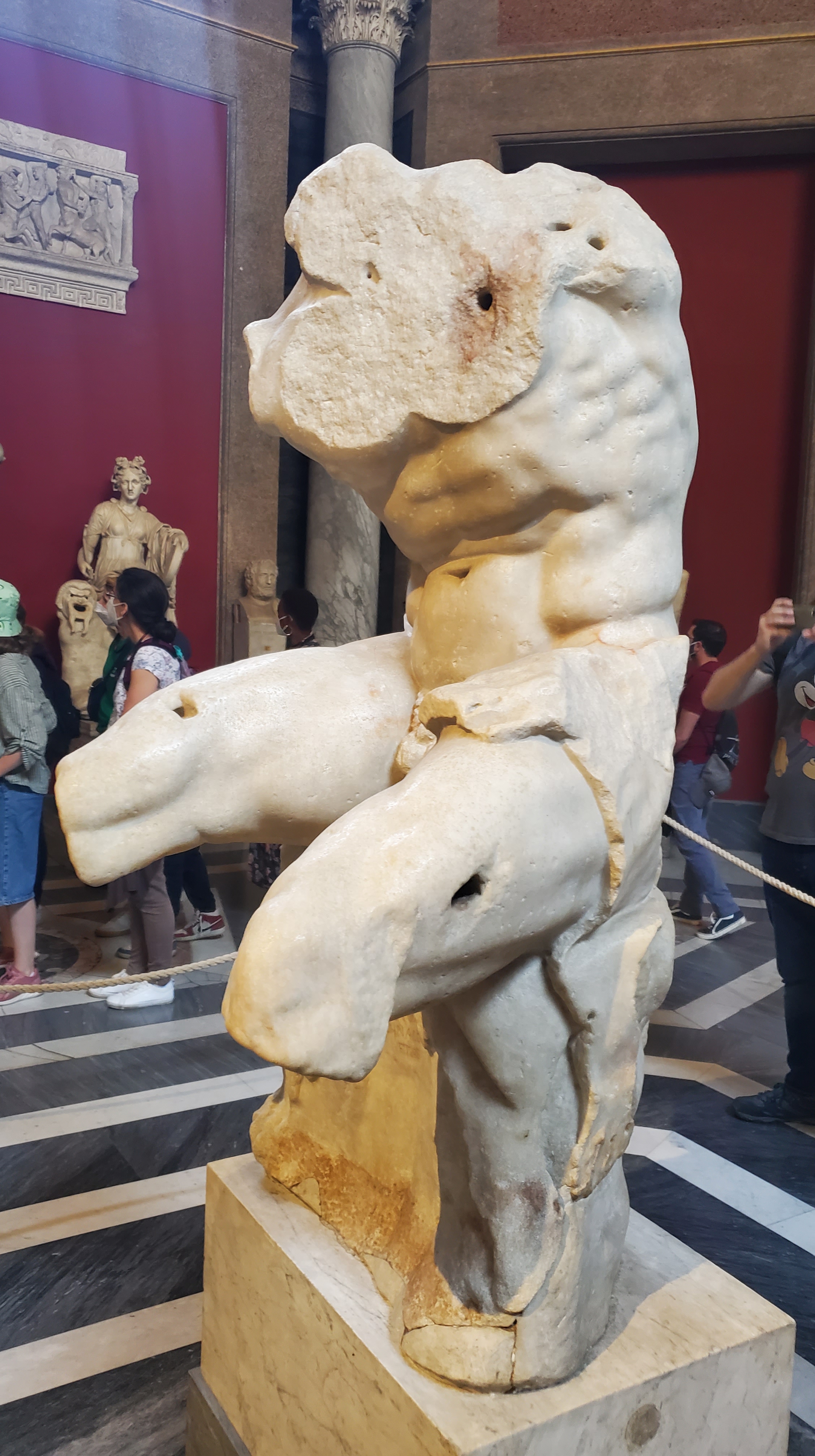
These pieces are interesting. The word is that Michaelangelo was deeply inspired by the movement of the left and right* statues and the perfectionism of the middle. These torsos inspired figures in the Sistine Chapel Ceiling, and the face of the Apollo was a model for one of his depictions of Christ.
Oh, and the ubiquitous fig leaf! Check out how many I captured in one shot! And, yes, they were added later during particularly censorous periods.**
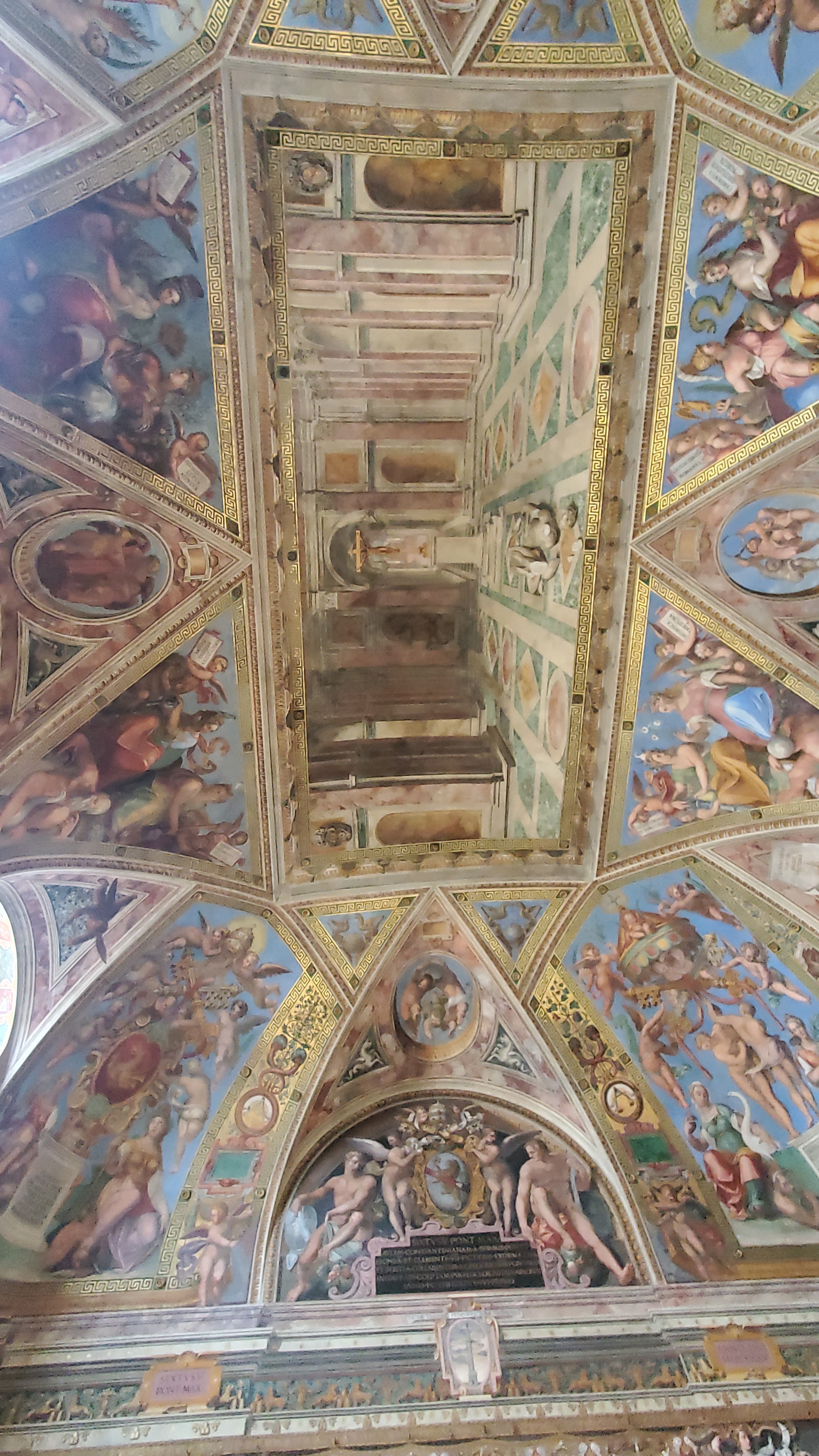
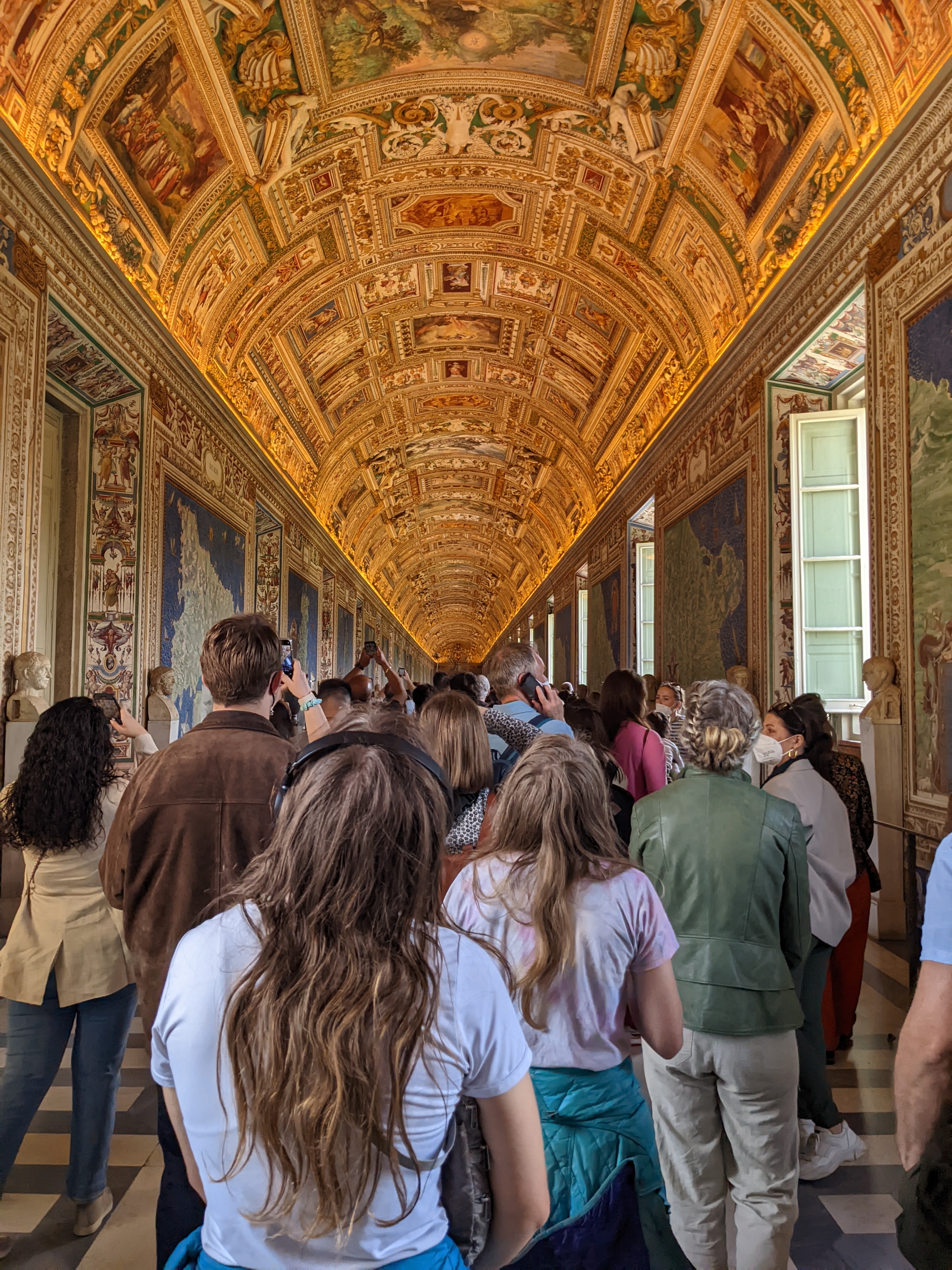
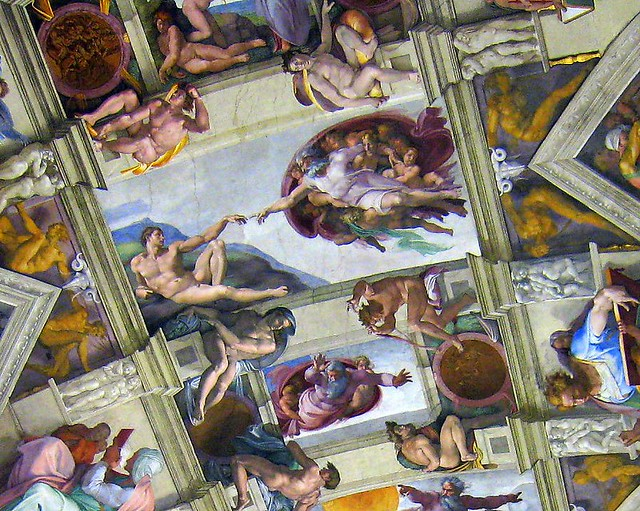
The museums lead to the pope’s personal conclave, known as the Sistine Chapel. No cameras are allowed in the place-with-the-famous-ceiling, but Internet has its ways. Honestly, after passing through all sorts of rooms that looked like this,
…it was a little harder to think this was as singular as its reputation.
What does impress me is that this is Michelangelo’s debut fresco, and he had only done a few public paintings before this, though he had an impressive sculpture resumé. To go from chisel to paintbrush, and find that this is what comes out of your palette, is pretty impressive.
View of St. Peter’s from Emperor Hadrian’s Castel Sant’Angelo. And the back of my head, because Dwayne likes his loved ones in his pictures.
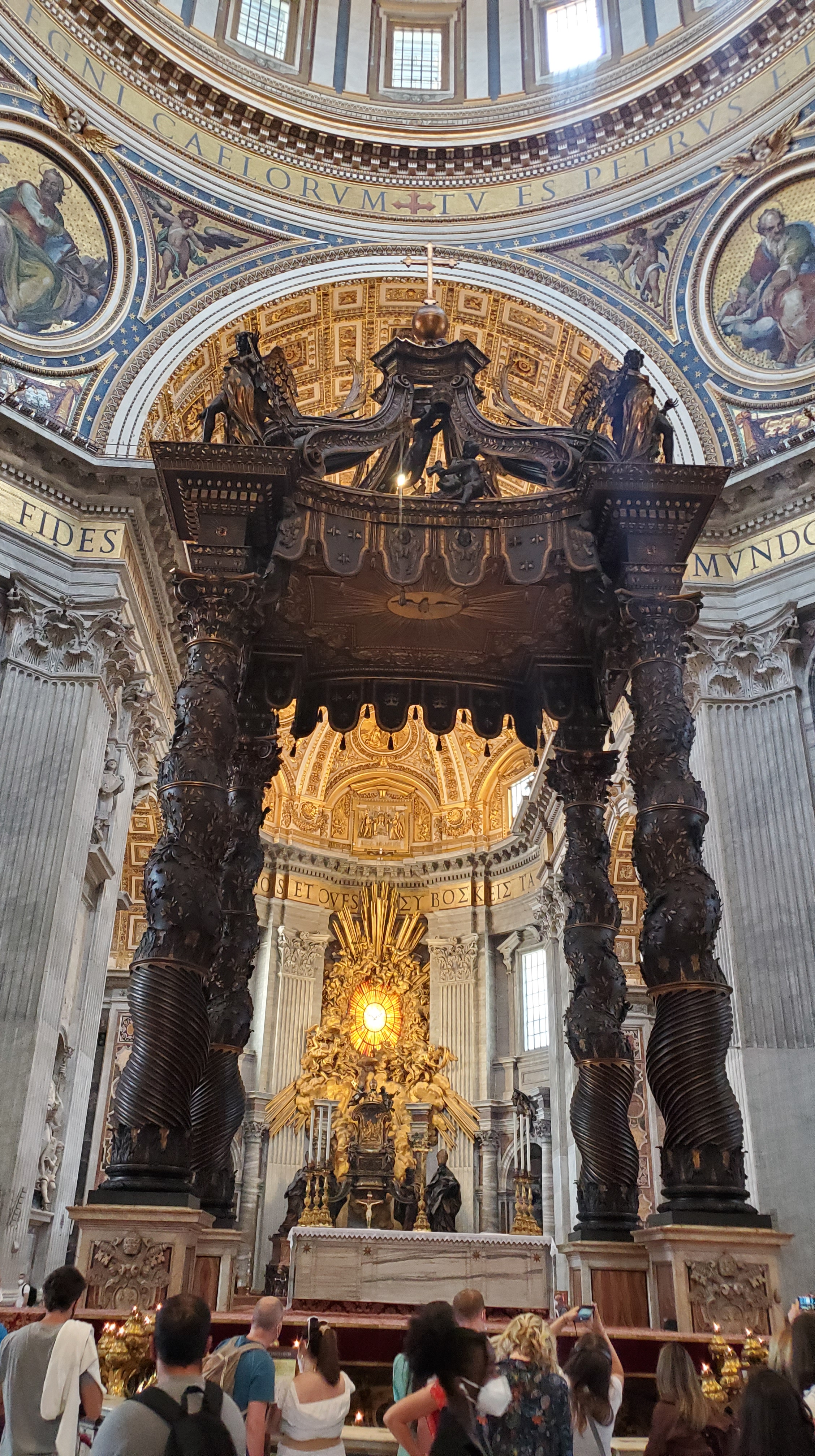
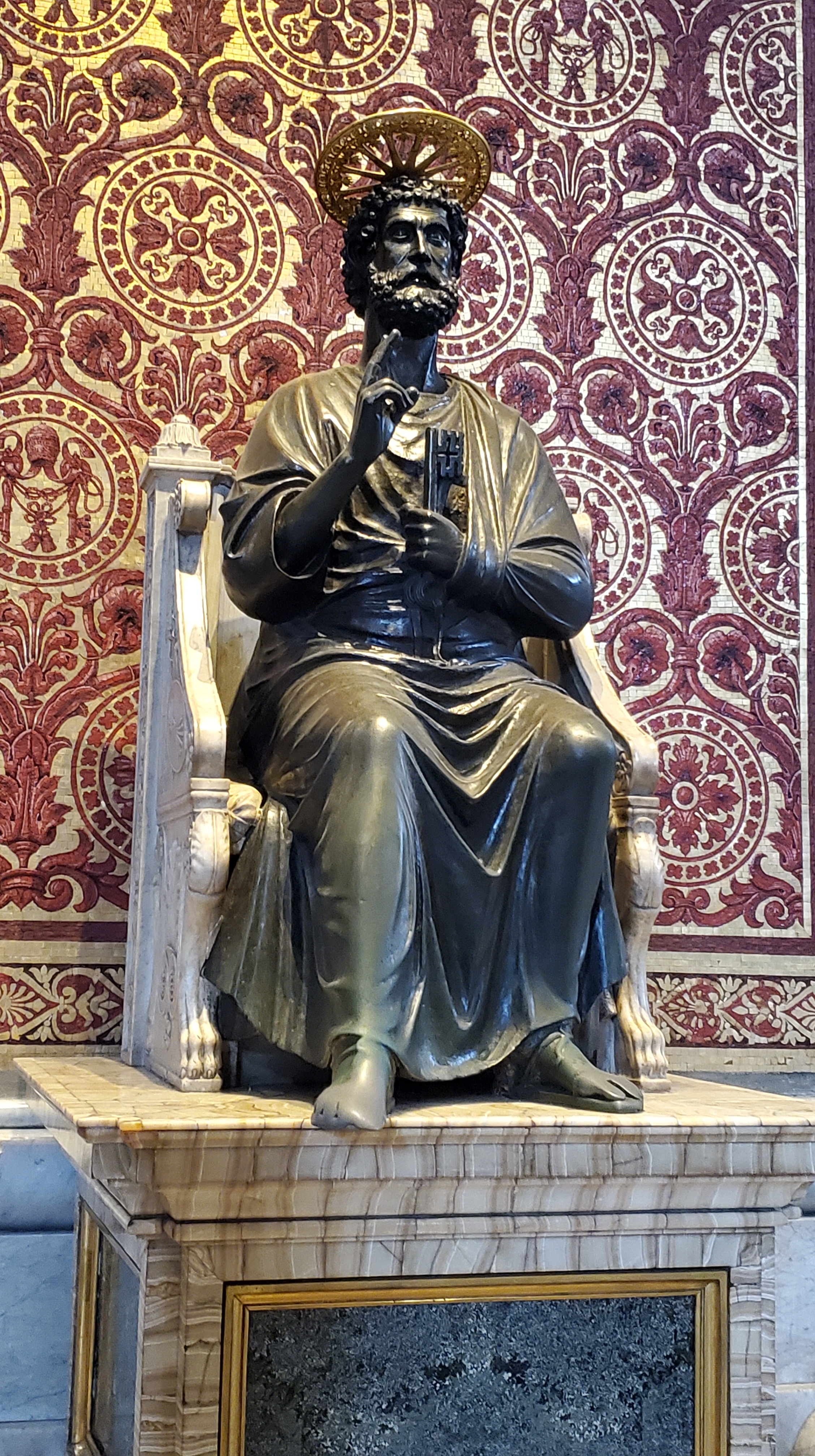
The Chapel shoots you out away from the third stop: St. Peter’s Basilica, the largest church in the world. It is enormous and I actually liked walking in and seeing that it was not taken up with benches, showing just how big the footprint was. I haven’t bothered to figure out what separates major (of which there are four and all are in Rome) and minor basilica (18,000 of them lurking around the world), but of course, St. Peter’s is major in every way. It is proud of its size and on the floor are plaques marking how other enormous churches stack up. I will admit that the art isn’t dreary; the basilica is light and airy, and it felt more uplifting than heavily sacred.
And now we’ve done the Vatican–
Won’t have to do that-again!
* * * *
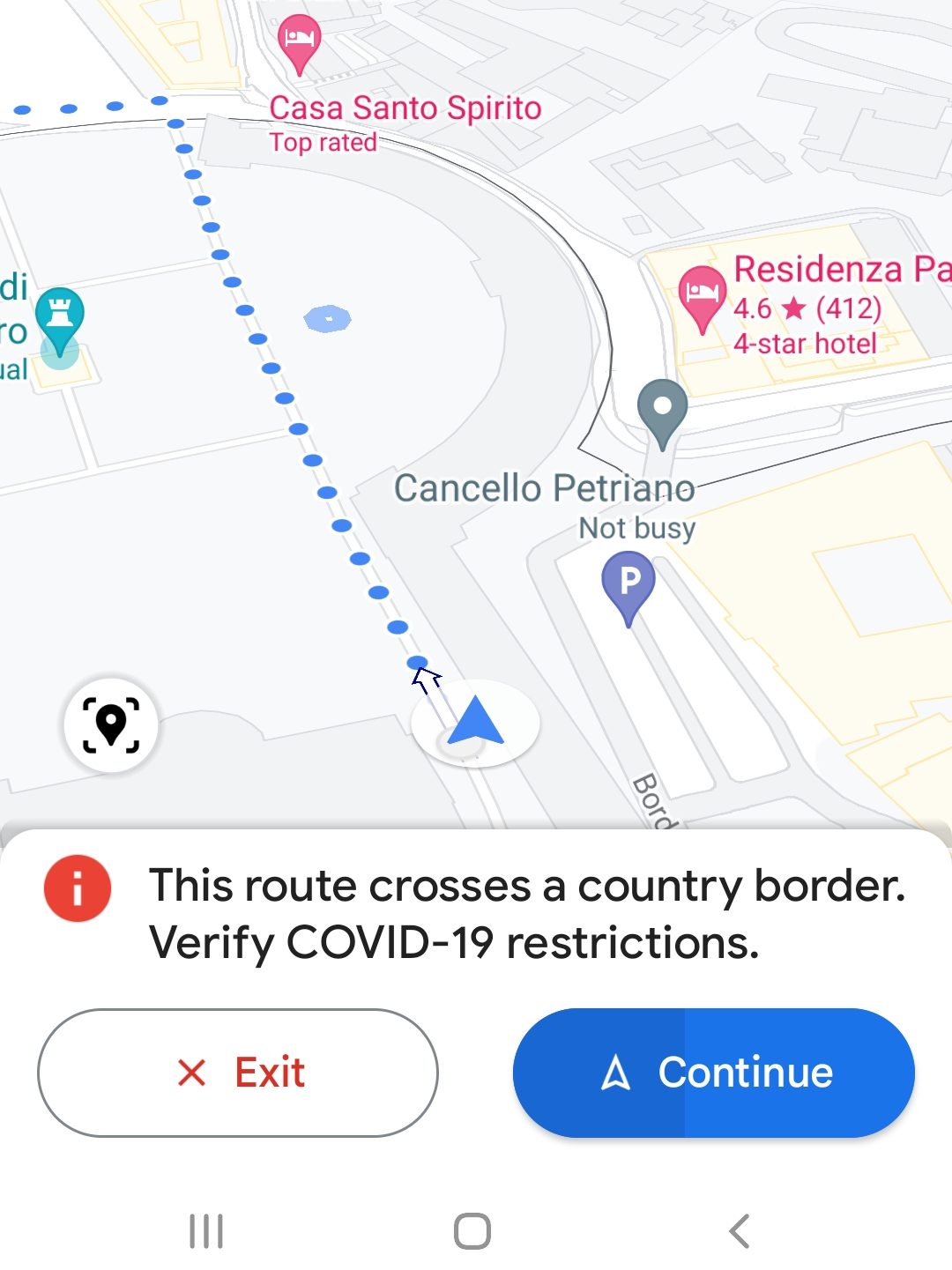
A little extra: Google Maps cracked me up as we mapped our way home from St. Peter’s. While we could walk back to our hotel, we were still in a different country, as noted at the bottom of the map. I think what I most like about the Vatican is that compared to The Holy See, Americans aren’t special snowflakes at all!
*“The Belvedere Torso, which means “the beautiful torso,” could arguably be one of the most important statues in history. This is no small feat for a statue that is lacking legs, arms, and even a head.”This link mentions further influences, including it becoming the base of the famous The Thinker sculpture.
**Perhaps a fig leaf is preferable to castration, but I do think it leads to far more wondering, “What’s under there?” [Underwear, if you are up for an elementary school joke.] Here’s a fun factoid I came across the other day. Penises really are smaller on Greek (and therefore Roman) ancient statues. It is counterculture to today, but modest genitalia symbolized restraint and wisdom. Only the most base of creatures, like satyrs and barbarians, would be portrayed comedically large, signifying all appetite and no refinement. And now you know.