Alliterative subtitle: Erect Elephants and Blue Balls
Yep. Totally prehensile, too.
I did not enhance or color-correct this photo of a Black Face monkey. These are the monkeys that played around Samburu camp, with mothers carrying babies on their bellies and younger monkeys wrestling in and out of trees. And I absolutely used this hilarious moment to discuss with my daughters (making sure Wes could overhear) why boys might complain about blue balls and why this is a problem that is his and his only. #StraightTalk #ThanksMonkeys
You can’t look at an African safari guide without seeing promises of The Big Five. I would have guessed the list included (ahem, BIG) animals that every 4 year old knows–lion, elephant, giraffe, rhino, hippo, maybe monkey or ape. But no, it’s all about how dangerous the animal is to hunt on foot. I think it’s telling that of the leopard, elephant, Cape buffalo, rhinoceros, and lion, three of them are herbivores. And the list leaves off alligators and hippos which, according to WorldAtlas, kill respectively ten times and five times as many humans as elephants and lions. Well done, marketers, you’ve killed off logic.
The Big Five, as stolen from Bing Images
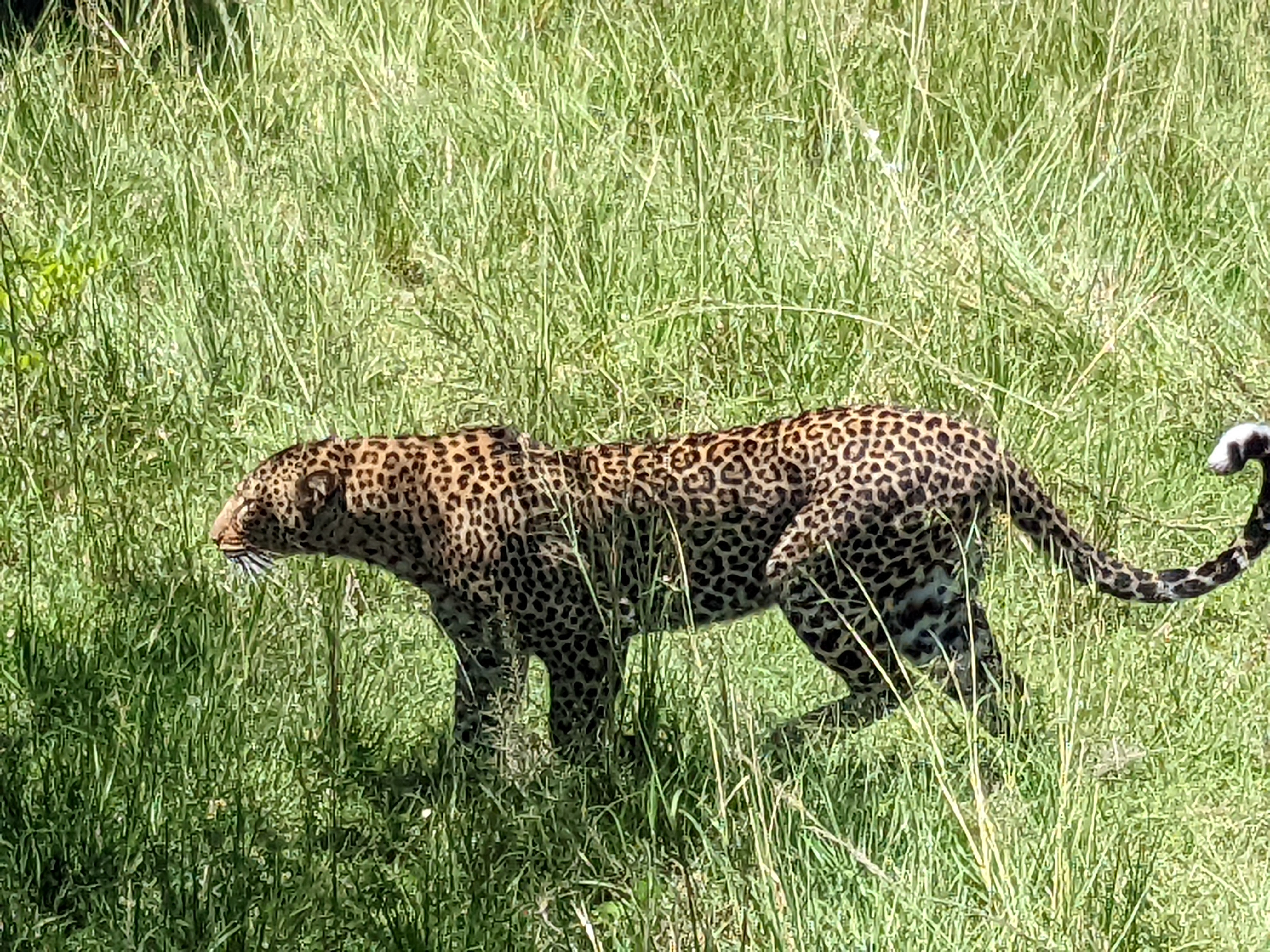
Regardless of the history behind the list, WE SAW THEM ALL! Today, towards the end of our 6-hour morning drive, Simon-the-Amazing guide spotted* the elusive leopard, checking off our African Animal Bingo card.
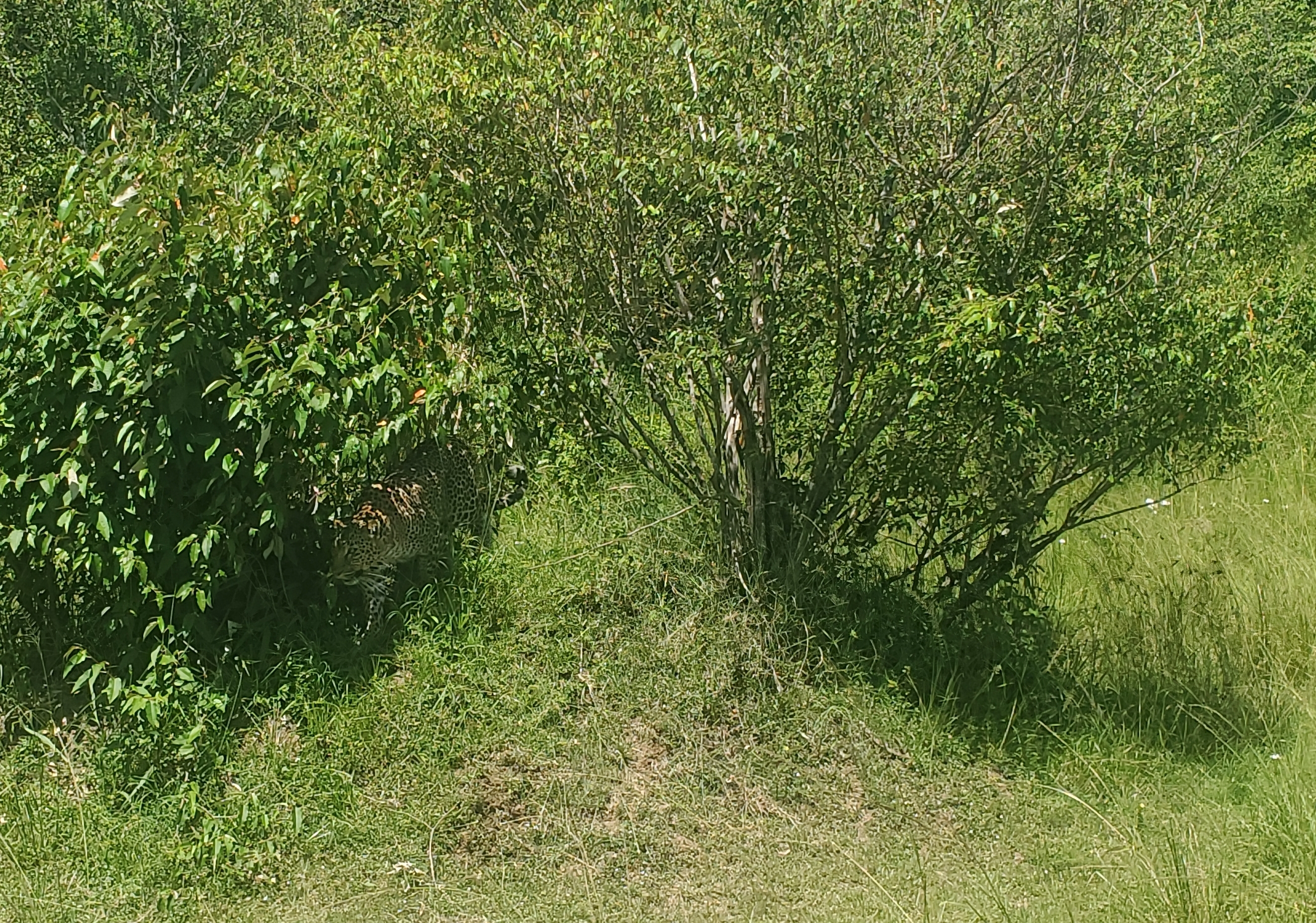
When you see a leopard against the green grass, you wonder why it’s so hard to locate. Find the same cat when he’s prowling more stealthfully by sliding the arrows to the left.
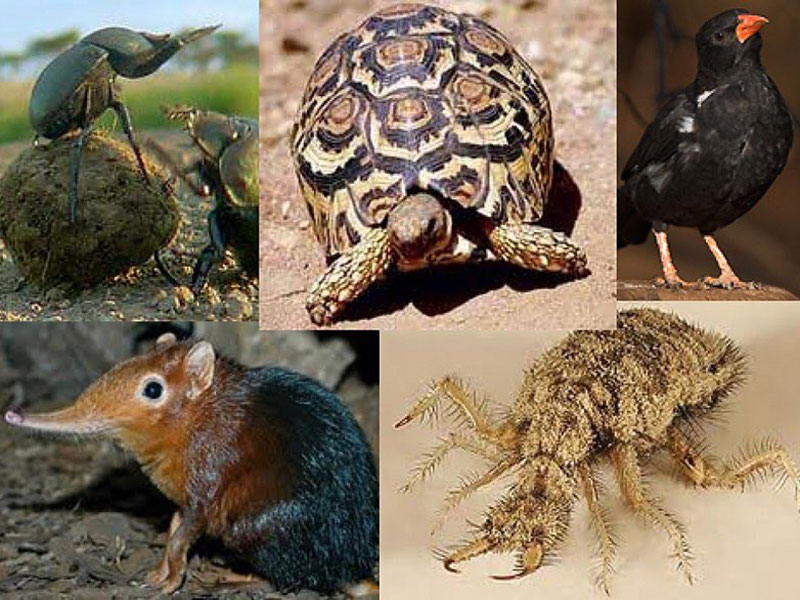
Admittedly, we saw none of the Little Five, but I can appreciate the list: elephant shrew, buffalo weaver, leopard tortoise, ant lion, and rhino beetle.
The Little Five, as stolen from Bing Images
The Ugly Five, per Bing Images
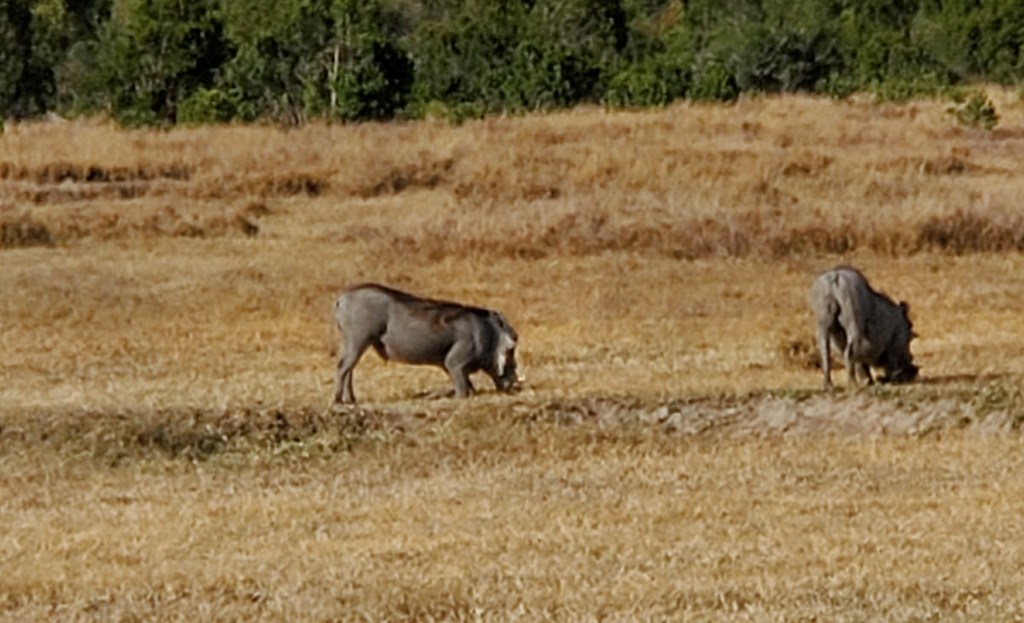
The Ugly Five deserve their time in the spotlight. Two are birds, which I find funny and fitting, but my beloved warthog hangs out on this list: Wildebeest, Warthog, Spotted Hyena, Lappet-Faced Vulture and Marabou Stork. Even though wildebeest come in the millions to Masai Mara during the Great Migration, we only saw one, and at a distance, on Crescent Island when we were at Lake Naivasha. Vultures were flying overhead and storks hung out at the water, so we saw them, but not close enough to appreciate their special beauty. We checked all of these off our list, but I only got to study the hyena and warthog.
*Word choice deliberate. Low hanging fruit, I know.
This morning, we woke up at Mara Intrepid Camp, bright and early for a 6:30am game ride.
So far, we’ve seen, in this order:
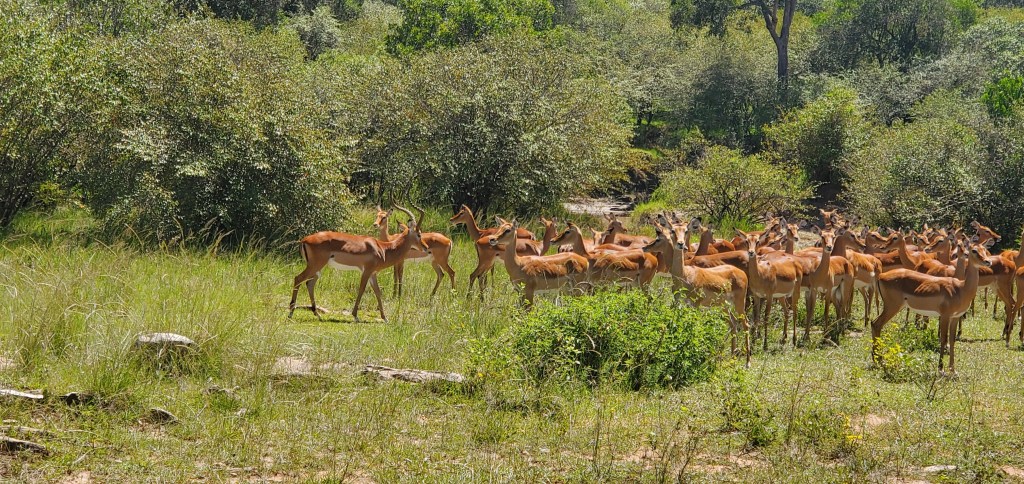
Impala
Impala, taken the day before. One male (horns on left) can handle stress of a harem for about two weeks before he grows weak from hunger and loses to the next challenger.
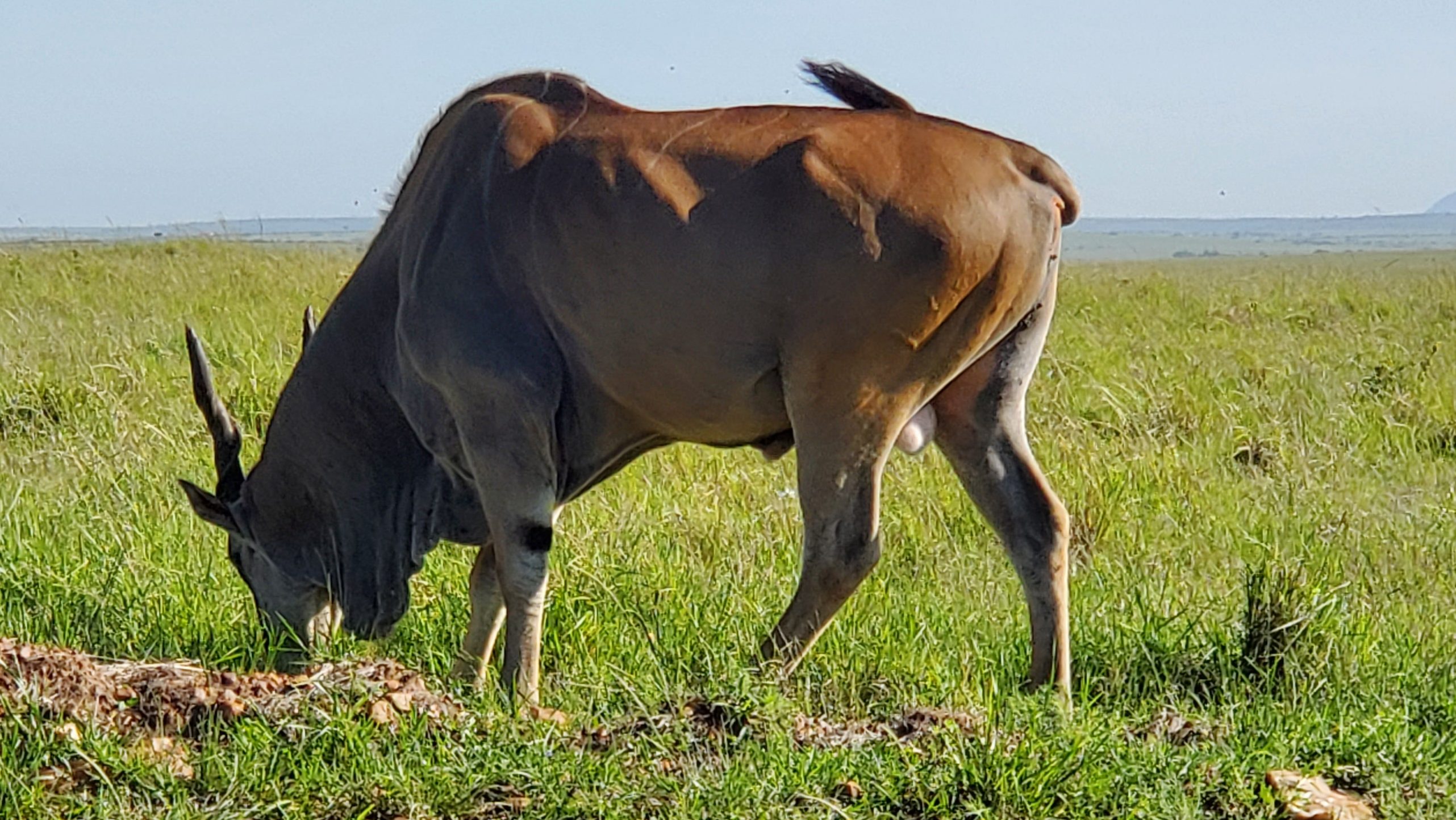
eland (biggest antelope)
The male eland has the oddest wobble on its neck.
warthog (who succeeded in not being breakfast)
lion (who failed at having breakfast–twice)
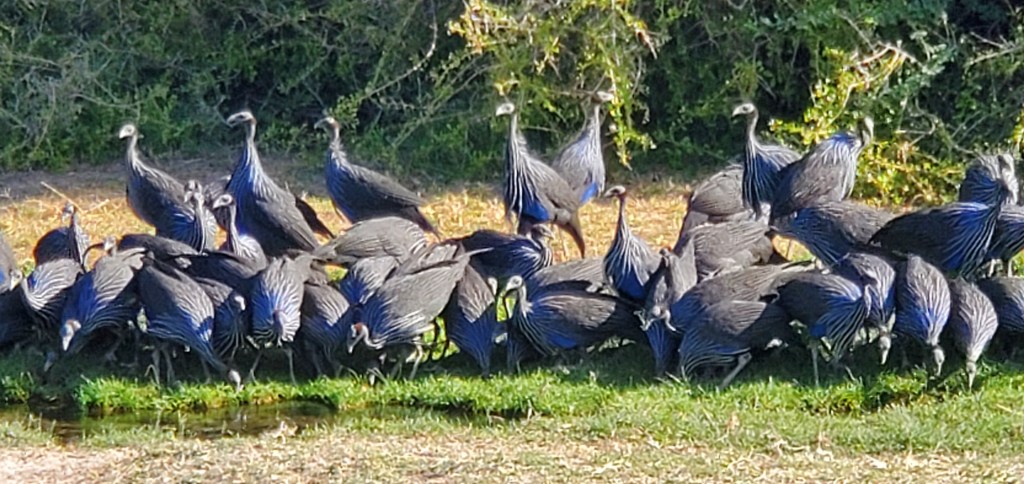
guinea fowl
our first cheetah sightings
These 5-but-now-only-3-after-two-tragic-accidents brothers are almost always found together, very unusual for cheetahs who almost always live and hunt solitarily.
crocodile
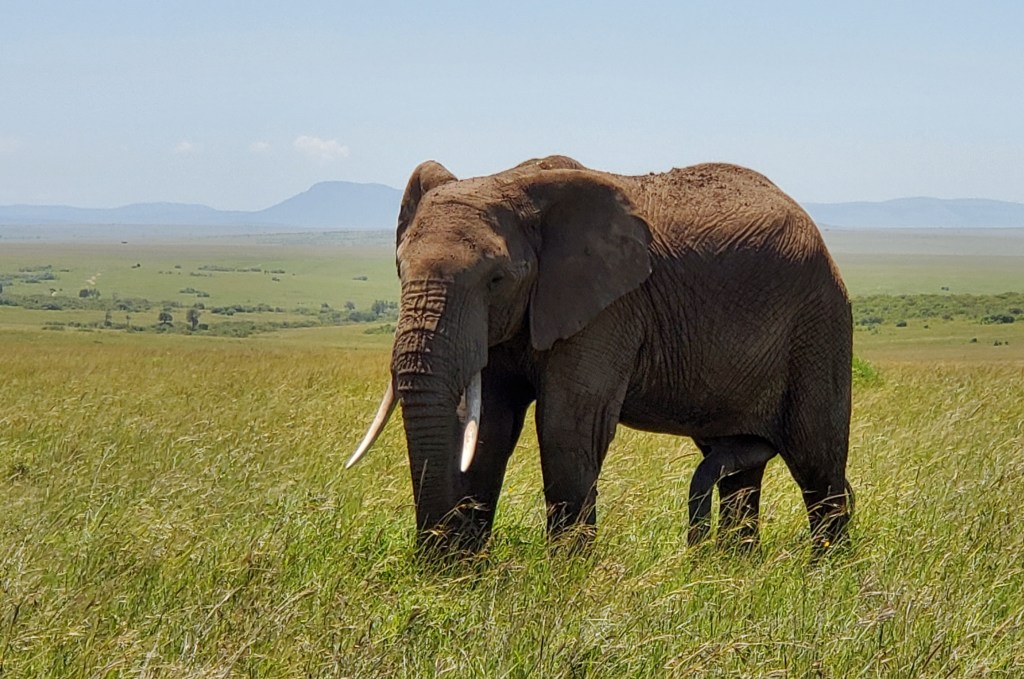
elephant
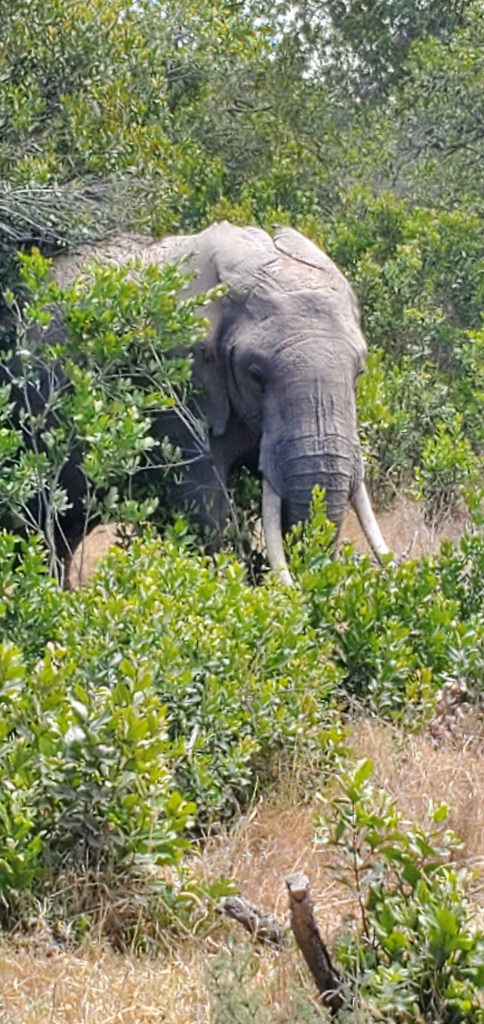
I’ll be posting plenty of elephant pictures, so will give this post some space.
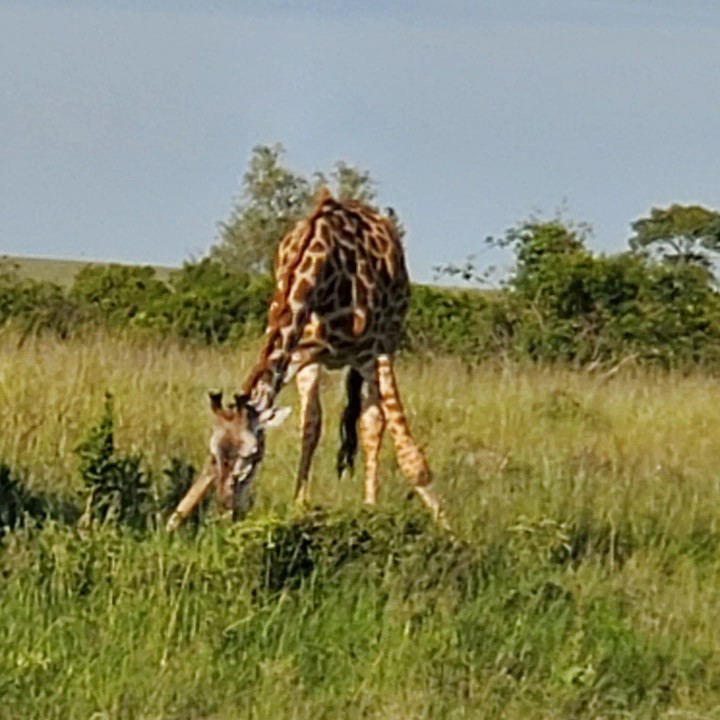
giraffe
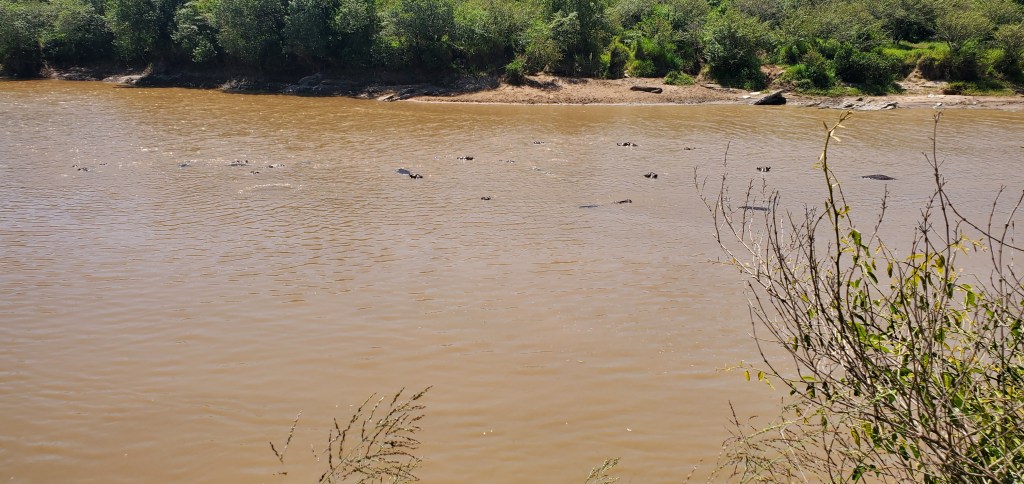
hippo
There was more than 30 hippos at the convergence of rivers this morning, and I think I drastically undercounted.
dik-dik (smallest antelope)
These guys are so small that I got lousy pictures of them, though we did get to witness two fight for territory–which was a little like watching teddy bears fight. Bing images gets the credit.
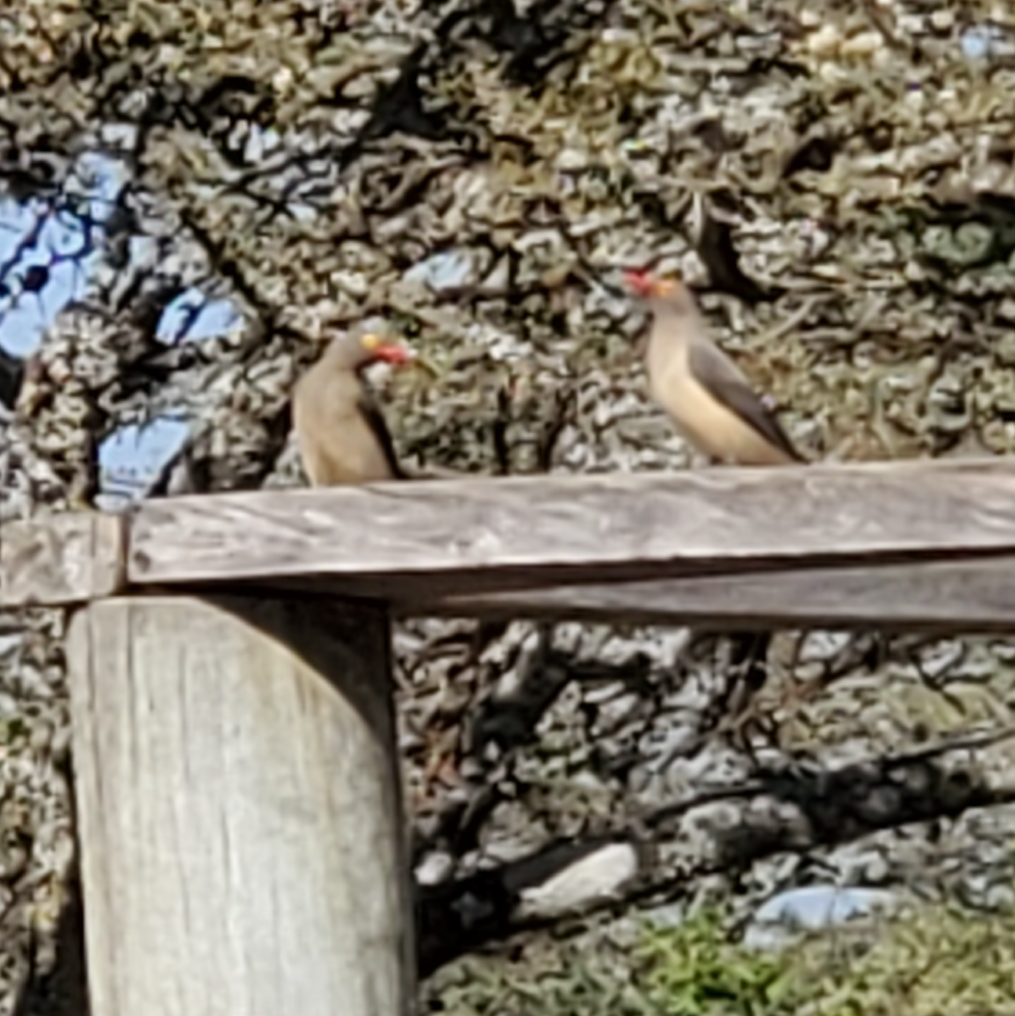
oxpecker birds symbiosing* with antelope
I took this back in Baraka’s enclosure. We have seen oxpeckers on beasts and antelope–most safari mammals are potential buffets!
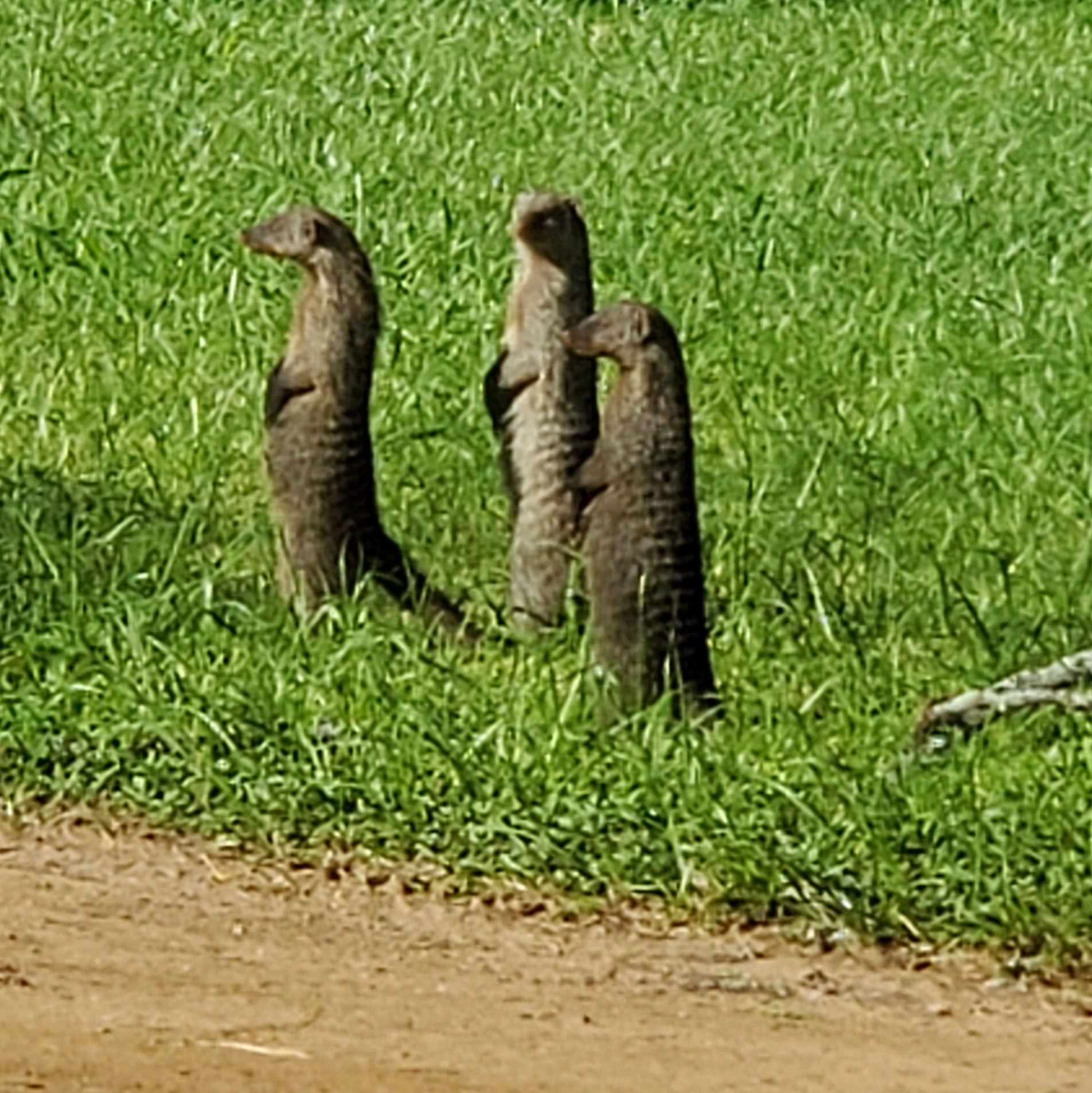
and banded mongoose.
What in the world will we do *after* breakfast?
This place is wild!
*calm down, spellcheck. I’m just turning “symbiotic relationship” into a verb.
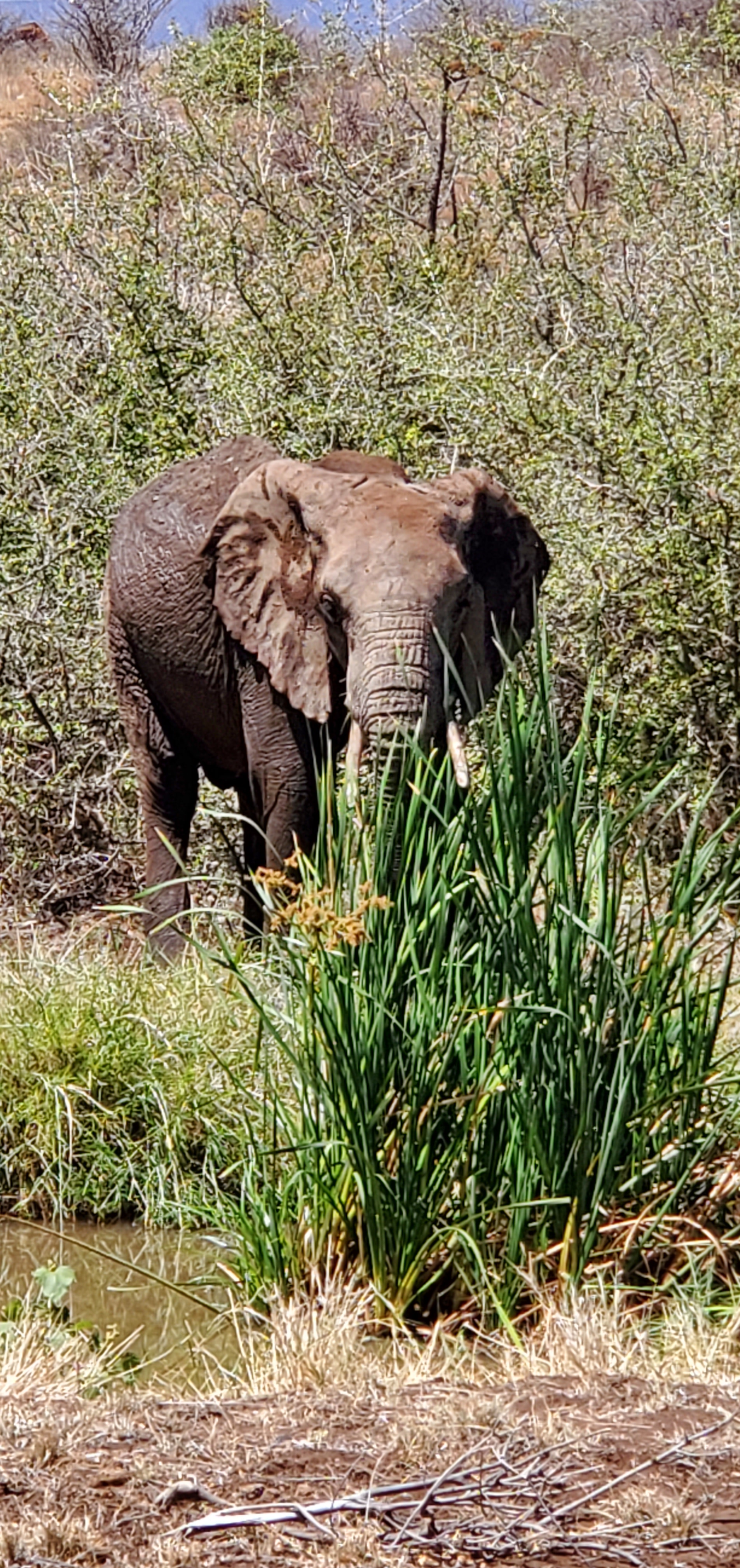
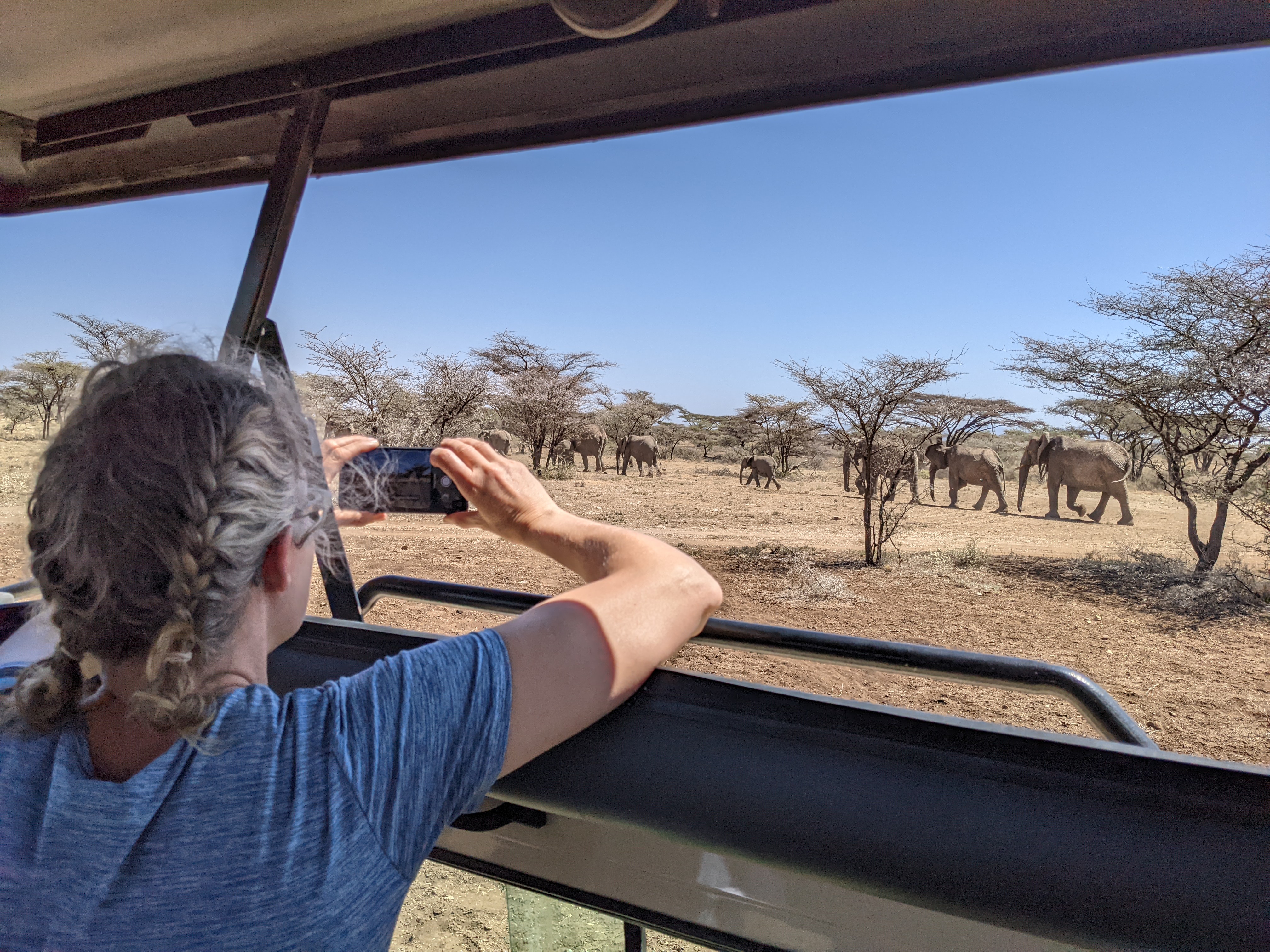
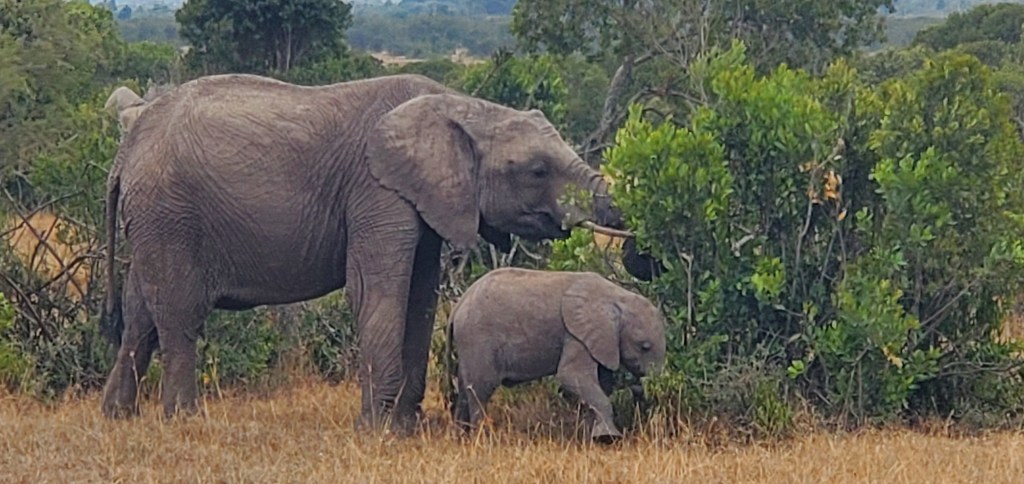
You’re late for the airport when halfway there, a mother elephant steps into the road and blocks your ride for several minutes. Why are she and her calf there? The grass is really sparse near the road and nothing but rocks and dust in the middle of the road. She seems to be picking up pebbles for no other reason than to mess with us. She flapped her ears a few times to let us know that she was in charge. We sat back and folded our hands—nothing to do but wait patiently for the boss.
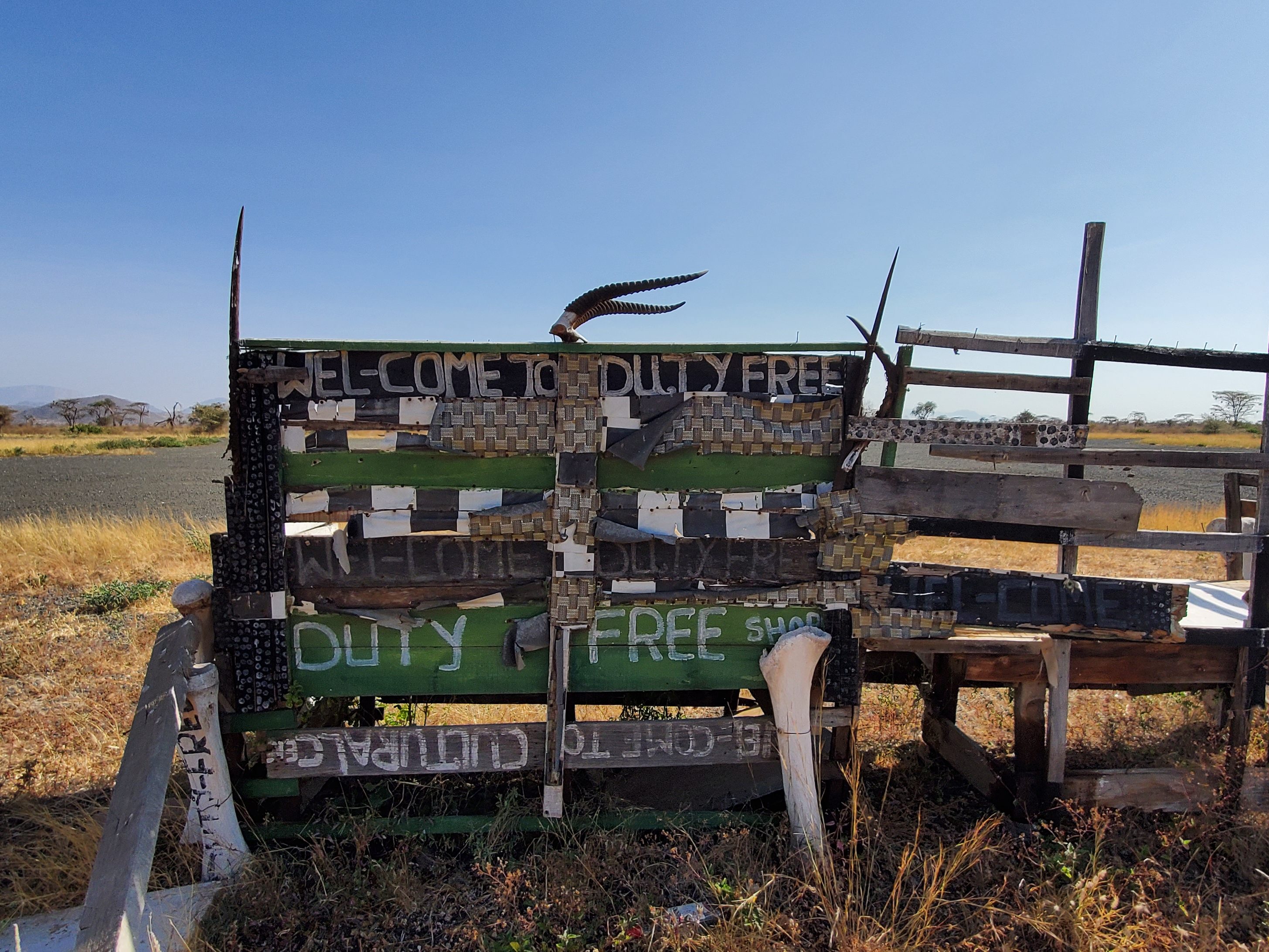
PS This is the airport we had to get to. It may have been duty-free, but not doodie-free. There were elephant droppings liberally spaced on the landing strip.
My first recollections of Samburu National Park are of dryness, heat, and dust. But when I scratch just a little further (and start curating my photos), I realize how glad I am we got two nights and a full day here.
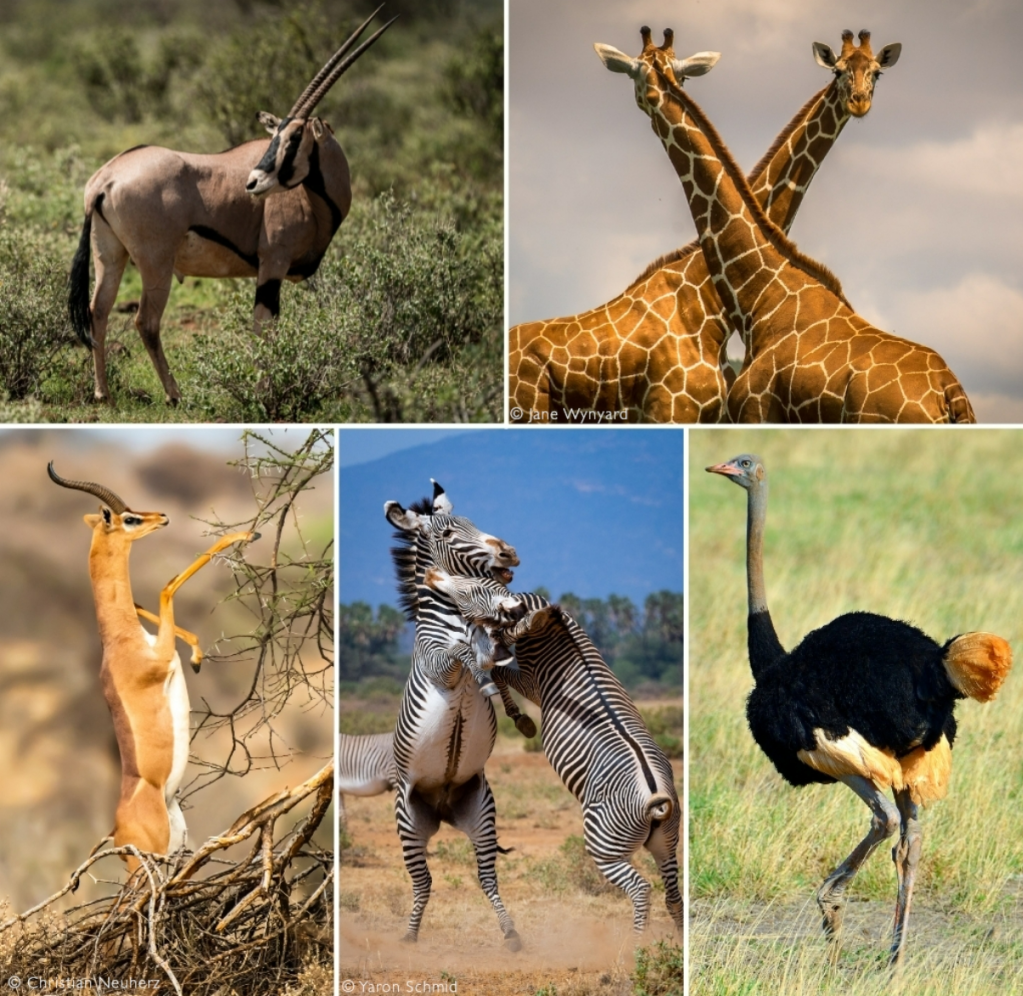
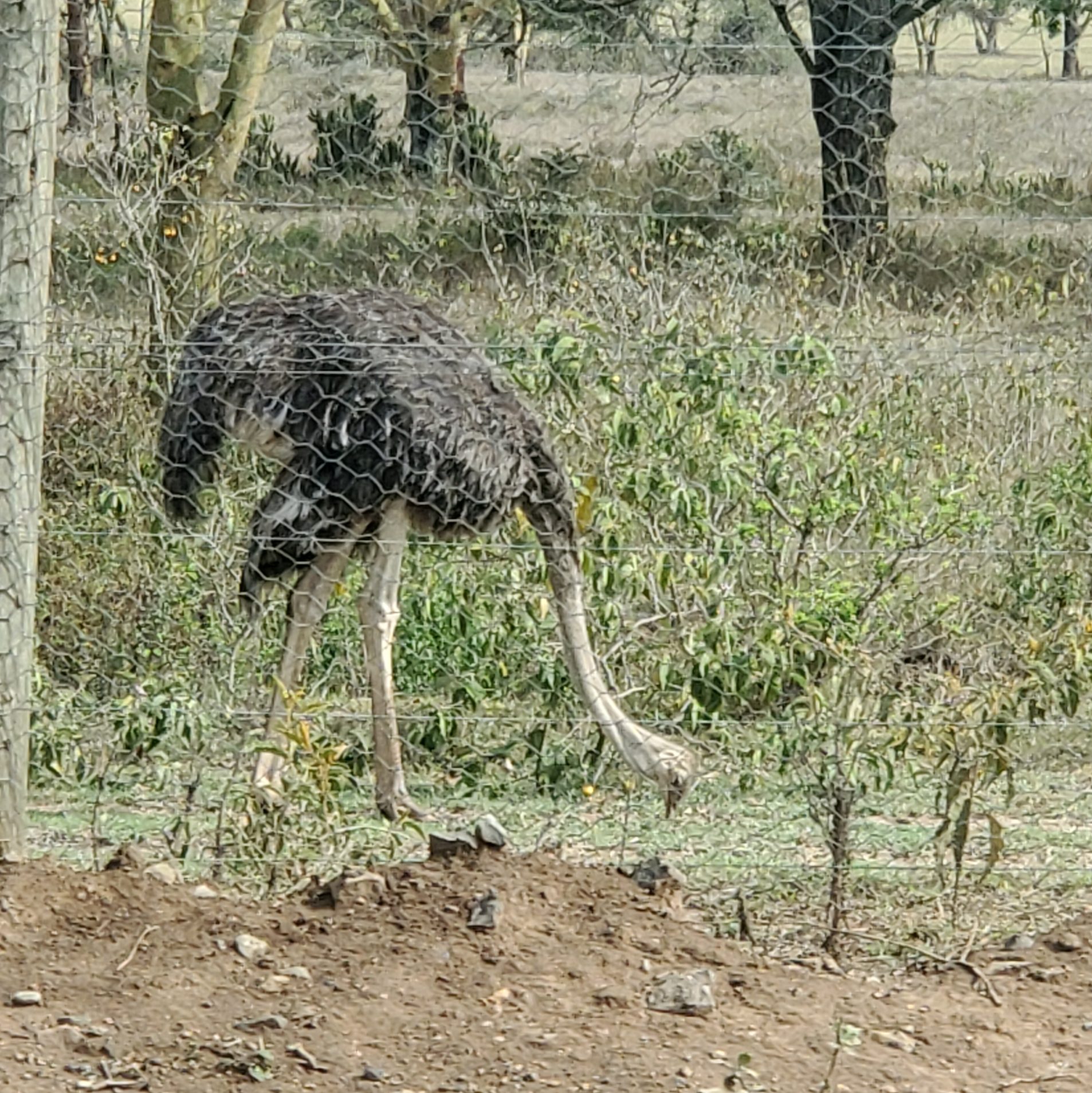
African safaris, or at least tourism, likes its top five lists, and I’ll do a post on the big, the little, and the ugly later. But Samburu crowns itself with the Special Five that can be found abundantly here: 1) the reticulated giraffe (one of 3 types of giraffes and the most beautiful) 2) oryx (thanks to Woodland Park Zoo in Seattle, I knew about this antelope before safari) 3) Grevy’s zebra, not the common zebra we saw here and the other camps), 4) the gerenuk, an antelope I had never heard of before, but stands upright to forage, and 5) the Somali ostrich, which has a blue neck and legs, compared to the standard pink.
Again, why should you look at my amateur shots when National Geographic exists?
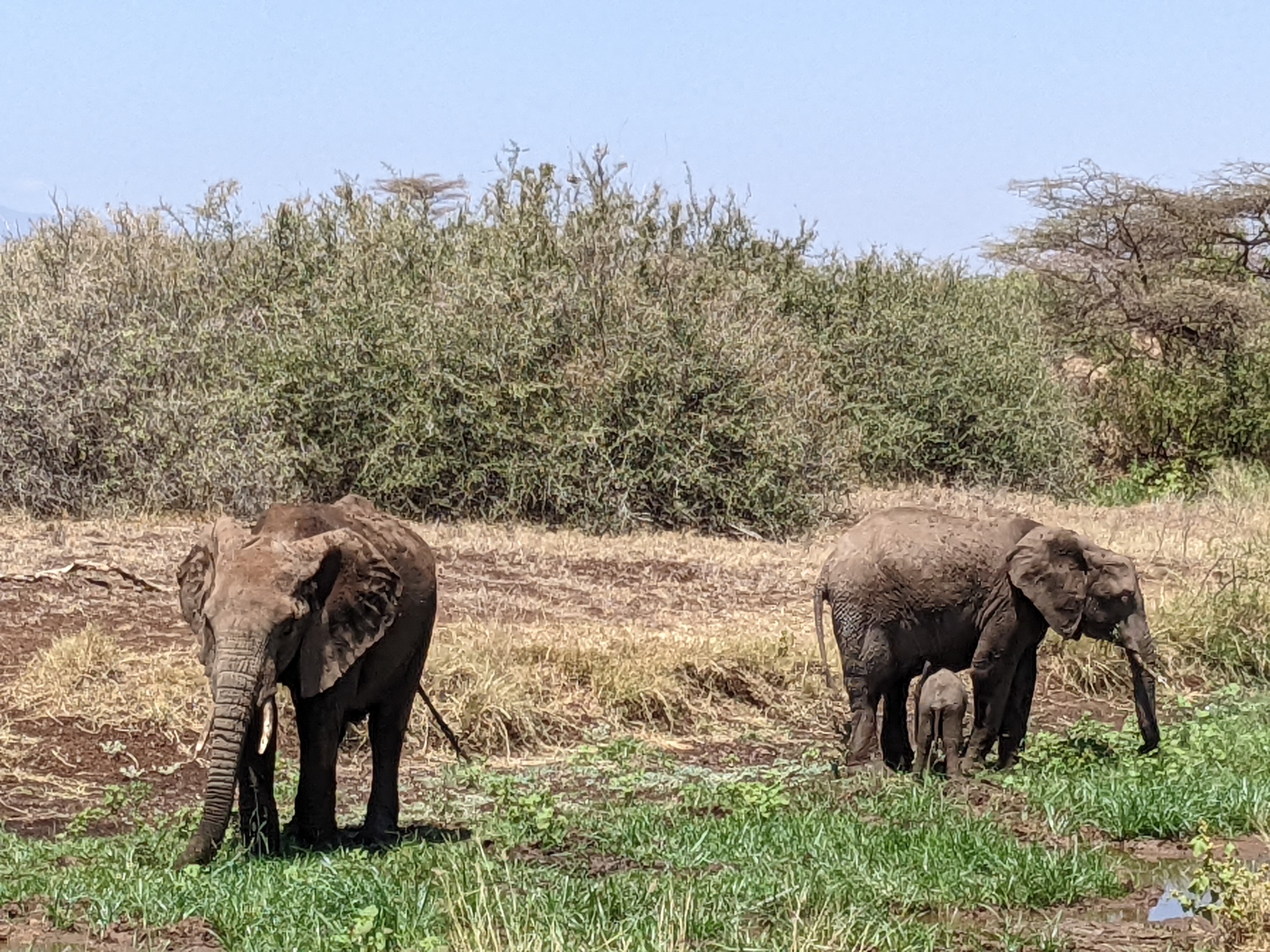
We did see these five animals, but there were plenty of other reasons to enjoy this spot. First, it was lousy with elephants*. We ran into more elephants here than even rhinos at Ol Pejeta. More groups, bigger groups, single lines that blocked roads– what a feeling to not see other animals because an elephant is blocking your view!
One herd is photobombing my giraffe picture.
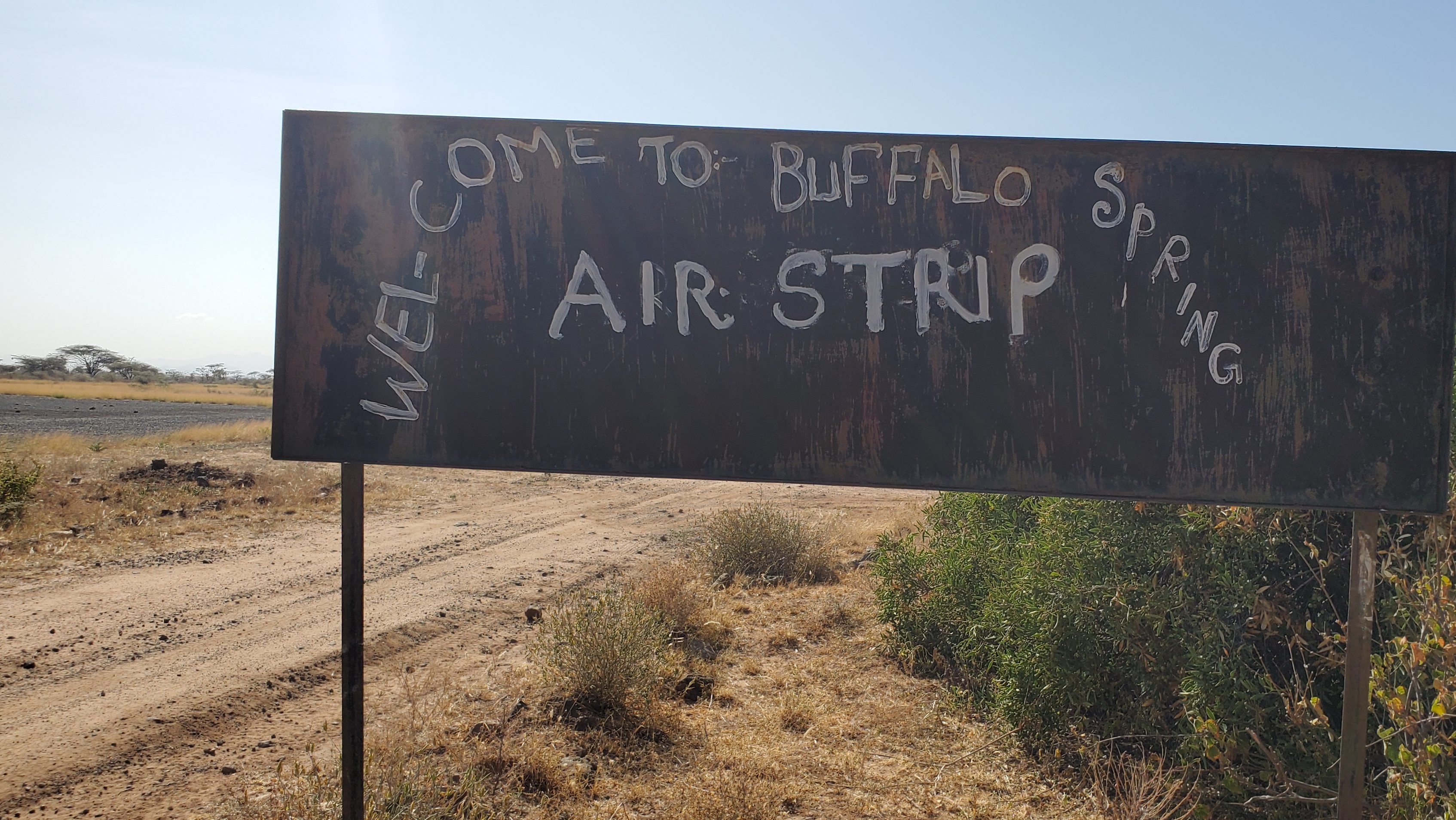
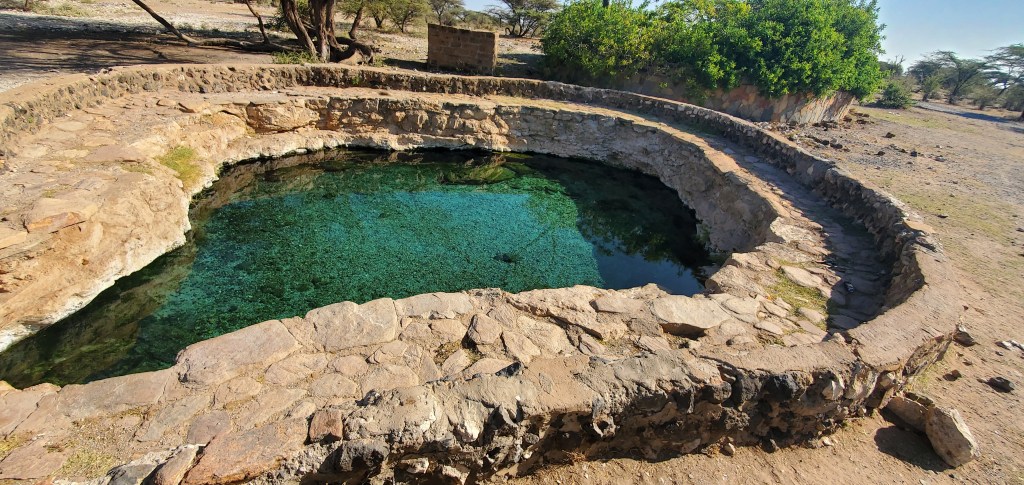
The oddest thing about today was finding Buffalo Springs–a large cratered pool CREATED BY A BOMB DURING WWII. Yes, that needs to be shouted, because did anyone know Kenya was bombed by Italians? Ever? Our guide knew it had happened, but couldn’t really tell us the story or seemed concerned, so after internetting** it, here is a better tale than I could tell:
Buffalo Springs, Kenya. There was a natural spring there which received a special upgrade in 1940.
‘It’s a bomb site,’ says our guide. We gape. ‘From World War II,’ he continues. ‘It was 1940 and a squadron of Italian fighter planes were flying back to Ethiopia. They looked down and saw a huge herd of buffalo drinking from this spring. They mistook the buffalo for the tents of the British, who were advancing towards the Ethiopian border, so they dropped a bomb on them’. He regards the huge rocky basin with placid unconcern, ‘and this is what’s left,’ he finishes.
It’s a strange story, but research reveals it to be true. In one of the least-known encounters of the Second World War, Italian Dictator, Benito Mussolini, had declared war on Britain and was attempting to seize what was then British Kenya and Tanganyika for an Italian empire that he declared would be even larger than the Roman Empire. He had 93,000 troops, 232 aircraft and 200 armoured vehicles and tanks. The British had 19,000 troops, six vintage aircraft, with only one serviceable carburettor between them, a couple of homemade armoured cars and no artillery. Surprisingly, the British won. The buffalos, unfortunately, were collateral damage.
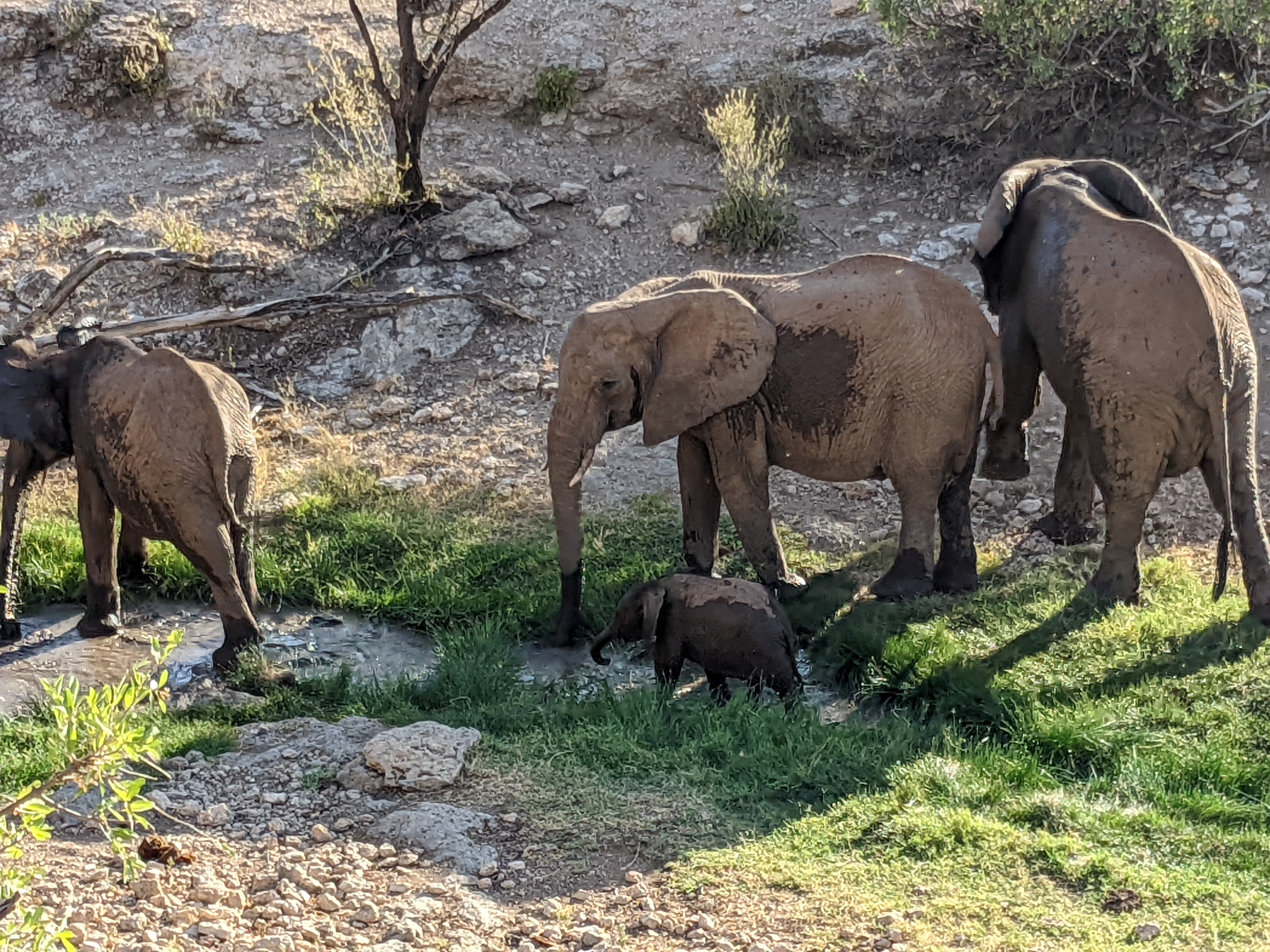
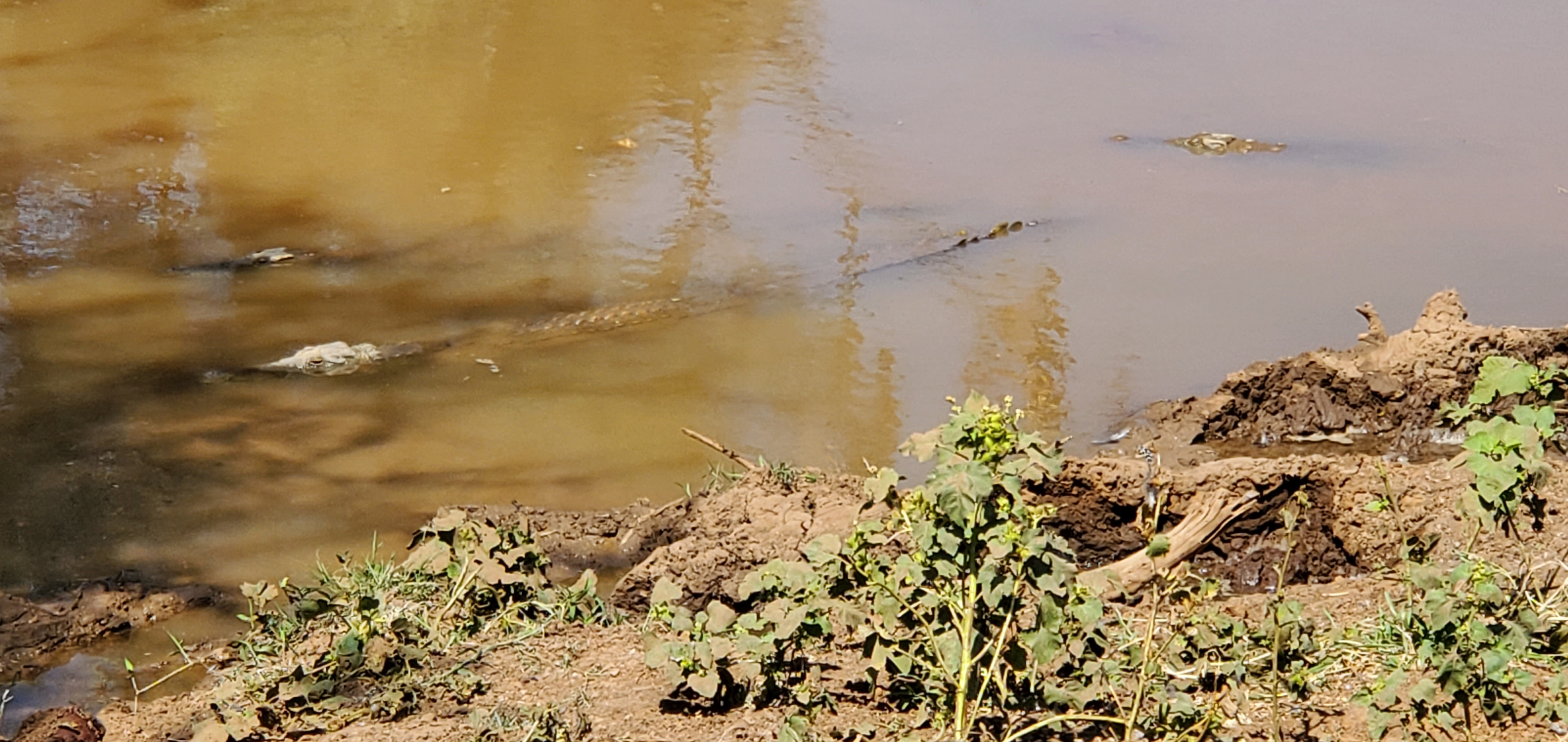
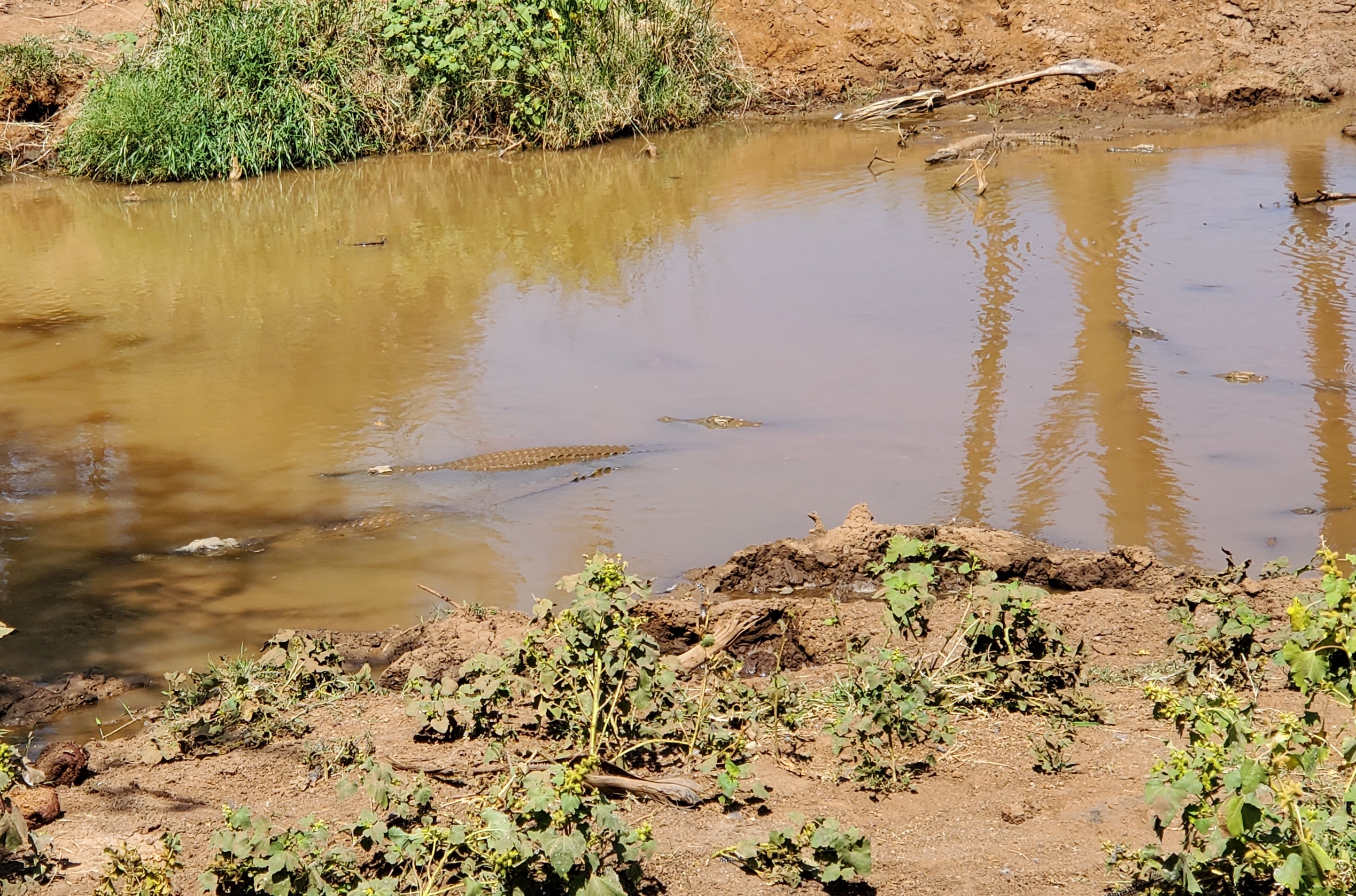
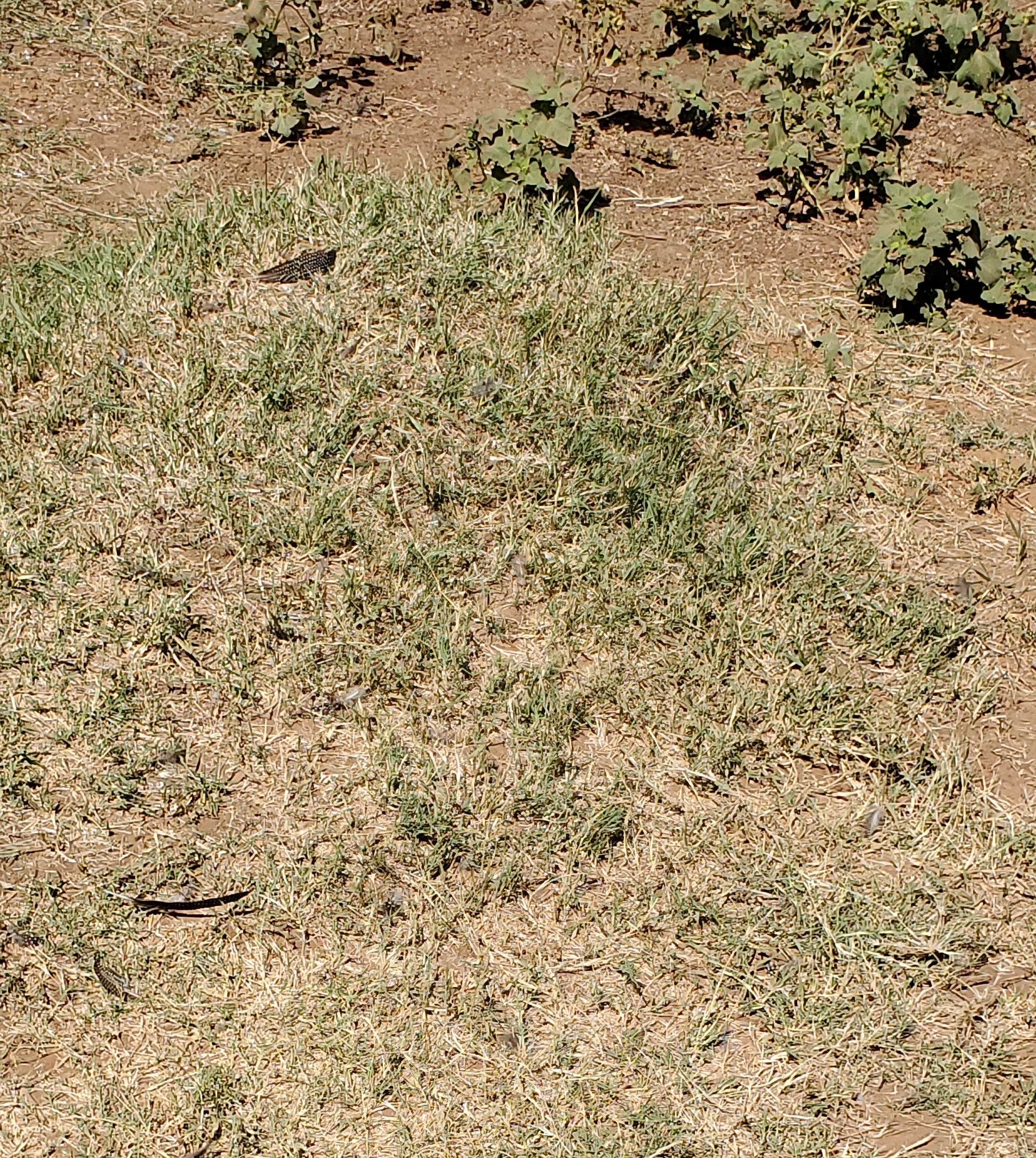
As dry as Samburu was, there were underfed rivers that made elephant viewing more fun (here and here) and gave us our first glimpse of crocodiles…and the guineafowl feathers left behind. The rule is, if it looks like a stick and acts like a stick…it’s not a stick.
Not everyone enjoyed the day as much as I did. I think this was during the morning drive, because it seems unlikely that he joined us for the afternoon one.
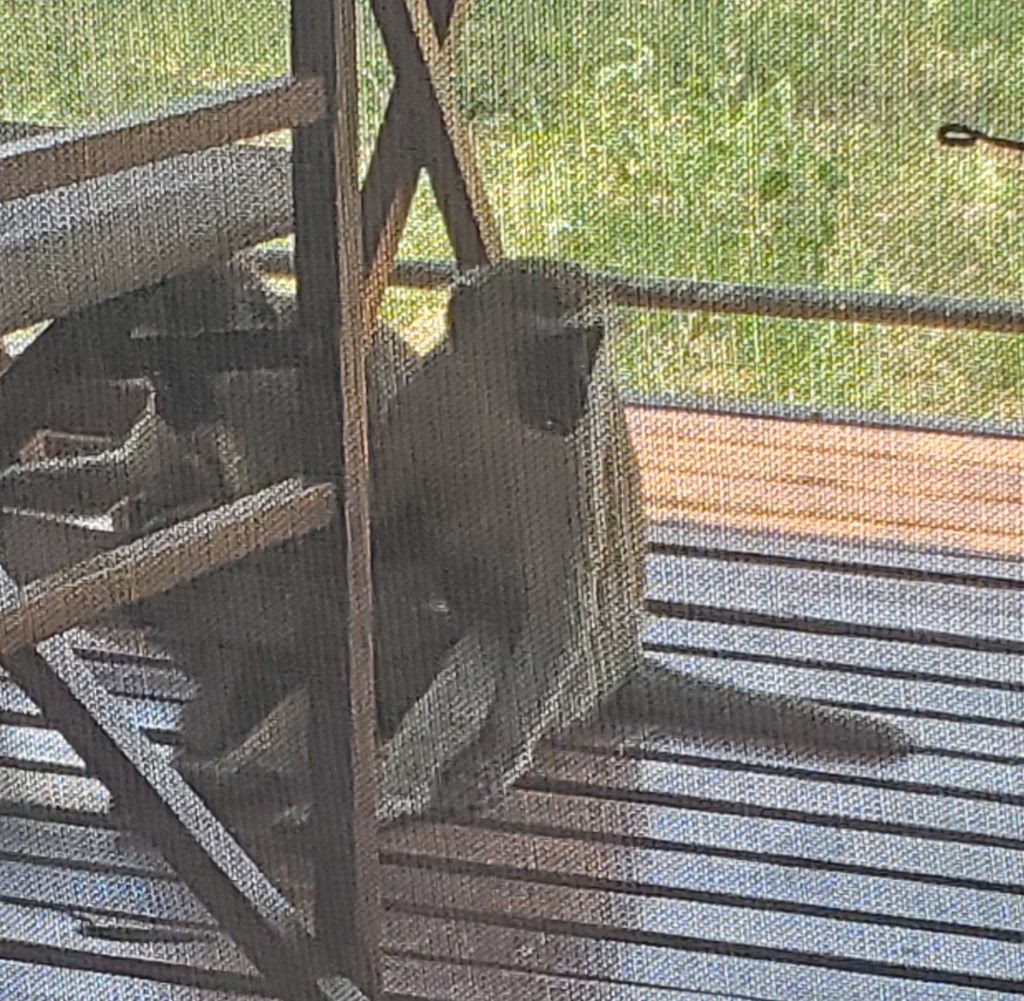
No matter how great a drive was, it was fun to return to the camp to these guys. There were boys hired to chase off baboons at the camp but the black-face monkeys had free reign. These twowere definitely siblings.
They also hung out on the back porches. We were recovering from a hot day of travel on dirt roads, so hanging out as a family in the kids’ tent. Piper and I were alternately reading aloud Klawde: Evil Alien Cat Overlord. The monkeys appeared to enjoy the book nearly as much as we did.
Yep! Samburu may have made bathing simultaneously necessary and useless, but it was a really great place to visit. Special indeed.
*I’ve been holding onto that phrase for a while. I was hoping to alliteratively say “lousy with leopards” but that was never the case. Etymology: lousy, 1840s slang meaning swarming with, actually comes from “infested with [lice/louses]”, which makes lots of sense and is something I learned today.
**bastardized word of the day. Shakespeare doesn’t get to have all the fun.
Kenyan National Park: fenced, government owned and slightly maintained, e.g. Samburu Park
Kenyan National Reserve: unfenced, government owned and maintained enough, though perhaps more by local hotels on the property, e.g. Masai Mara
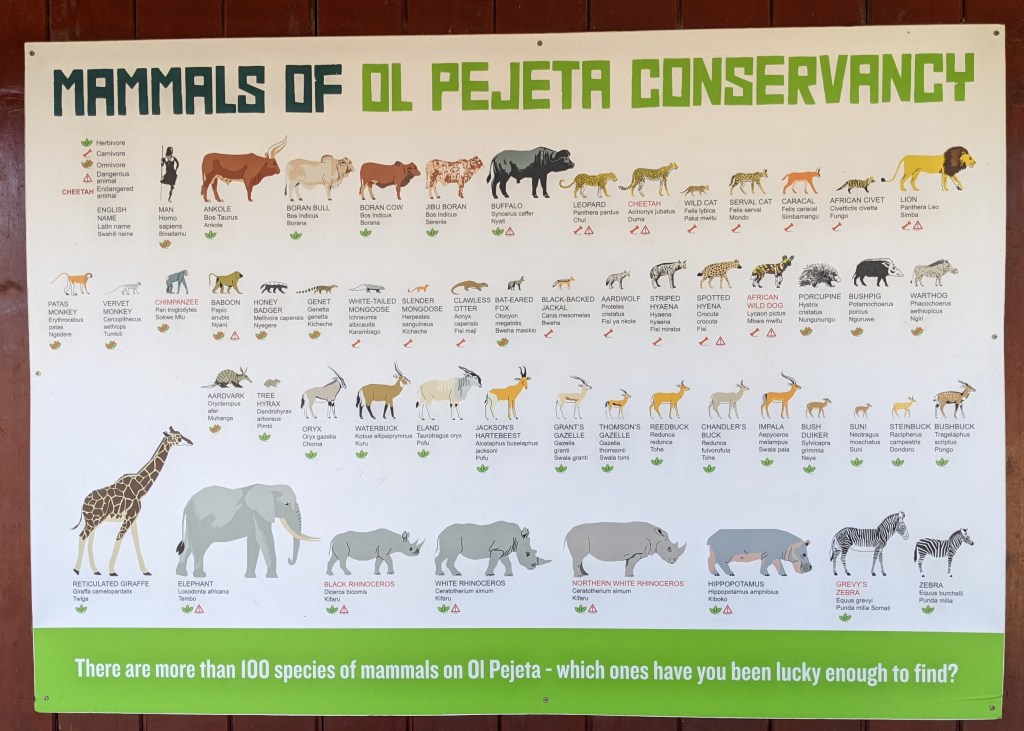
Conservatory: Private land/funds, generally fenced (though Ol Pejata had special fences that kept rhinos in but allowed elephants roam in and out at will), focused on combinations of animal conservation, education, reproduction, etc.
We stayed in Sweetwater Serena Camp, a privately owned camp, in the Ol Pejeta Conservancy for two nights, and I tried to make the most of that time. [Fun note: the camp straddles the equator and we went back and forth over the latitudinal line several times during our visit.]
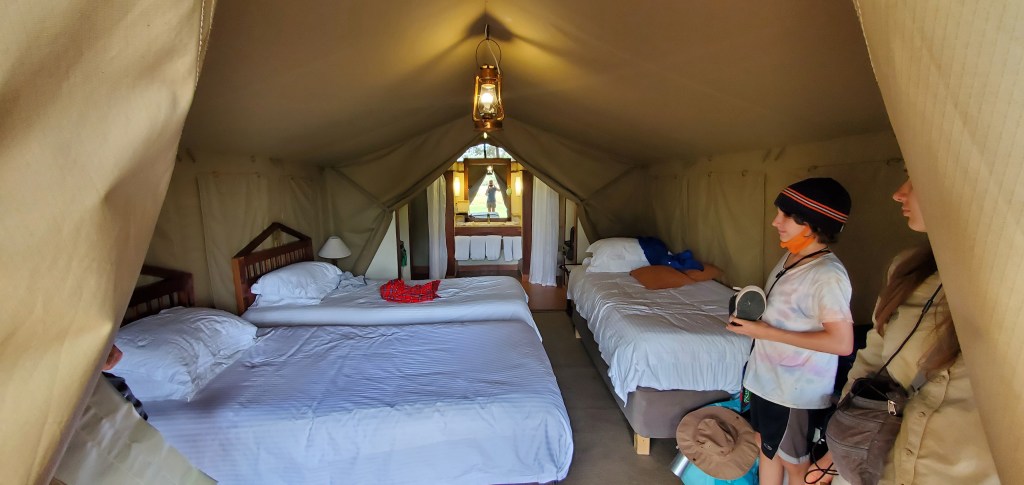
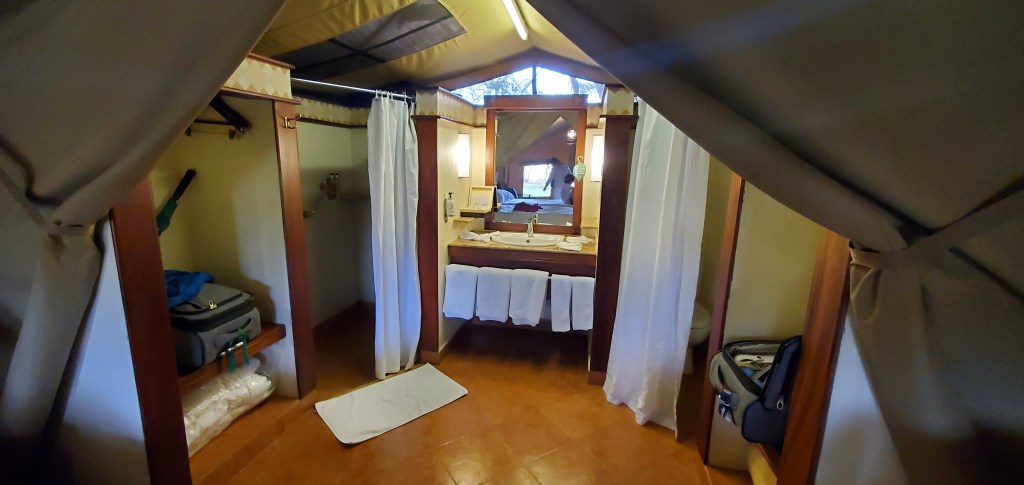
The camp itself was exciting for two reasons: 1) we were finally staying in tents (“tents”, as in attached full bath and all the conveniences, much nicer than even Hermione carried around in her little purse), and 2) the tents were wrapped around the perimeter of a very popular watering hole.
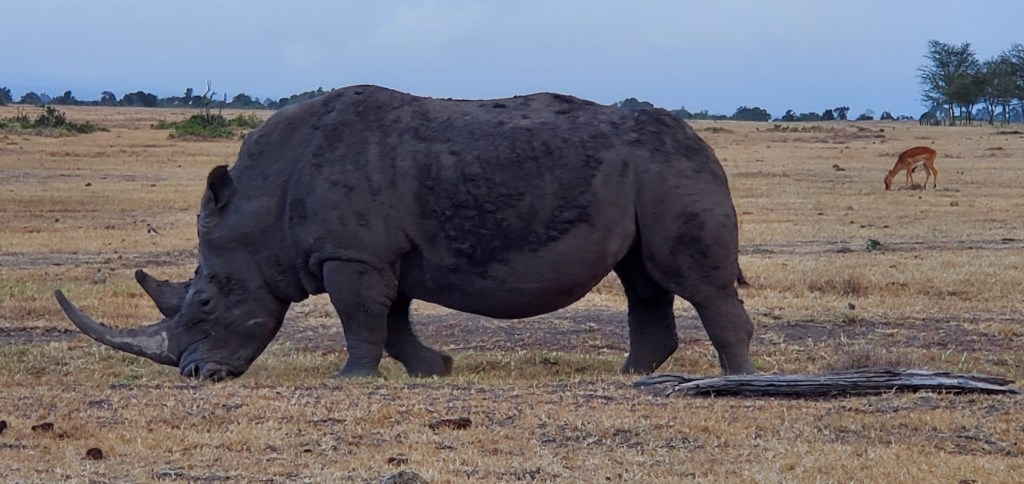
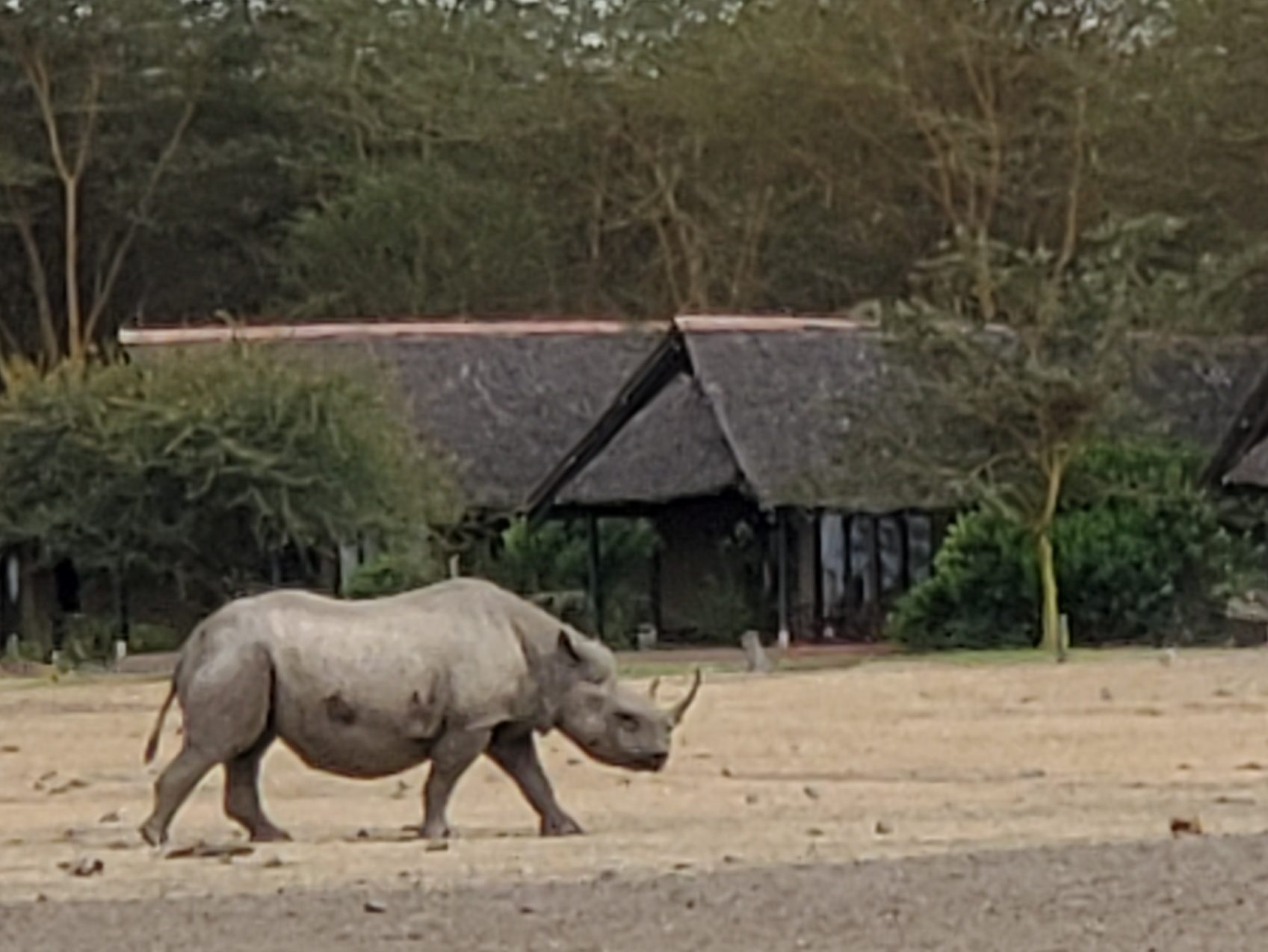
Right away, we saw our first rhino, just across the yard. I was so excited, I Instagrammed…a rare occurrence.
The next evening, after getting back from another game drive, we witnessed this at the watering hole—and the picture doesn’t do justice for all the animals that were streaming in. By dinner, it was mostly deserted.
The waterhole at Sweetwaters on our second evening after the afternoon game drive might be my favorite shot of safari thus far.
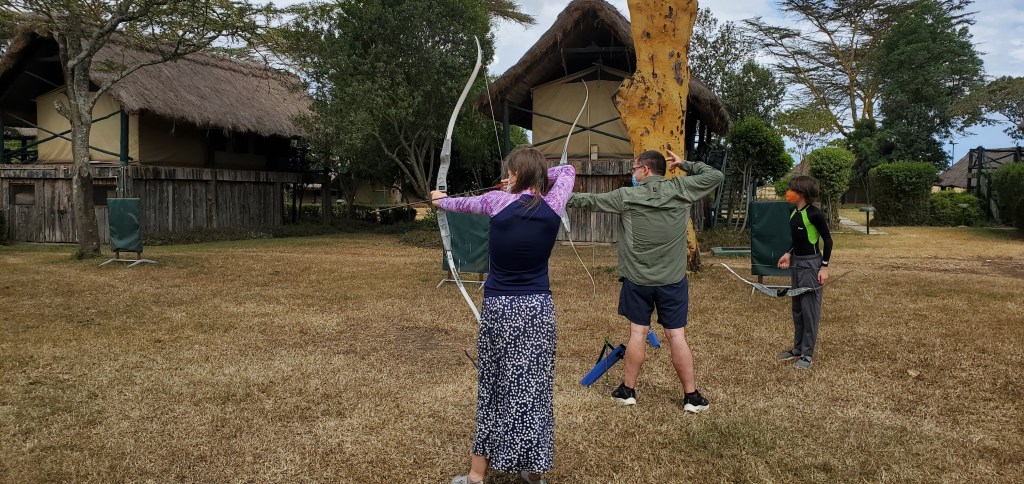
There was a brief attempt to go swimming, but it wasn’t a hot enough afternoon to enjoy an unheated pool, so the kids found archary instead.
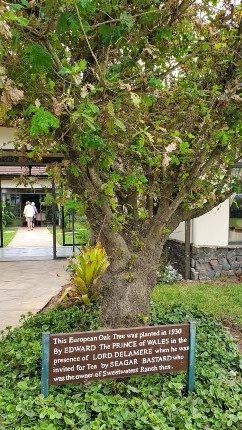
And just to add a touch of colonialism, there was this outside the dining room. It reads, in the most Brittish accent:
“This European Oak Tree was planned in 1930 by EDWARD the PRINCE of WALES in the presence of LORD DELAMERE when he was invited for Tea by SEAGAR BASTARD who was the owner of Sweetwaters Ranch then.”
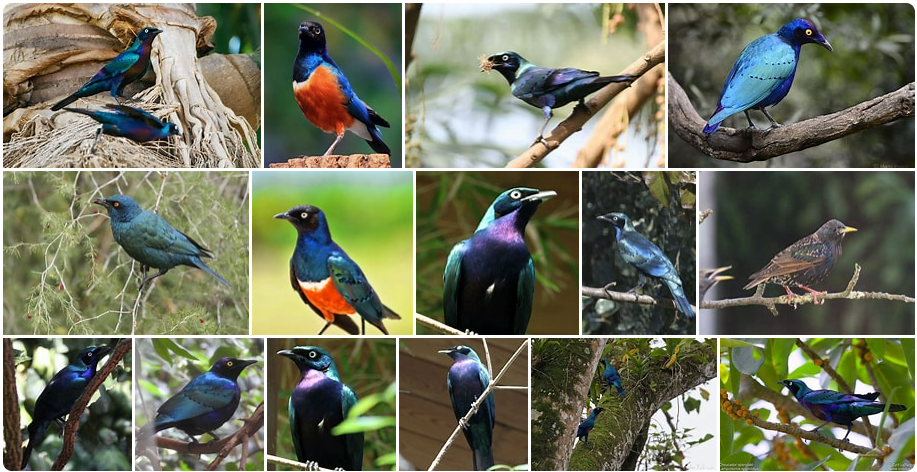
And I’m so glad I am taking a hiatus from my bird apathy because splendid starlings are more numerous than robins back at home–and they are…well, I was trying for radiant or shiny or irridescent, but I think splendid is the right adjective.
My pics didn’t turn out nearly this well, so another screenshot of Bing images.
Sweetwater Serena, you are as wonderful as your name!
Thank you for potty-training me when I was little. Otherwise, I would have had trouble containing myself and Kenya would be a little messier in my wake. I have been extremely excited as we have begun our safari adventure.
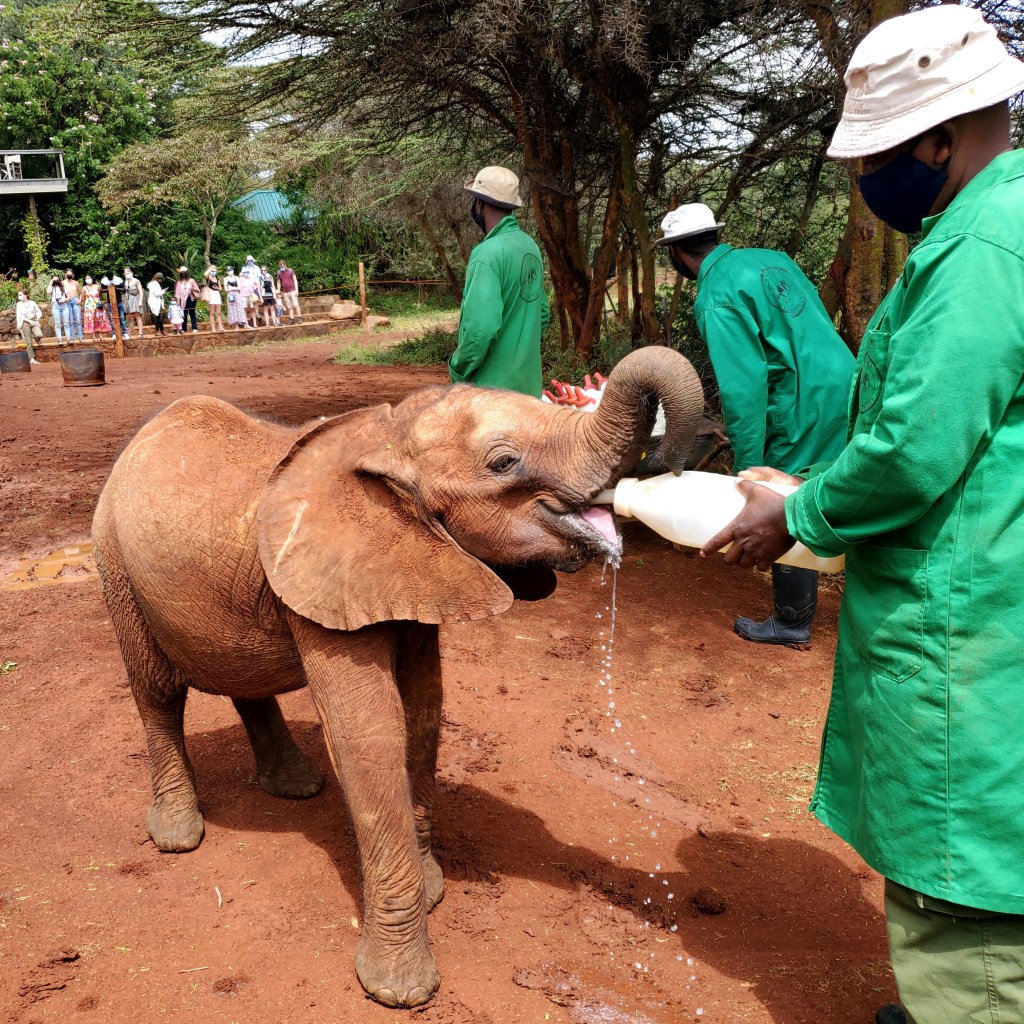
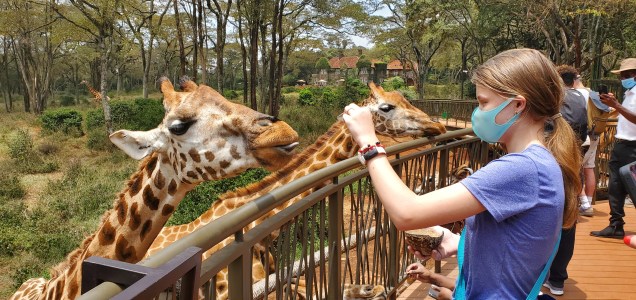
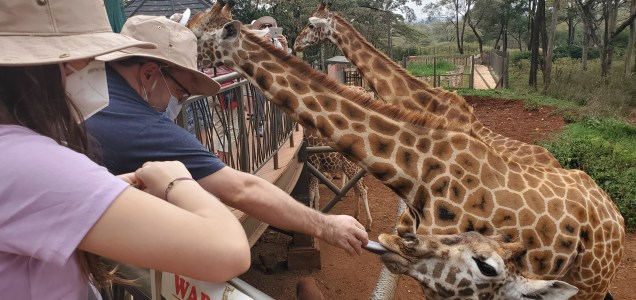
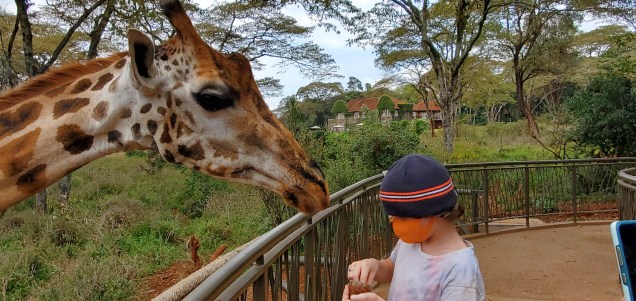
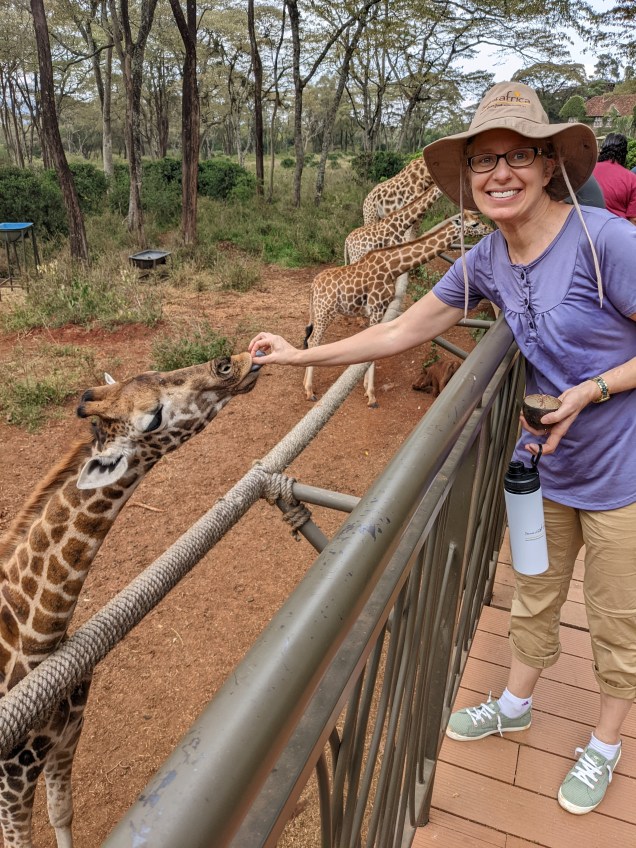
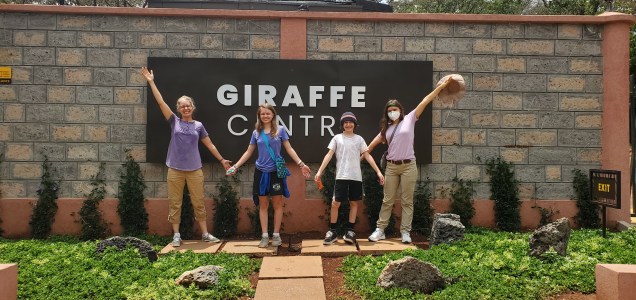
Today is our 4th day on Safari, and I have been absolutely drenched in African animals. The first day, we started at an Elephant Orphanage & Rescue, enjoying the baby antics during bottle-feeding, and the girls adopted an orphaned elephant for a year. From there, we drove to the Giraffe Centre, where we all got to hand feed, well, giraffes.
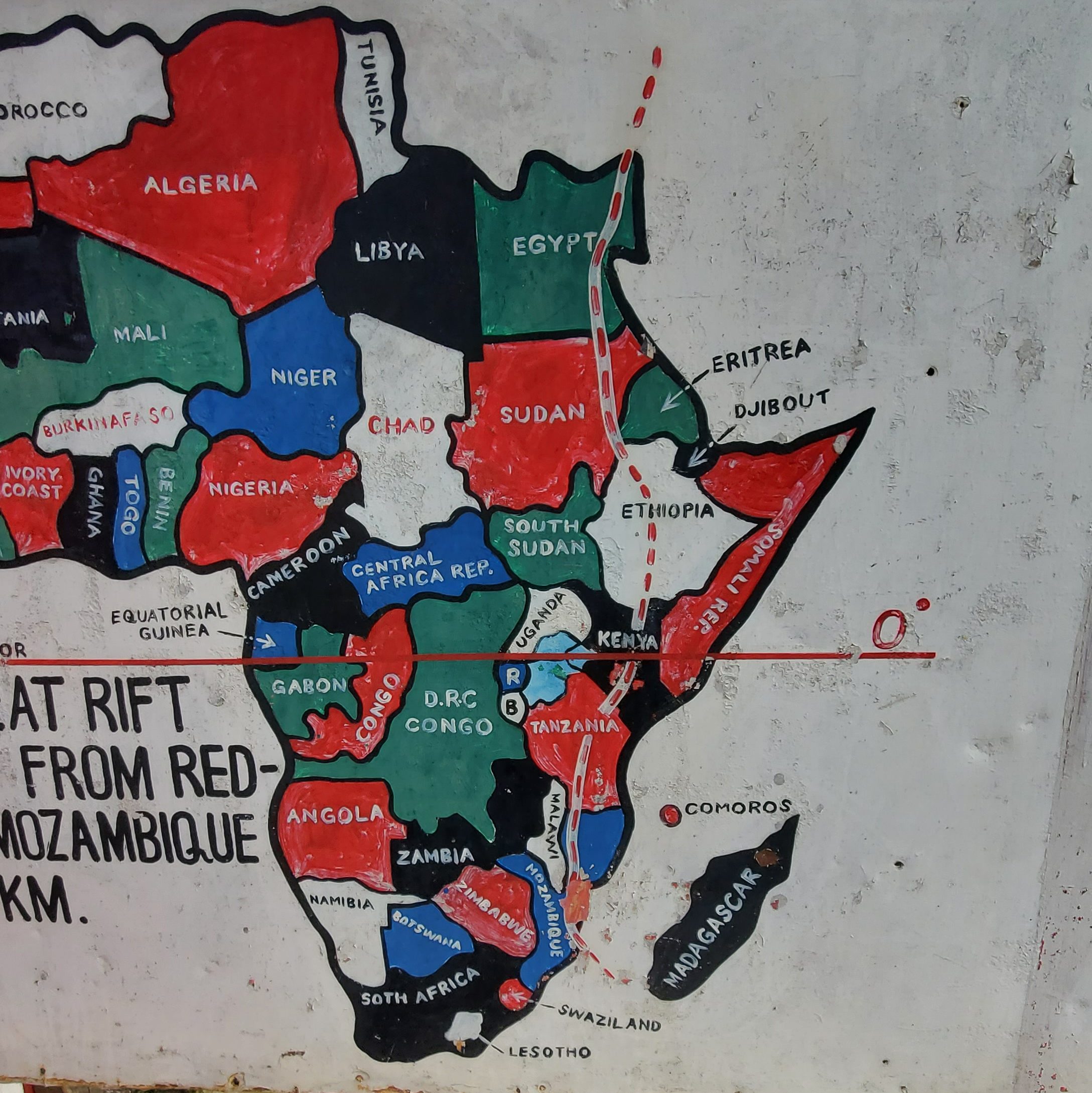
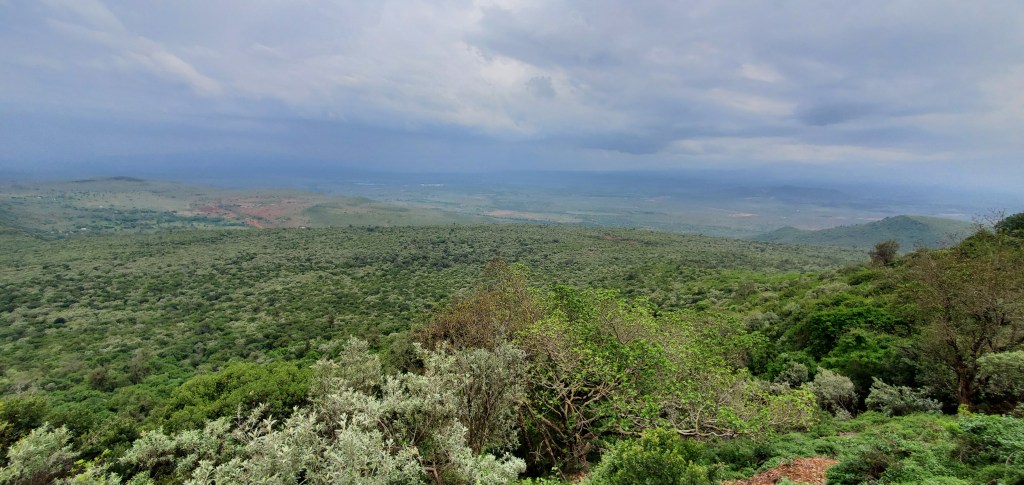
From there, we left Nairobi and drove toward the Great Rift Valley, where we got an amazing view of the valley and a quick geography lesson. Throw in a lecture about how the great rift is really a bunch of smaller rifts all put together, and we have an education. (Good thing I’m not in charge of knowledge. The sun would clearly be revolving around the earth and the Great Rift would just be one giant rift in an enormous continent. Also, we wouldn’t know how to make fire.)
View from a lookout point over a small section of the Great Rift Valley.
We arrived at Great Rift Lodge that afternoon but really hadn’t seen that many animals that hadn’t already been (figuratively) plattered for our viewing pleasure. That changed very quickly the next day.
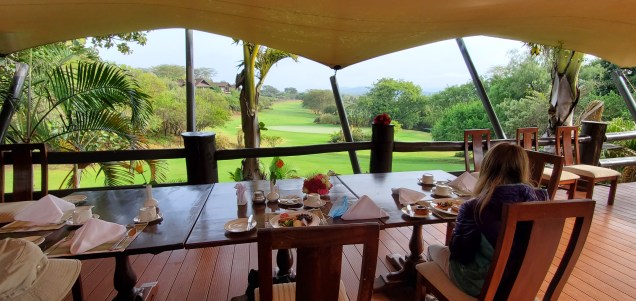
Great Rift Lodge, a “bush breakfast”**
Wes loved the pools
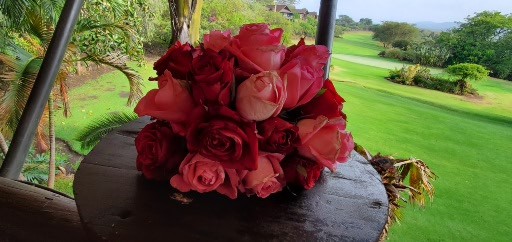
Kenya exports roses…but keeps some itself
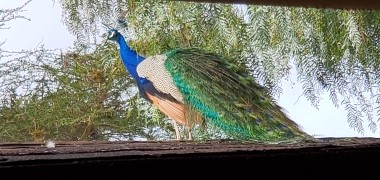
Lodge mascot
We began the day with a 6:30 bird walk. I was only mildly interested in birds before our Amazon and Galapagos adventures really turned me off to dreary-colored birds that I was supposed to spend the better part of a day admiring. But African birds? I am willing to take a hiatus from my apathy. But while we were looking at the ibis, guineafowl and weaver birds, impalas and zebras grazed nearby. A bushbuck trotted across a green while we made fun of the Egyptian geese (like Canada geese in every obnoxious way, but more attractive). We settled in for our bush breakfast overlooking the 14th hole*, where warthogs placidly ate.
These guys distracted me from the impalas, which distracted me from the birds we were supposed to be spotting.
Our driver had already arranged a boat tour for us at Lake Naivasha for the rest of the morning. The half-hour drive there flipped my skirt, or would have if I hadn’t been dressed safari-sensible. We spotted baboons, camels, ostriches, zebras, and storks just from the main roads.
And then it got better. In the two-hour boat ride, we came across dozens of hippos, partially submerged for the daytime relief from the sun. These guys, in particular, put on a show. Hippos usually show up at the top of Africa’s most dangerous animals, so our guide watched closely for bubbles near us. I lived to write this, so he was successful.
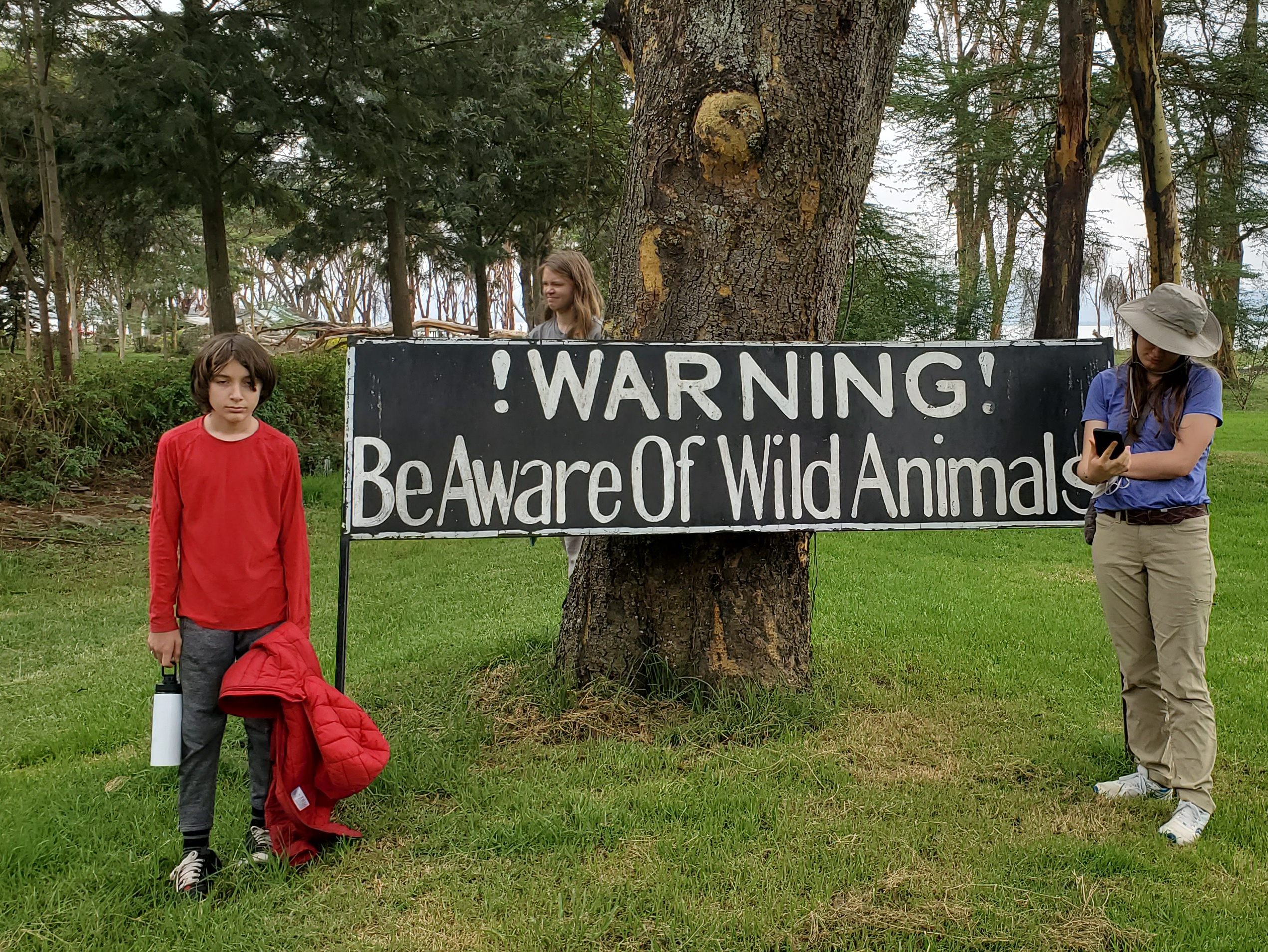
My Favorite Wild Animals (Yes, this is how they think animals look in the wild. Minus the phone, Kyla.)
At the lake, we also saw heaps of birds and even watched an African eagle catch a fish our guide tossed. I actually wrote down names of 37 birds that we saw and developed a bit of a crush on the pied kingfisher. We headed toward Crescent Island, where both Out of Africa and Born Free were filmed. It’s now a bit of an oasis for grazers, who were brought in as scenery and left without predators. Again, we saw zebra alongside waterbuck, gazelles and (hurray!) giraffes.
Waterbuck, gazelles, ibis, zebra, and possibly impala
On the third day, after a long drive, we arrived at our second camp, Sweetwater Serena, in Ol Pejeta Conservancy. Here, Africa really started showing off. After finding our tents and a white rhino (!) at the watering hole, we were ready for an afternoon drive and ran across lions almost right away.
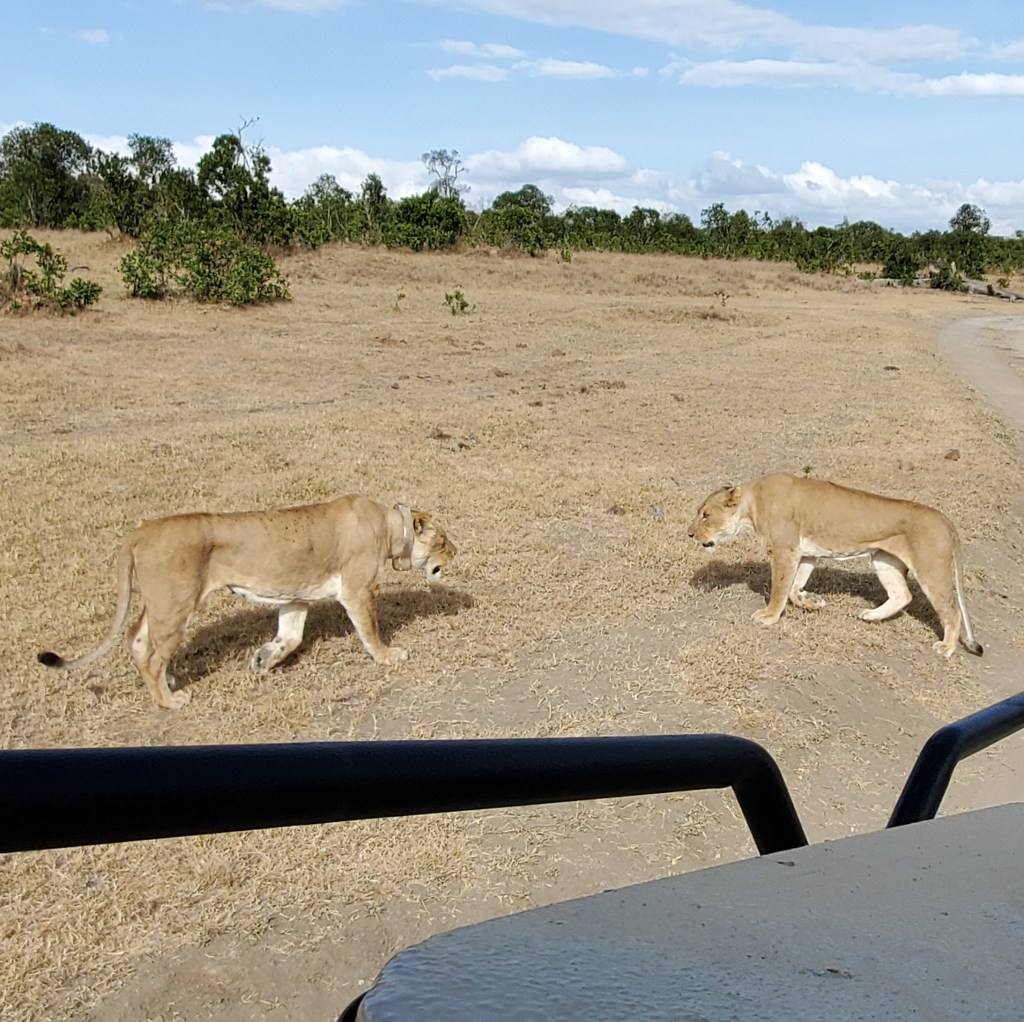
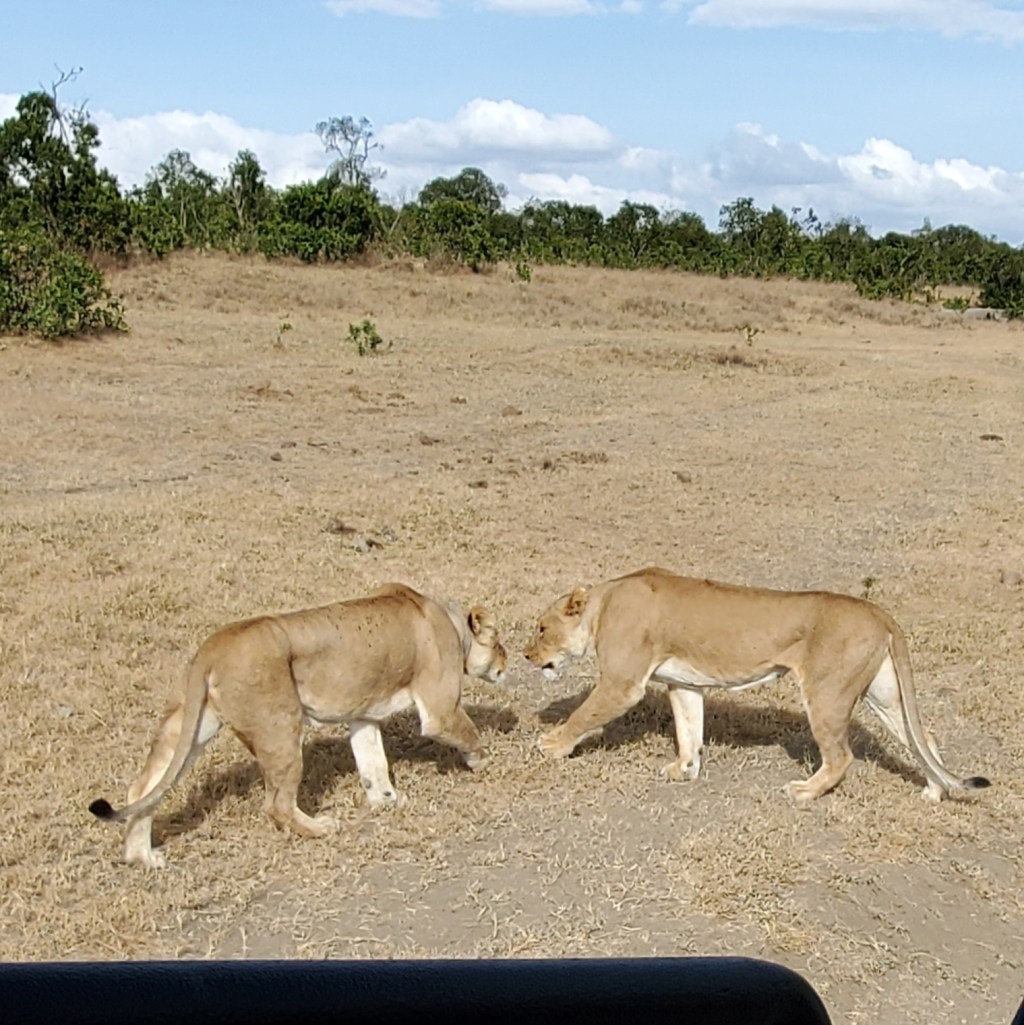
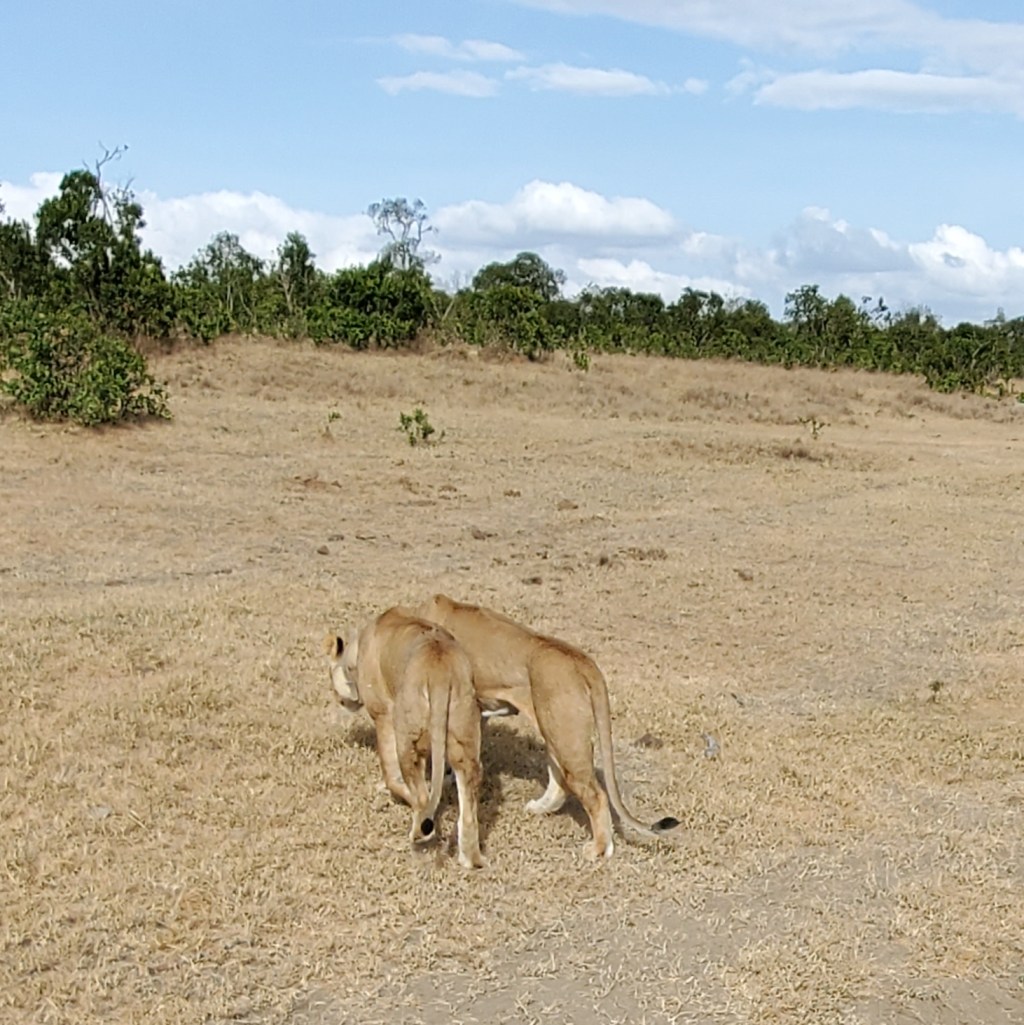
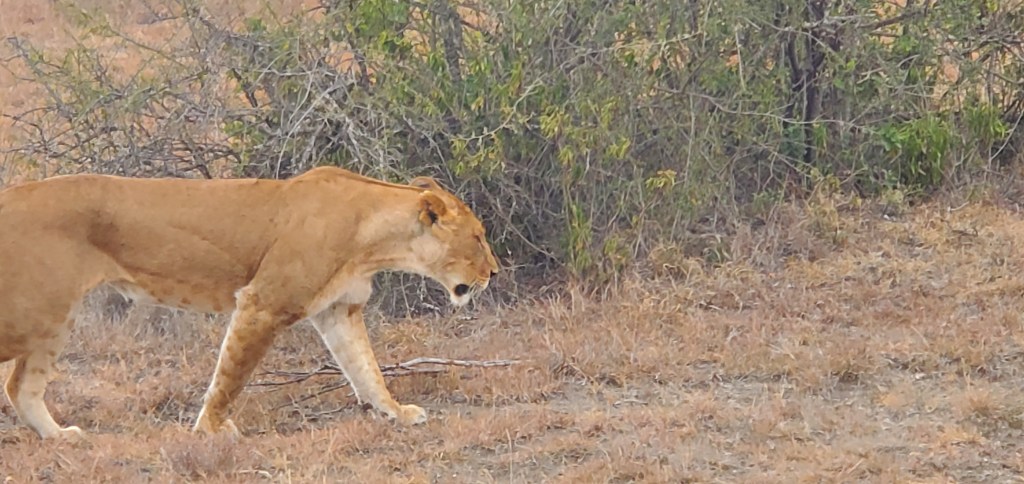
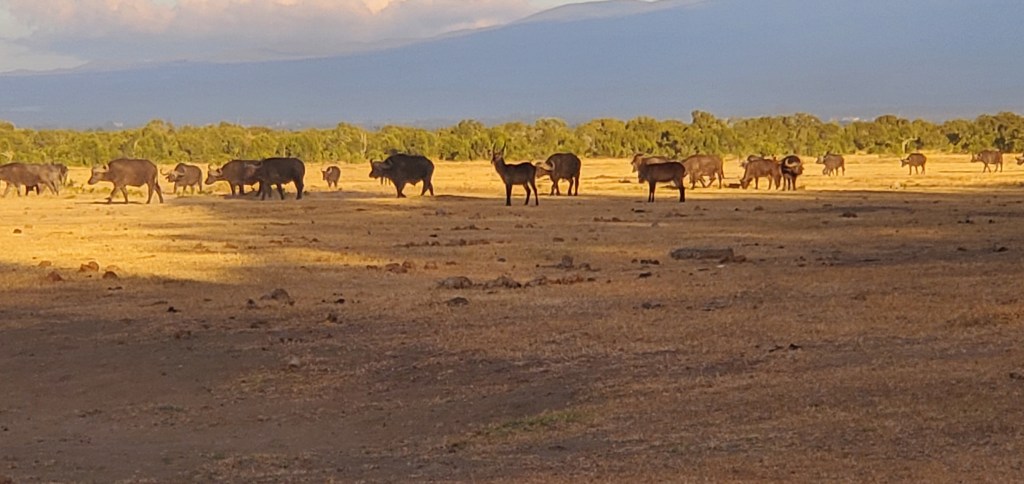
We spotted a lioness hanging out on a bit of a hillside when our guide spotted another one trotting across the marsh, making the herds of cape buffalo, impalas, and waterbucks a wee bit nervous. The sisters met up right in front of our jeep and went off to the bush together. Not much later, we came across King Lion himself, determined to get his 20 hours of sleep in before bedtime. Fortunately, our guide speaks lion and got the beast to briefly open his eyes. We had been looking for elephants but decided a Lion (and rhino) Day was more than acceptable.
Wish you were here! Dad, you would love just seeing the country, and Mom would get a kick out of game rides.
Love,
Denise
*Pure fiction: I have no idea which of the 18 holes the dining room overlooked.
**We found out later that we were charged services fees for these meals outside. I was a little annoyed because we sat at our inside table and were escorted outside to enjoy the view twice. It was cleared up eventually. We also pay for the bottled water, but they were opened for us just as we were sitting down, with no chance to ask for bigger or fewer bottles. This is the only place that we were charged for anything we didn’t explicitly ask for.
Note: Between low concurrence of downtime, internet, and creativity, it can take me 2-8 days to write a post and add photos. So the most fictional part of the post is the publish date–it is aspirational, not accurate.
Today, the girls and I did 8.5 hours of game drives.
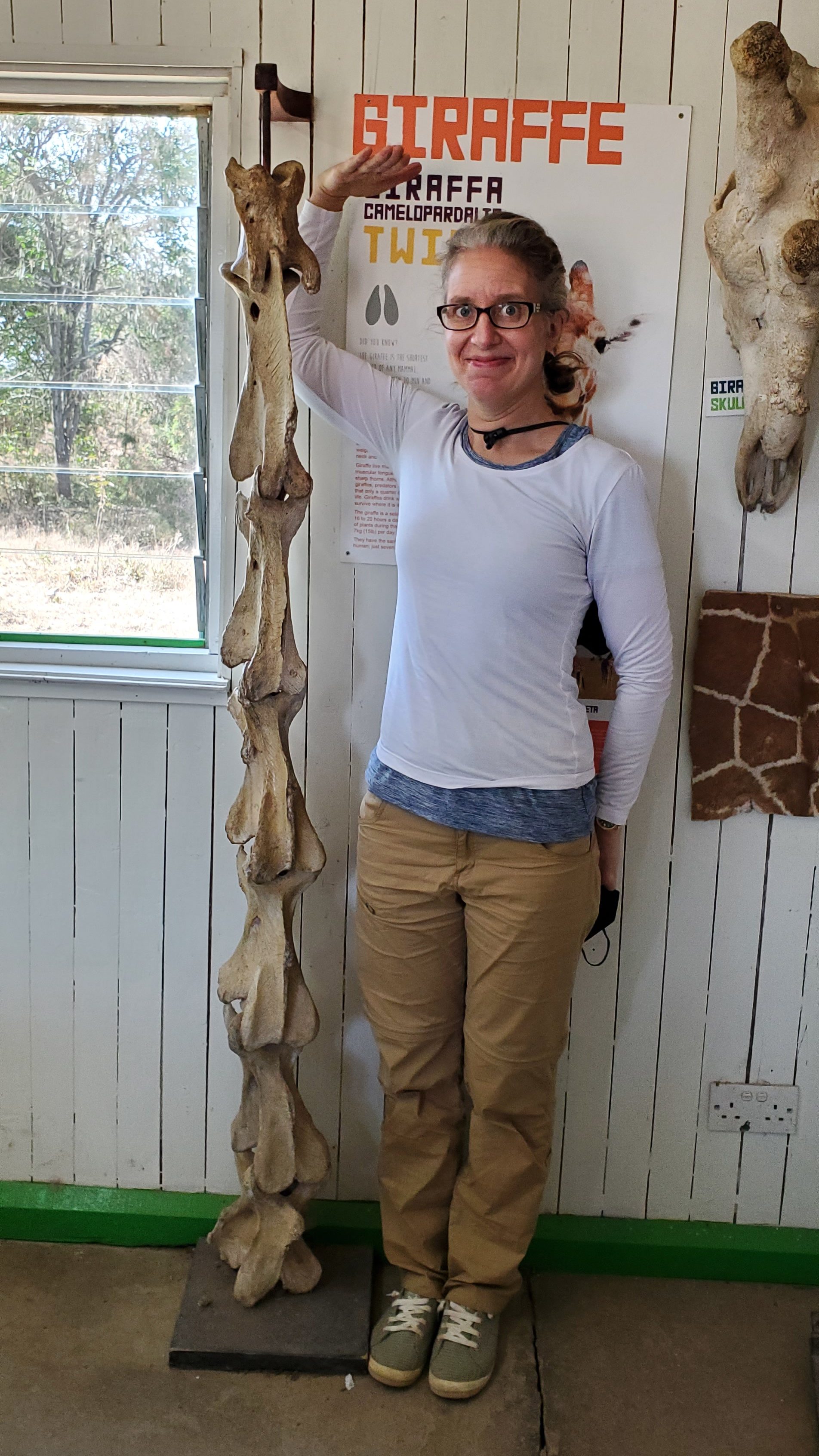
Denise v. Giraffe vertebrae. Giraffe wins.
We all started with a fabulous drive in the morning. We did a few hours of exploring in the jeep and found our elephants (many times over!), then stopped to meet Baraka, the blind black rhino. We also took in the Education Center (which managed to make education entertaining enough to engage Wes, so check school off for today!), drove some more, and then visited the chimpanzee sanctuary again, with a much better guide before returning to camp for lunch.
This is Wes at the beginning of the drive (standing up to “surf” in the Land Cruiser was a highlight for him). Let me assure you, emphatically, this is NOT him by hour 4.
Wes was stick-a-fork-in-it done after the 4.5 hour morning drive, and Dwayne was being Amazing Papa with him, so the girls and I did another game ride in the afternoon, took a quick break, and then did the camp-led night drive with a spotlight. We got to see more lions in the afternoon, and could even spot (with binoculars) three cubs playing in the brush under a tree, where they had been left with stern admonitions to stay there and be good while the lionesses hunted.
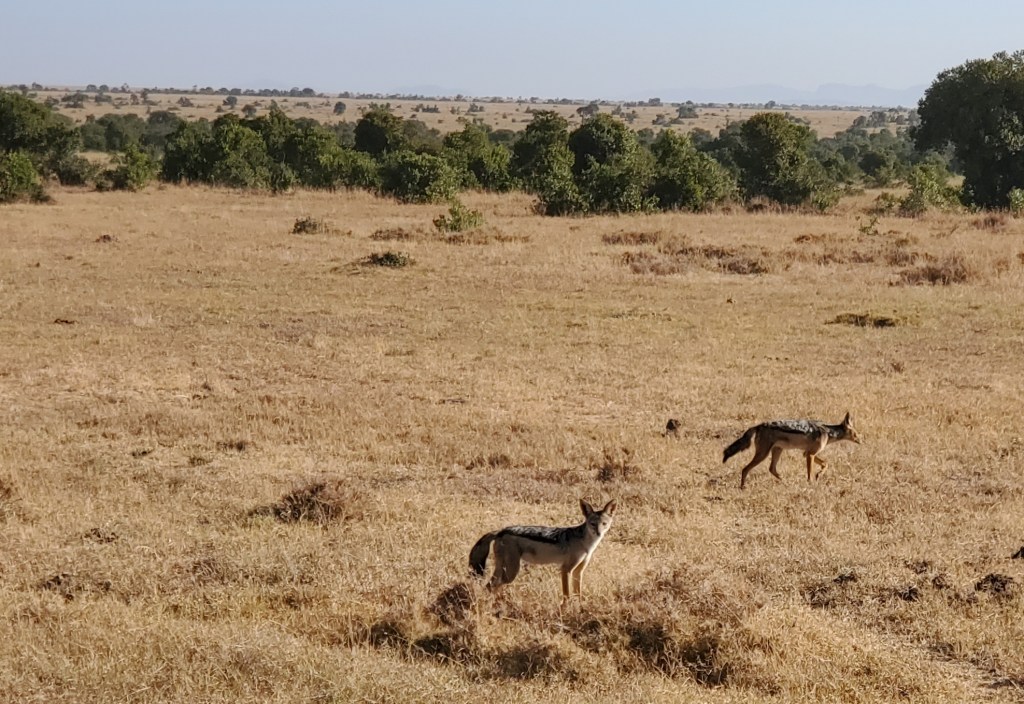
The night drive was disappointing. We got to check a few more animals off our list—hyenas (and even two pups) and a white-tailed mongoose, but an hour of the drive was spent seeing no animals at all, and the rest of it poorly seeing animals we had seen a lot of during the day. But it’s the night drives that are either the most interesting or the most dull, so we lost just one round in an otherwise winning game. (See, I can even toss in bad puns without breaking a sweat!)
I can’t do justice to all the animals we saw and I’m certainly not going to make you wade through all the pictures of elephants, lions, zebras, antelope, rhinos and giraffes I took. We did get to see the rhino graveyard and glimpe the last two living northern white rhinos. Fortunately, poaching is down to zero a year so the recent graves are from natural causes, include Sudan, the last male northern white rhino. With harvested sperm and eggs, Ol Pejeta is going to try surrogacy to keep the subspecies from going extinct.
A cross section of an elephant skull.
I Didn’t Know This!
I knew birds have honeycomb bones to make them lighter, but I had no idea that elephant skulls are also honeycombed, to reduce the weight of this 6-beastie. Um, elephant legs are solid bones, but I bet you already guessed that.
Did we pay for all this the next morning with overly tired children? Yes. That morning began a 3-day streak of fighting over (5) charging cords between three children. Does the math work out? Yes, they each had at least one cord. Did that matter? No. No, it definitely had no bearing on the quarreling or the outcome. At first, I was very frustrated by this. Then I realized that the same idiotic rows happen between our youngers at home as well, so I might as well be dealing with it in Kenya as in the US.
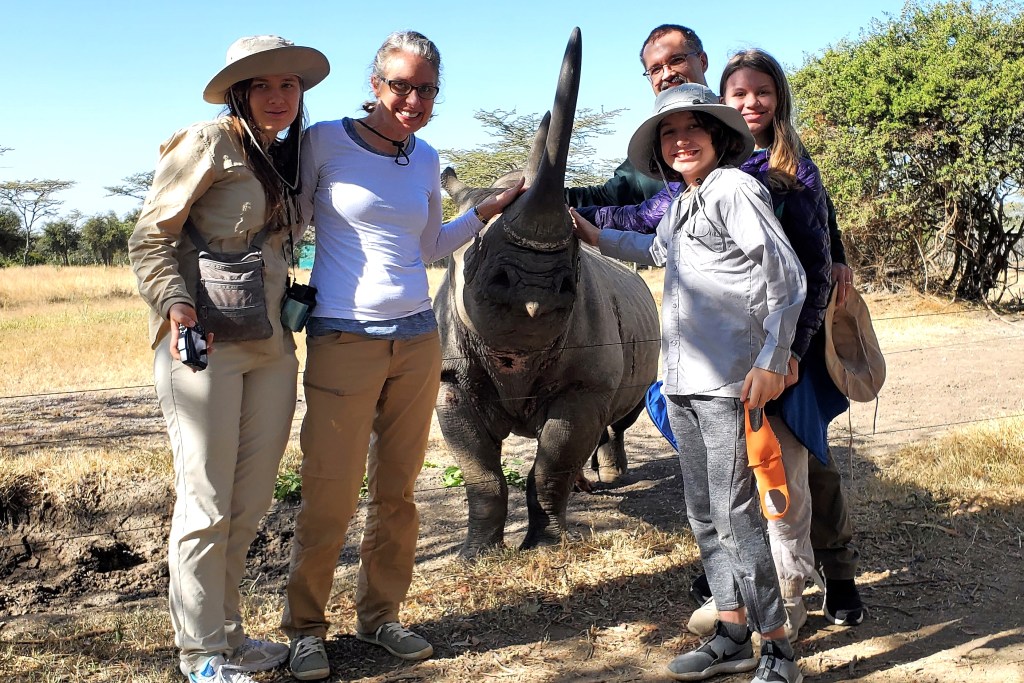
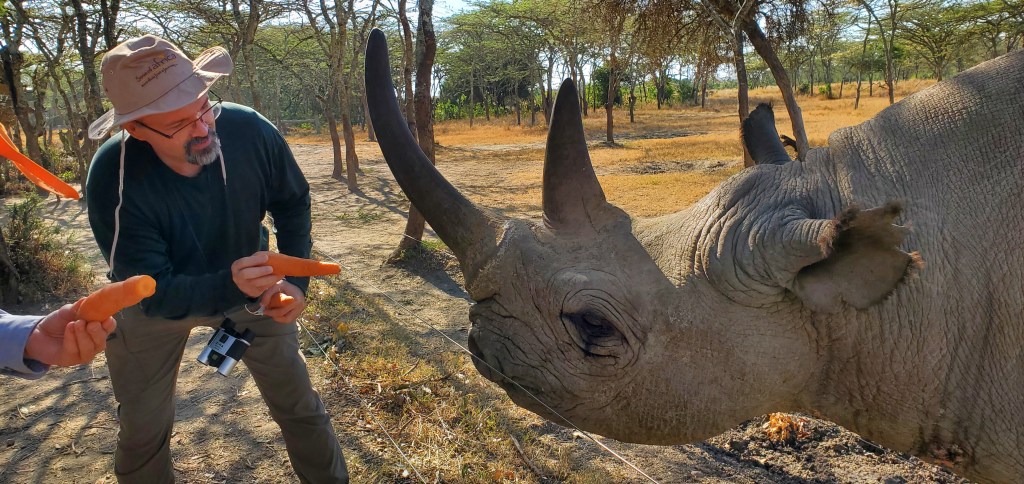
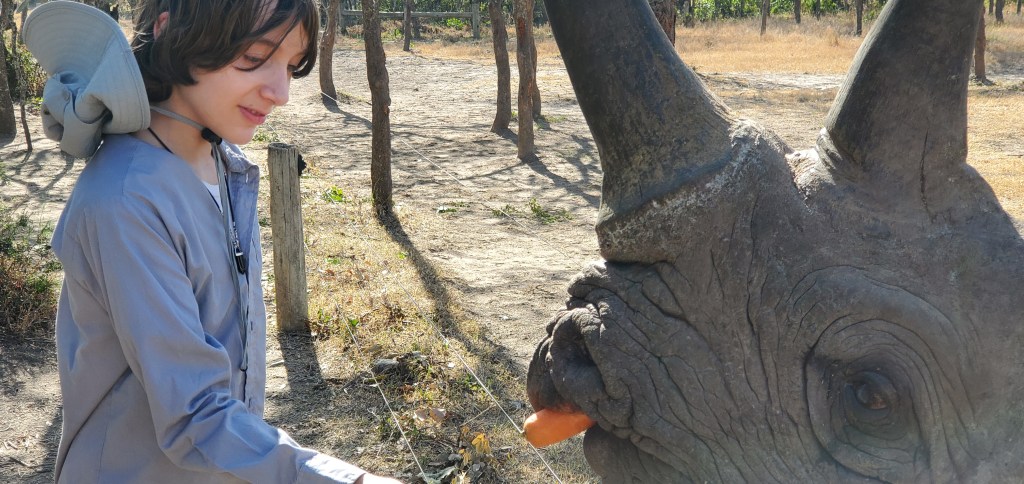
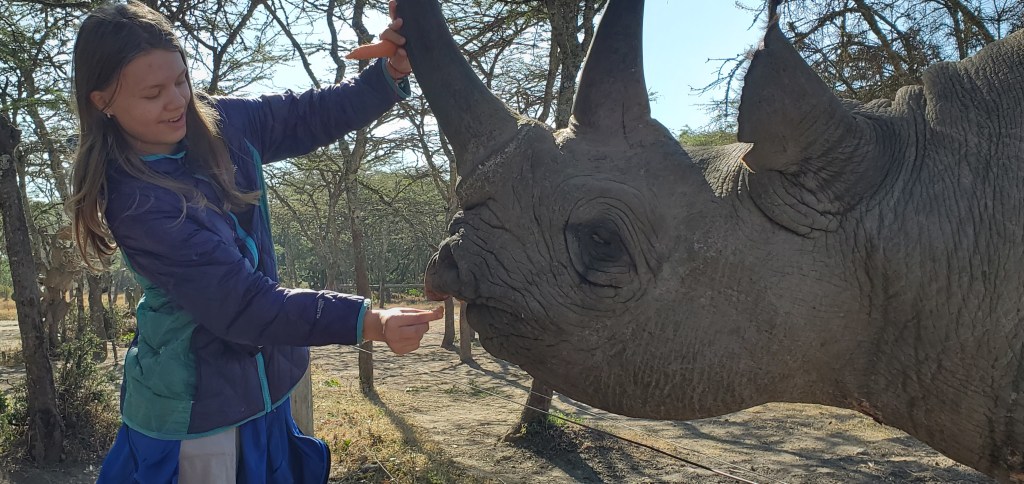
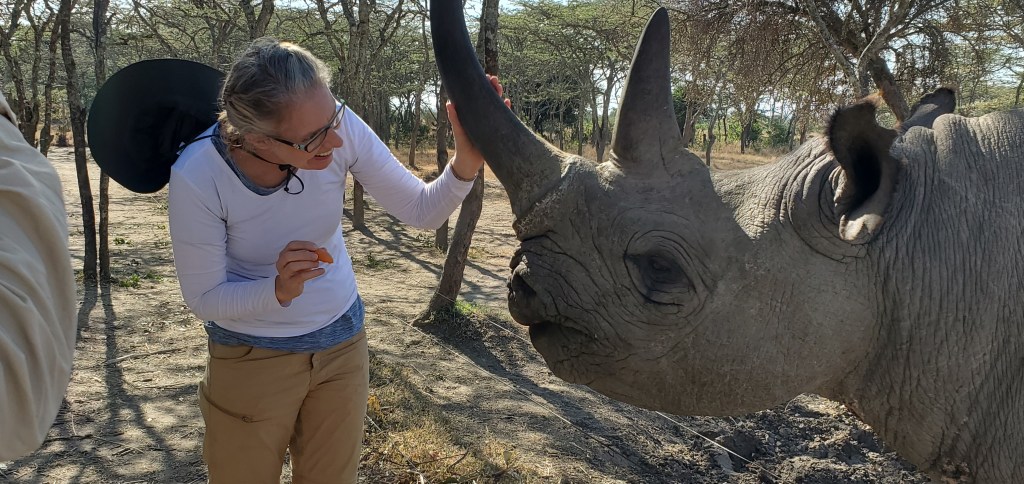
I think all my fellow liberals can agree that Baraka means blessing (okay, so it actually does, in Swahili, a fact outside of partisanship). This black rhino lost one eye in a bar fight and then the other to cataracts. Rhinos have limited vision anyway, but not having any is pretty much a death sentence. Baraka has become a blind ambassador for rhino conservancy in Ol Pejata Conservancy. And he let us feed him carrots and give him scritches, so I have been fully ambassadorisized*.
*I’m considering making a resolution to bastardize at least one word in each post. It’s quite entertaining to sucker-punch spellcheck, although very much like biting the hand that helpfully edits for me.
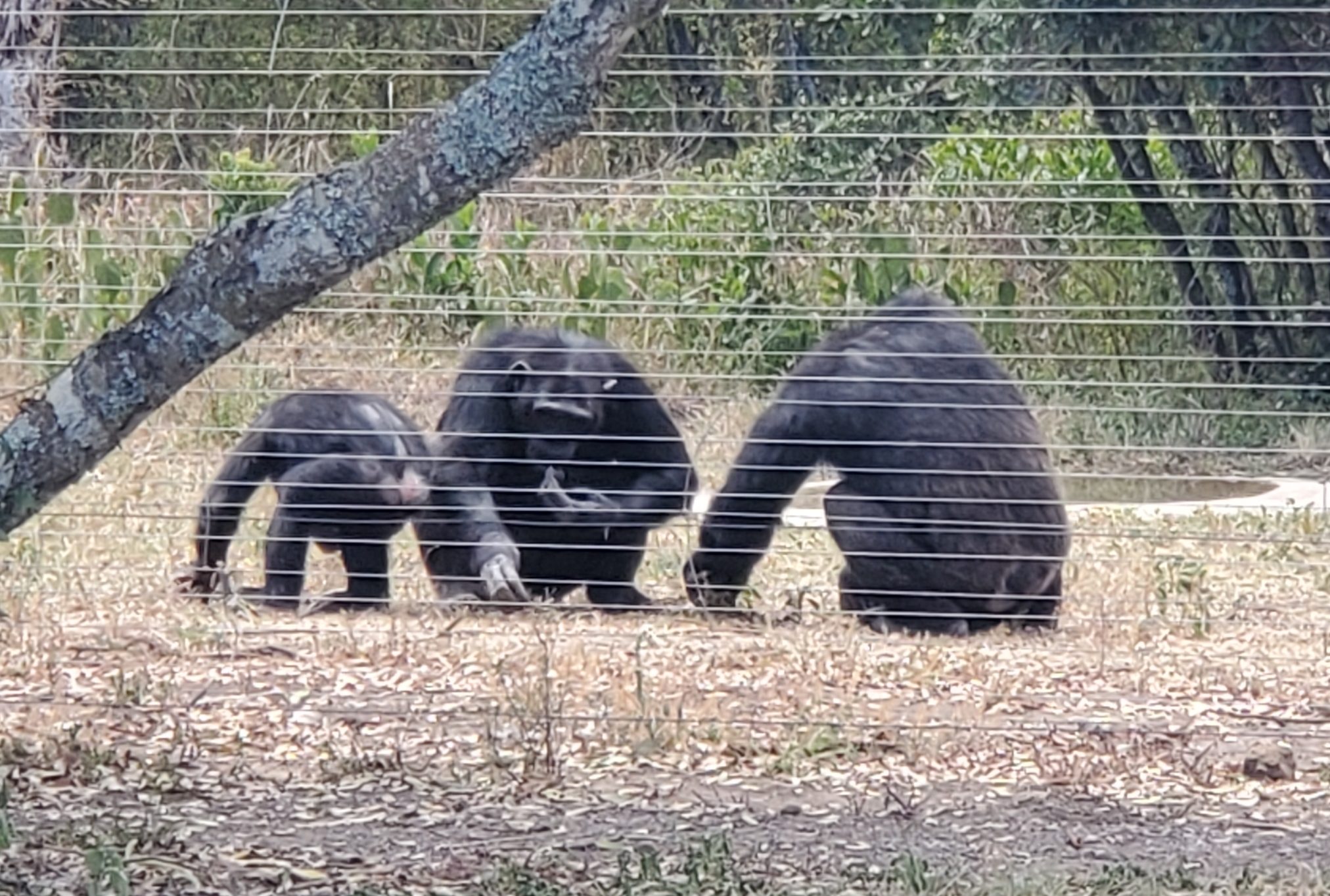
Chimpanzees are not native to Kenya so finding this rescue is a bit of a surprise. The sanctuary takes in chimps mostly from conflict areas and those illegally adopted as “the cutest pet ever”, until they get to be about ten years old and demonstrate just how strong and wild they are. The chimp park is worth reporting on mostly because of this:
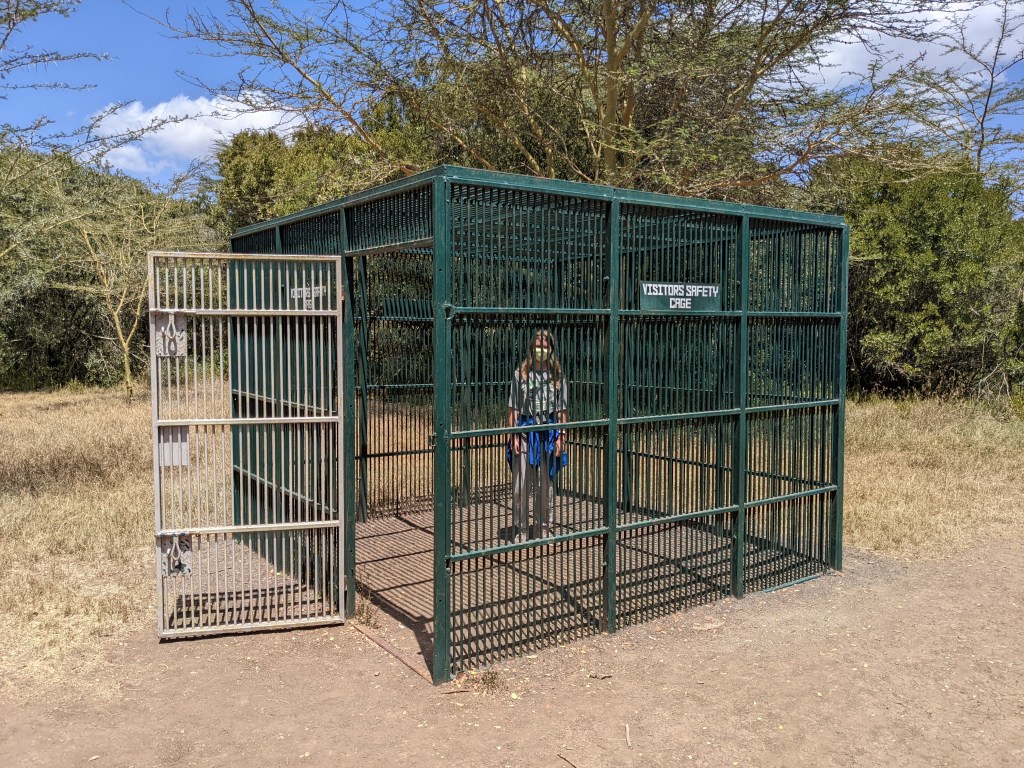
The sanctuary is double fenced, and in that gap area, there is a human containment cage with reinforced steel along all facets. Why is this necessary? Because there are two chimps who are extra-clever and extra-strong. One has learned how to put two wires from the electric fence to short-circuit it then escape the first stronghold. If/when this happens, there is an immediate call out for all humans to go into the cage until the chimps can be bribed or sedated back into their sanctuary.









































 Needopedia