Dear Cats, Don’t be Alarmed…

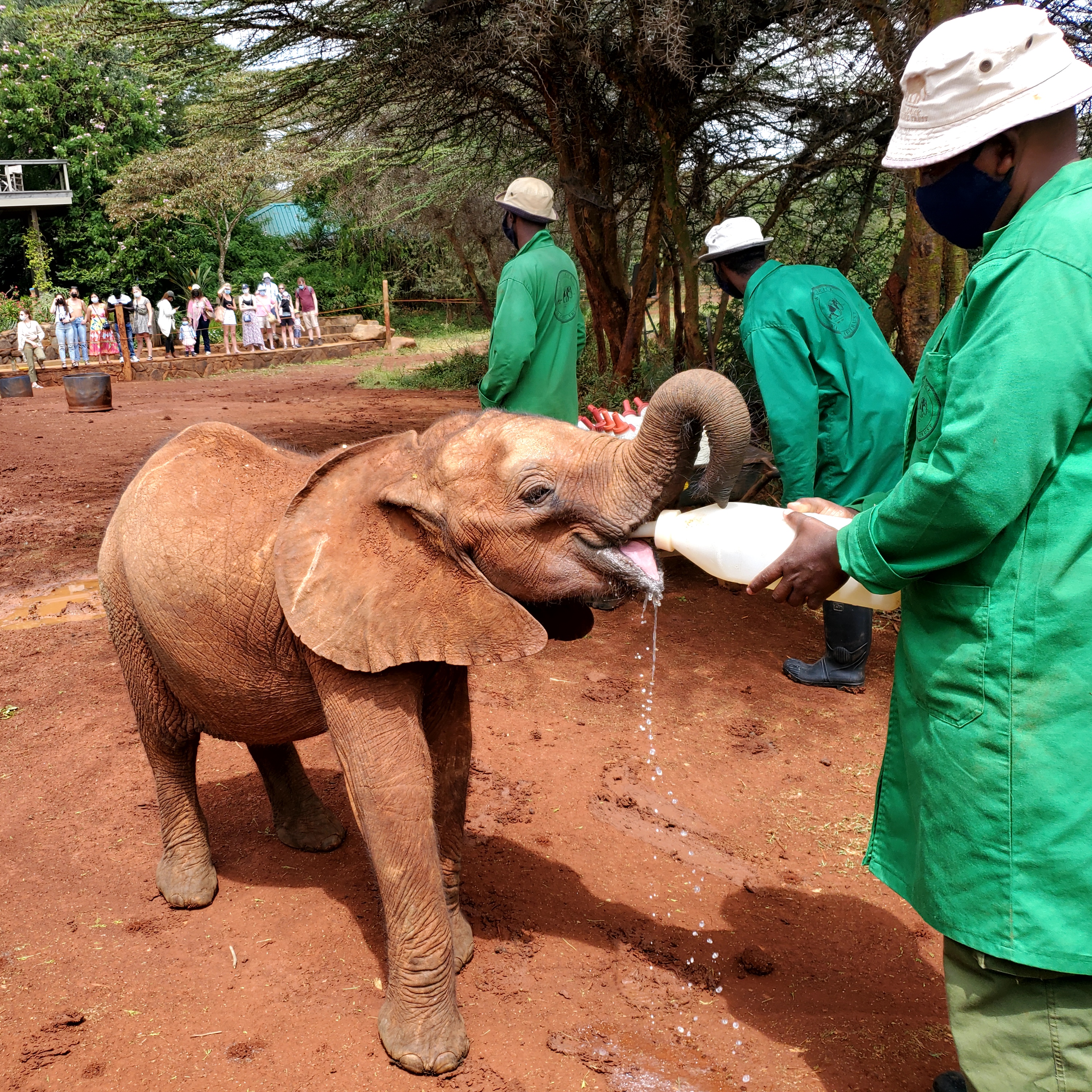
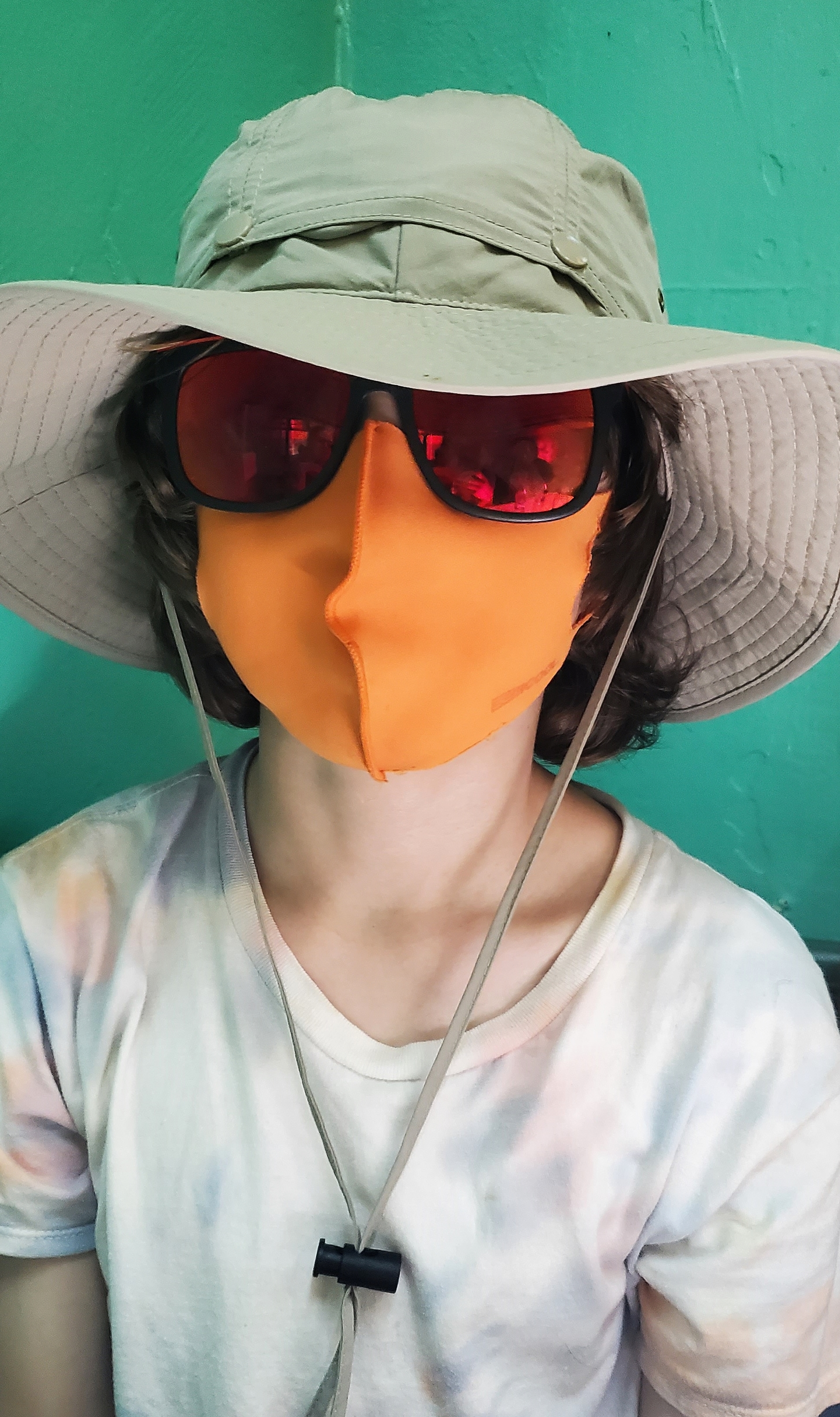
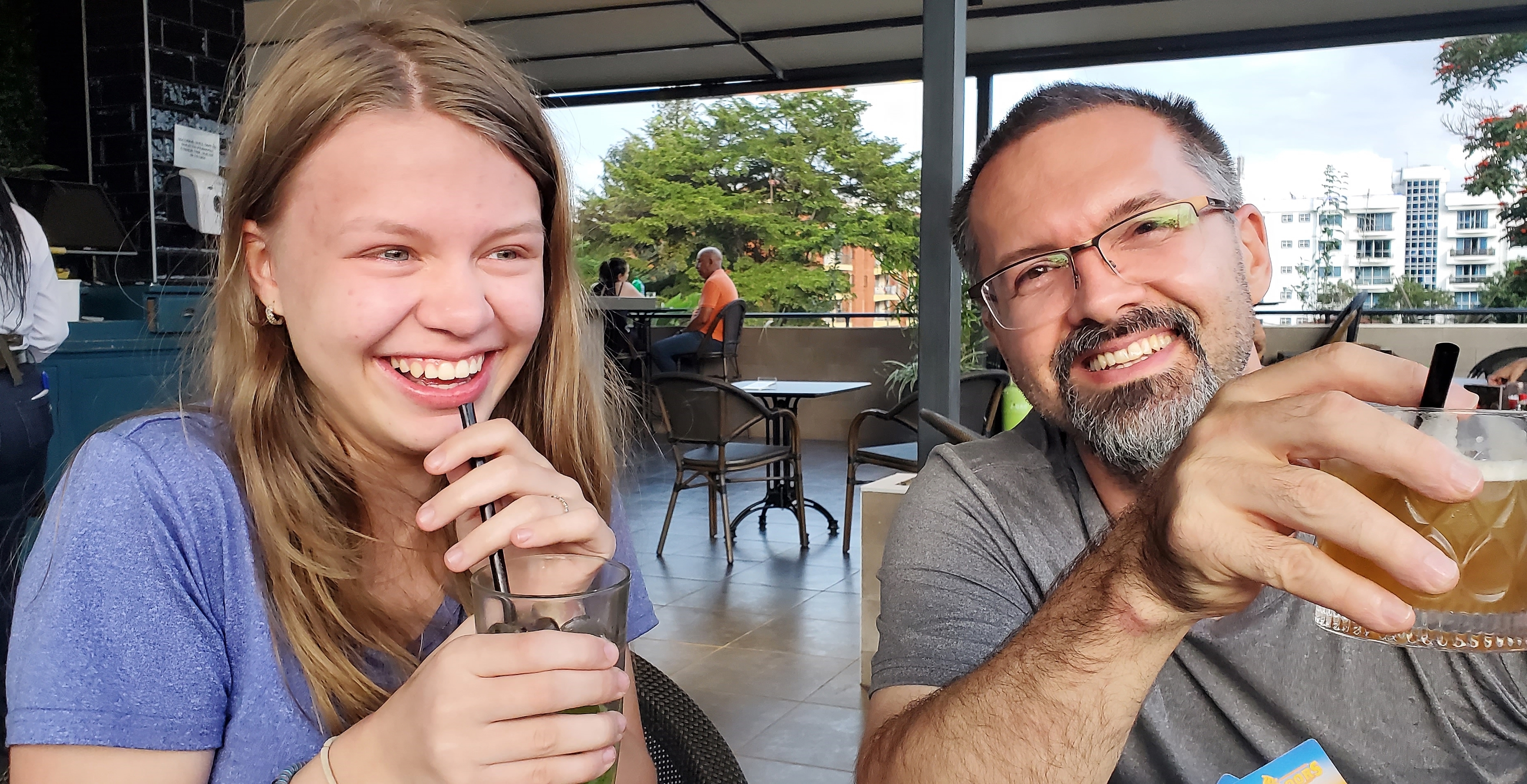
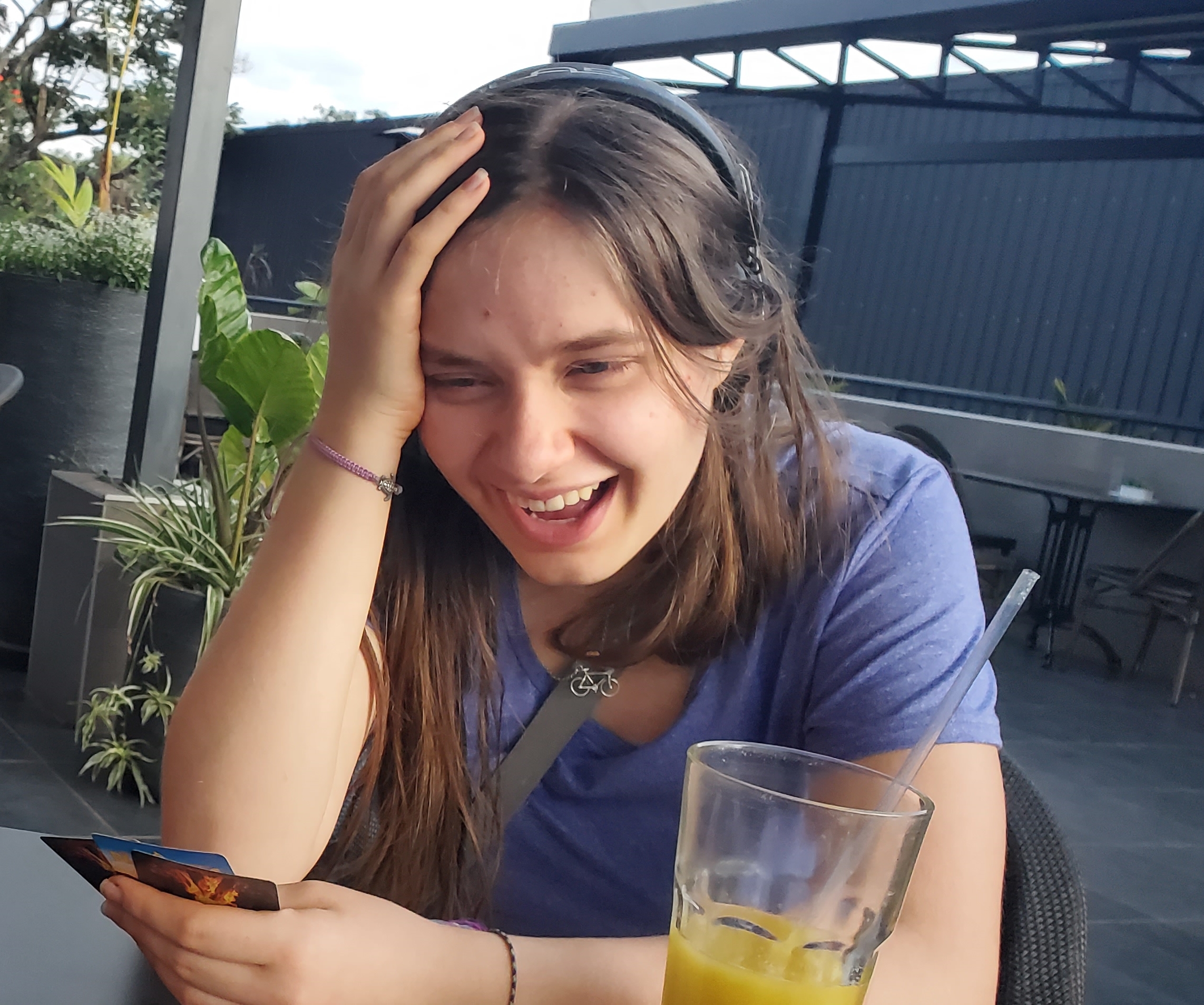
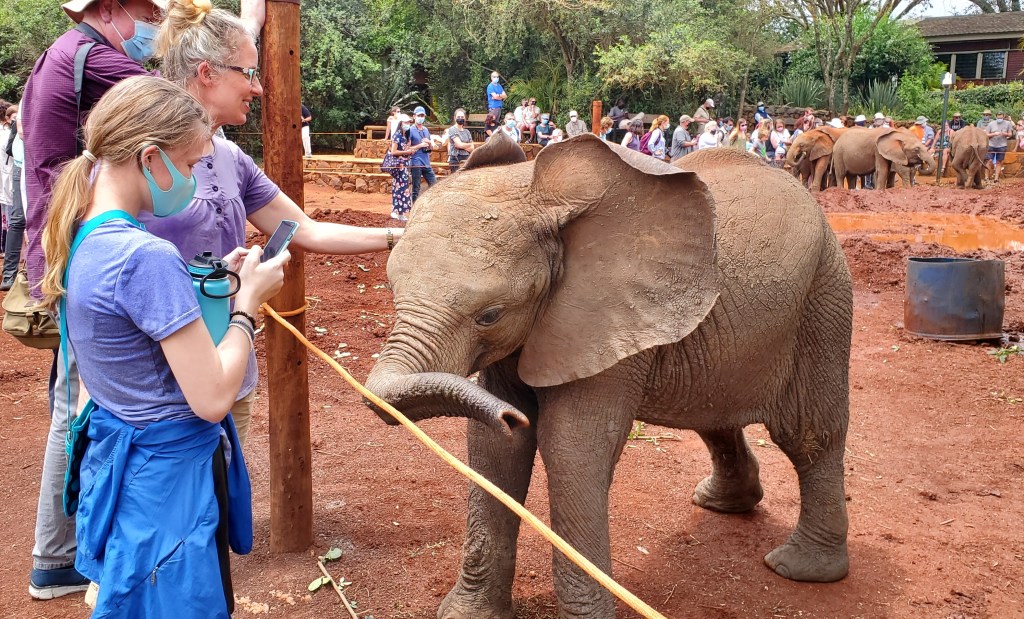
Piper and I fawning over our newest pet, Kerrio

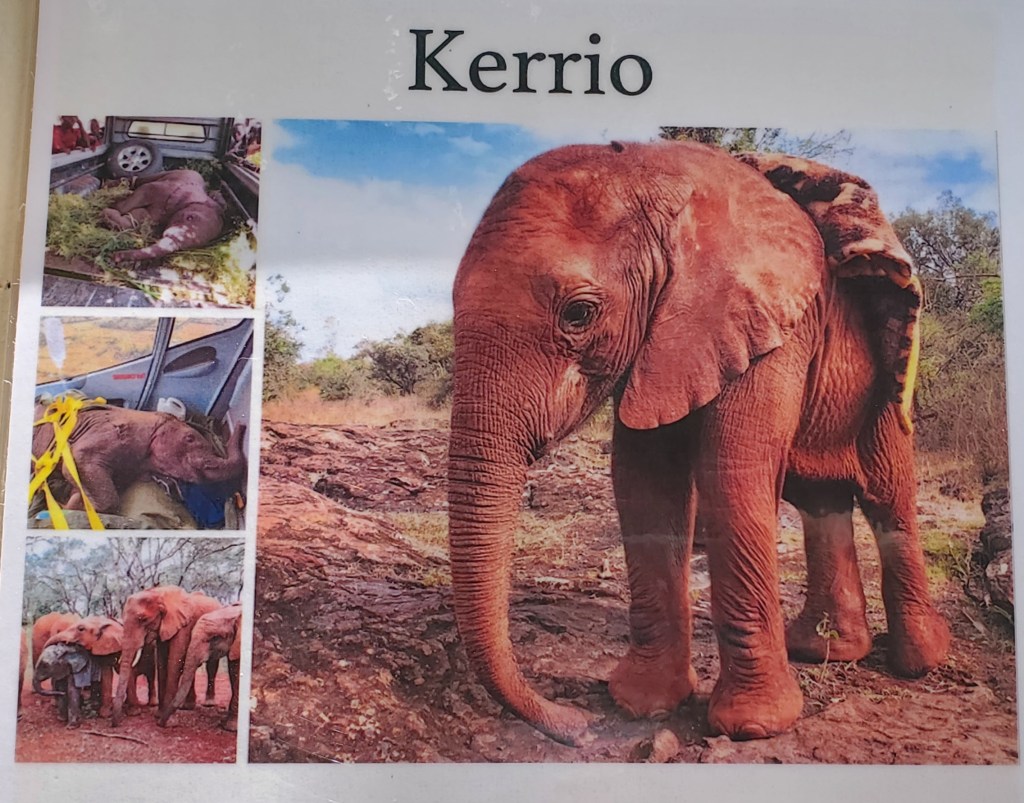
…but Piper and Kyla just adopted a baby elephant. Unfortunately, we are unable to take her home because she must stay with her care team and her friends at the Daphnie Sheldrake Elephant Orphanage in Nairobi. But the girls will get monthly updates on Kerrio’s progress, and I’m sure they will share them with you so you can also see Kerrio grow. When she is about 4 or 5, she will go with a few friends to the bush, and keepers will stay with her until she is accepted/adopted into a new herd. She will be wild again!
Honestly, she might be a little wild now. Piper and I got to pet her and Kerrio was enjoying the feel of mud on her trunk. She swung and got Piper fully on the leg, red mud and all. Piper was smitten. The keeper wagged his finger at her, and I can now tell you that finger-wagging doesn’t work on children, cats (ahem), and elephants.

The kids miss you all! Please, leave the mice and baby rabbits alone, okay? Or I might try harder to replace you with something less destructive. Like an elephant.

Luke-warmly,

Your feeder


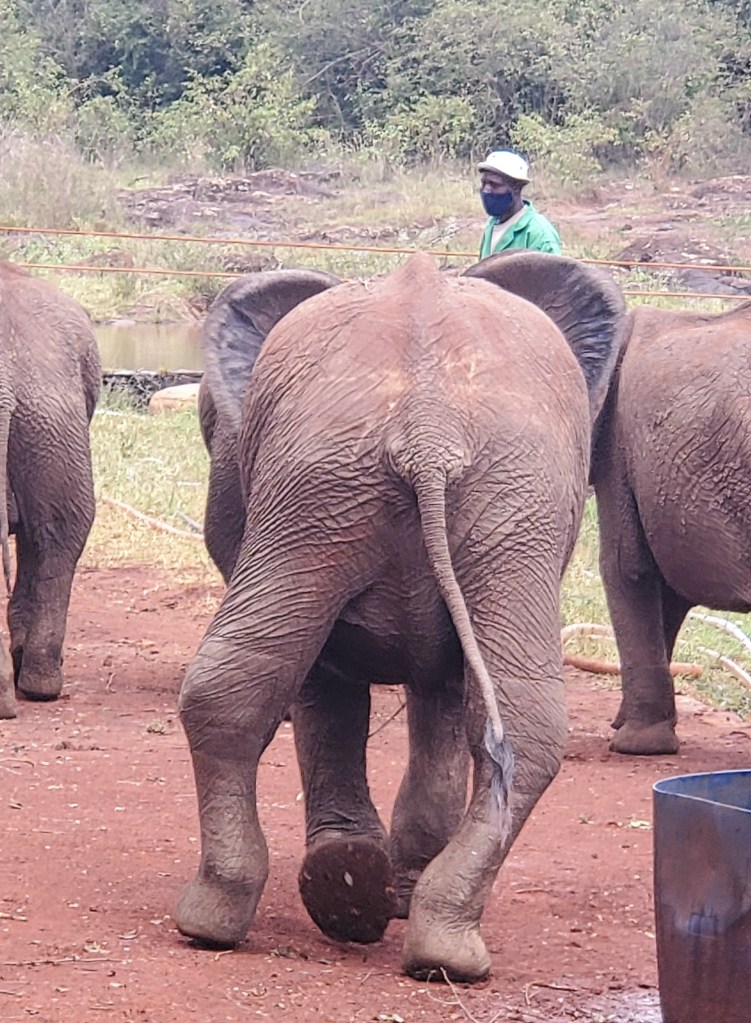
The Sheldrake Centre is open 10-11am every morning so admiring tourists can watch the baby elephant orphans be bottle-fed and learn of their stories. We were introduced to 21 babies this morning and we (read: Piper) wanted to take them all home.
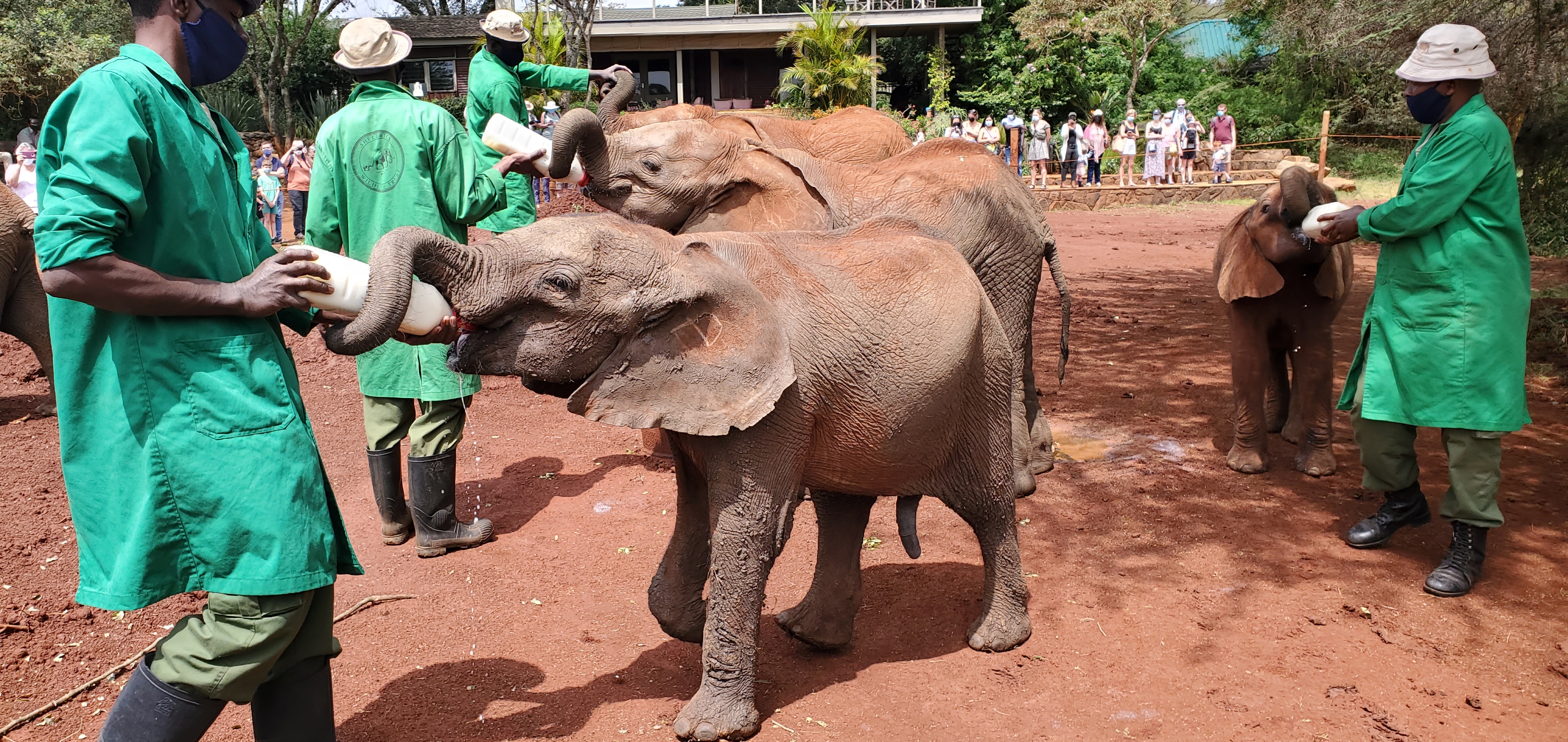
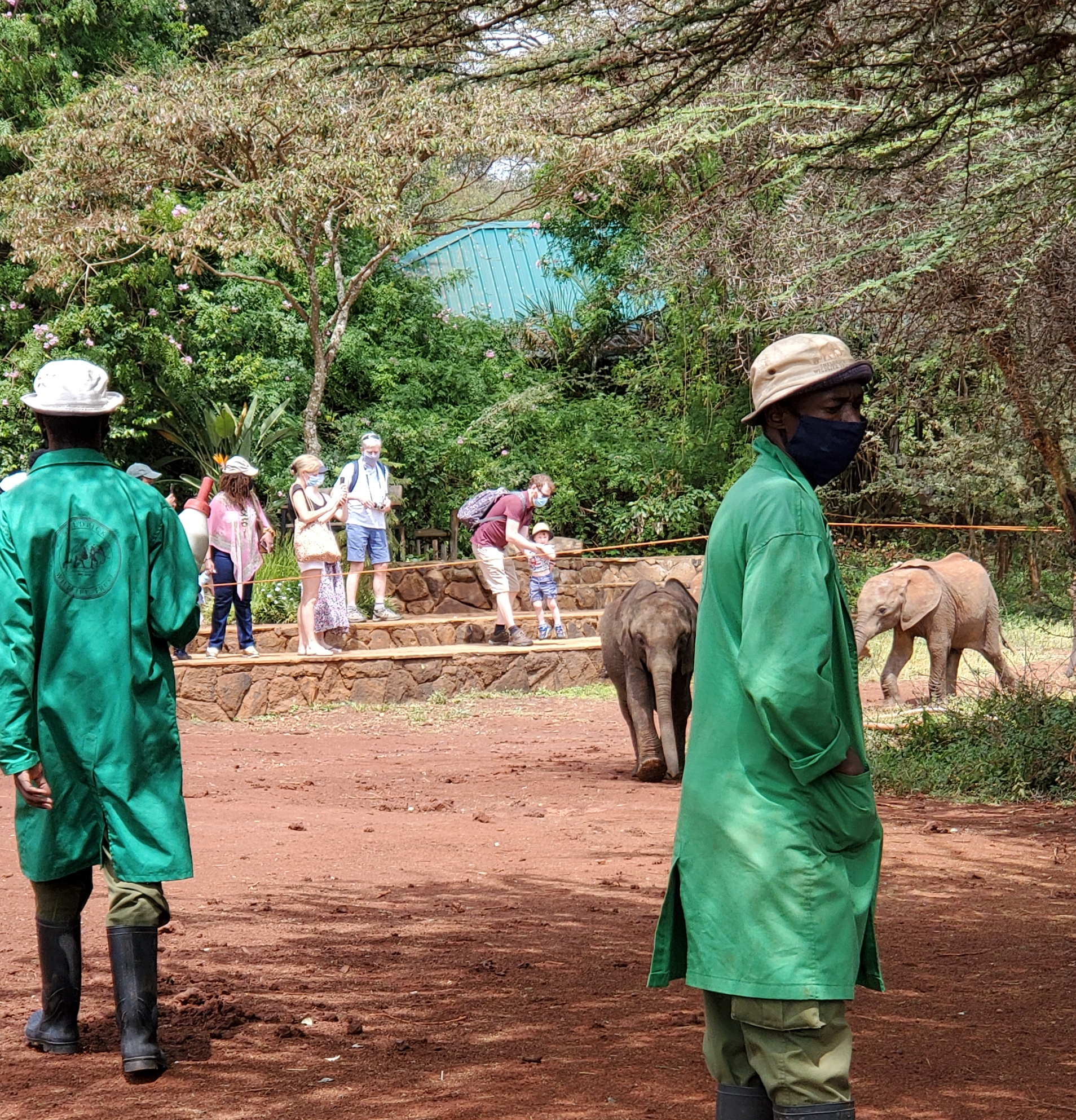
Fun fact: Human babies might suck their thumbs, and baby elephants also like to self-pacify!

Two of the babies actually appeared abandoned by their herd and their mother, rather than being separated by conflict or death. At first, keepers were puzzled by an abandoned girl, until they got her to the refuge and realized she had epilepsy, with episodes several times a day. Now she is on medication, and has improved significantly. The other abandoned elephant was this guy, with severely bowed legs. He would not have been able to keep up with the herd, and so may have just been left behind. He may become a lifelong resident at the refuge, like a blind rhino that has been there about 15 years.

What a perfect start to a safari!

Kazuri Beads

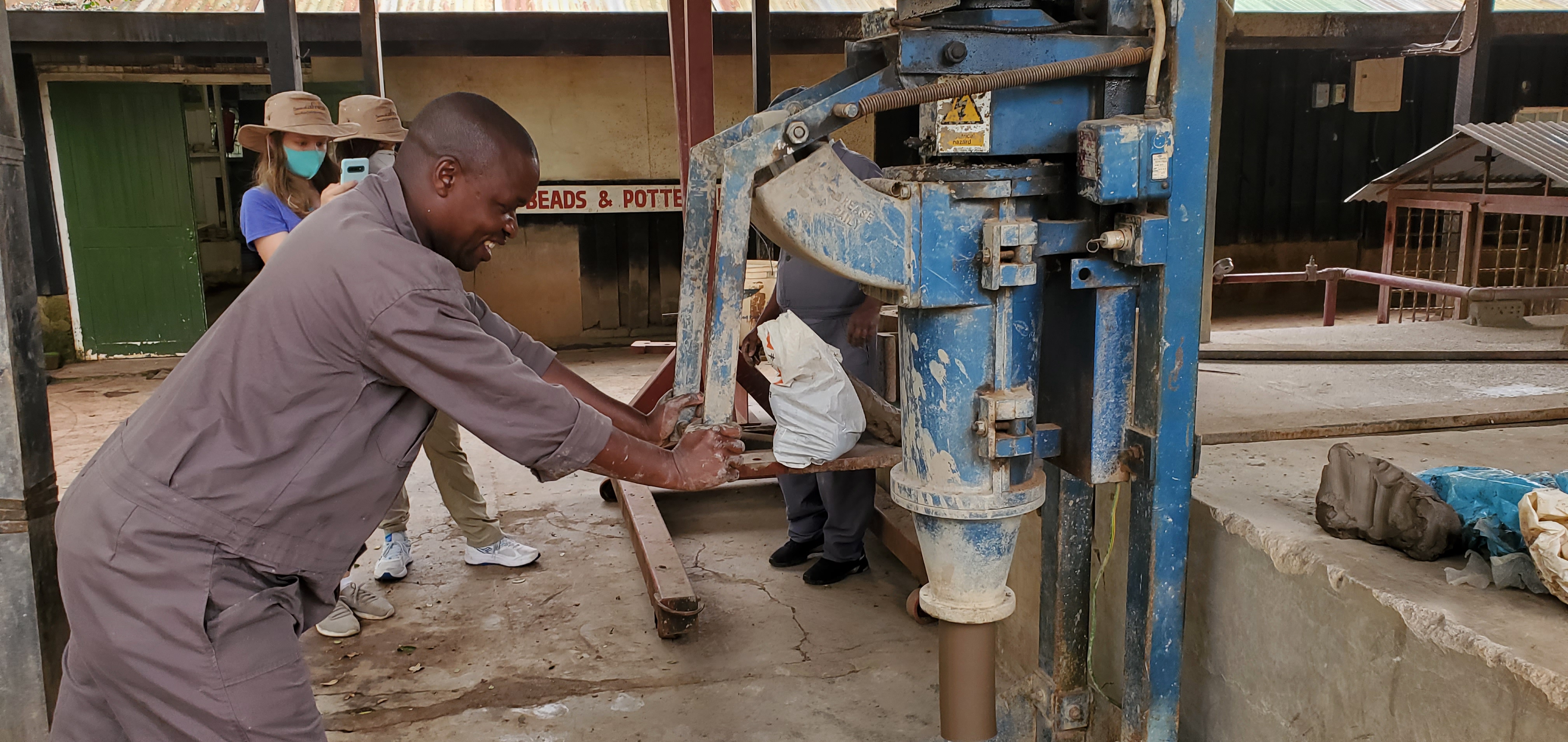
Today is the first real day of our safari, and after checking out of the House of Waine, we drove a short distance to a local workshop that makes beads and pottery. Their mission statement says it better than I can:

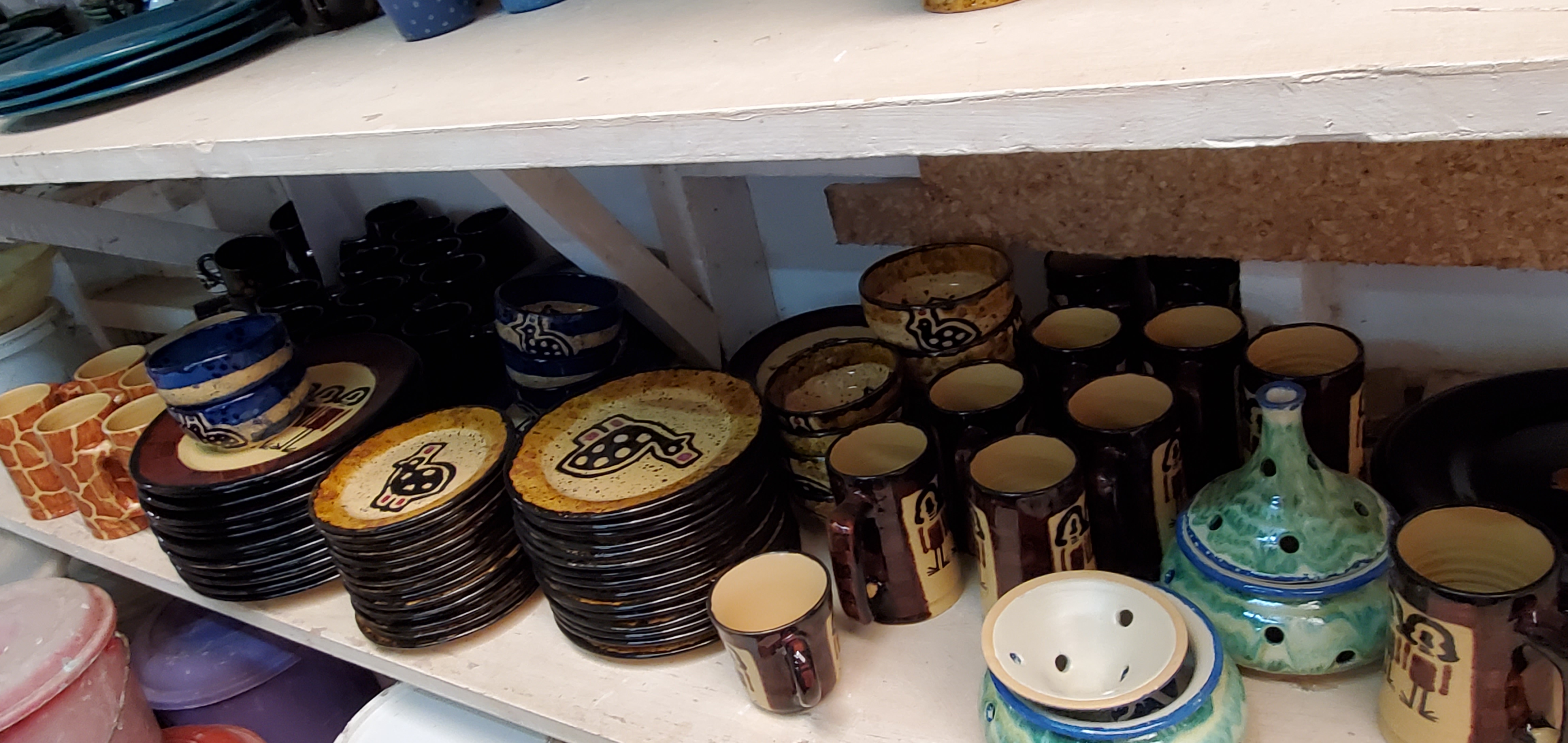
Did you ever watch the show “How It’s Made”?  We got just that in our personal tour of how a clayologist (okay, I made up that word, but you already know what it means) found suitable local clay deposits, the first step in the process of refining, cleaning, squeezing, and prepping the material.  Once in long tubes, the clay goes into the workshop where women turn it into dozens, hundreds, thousands of unique beads, as well as dishware and figurines.  I’m sure you know the process from there—firing, cooling, painting, glazing, firing, repeat until the beads are ready to string into bracelets and necklaces and export to locations around the world.

I didn’t absolutely love the work—it’s heavy and bulky and not quite my style, but it was fun to support the shop, and Dwayne bought me an anklet while the girls each found souvenirs.

We Want to Be…. in Nairobi!

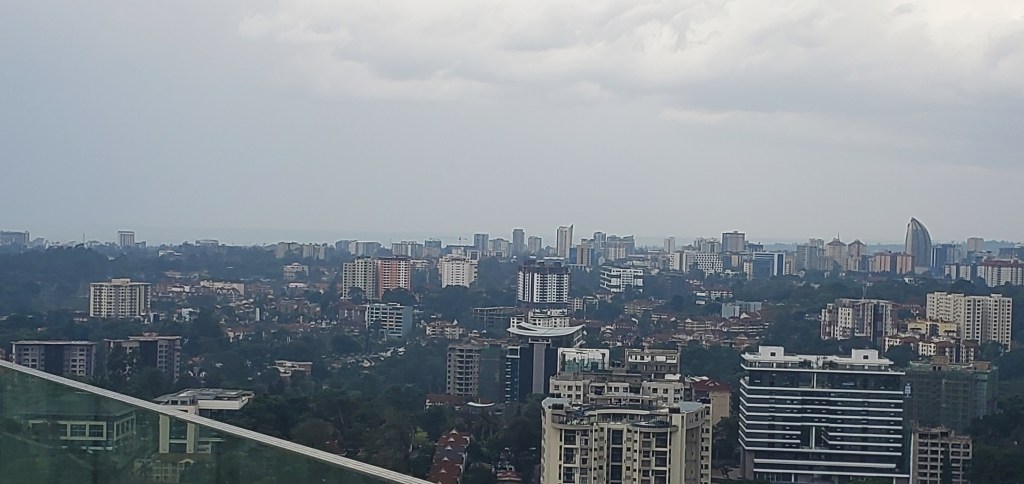
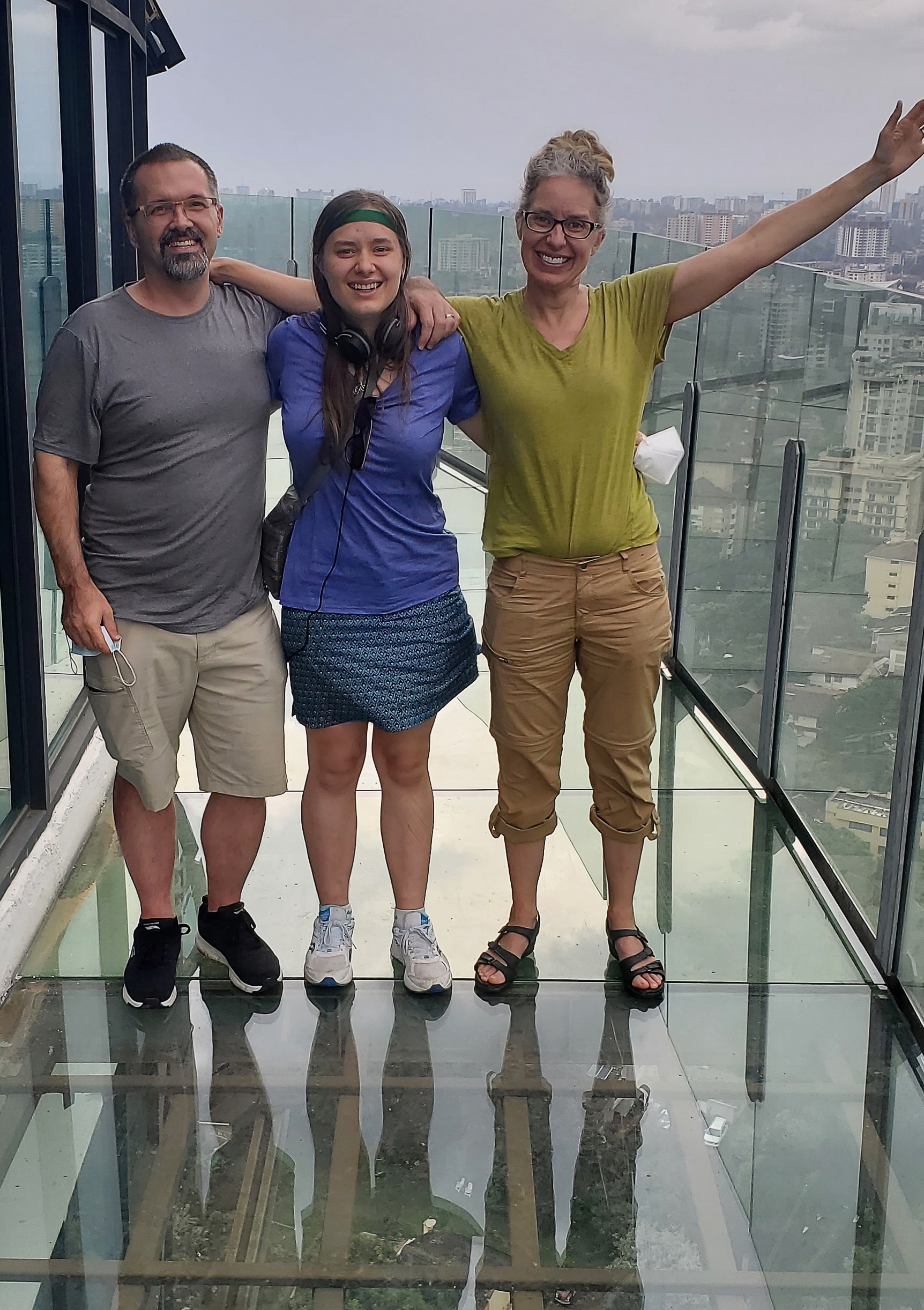
24 floors up, a city view

We’re in Africa! Nairobi is Kenya’s capital and largest city, with a population of over 4 million, which is probably an undercount since slum censuses are not politically nor logistically expedient.
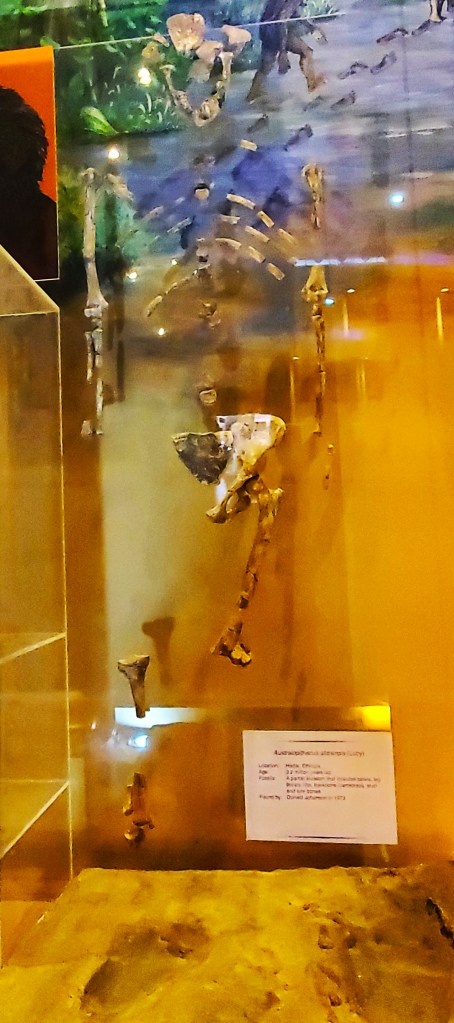
Lucy is 3.2 million years old, and looks great for her age!

Most of the family was excited to visit the Nairobi National Museum, home of an extensive collection of hominids and early human fossils. I still remember learning about Lucy back in high school biology, and her reasonably intact skeleton (40%) is the oldest and most complete ever found. Her original bones are locked up tight in Ethiopia, but since I can’t tell the difference between real fossils and copies, I’m thrilled to see this display.

1.2 million year old Turkana Boy

I liked the different exhibits very much. Dwayne and I went on our own the first day so we could linger as long as we wanted, and to plan how to best use it as school when we returned with the kids. Human evolution was an easy one, as well as divergent and convergent evolution in mammals and how sickle-cell anemia interacts with malaria to become adaptive rather than maladaptive. And learning the history of Kenya was a great springboard into a discussion of colonialism, independence, corruption, and short- and long-term effects of racism, and how clearly these are not just African (or American!) problems. Kyla, especially, connected many of the science and social-historical lessons to her course load at home.

In the mammal room

Part of the museum campus was the Snake House, which was way more fun than it should have been for a snake-aphobe. (It helps enormously that I know they are there and they are in cages. It’s the snakes that slither unexpectedly in front of me that make me wet my pants.)

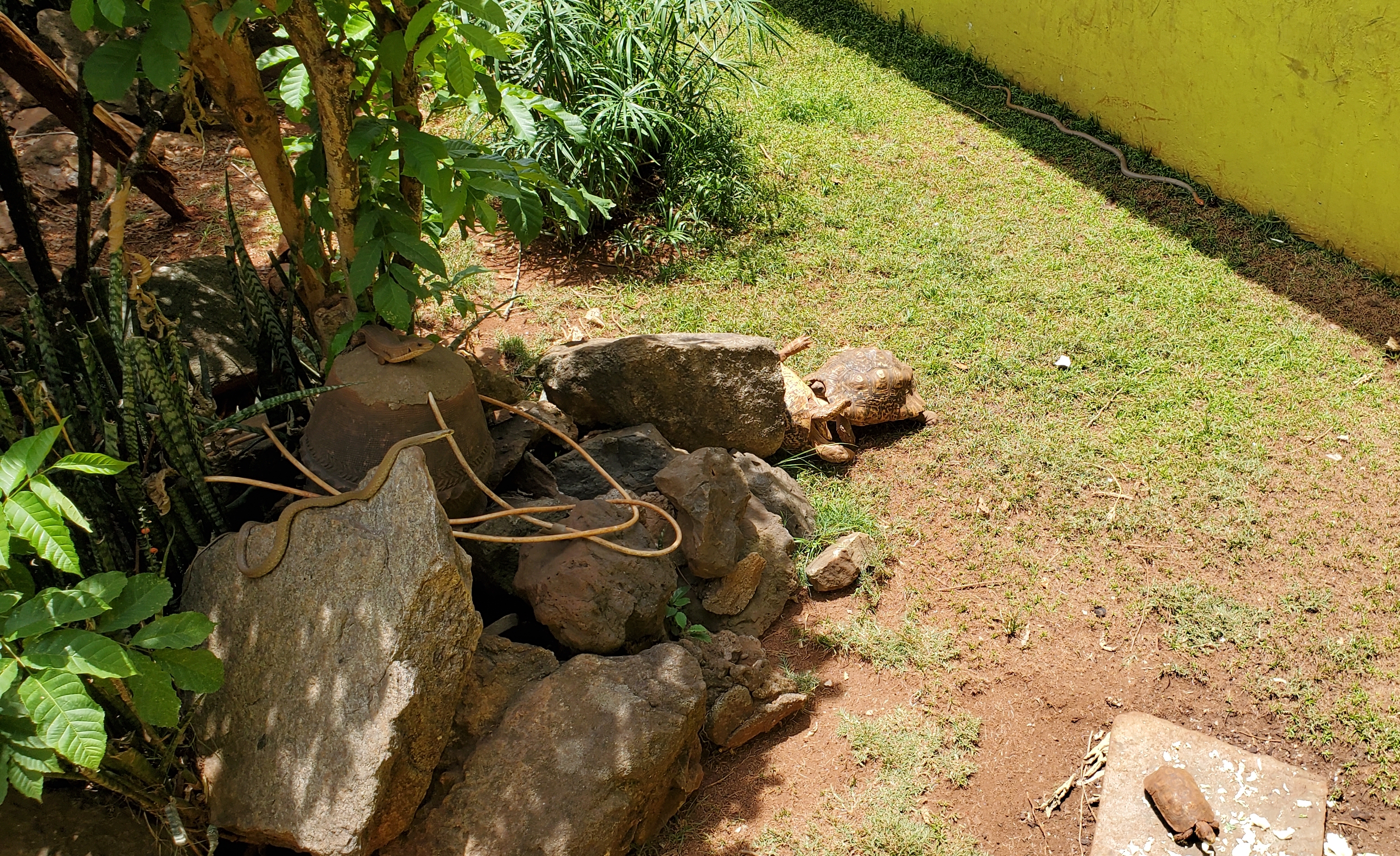
Probably the coolest part of the park was a center enclosure of many reptiles, with (non-wall climbing) snakes, tortoises, fish, lizards, and turtles.

Can you see all 6 (two tortoises) animals?

We watched a small tortoise tumble into the pond, and one of the keepers went in with his snake-corralling stick to help the tortoise regain its footing.

The tortoises were especially amusing this day. Anthropomorphizing this, I assumed the one was giving the other a belly rub, along with attentive grooming. Nope, a battle for dominance. You can probably guess the winner.

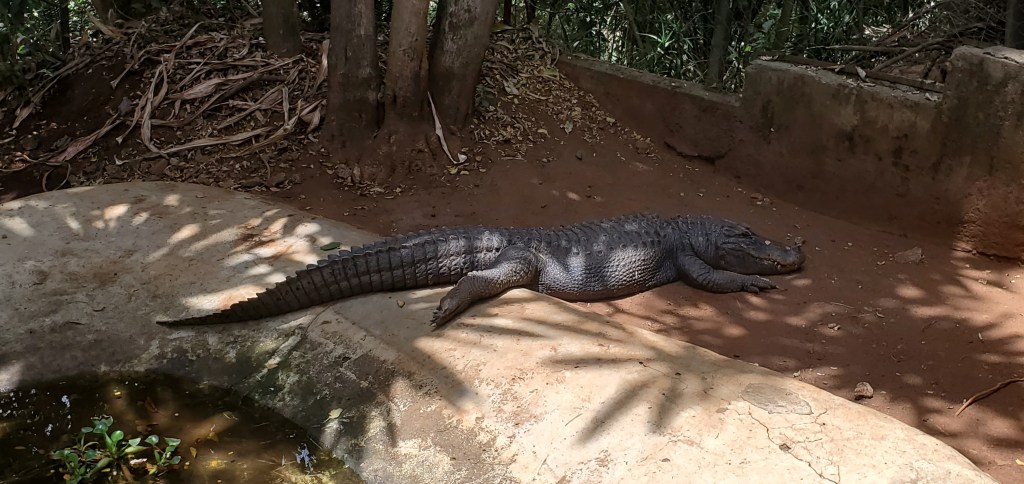
This American alligator was donated by the US back in 1967. His BFF is a tortoise, as he has never been around another alligator here. Unlike the neighboring crocs, this guy looks like if he wanted to eat you, he’d have to slowly stretch out, yawn, think about putting on his tennis shoes, all the while knowing he’s just going to go back to sleep.

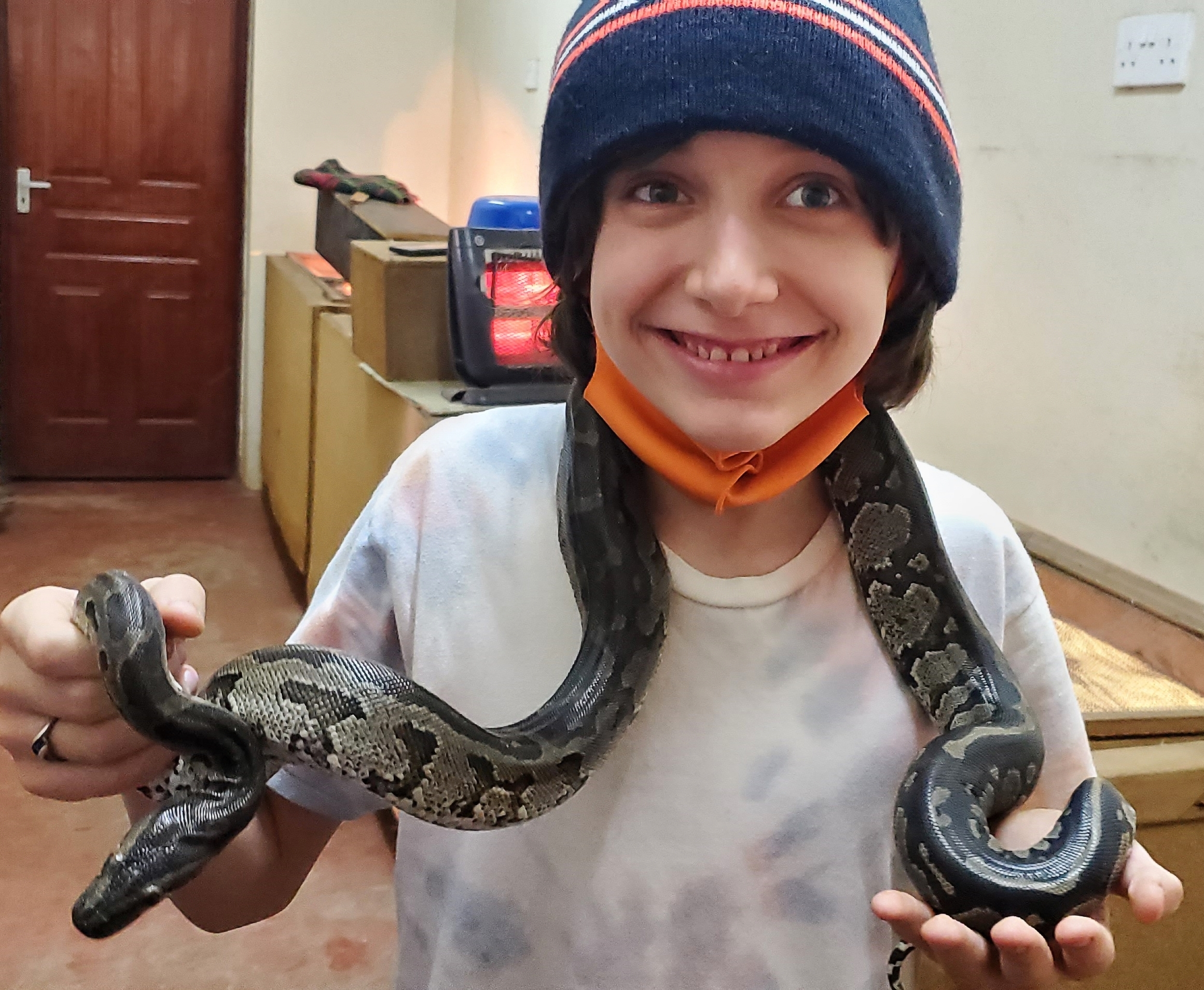
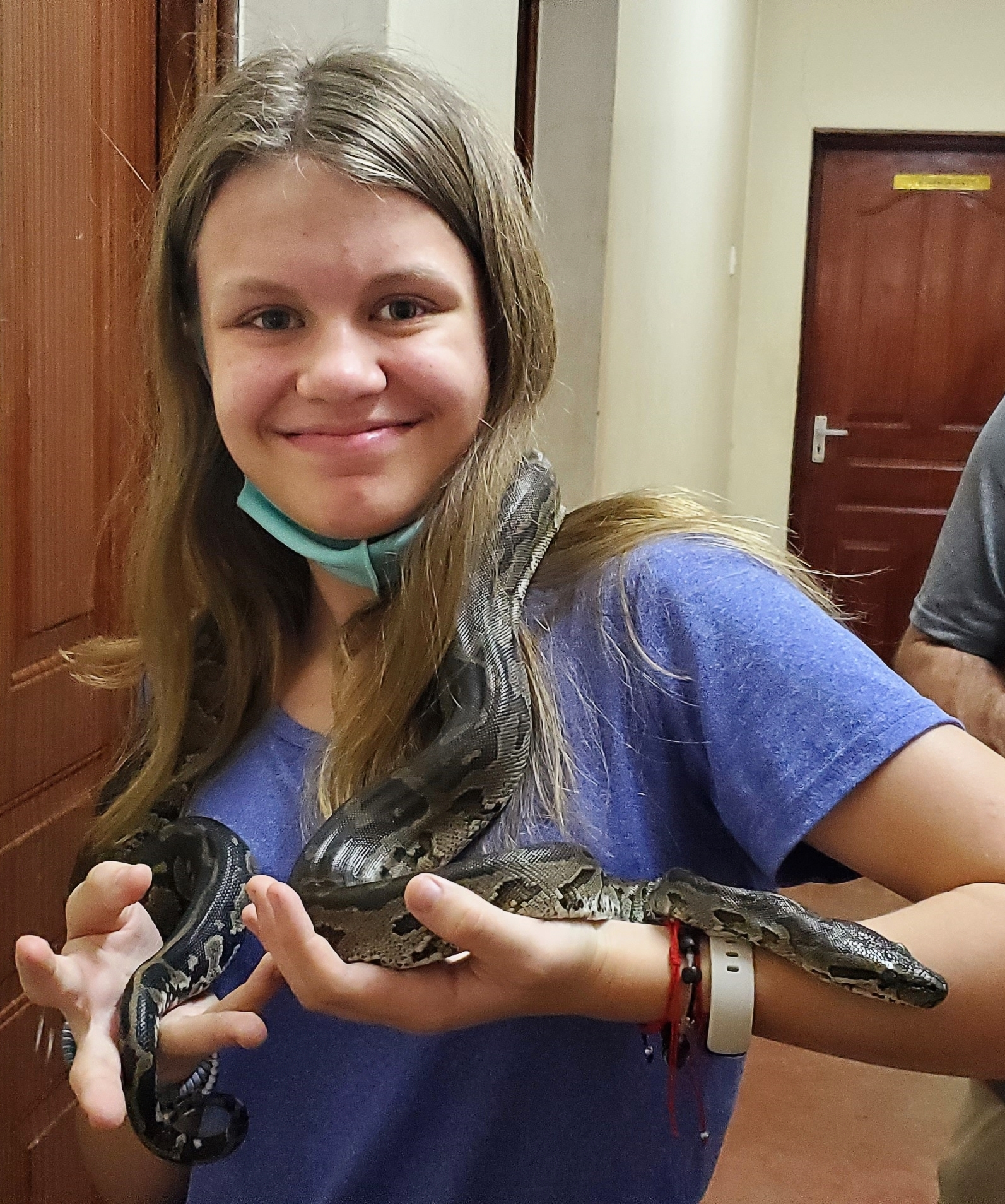
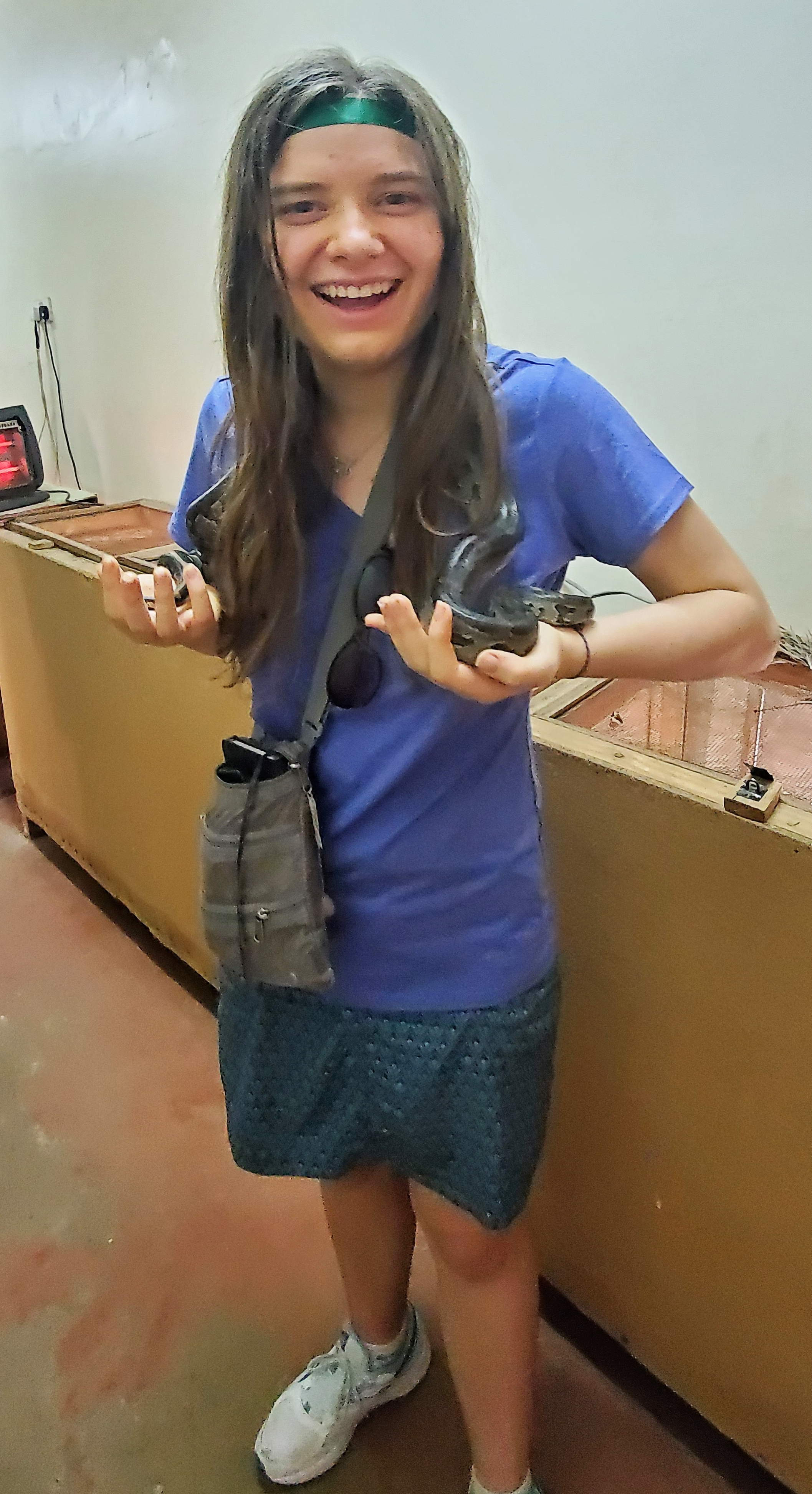
And as a special treat, the family was offered to hold a boa. But, ya know, someone’s got to take the pictures! I found my own reptile, who was feeling a little shy.

Kenya’s history as both an international trading post and many generational home of many Asian people shows up smack dab in the menu. We ordered Chinese noodles, traditional pilau (rice dish), snapper in a curry sauce, collard greens, naan… and french fries.

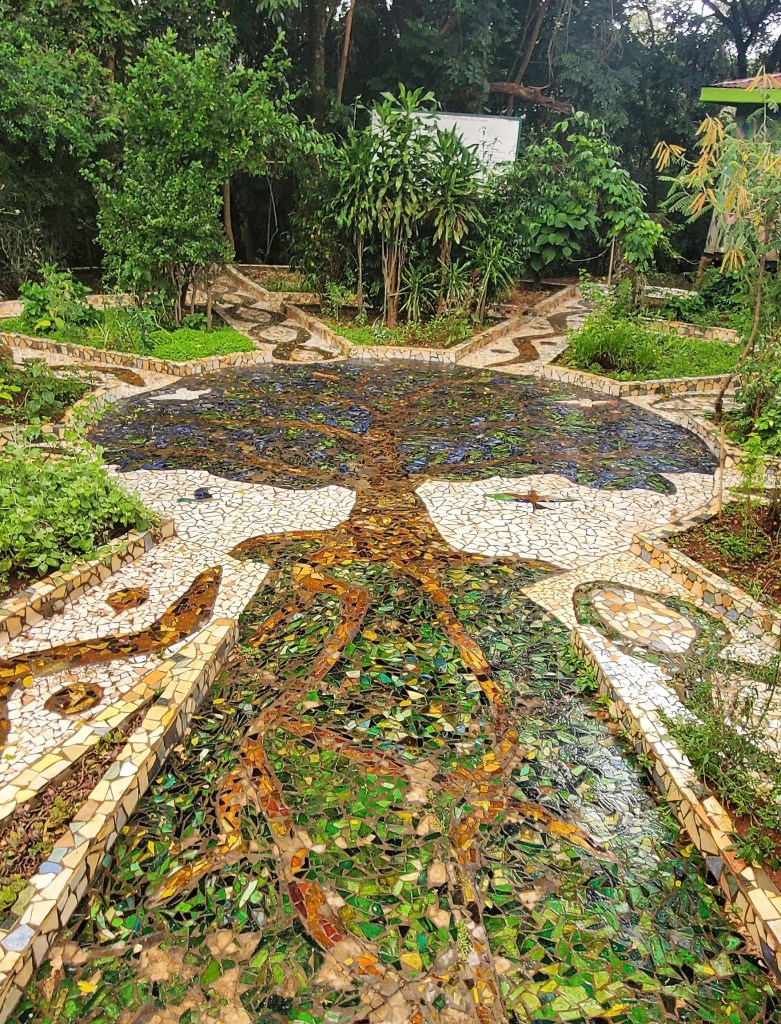
Tree mosiac in the botanical gardens, part of same campus. As we walked though the garden and the river walk, a thunderstorm came up suddenly and soaked us. But being drenched and warm is a completely different experience than NW rainfall!

We stayed in a part of town we were comfortable walking around, getting groceries, and going out for drinks and dessert. Ubers took us the 10-15 minutes to explore up- and downtown Nairobi, generally costing us less than $3 a ride (times 2 cars, as families of 5 always have one more person than can fit). This has been my first taste of Africa, outside of all my reading, and I am thrilled!

Nairobi: Reality

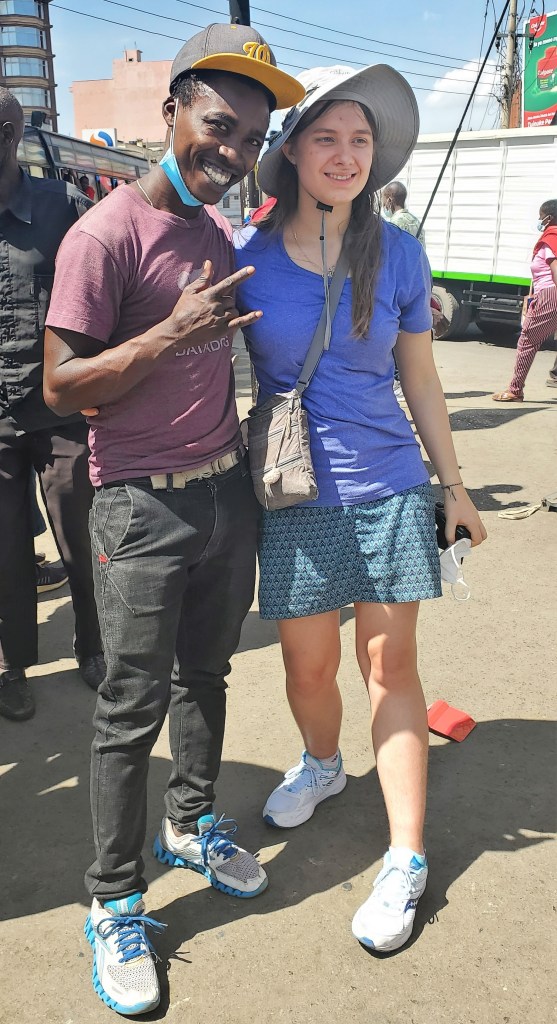
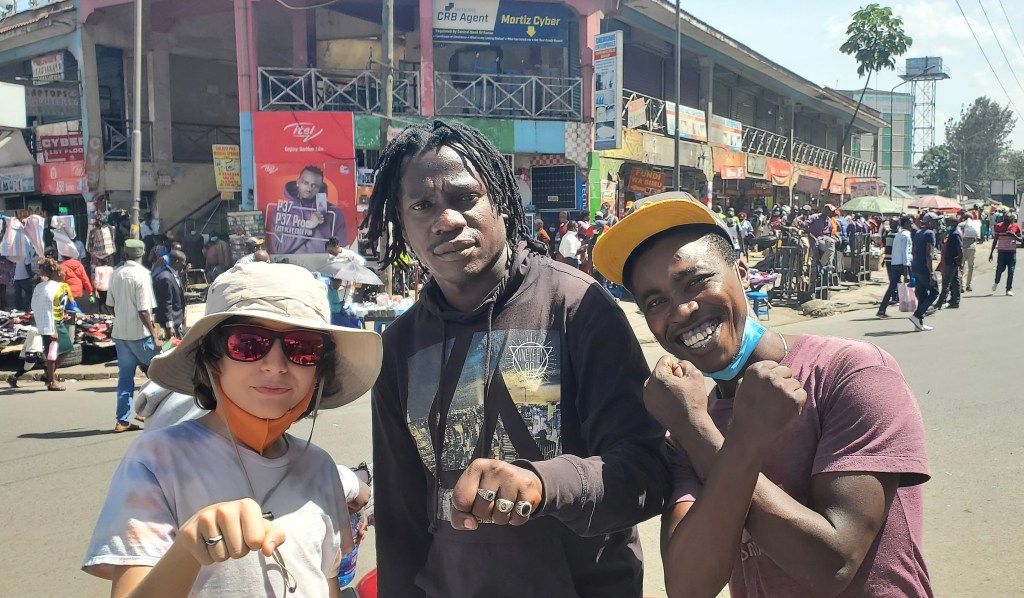
There are many, many, many ways of getting out of your comfort zone while traveling, but I went looking for more anyway while we had a few days in Nairobi. We use Project Expedition to find small-business local tour experiences, which is how I came across the Nai Nami Story Telling Experience. Here’s the blurb:

3 hours of storytelling experience in Nairobi Downtown (not slum!), guided by former street children
– Every pair of attendees gets his own guide to facilitate an inspiring exchange
– See Downtown, the side of the city center where the real local life is taking place and you wouldn’t go yourself
– Opportunity to visit a hidden market where the locals hustle
– Have lunch at a Kibanda to exchange and ask all your questions about street life

Our tours are not designed to be sightseeing tours. It’s a storytelling experience where our guides will show you the places you will never venture alone. We will take you through the bustling streets of Downtown in the city centre, which used to be the home of your guides. It is a vibrant place where local people do business, shop at hidden markets, eat at Kibandas and enjoy the authentic Nairobi life. Each street has its own stories and secrets, which we will share with you.

I am not done processing this, but I will say that when it was just the five of us again, one of the kids said with wide-eyed seriousness, “This isn’t [our home town],” and we all nodded slowly for a long time.

What we were able to rescue for recycling near our home.

One lens we can look through is litter. A few Sundays before we left, Dwayne, Wes and I went to the bottom of our hill and walked up to the ‘funny-4-way-stop’, with 3 trash bags. We filled them up, found a few more bags among the garbage and filled those up as well, before we ran out of time and garbage bags. It was annoying, especially after Dwayne and I handwashed all this so it could be recycled, but it made a huge difference on the hill.

I couldn’t find a bottle cap on the streets in Dubai.

In the part of Nairobi we are staying, there is enough trash in a few blocks to fill several trashbags but with enough determination and time, it could get reasonably clean.

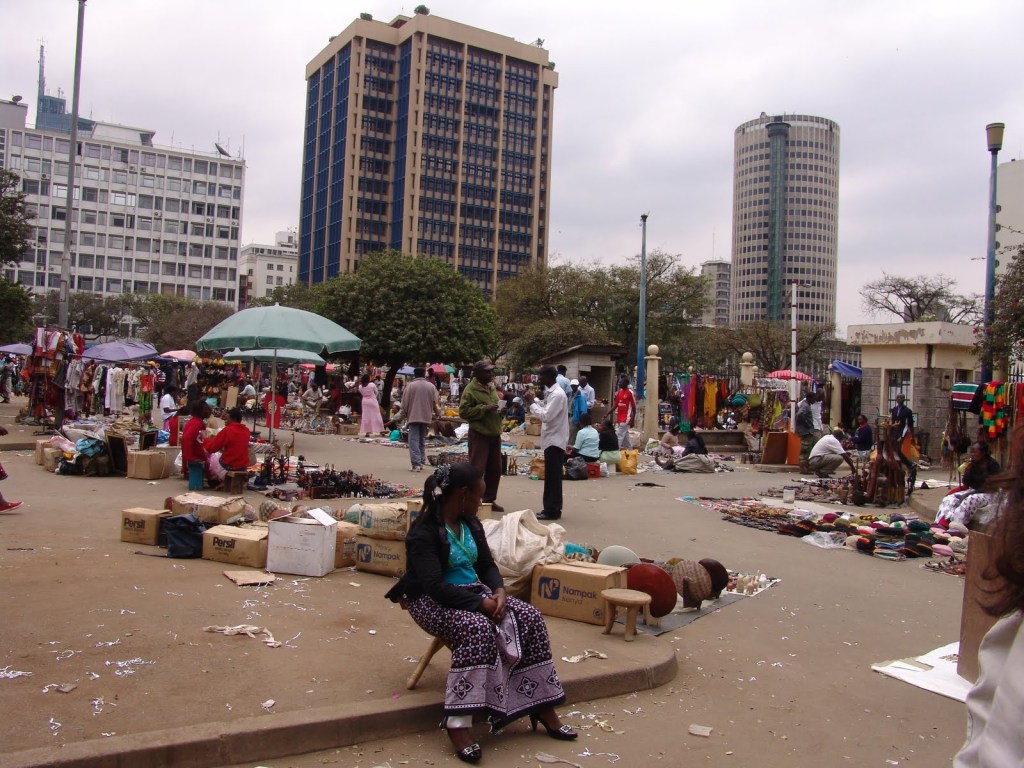
Downtown (as in the opposite of uptown) Nairobi: I wouldn’t know where to start. It wasn’t that there was just litter on the street; it was the street. And it was a tangible metaphor of the hopeless and desolate poverty downtown. Our story-telling guides, who have “made it” out of the streets, were very pessimistic about life every getting better–even as they were actively working towards helping others.

Out of respect, we didn’t take pictures while we were downtown. Again, Bing comes to my rescue for published photos of what we witnessed.

I have some thinking to do.

Dubai: Oh, my!

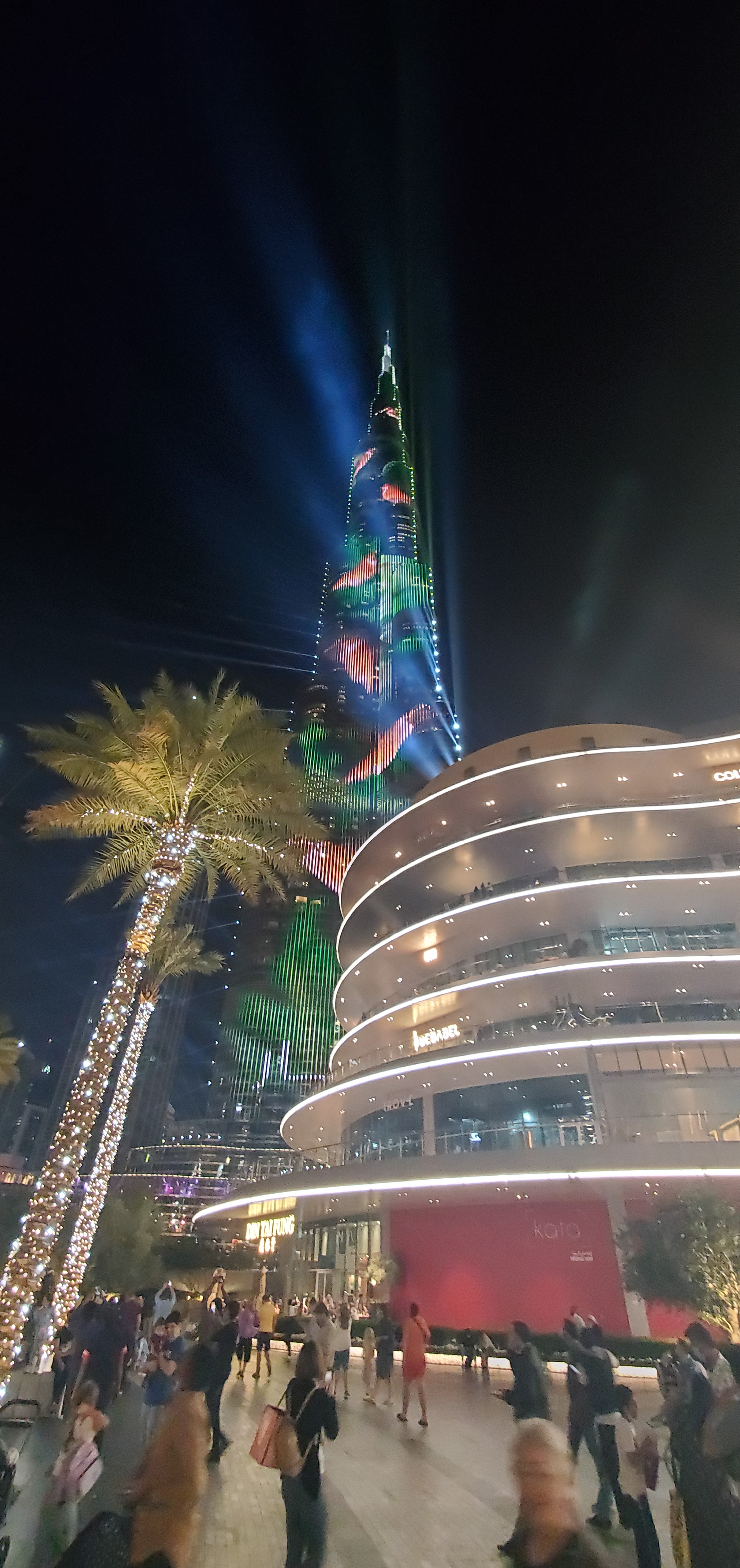
Definitely NOT my picture. Thanks, Bing, for non-blurry stock photos.
Yes, this palm tree trunk is “made” of gold bullions. Subtle, it is not.

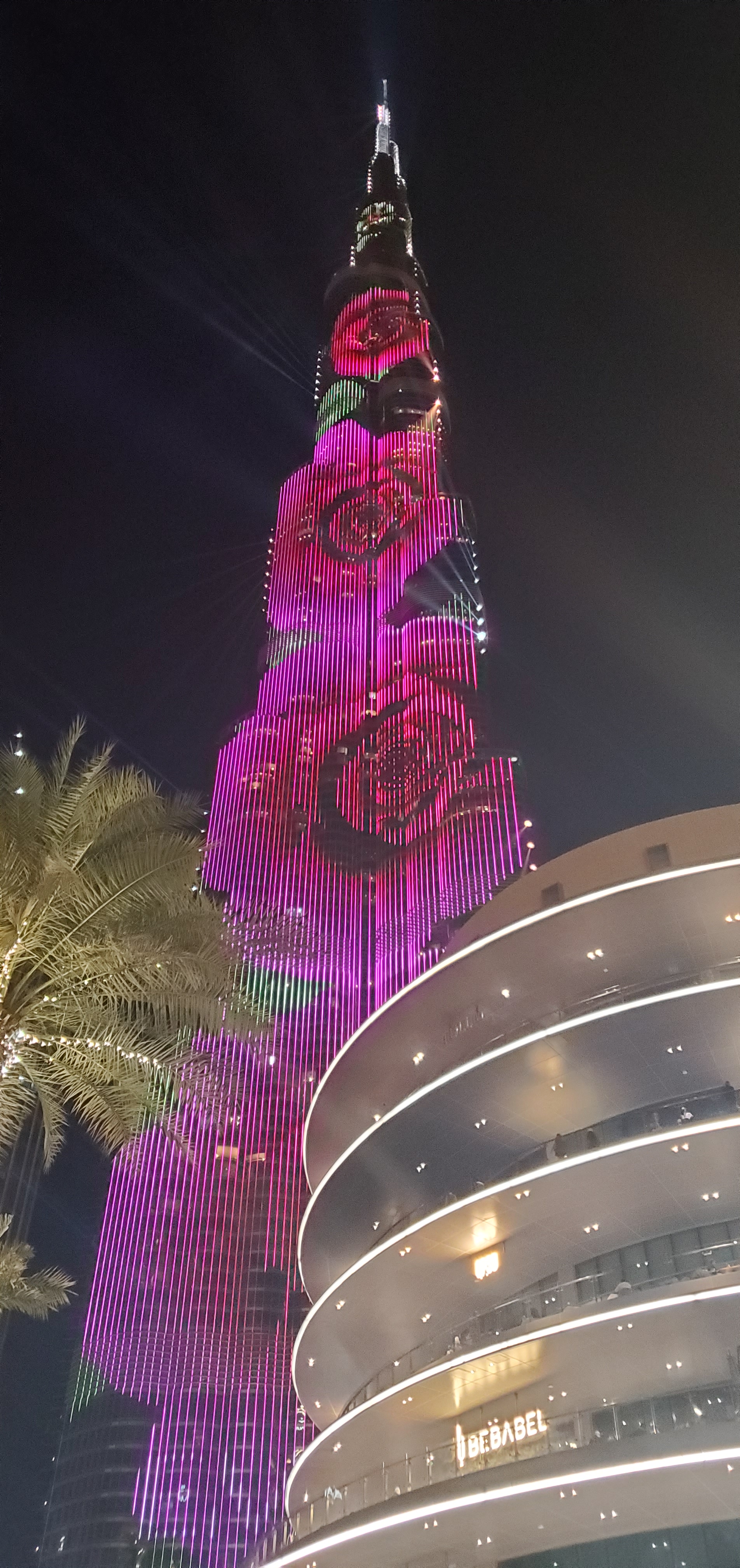
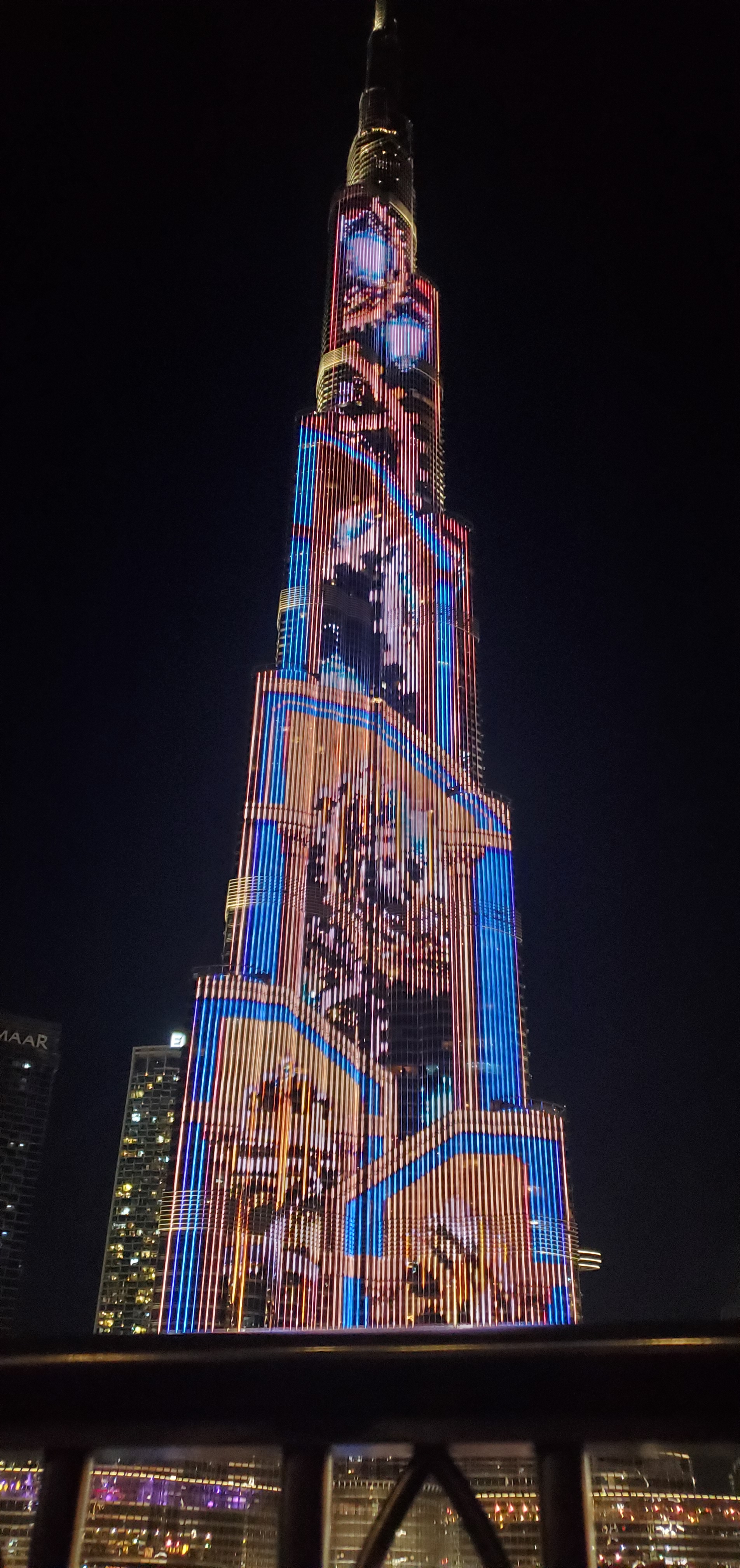
I thought I knew my type: classically beautifully, rugged, and ancient, like Quito, Split, Dubrovnik, Venice, Budapest, and Vienna. (Sorry, London, you are wonderful, and not bad looking, but you’re a little…obsessed…with royalty. Let’s just be friends.)  But shiny, too-young, playboy Dubai? Swoon!  I did not see that coming.  Clean cut, English-speaking, meticulously clean and polite, Dubai has all the coolest toys.  Enjoy UK’s Big Ben and London Eye?  They’re bigger (and, ahem, England, not under long-term construction) here.  Want to go skiing and enjoy the world’s biggest water park, in the desert no less, Dubai’s your guy. The weirdest, coolest, tallest, most amazing, record-breaking buildings and architecture? You won’t have enough time. Is it enough to have the tallest building in the world? Nope, better make it into the tallest light show in the world as well, and don’t forget to add an amazing dancing fountain as well, so people shopping at the largest (and likely, most opulent) mall in the world won’t suffer from ennui. It truly seems to be a multicultural, multi-faith, tolerant society. [Admittedly, I have no stats or anecdotes about the LGBTQ+ community.) But I can admire a society where getting stuff done is far more important than division. Seriously, Dubai is dreamy.

It was actually only in the light of the second day that rose-colored glasses grew a little clearer.  In many ways, it is a utopia.  With so much oil, this city is literally lit—the biggest Christmas light displays would be embarrassed by an average February Tuesday here.  Taxes increased about ten years ago…from zero to 5%.  With no homeless population and 100% employment, almost no crime and police presence, it seems too good to be true. It’s worth noting that full employment comes from the policy that if you don’t work, you don’t stay.  Only about 15% of the population are actual citizens.  Everyone else is temporary (even if for nearly a lifetime), and if you lose your job, you have two months to find a new one, or out you go. Seriously. Our tour guide’s wife lost her job and now she is living in the UK with family, while her husband and young son are in Dubai. Employers take care of health care, but they also, often, hold on to passports, as they will be fined if any employee absconds.  There is a fine line, then, between solid employment and possible slavery. (Do you remember the scandal years ago about Indian workers brought to Dubai to build and didn’t get to leave?)  Also, don’t have a child with special needs as there isn’t any social safety net to speak of.

Perhaps I can say it this way—it’s all the good stuff without any of the grace. So it might not be worth having. However, I venture out of my depth into philosophy, so I will wade back in with another picture that I can assure you I did not take.

The Try-It-Again Trip: Prologue

It was just while we were preparing for Ecuador in December that it started seeming possible, even likely, that our Big Trip would happen.  Even in the excitement of Quito, Dwayne and I would sometimes look at each other and mouth “six weeks”—the subtext being “we’ll need to panic soon”.

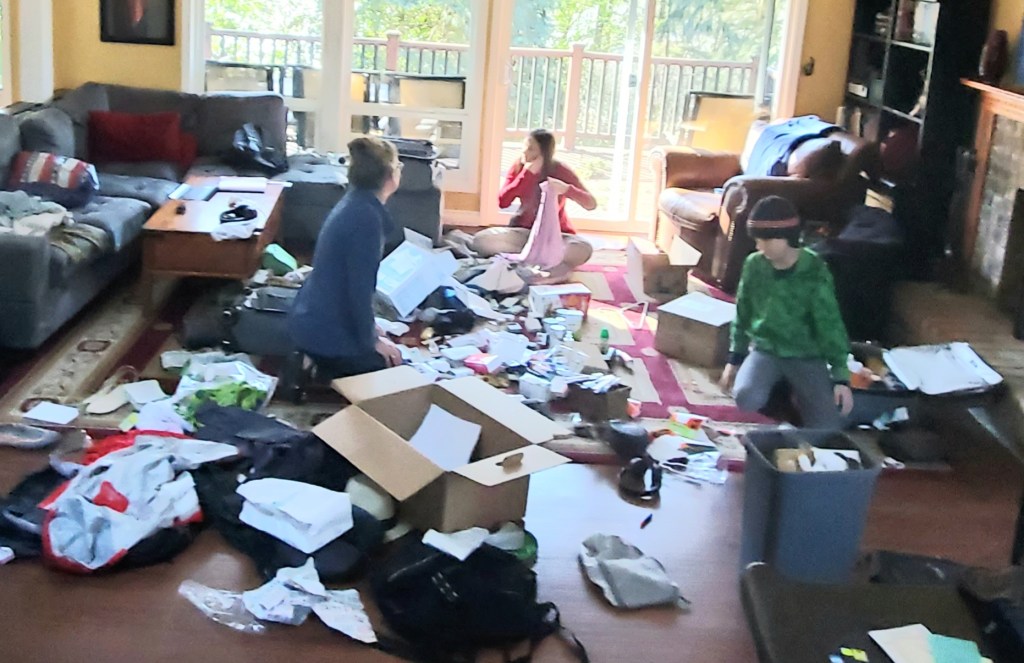
I took that to heart and spent all of 2022 thus far in a tizzy, making to-do lists of all the to-do lists I needed to make.  Finally, it accumulated in this last weekend as we began packing,

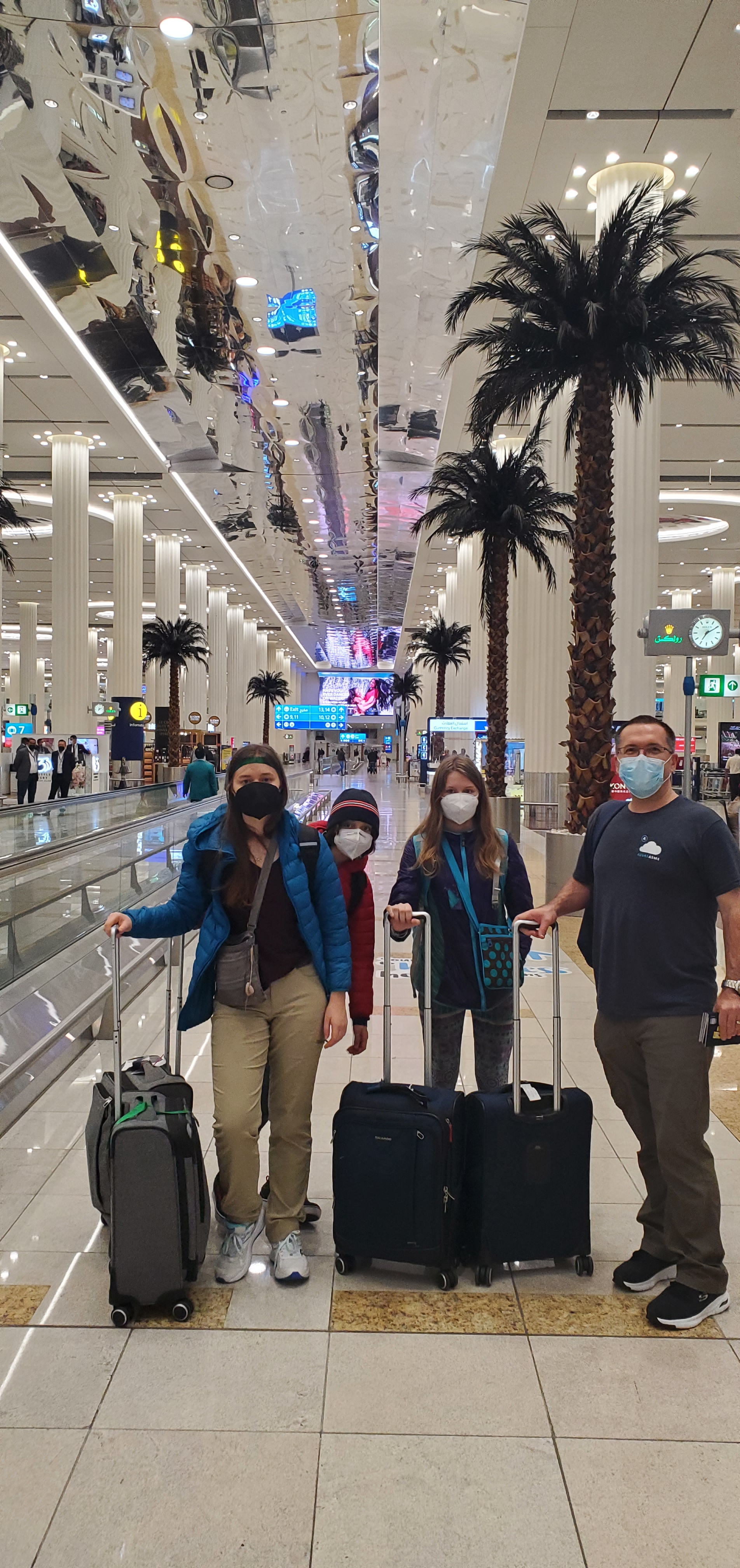
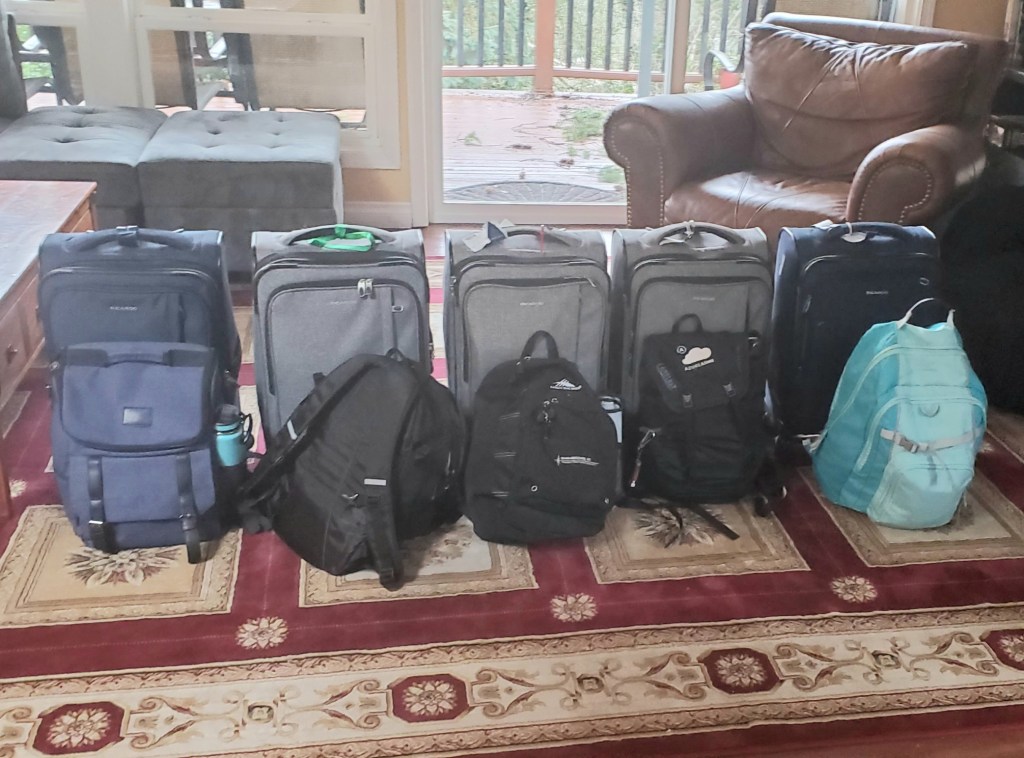
And this morning, this,

Four months packed in five carry-ons, wrapped up in a decade of dreams and schemes.  Let’s see where it leads, shall we?