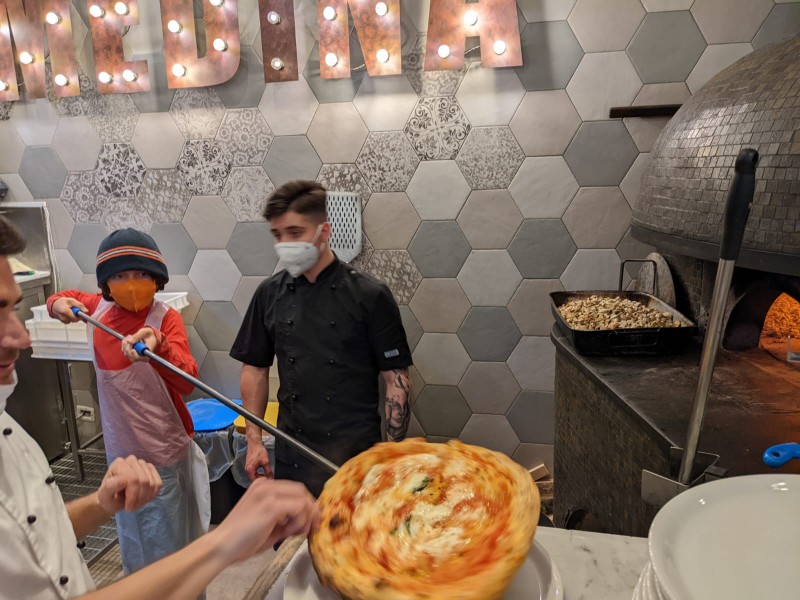
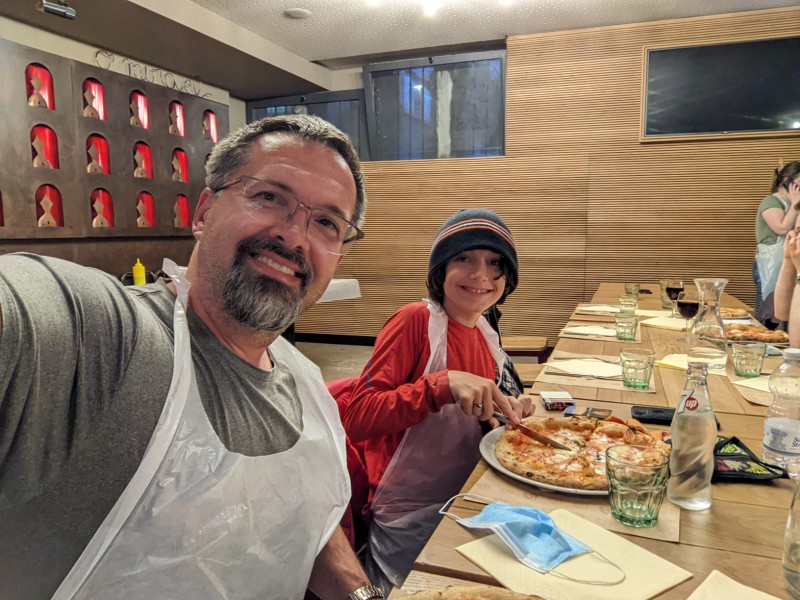
We had just a day and a half in Naples, and focused on two things: Pompeii and cooking classes. Wes was excited for the pizza margherita class he and Dwayne were signed up for, and the girls and I were excited to learn how to make fresh pasta.
The famous pizza is named to honor Margherita, the queen of Italy, in 1889, which is probably about as true as anything I write here. I’m pretty sure everyone but me already knew this, but the point of pizza margherita is that it is Red, White and Green (tomatoes, mozzarella, basil), the colors of the flag of Italy. And it is now famous for being another pizza besides pepperoni that Wes likes to eat.
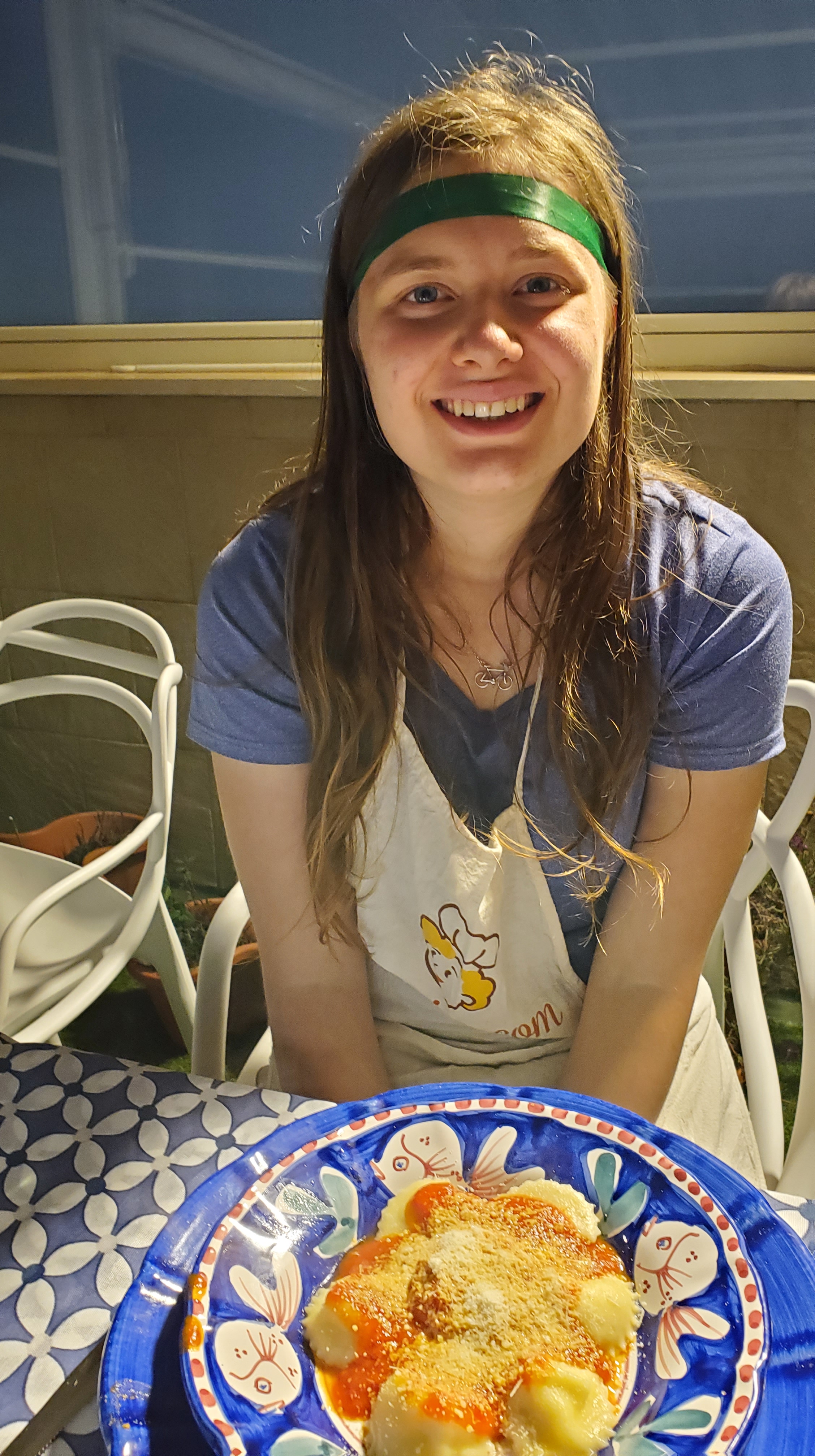
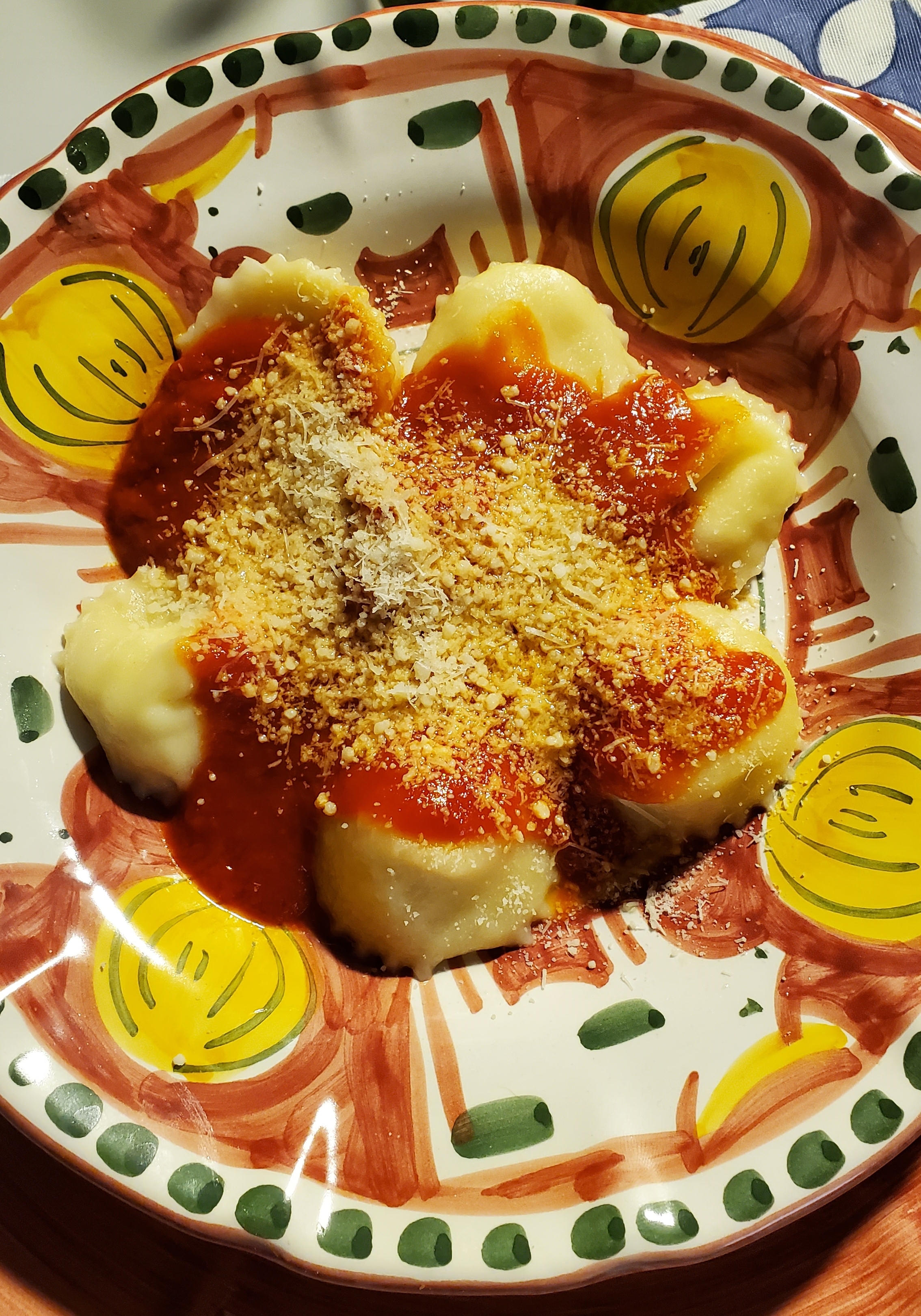
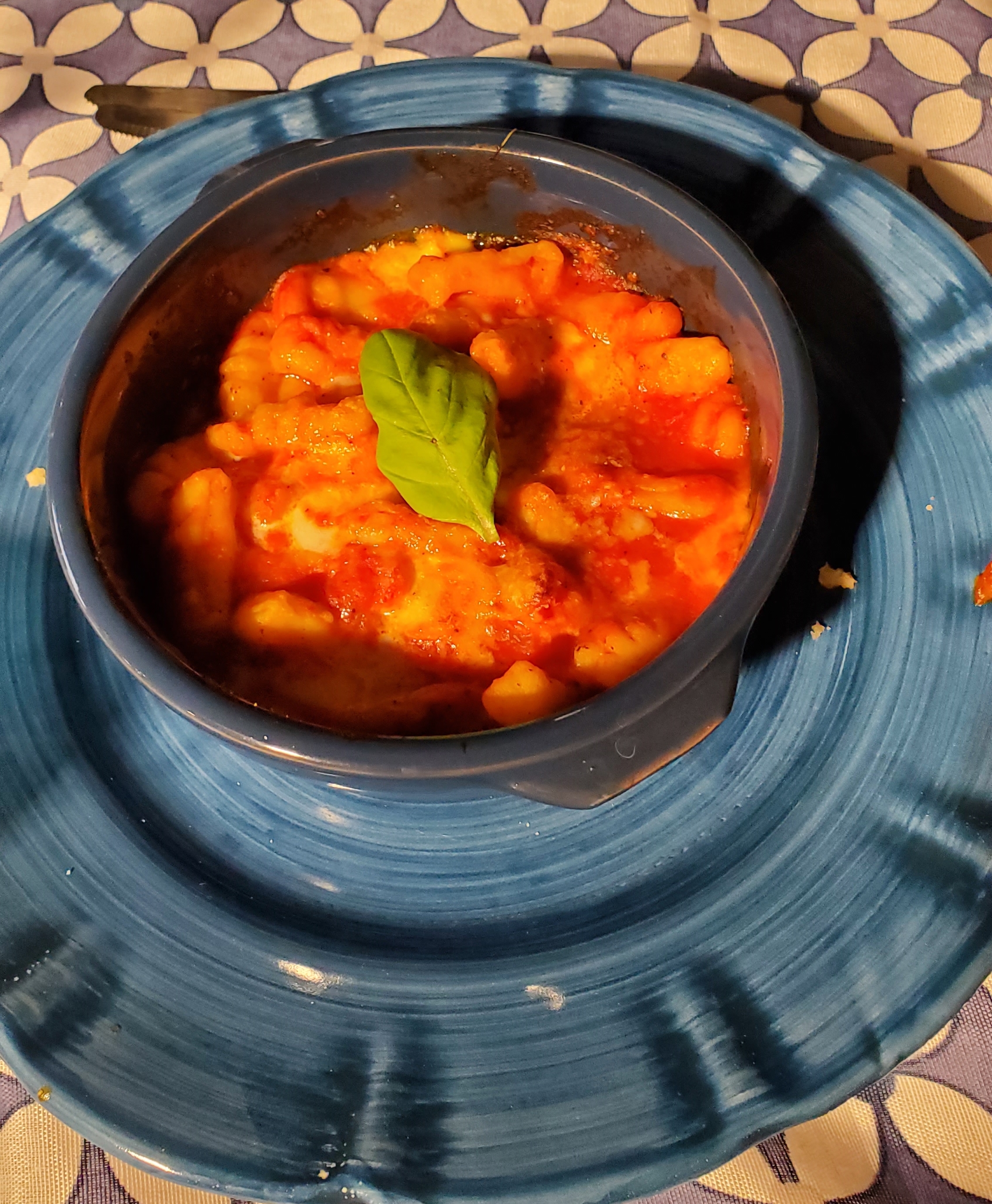
Piper loves cooking and baking and Kyla is always excited to learn new things. We learned how to roll gnocchi from a fork and make double cheese ravioli. We started with the same dough, and I managed to make mine hard and unappetizing with minimal effort. Brunella took over for me while I drank my wine, which is my ideal cooking class. Kyla and Piper did an excellent job, and Piper was happily shocked when, asked if she wanted wine, was poured a nearly-grown-up amount. When in Naples…
Note: Cesarine.com is a loosely organized group of home cooks across Italy (and maybe beyond) that give informal cooking classes in their own home, or in our case, the lovely roof terrace in uptown Naples.
[“Penis” is in the title. Do you need further clarification of the rating?]
I think we have done Naples perfectly. After a further study on the Third Classic Blunder*, we made it to the Palermo Airporto in time for the hour-long flight to Naples, giving us an entire afternoon in the “New York of Italy”†. Dwayne and I made our way to the MANN (Museo Archeologico Nazionale di Napoli**) to explore all the finds taken out of Pompeii excavations as well as all the marble statues we could hope for.
Why I love this: The body is of Circe (notable by black “witch” robes), the title character of a book with the most satisfying ending. Fifty-fifty chance the face is of Aphrodite, as she is a popular statue figure. I was surprised that some statues were mix-and-match, post-earthquakes and other destructions.
As we picked our audio guides, we were told that the secret room closes in 20 minutes. That’s an intriguing statement to make to a middle-aged couple sans children. We found another three others looking for the Gabinetto Segredo and through cooperative efforts, we entered . . . the room of Pompeii erotica. Mosaics and painted pottery, phallic whistles and wind chimes, statues and figurines, we had graphic displays of everything but woman-on-woman, which for some reason was taboo. [Zeus the Goose can rape maidens, and Satyrs can love their goats, but the only truly beautiful gender doesn’t get to enjoy the same loveliness? It does not hold up to scrutiny.] With a corner of my mind always narrating for this blog, I did not take pictures, knowing that this is shown to children and people I am related to and they have to see me over family dinners.
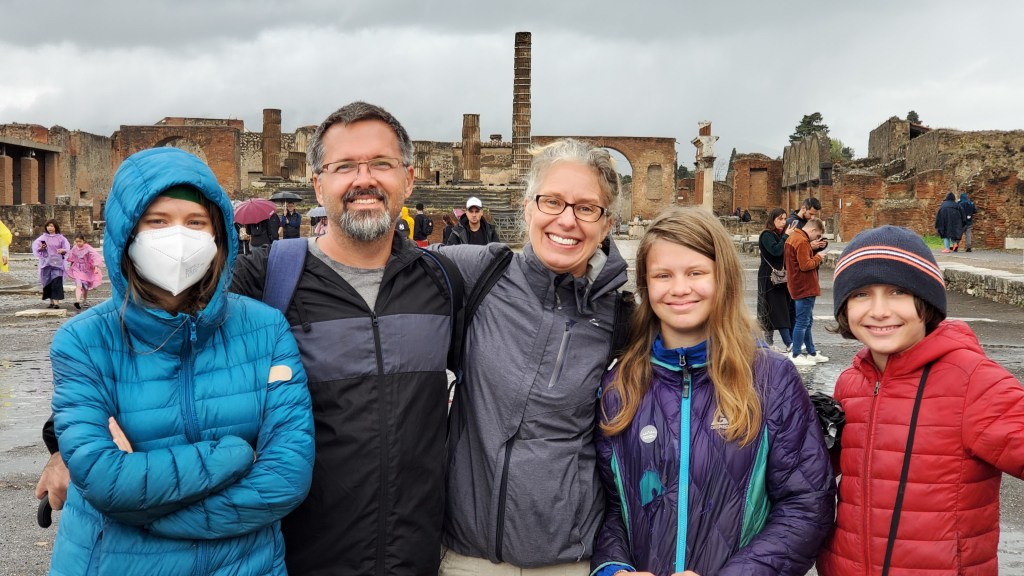
I was less censorious on our actual tour of Pompeii today. Let us enter the red district first because afterward, I have some really interesting tidbits to relate.
First of all, as everyone knows, Pompeii’s entire trajectory was transformed by the 79AD eruption of Vesuvius, covering the busy port city with ash, suffocating living things while burying and preserving organic and nonorganic materials alike. Pompeii’s current location, while close to water, isn’t exactly port material. There is good evidence that the plate tectonics that caused the earthquakes and eruptions over the millennia also changed the geography so that the ocean is no longer just 200 meters from one of Pompeii’s main gates, as it was over 2000 years ago.
A port city meant that sailors spent more time in areas of the city closest to the port gate. And where sailors roam, food and prostitutes take up residence. And how did sailors know they were in the right area? The penises embedded above shops and used as arrows (thank goodness penises can also point!) on streets and walls. In fact, an erect penis above a doorway was an excellent place to hang a red lantern. If the lantern was lit, services were available. Not lit, services were servicing. Tada, the infamous redlight district.
The gladiator school training yard of long ago.
One of two theaters in Pompeii. In about as good of shape as the ones we saw in Jordan!
Can you read this grafiti? “Liberti” from 2000 years ago.
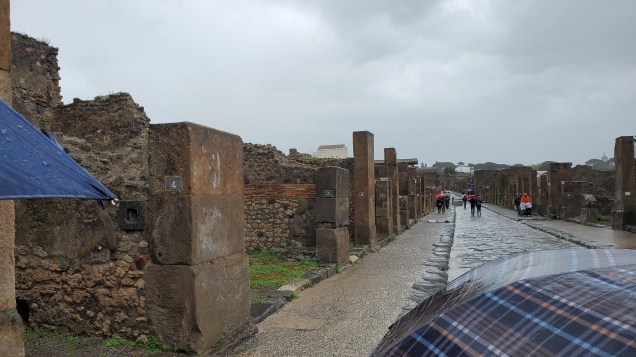
Chariot/cart tracks on one of the main streets. Literal stepping stones so pedestrians could get across with dry feet. Stone placed so that wheels could still get by.
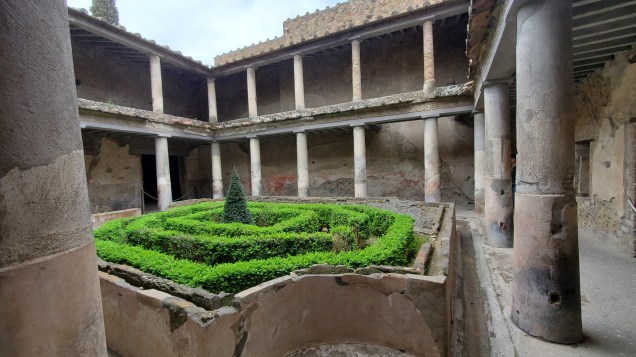
On of the best intact villas of elite Pompeii.
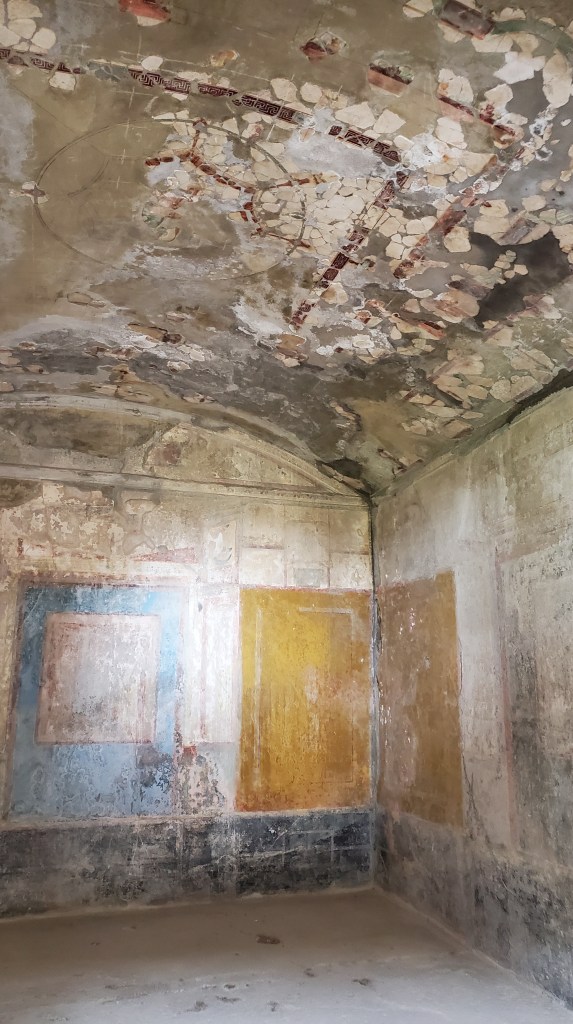
Same villa still had some original wall paint. Blue was particularly expensive and exclusive.
That’d be a penis-on-a-wall.
A row of house and shops.
One of the few mosaics left intact from earthquakes and museums hunters.
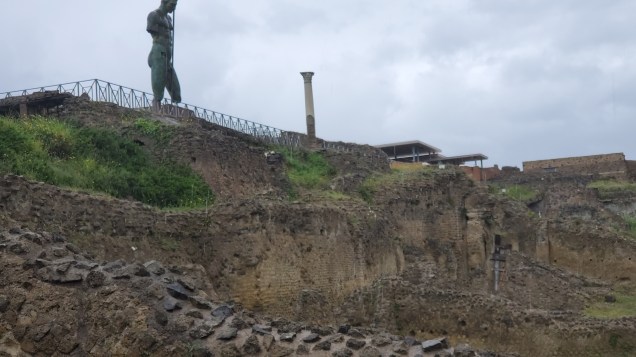
Look! An Igor Mitoraj sculpture in the main square of Pompeii! He’s the artist who did Icurus in Sicily’s Valley of the Temples I loved so much.
What?! A second Igor Mitoraj piece? I love Pompeii.
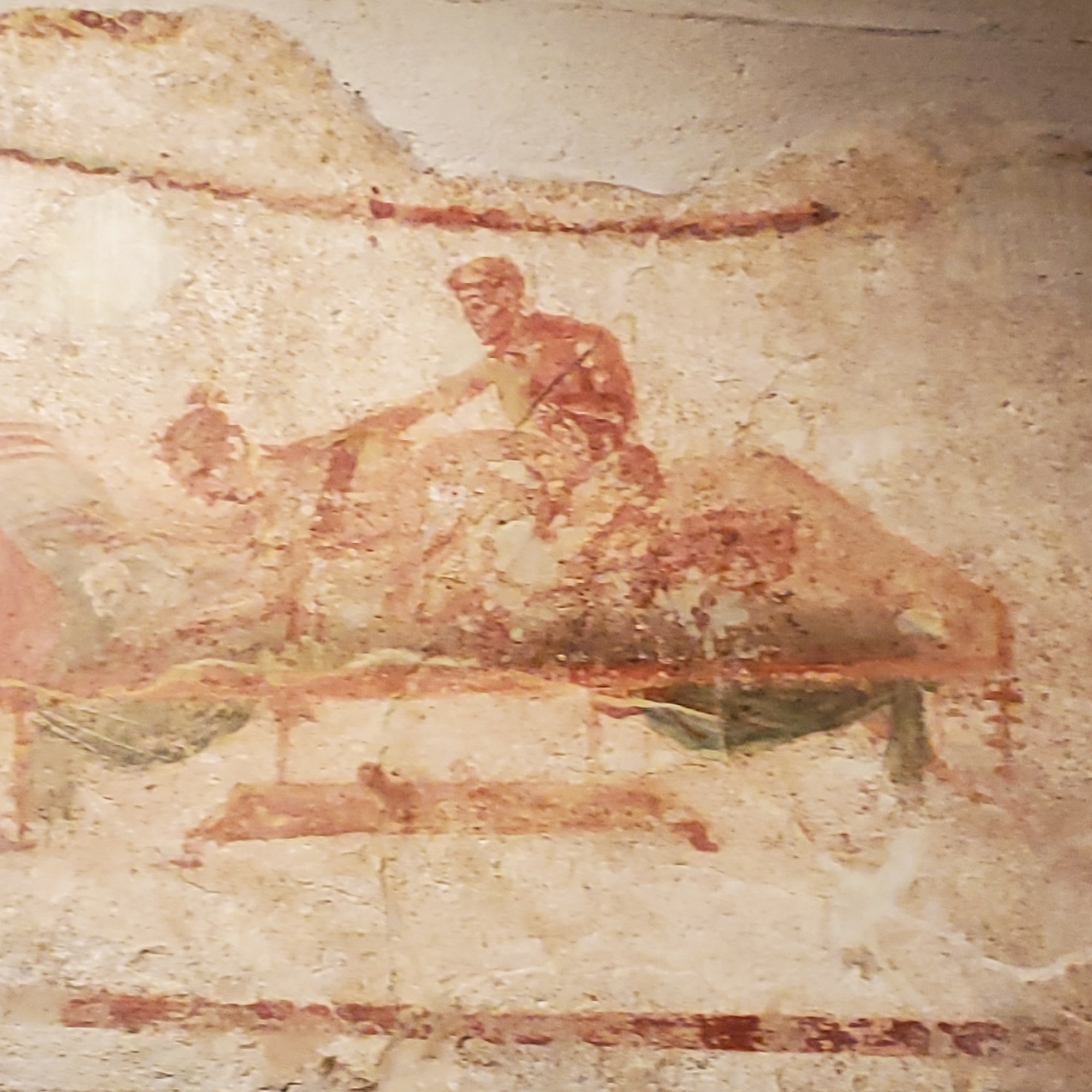
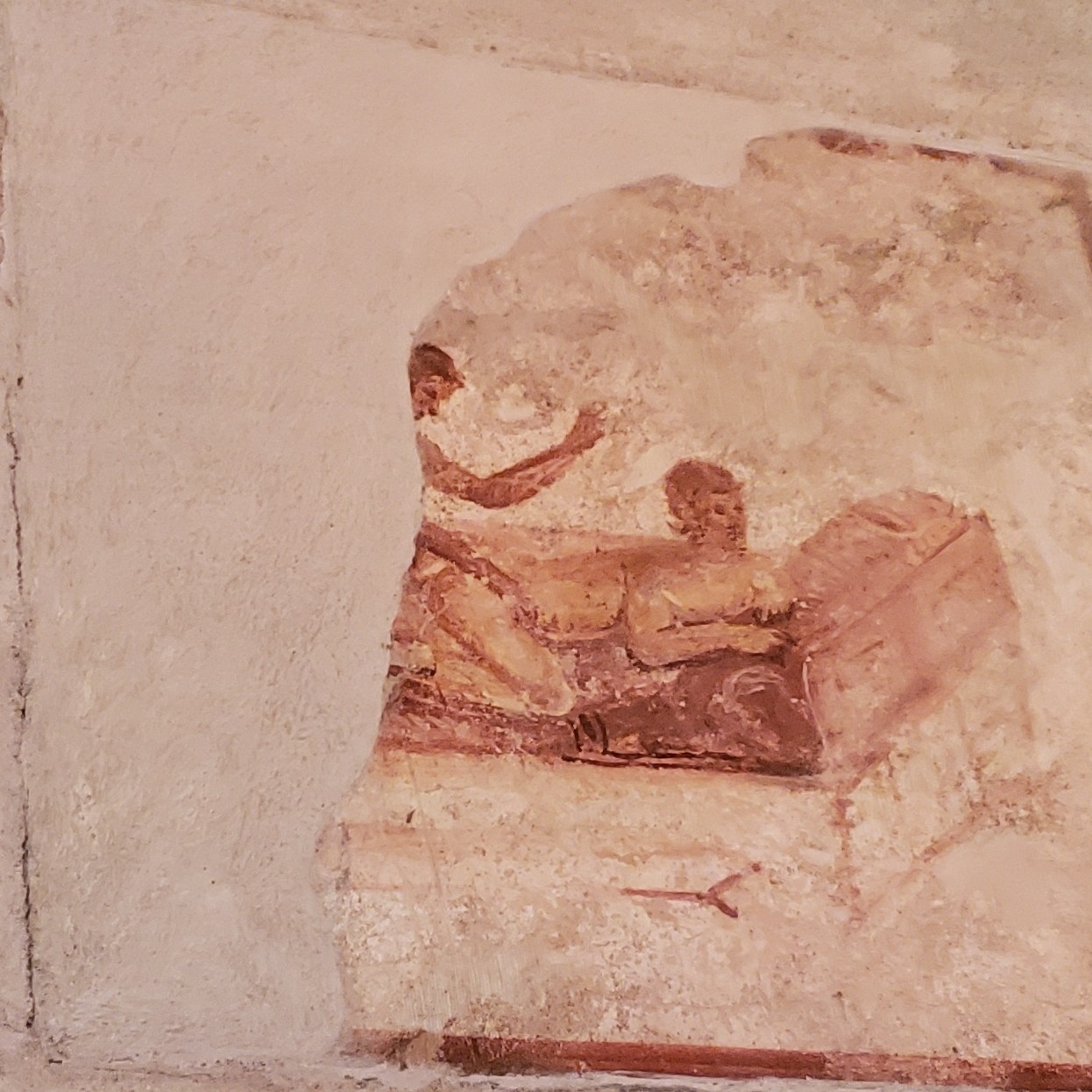
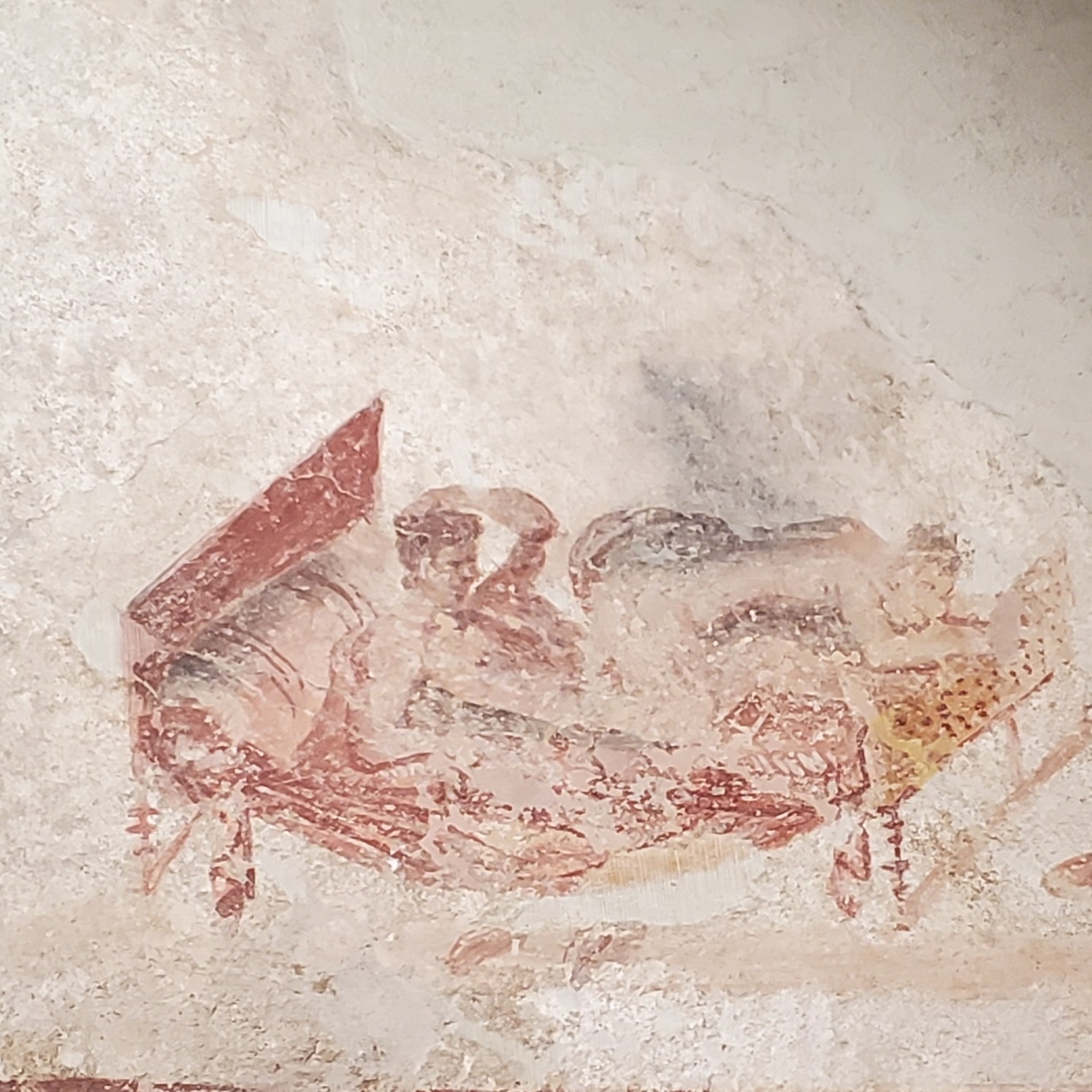
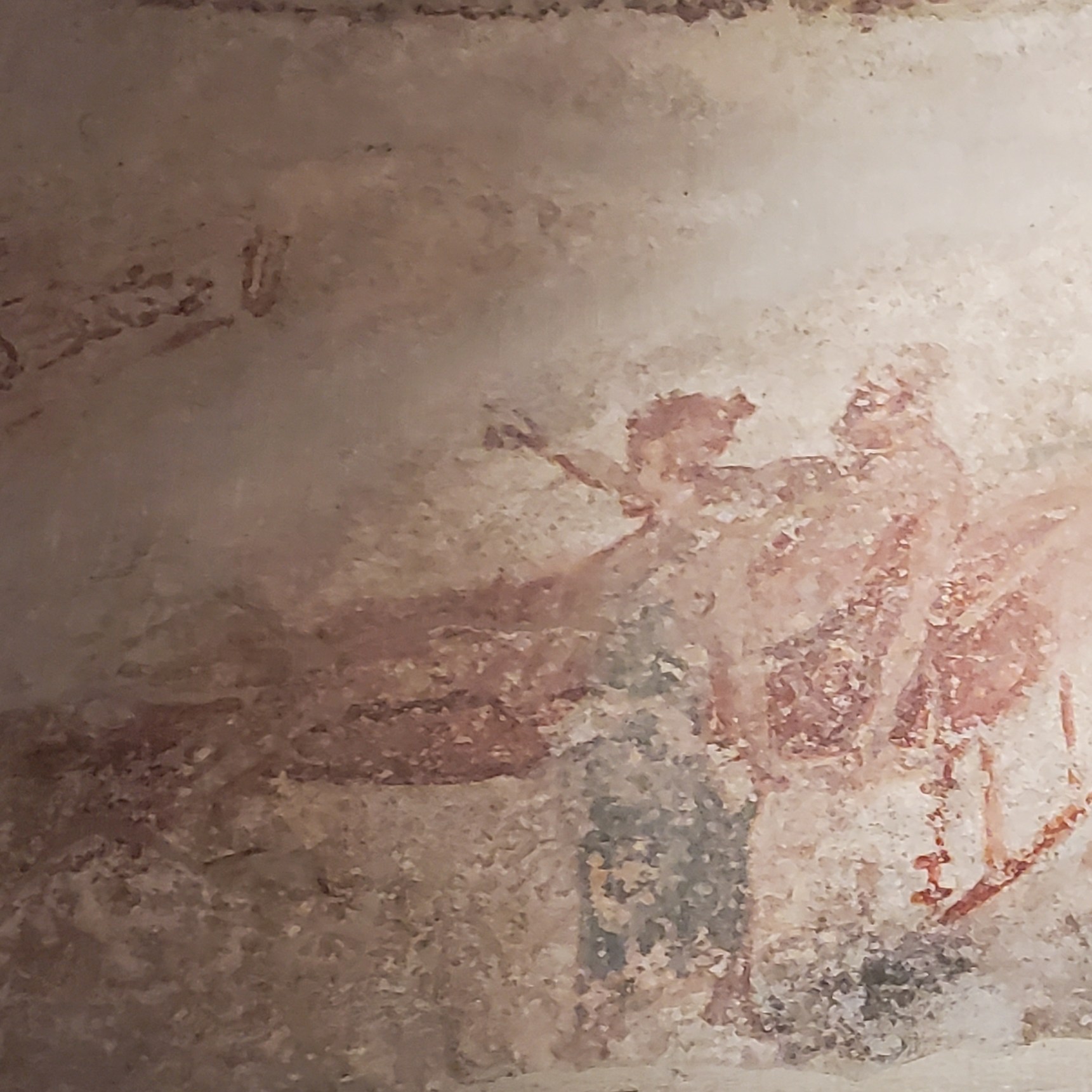
A brothel was practically an art gallery. Without relying on literacy or common language, one could just point to the mosaic that best detailed the service desired. Are you not entertained? These are still on the wall in Pompeii. (I’m leaving them small so you don’t have to get full details.)
Mosaic, portrait of a woman, found in Pompeii.
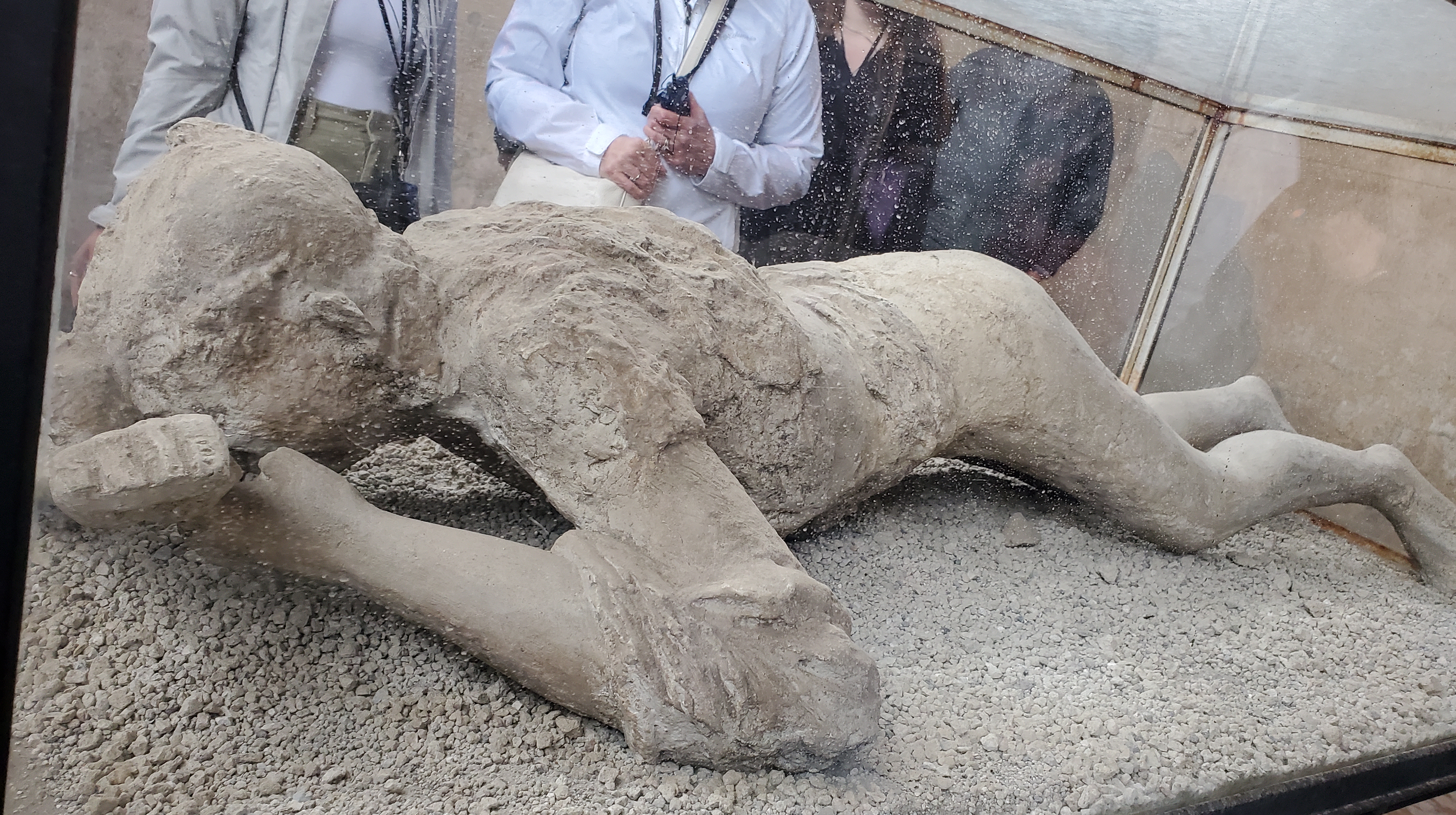
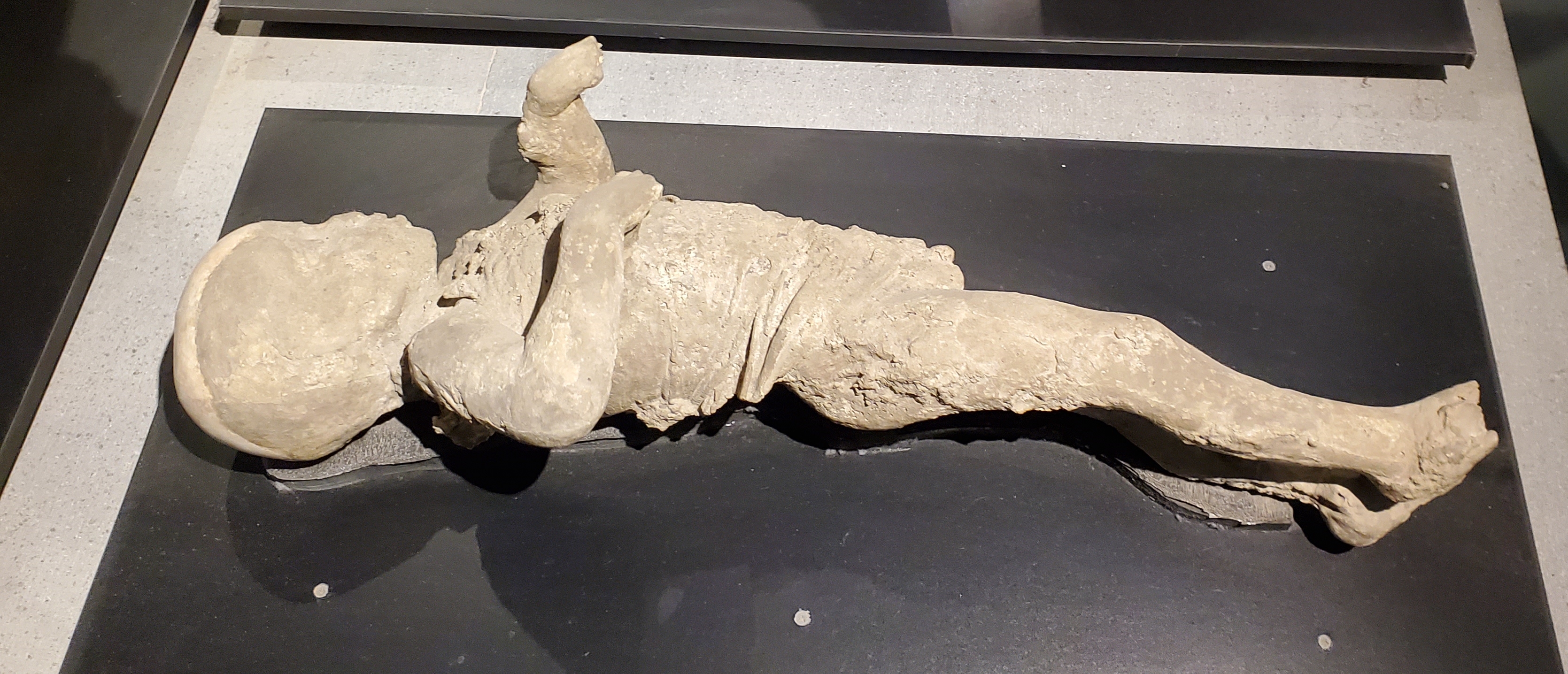
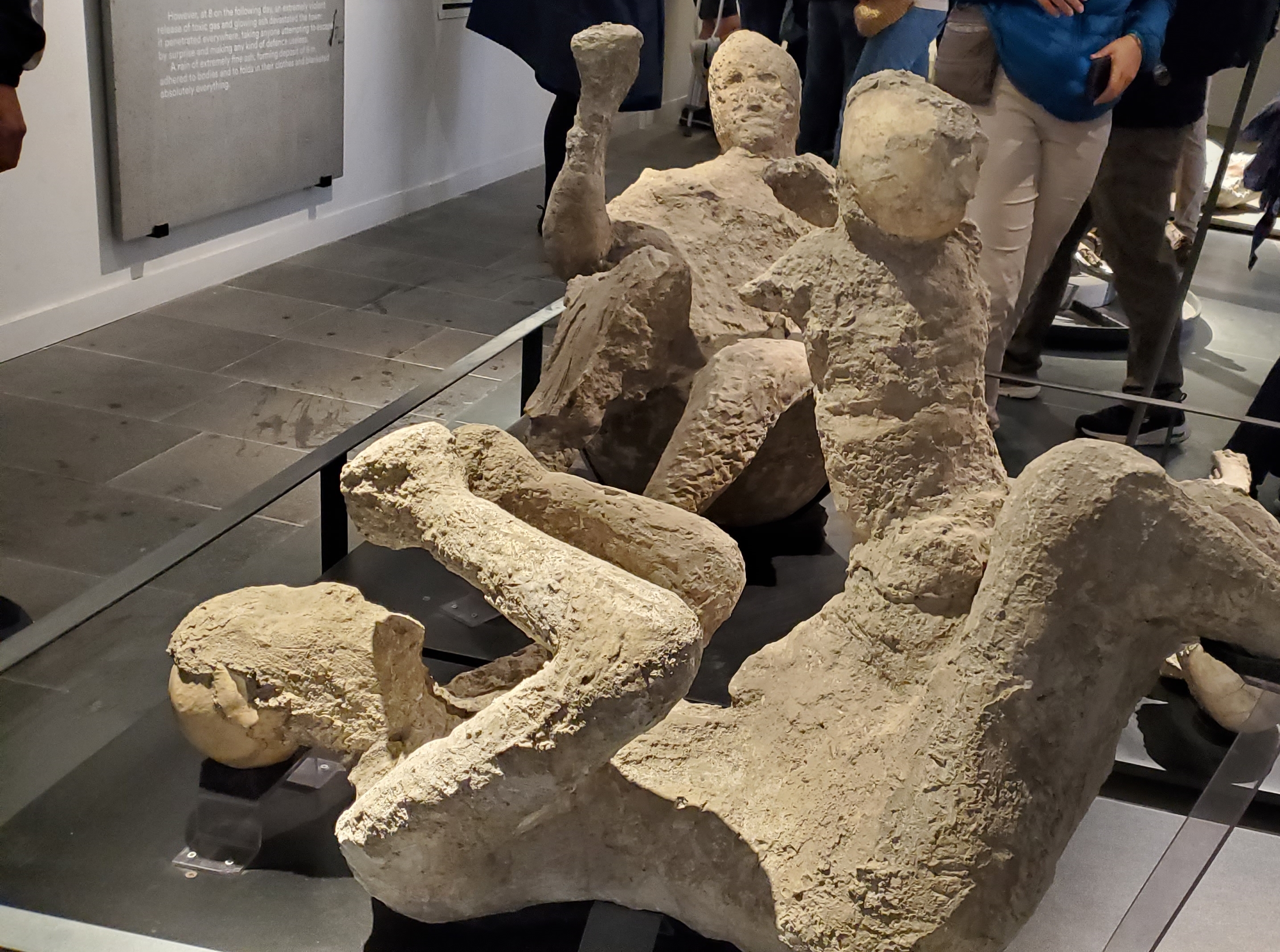
Let’s now turn to the interesting parts. I had pictured Pompeii differently. It is definitively ruined; former two- and three-story buildings now have only half a story. But destruction and preservation are not entirely mutually exclusive. Excavated walls still have painted murals. Mosaics, mostly relocated to the MANN, are plentiful. And unique among Roman ruins, mostly intact everyday items have been found, from petrified bread to glassware, pots, décor, jars of urine for bleaching at laundries, and, to keep with a theme, condoms. If you visited the Pompeii traveling exhibit, you also may be aware that about 80% of the population died in the eruption and were covered in ash where they fell and suffocated. Slowly, the bodies decayed, leaving a body-shaped hole in the layers. About 200 years ago, someone injected liquid plaster into those cavities and created forms of the bodies in their last moment. Also about 200 years ago, soldiers excavated the area with dynamite and threw away boring skeletons, so the 1800s wasn’t always brimming with brilliance.
Lead pipe in the original sidewalk. (Long, skinny part that curves.)
What may have fascinated me most today was the story of the water of Pompeii. Like all good Roman cities, an aqueduct brought fresh mountain spring water down to the population center. Clay pipes began dispersing it. But to one-up Petra, the water then flowed into metal pipes to reach the various fountains in this sizeable town. Lead pipes. Seriously. All evidence seemed to point to a well-nourished population that didn’t grow very tall or live very long (well under 5’ and lifespan of under 30 years for woman‡ and about 5’3” for men who lived 4-5 decades). There is some argument that the water ran through so much limestone that the pipes became coated with it, lessening the effects of the lead. Oh, to have a time machine and all of today’s scientific equipment!
Thanks for hanging in so long. I wrote the first draft the afternoon we returned from our Pompeii tour, and was still getting with finally seeing (a fraction of) this famous site.
*Classic blunders—the most famous of which is, “Never get involved in a land war in Asia”—but only slightly less well-known is this: “Never go against a Sicilian when death is on the line”! Unfortunately, Vizzini died of iocane powder poisoning before completing, “The third is trusting Google maps when driving in Sicily, you idiot.” [Dad, Mom, you do remember famous Princess Bride quotations, right? Just nod and smile if you need to.]
†If you are looking for amazing art, museums, and food in a crowded, loud, smelly urban setting, the Venn diagram favors the comparison.
**Mann, I love my footnotes. Isn’t Italian great? I don’t even have to use my translator app to figure this out.
‡Childbirth, of course, skews this. Hmm, our guide also said that most families at the time were a “one is enough, two is too much” child-mindset, but it could have been their mothers didn’t regularly survive a second or third birth.
In a dramatic counterpoint to all of Wes’s Worst Day Ever (So Far) rants, I’d like to share one of the best days, for all of us.
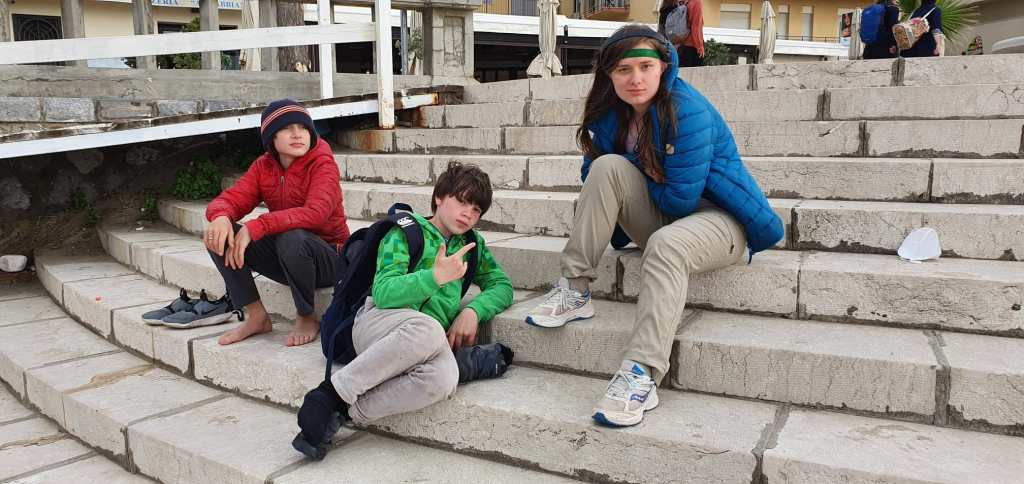
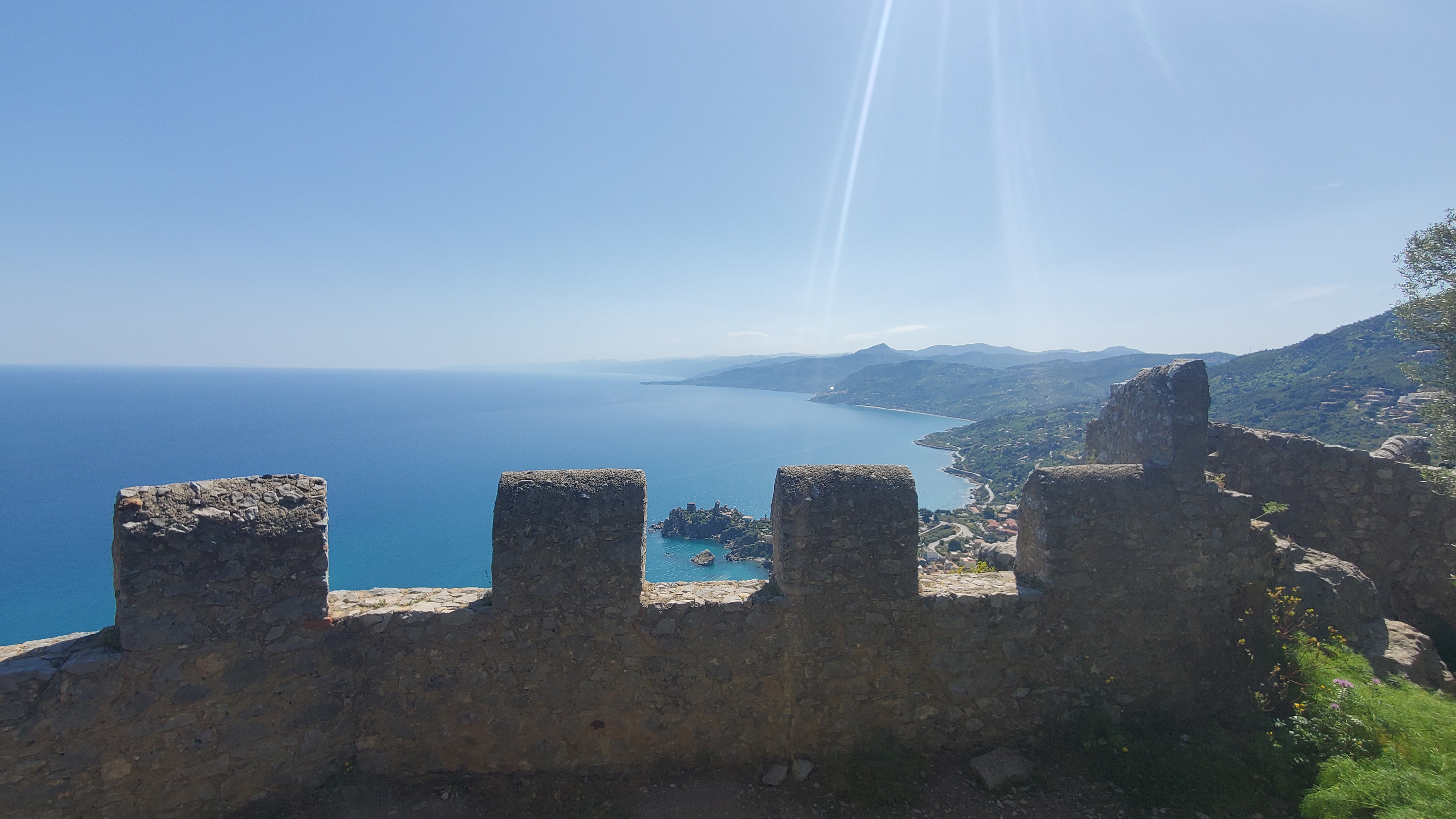
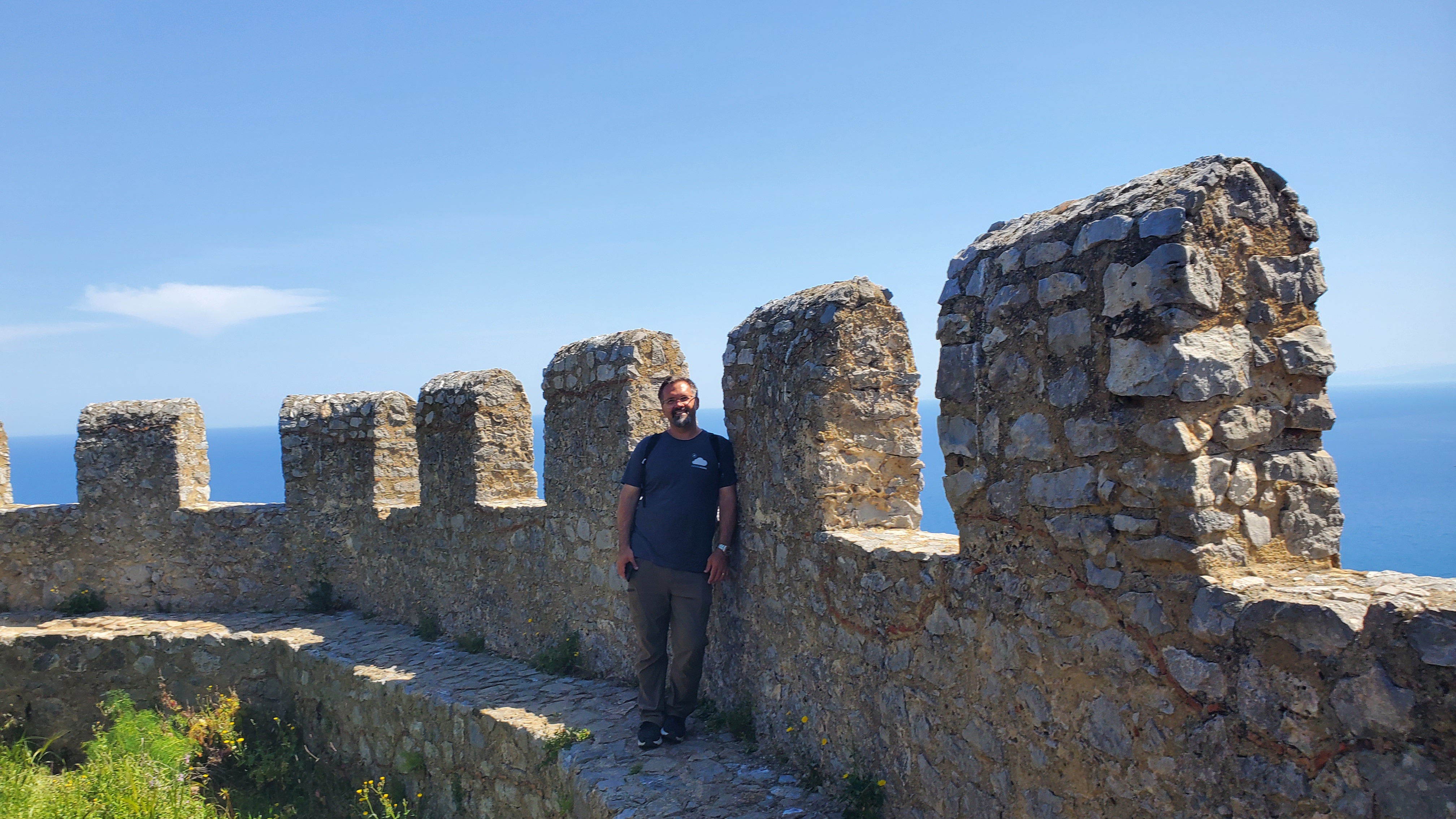
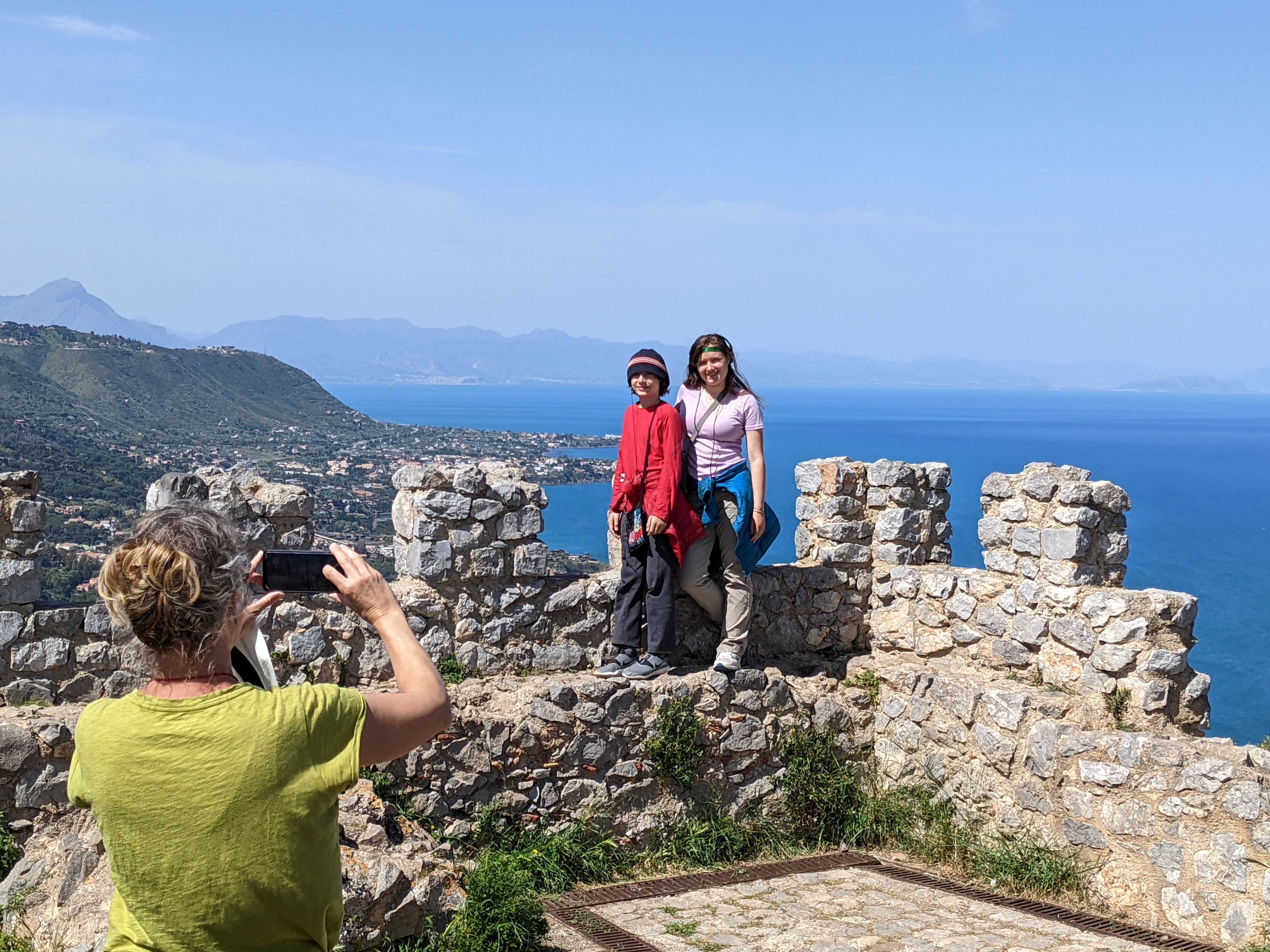
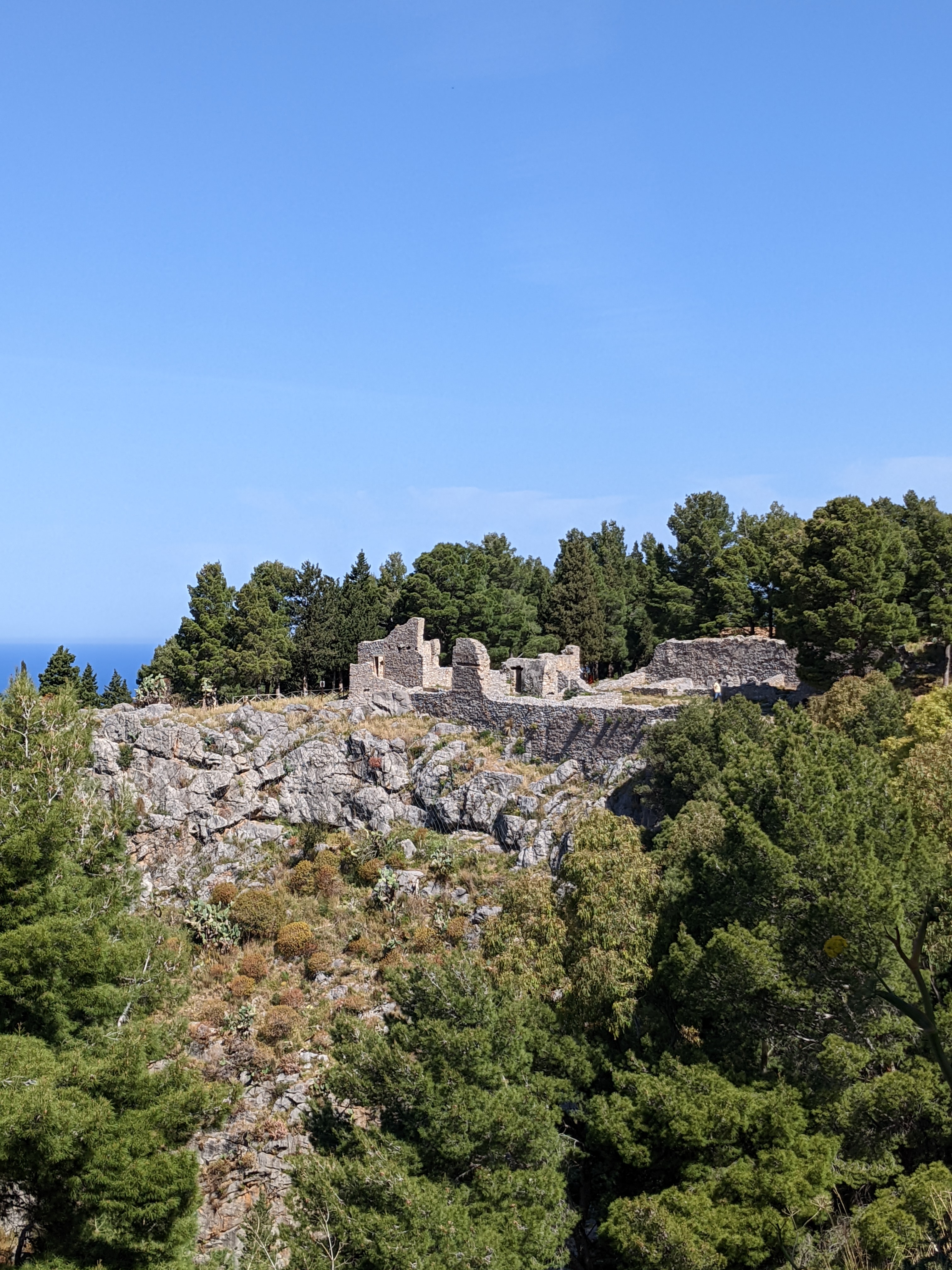
La Rocca had been beckoning all week, and on our last full day in Sicily, the Activities Coordinator Who Must Be Obeyed* heeded the summons and herded the family together for the hike up Castle Rock. It was what all the Mediterranean brochures advertise—blue sky, turquoise water, green flora, crumbling ruins of goddesses and kings. As we bought our tickets, we crossed paths with a father-son team doing the climb for the second time in two days. When we met them again by the battlements, the kid connection kicked in and we started chatting, both agreeing that Londoners have the best accents and Americans can barely speak English†. In an astronomical coincidence, his ten-year-old, L, likes video games, and Wes, Piper, and L hit it off and then took off. They were detained at the gate until claimed by their grownups, where my kids quickly remembered the promised gelato for having to go on a beautiful hike and romp around castle ruins overlooking a cerulean sea.
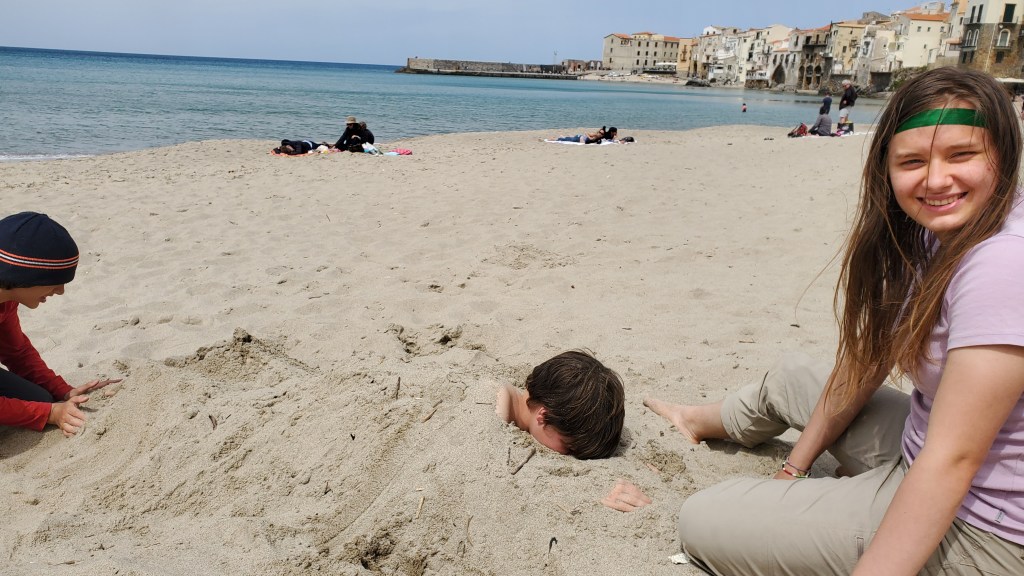
All paths lead eventually to the duomo or beach, so it didn’t take long for the seven of us to find ourselves both sticky and sandy. William is both Kind and Interesting, and works in tech, so it was easy to hang out for hours while Wes buried L in sand.
I know you assumed Wes would leave L’s head unburied, but you are underestimating weird preteen boys.
We eventually had to do laundry and other leaving chores before heading to Naples the next morning, and Wonderful William offered to let Wes stay with them for the rest of the afternoon. He did them one better by just following them at distance, being a protective yet discreet money source, as the boys went out for espresso, where Wes impressed and horrified L with the amount of sugar he added, and then more food. We had a pick Wes up eventually so he could pack for our early departure the next morning, but we met up for dinner at the best pizza place in town.
We stretched out dinner, and another dessert, for as long as we could and even offered to buy L (who is a crazy-smart, bilingual, thoughtful, articulate kid with interests and ideas outside of video games), but William was unable to do so without his wife’s approval, and she was back in London, recovering from Covid, being the last in the family to get it. Also without her approval, William was unable to take Wes home with him for keeps, so the evening ended quite sadly.
* * * * * * *
Confidential to William and L: We’ve missed both of you all the way through Italy. I haven’t forgotten your book recommendations. We hope to land in the same city again someday!
*She has several titles, but I really think Wes’s “Mom-strosity” is fairly accurate and her phone is programed to call her “Goddess”.
†They were from London, and William tossed out words like “luster”, which I would clearly use in writing, but have probably never once said aloud in casual conversation. The Queen’s English wins hands down.
“Cefalù is best appreciated through that serendipitous decision to go left and not right, through breaking off from the tourist throngs and seeing where your feet or your camera lead you.”
I’m picturing women gathering 600 years ago to do the laundry, and making sure it took all day so they could have an excuse for chatting together. On the other hand, I’m afraid it did take all day, even with the gossip to make the labor interesting.
I had just read the above travel note when Dwayne and I did an exploratory walk of Old Town, mapping out an afternoon with the kids. Almost immediately, a random left-then-right brought us down to this medieval washhouse in a hidden corner. My cup runneth over.
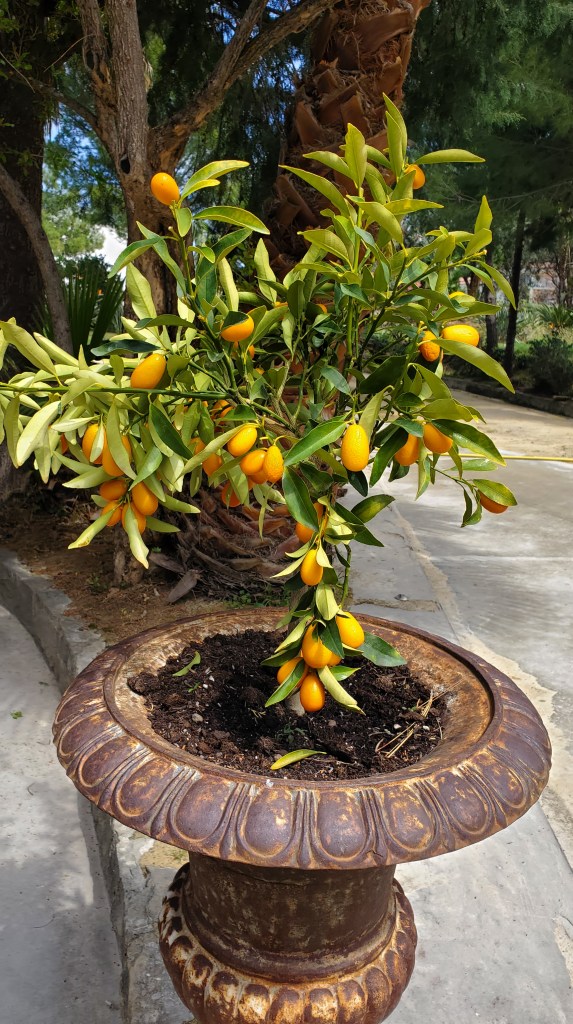
Cefalù inspired me: If I can’t grow an orange tree in Seattle, perhaps a kumquat would be an acceptable alternative.
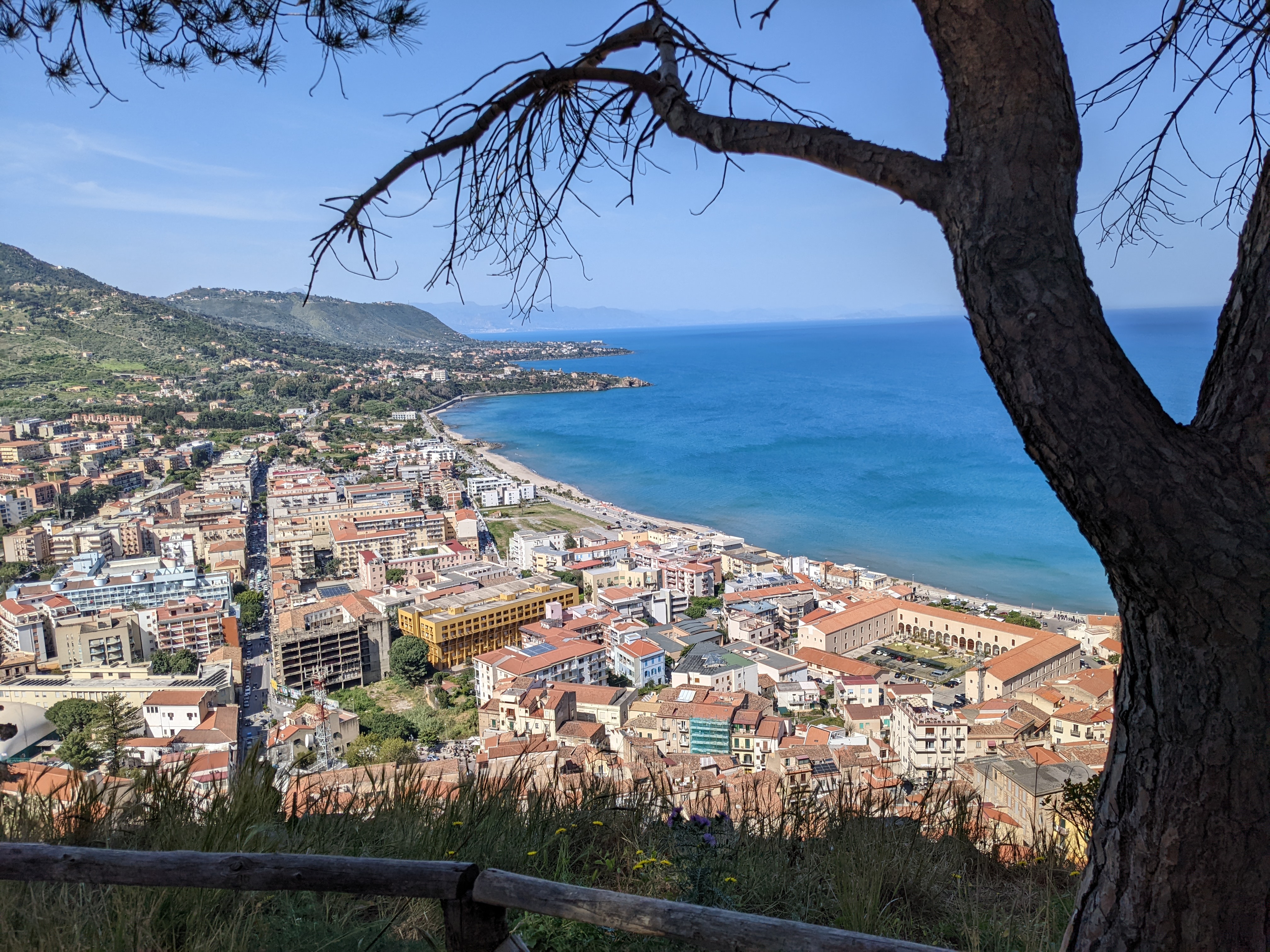
I haven’t yet tired of places with old towns, with alleys barely wide enough for a chariot and shop after shop selling either gelato or made-in-China tchotchkes. Cefalù (Chĕff’ uh loo) is a low-key beach town that combines Olde Towne charm, decent beaches, good pizza, a castle-on-top-of-the-hill, and non-lethal Italian driving. And, of course, there’s the requisite duomo (cathedral). We waited until the kids were with us before we bought the full exploration tickets, not at their request.
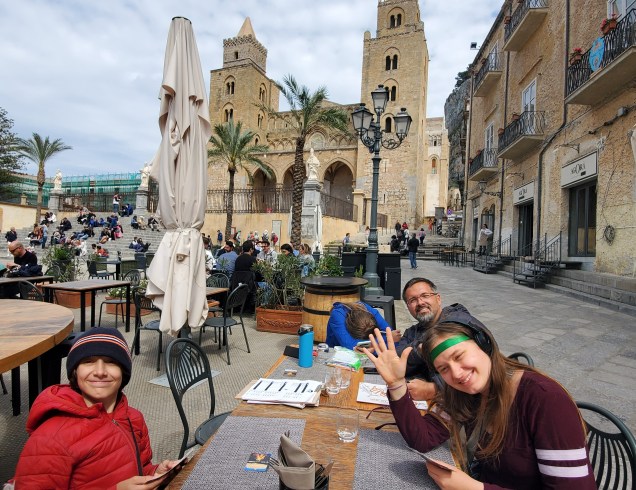
Topping off their fuel tanks before we explore the duomo behind us.
The day after Easter, the church was decorated for spring.
For Liza, and because candlelight is a reasonable symbol for a little extra hope, peace, and goodness in this world.
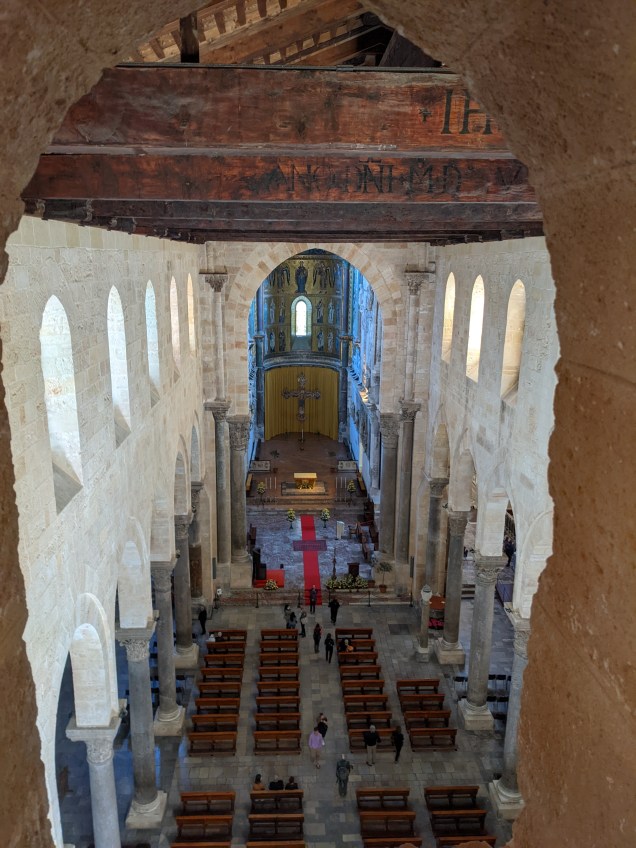
A bird’s eye (or upper story) view of the chapel.
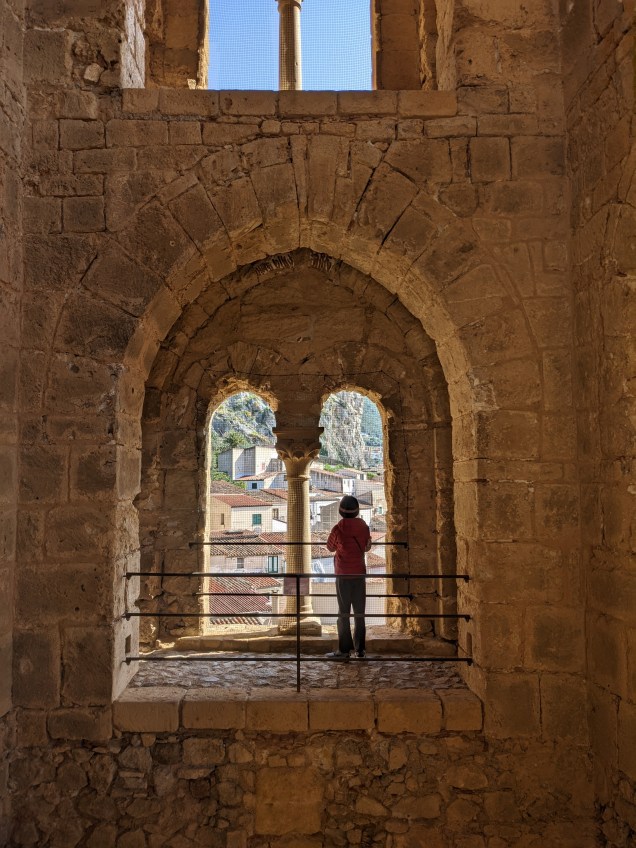
Great views passing the upper walls between the bell towers.
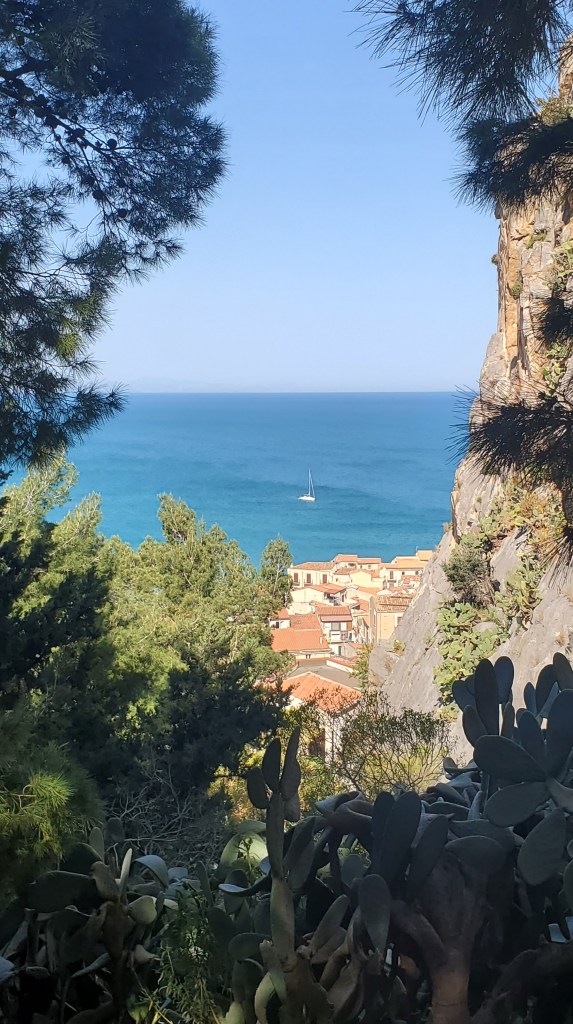
The sea isn’t too bad either.
I got to explain my fascination with relics to my children*.
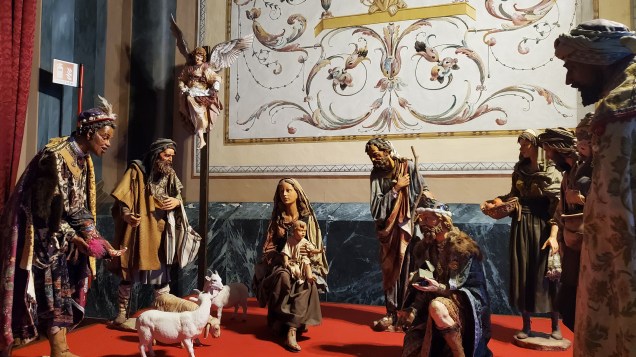
Not-the-whitest-Baby-Jesus I’ve seen in a nativity scene. This is a compliment, as I search for non-porcelain-skinned Jesus through Europe. I’ve kind of given up on Mary.
Cefalu was supposed to be a relaxing break where I could catch up on my writing and the kids their math, but sitting in a hotel room is anathema: when traveling, what can be done anywhere should be done “not here”. Relaxing is good; exploring is better. Sicily has been great for both!
*I’m not trying to be fully irreverent. Here’s what’s interesting about relics: 1) The precious and expensive vessel it is held in, which can be silver busts, jewel-crusted gold crosses, or anything grand and gawdy, and 2) the body part or sliver of cross/shroud/pillow/nail/thorn entombed in the reliquary. I think it was in St. Marks, Venice, that Jesus’s diaper was listed as a local relic. Most recently, I listened to a Rick Steve’s interview called “An Irreverent Curiosity” about a small town outside of Rome and their claim of Jesus’s foreskin, which eventually led to a pope’s decree about not talking about this delicate piece of His body, except on January 1st, if it must be spoken about at all.
Looking back, I realize that Dwayne and I, and usually Kyla, do one big day tour out from our landing spot, and in Sicily, it was the Valley of Temples. For millennia, Sicily was a great place to land for anyone with a boat and sword—a bloodthirsty power complex could be added later if not already fully developed. The Temples are a mix of ruined ruins and astonishingly well-preserved ruins from a Greek building spree about 2,500 years ago. They were an interesting counterpoint to the numerous Roman ruins we keep stumbling across.
There are three things I want to hold on to from this trip.
The Temple of Concordia is easily the most intact temple in Sicily and beautiful as well. Her eternal youth comes from being continuously useful (and therefore, maintained), first as a temple to unknown deities and then being repurposed as a Christian church for many centuries. But what made me fall smashingly hard for this temple was this modern statue of Icarus placed just so.
On one hand, I want to live in a world where this ancient statue has been left unmolested (unmelted?) for millennia just for the sheer rightness of the heart-aching beauty of the scene. On the other hand, I have a new artist, Igor Mitoraj*, to chase around the world.
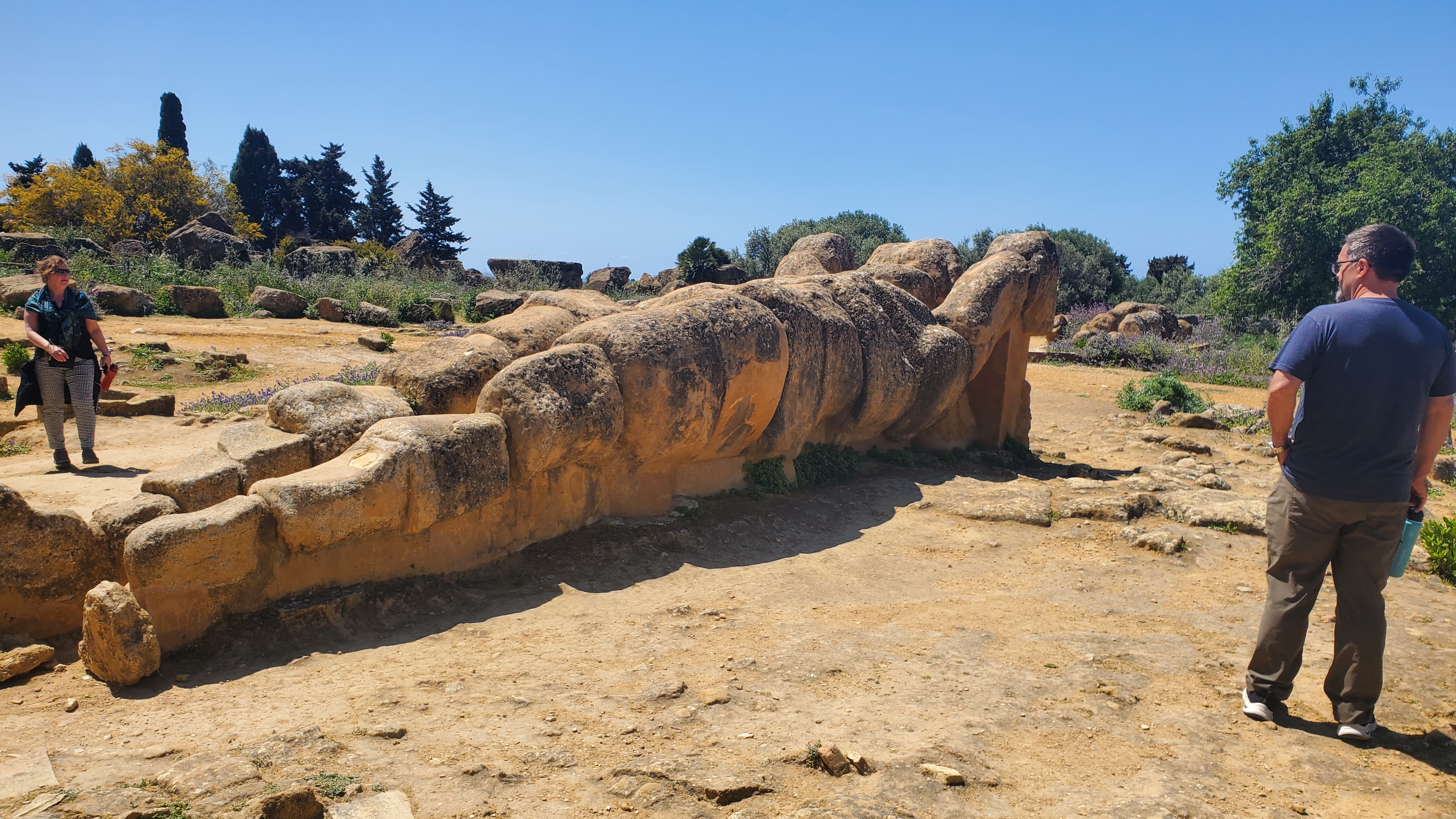
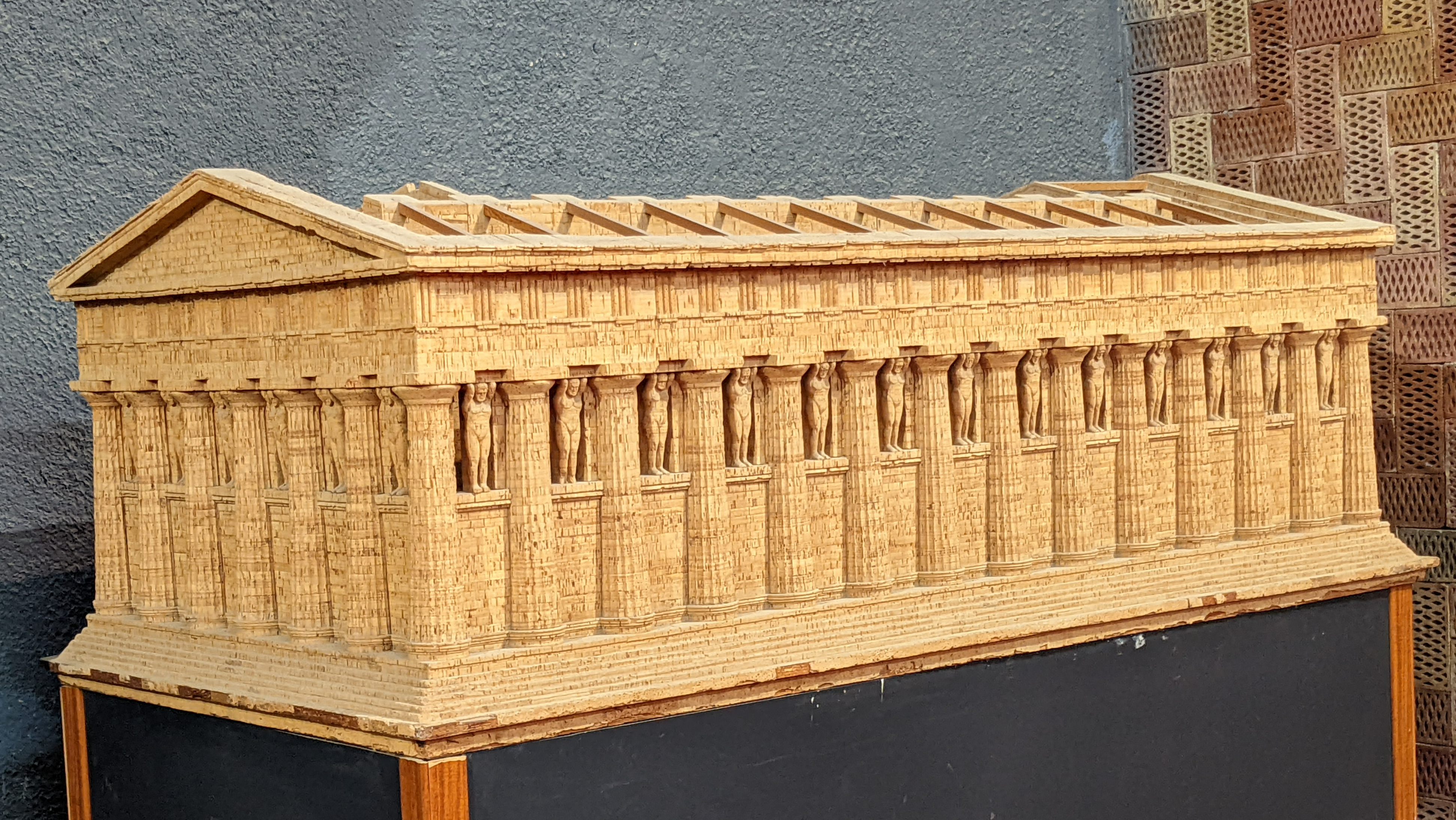
2. The only way to account for the state of Zeus’s Temple is that Colossal Toddlers got away from the governess for an afternoon. But these giant figures were intended to hold up the roof of this enormous building. One was somewhat reconstructed on the ground, but the best-looking ruins were reassembled at the nearby museum. The model shows what the temple may have looked like with these man-shaped support columns.
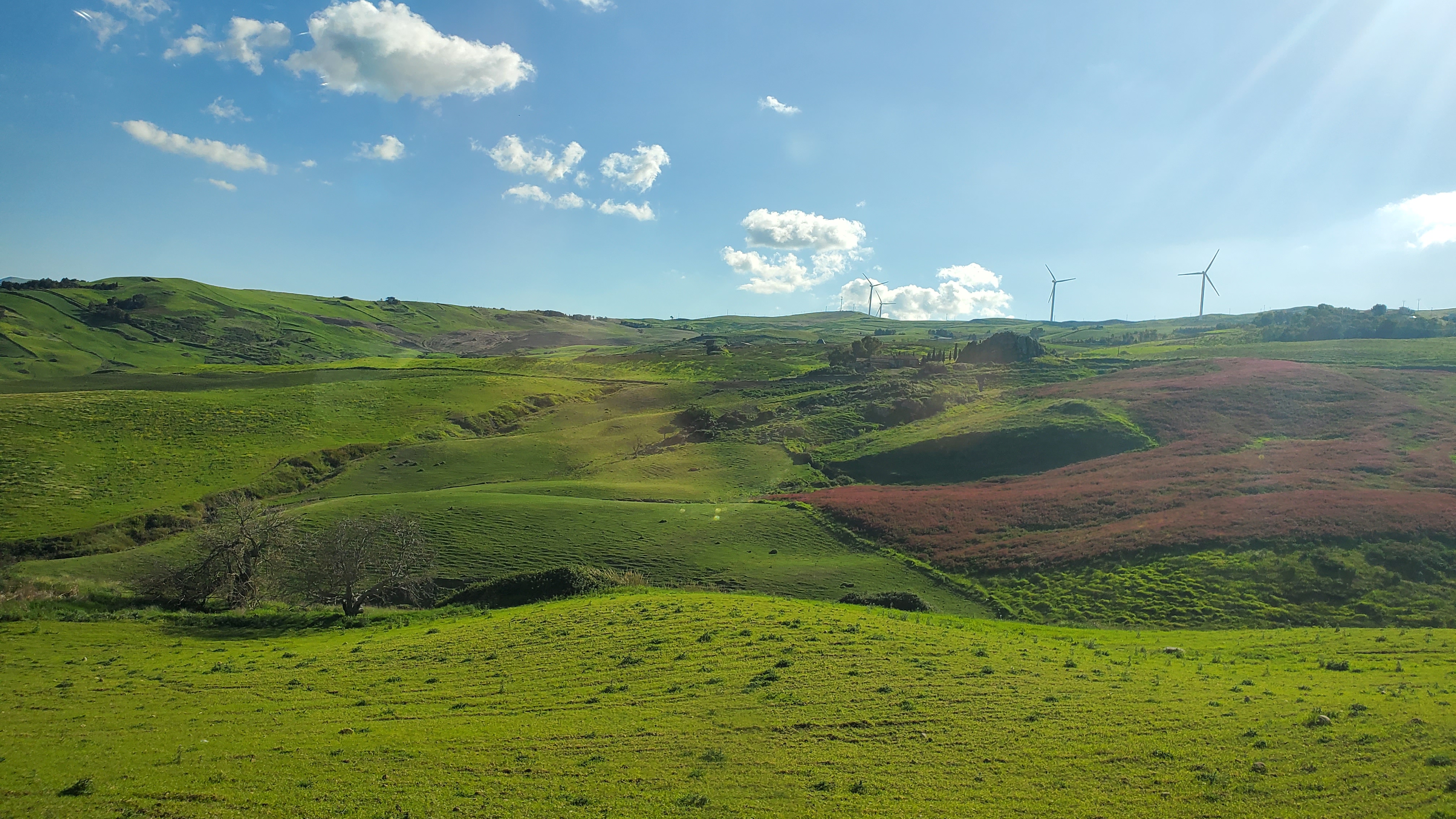
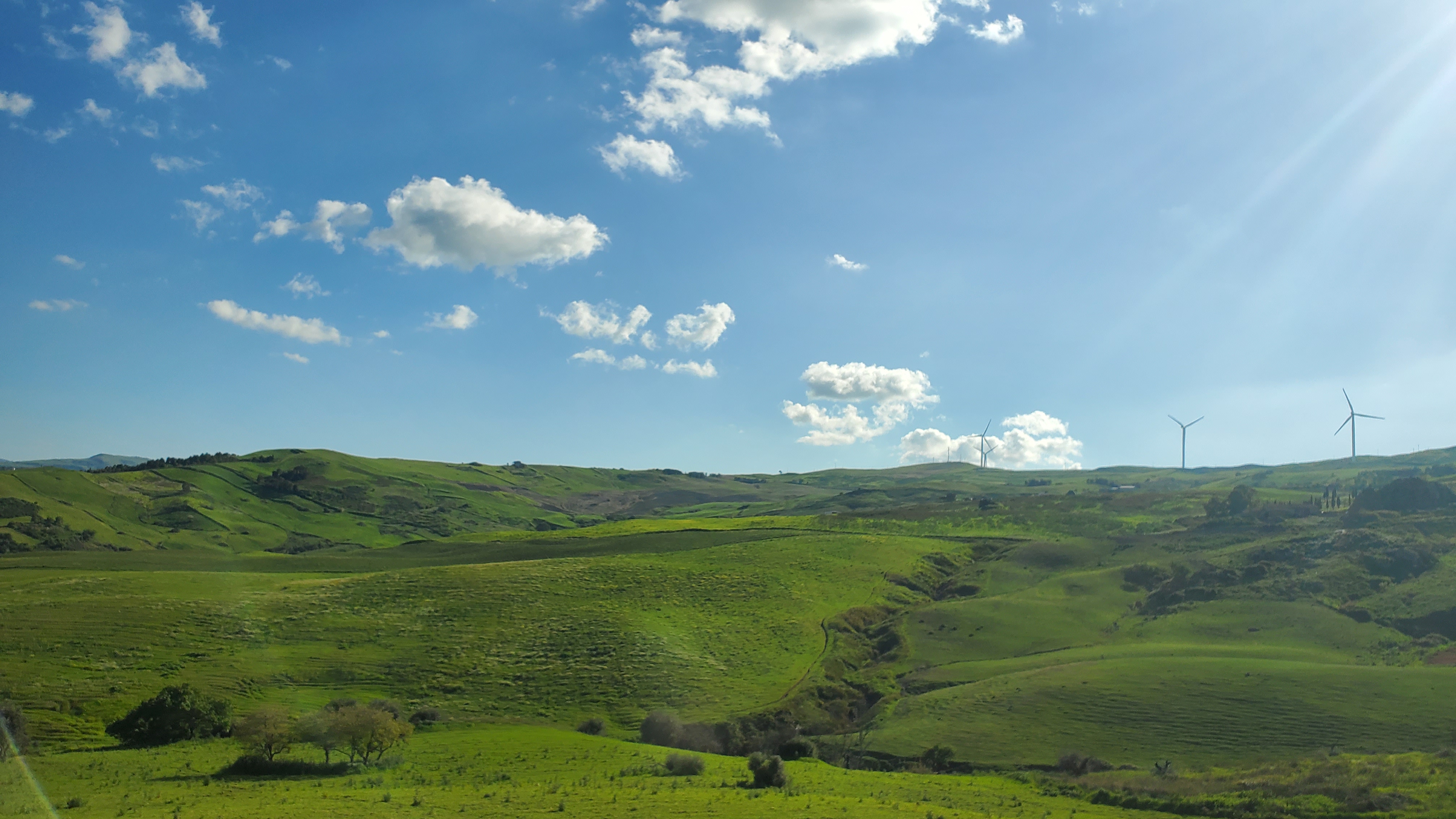
3. Cyprus was just a warmup for how beautiful a Mediterranean island can be. Following Google Maps home, we had a wild cross-country drive from the south to the north coast**. Perhaps we hit the season just right, but it was green and lush and mountainous, with the wind waving tall grassy meadows in symphonies. Occasionally having to stop for a goat herd was just a bonus.
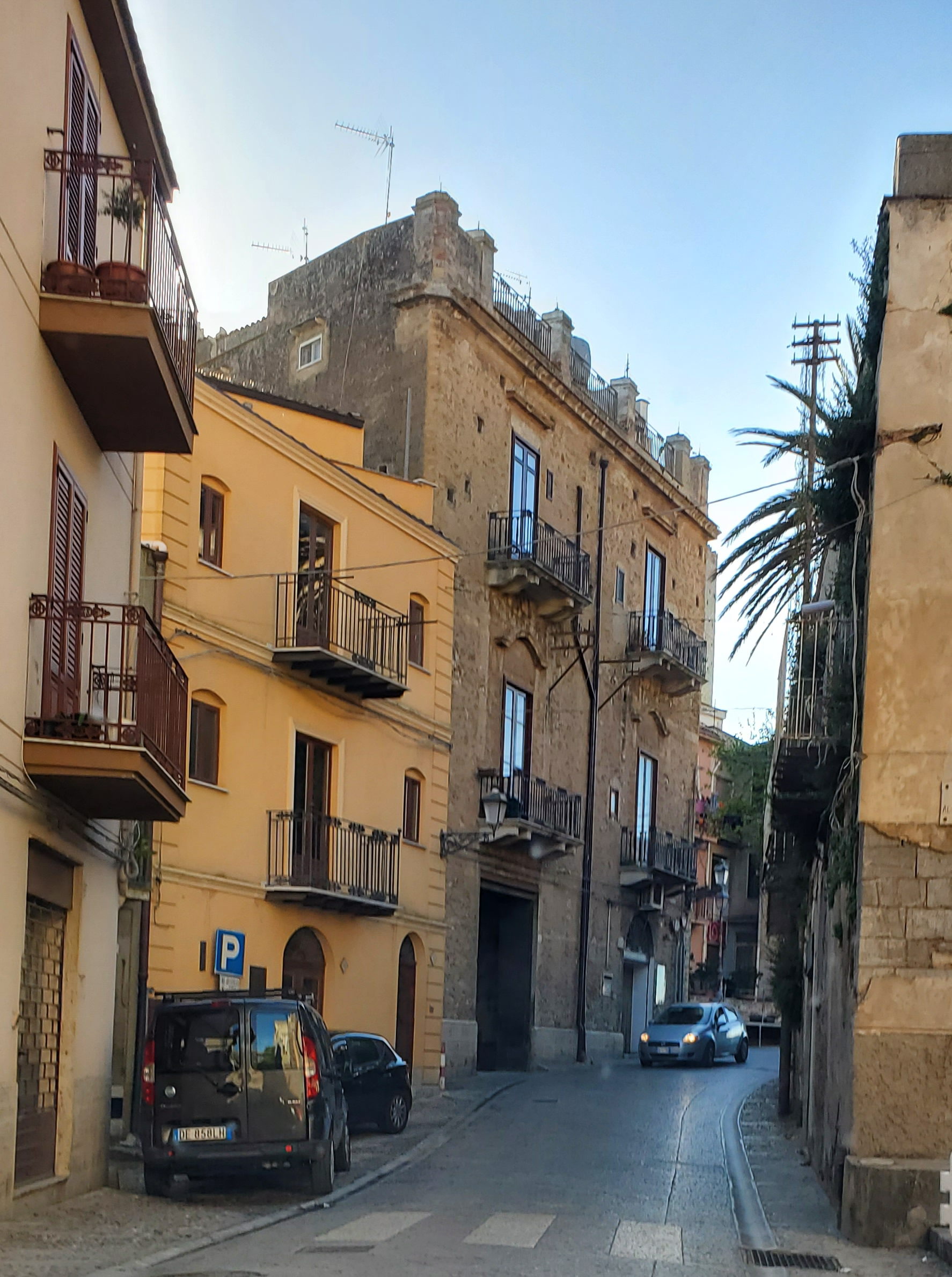
What we don’t want to remember, though I think we are doomed to, is driving the narrow “streets”. Dwayne asked me to take pictures of the route through the towns that Google, with a straight face, directed us through. I have thoughts and feelings about driving in Italy. I’ll share once the meds kick in.
*Sadly, Igor died in 2014, but clearly, his sculptures are his slice of immortality.
**You might be wondering why we didn’t take the freeway back the way we came. We ask that as well, Google.

























 Needopedia