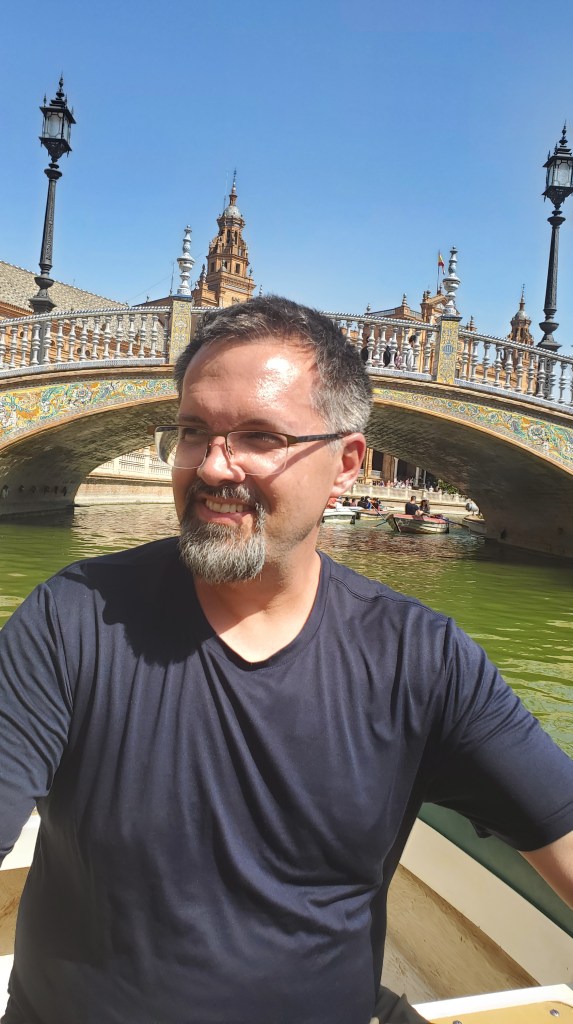
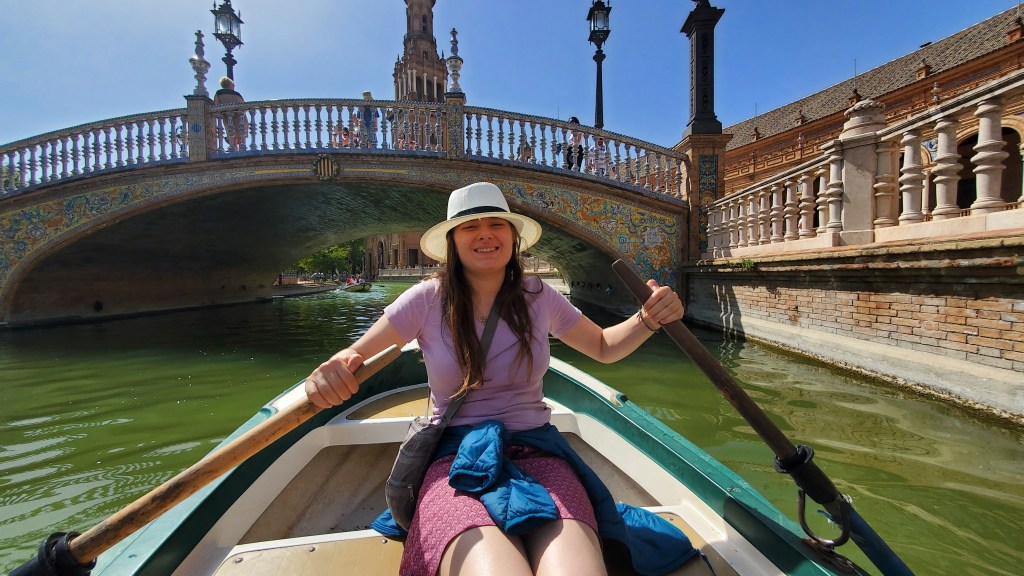
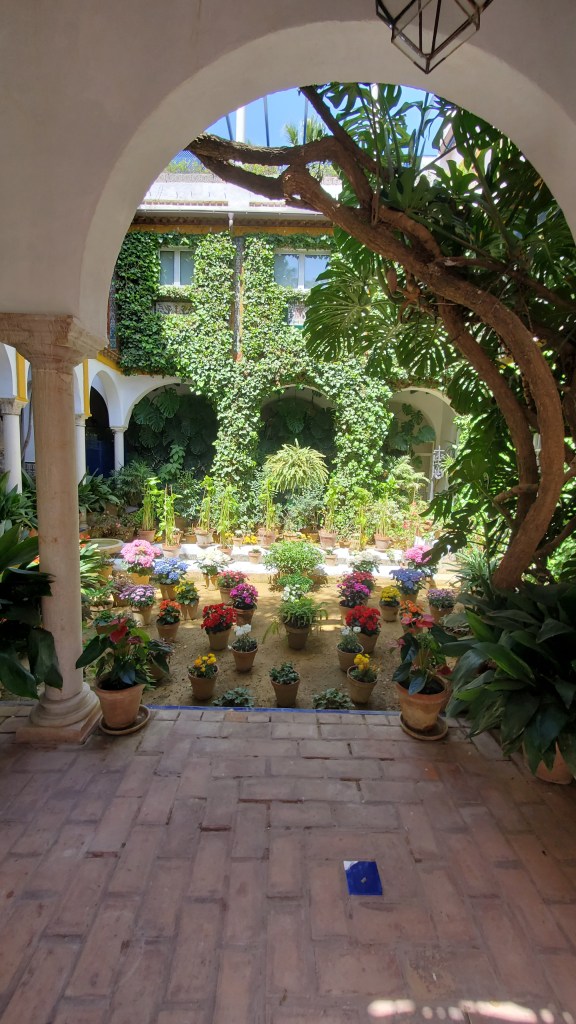
Buenos Dias, Seville!

Thank goodness I’m American, so I can pronounce this city’s name Suh-ville, instead of correctly like the rest of the world does, suh-VEE-ah.

It was one of those mornings we woke up with a few thousand steps already on our pedometers. It had been past midnight when, after a few false leads, we found the alley of our un-addressed B&B and collapsed as quickly as our host would let us. Seville was perfectly happy to let us sleep in, as Spain has the internal clock of an American teenager.

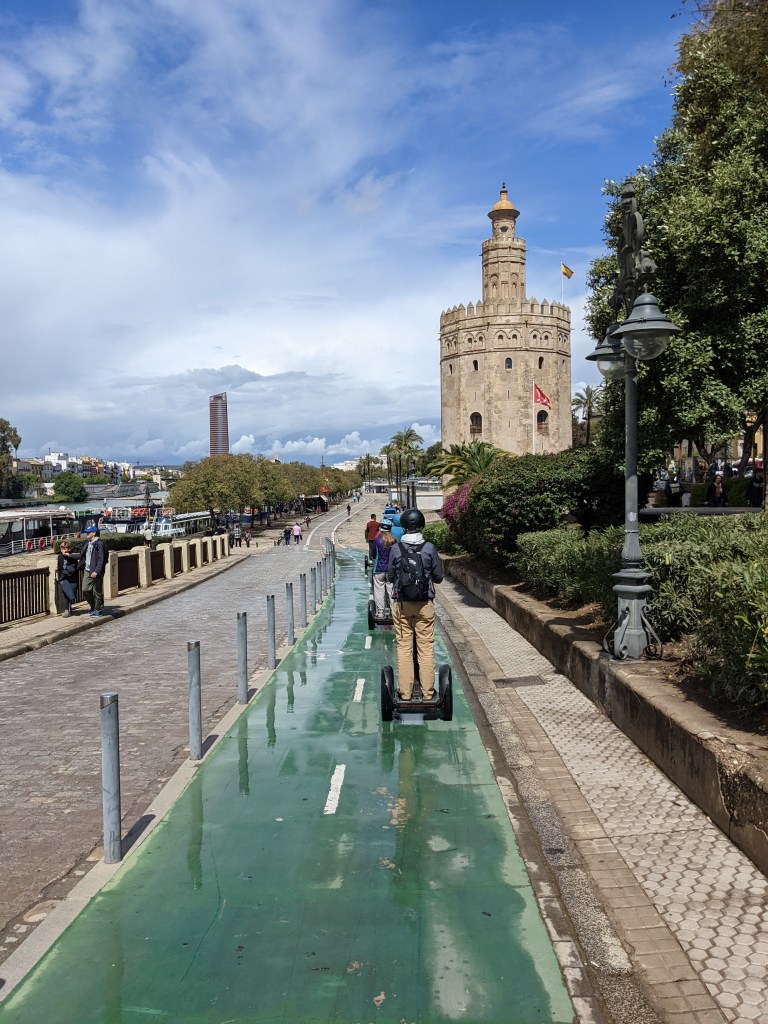
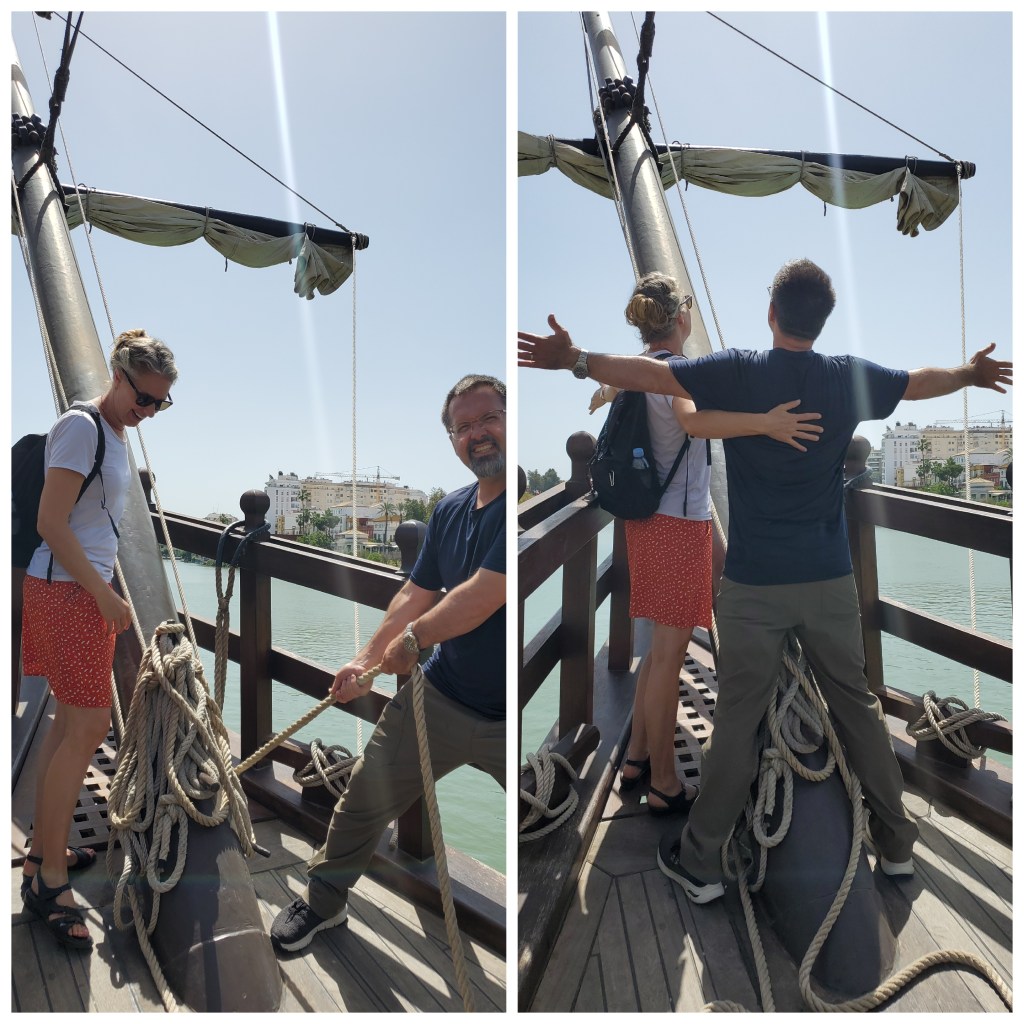
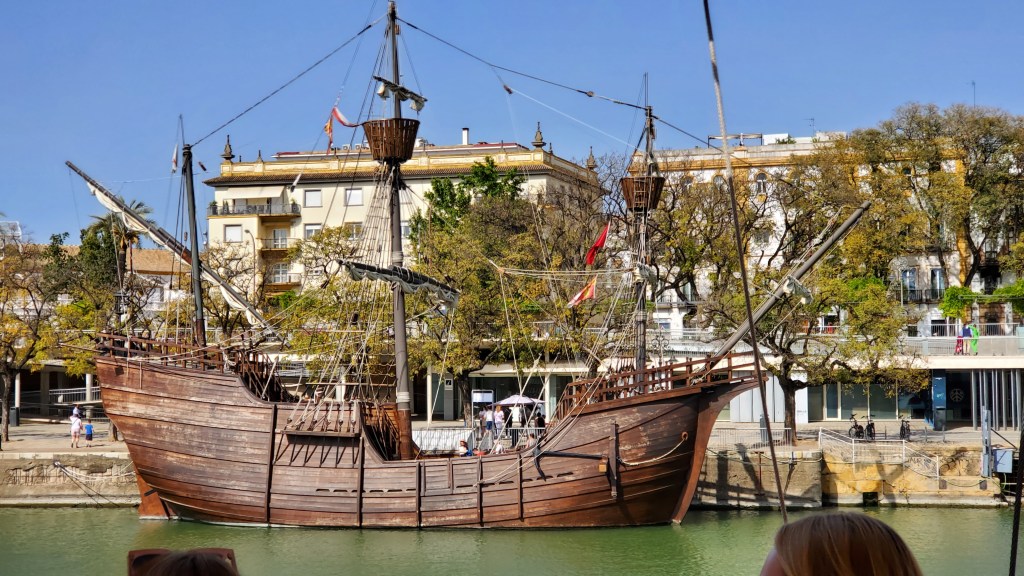
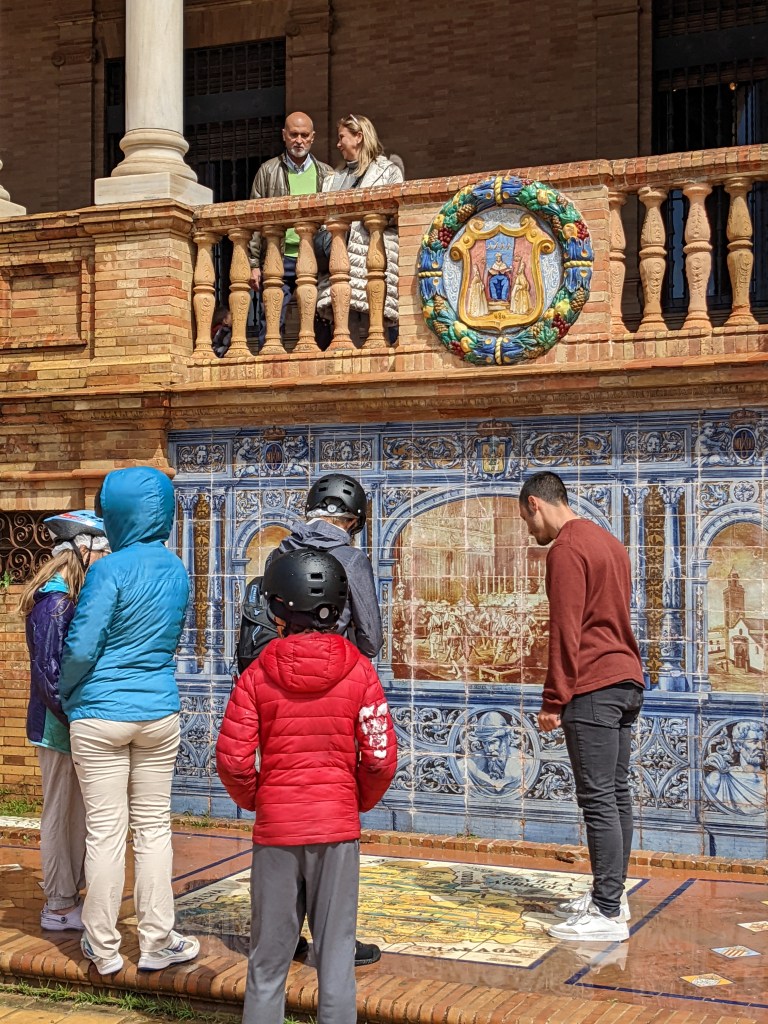
We kicked off our exploration with our first Segway tour—super fun mode of transportation to get an introduction to Old Town, the most important squares and parks, and the river paths. Seville was the perfect place to give the kids Euros and a key so everyone could go the direction they wanted. (You-know-who often headed straight back to the hotel.)  Piper and I loved the cute clothes and did some shopping. Kyla and Dwayne headed further out to parks and a museum. Dwayne and I got caught in a rooftop terrace during a storm, forcing us to order more drinks. We all went enjoyed an evening of flamenco and tapas, and a tour of the replica of Magellen’s ship, the first to circumnavigate the world.

Everyone said to eat the jamón (ham), which is hung in large hocks in restaurants that brag about the quality of their pig*.  There’s regular thinly sliced ham, and then there’s black ham from a free-range, acorn-eating, well-loved breed of pig that is either all black or has black toenails.  There’s a 3-fold difference in price, and to keep from being deported, you will have to agree that it tastes five times better. 

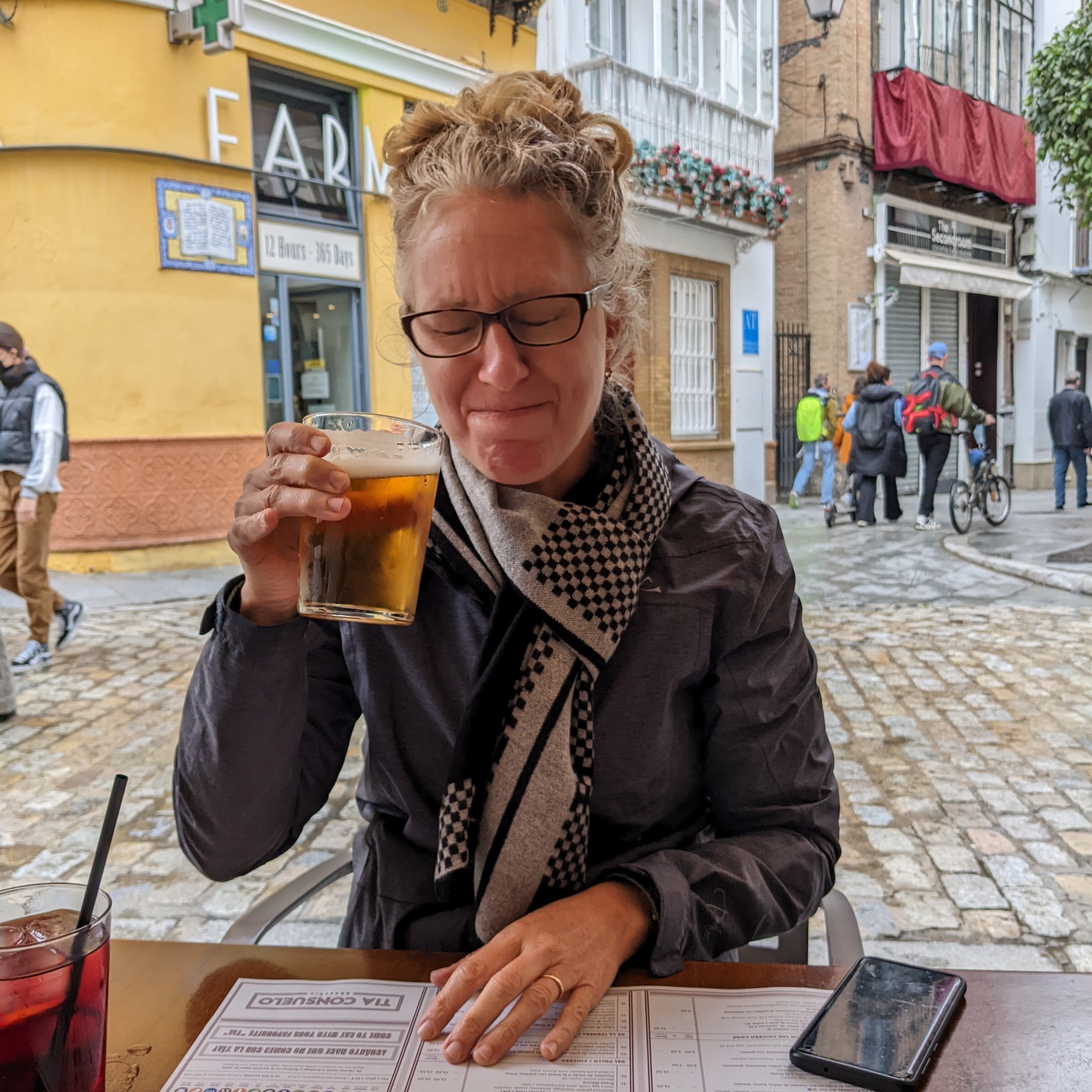
One of our favorite games is “Does Denise Like Beer Yet?” I never win this game.

Seville! We explored our hearts out and ate our fill, and still want to go back for more.


*I read that this was originally a way, after the christian-lower-case-c takeover of the formerly Muslim and Jewish-friendly town, to tell other groups they were not welcome, in both the establishment and the community.
Holy @#!*&: Semana Santa in Seville, Spain

It wasn’t until we were on the plane out of Barcelona and I was chatting with an exchange student from the US that I realized we were going to be in Seville during Holy Week. Sure, you’ve lived through and possibly even participated in the week before Easter your entire life, haven’t you?

No, you have not!

In a casually Catholic country (55-70%), there is a quite Catholic state (80%), and the capital of that state is Seville, which, at least during Holy Week, must have a Catholic population of about 150%. If that seems mathematically impossible to you, then you may not be ready to read on. That’s fine; it’s not too early for the first glass of cava*.

Semana Santa is a celebration and remembrance of the last days of Jesus. I will do my best not to misrepresent a meaningful tradition with too much irreverance, partly because I want to be respectful and mostly because [inspite of the absurd noise, chaos, and crowds] I really enjoyed it.

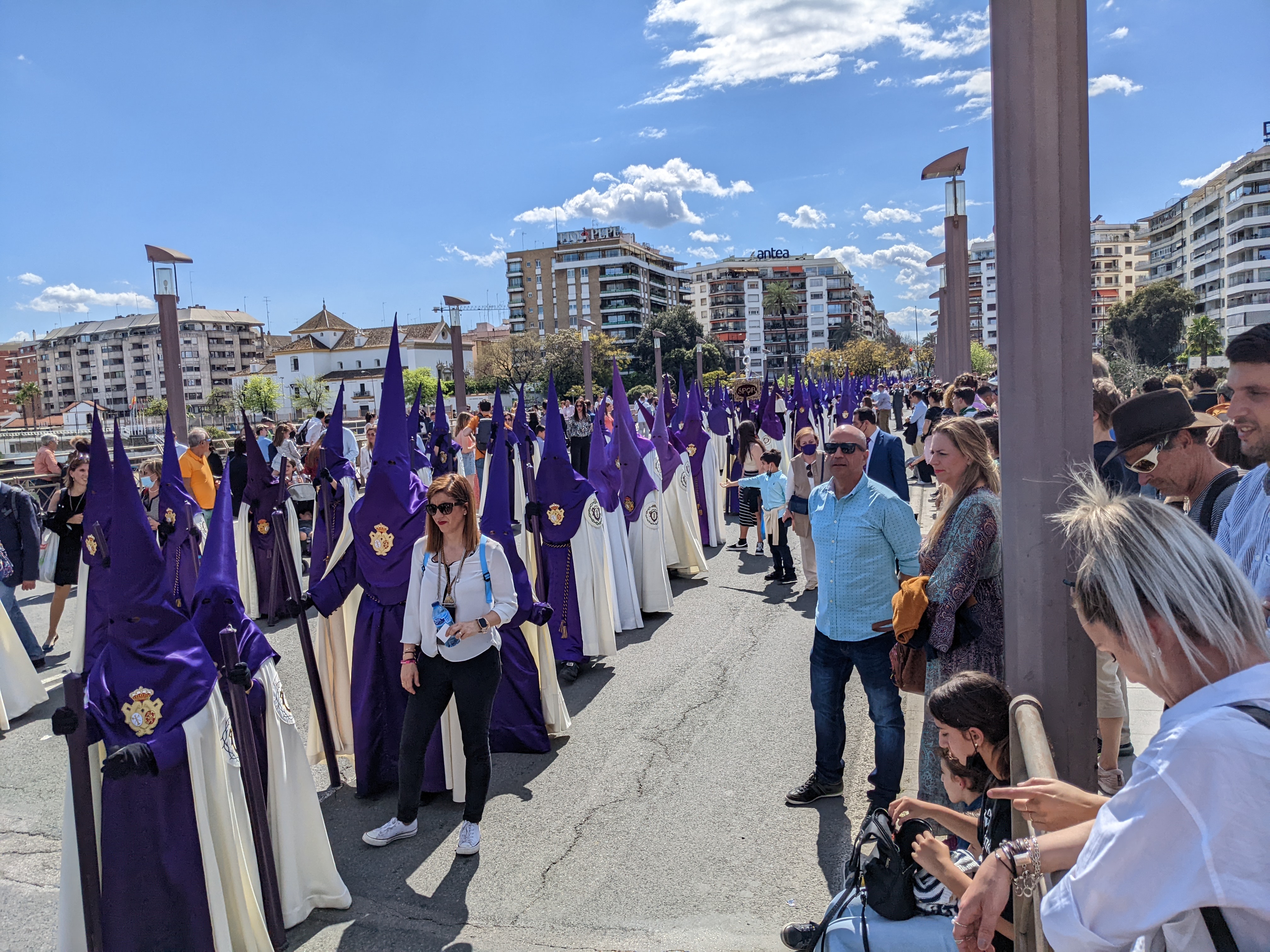
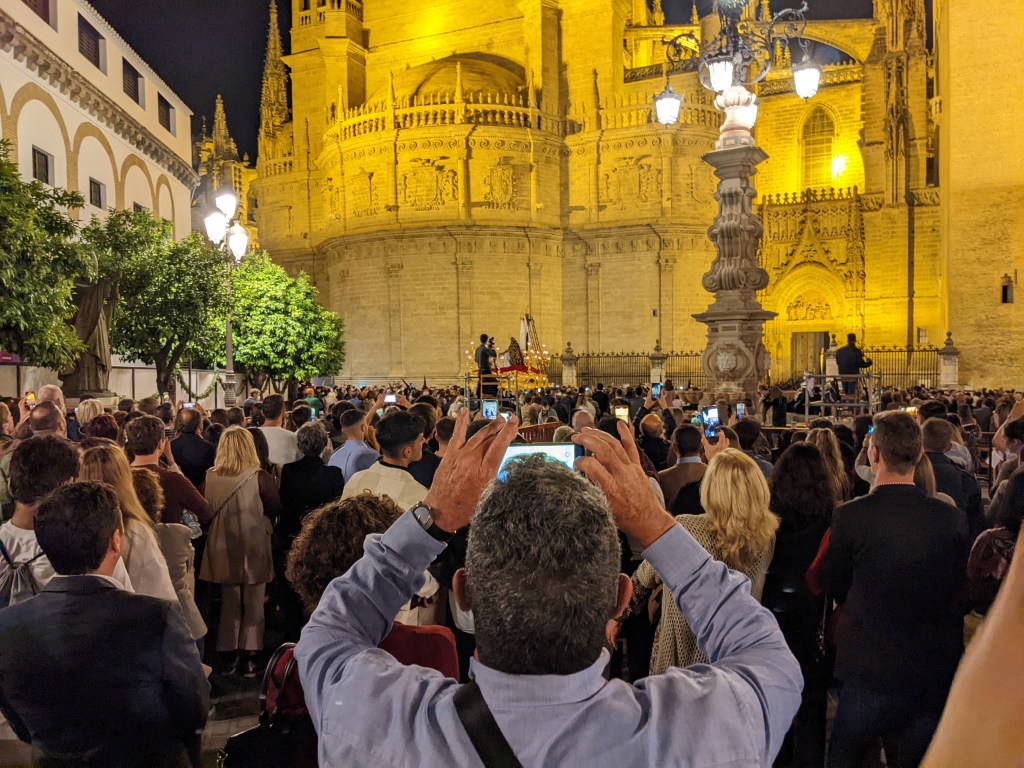
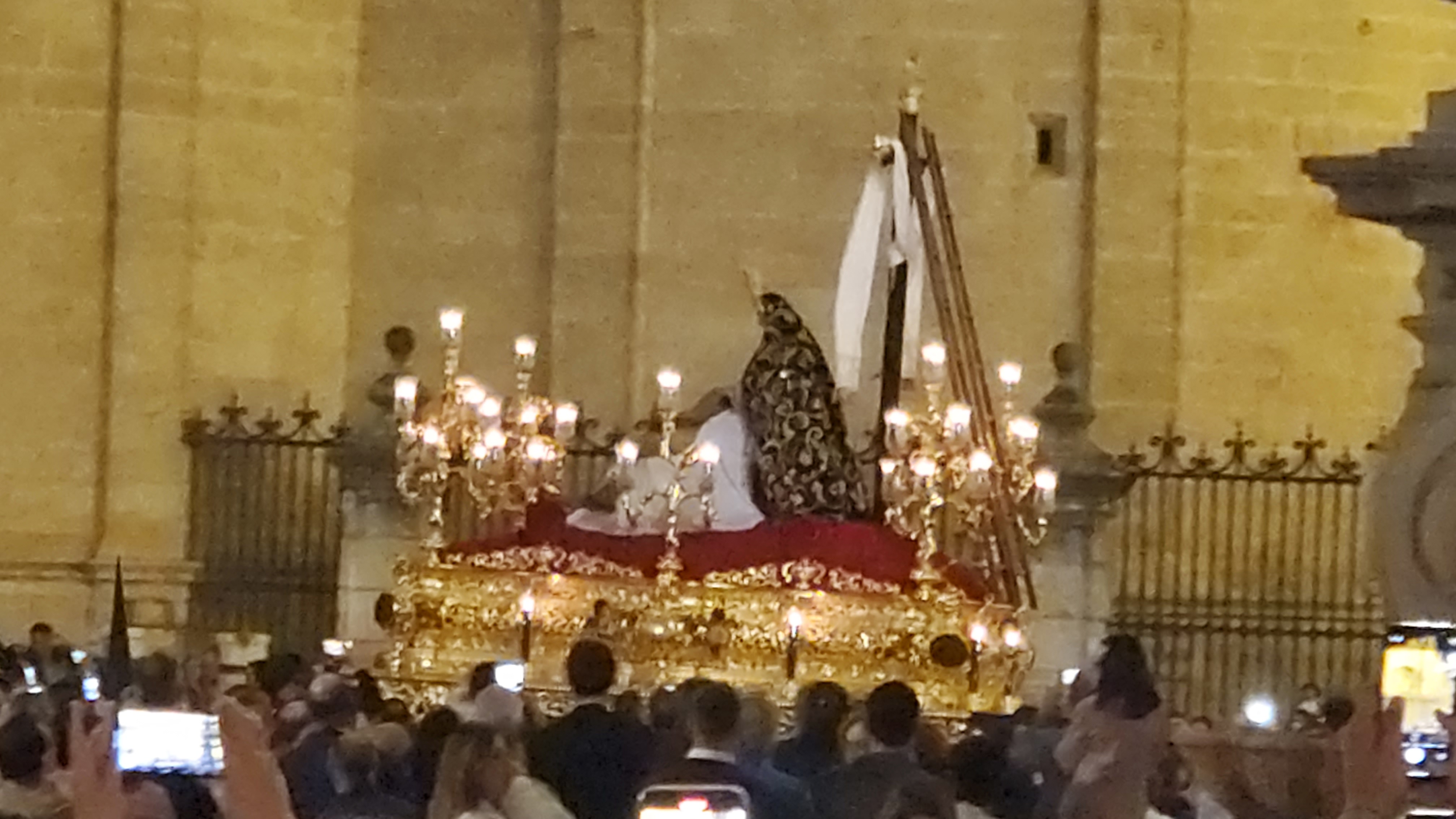
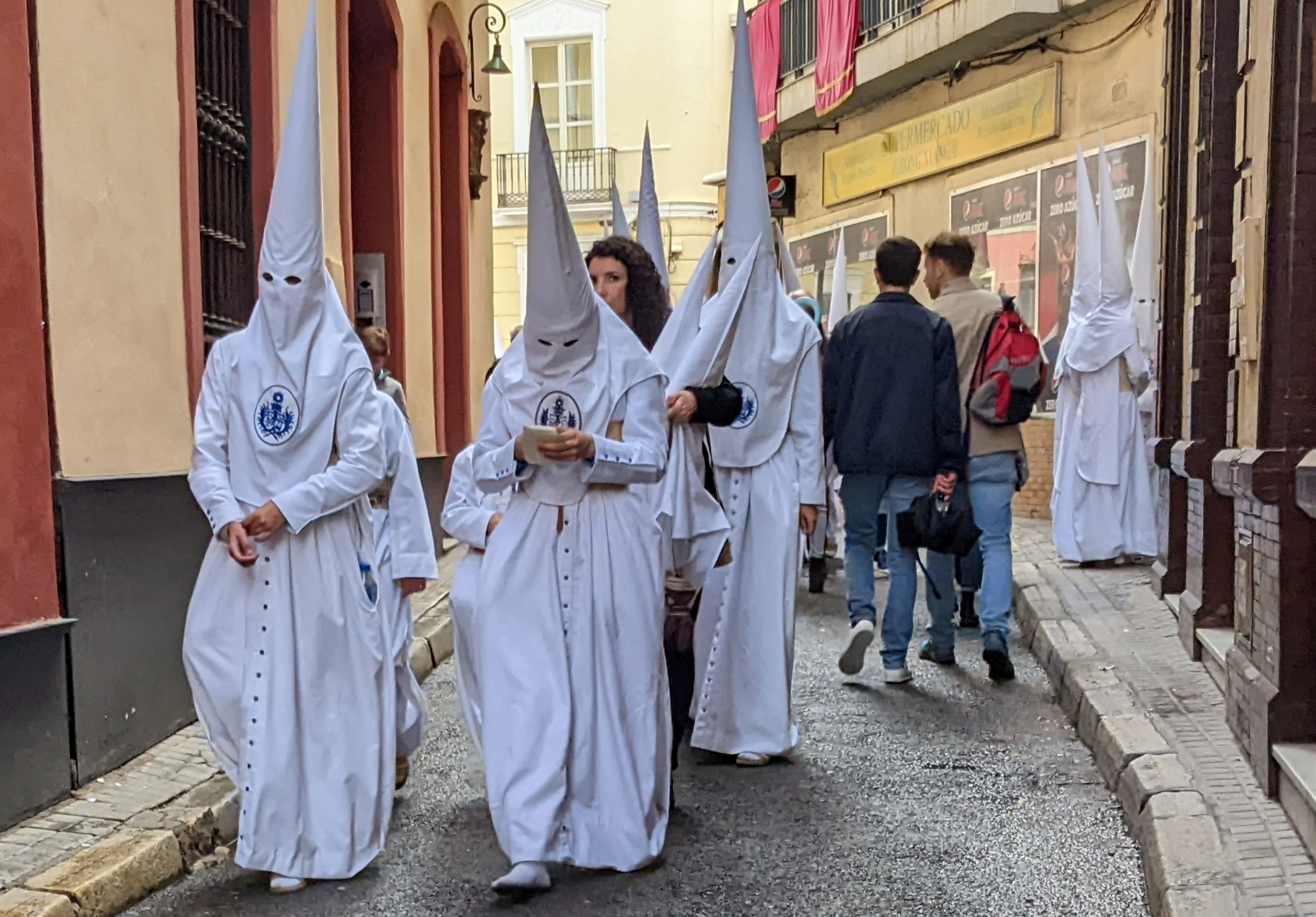
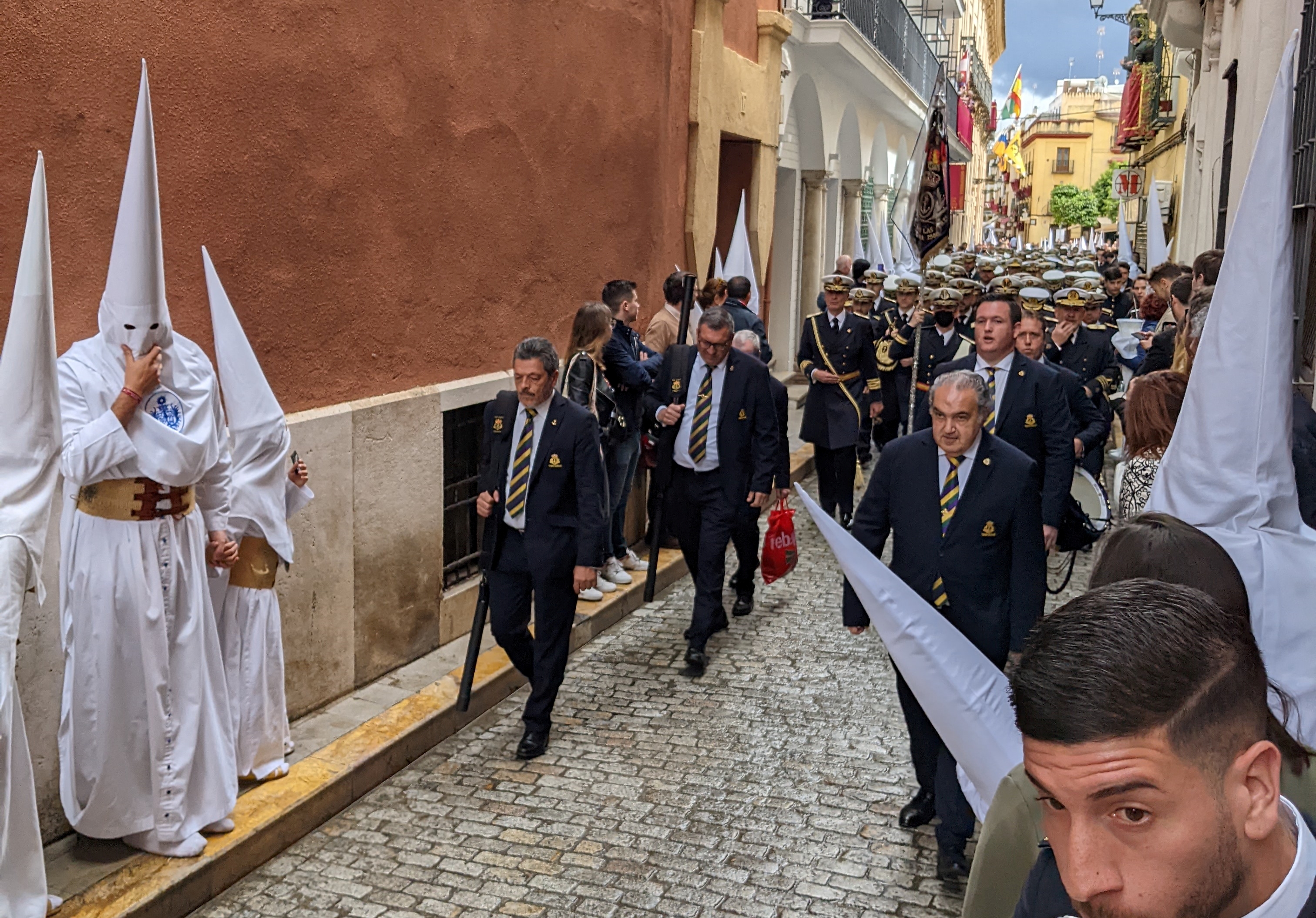
Seville has one cathedral, the Catedral de Santa María de la Sede.** About 70 religious brotherhoods, basically individual church communities, walk from their church to the Cathedral and back again during their designated processional time during the week. The heart of the processional is the float that depicts some aspect of Good Friday or Mary, and it is carried for hours and hours and hours by men strong and lucky enough to be chosen to shoulder the burden. There might be a marching band (and I love the sounds of the drums reverberating against the narrow stone alleys, even at 1am), there may be little kids dressed as priests handing out candy and saint trading cards to the kids, but there are always penitentes. You know you are an American seeing a penitente for the first time because you start freaking out while trying to act normal:

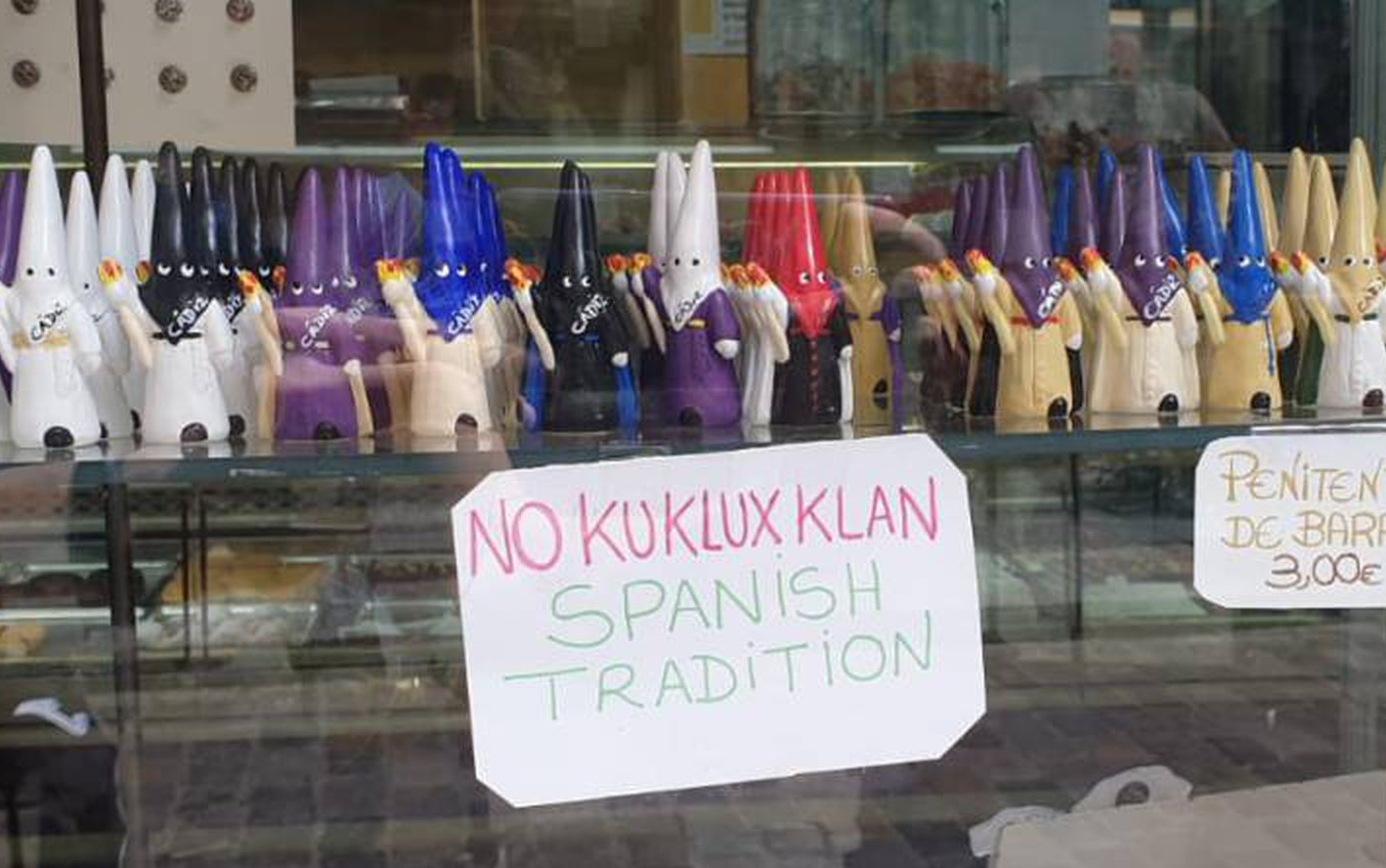
This sign in a pastry shop (“borrowed” from the internet) sums it up:

The anonymity of the pointed capirote is meant to be pious, not intimidating, and the point of the point is to point towards heaven. These traditional Semana Santa caps evolved from the Inquisition era, if online research is to be believed, and everyone agrees that they are not related to the KKK in anyway. Anecdotally, it seems American travelers just have to keep reminding themselves that this is a meaningful religious tradition denoting repentence and humility, not a lynching squad. It was just a bit unfortunate that our first morning in Seville coincided with the procession of the brotherhood that wears white-on-white.

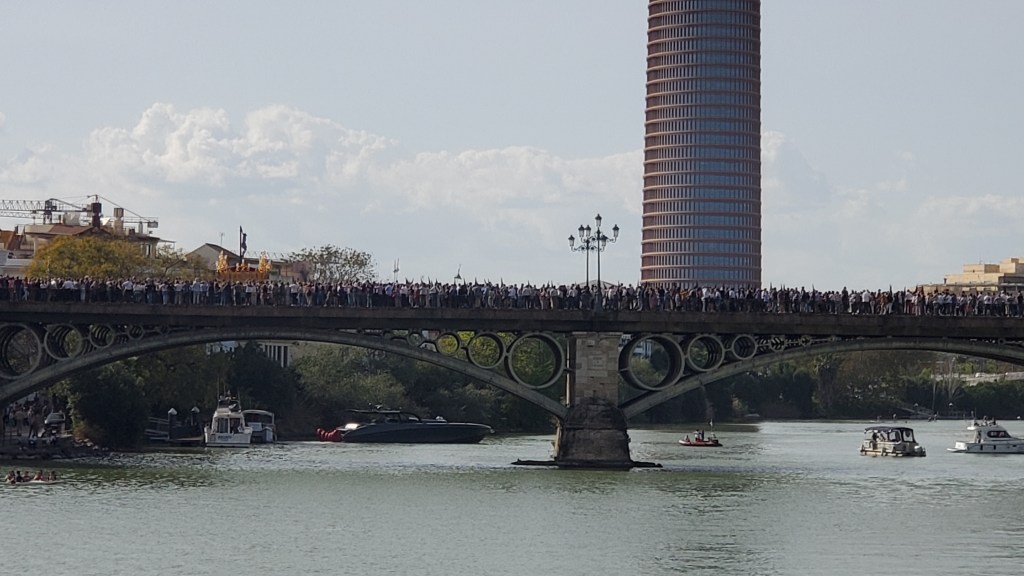
The crowds were massive, of course, but mostly concentrated around the procession, which was canceled one day because of the rain, making the city itself mourn. But it was impressive how alleys that are too narrow for cars managed the number of participants, the floats, the bands, and all the people watching.

Seville has been our favorite European experience thus far, and I’m not really sure if it’s because or inspite of Holy Week. Guess we’ll have to soujourn again someday to find out.


*If it were born in Champagne, France, it could be called champagne. Alas, it was born on the wrong side of the border and must be called cava.

**Seville really loves Mary, to the point it might be a bit of “Jesus, who? Oh! You mean Saint Mary’s son!”. Also, I am still on my search to find a non-white Jesus.

100 Points if You’ve Heard of “Alhambra”

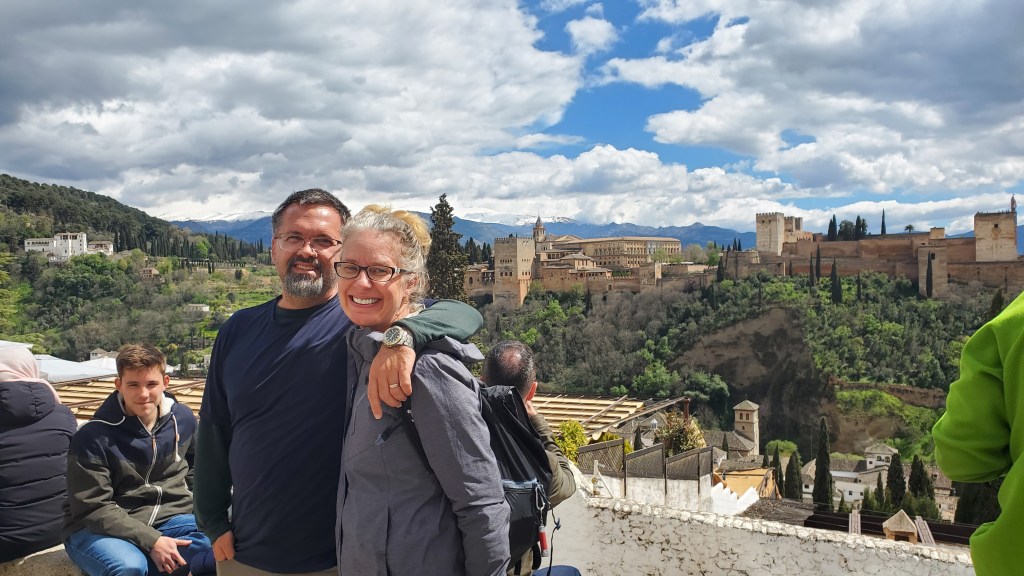
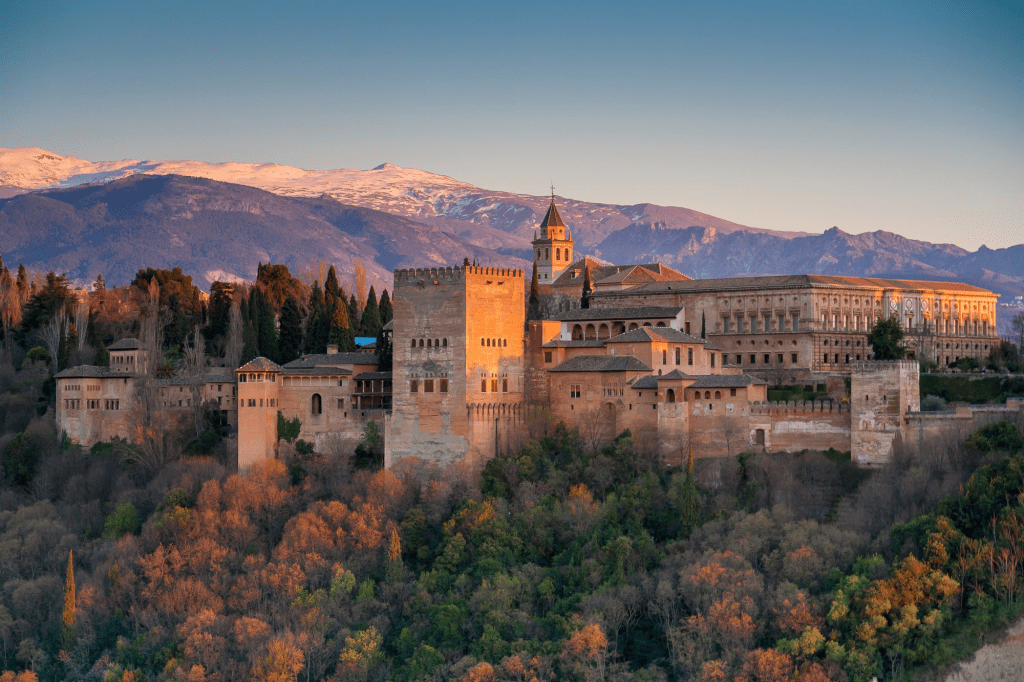
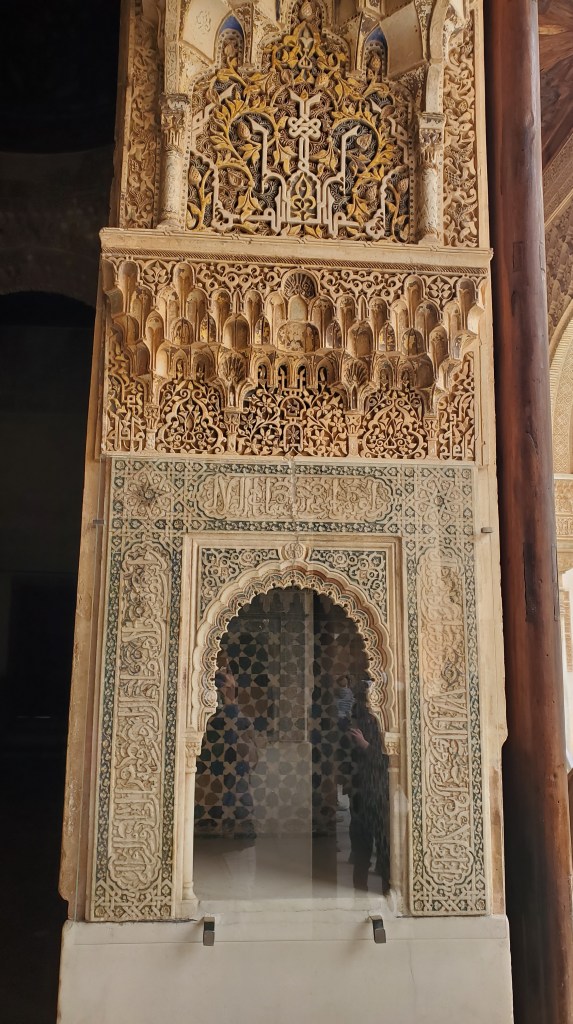
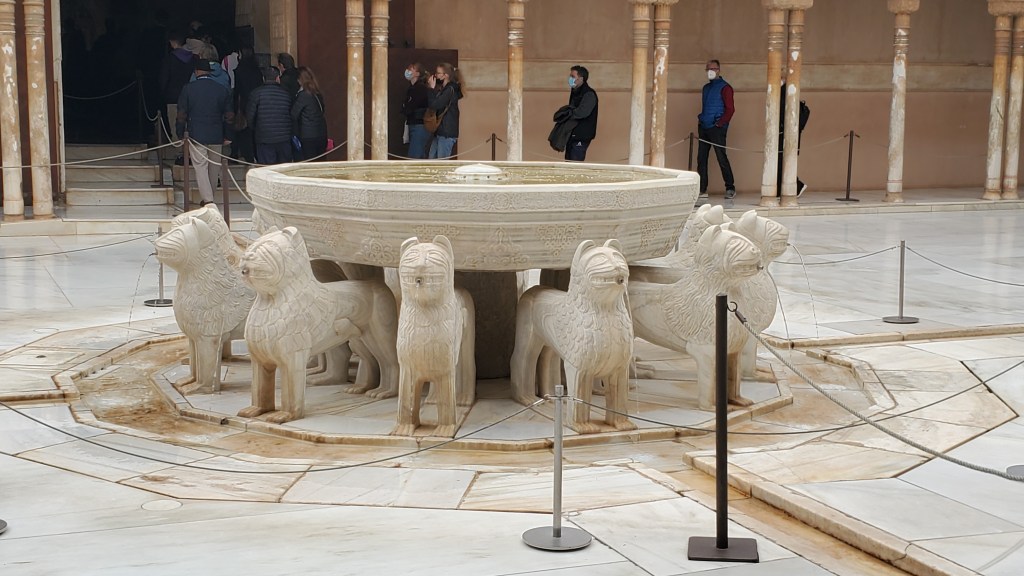
Alhambra, outside of Granada, Spain, is the Islamic palace complex behind us, from the last Islamic (“Moorish”) kingdom in western Europe.
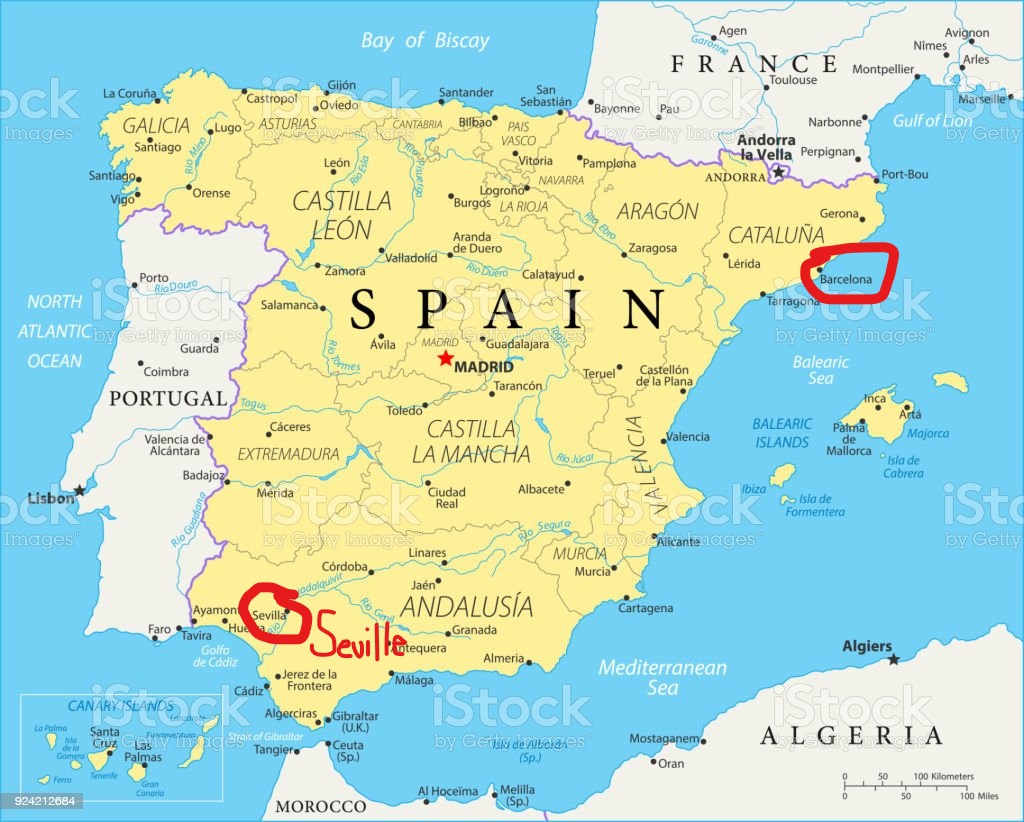
Spain takes up most of the Iberian Peninsula. We were just in Barcelona, near France. Granada is two hours from Seville.

Oh, there are so many things I don’t know, and far more that I didn’t know that I didn’t know. Alhambra in Granada is certainly one of those, but what it really revealed is how little I know about Spanish history*.

The Alberian Pennisula has a dramatic history. Here’s 1700 years in 2 sentence:

1) The Roman Empire straddled the BC to AD shift before the Visigoths (who?) took over until Muslims conquered the area in about 700 AD, and not long after Christianity slowly bled (bled, ha) through from north to south.

2) Even history minors know that 1492 was a big deal; not only did Isabella & Ferdinand finance Columbus sailing the ocean blue, but they also expelled Muslims and Jews from the newly united Spain.

2a) A particularly slanted reporting worded it this way: In 1492, King Ferdinand II of Aragon and Queen Isabella I of Castille conquered the Nasrid Kingdom of Granada, finally freeing Spain from Muslim rule after nearly 800 years. Because it wanted to be a peaceful democracy?? Ha! Nope.**

Isn’t this the most beautiful shot? If you ignore the fall colors in this spring post, we could pretend I took it.

Now we can go to Alhambra, which is a palace/citadel/fortress dating from the 700s, though like all these types, it was built, added onto and evolved over centuries.

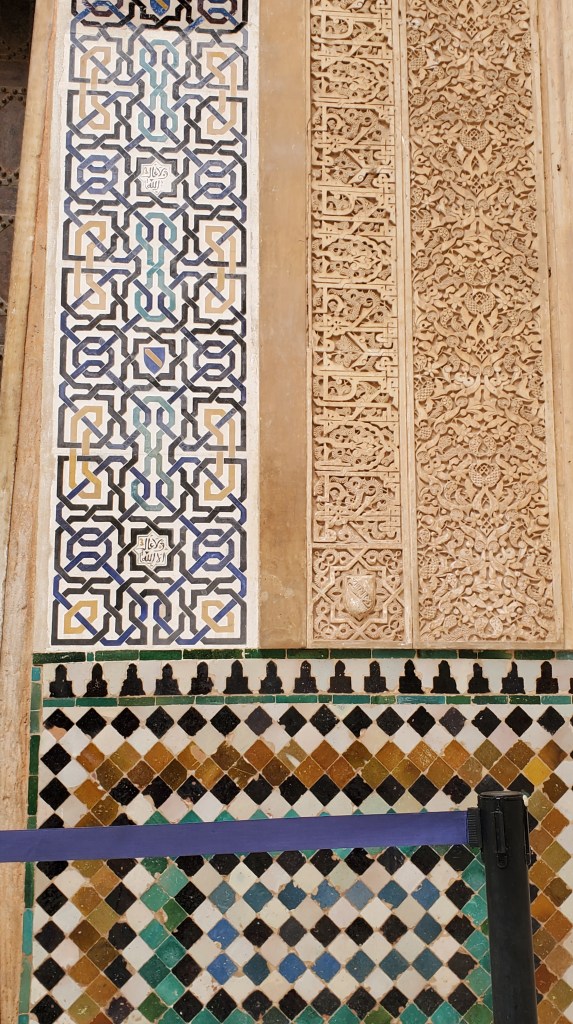
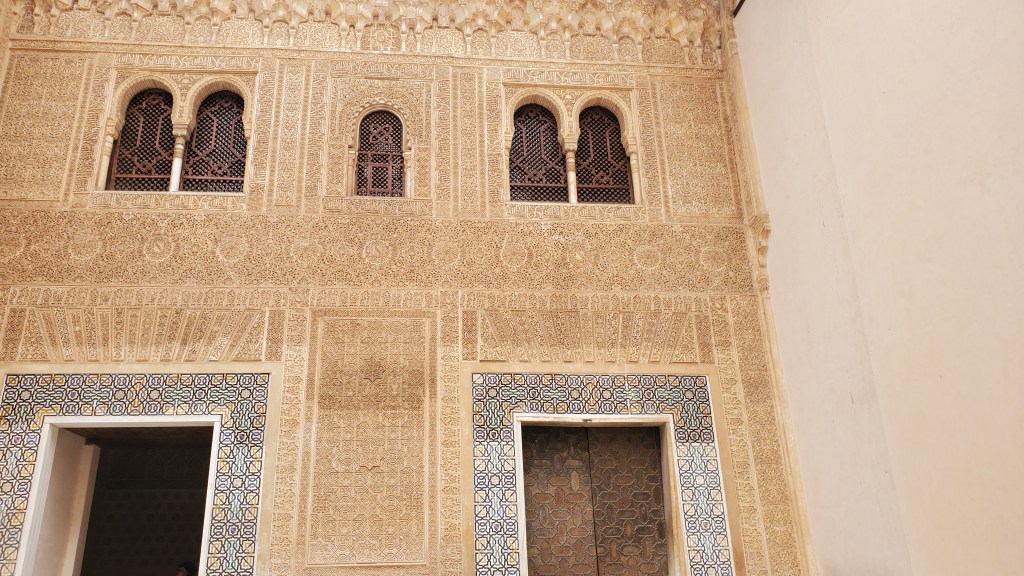
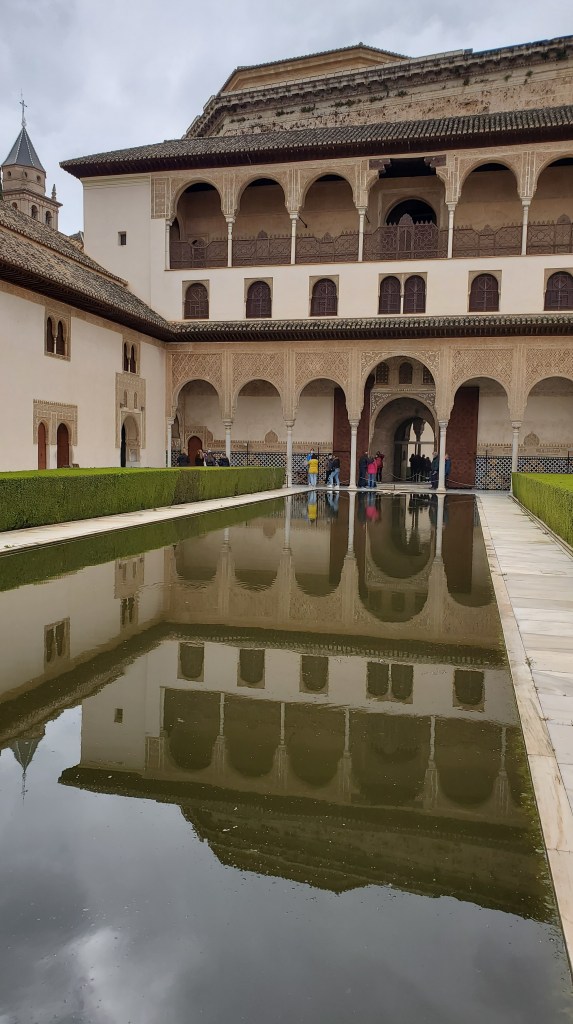
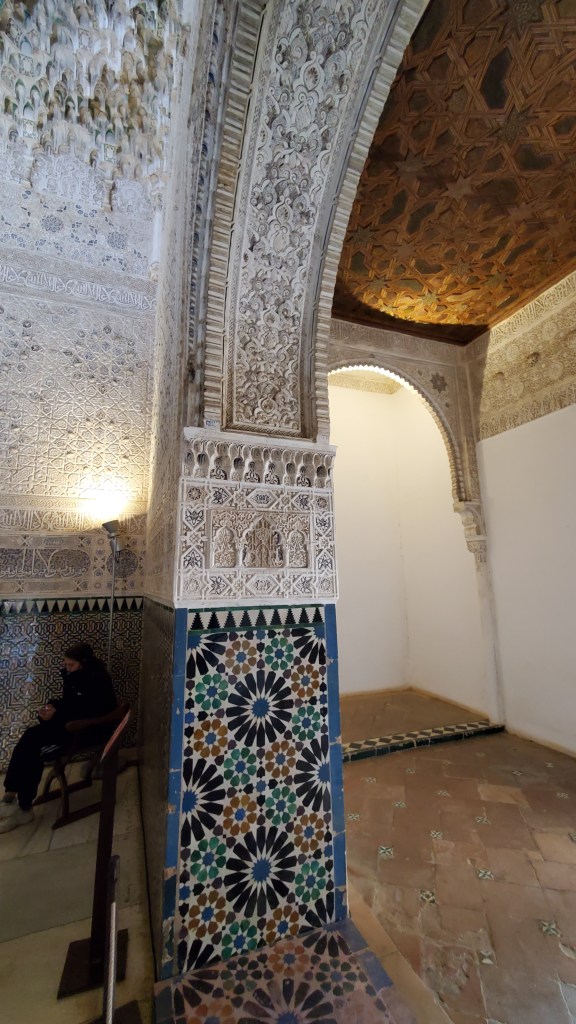
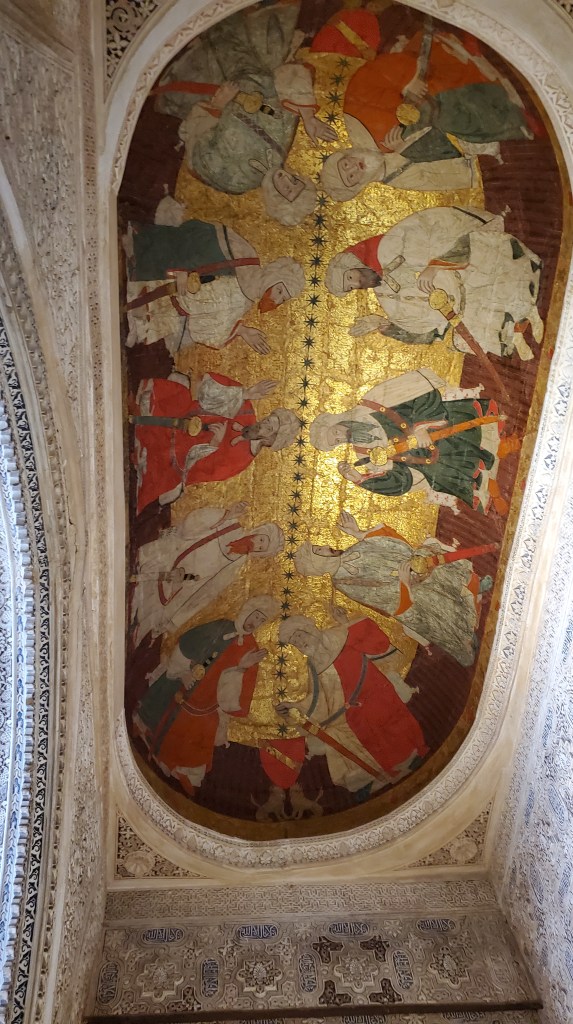
Dwayne and I explored some exterior Islamic construction in Egypt and Jordan, but didn’t get to study it until we were in the south of Spain. I already knew that since Islam doesn’t allow for depictions of people and animals, geometric shapes are mostly used. But I didn’t know what could actually look like in practice by a man, Mohammad V (shortest name I can give), with a huge amount of power and wealth and travel experience. What is notable about Alhambra is not just that is a wonderfully preserved, more-than-thousand-year-old Islamic palace in southern Spain; the crafting of the carved walls, doors, windows, archways is so finely delicate and detailed, it is known worldwide as a particular architectural achievement.

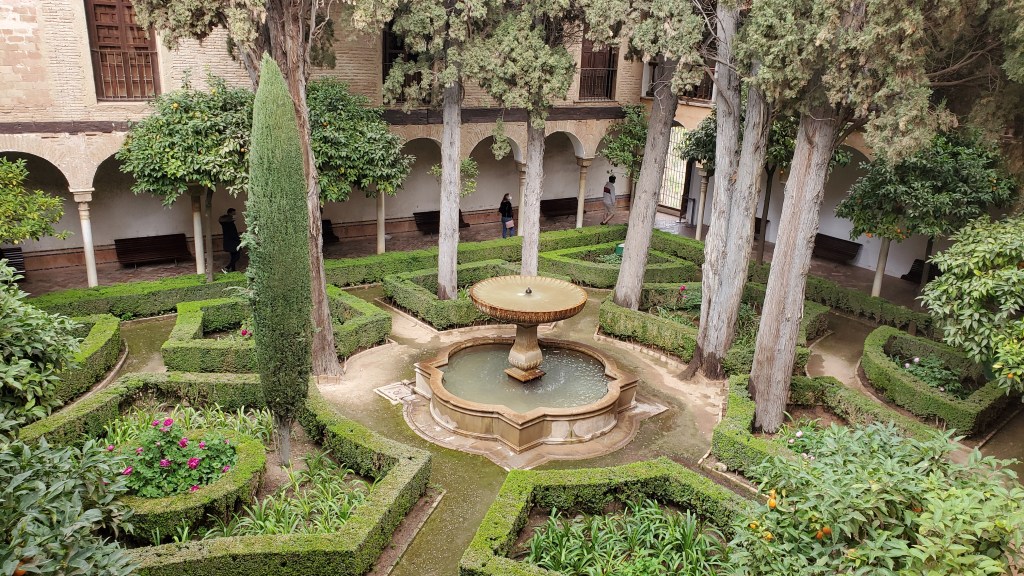
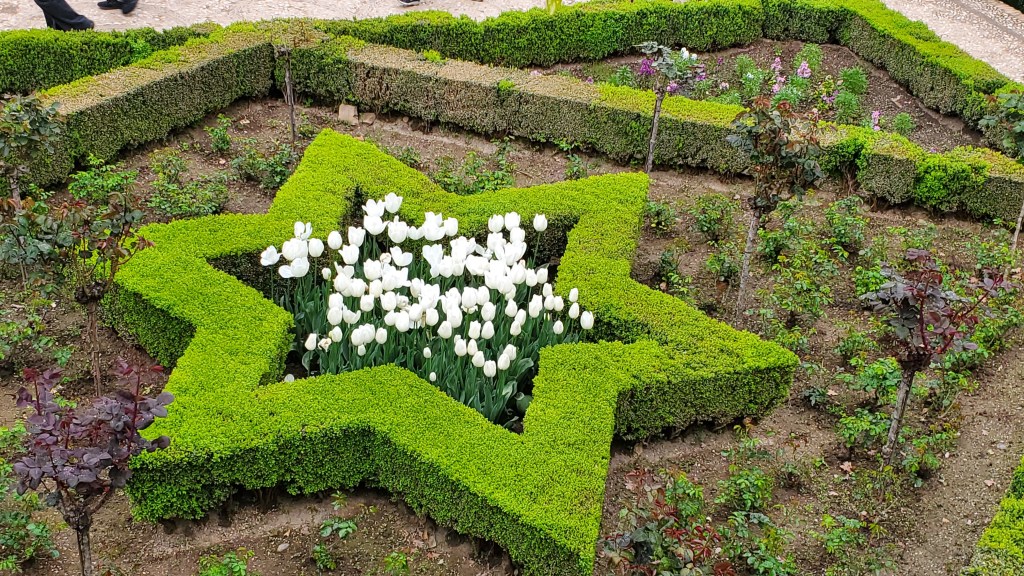
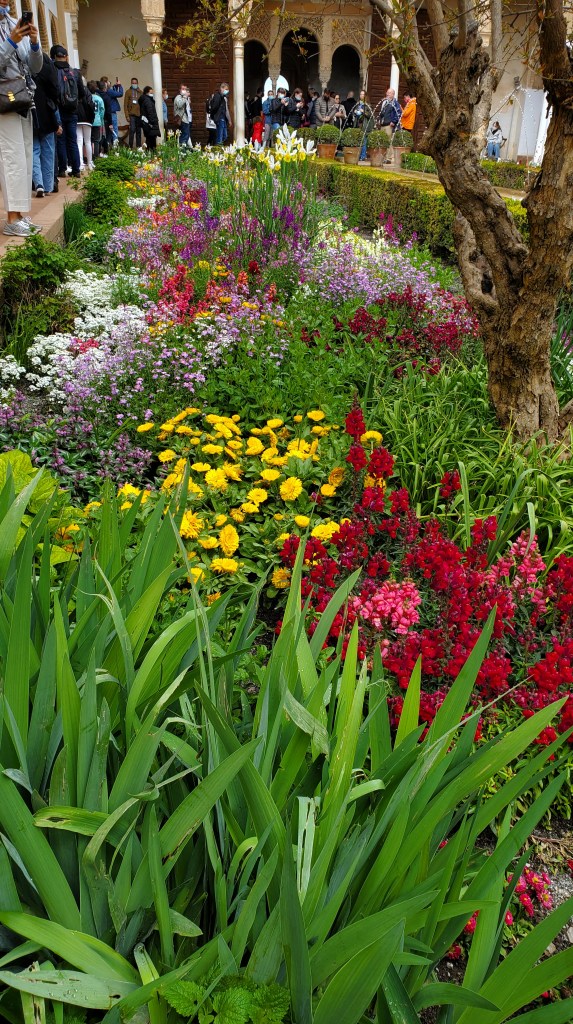
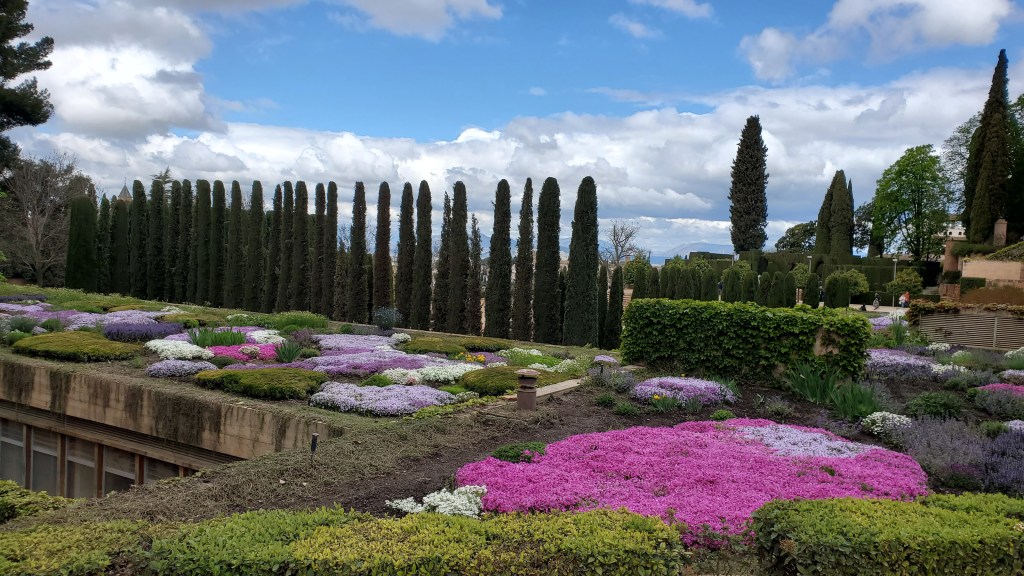
Dwayne loves his architecture like I love the gardens, and he walked away with an appreciation for the site, but no inspiration to build that way. As beautiful and exotic as the palace was, it was so visually busy, even empty of furnishings, that my brain got tired. Fortunately, the gardens were spectacular and refreshing. My brain is already wondering where I can plant a star-shaped garden.

I don’t blame you if your brain is hurting after all that information smooshed into one post! Once I wrap up Spain, we can go relax in Sicily for a little while.


*I am very sheepish that I have a history minor. When allowed out in the world, it turns out I know very little.

**It will take more than 2 sentences to complete Spain’s history from the Spanish Empire, war, war, war, war, republic, war, war, republic 2, Franco, monarchy, to democracy and joining the EU. Hmm, well I left out some wars, but there it is in one sentence.

Barcelona: Lessons Learned

Lesson #1: Never go to an amusement park on an April Monday.

We thought a delightful way to spend our last day in Barcelona would be to go to Tibidabo, a fun place to say, and according to the press, enormously fun to do, with a roller coaster that weaves in and out on this hilltop park, thrill rides, fun rides, historic rides, family rides…you get the picture. Somehow we missed the caveat that only four rides are open on Monday and the coolest of those lame ones would be broken.

So we did the carousel.

The 5th amusement was a collection of turn-of-the-century automatons that were mostly creepy and/or racist.

The oddest thing? It shared the grounds with a beautiful cathedral.

Lesson #2: Always peek inside a European church/cathedral/basilica, especially if it is free and not inconvenient.

We’ve been chased by mosaics and frescos since Jordan, but there was something special about these. They were very Barcelona-on-the-sea focused and so colorful and hyperrealistic.

Lesson #3: Take Kyla and Piper (and Denise and Dwayne!) to art museums once in a while.

Museu Nacional d’Art de Catalunya is housed in the most amazing building, and even if most of its collection was everything but Renaissance, which is generally my preference over too much medieval religious same-same, it was tranquil and interesting. Piper and I went through the collections together, and I enjoyed her companionship immensely. Kyla loved delving into it herself, and we all met up for lunch in the great hall afterward.

Lesson #4: Take a cable car/gondola whenever you can.

The views from the top will be worth it. Keep the peace and purchase a return ticket as well. In exchange, your kids may happily walk another 30 minutes to get to the singular chocolate shop that they found on your phone. With enough chocolate in them, all sorts of other good things may happen. (Piper and I had a blast buying her more cute clothes in darling alley boutiques and walking back to the hotel, and Dwayne and Kyla explored the square a little more and taxied it back.)

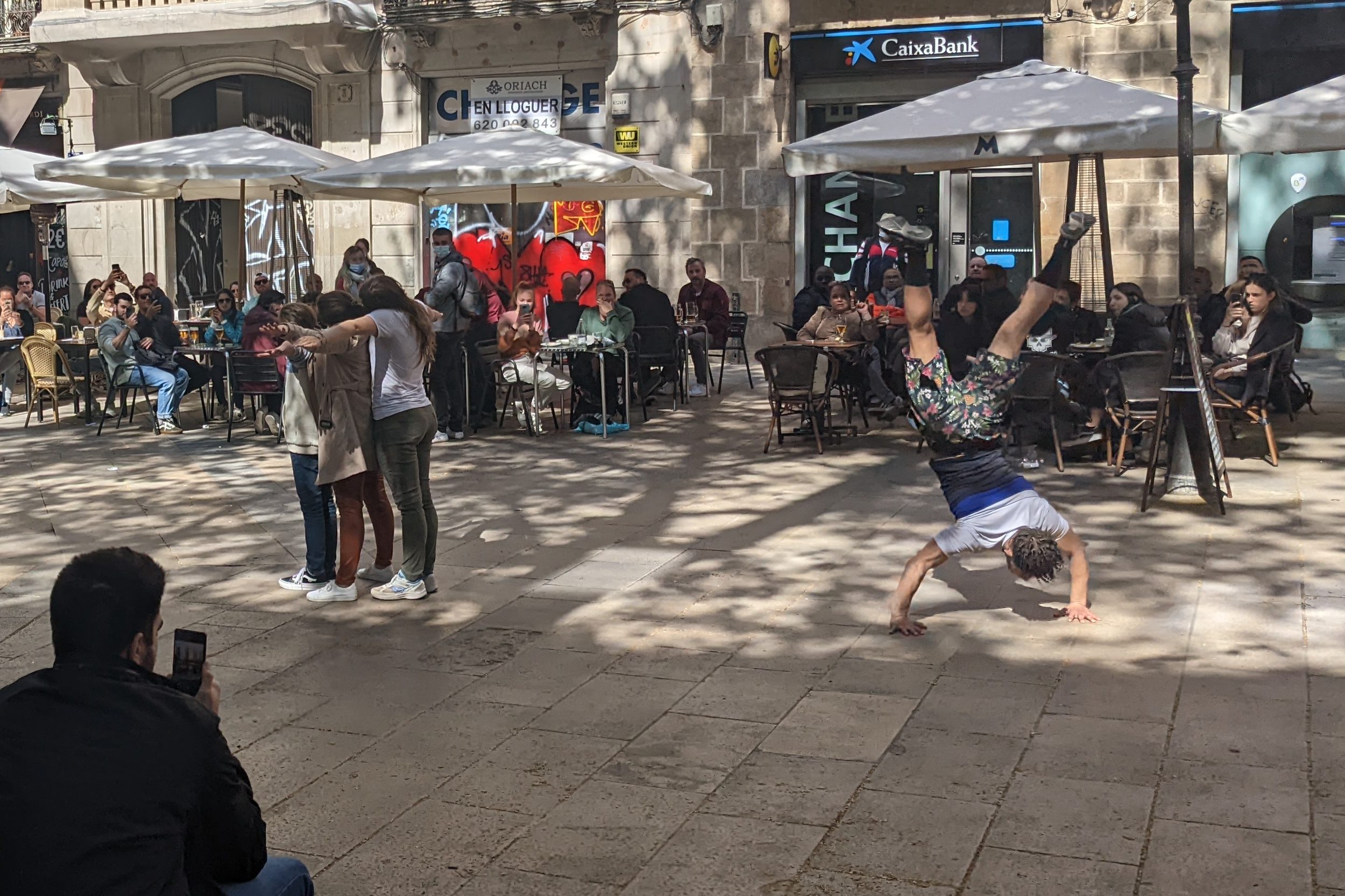
Lesson #5: Stop what you were doing, even chasing down a singular chocolate shop, to watch street performers.

Kyla got chosen to be a volunteer for this. Dwayne did the same thing back in NYC six years ago.

Lesson #6: Stay at the Sensation Sagrada Familia.

It was the first place we stayed that did EVERYTHING right. Plenty of space, EVOO in the kitchen, soap/detergent aplenty, showers that kept the water in the shower*, the most helpful staff we’ve ever had in a hotel. We scratched our heads to come up with a way it could have been improved and came up with nada. We want to take this place and put it everywhere we go. Wes spent many happy hours when it was just better for everyone when he wasn’t up for adventuring.

Lesson #7: Write about Barcelona a few weeks after the fact so you don’t remember the quarrels, the blahs, the plans that just didn’t work out, or the terrible seafood paella. My memories are only good ones (except the paella) now!


*Egypt, Jordan, the EU, almost every place we’ve stayed does full showers that are half-enclosed. Some like leaving gaps between the too-few panels or where the panels meet the tub. We cannot fathom the reasoning, especially after wringing out so many towels after a short shower where I consciously try to keep water from splashing out.

Architect Antoni Gaudí: Great or Gaudy?

Of the nine UNESCO sites in Barcelona, Antoni Gaudi designed seven of them. He is a Big Deal. Which is why I’ll pretend I knew all about him long before setting foot in Barcelona.

Gaudi (gow-rhymes-with-cow DEE) was an architect in the late 1800s until his weirdly anti-climatic tram death in 1926. By almost any standard, he was a Genius. After exploring three of his works, I’m mostly Team Gaudí and Dwayne is mostly not.

“Originality consists of returning to the origin,” said Gaudí, summarizing his deep desire to build the greatest reflection of nature he could design. Let’s see if I can show, not tell.

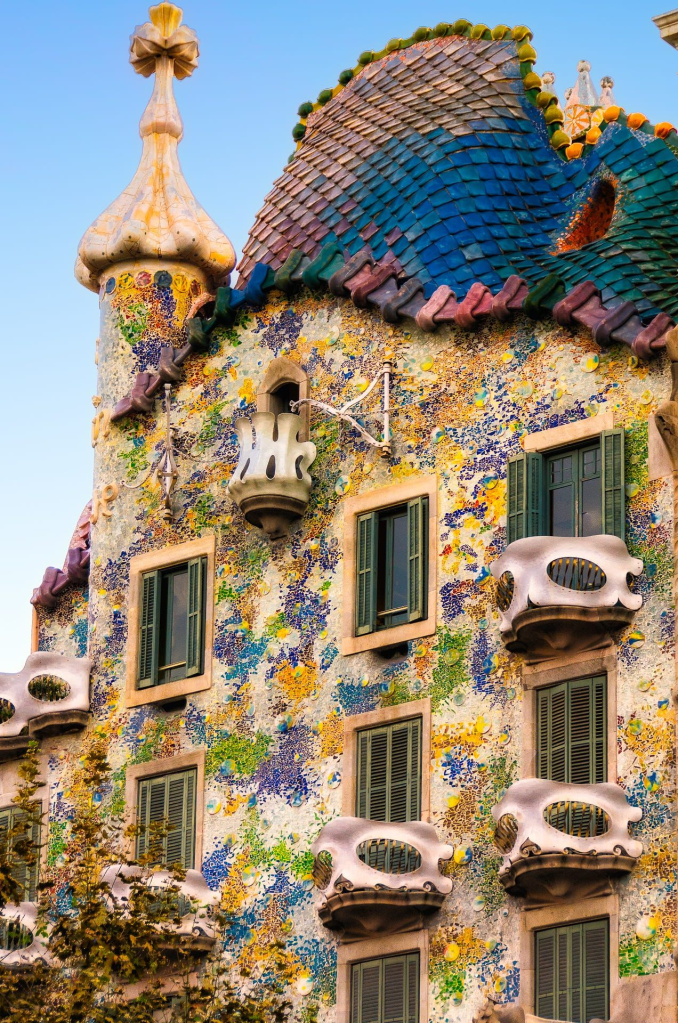
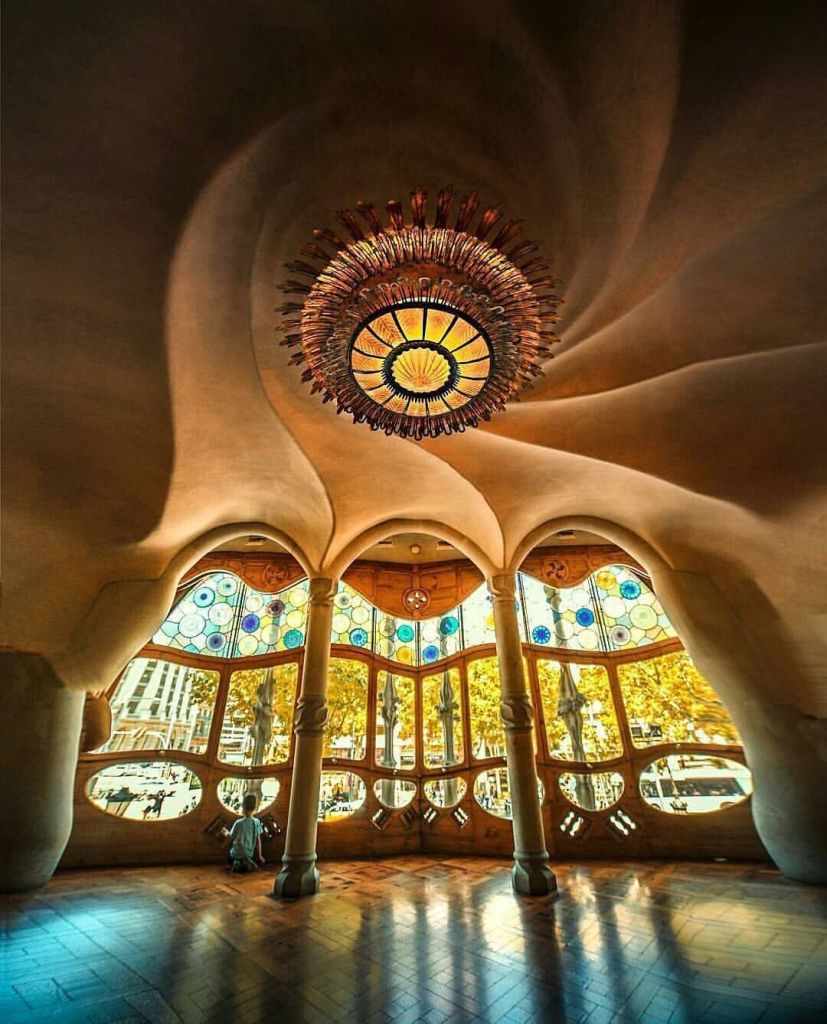
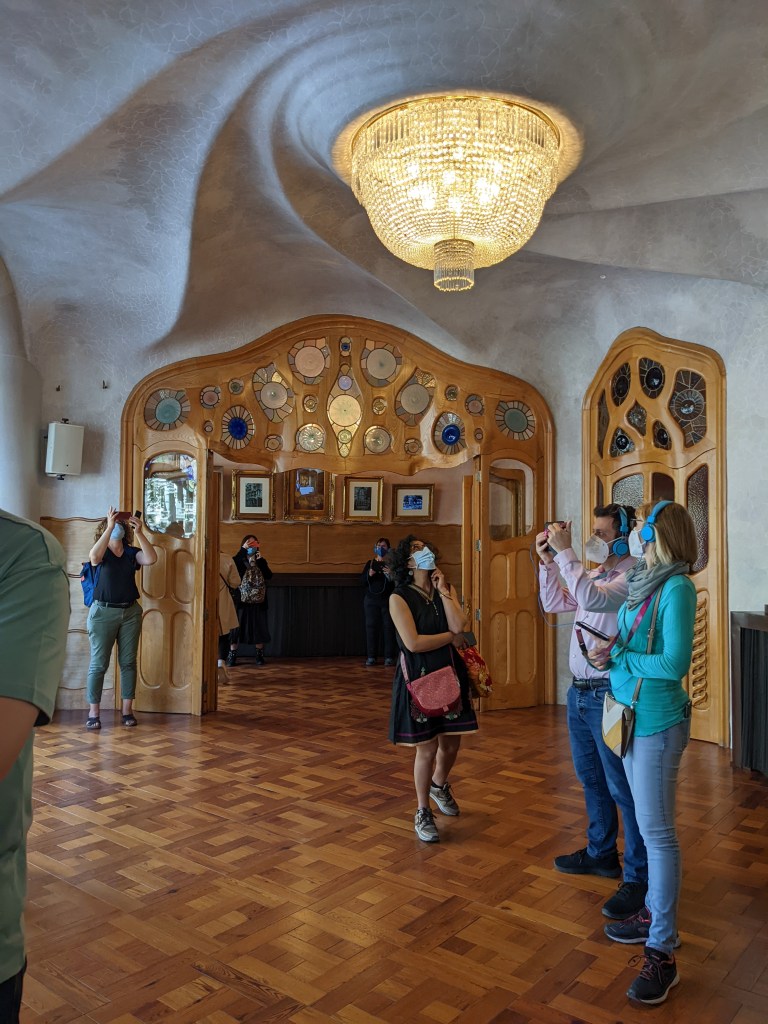
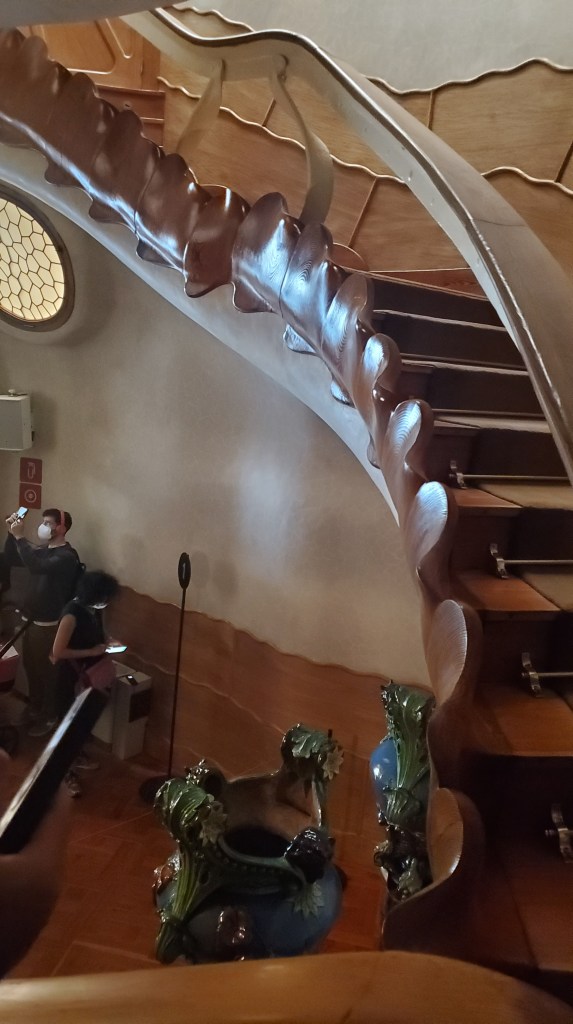
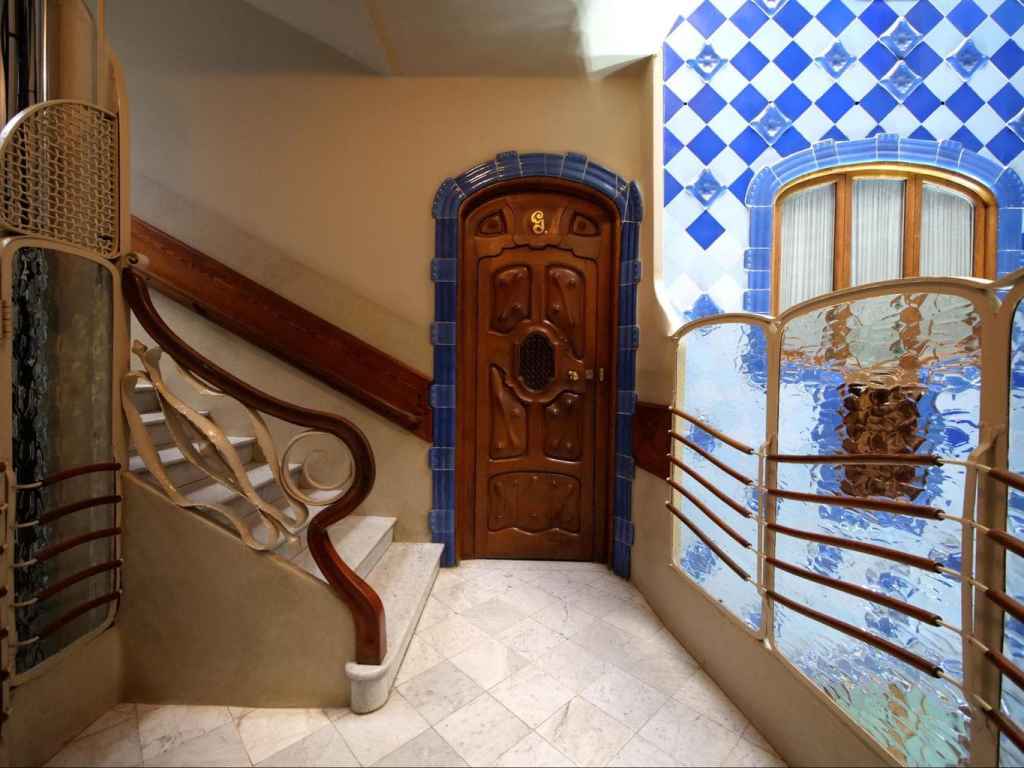
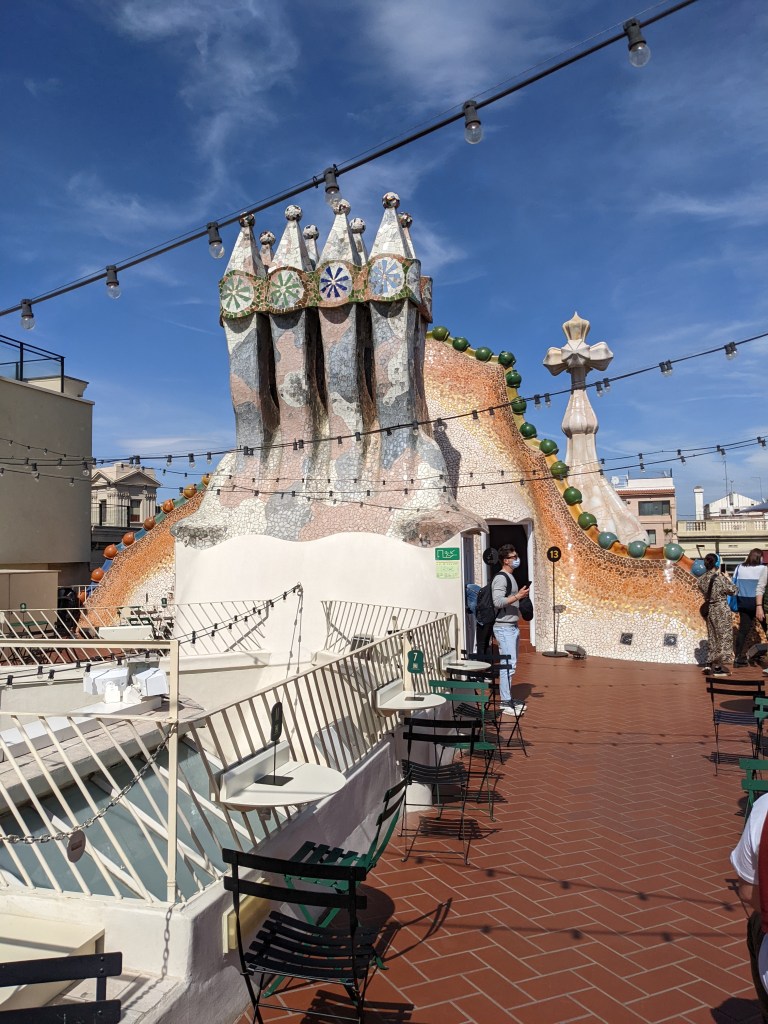
Casa Batlló

Kyla, Dwayne, and I toured this home designed for the Batlló family, where I crushed hard on the water-sky loveliness. It was airy and light and whimsical, and hardly a straight line to be found.

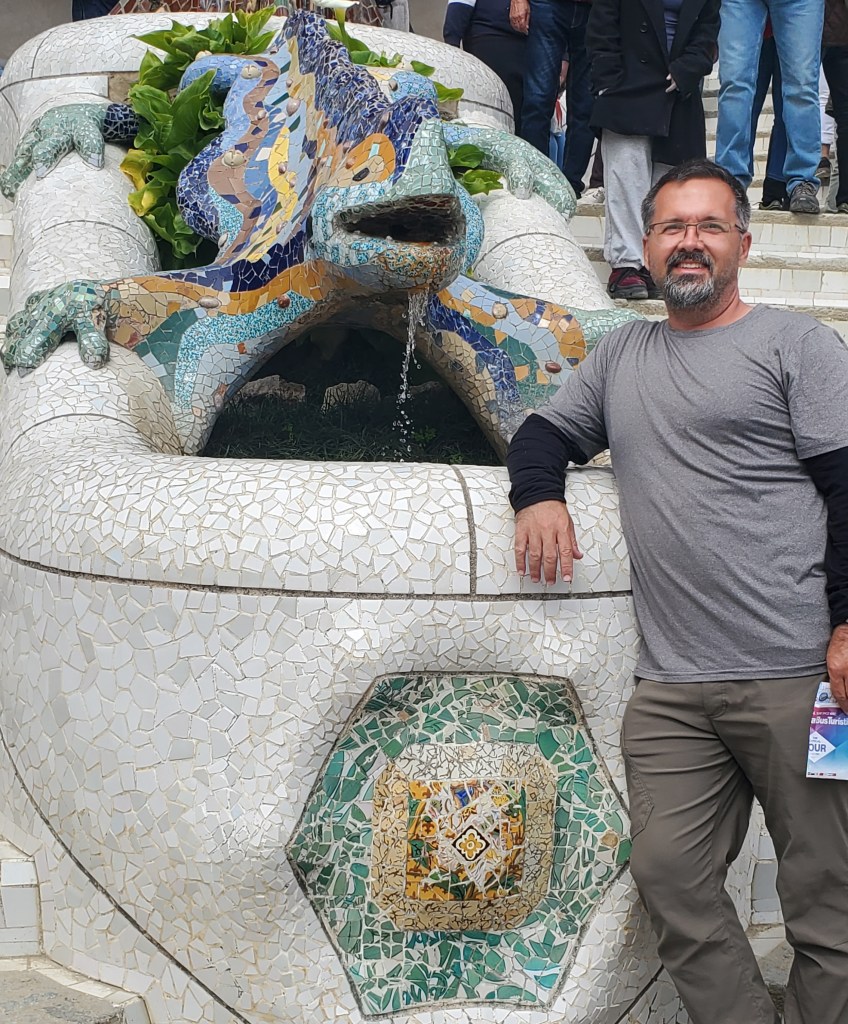
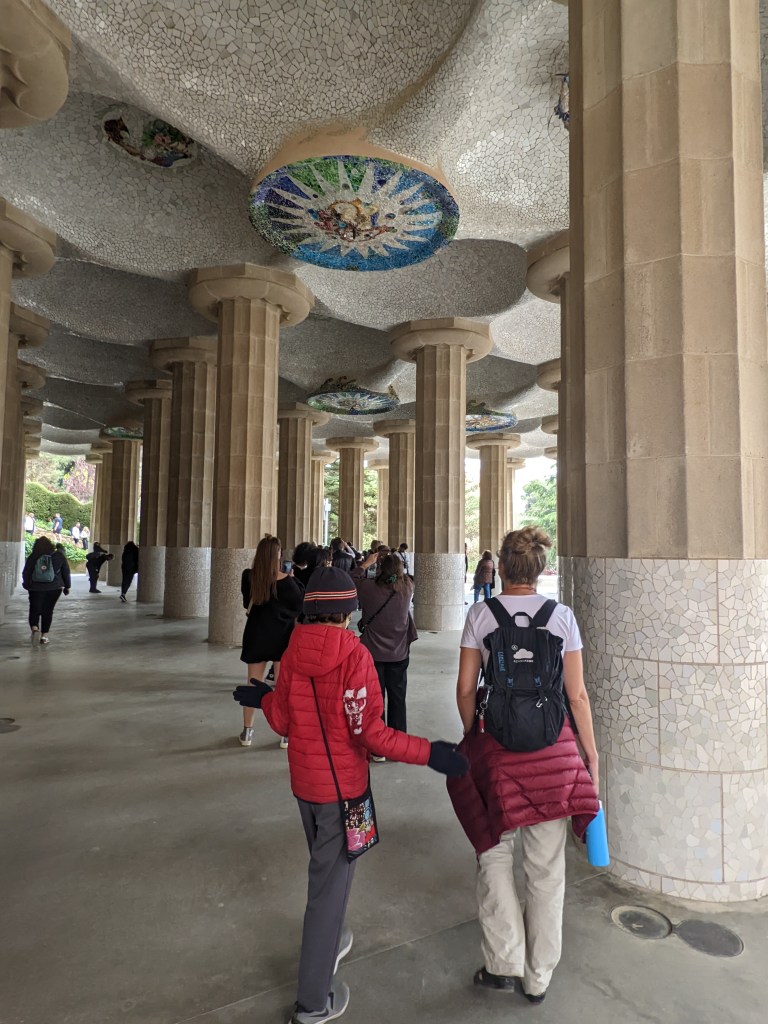
Park Güel

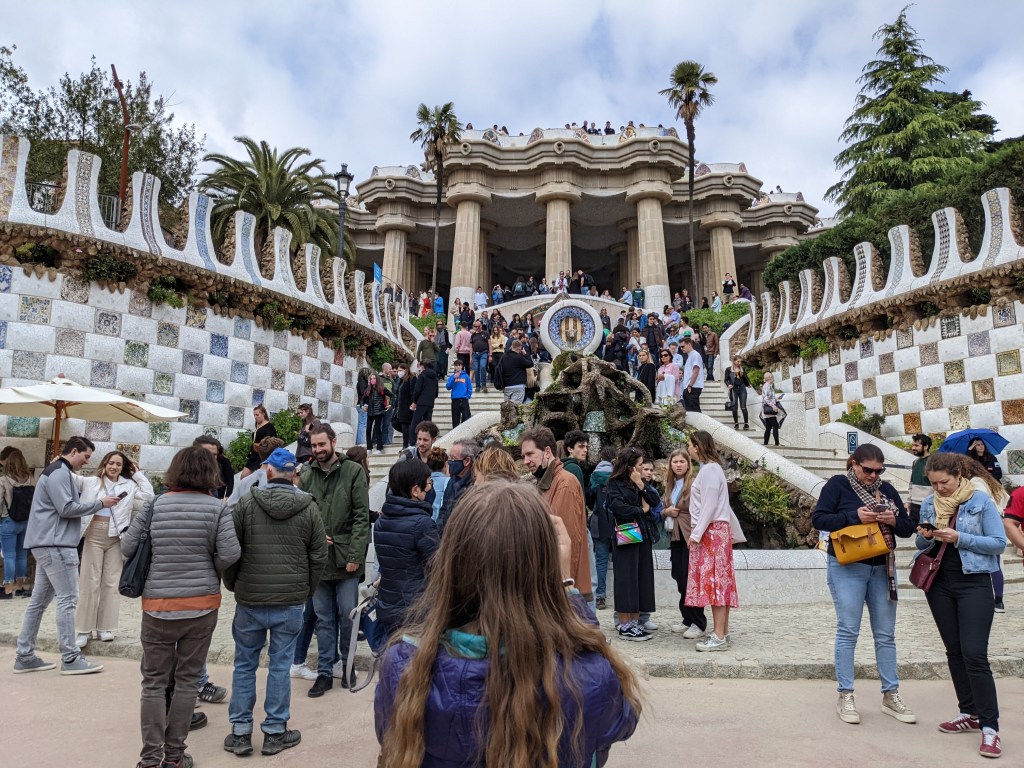
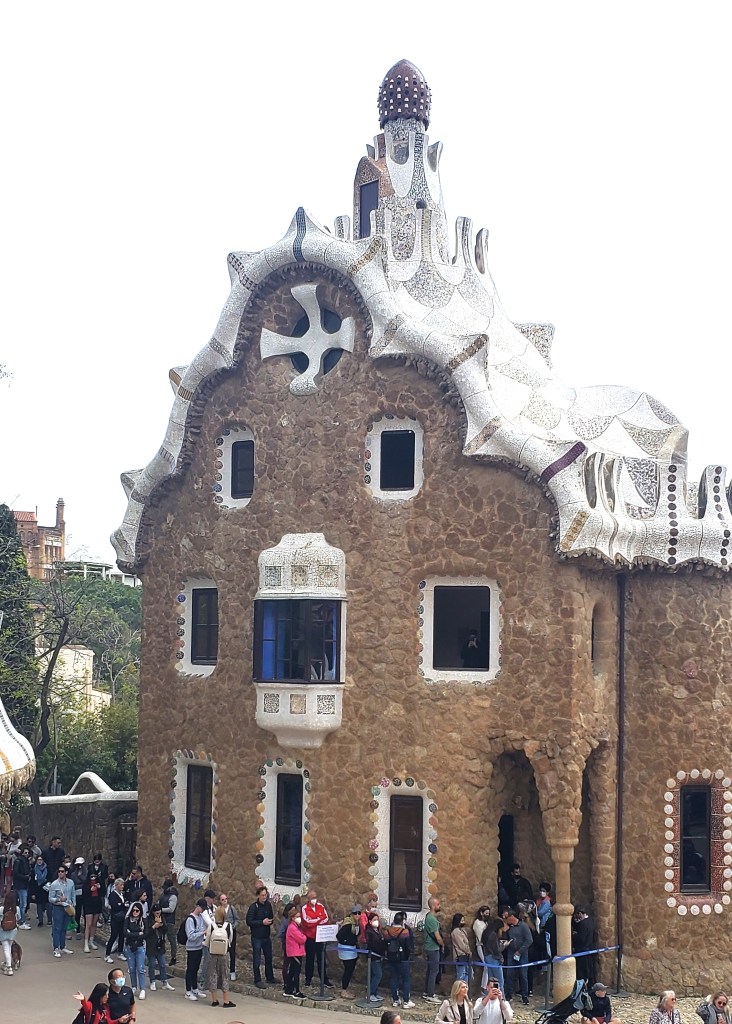
I’m so glad we saw Batlló first. The park was crowded, inconvenient, expensive, and only amazing-ish. It was the first stop on a hop-on, hop-off tour bus and the excursion effectively murdered my children’s desire to see anything else that day. The park is famous for its serpentine bench that wraps around a very large terrace. Its display house (with an entry line that made me quickly walk in the opposite direction) demonstrated that melted-icing-over-a-sand-castle look that I associate with Gaudí exteriors.

Sangrada Familia (Sacred Family)

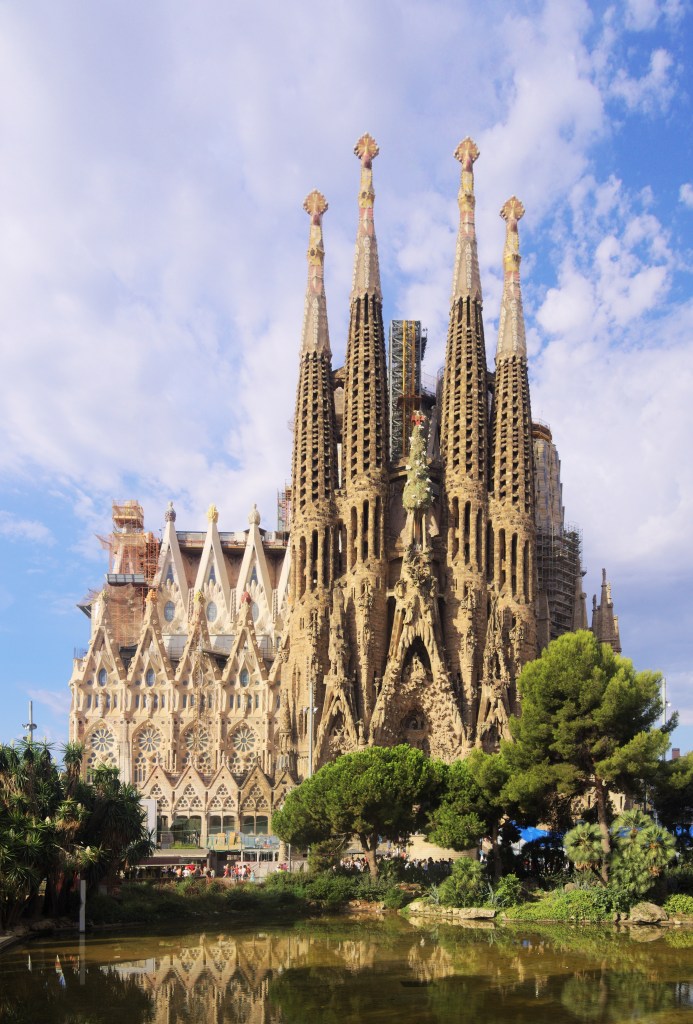
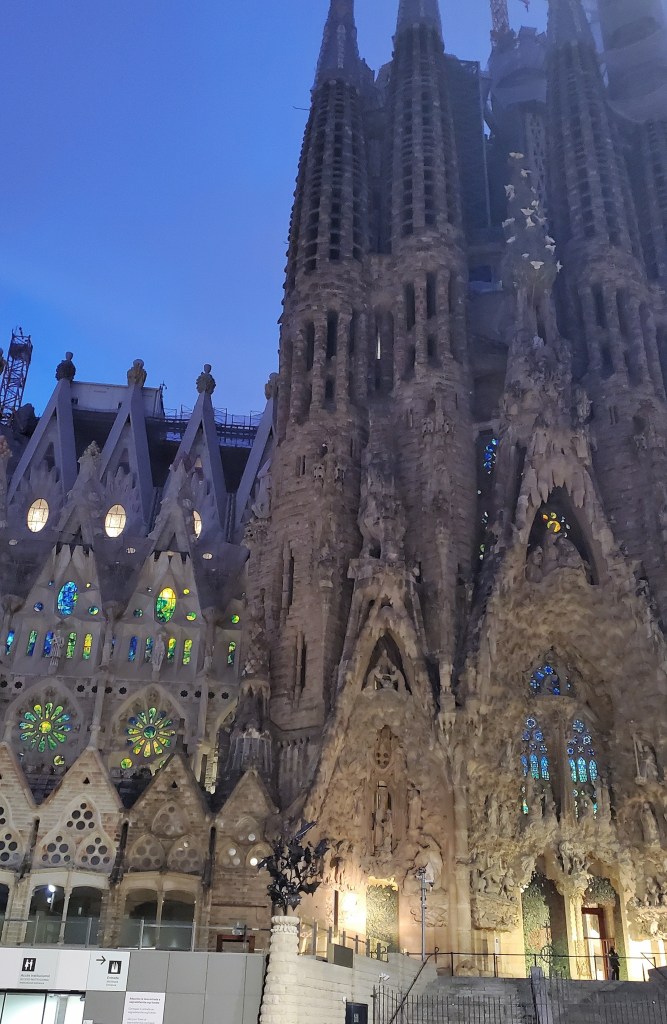
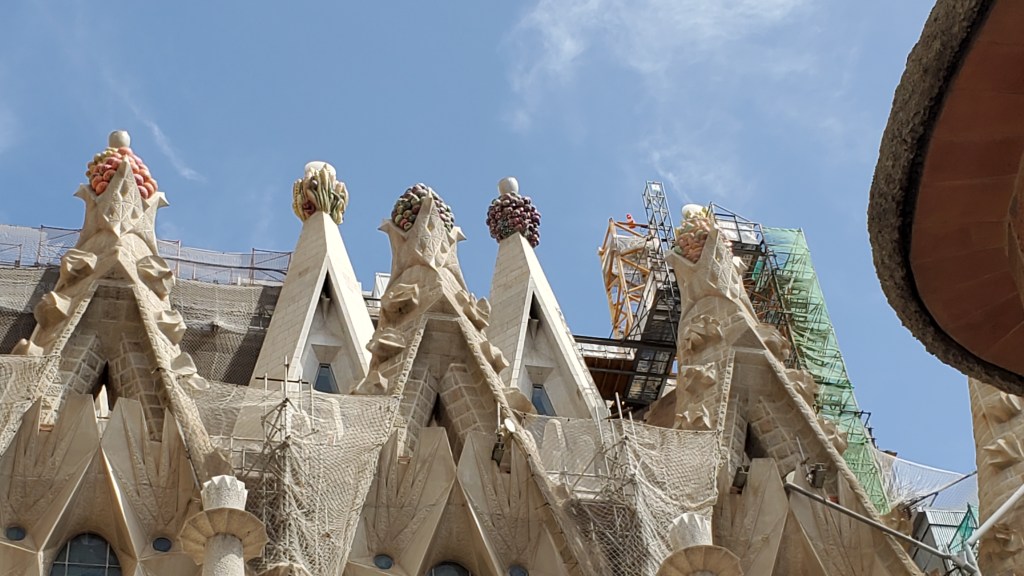
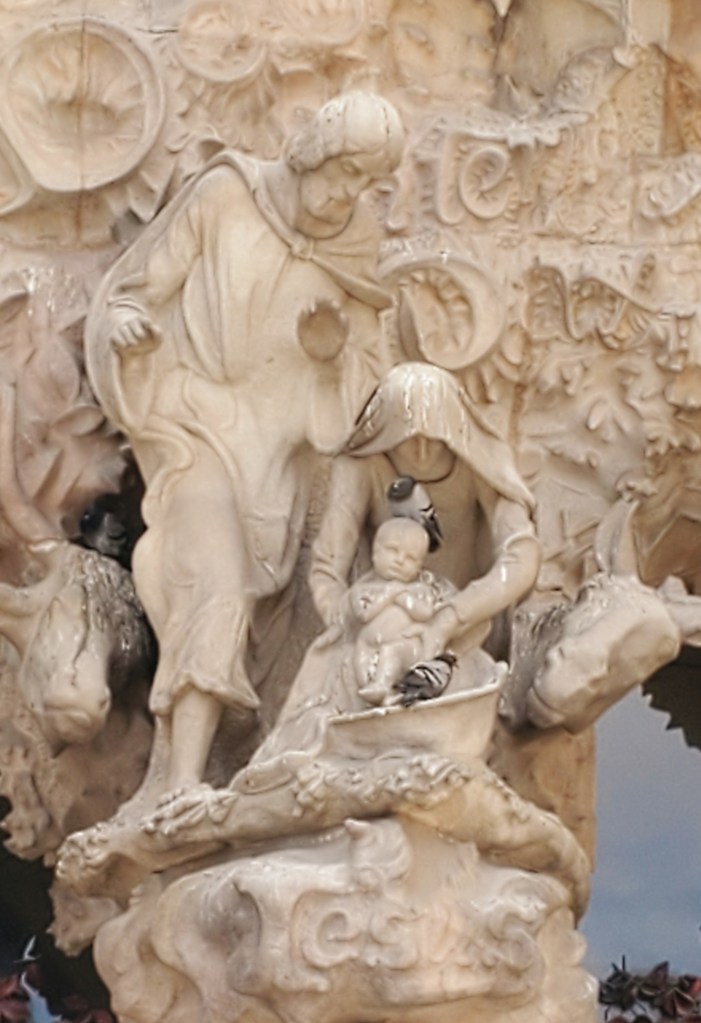
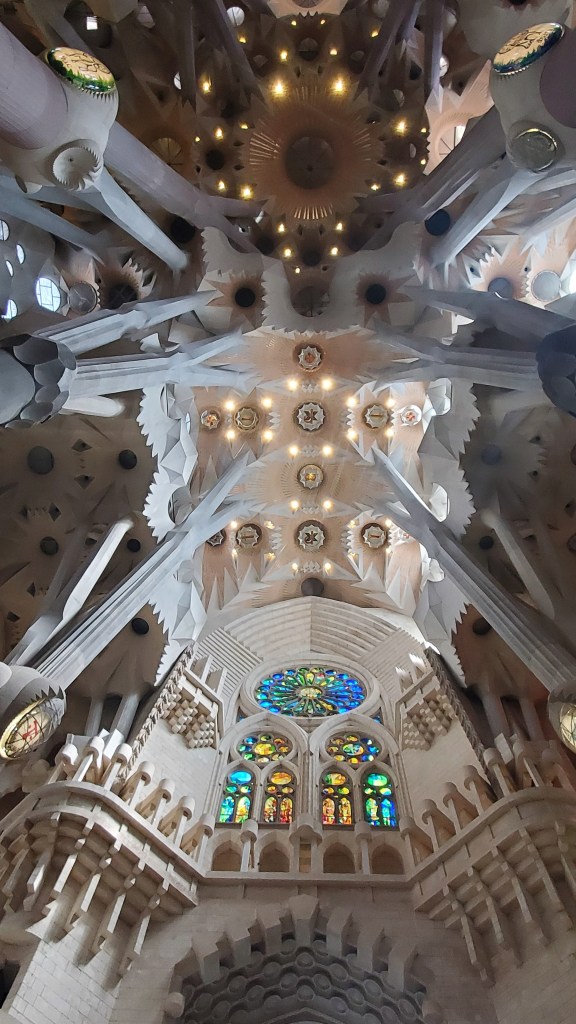
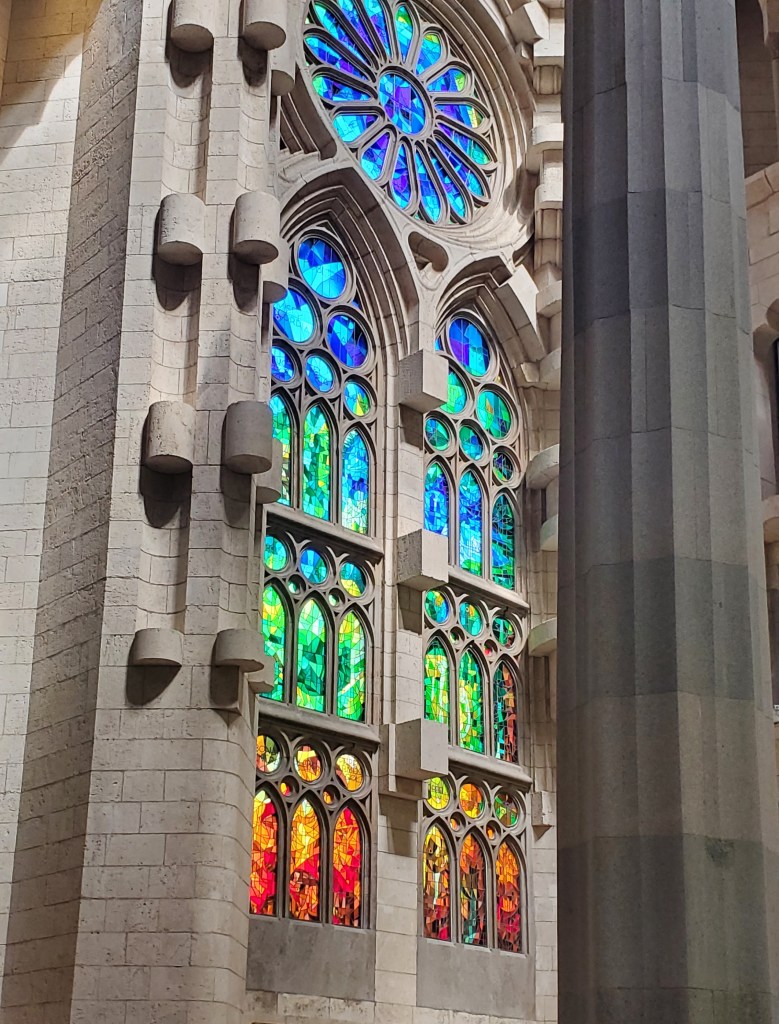
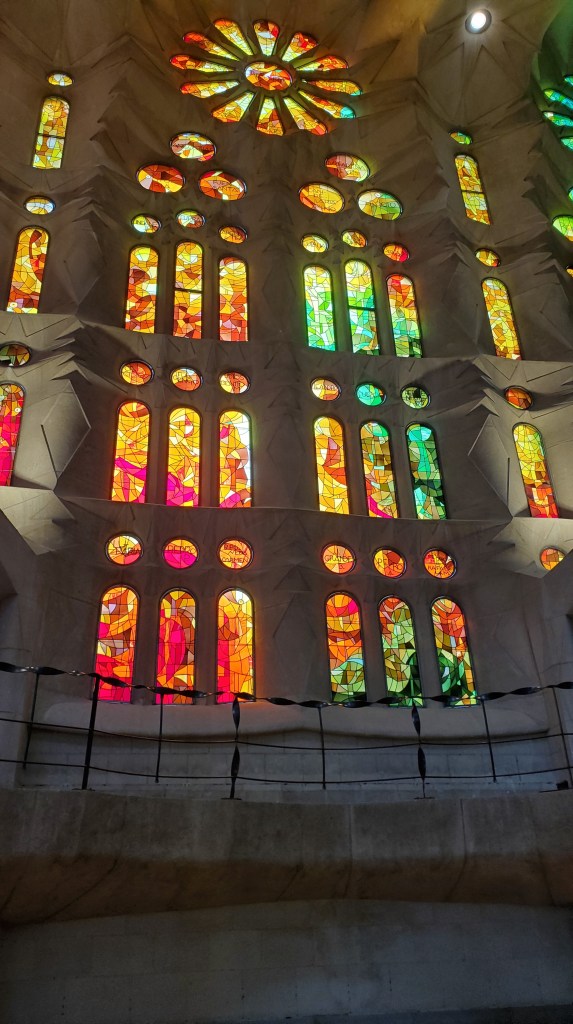
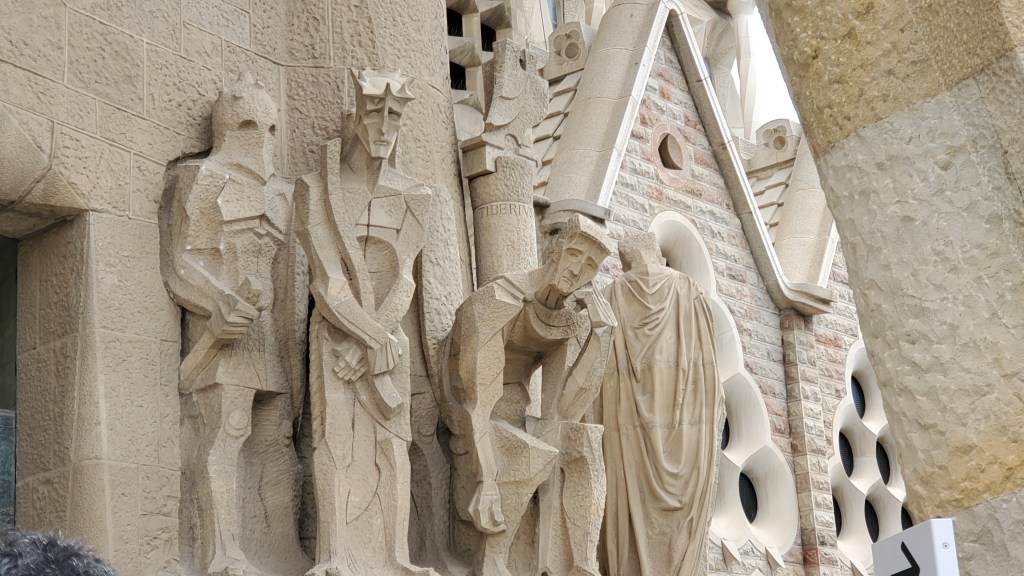
This is the Cathedral that finally has a projected completion date of 2026, the one hundred year anniversary of Gaudí’s death. It is, if one may radically understate, atypical of a European cathedral with official minor basilica standing*.


*This is a thing. There are 4 major basilicas in the world. They are all in Rome. Would you consider this more nepotism or self-aggrandizement?

Barcelona: Our introduction

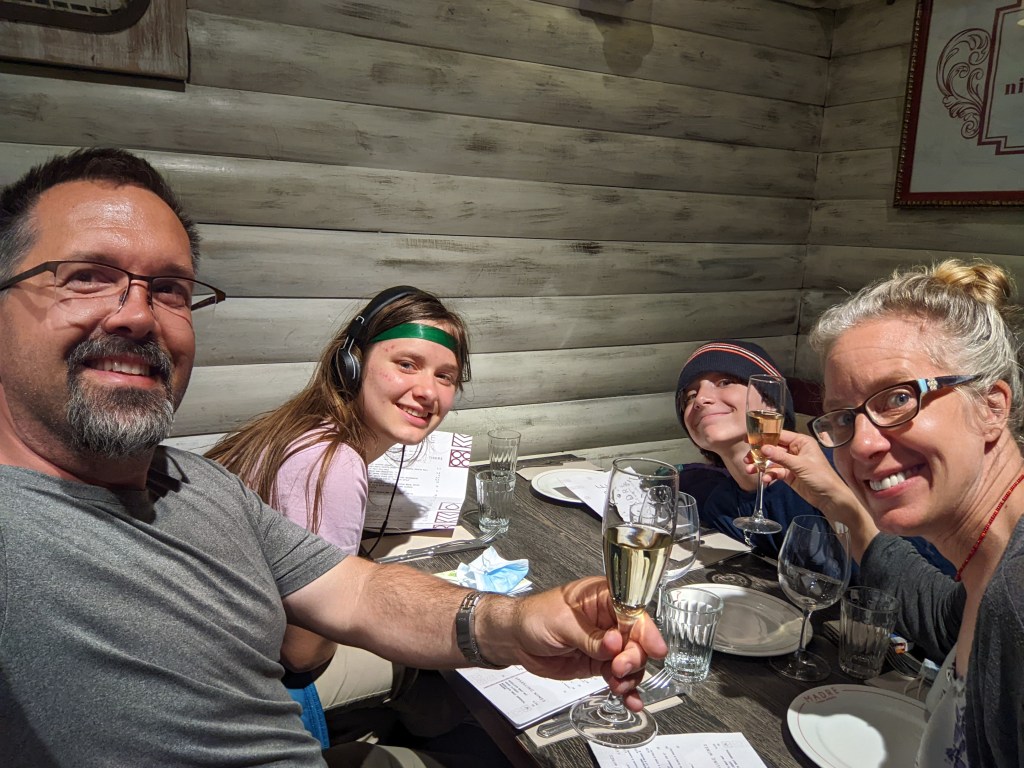
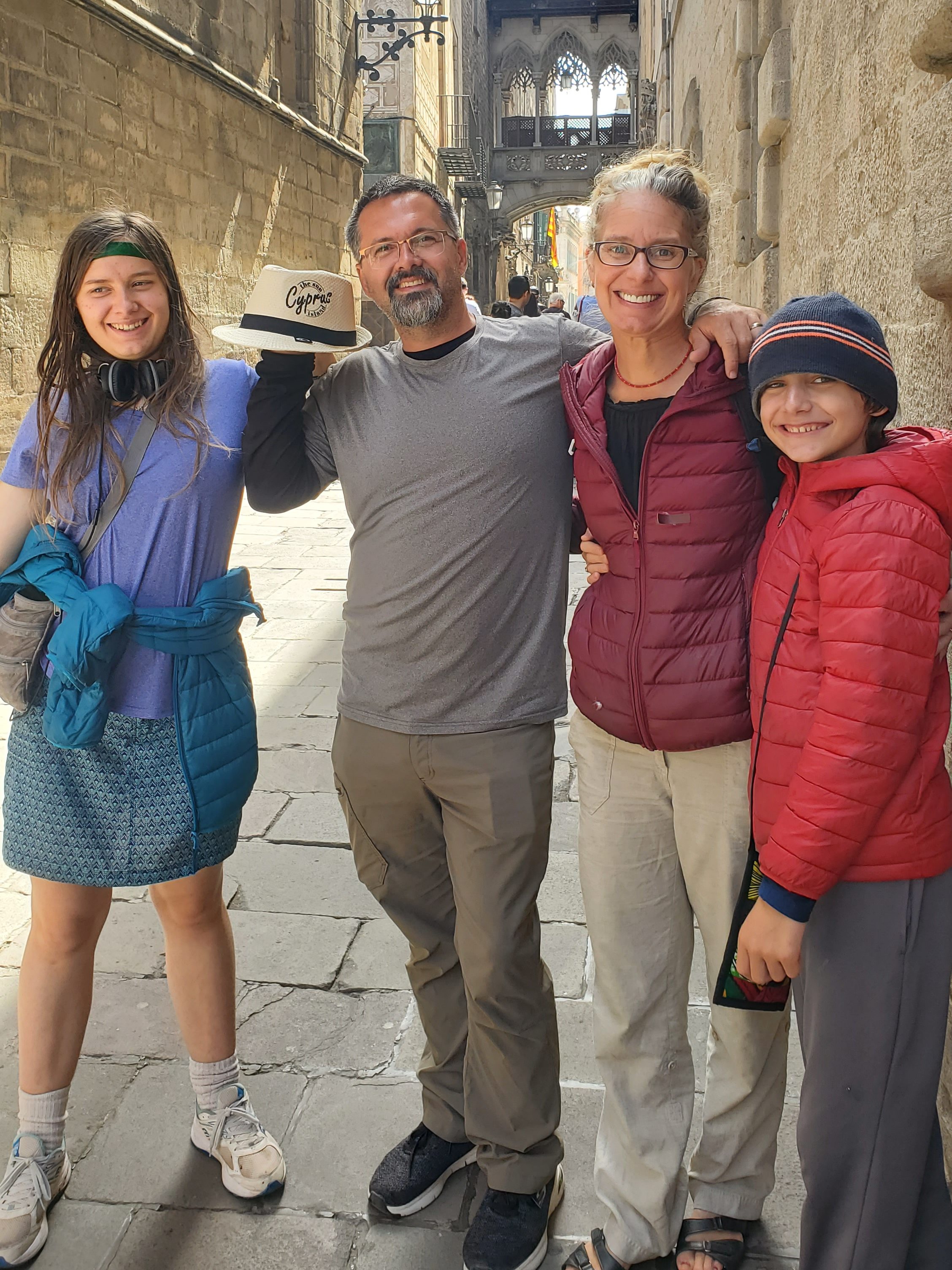
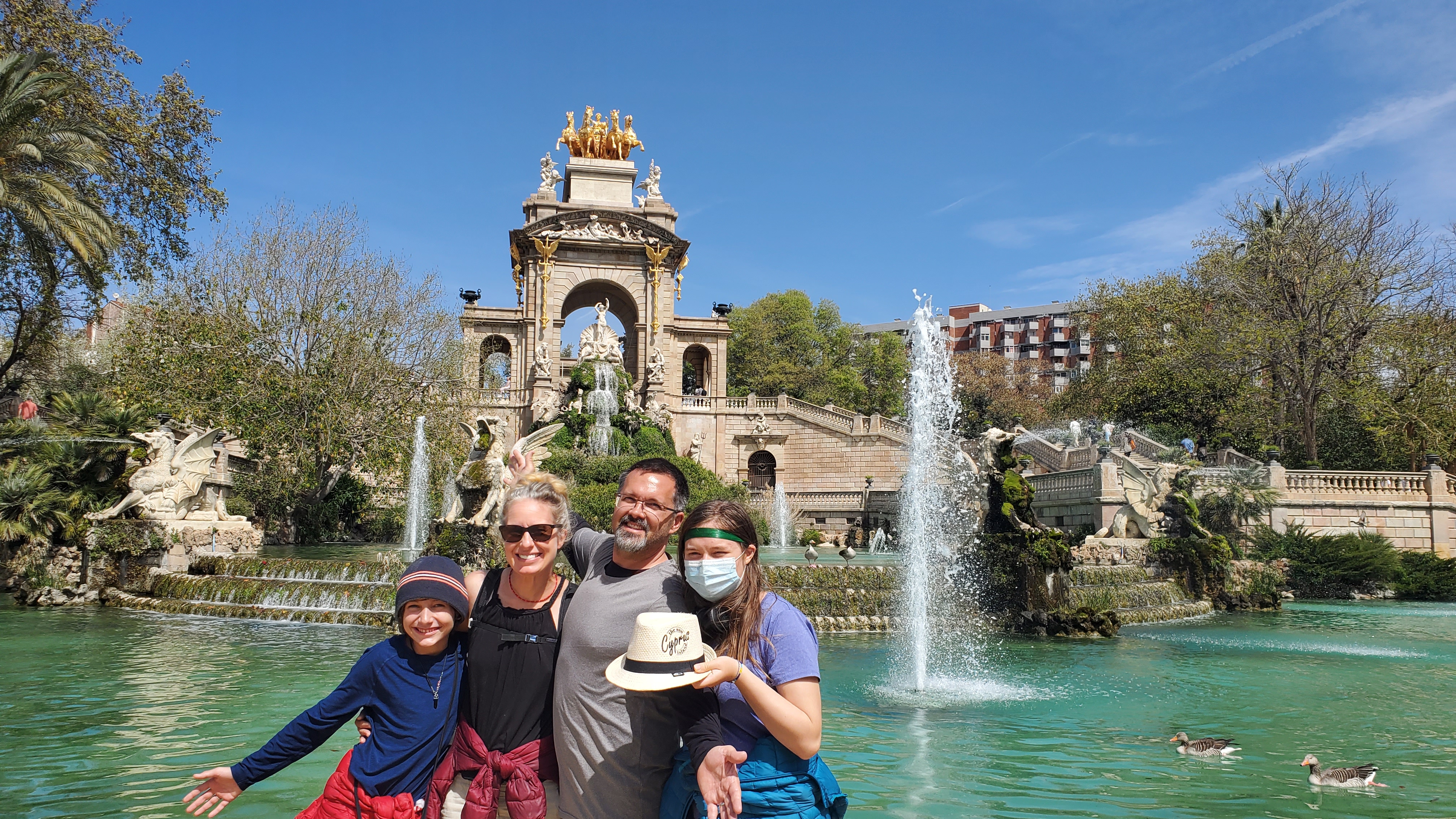
Family portrait in Barcelona, with Piper’s hat joining us.

Just an hour’s flight from Marseille put us in Barcelona, the heart of Catalonia. Catalonia would like you to know that Catalonia may look like it’s part of Spain, but it is Catalonia, the wealthiest and bestest independent not-Spain place ever. [Think Jefferson County in California if you need an analogy.] Barcelona is the capital of the region of Catalonia, and its call for independence seems to meet mostly with eye-rolling from the rest of Spain. But like any big city (at over 5 million people, it is 3.5 times bigger than Marseille), Barcelona has its own feel.

We all seek entertainment, albeit in different ways. Wes piled all (all!) the pillows on a swivel chair and spent, what I can assume, many happy hours spinning while Dwayne and I enjoyed exploring the city.

Even our local walking tour guide wonders how anyone makes money in the area. With a culture of up and about by 11am, soon followed by lunch and afternoon siesta, a reopening in the late afternoon, dinner at 21:00 or 22:00, bedtime at 2am…, well there was a shop right next to our hotel that Piper desperately wanted colored pencils from and it wasn’t until the last day that she finally caught them open.

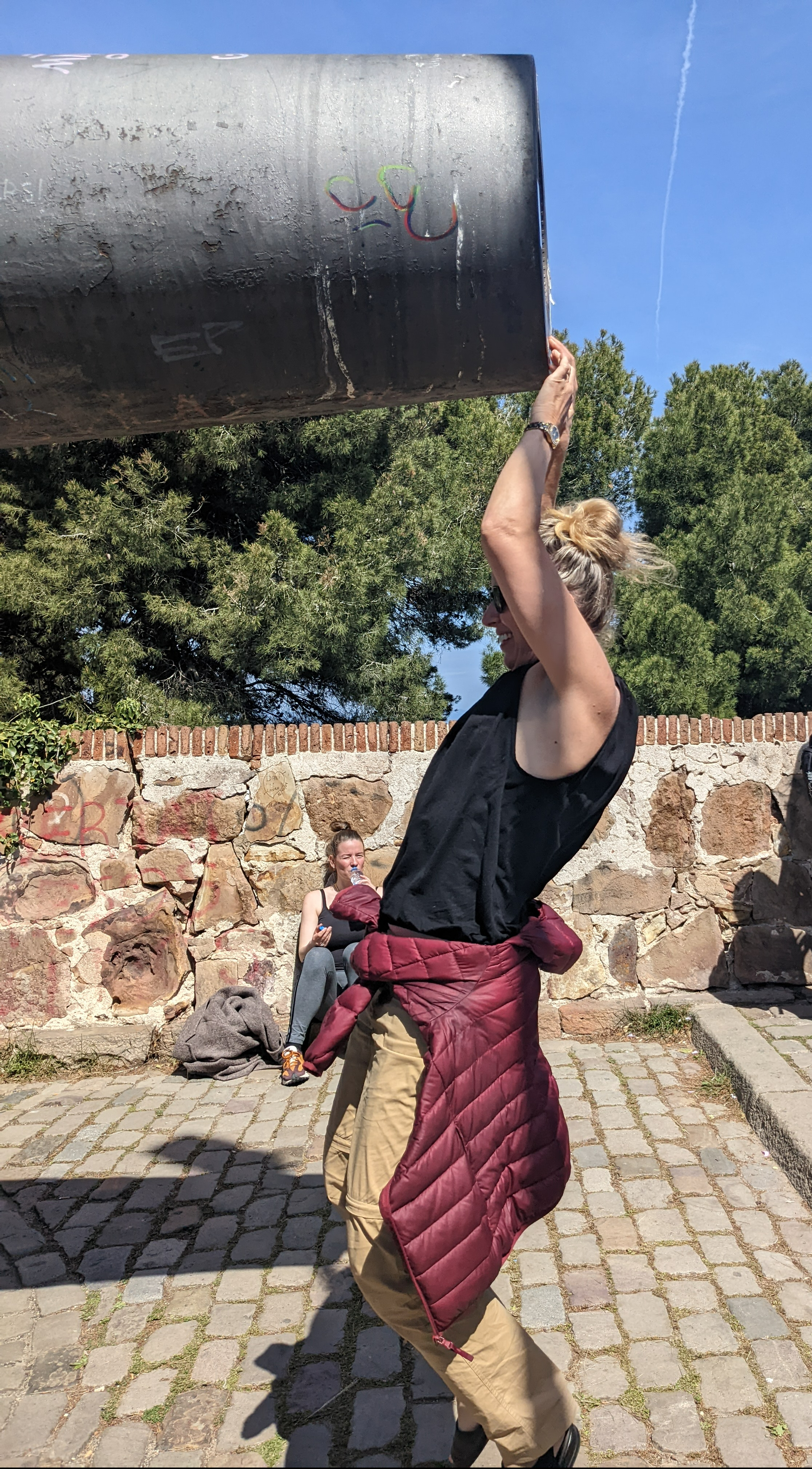
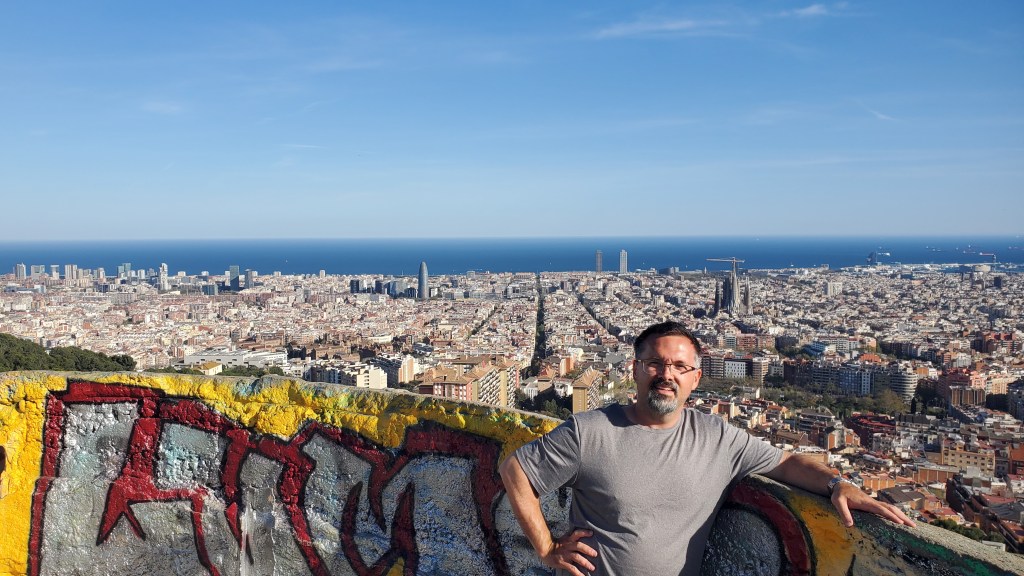
But as a tourist, it was delightful. After first getting to our hotel, Dwayne and I explored as far as we could walk, using his delightful method of aiming for the greenest parts on google maps. That’s how we ended up miles from the hotel, on the top of an abandoned WWII battery, overlooking the city. We got back with enough time to get to our 7:30 dinner reservation for tapas, beating the dinner crowds by a few hours. Weird.

We started our first full day with a crack-of-day 10am walking tour, perfect for our 2.5 teenagers. The tour was my first introduction to Gaudí, and more importantly, fresh churros with chocolate dipping sauce.

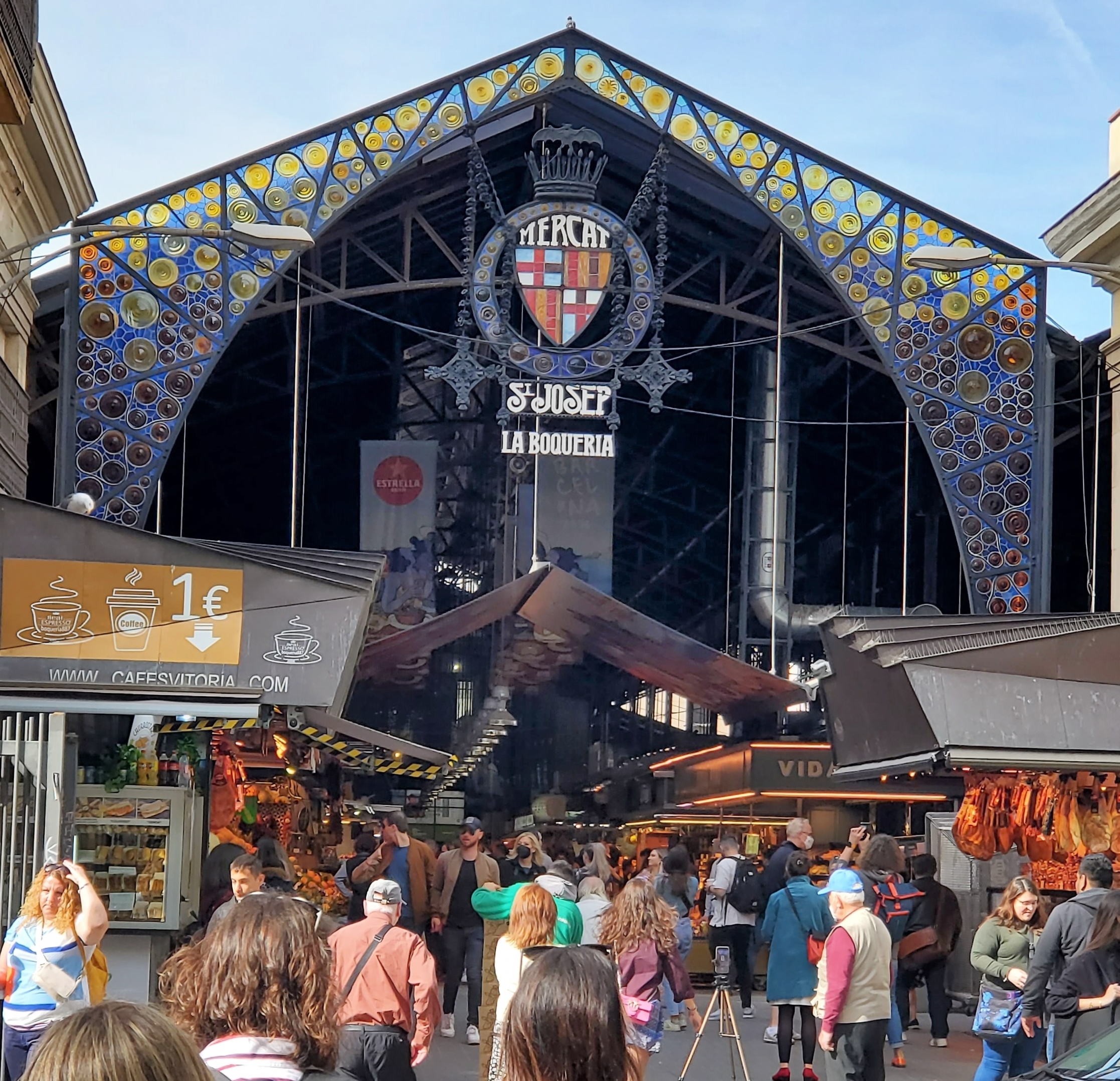
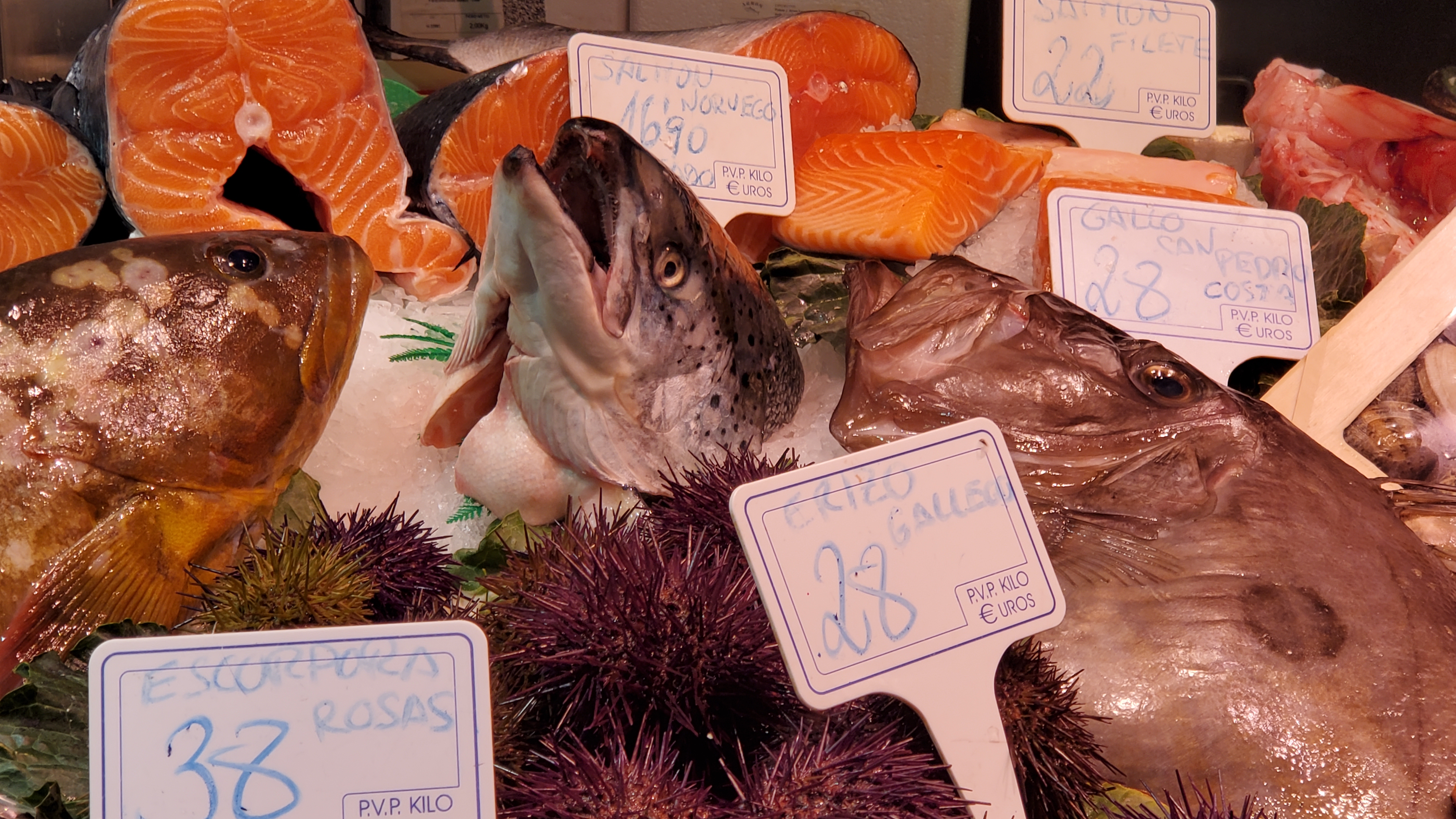
We also explored the busy, busy market (dozens of independent food stalls under one roof) with the freshest foods displayed like a beauty pageant. Getting through this with our guide gave us the confidence to shop at a smaller market later.

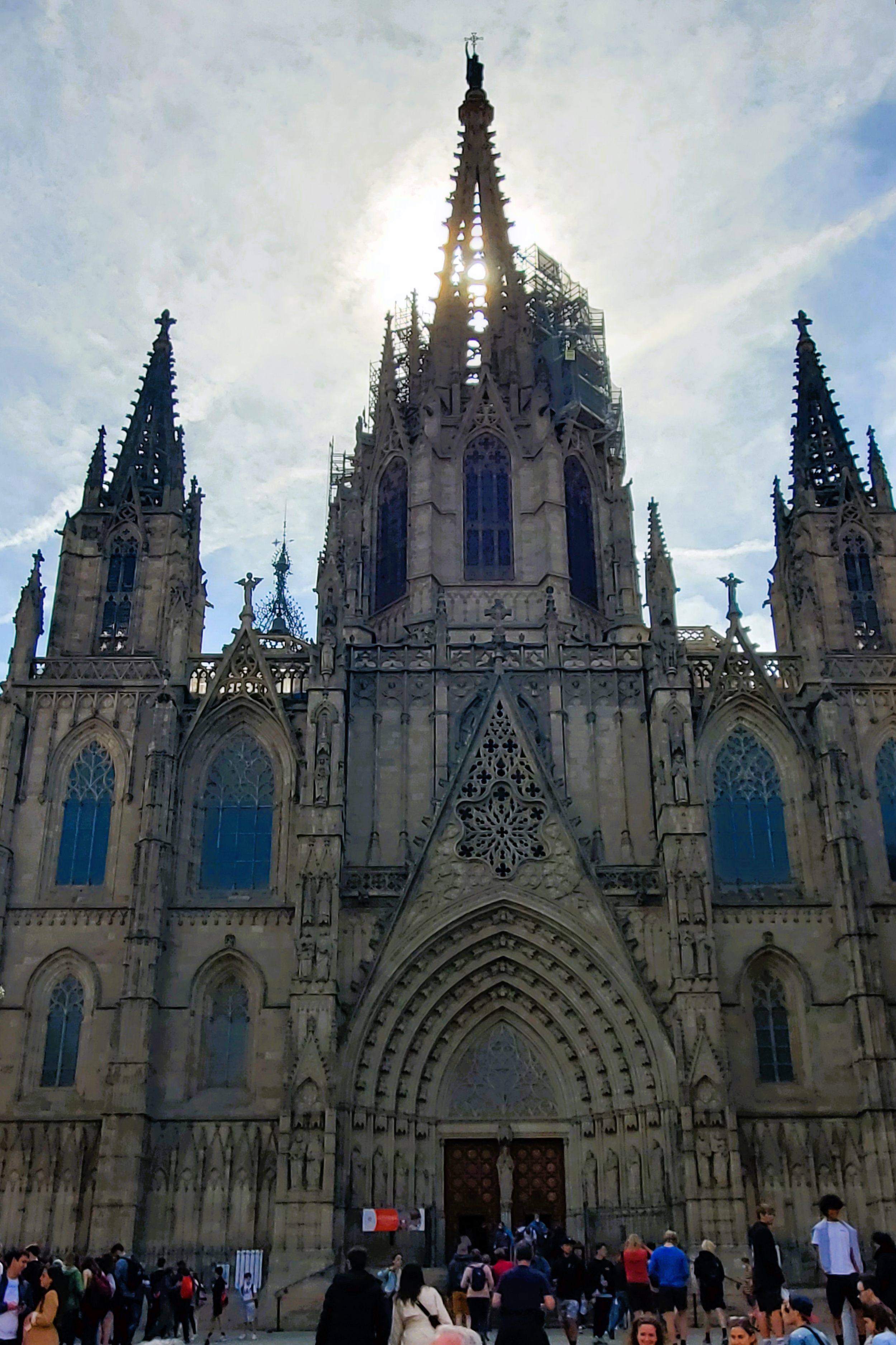
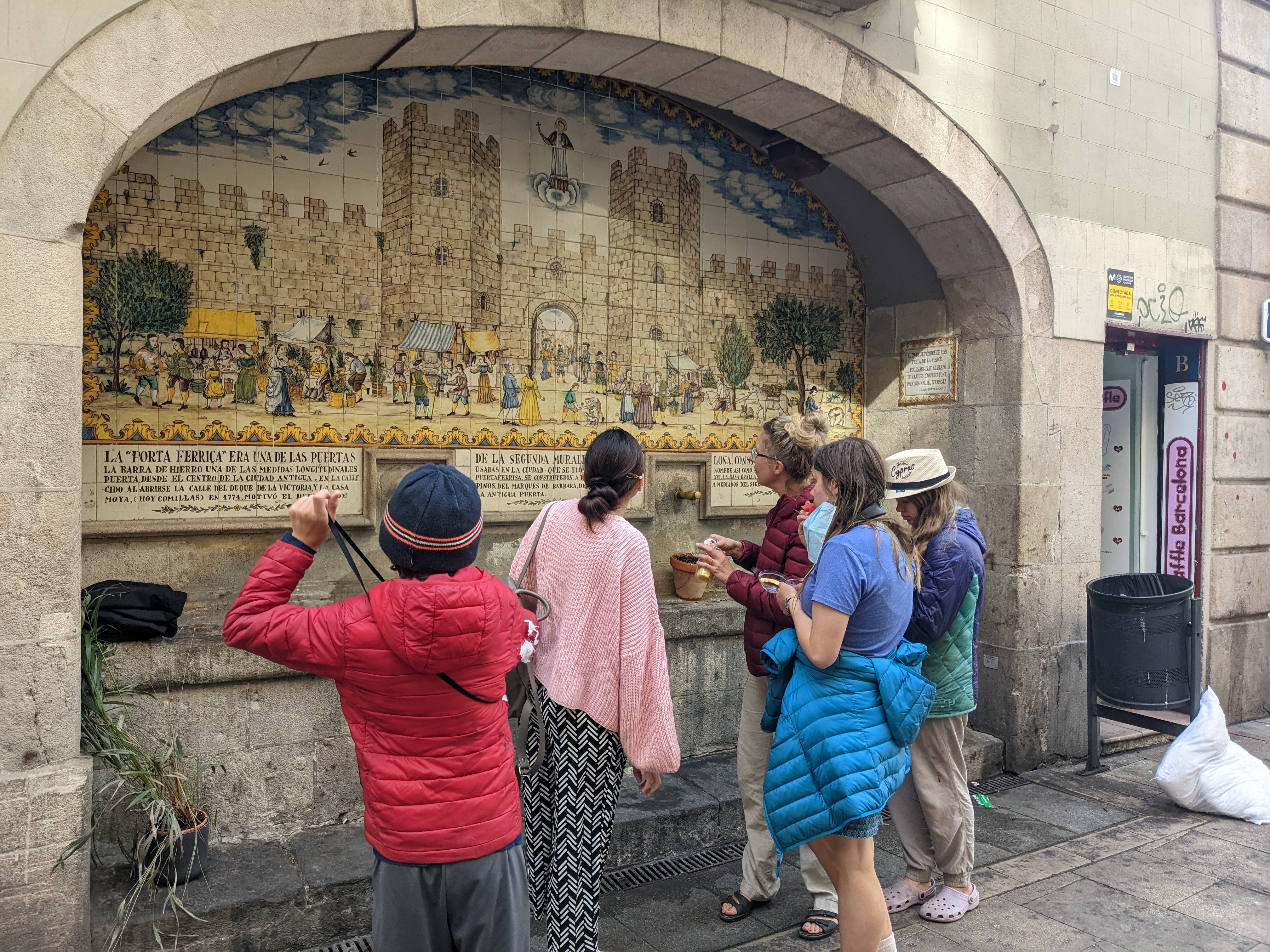
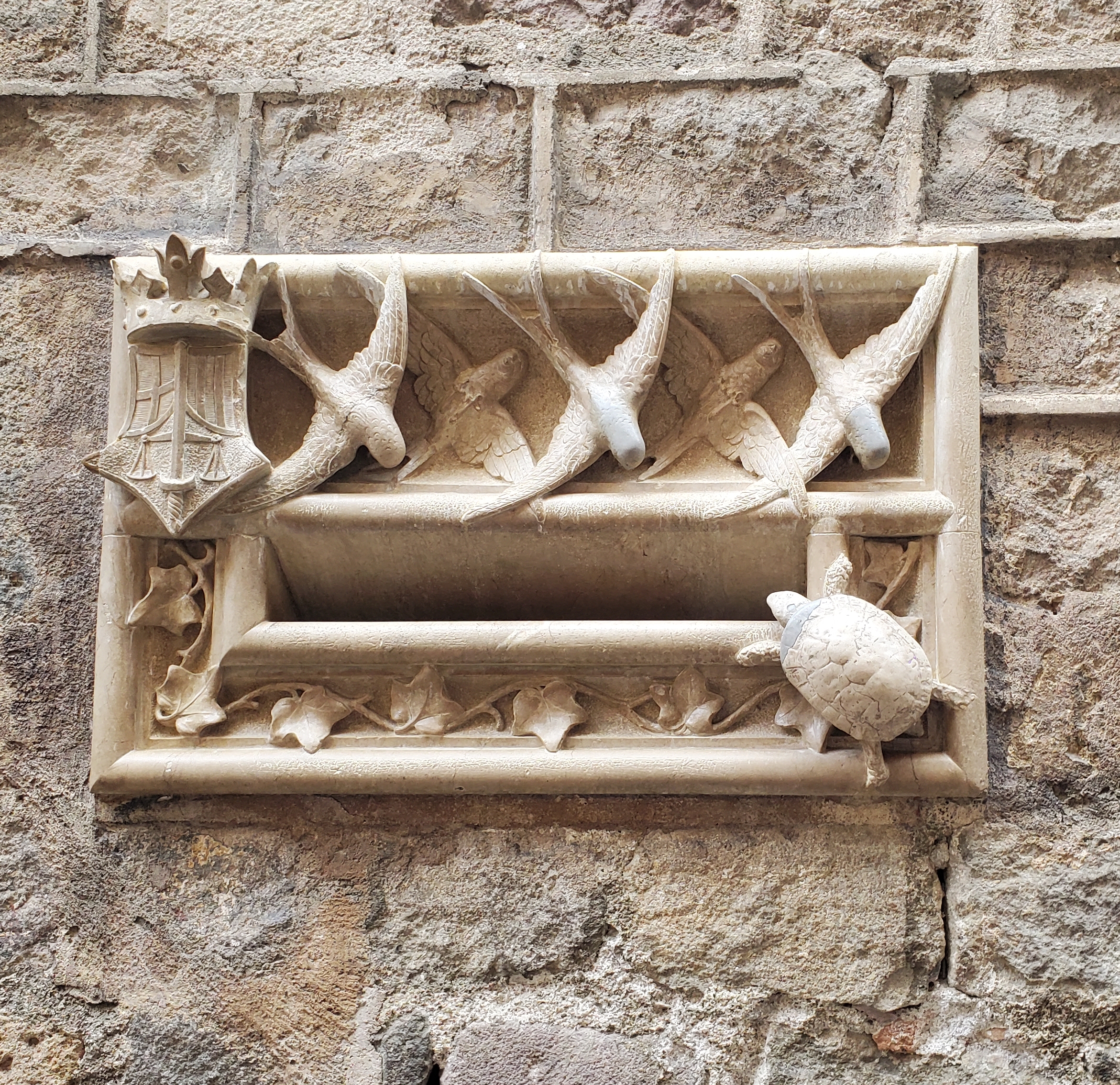
I am always pleased to see gothic cathedrals, peekaboo art and city water fountains, and of course, ancient Roman aqueducts.

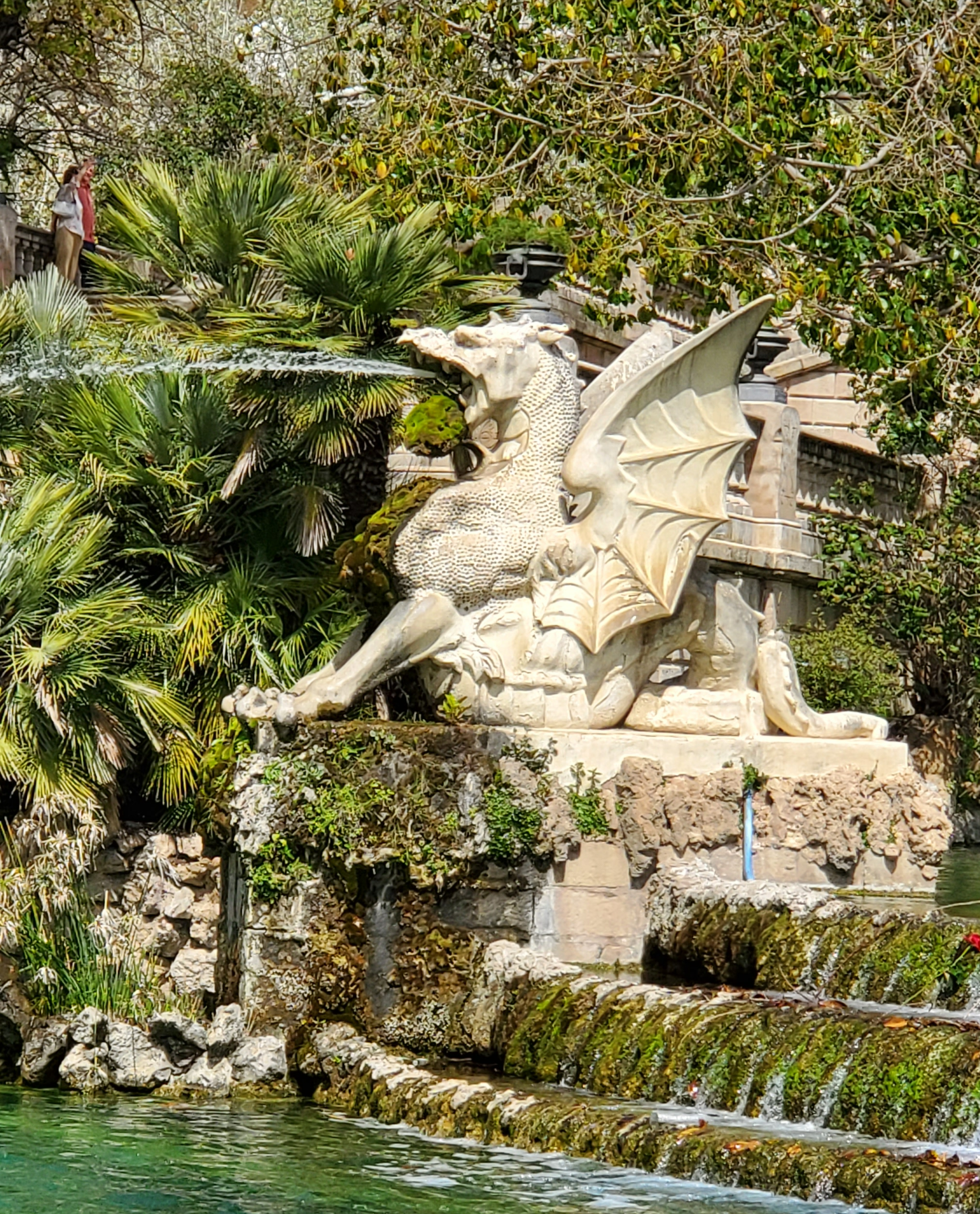
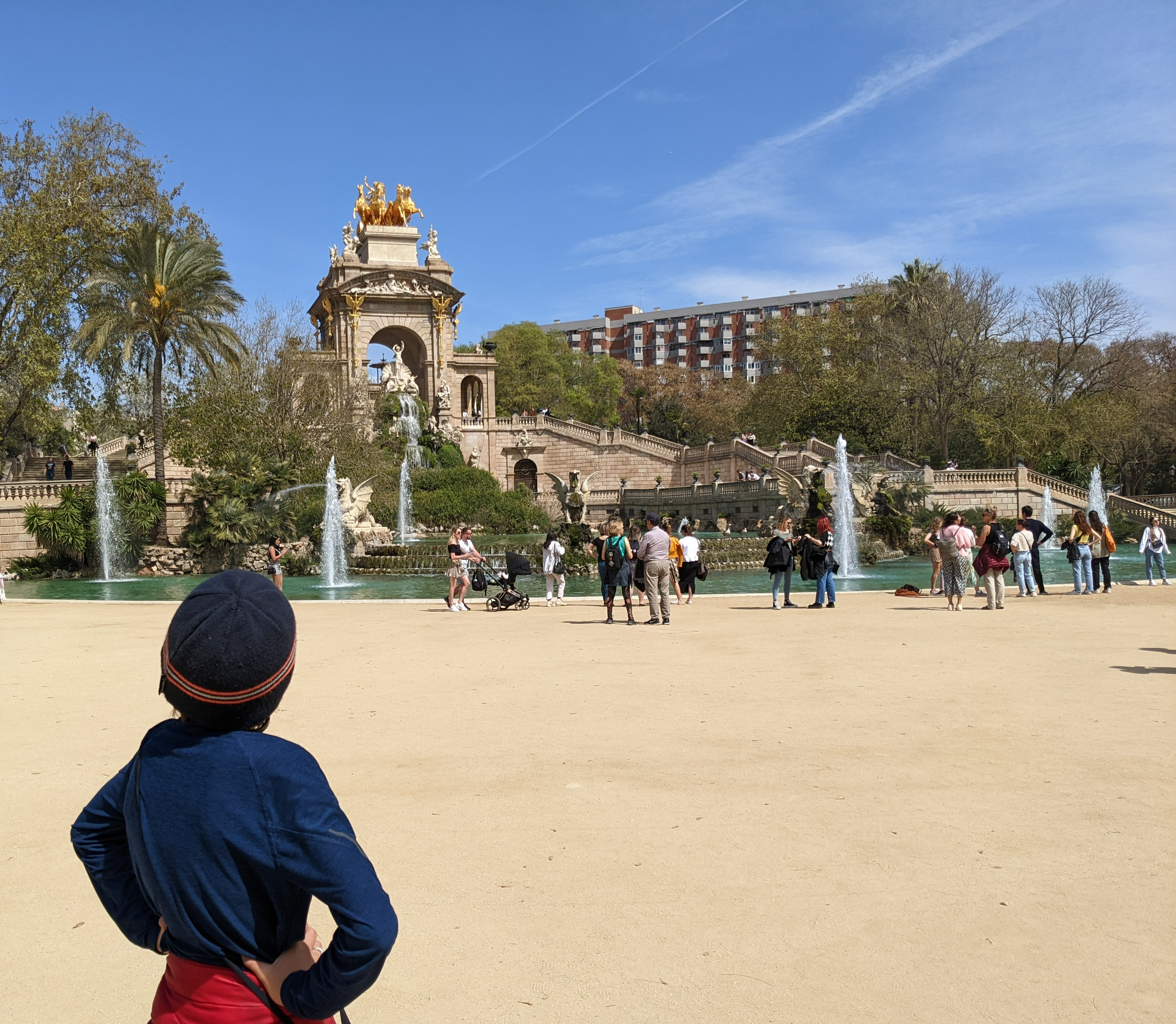
We ended at the city park, our first real bit of green in a city that must conserve water, and where dozens of pocket parks and playgrounds on each street are brown and sandy. Dwayne didn’t feel the magic that made him tingle at Longchamps, but I was delighted by fountains, falls, and, especially, dragons. Hola, Barcelona! We’re happy to be here.